Tea exports to Ukraine comes to a halt

The Sri Lanka Tea Board says that the export of tea to Ukraine has come to a complete halt.

Its Director General, Anura Siriwardena stated that the country will not be able to export tea again until the Ukraine-Russia crisis comes to an end.

The amount of tea exported to Ukraine annually is about 4 million kilograms.

He noted that tea exports to Russia have also declined slightly due to the current situation.

Accordingly, alternative ways of exporting tea to Russia are being studied, Siriwardena added.

Posted in Uncategorized

Second death in Sri Lanka fuel queue in 24 hours: police

A second senior citizen died Sunday (20) morning while waiting in line for fuel in cash-strapped Sri Lanka, police said, barely 24 hours after the death of a 71-year-old man under similar circumstances.

According to police spokesman SSP Nihal Thalduwa, the victim, a 70-year-old resident of Makola, Gamapaha, had collapsed while standing in a queue at a filling station in Kadawatha.

Thalduwa said the man, a threewheeler driver by profession, had only been standing in the queue for 15 minutes and had had a history of high blood sugar and medication for cardiac issues.

Sri Lanka is facing a fuel crisis after forex shortages were caused by money printed to keep interest rates low in a bid to build a ‘production economy.’

Sri Lanka: Three Years After Easter Attacks, Politicians Run For Cover – OpEd

With the mastermind still at large, the motive not established and high-profile government officials going scot-free, Sri Lanka’s Easter bombing has reached a cul de sac after three years of investigations.

With the 2019 probe into the terrorist atrocity dragging its feet, the less influential Christian community has been let down by the Gotabaya Rajapaksa government, which came to power in the same year promising to bring the perpetrators to book.

The 279 people who died in attacks on three churches and three hotels included worshippers in two Catholic churches and a Protestant church attending Easter Sunday services. No wonder the Catholic Church views the current regime with suspicion as the probe enters a third year.

From day one, it was clear that the government had its hands tied as Rajapaksa’s immediate predecessor Maithripala Sirisena and the then prime minister Ranil Wickremesinghe were among top government figures blamed for their inaction despite repeated intelligence warnings about the bombings on April 21, 2019, that left more than 500 wounded.

A group of nine suicide bombers affiliated to local Islamist group National Thowheed Jamath (NTJ) were involved in the attacks. Two days after the atrocity, Islamic State claimed responsibility. Those who perished included 45 foreigners who were having breakfast.

A kind of official version is that both the then president and the prime minister were at loggerheads at the time of the incident, which prevented the executive from restoring its well-oiled war infrastructure that had proved so efficient in suppressing the Liberation Tigers of Tamil Eelam’s (LTTE) claim for a separate homeland.

Including the former president and the prime minister, who hail from influential families, under the gambit of the investigation left enough room for political maneuvering and the blame game. Since its independence in 1948, Sri Lanka has been ruled by powerful elite families who have a habit of burying the hatchet to pursue common interests.

In fact, passing the buck is what exactly happened during the probe. Hemasiri Fernando, then secretary to the Defense Ministry, and the then inspector-general of police Pujith Jayasundara, who were arrested in 2019 and held in custody for four months before securing bail, testified to a parliamentary inquiry that Sirisena failed to follow established protocols in assessing security threats ahead of the deadly bombings.

They found Sirisena an easy target, passed the buck and saved their skin. The duo told the commission that the ex-president as minister of defense and law and order simply did not take the threats seriously. Both Jayasundara and Fernando were absolved of all 855 charges including negligence and murder.

With them becoming free birds, efforts to unearth the role of the government and the executive in abetting the bombing or their failure to prevent it have come to naught.

The government’s failure was simply blamed on the political infighting leading to a communication breakdown between the president and the prime minister.

Unlike in other South Asian nations, Islam in Sri Lanka is known for its tolerance and secularism. Though it was a fact that many anti-Muslim attacks had taken place before the Easter bombings, they were not large in scope for the community to take revenge. In fact, most of the atrocities were carried out by the majority Sinhalese community, not by Christians and foreigners.

Unlike the jihadist networks in Pakistan and Bangladesh, Sri Lankan terror outfits are less exposed to the outside world. This leaves them with less experience, wherewithal and resources to execute a major operation such as meticulously exploding bombs at six places around the same time in a well-coordinated attack.By linking a few suspects, who were rounded up in the initial stages of the probe, with the international terror network of Islamic State, the rationale for the bombings was imported from abroad and the purpose was lost.

During the height of the civil war, LTTE never attacked tourists and foreigners, and the country’s status as a tourist-friendly nation was never dented. What message were the killers trying to send while targeting wealthy foreigners and mixing their blood with local conflict dynamics? Does it make sense? Why should Christians, who are known as a peace-loving community in the Buddhist-majority nation, be targeted? Was the bombing staged for an international audience by a few perpetrators with international connections?

Initially, the Sri Lankan Church and its leader Cardinal Malcolm Ranjith of Colombo had placed all their hopes on the Rajapaksa government’s election strategy to zero in on all the culprits and architects of the atrocity.

Sri Lanka rejects invitation to co-sponsor consensus resolution

Sri Lanka has rejected an invitation to co-sponsor another consensus resolution at the UN Human Rights Council, Foreign Secretary Admiral Jayanath Colombage said.

The Foreign Secretary told the media at the President’s Media Centre last week that they were approached by Germany, a member of the Core-Group, to get the consent of the Government to agree on a consensus resolution to be moved at the UNHRC in September this year.

The Government has rejected the offer, citing that such endeavours would fail without the blessings of the people.

“The former Government supported a consensus resolution in 2015 and was rejected by the people at the next election. We would be committing the same mistake if we endorse a similar move,” he said. The Government has conveyed this to the Core-Group. Resolution 46/1 of March 23, 2021 which mandated an evidence gathering mechanism permitting Human Rights High Commissioner Michelle Bachelet to collect evidence on past human rights violations in Sri Lanka, will expire at the 51st session of the UNHRC in September. A new resolution is expected to be tabled by the Core-group replacing the current resolution, if the period of implementation of the 46/1 is not extended by the HRC.

The Council approved a whopping US $ 2.8 million budget for this mechanism. However, a limited portion of it has been released so far while the Government protested that the huge fund for the salaries and other expenses of this mechanism showed the undue emphasis this case has been given when matters of a more serious nature were happening around the world.

Bachelet is required to submit a comprehensive report that includes ‘further options to advance accountability’ in Sri Lanka at the September session.

“We need to end this unfair process. We were a victim of terrorism not a perpetrator,” Foreign Secretary Colombage said. The Sri Lankan delegation to Geneva held a meeting with the President of the UNHRC, Argentina’s Envoy to the UN in Geneva Federico Villegas, to brief him of the progress Sri Lanka had made so far and the disproportionality with which the country’s case has been handled by the Council.

“The meeting was highly productive and encouraging,” Foreign Secretary Colombage said.

The delegation included Foreign Minister Prof. G.L. Peiris, Justice Minister Ali Sabri, State Minister Dr. Channa Jayasumana, the Foreign Secretary and Additional Solicitor General Nerin Pulle.

Argentina’s Envoy had agreed to discuss a future course of action to end this incessant process.

“We are in discussion with member states and the Core group to stop any new detrimental resolutions at the Human Rights Council,” Colombage said, adding that they are hopeful that many member states will support Sri Lanka’s case. Of the 45 member countries which spoke at the recent interactive session, 31 spoke in favour of Sri Lanka highlighting the progress it has made in fulfilling international obligations. The countries which are usually critical of Sri Lanka, had also acknowledged the progress the country had made on the ground, despite challenges posed by the Covid-19 pandemic.

He said the Government has embarked on a roadmap to prepare for the crucial 51st HRC session. This roadmap will have clear timelines to fulfill certain commitments before September.

Sri Lanka foreign minister meets UNHRC core group

Foreign minister G L Peiris had informal discussions with representatives of the United Nations Human Rights Council (UNHRC) core group of countries on Sri Lanka on Friday (18) in Colombo.

A foreign ministry statement did not elaborate on the discussions, but noted that ministry secretary Jayanath Colombage also took part.

The core group comprises Canada, Germany, North Macedonia, Malawi, Montenegro, the United Kingdom, and the United States. At the 49th session of the UNHRC session in Geneva earlier this month, the core group said its concern over surveillance and intimidation of civil society persists, and detentions, threats and intimidation of journalists and human rights defenders continue while the proposed changes to the controversial Prevention of Terrorism Act (PTA) are very limited.

“The new ‘One Country One Law’ taskforce risks undermining Sri Lanka’s pluralist society. We urge Sri Lanka to ensure that this taskforce’s work is inclusive and non-discriminatory,” the UK’s Global Ambassador for Human Rights Rita French in her statement on behalf of the core group said.

The ‘One Country One Law’ task force is headed by a controversial Buddhist monk appointed to the position by President Gotabaya Rajapaksa. The monk’s name has been linked to anti-Muslim violence in the island nation.

Sri Lanka claimed “overwhelming” and cross-regional support, particularly from the global south, at the interactive dialogue of the UNHRC session. However, Western countries noted setbacks on the human rights front and called for increased engagement with minority political parties.

“Sri Lanka received overwhelming support from countries of the global south who expressed support for the government’s significant efforts towards reconciliation and reiterated the importance of objective and constructive cooperation as the fundamental basis for multilateral engagement,” Sri Lanka’s foreign ministry said in a statement last Tuesday (08).

However, the United States, which recently joined the core group, called for increased engagement with Tamil and Muslim parties and civil society organisations to “advance an inclusive, lasting political solution”.

The UK, meanwhile, noting continued lack of progress on accountability and “setbacks in several emblematic human rights cases”, called on the Sri Lankan government to engage constructively with the recommendations in resolution 46/1 passed in March 2021 and to cooperate with the Office of the Human Rights Commissioner (OHCHR).

Posted in Uncategorized

Sri Lanka tests UN’s patience on human rights -BBC

Memories of the dark cell and constant fear for his life still haunt Murugiah Komahan, who spent six years in prison on anti-terrorism charges in Sri Lanka.

Mr Komahan, 40, is among thousands of Tamils and others detained under the Prevention of Terrorism Act (PTA) in recent decades.

Successive governments dominated by the Sinhalese majority used the PTA primarily to arrest those suspected of links with the separatist Tamil Tigers until the rebels’ defeat in 2009.

But more than a decade after the civil war ended, the act is still in use and Sri Lanka is under pressure to reform it.

The island’s access to lucrative export markets in Europe depends on it making progress on human rights.

Mr Komahan, who’s from northern Jaffna region, was first arrested under the anti-terrorism act in 2010 on charges of links with the rebels.

“Police tried to force me to sign a confession but when I refused, I was severely beaten. An officer even threatened to shoot me. When I complained to a judge about being tortured, I was beaten even more,” Mr Komahan told the BBC.

Finally, he said, he signed a confession in Sinhala, a language he doesn’t understand. He was worried that if he refused, he might be sent to solitary confinement.

A court freed him in 2016 for lack of evidence – but Mr Komahan says he is still being monitored by intelligence agencies.

“The constant surveillance is making it difficult to return to a normal life,” he says.

Rights groups say the PTA has been used to make arbitrary arrests, to detain people for years without due legal process and to extract false confessions under torture, accusations the authorities deny.

It was first introduced as a temporary measure more than 40 years ago, when the insurgency for a Tamil homeland was in its early stages. But it’s also been used to target other minority groups, government critics and civil society activists over the years, campaigners say.

“We have cases of people who spent several years in prison before they were discharged – that means there was no evidence and no indictment was filed,” said Ambika Satkunanathan, a prominent human rights activist.

She alleges the PTA was used to target Muslims after the island’s 2019 Easter Sunday bomb attacks by Islamist militants.

These include prominent Muslim lawyer Hejaaz Hizbullah, a vocal opponent of President Gotabaya Rajapaksa. He was released on bail in January amid growing international criticism after spending almost two years in detention.

According to the Sri Lankan prison authorities, there are still nearly 300 people detained under the PTA, some of whom have been held for more than a decade.

Following years of criticism, the government has now tabled amendments to the act with “the objective of bringing it in line with international norms and best practice”.

Justice Minister Mohamed Ali Sabry told the BBC: “One of the key provisions in the amendments is if the indictment is not filed for more than a year, then the detainee can apply for bail.”

He said officials were trying to expedite pending anti-terrorism cases and 86 people had recently been released.

But campaigners say the proposed changes do not go far enough. For example, “a confession given to an assistant superintendent of police or above can still be used as evidence in trial”, Ms Satkunanathan said.

The United Nations Human Rights Council (UNHRC), which is holding its spring session in Geneva, and others are watching closely. Another critical assessment by the council later this year would not augur well for Sri Lanka.

The European Union has already warned it will suspend tariff free access for Sri Lankan companies if there is no progress on human rights. The island’s exporters sent garments worth more than $2bn to the bloc in 2020.

Given Sri Lanka’s foreign exchange reserves crisis, a bailout from the International Monetary Fund looks on the cards.

Last month, UN Human Rights chief Michelle Bachelet acknowledged the Sri Lankan government had taken some steps in addressing human rights issues. But she also called on member states “to investigate and prosecute international crimes committed by all parties in Sri Lanka”.

Last year, member states authorised her to collect and preserve evidence of alleged war crimes by both sides in the 26-year conflict. The UN estimates 80-100,000 people were killed and thousands disappeared.

“The initial step is to create a centralised repository for the wide array of material that is available, including that collected by the UN over the years, which is substantial,” Rory Mungoven, Asia-Pacific chief at the Office of the UN High Commissioner for Human Rights, told the BBC.

“We are analysing all the material and pinpointing particular cases, particular perpetrators where further action may be possible.”

After the inaction of successive Sri Lankan governments, the intention is that material gathered could be used to try war crimes suspects outside the island under the principle of “universal jurisdiction”.

President Rajapaksa, a hardliner who led the war efforts, has consistently rejected allegations of war crimes by the military and it’s highly unlikely that he might agree to the conditions set by the UN. Many of his supporters in the Sinhalese majority see those accused of wrongdoing as heroes.

His foreign minister criticised the UN decision earlier this month.

“It creates obstacles to reconciliation efforts, breeds hatred by reopening past wounds, and polarises society,” GL Peiris told the session in Geneva.

Ministers in Colombo point to measures already taken, such as rehabilitating former rebels and the setting up of an office to determine the status of those still missing in the war.

Critics argue little came of such initiatives.

People like Murugiah Komahan agree. He and others who were jailed unjustly say their lives were ruined – and they’ll never get back the years they lost.

Posted in Uncategorized

West and Japan urge Sri Lanka to extend “vocal support” for Ukraine

Envoys of the United States and several other key nations in the west, as well as Japan on Friday, called on Sri Lanka to join in active support against the Russian invasion of Ukraine.

In a joint statement, the ambassadors and high commissioners to Sri Lanka urged the island nation to raise “vocal support” for Ukraine, international law, including the United Nations charter.

“We urge Sri Lanka to join us in calling on Russia to end it hostilities immediately.”

The statement was issued by the head of the delegation of the European Union, high commissioners of Australia, Canada, New Zealand and the United Kingdom, and the ambassadors of France, Germany, Italy, the Netherlands, Norway, Japan, Rumania, Switzerland and the United States.

“We will work together with our friends and allies around the world to ensure that the sovereignty and independence of Ukraine is restored. We stand with Ukraine; and for freedom, democracy, and the sovereignty of nations around the world,” the envoys said.

The envoys condemned Russia’s invasion of Ukraine as an unprovoked, unjust and illegal attack on a peaceful, democratic and sovereign state. “This outrageous attack is a gross violation of international law, including the UN charter.”

The statement slammed Russia for dramatically escalating its attacks on civilian neighbourhoods and infrastructure, leading to large numbers of civilian casualties. Millions of ordinary civilians – mainly women, children and older persons – have been forced to flee from their homes into neighbouring countries as refugees, making it the fastest-growing refugee crisis in the last 70 years, it read further.

Russia threatens the fundamental principles of sovereignty and territorial integrity that underpin peace and security around the world, the representatives to Sri Lanka stressed.

The statement also read: “We stand united in condemnation of the Russian government’s attacks on Ukraine. In the UN General Assembly on 2 March, 141 countries – an overwhelming majority – voted to condemn Russia’s invasion. This demonstrates Russia’s utmost isolation from the international community. Countries supporting Ukraine have imposed an unprecedented package of targeted sanctions to inflict heavy cost on Russia. These aim to degrade Russia’s capacity to pursue its attacks against Ukraine, and to press Russia to withdraw from hostilities. We have seen organisations from banks to oil companies, to football leagues, make it clear that Putin’s actions have consequences and his regime can no longer be part of the international community.”

It said the friends and allies of Ukraine have committed significant levels of economic and humanitarian assistance with many countries opening their boarders to Ukrainian families fleeing the war.

The envoys also accused Russia of promoting false narratives as a pretext for invasion.

“The Russian government has conducted an aggressive disinformation campaign against Ukraine in a spurious attempt to justify its invasion. There is no justification for Russia’s campaign to subvert its democratic neighbours. Russia falsely accuses NATO of provocation. NATO is, and always has been, a defensive alliance, and poses no threat to Russia.”

Chinese Ambassador meets with Foreign Minister, discusses China-SL FTA

The Chinese Ambassador of Sri Lanka, Qi Zhenhong met with the Sri Lankan Foreign Minister Prof. G.L. Peiris yesterday (18).

The Chinese Embassy stated that the two dignitaries highly appraised the mutual understanding and support which remained between Sri Lanka and China at the 49th session of the United Nations Human Rights Council, which concluded recently.

Prof. G.L. Peiris, who chairs the newly founded Cabinet Sub Committee on Economic Way Forward initiate with China and several other countries, explored the potential of financial and trade collaboration in the meeting with the Chinese Ambassador.

The Cabinet Sub Committee recently discussed on the topic of expediting the Free Trade Agreement between China and Sri Lanka.

Cash-strapped Sri Lanka cancels school exams over paper shortage – Aljazeera

Sri Lanka has cancelled exams for millions of school students in the Western Province as the country ran out of printing paper with Colombo short on dollars to finance imports, according to officials.

Education authorities said the term tests, scheduled a week from Monday, were postponed indefinitely due to an acute paper shortage as Sri Lanka contends with its worst financial crisis since independence in 1948.

“School principals cannot hold the tests as printers are unable to secure foreign exchange to import necessary paper and ink,” the Department of Education of the Western Province, home to nearly six million people, said.

Term tests for classes 9, 10 and 11 are part of a continuous assessment process to decide if students are promoted to the next grade at the end of the year.

A debilitating economic crisis brought on by a shortage of foreign exchange reserves to finance essential imports has seen the country run low on food, fuel and pharmaceuticals.

IMF bailout

The cash-strapped South Asian nation of 22 million announced this week that it will seek an IMF bailout to resolve its worsening foreign debt crisis and shore up external reserves.

The International Monetary Fund on Friday confirmed it was considering President Gotabaya Rajapaksa’s surprise Wednesday request to discuss a bailout.

The island nation secured a $1bn credit line from India to buy urgently needed food and medicine, officials said, after Finance Minister Basil Rajapaksa’s visit to New Delhi.

About $6.9bn of Colombo’s debt needs to be serviced this year but its foreign currency reserves stood at about $2.3bn at the end of February.

Long queues have formed across the country for groceries and oil with the government instituting rolling electricity blackouts and rationing of milk powder, sugar, lentils and rice.

Sri Lanka earlier this year asked China, one of its main creditors, to help put off debt payments but there has been no official response yet from Beijing.

Posted in Uncategorized

How Four Powerful Brothers Broke an Island Nation – Bloomberg

In just over two years, Sri Lanka’s first family has presided over a series of crises mostly of its own making.

The island nation of 22 million people is facing its worst economic upheaval in a decade. From an ill-fated fertilizer ban that led to a dramatic fall in yields of crops like rice and tea, to its failure to deal with a foreign-currency crisis that’s now a humanitarian emergency, the government of President Gotabaya Rajapaksa is fast running out of solutions. Relying until now on help from its two major backers — India and China — and stubbornly refusing wider international aid, the country is on the verge of default.

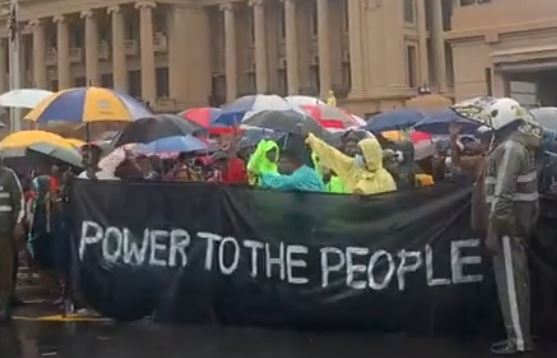
Protests roiled Colombo on Tuesday, with upwards of 10,000 opposition supporters gathering outside the president’s office to call for his resignation. Shortages of electricity, fuel, food and medicine are widespread and causing real pain for everyone from daily wage earners to operators trying to jumpstart the key tourism industry after two years of Covid interruptions and the 2019 Easter Sunday bombings that targeted churches and luxury hotels, killing nearly 270 people. Inflation has soared to 15% — the worst in Asia.

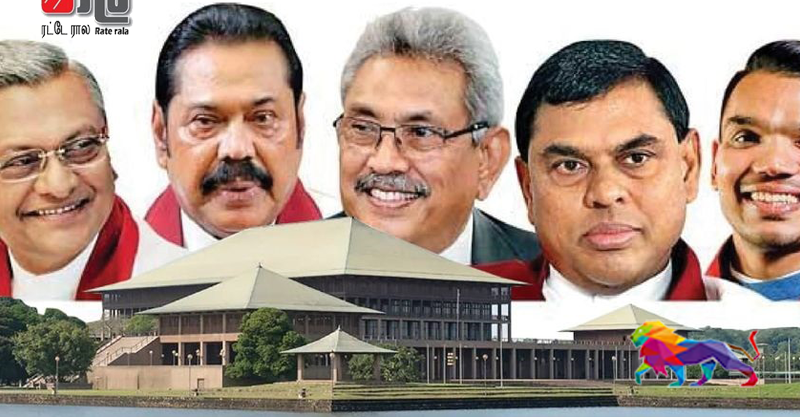
It’s hard to overstate the influence of the Rajapaksa clan in all this. Gotabaya, who won office in the November 2019 presidential elections, appointed his brother, Mahinda, as prime minister. If this pairing sounds familiar, it’s because it is. Mahinda first came to power in 2004, initially as prime minister and then as president. At the time, Gotabaya was defense secretary and was notorious for his role in the 2009 operation to end the civil war with Tamil rebels. Thousands died or disappeared amid allegations of torture, rape, extra-judicial killings and the abduction and assassination of Tamil separatists, journalists and opposition figures. Gotabaya denies all these allegations.

The Rajapaksas were out of power briefly from 2015, when Maithripala Sirisena and Ranil Wickremesinghe led the country, until Wickremesinghe was removed from his post in 2018, sparking a constitutional crisis. Their party won a landslide victory in the August 2020 general election, and quickly restored sweeping executive powers to the presidency that had been previously curbed. Another brother, Basil, was appointed finance minister in July 2021. He was already a controversial figure due to his American-Sri Lankan nationality — his entry into Parliament was only made possible when the government removed a constitutional provision barring dual citizens.

Their eldest brother, Chamal, is a Cabinet minister, while his son is a non-Cabinet minister. One of the prime minister’s sons is also in the Cabinet, another is his chief of staff, and a nephew is a member of Parliament. According to some estimates, about 75% of the budget is under the control of Rajapaksa ministers in government. It is dynastic politics at its purest.

But all the Rajapaksas in power haven’t been able to do what needed to be done to help Sri Lanka out of this mess.

Basil was in India March 16-17, where he secured a $1 billion credit line to help stave off the crisis, exacerbated by spikes in oil prices driven by Russia’s invasion of Ukraine. The war is also badly affecting the travel sector: About 30% of visitors so far this year were from Russia, Ukraine, Poland and Belarus, while Russia is also one of the biggest buyers of Sri Lankan tea, its main goods export.

Things are bad enough that the brothers’ resistance to seeking support from the International Monetary Fund is softening, Bloomberg News reported earlier this week. Sri Lankan officials began talks with the IMF on Monday and may present policy proposals by early next month.

Authorities have recently allowed the rupee to weaken and borrowing costs to rise, in line with expectations of IMF conditions. But experts have criticized the sequencing of these moves. Debt restructuring was the first priority, said economist and executive director of the Colombo-based Verité Research, Nishan de Mel, told me. Increasing interest rates and depreciating the rupee should have come next.

The situation has snowballed because it was mismanaged for some time, de Mel said. What Sri Lankans are facing now is unprecedented, he said, and beyond anything experienced during the decades of civil war. Sri Lanka has about $2 billion of foreign-currency reserves against total debt repayment of as much as $7 billion for 2022, including a $1 billion dollar bond maturing in July. It has three months, maybe less, before a default, de Mel said.

There is now a growing demand for the government to clearly articulate some concrete solutions, said Dushni Weerakoon, executive director of the Institute of Policy Studies of Sri Lanka. “There is no painless way out of this,” Weerakoon noted. “The economic conditions will tighten before they get better.”

It all began with the government’s capital market borrowing back in 2007, she said. (Mahinda was president then.) That now accounts for 38% of the country’s foreign debt, while loans from China accounted for 10%. Given the severity of Sri Lanka’s plight, the initial reliance on government-to-government deals to finance the foreign exchange gap hasn’t been sufficient, she said. Approaching the IMF is now the best option, complemented by efforts to access financing from India and China. Sri Lanka has asked both Beijing and New Delhi to consider restructuring its debt repayments after India in January extended a $400 million swap line and deferred an Asian Clearing Union settlement of $500 million.

The country is also seeking to negotiate a new loan with China. The Hambantota port — part of China’s Belt and Road Initiative — is widely viewed as an example of what can go wrong with Beijing’s infrastructure drive. Sri Lanka borrowed heavily to build the port, couldn’t repay the loans, and then gave China a 99-year lease for debt relief.

Gotabaya is hardly the unifying figure Sri Lanka needs right now. However, with a two-thirds majority in Parliament and elections not due until 2024 and 2025, the opposition protests are unlikely to loosen the family’s grip on power.

He addressed the nation Wednesday evening, vowing to work with the IMF to resolve the crisis and saying he was “sensitive to the many sufferings the people have had to experience over the past two months.” But the clock is ticking and people are angry — and hungry. Any delay in an agreement with the IMF brings the country one step closer to a hard default. And that is a road no one wants Sri Lanka to travel.