Sri Lanka forced into IMF U-turn after financial crisis sparks protests -FT.COM

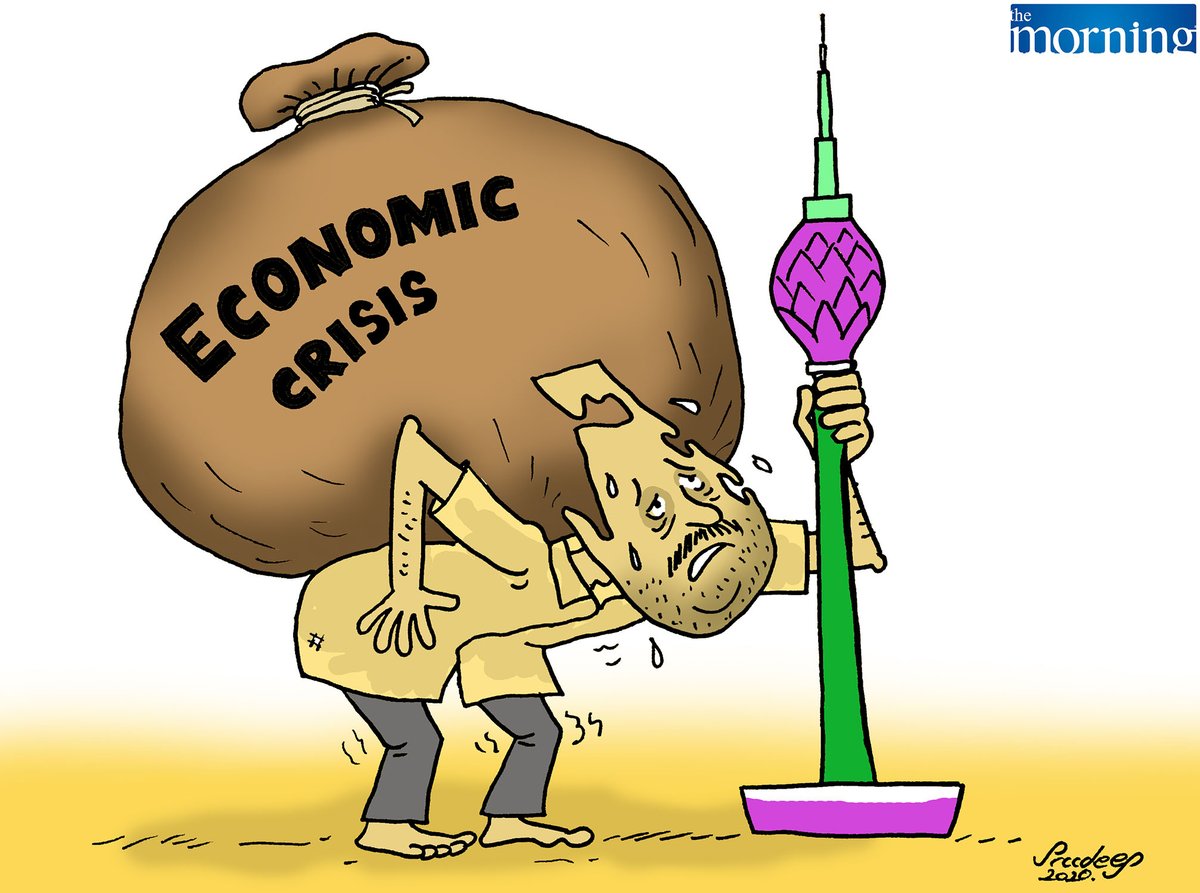
Sri Lanka has begun talks with the IMF over a debt relief package after protests over a deepening economic crisis forced Gotabaya Rajapaksa’s government into a policy U-turn.

The president told the country on Wednesday night that he was “attempting to immediately resolve this crisis and provide relief to the people”.

“Subsequent to my discussions with the International Monetary Fund, I have decided to work with them,” Rajapaksa said, according to a transcript of his comments by Sri Lanka’s Daily FT newspaper. “Through those discussions, we hope to find a way to pay off our annual loan instalments, sovereign bonds and so on.”

Sri Lanka has for months faced mounting economic pain as its depleted foreign currency reserves triggered shortages of imports and fuel, power blackouts and double-digit inflation.

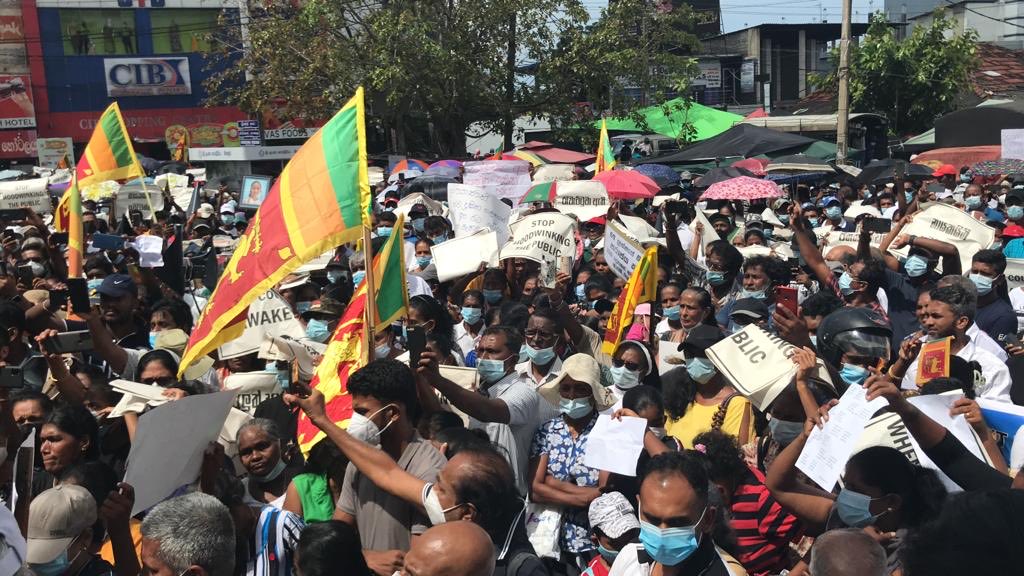
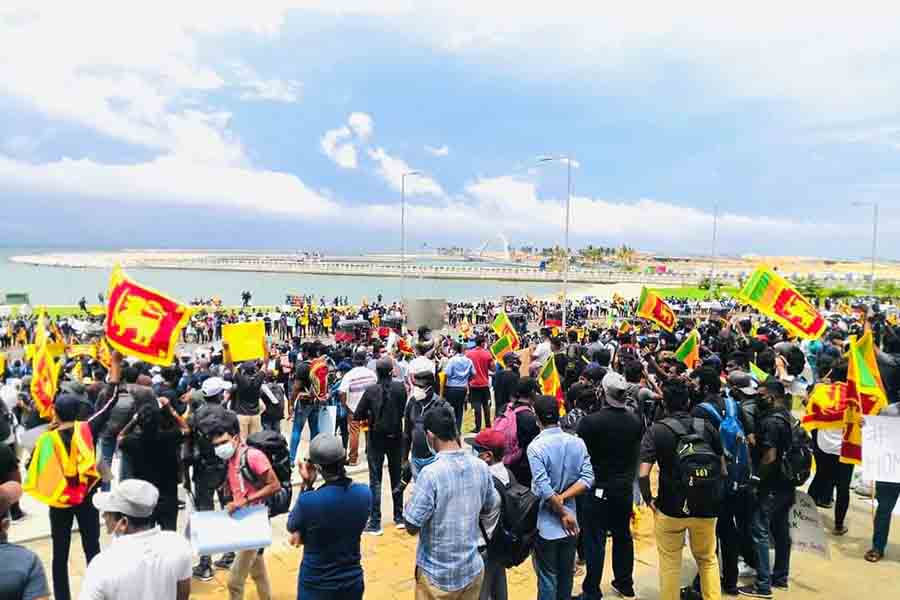
Thousands of protesters and opposition parties gathered in Colombo this week calling on Rajapaksa’s government to resign over its handling of the economy.

The government has until now insisted that Sri Lanka would be able to navigate the crisis without IMF assistance. But its strategy, which involved securing bilateral aid from countries such as India and a post-pandemic revival in tourism, was dismissed by many investors and analysts as unrealistic.

The island nation had debt and interest repayments worth about $7bn due this year, its finance minister Basil Rajapaksa told the Financial Times in January. But analysts estimate that usable foreign currency reserves have fallen as low as $500mn.

Among its more immediate challenges is a $1bn bond due in July, which many investors are sceptical Colombo will be able to repay without restructuring.

Sri Lanka is Asia’s largest high-yield bond issuer, borrowing heavily in the years following the end of its 2009 civil war. It has never defaulted.

About one-third of its debts are owed to international bondholders while other large creditors include countries such as China and India. It is expected to finalise a $1bn credit line this week with New Delhi.

However, after Rajapaksa came to power in 2019, his government introduced large tax cuts that eroded Sri Lanka’s revenue base. Combined with the blow to tourism from the Covid-19 pandemic, it prompted a series of rating downgrades into junk territory, leaving Sri Lanka locked out of international debt markets and unable to refinance.

Analysts said that any programme with the IMF would probably involve restructuring its debts to bring them to sustainable levels.

In a consultation document with Sri Lanka released this month, the IMF warned that challenges included “public debt that has risen to unsustainable levels, low international reserves and persistently large financing needs in the coming years”.

If it restructures, Sri Lanka will join countries such as Suriname, Belize, Zambia and Ecuador that have defaulted on their debts during the pandemic.

Diesel, Jet fuel consignments stuck at Port

The government has been unable to clear two consignments of fuel consisting of diesel and jet fuel which is presently docked at the Colombo Port totalling to 42 million US dollars and due to the delay in clearance, the foreign company is now claiming a fee for demurrage, the Daily Mirror learns.

According to inside sources, the consignment consists of 22,000 metric tonnes of diesel and 22,000 metric tonnes of jet fuel, and it has been docked at the port for five days awaiting payment.

The Letters of Credit were opened for the purchase, but the government has been unable to provide the funds as yet leading to the company now claiming a fee for demurrage.

The government’s failure to clear this shipment has led to a severe shortage of diesel in the market, with queues lengthening further at all petrol stations in the country.

Presently payments have been released only to clear the gas shipments and the President’s Office said yesterday that unloading and distribution of domestic LP gas had recommenced after people had raised severe frustration at the lack of gas available in the market. This week, local primary gas suppliers Litro Gas Lanka and Laugfs Gas were compelled to suspend the operations due to the unavailability of stocks.

Meanwhile, senior sources at the BIA told Daily Mirror that airline operations were continuing and there was no shortage of jet fuel. However, if the present shipment of jet fuel is not cleared soon, then airline operations may be affected.

Sri Lanka’s economy is being crushed by war in Ukraine -TOI

Russia’s war in Ukraine, which has caused a humanitarian crisis and convulsed global financial markets, is now threatening to crush an $81 billion economy more than 4,000 miles away in the Indian Ocean.

Hit by soaring oil import costs and a dip in tourism revenue, Sri Lanka is racing to avert a default amid dwindling foreign-exchange holdings. With inflation already at 15% — the worst in Asia — the conflict is only making it harder for the tropical island located off the southern tip of India. Fuel shortages and blackouts lasting as long as seven hours have become daily routine, while the wait gets longer at gas stations where prices surged almost 50% this month.

Authorities are struggling to contain the crisis. They’ve raised interest rates, devalued the local currency and placed curbs on non-essential imports. But with a meager $2 billion in forex reserves and $7 billion in debt payments due this year, the battle is turning uphill. The government this week finally abandoned its reluctance to seek help from the International Monetary Fund and President Gotabaya Rajapaksa pledged to fulfill Sri Lanka’s obligations.

“Seeking help from the IMF is the most feasible way to get out of the crisis,” said Ankur Shukla, a Mumbai-based economist with Bloomberg Economics. “The Russia-Ukraine war has worsened the already weak external balances situation, increasing the gap between external financial requirements and financing sources available.”

One of Europe’s worst conflicts since World War II couldn’t have come at a worse time for Sri Lanka, which is still recovering from a brutal 30-year ethnic strife that ended in 2009. The South Asian country has sought to revive growth since, spending millions on tourism infrastructure, until the pandemic dealt a blow to its plans. The crisis also shows how Russia’s war is putting some of the fragile developing economies at risk and imperiling decades of efforts to lift millions out of poverty.

In South Asia, other vulnerable countries include Bangladesh, Maldives, Nepal and Pakistan, Shukla said. Though direct trade and financial linkages with Russia and Ukraine are limited, the “price and supply shocks are powerful,” he wrote in a note on March 9.

With a population of about 22 million, Sri Lanka is a net importer of goods from medicines to fuel. In December, petroleum products accounted for about 20% of inbound shipments and the cost jumped 88% from a year earlier. The increase in oil prices this year is adding to the burden.
The country has also been paying off external debt it piled on to help rebuild an economy scarred by the bloody civil war between the majority Buddhist Sinhalese and a Tamil minority that’s predominantly Hindu. That has been draining its forex reserves.

Another pain point is tourism revenue. About 30% of visitors this year were from Russia, Ukraine, Poland and Belarus, and the war is threatening to turn off that tap. Sri Lanka earned $3.6 billion from tourism in 2019 before the pandemic slashed that to less than a fifth two years later, official data show.

The central government’s foreign-owned debt stood at $32 billion as of November. Optimism that the government will soon manage to reach a deal with the IMF has already spurred a rally in the country’s dollar bonds. An offshore bond due 2030 rallied to 49 cents to the dollar from a record low of 38.9 cents on March 9, while one-year default probability has dropped to 18.2% from as much as 31.3% in late December, according to data compiled by Bloomberg.

The nation’s international bonds need to be restructured by July as Sri Lanka doesn’t have the necessary resources to pay the $1 billion due that month, Citigroup Inc. said in a February note.
Besides raising borrowing costs and devaluing the rupee, Central Bank of Sri Lanka governor Ajith Nivard Cabraal also urged restrictions on non-essential imports of around 300 items from electronic appliances to apples and increases in fuel prices and power tariffs.

“The government seems to be reacting positively and that would help steer the economy to calmer waters in this time of unprecedented global challenges,” Cabraal said by phone last week.

Yet for ordinary Sri Lankans, the pain is real. Civic groups have held vigils highlighting rising costs, while the main opposition party organized a mass rally in the capital city of Colombo on March 15, demanding the resignation of President Rajapaksa. The protests pose no immediate threat to his government, which commands almost two-thirds majority in parliament.

Sugath Chaminda, 44, said he spent about 10 hours to refuel his auto rickshaw, after being turned away by numerous gas pumps that had run dry. He then spent more time hunting for a cylinder of cooking gas, which was also in short supply.

“I don’t know what the government is doing to have brought us to this situation,” he said in Colombo.

Some of the inflation surge is also self-inflicted. Last year, the government banned imports of chemical fertilizers in an ambitious plan to promote organic farming. That caused a shortage of nutrients, leading to crop failure and protests, prompting the government to reverse the decision in November.

Sri Lanka has also approached China and India for bilateral credit lines to avoid an IMF bailout, but negotiations have been complicated by the war in Ukraine. In the past, policymakers have generally considered some of the IMF’s conditions as burdensome, leading to reluctance to engage with the agency.

Rajapaksa said Wednesday his government has weighed the advantages and disadvantages of working with the IMF, which has urged a “credible and coherent strategy” to restore macroeconomic stability and debt sustainability.

A restructuring is necessary as the debt levels are too high, said Kenneth Akintewe, head of Asian sovereign debt at abrdn in Singapore.

“The country doesn’t have a history of defaults but that also means they don’t have experience with going through the restructuring process,” he said. “Added to that, the relationship with the IMF has been a fractured one. This leaves room for missteps along the way.”

Posted in Uncategorized

Does the China-SL FTA pose risks?

While signing loan agreements with India for the purchase of oil, food and medicine, China is also preparing to expedite a free trade agreement with Sri Lanka, which will seriously affect the country’s domestic industries.

A statement issued by the Sri Lankan Embassy in China yesterday (16) stated that the decision to expedite the agreement was taken at a meeting of the Ministerial Sub-Committee on International Trade.

The status of trade transactions between the two countries was also cited in the announcement, which mentioned that China sent $ 4700 million worth of goods to Sri Lanka last year, while Sri Lanka has sent $ 274 million worth of trade goods to China.

However, questions remain as to whether Sri Lanka, which already imports a large quantity of goods from China, compete with the Chinese market by entering into a free trade agreement, and what the fate of our country’s local industries be if these undrafted agreements are signed soon.

State TV presenter sacked for being critical of Government

A state TV presenter has been sacked for being critical of the Government on social media.

Parami Ranasinghe said that she was removed by Rupavahini after publishing a post on Facebook, reflecting the views of the general public on the state of affairs in Sri Lanka.

Ranasinghe hosted a number of programs on Rupavahini, including Nuga Sevana and Hard Talk.

In a Facebook post, the TV presenter said that her freedom of speech had been violated.

She said that Rupavahini has banned her from entering the premises.

There was no immediate reaction from Rupavahini.

Posted in Uncategorized

Won’t remit Dollars to Sri Lanka: Expatriate organization

‘Sri Lankan Expatriates for Change’, an organization formed by the Sri Lankan expatriates based in Milan in Italy today said they have decided to refrain from remitting dollars to Sri Lanka as a protest against whom they call corrupt politicians who had ruled the nation in the past and now.

“It is common knowledge that the economic crisis in Sri Lanka was not caused by the fall of tourism industry or the decline that the Lankans abroad remit funds. It is the present rulers who had forced our relatives back home to suffer in long queues and to languish in darkness. It was the corrupt politicians who rule the nation now and those who ruled in the past who had wasted and robbed our blood and sweat.

Therefore, we the Lankan expatriates abroad have decided not to remit any dollars to Sri Lanka till a corrupt-free government is established,” Sri Lankan Expatriates for Change said in a statement.

“It is hilarious to note that they are saying their dwindling tourism dependency and expatriate remittances were the cause for the country’s present situation. It was their inability to take meaningful steps to resolve Sri Lanka’s economic crisis. It is the duty of the government to take meaningful and tangible measures to resolve the issue,” the statement added.

“Many countries have managed to stabilize their economies successfully after the pandemic and it is totally unacceptable blaming the pandemic and the Ukraine-Russia war for the current perilous economic crisis in Sri Lanka,” the statement asserted referring to President’s address to the nation on Wednesday.

Posted in Uncategorized

Two Indian Navy ships berth at China-funded port in Hambantota

Two Indian Navy ships berthed at the China-funded port in Hambantota, the Port management said.

Hambantota International Port Group Pvt Ltd. said that the Indian ships visited the Hambantota International Port (HIP) for replenishment and husbandry services.

The ships which arrived on the 9th were berthed at HIP for 2 days.

INS ‘Chennai’, a Destroyer and the Flagship of the Indian Western Fleet along with the Frigate INS ‘Teg’ were in Colombo on a formal visit.

During their stay in the island, the crews of both ships engaged in several programmes organized by Sri Lanka Navy in keeping with COVID-19 protocols.

In past years naval vessels from Japan, Indonesia, Russia and USA have called at the port of Hambantota.

Posted in Uncategorized

US destroyer arrives in Sri Lanka

USS Fitzgerald (DDG-62), an Arleigh Burke-class destroyer in the US Navy, which in 2017 was involved in a deadly accident killing 7 sailors, arrived in Trincomalee today.

The Sri Lanka Navy welcomed the visiting ship in compliance with naval traditions.

The 160m long destroyer is commanded by Commander D.J. Catteral and the ship is manned by a 300 member crew.

The crew of USS Fitzgerald (DDG 62) is expected to take part in several programmes organized by the Sri Lanka Navy to promote camaraderie and exchange best practices between both navies. The ship is scheduled to depart the island on 16th March.

On June 17, 2017, the Fitzgerald was sailing off the coast of Japan, approximately 64 miles southwest of Yokosuka, when it collided with the Philippine-flagged cargo ship ACX Crystal.

The accident caused significant damage to the destroyer’s superstructure and hull. A large puncture below the waterline flooded three compartments, and the captain’s cabin was destroyed.

A Navy investigation into the collision cited crew exhaustion, skipped certifications, poor watch-standing and training and manning problems among the causes of the collision, which the report found was preventable.

Navy officials ultimately relieved the ship’s two senior officers and a senior enlisted sailor, while also holding numerous officer and enlisted watch-standers accountable for the accident.

Posted in Uncategorized

SJB prepared for Arab Springs style protests

The Samagi Jana Balawegaya (SJB) says it is prepared to stage Arab Springs style protests if the Government fails to admit its mistakes and address the issues facing the country.

SJB MP Harin Fernando said that the intention of the main opposition is not to take unfair advantage of the current situation and attempt to overthrow the Government.

Instead, he says the SJB wants President Gotabaya Rajapaksa to admit that his policies failed and now work with the opposition and look for solutions to address the issues.

The SJB is to stage a major protest against the Government, in Colombo on Tuesday 15th March.

Fernando called on the public to join the protest at 2pm in Colombo and express their opposition to the state of affairs in the country.

He said the SJB will look to send a clear message to the President on Tuesday through the protest.

The SJB MP warned that if the President does not consider the demands of the public then the opposition is prepared to even stage Arab Springs style protests.

The Arab Spring was a series of anti-government protests, uprisings, and armed rebellions that spread across much of the Arab world in the early 2010s.

It began in response to corruption and economic stagnation and was first started in Tunisia.

From Tunisia, the protests then spread to five other countries: Libya, Egypt, Yemen, Syria, and Bahrain, where either the ruler was deposed or major uprisings and social violence occurred including riots, civil wars, or insurgencies.

Sustained street demonstrations took place in Morocco, Iraq, Algeria, Iranian Khuzestan, Lebanon, Jordan, Kuwait, Oman, and Sudan. Minor protests took place in Djibouti, Mauritania, Palestine, Saudi Arabia, and the Moroccan-occupied Western Sahara.

All students to return to school from tomorrow

All students of government and government-approved schools will be allowed to attend in-person lessons from tomorrow (March 14) as per usual.

A circular in this regard was issued by the Secretary to the Ministry of Education Prof. Kapila Prera earlier this week, giving necessary instructions to the authorities.

Previously, the in-person lessons in schools were conducted based on the number of students per class due to the Covid-19 pandemic.

However, a new circular was issued by the Education Ministry noting that all students should be summoned to schools as per usual from tomorrow.

The communiqué also stated that, if an issue with regard to the functioning of schools arises owing to the Covid-19 pandemic, it is possible to take necessary actions with the approval of the zonal director of education.

Meanwhile, the Commissioner-General of Examinations stated that the results of Grade 5 Scholarship Examination would be released within the course of the day.