India imposes tough conditions for US$ 1 billion loan

India has called for a road map from Sri Lanka on how it is going to overcome its economic crisis in the long term as well as to clear the decks for a long list of its economic cum strategic demands for implementation in the North and the East of Sri Lanka.

Till then the future of the one billion dollar emergency loan from India seems uncertain.

Finance Minister Basil Rajapaksa’s twice cancelled visit to India after securng a USD 500 million loan in December last year to clinch a further one billion dollar loan for emergency supplies of food, fuel and medicines to overcome the ongoing economic crisis in Sri Lanka is yet to be rescheduled. The December loan taken by Sri Lanka was also to be repaid this week.

The Sunday Times learns that the Indian Government is awaiting the green light from the Colombo Government on both fronts, i.e. the economic action plan aimed at long term recovery from the country’s foreign exchange and debt repayment crisis and to the Indian list of demands to start economic projects in Sri Lanka. Neither Colombo nor New Delhi has officially mentioned either so far.

The Indian demands involve a string of maritime security agreements that will strengthen India’s strategic interests, particularly around the eastern Trincomalee harbour. These include Donier surveillance aircraft for the Sri Lanka Air Force, a ship repair dock for the Sri Lanka Navy in Trincomalee and posting of a Sri Lankan Navy officer at the Intelligence Fusion Centre, a Bahrain-based intelligence sharing office which is a US Navy initiative to combat international terrorism, the narcotics trade and ensure safe maritime passage for commercial vessels in the region.

One of the key pressure-points from the Indian Government is to start a renewable energy (solar power) project in and around Sampur near Trincomalee. An earlier plan by India to begin a coal power project in joint partnership with Japan has now been abandoned as Sri Lanka announced a move away from coal plants as part of its futuristic energy policy.

The reopening of the Palay airport for commercial operations and several cultural projects in the Jaffna peninsula are also among items on the list already made public.

The Indian Government also wants to enter into the renewable energy field in the Delft islet after it scuttled a Chinese company securing the project following an Asian Development Bank ((ADB) tender procedure.

The one billion US dollar loan from India agreed to earlier in principle by the Indian Finance Ministry remains suspended for now, until guarantees are given from the Sri Lankan side, it is learnt.

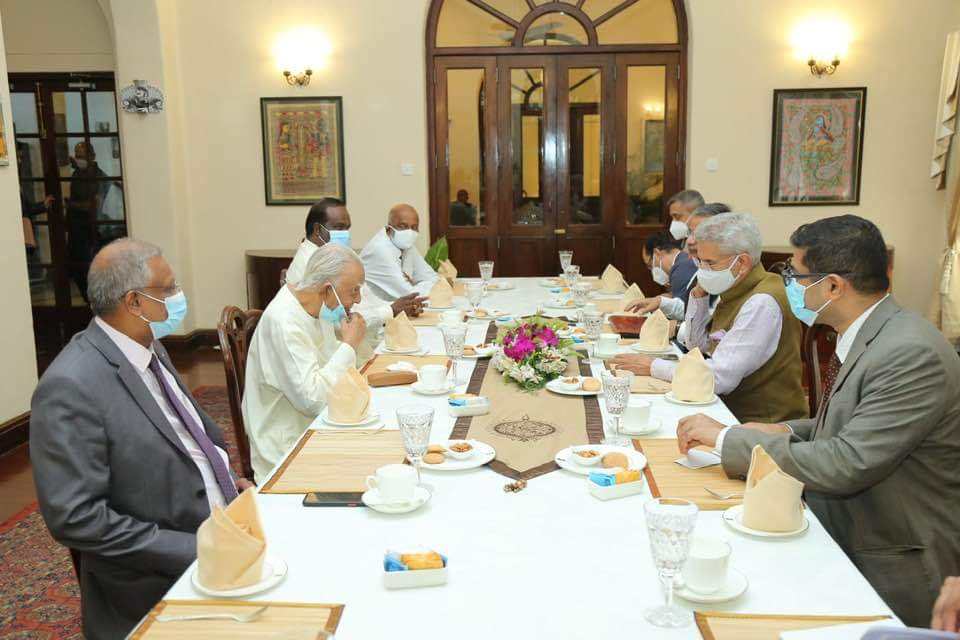
The Indian High Commission said it did not want to comment on Finance Minister Rajapaksa’s visit as it was not formally announced that he was to visit New Delhi for a one billion dollar loan facility. Last week, however, the mission stated that the visit fixed for last week was rescheduled as Foreign Affairs Minister S. Jaishankar had to urgently visit Paris on official business.

Mr. Jaishankar was earlier due in Colombo on March 18, but the high commission remained tight-lipped on the visit taking place.

Political rumblings: Sixteen Government MPs to go independent

Sixteen parliamentarians from 10 political parties which form the governing alliance plan to sit independently in the House from next week, The Sunday Morning reliably learns.

The decision to sit independently was reached during a 10-party party leaders’ meeting held last Friday (4), a leader of a dissident group told The Sunday Morning.

Accordingly, the group of 16 will sit separately from the Government MPs, but will remain on the Government side of the House.

It is also learnt that the Sri Lanka Freedom Party (SLFP), which has been raising a dissenting voice over the last year, will not join this move.

The move comes in the wake of last week’s Cabinet reshuffle, where President Gotabaya Rajapaksa sacked two key Cabinet Ministers – National Freedom Front (NFF) Leader Wimal Weerawansa and Pivithuru Hela Urumaya (PHU) Leader Udaya Gammanpila – who had criticised Government policies and called for a change in policy direction to avert a further crisis.

Posted in Uncategorized

GL slams UNHRC report, but friendly countries say Lanka missed opportunity to brief members

The ‘interactive dialogue’ on Sri Lanka at the Human Rights Council in Geneva will end on Monday and the focus will then shift to its sessions in September when a new resolution is likely.

Monday’s continuation for less than an hour is the result of the Council making provision for an urgent debate on the Russian invasion of Ukraine.

UN Human Rights High Commissioner Michele Bachelet, who commented on her report on Sri Lanka that was released earlier, said “the past year has seen further obstruction and setbacks to accountability. Victims and their families continue to be denied truth and justice.”

The session on Sri Lanka was delayed and resultantly shortened. It was the because of the Council conducting an urgent debate on the situation in Ukraine.

Foreign Minister, G.L. Peiris, made a scathing attack saying that

the “so called evidence gathering mechanism” is deeply flawed procedure and unacceptable. He said that the Report on Sri Lanka is “intolerably intrusive character, impinging as it does no core functions and responsibilities of organs of Sri Lankan state, overwhelmingly mandated by the people at successive elections.”

In making those highly critical remarks, Foreign Minister Peiris has overlooked the fact that the Human Rights High Commissioner is only carrying out a mandate given to her by the Human Rights Council.

Diplomats from countries friendly with Sri Lanka said that the opportunity could have been better used to brief member, observer countries and NGOs who are drivers of the action against Sri Lanka. “This approach will make it difficult to help Sri Lanka. For instance, the EU countries awaited a briefing on amendments to the Prevention of Terrorism Act (PTA) with the future of GSP plus hanging in the balance,” said one diplomat.

A statement on behalf of the core group was made by Rita French, United Kingdom’s Global Ambassador for Human Rights and Deputy Permanent Representative to the United Nations. She expressed concern that surveillance and intimidation of civil society members and journalists continues.

The core group is made up of Canada, Germany, North Montenegro, Malawi, Montenegro, United Kingdom, and the United States.

India tells Lanka: Address “legitimate aspirations of Tamils”

India’s Permanent Representative to the United Nations in Geneva this week called on Sri Lanka to address the “legitimate aspirations of the Tamil community” in Sri Lanka.

The envoy, Indra Mani Pandey, did not elaborate what they were, except to say they included carrying forward the process of reconciliation and implementing the 13th Amendment to the Constitution.

“India believes it is in Sri Lanka’s own interest that the expectations of Tamils in Sri Lanka for equality, justice, peace and dignity, within a united Sri Lanka are fulfilled,” Mr. Pandey added.

The Indian delegation supported the UN High Commissioner’s report saying; “The report raises important concerns on promoting, reconciliation, accountability, and human rights in Sri Lanka”. India also called for early Provincial Council elections in Sri Lanka.

Rajapaksa Govt drops to 10% approval rating in Verité poll

The government of Sri Lankan President Gotabaya Rajapaksa has a meagre 10% approval rating little over 2 years into his term, according to a poll by Verité Research.

The Colombo based think-tank recently launched a Gallup style “Mood of the Nation” poll in Sri Lanka to assess approval, satisfaction and confidence in relation to the government, the country and the economy.

Gallup is the most reputed polling organisation in the world. It runs a regular “Mood of the Nation” poll in the United States. Accordingly, Verité Research has adapted that same poll and scoring methodology to follow the pulse of the people in Sri Lanka.

The poll is based on an island wide nationally representative sample of responses from 1,021 Sri Lankan adults, conducted in January 2022. The sample and methodology were designed to ensure a maximum error margin of under 3% at a 95% confidence interval. The polling partner was Vanguard Survey (Pvt) Ltd.

Government approval rating | 10%

To the question, “Do you approve or disapprove of the way the current government is working?” only 10% said they approve.

Sri Lanka satisfaction | 6%

To the question, “In general, are you satisfied or dissatisfied with the way things are going in Sri Lanka?” only 6% said they were satisfied.

Economic confidence | negative (-) 82.96

Multiple choice questions on the condition and trajectory of the economy are used to generate an economic confidence score. The score can range from negative (-) 100 to positive (+) 100. A score above zero means more people see the economic conditions positively rather than negatively.

If everyone thinks the economy is in either excellent or good conditions, and everyone also thinks it is getting better the score will be positive (+) 100. If everyone thinks that the economy is in a poor condition, and everyone also thinks it is getting worse, the score will be a negative (-) 100.

The score is a negative (-) 83 because the average of those who thought the economy was in a poor condition, and those who thought it was getting worse, was 83%.

Posted in Uncategorized

Take necessary steps to address Tamil aspirations, India urges Sri Lanka

India on Friday called upon Sri Lanka to take “necessary steps” to address the “legitimate aspirations” of the Tamil community, while reiterating its earlier stance that it is in Sri Lanka’s “own interest that the expectations of Tamils in Sri Lanka for equality, justice, peace and dignity, within a united Sri Lanka, are fulfilled”.

Delivering a statement in the interactive dialogue segment on the U.N. Human Rights chief’s latest report on Sri Lanka, Ambassador Indramani Pandey, Permanent Representative of India told the Human Rights Council in Geneva that, “As its friend and immediate neighbour, India has consistently called upon Sri Lanka to fulfil its commitments on addressing the issues related to protecting the interest of Tamils in Sri Lanka.” While making a similar intervention last year, India abstained from voting on the resolution on Sri Lanka. There is no resolution or vote on Sri Lanka this year.

Calling for continued engagement by the Government of Sri Lanka with the international community, India on Friday noted that High Commissioner Michelle Bachelet’s recent report raises “important concerns” on promoting, reconciliation, accountability and human rights in Sri Lanka.

The written report, among other observations, highlighted “setbacks to accountability for past human rights violations and the recognition of victims’ rights”, and the failure of transitional justice mechanisms to win the confidence of victims affected by the civil war that ended in 2009.

In her statement to the Council on Friday, Ms. Bachelet said, “Regrettably, the past year has also seen further obstruction and setbacks to accountability. Victims and their families continue to be denied truth and justice.”

“Two years after the expression of commitments to pursue an “inclusive, domestically designed and executed reconciliation and accountability process” before this Council, the Government has still not produced a credible roadmap on transitional justice towards accountability and reconciliation,” the High Commissioner noted, adding that “as long as impunity prevails, Sri Lanka will not achieve genuine reconciliation and sustainable peace”.

Tamil concerns

India’s statement in response focussed on long-pending concerns of Tamils and the need for power devolution. “We call upon Sri Lanka to take the necessary steps to address the legitimate aspirations of the Tamil community, including by carrying forward the process of reconciliation and the implementation of the 13th Amendment to the Constitution of Sri Lanka, to ensure that the fundamental freedoms and human rights of all its citizens are fully protected,” Ambassador Pandey said. India would “continue to urge” the Sri Lankan Government for the early conduct of elections to the Provincial Councils in keeping with its commitment to devolution of power, he said.

What is the 13th Amendment to the Sri Lankan Constitution, and why is it contentious?

The five-year terms of all nine Provincial Councils in Sri Lanka expired in 2018 and 2019. There is no official word on provincial polls from the Government, which is cash-strapped and growing increasingly unpopular in the wake of an unprecedented economic crisis, reflecting in fuel shortage and prolonged power cuts.

Thrust on 13 A and provincial polls

India’s emphasis on the 13th Amendment, which followed the Indo-Lanka Accord of 1987 and assured a measure of devolution, comes weeks after senior Tamil parliamentarians wrote to Prime Minister Narendra Modi, seeking his intervention in securing a durable political solution for Sri Lanka’s historic Tamil question.

Significantly, the signatories to the letter pointed to limits of the 13th Amendment, especially within a Unitary Constitution, and underscored their commitment to a political solution that goes beyond the Amendment, and is based on a federal structure that recognises Tamils’ “right to self-determination”.

Posted in Uncategorized

No more Chinese loans?

The Government of China is seriously considering refraining from granting any more loans to Sri Lanka, informed sources revealed.

A high level group of Chinese Government officials, who are currently in Colombo, had reportedly conveyed this decision to a few top officials in the Government.

It is stated that Beijing had decided to abstain from granting loans or aid to Colombo due to two reasons. One of the main issues is said to be the problems that had cropped up in connection with the construction of the third phase of the Central Highway.

The second reason is the controversial Chinese fertiliser vessel that had been sent back from Colombo after its arrival here. It is reported that China had granted loans to Sri Lanka amounting to US$ 16 billion.

Posted in Uncategorized

Tamil Political Parties in Sri Lanka Jointly Call for Referendum for Permanent Political Solution to the Ethnic Conflict

Five main Tamil political parties from Sri Lanka have jointly wrote a letter to UN High Commissioner for Human Rights Michelle Bachelet calling for “Referendum as the only way to bring permanent political solution to the ethnic conflict, thereby stopping mass atrocities against the Tamil people.”

“We would like to point out that repeated mass killings of Tamils amounting to genocide is due to lack of permanent political solution to the protracted ethic conflict in Sri Lanka. We strongly feel that an internationally conducted and monitored referendum is the only way to bring permanent political solution to the ethnic conflict, thereby stopping mass atrocities against the Tamil people.” said the letter.

The letter appreciated High Commissioner’s Report to the UN Human Rights Council on Jan 12, 2021 referring to accountability as:
“Member states have a number of options to advance criminal accountability and provide measures of redress for victims. In addition to taking steps towards the referral of the situation in Sri Lanka to the International Criminal Court….”

In addition to calling for Referendum, the letter also appealed the High Commissioner to:
“take decisive steps to stop government sponsored Sinhala – Buddhist settlements in Tamil areas, to stop demarcation of divisional boundaries to incorporate Sinhala – Buddhist areas into Tamil districts and to reduce the overwhelming Sri Lankan military presence in Tamil areas even after the war ended over twelve years ago.”

The letter also highlighted the continued abuses faced by the Tamil people as:
* Suffering Tamil women continue to face numerous challenges in their life since the war ended. International Truth and Justice Project (ITJP) in February 2017 handed over details to UN of Sri Lankan Military run “Rape Camps”, where Tamil women are being held as “sex slaves”.
* According to UK Foreign and Commonwealth Office report in April 2013, there are over 90 thousand Tamil war widows in the North and East of Sri Lanka.
* Thousands of Tamils had disappeared, including babies and children. UN Working Group on Enforced Disappearances stated in 2020 that the second highest number of enforced disappearance cases in the world is from Sri Lanka. Families of the disappeared who seek their loved ones are harassed, threatened and intimidated by the Terrorist Investigation Department (TID), Criminal Investigation Department (CID) and other Government intelligence agencies. Peaceful protests of these families face numerous challenges.

This letter was written ahead of UN Human Rights Council Session currently taking place in Geneva. High Commissioner will table a report on Sri Lanka during this Session.

** BELOW, PLEASE FIND THE FULL LETTER:

February 25, 2022

Honourable Michelle Bachelet
UN High Commissioner for Human Rights
Geneva

Dear Madam High Commissioner!

As you are preparing to deliver a written update to the UN Human Rights Council about Sri Lanka, we, from the Tamil political parties in Sri Lanka wish to bring to your kind attention our assessment of the situation of Tamils since the adoption of UN Resolution 46/1 in March 2021.

We also want to express our appreciation for your below report on Sri Lanka on Jan 12, 2021 referring accountability as:

“Member states have a number of options to advance criminal accountability and provide measures of redress for victims. In addition to taking steps towards the referral of the situation in Sri Lanka to the International Criminal Court, Member States can actively pursue investigation and prosecution of international crimes committed by all parties in Sri Lanka before their own national courts, including under the principles of extraterritorial or universal jurisdiction. The High Commissioner encourages Member States to work with OHCHR, victims and their representatives to promote such avenues for accountability, including through opening investigations into possible international crimes, and to support a dedicated capacity to advance these efforts. Member States can also apply targeted sanctions, such as asset freezes and travel bans against State officials and other actors credibly alleged to have committed or be responsible for grave human rights violations or abuses, as well as support initiatives that provide practical benefits to victims and their families.” https://undocs.org/A/HRC/46/20

We also would like to bring to your kind attention an open letter from 20 former high-level UN officials on February 18, 2021. The signatories included all four former UN High Commissioners for Human Rights – four former high officials of the UN, nine former Special Rapporteurs who had visited and written reports on Sri Lanka, and, all three members of the Secretary-General’s Panel of Experts on Sri Lanka.

As the signatories noted, “The recently released report on Sri Lanka by UN High Commissioner for Human Rights underlines, yet again, the country’s lack of progress on justice and accountability. Based largely on an analysis of emerging trends, it makes a compelling case for decisive international action to ensure justice and accountability for mass human rights violations and atrocities in Sri Lanka as a central element of the search for sustained
reconciliation and the prevention of the recurrence of rights abuses and conflict.” They concluded, “Given the continued reluctance of the Sri Lankan Government to meaningfully uphold the human rights of all, only decisive, international action to ensure justice and accountability can interrupt Sri Lanka’s periodic cycles of violence. https://chrgi.org/wp-content/uploads/2021/02/Sowing-the-Seeds-of-Conflict.pdf

During the last six months, there was continued impunity for violations committed during the war that ended in 2009 and the government ignored repeated UN Human Rights Council Resolutions calling for justice and accountability. As such, justice stalled and impunity prevailed. Tamil victim groups, Human rights defenders, Civil society leaders, Journalists and others were increasingly intimidated and harassed by Sri Lankan authorities. Increased use of Covid-19 restrictions and counter-terror laws by the Sri Lankan law enforcement authorities restrict the space for peaceful protests while discrimination against and marginalization of the Tamil people continues.

Under the guise of “development projects,” government – driven Sinhalese – Buddhist colonization (settlements) is growing in traditional Tamil areas with the intent to change the demography, disturb the contiguity of the North East Tamil speaking areas and deny Tamil people access to their lands. Several government departments, including the Mahaweli Authority, Archaeological Department, Forest Department, and Wildlife Department are deployed in this initiative. This encroachment is facilitated by the overwhelming presence of the Sri Lankan military which is comprised almost exclusively of Sinhala – Buddhist persons. The present ethnocratic government is bent on disturbing the demography of the North and East areas and plant Sinhala settlements within predominantly Tamil speaking areas.

We also wish to bring to your attention that Sri Lankan government is also engaged in a program of demarcation of divisional boundaries to incorporate Sinhala – Buddhist into Tamil districts, thereby increasing the Sinhala – Buddhist population in the Tamil areas.

Suffering Tamil women continue to face numerous challenges in their life since the war ended. International Truth and Justice Project (ITJP) in February 2017 handed over details to UN of Sri Lankan Military run “Rape Camps”, where Tamil women are being held as “sex slaves”. Also, according to UK Foreign and Commonwealth Office report in April 2013, there are over 90 thousand Tamil war widows in the North and East of Sri Lanka. Thousands of Tamils had disappeared, including babies and children. UN Working Group on Enforced Disappearances stated in 2020 that the second highest number of enforced disappearance cases in the world is from Sri Lanka. Families of the disappeared who seek their loved ones are harassed, threatened and intimidated by the Terrorist Investigation Department (TID), Criminal Investigation Department (CID) and other Government intelligence agencies. Peaceful protests of these families face numerous challenges.

Despite numerous appeals and Resolutions by the UN Human Rights Council, Sri Lanka continues to use draconian Prevention of Terrorism Act (PTA). While numerous Tamil political prisoners are imprisoned for years without charge or trial or convicted after unfair trials, not a single member of the Sri Lankan security forces was arrested or charged for committing atrocity crimes against Tamils. It is pertinent to mention that members of the security forces have been released from their convictions or charges of crimes by the current Government.

We would like to point out that repeated mass killings of Tamils amounting to genocide is due to lack of permanent political solution to the protracted ethic conflict in Sri Lanka. We strongly feel that an internationally conducted and monitored referendum is the only way to bring permanent political solution to the ethnic conflict, thereby stopping mass atrocities against the Tamil people.

We appeal to you to take decisive steps to stop government sponsored Sinhala – Buddhist settlements in Tamil areas, to stop demarcation of divisional boundaries to incorporate Sinhala – Buddhist areas into Tamil districts and to reduce the overwhelming Sri Lankan military presence in Tamil areas even after the war ended over twelve years ago. We also appeal to you to strongly consider calling for a referendum to prevent further atrocity crimes against Tamil people.

We submit these facts for your kind attention, consideration and necessary action and to support your commitment and untiring efforts to ensure justice to the Tamil people of Sri Lanka.

Thanking you, Sincerely

1) Hon. Justice C.V. Wigneswaran, MP Member of Parliament, Jaffna District.
Leader – Tamil Makkal Kootani (TMK) / Tamil Makkal Thesiya Kootani (TMTK)
No. 232, Temple Road, Nallur, Jaffna, Sri Lanka.
Tel: +94 21 221 4295 – Email: cvwoffice18@gmail.com

2) Hon. Selvam Adaikalanathan, MP Member of Parliament, Vanni District.
President – Tamil Eelam Liberation Organization (TELO) (TNA)
St. Sebastian Road, Mannar, Sri Lanka.
Tel: + 94 23 222 2100 – Email: selvamtelo@yahoo.com

3) Hon. Dharmalingam Sithadthan, MP Member of Parliament, Jaffna District.
Leader – Peoples Liberation Organization of Tamil Eelam (PLOTE) (TNA)
Kantharodai, Chunnakam, Jaffna, Sri Lanka.
Tel: +94 11 258 6289 – Email: sithadthan@gmail.com

4) Mr. Kandiah Premachandran, Former Member of Parliament, Jaffna District
President – Eelam People’s Revolutionary Liberation Front (EPRLF) (TMTK)
Kattappiriai, Irupaalai, Jaffna, Sri Lanka.
Email: akpchandran@gmail.com

5) Mr. Nallathamby Srikantha, Former member of Parliament, Jaffna District
Leader – Tamil National Party (TNP) (TMTK)
138A. Pointpedro Road, Aanaipanthi, Jaffna, Sri Lanka.
Email: nsrikanthampsl@gmail.com

Posted in Uncategorized

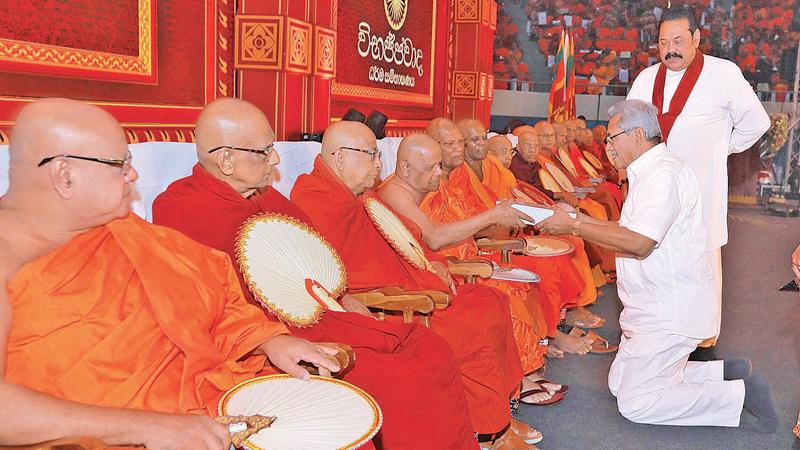
Wimal and Gammanpila removed from minister posts

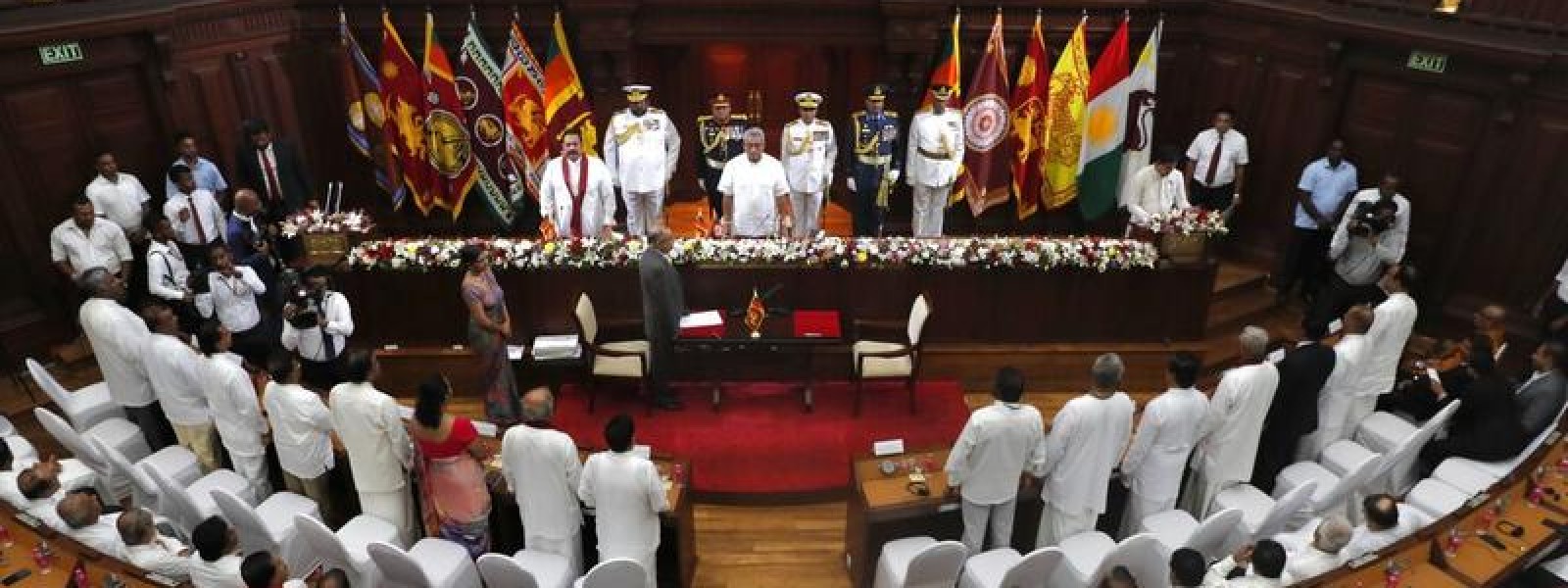
Ministers Wimal Weerawansa and Udaya Gammanpila have been removed from their respective ministerial portfolios by President Gotabaya Rajapaksa.

The President’s Media Division said that under the powers vested in him by the Constitution, the President has removed the two MPs from their Cabinet minister posts with effect from this evening (03).

This was followed by the reshuffling of several ministerial positions.

Gamini Lokuge was sworn in as the Minister of Energy while Pavithra Wanniarachchi was sworn in as the Minister of Power before the President this evening at the Presidential Secretariat, the PMD said.

Secretary to the President Gamni Senarath was also present on this occasion.

Meanwhile SLPP Member of Parliament S.B. Dissanayake has been sworn in as the new Minister of Industries, the position held by MP Wimal Weerawansa.

PHU leader Udaya Gammanpila has served as the Minister of Energy while NFF leader Wimal Weerawansa served as Minister of Industries.

It was reported earlier today that the President has decided to reshuffle several key Cabinet positions.

Minister Gamini Lokuge had confirmed that he was sworn in as the new Minister of Energy, the position previously held by MP Udaya Gammanpila.

The minister revealed this while speaking to reporters outside the Presidential Secretariat in Colombo his evening, following the sudden Cabinet reshuffle.

Minister Lokuge also said that Pavithra Wanniarachchi, who was serving as the Transport Minister, was sworn in as the new Minister of Power, the post previously held by him.

Ukraine Crisis Risks Pushing Sri Lanka Closer Toward Default -Bloomberg

With Covid shutting off tourism from much of the West, Russia and Ukraine had become an increasingly important source of foreign currency for Sri Lanka. The conflict threatens to turn off that tap as key bond repayments come due.

Almost a quarter of all tourist arrivals into Sri Lanka this year were from Russia and Ukraine — rising to 30% if you include Poland and Belarus, official data show. Russia, which was the third-biggest buyer of Sri Lankan tea over the past two years, rose to second place in January.

While detailed breakups on spending aren’t yet available, tourism and tea earned Sri Lanka more than $260 million in foreign currency this year. Every dollar is important because the nation’s overall FX reserves fell 25% to $2.36 billion in January. Sri Lanka looks set to face a funding requirement of $5.7 billion in 2022, including the money needed to plug the current account deficit, according to estimates from Bloomberg Economics.

Much of the reserves stockpile comprises bilateral aid such as swap lines from China and India, and Sri Lanka was looking to boost non-debt flows. The island nation is already running Asia’s fastest inflation, and foreign investors are concerned that if Sri Lanka doesn’t restructure its overseas debt or devalue the rupee that is currently pegged to the dollar, it could miss repayments such as on a bond maturing in July.

“Balance of payments is the main issue, reserves are dwindling, the currency isn’t being allowed to adjust and if they avoid raising fuel prices then losses at the state-owned enterprises will mount,” said Kenneth Akintewe, head of Asian sovereign debt at abrdn. “Securing some source of foreign funding is even more urgently required now, but given the risk of fairly imminent default, that is easier said than done.”

The 5.875% bond maturing in July fell one cent to 74 cents on the dollar Monday, the lowest in more than a month. The 7.55% 2030 note dropped three cents over the past week to a record low of 46 cents on the dollar.

Sri Lanka’s policy makers have reiterated that they are seeking to refinance rather than restructure the notes. “We hope the conflict won’t escalate,” Central Bank of Sri Lanka Governor Ajith Nivard Cabraal said by phone Monday, adding that the authority was assessing the situation. He didn’t elaborate.

What Bloomberg Economics Says…

“Russia’s invasion of Ukraine has increased the probability that Sri Lanka could default on its dollar-denominated debt. This raises the urgency for Sri Lanka to seek assistance from the International Monetary Fund”

The Ukraine tensions have already “badly affected the Sri Lankan economy” and local oil prices may need to go up in time, Cabinet spokesman Ramesh Pathirana said last week.

Buyers from Russia have warned of “affordability issues” because of the steep depreciation of the ruble, said Dinesh Fernando, chief operating officer of Ceylon Tea Brokers Plc in Colombo. A few Ukrainian buyers have also told exporters to hold shipments until further notice, he said.

The impact on prices would be seen at the auctions later this week, Fernando added.

The ruble was indicated 29% lower versus the dollar in offshore trading on Monday after President Vladimir Putin put the nation’s nuclear forces on higher alert as the U.S. and European allies announced plans to sanction Moscow’s central bank and cut off some Russian banks from the SWIFT financial messaging system.

“After the pandemic, Central Europe has been a major source of arrivals, especially from Ukraine and Russia,” said M. Shanthikumar, president of the Hotel Association of Sri Lanka. “Obviously that will now not happen because of the conflict,” he said, adding that there had been cancellations from these destinations.

The government will report February inflation data later Monday, with analysts expecting an up tick in prices to 14.6%, stoked by crop failures on top of import restrictions to conserve dollars and high global prices of key commodities.

Ukrainian tourists visiting Sri Lanka request extended stay

Ukrainian tourists visiting Sri Lanka have been severely inconvenienced by the current Russian-Ukrainian crisis.

As a result of this issue, they are currently resorted to staying at hotels in Bettota area and are unable to travel to their home country.

They are requesting that they be allowed to remain in Sri Lanka until the war situation in Ukraine is resolved.

The war in Ukraine has resulted in 198 people being killed with 3 of them being children and 1,115 wounded, with 33 of them being children.

Posted in Uncategorized