Basil’s visit to India postponed

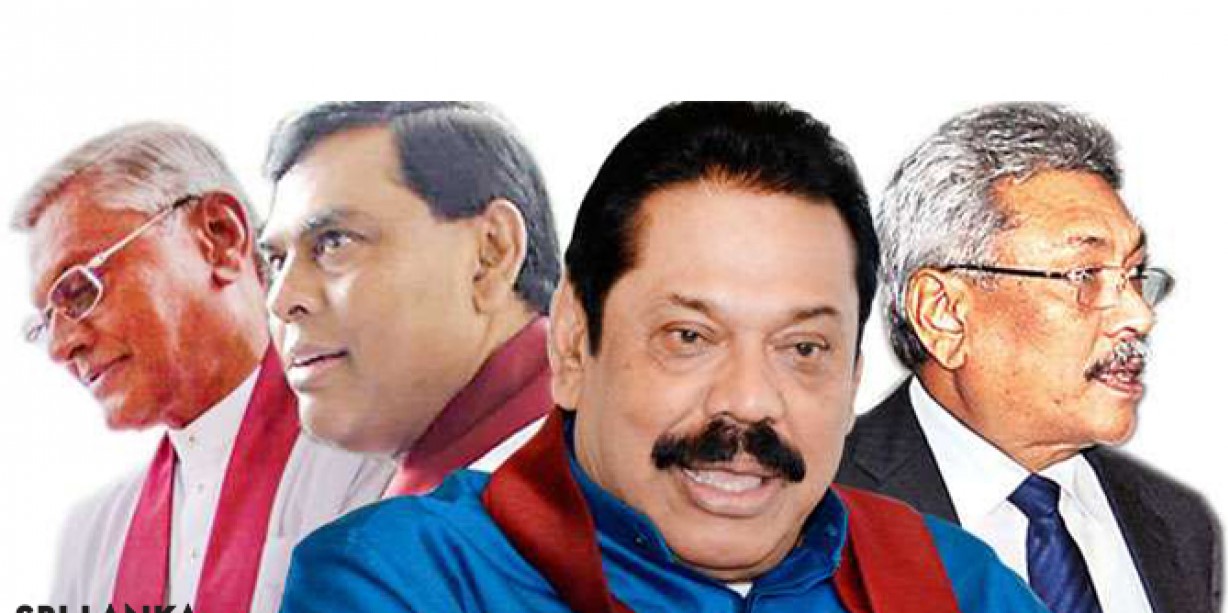
Finance Minister Basil Rajapaksa’s visit to India has been postponed, Daily Mirror learns.

The Minister was supposed to land in New Delhi today for meetings with his Indian counterpart Nirmala Sitharaman and External Affairs Minister Dr. S. Jaishankar to finalise on financial cooperation for Sri Lanka, to secure supplies of essential foods and fuel in the midst of the foreign exchange crisis.

According to informed sources, the visit will be rescheduled for a future date shortly.

India has already offered US $ 500 million credit line for fuel and US $ 1 billion facility for the import of food items and pharmaceuticals.

Posted in Uncategorized

Foreign Secy Slams Bachelet’s Decision By Sulochana Ramiah Mhhan

Foreign Secretary Admiral Jayanath Colombage slammed UN High Commissioner for Human Rights Michelle Bachelet’s new report, which claims the UN has decided to set up an evidence-gathering mechanism for Sri Lanka.

Bachelet stated in her report that her office has decided to open an office in Sri Lanka for evidence collection, and that her office has begun implementing the aspects of Resolution 46/1, with a start-up team carrying out preparatory work since April 2021.

“We are not going to allow that to be operating in Sri Lanka,” he said adding that this mechanism run by outsiders will not be allowed in Sri Lanka.

“It’s against the UN mandate, and the United Nations Human Rights Commission has no entitlement to run an evidence gathering mechanism in other countries,” he stressed.

Colombage asserted that since a domestic mechanism is taking shape and the process is on-going, Sri Lanka cannot allow another parallel mechanism introduced from outside and that would never occur.

He pointed out that this matter has been explained clearly to the Rights Chief. “We will do everything locally and no international mechanism of that nature will be allowed,” he reiterated.

He recalled how the 2015, the Government of the time had co-sponsored a hybrid mechanism to probe war crimes allegations, agreed and tried to allow foreign judges to set up a special Court in Sri Lanka. But such mechanism was also rejected then and that will never be allowed too, he reiterated.

He also said this Government is ready to face the UNHRC session and challenge what comes may. The UNHRC raised various allegations related to human rights on Sri Lanka, adding that however, about 95 per cent of matters are related to domestic politics and affairs. “We have a Parliament, a Cabinet, a President elected by the people and we are a democratically elected Government. There is no dictatorship or a military run government in Sri Lanka, so the country has the right to take decisions on the behest of the elected government and the people of the country. But when the very domestic policies are being questioned by the UNHRC, a conflict erupts. We have clearly stated to the UNHRC Commissioner, that a country’s internal or domestic affairs cannot be challenged by the UNHRC and it has no relevance to her Office.

Sri Lanka Tamil MPs protest outside president’s office over land issue

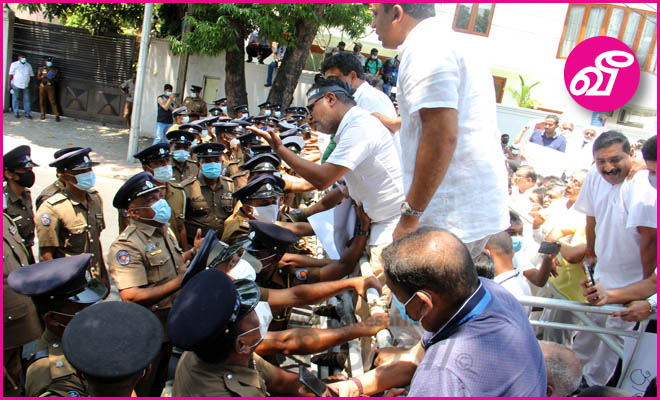
Nearly 13 Members of Parliament (MPs) representing the Tamil-speaking people held a protest in front of the Presidential Secretariat in Colombo Thursday (24) morning (24), demanding an audience with President Gotabaya Rajapaksa to raise issues about land grabbing occurring in the Northern and Eastern Provinces.

Today, 13 MPs TELO,ITAK,TNPF and TMTK are holding a protest in front of the Presidential Secretariat. We heard from our sources that the President is due to be at the Secretariat today. We have raised our land-related issues in Parliament on a number of occasions and have held protests in a number of places. However, this issue still has not been resolved.

“I told the official that we’re not a trade union or association. There are 13 MPs here who were elected by the people, with over 1.5 million votes between us all. The president and the secretaries must remember that we represent 1.5 million people,” said Rasamanickam.

In a statement issued Wednesday morning, the president’s media division said an appointment had been given to the Tamil MPs who had, instead of meeting him, had held a protest outside the president’s office.

He explained that the Sri Lanka Mahaweli Authority is distributing traditional cattle grazing land in the Eastern Province and that farmers from traditional farmlands are being evicted by the Forest Department. “Recently, we saw a Sri Lanka Podujana Peramuna (SLPP) Government MP taking some rocks belonging to the Archaeology Department from the North and the East. In the name of archaeology, even Hindu shrines have been removed and thrown away,” he added.

Rasamanickam said that yesterday, an official at the Presidential Secretariat had advised them to hand over a letter with their grievances but that a meeting with the President could only be given at a later date.

“We are not trade unions (TUs) or a village committee. We are MPs elected by the people. If you count the total votes that the 13 of us have obtained, it comes up to about 1.5 million votes. The President should remember that we are the people’s leaders of nearly 1.5 million people,” noted Rasamanickam.

Thamil Makkal Thesiya Kuttani Leader and MP C.V. Wigneswaran, who was also present at the protest, said that in recent times, a “lie is being spread that traditional Sinhala Buddhist lands have been taken by Tamils.”

“You kicked our Tamil people out in 1958 and 1983,” added Wigneswaran.

“We have repeatedly informed parliament and held protests in the north and east about this problem. No solutions have been provided. In fact, the problem has actually worsened,” he said.

The MP claimed that the ruling Sri Lanka Podujana Peramuna (SLPP) has been unlawfully distributing land held by the people of the north and east. The Mahawelia Authority has distributed acres of land that people in the Eastern province have used for cattle grazing.

“People have suddenly been asked to evict lands where they had been growing cowpea, green grams at small scale for 50, 60 years, with the claim that it’s land belonging to the Forest Department,” he said.

The 13th Amendment and the Tamil Polity – A pragmatic approach-Dr Nirmala Chandrahasan

There is much speculation in the Tamil political circles as to the usefulness or otherwise of the 13th Amendment to the Constitution and whether the Provincial Council system set up under its aegis gives a measure of power sharing or devolution of powers to the Tamil speaking provinces, or whether it is an ineffective institution which blocks out any greater devolution under the exercise of internal self- determination. This debate has been sparked by the decision of Tamil speaking parties including the TNA, to send a letter to the Prime minister of India Shri Narendra Mody, requesting him to use his good offices to induce the Government of Sri Lanka to implement the 13th Amendment fully, in the context that the 13th Amendment arose out of the provisions of the Indo -Sri Lanka Peace Accord of July 1987, to which treaty India and Sir Lanka are signatories. The letter was duly signed by six Tamil party leaders and handed over to the Indian high Commissioner, triggering some protests by those opposing the 13th Amendment. This debate takes on even greater urgency in the context of the impending new constitutional proposals of the Experts Committee appointed by the Gotabaya Government to be tabled in Parliament shortly.

In order to determine which is the better view we have to take a look at the provisions of the 13th Amendment and the workings of the Provincial Councils set up under them, which have been in operation from 1988 onwards in most parts of the Country. Although the PCs as originally envisaged were intended to be set up for the amalgamated Northern and Eastern provinces, to give expression to the long standing demand of the Tamil speaking people since independence, for devolution and power sharing within a Federal framework, it was extended to the Sinhala majority provinces as well although there had been no demand for them in these provinces.

The first Provincial Council elections were held in April 1988 for the North Central, North Western, Sabragamuva and Uva provinces, and subsequently for the other provinces. In September 1988 the Northern and Eastern provinces were made one administrative unit in accordance with the provisions of the Indo -Sri Lanka Treaty, and in November 1988 elections were held for the North East Provincial Council. In 1990 the PC was dissolved. Thereafter the North East Province was directly administered by the Central government. During the civil war it was not possible to hold PC elections In the northern and eastern parts of the Country. In 2006 pursuant to a Court decision the two provinces were separated.

It was only in May 2008 that the Eastern province, Provincial Council election was held. Subsequently after the termination of the war in the north, the Northern province, Provincial Council election was held on 21st September 2013. We can see that this institution has been operating over a long period of time but during this long period certain sections of the 13th Amendment dealing with the powers conferred on the Provincial Councils, set out in the 3 Appendixes to the 9th Schedule of List 1 Provincial Council List, are yet to be activated and are in abeyance. These Appendixes deal with the following subjects; Appendix 1, law and order which has to do mainly with Police powers and institution of a Provincial Division of the Police Force alongside the National Division of the Force. Appendix 11 Land and land settlement, and Appendix 111 Education.

Apart from the above, the Provincial Council exercises powers in respect of the subjects assigned to it, over which it has both legislative and executive powers. The subjects assigned to the Province and set out in the provincial List, List 1 include interalia Provincial housing and construction, Agriculture and Agrarian services ,Rural development ,health, land, Irrigation, Roads bridges and ferries within the Province, Planning,and Plan implementation of Provincial economic plans ,Educational services, and supervision and administration of Local Government Authorities. The List even includes Ancient and historical monuments other than those declared to be of national importance. I mention this in the context of the Archaeological explorations being made in the northern and eastern provinces by the recently appointed task force on Archeology without any representation from the Tamil and Muslim communities.

There is also a concurrent List , List 111, over which both the Provincial Council and the Centre can exercise powers, these include planning and appraisal of plan implementation strategies at the provincial level, education and educational services, higher education, agriculture and agrarian services, health, irrigation, Tourism etc. In these areas there can be overlapping powers and hence disputes. The Provincial Council can pass statutes and exercise executive powers in respect of the subjects set out in the Provincial and Concurrent Lists. These powers are largely based on the powers conferred on the States in the Indian Constitution part VI. The States in India are running efficiently and providing the people with the services that they need.

Tamil Nadu for example is recognized as having a very efficient administration presently under the Chief -Minister M.K Stalin. The question has to be posed as to why the Provincial Council system in Sri Lanka is generally regarded as a white elephant and as not effective in providing services to the people. For this we must examine the road blocks in the system and make the necessary adjustments, rather than just dismantling the entire system, and throwing the baby away with the bath water so to speak.

An appraisal of the workings show that most of the stumbling blocks to the smooth functioning of the Provincial Councils are as a result of the provisions of the Provincial Councils Act no 42 of 1987, which was passed alongside the 13th Amendment. Under this Act the Governor is given powers over the finances of the PCs and is given control of the Provincial Public service as well as the Provincial Public Service commission. The 13th Amendment provides that the executive power of the Provincial Council is vested in the Governor and he acts through the Board of ministers or through members of the provincial public service. The Chief Minister and the Board of Ministers aid and advise the Governor in the exercise of his functions and the Governor Shall act in accordance with the advice except where he is required under the Constitution to exercise his discretion.

In the Indian Constitution similarly in respect of the States ,the executive power is vested in the Governor but as in the Westminster scheme of governance the Governor acts on the advice of the Chief Ministers and is a nominal head .On the other hand in Sri Lanka we find many instances of Governors exercising these powers like executive heads and not as nominal heads, particularly in the Tamil majority provinces and not so much in the Sinhalese majority provinces.

The Governors stranglehold over the functioning of the PCs is most clearly demonstrated in his power over the finances of the province. To run the PCs money is required and this is where the Councils have been most hamstrung as the Provincial Councils Act gives the Governor controlling power over the finances of the Province. The custody of the Provincial Fund is with the Governor. The PC cannot pass any statute imposing or abolishing taxes without the consent of the Governor. More over the constitutional framework severely limits the revenue raising capacity of the PCS, as pointed out in the Report of the Parliamentary subcommittee on Centre- Periphery relations of November 2016. Hence the PCs have to depend largely on Central grants for their funds.

Another area which needs to be redesigned is the Administrative system. To run the Provincial Councils effectively the Council requires control not only over its funds but also an effective administrative system and defined areas of competence. At present the District Secretary and the Divisional Secretary as well as the Grama Niladaris come under the Central Government These officers perform administrative functions within the territory of the province but without any control from the provincial administration. Also although the Local Authorities are under the supervisory control of the Provincial Councils as per the devolved List, most of the power at the local level remains with the Central Government.

For efficient administration of the province there has to be defined areas of competence. But in effect the Centre has been encroaching on the areas assigned to the provincial administration. The reserved List of the Centre List 11, starts with the Rubric” National policy on all subjects”. This has enabled the Centre to take over subjects which it designates as National. To remedy this, what is National policy or National standards should be laid down through a participatory process with the involvement of the Provinces culminating in framework legislation passed by Parliament to which both Centre and Provinces should adhere. This has been proposed in the Report of the Experts Committee on the Constitution,2006. Another matter which has to be amended is the Concurrent list. Here too it has been recommended that the List be eliminated and the relevant subjects be divided between the Centre and the Province, so that they each have defined areas.

In an article of this nature it is not possible to do a more in depth study but I have outlined what are the important issues to be addressed if the Provincial Councils are to provide meaningful Devolution. Some of the areas which need amendment are as follows. The Governors role has so far tended to be an obstruction to the functioning of the PCs. The Governor should continue as a nominal head and leave the running of PC to the elected representatives. This is also a recommendation of the Parliamentary subcommittee in its 2016 report.

Hence the Governor’s powers have to be pruned and the Provincial Councils Act suitably amended. The revenue raising capacity of the PCs must be enhanced . It is suggested that they be given the power to obtain loans from foreign sources or at least have the power to administer projects financed by foreign aid. Another important issue is to put in place an administrative structure that can carry out the functions of the Provincial Council in services delivery to the people and for this the administration has to be redesigned so as to bring the District Secretary , the Divisional Secretary and the Grama Niladaris, under the Provincial administration while they still carry out agency services for the Centre. Furthermore although local Authorities are under the Authority of the PC, as per the devolved List, this provision is being undermined by the Centre using the Urban Development Authority (UDA), Mahaweli Authority and other Central bodies operating within the Province. Hence it must be mandated that such bodies operate within the Province only with the consent and in conjunction with the Provincial and Local Government Authorities. As for the powers in respect of Law and Order and Police powers contained in Appendix 1 of List 1 the 9th schedule , they could be transferred to those PCs which request them as for example in the case of the Northern Ireland Assembly in the UK , where these powers were initially with the Centre, but there was a provision that allowed them to be released on request. In 2010 they were transferred to the Assembly under the Hillsborough Agreement. Until such time as Appendix 1, comes to be activated other provisions can be put in place, such as a policy of recruiting a percentage of the Police cadre stationed in the northern and eastern provinces from these provinces and mandate that they have an O level pass in the Tamil language so that they could operate efficiently in the Tamil speaking areas. I would suggest some similar provision in respect of some areas in the Central provinces so that the upcountry Malayaha Tamils, are also benefited. It is submitted that the Appendix 11 on land be fully implemented as it is essential for the land security of these provinces that the utilization of state land as well as alienation of such land under Presidential order be done in consultation with, or advise of the Provincial Council . The provision in Appendix 11 on the constitution of a National Land Commission with members being appointed from all 3 communities should be carried out forthwith.

I would suggest that the Tamil parties take up the proposed reforms with the Government of Sri Lanka in a negotiated process. As the Government of India was the other party to the Indo Sri Lanka Treaty, India can legitimately demand that the obligations undertaken in the treaty be carried out and the provisions of 13 A be implemented fully so that meaningful devolution is assured to the Tamil speaking people whom the Treaty specifically denotes as the historical inhabitants of the northern and eastern provinces of Sri Lanka. In line with the UNHCR resolution the Sri Lankan Government should also hold the Provincial Council elections so that these institutions can be functioning and not in abeyance as they have been for some years. The Provincial Councils in the South will also benefit from the reforms proposed as it will provide the citizens of the entire Country a stream lined system which is a service provider to the people. I note that the President in his Budget speech has advised the Tamil parties to look to their peoples’ needs and concentrate on economic development of their areas. This can best be done when there is true democracy and the people are taken into the process of consultation as to the strategies for economic development and this is best done at the local level through the Provincial Councils, and local Government Authorities, rather than through bureaucrats sitting in Colombo who have no knowledge of the local conditions or the needs of the people. In my view the Province remains the best unit of devolution at present to serve the needs of the Tamil speaking people. It gives them some measure of autonomy in their traditional areas of inhabitancy. Similarly in the United kingdom which is a Unitary State, Scotland, Wales and Northern Ireland which are ethnically distinct have their own Legislative Assemblies, in the case of Scotland it is called a Parliament, and exercise similar powers to those set out in the 13th Amendment.

I would like to point out that all the major changes suggested in this article respecting the Governors powers, Financing of the Provincial Councils and the Re-designing of the Administrative system in the Provinces have been recommended in the following Reports: Report of the Experts Committee advising the APRC on Constitutional matters and resolution of the National Question 2006, the Report of the APRC( All party Representative Committee) on a new Home grown Constitution 2010, Report of the Parliamentary sub- committee on Centre -Periphery relations 2016 , presented to the Steering Committee of the Constitutional Assembly which was engaged in producing a new Constitution during the tenure of the previous government. In the circumstances the proposed new Constitution could incorporate these features and there is no need to reinvent the wheel. I would submit that the Provincial Council system can be an efficient and successful system if all the short comings referred to above are eliminated and the necessary amendments made. These changes will not require any major constitutional procedures, and can be accomplished by legislation in Parliament with a simple majority ,and the administrative changes by Presidential gazette notification under the provisions of the 13th Amendment itself.

*The writer was a member of the Experts Committee 2006, and a signatory to the Majority Report of this Committee.

Posted in Uncategorized

Hambantota Port to begin MGO Fuel Bunkering

Oil tanker ‘Sunny Bay’ carrying 15,000 metric tons of Marine Gas Oil (MGO), called at the Hambantota International Port (HIP) on the 23rd January.

The vessel was the first to discharge MGO for storage at the port’s tank farm.

HIP, with its global partner Sinopec, launched bunkering operations for VLSFO last year.

With the tank farm along with its oil jetties fully refurbished and FSS certified for safety by the Lloyd’s Register, HIP is ready to utilise the storage facility allocated for MGO and MDO (Marine Diesel Oil).

The port which received their first MGO shipment is now capable of providing a full complement of bunkering fuels to its customers, positioning as a strategic bunker operator in the region.

Benchmarking international standards, HIP has also set up a state of the art Petroleum Testing laboratory in partnership with leading global independent inspection service provider Intertek Lanka, to provide innovative and bespoke assurance, testing, inspection and certification services for bunker fuels, LPG, LNG and other petrochemical products.

The laboratory located within the port premises, is classified as a truly international facility capable of testing IMO 2020 global Sulphur protocol.

CEO of HIPG Johnson Liu says, “With our Lloyds certified oil storage facility and state of the art testing capabilities, HIP has the overall capacity to add great value to customers. With our location in the Indian Ocean rim, where 50% of the world’s maritime oil is traded, our oil fuel bunker, LPG and future LNG operations, we are securing the Hambantota Port’s rightful place as a global maritime location.”

The lab testing facility will enable HIP clients to get their products such as fuel oil, marine diesel and marine gas oils tested efficiently and with ease, at the bunker terminal site, ensuring that products meet the required international quality standards. The port’s dedicated professional team ensures safe operations of the oil tank network, ancillary pipelines, oil berth jetties, and control systems, which are on par with international standards. All supporting facilities for operational safety are in place such as a wholly functional firefighting system and wastewater treatment facility.

HIP’s location in close proximity to one of the busiest sea routes coupled with the port’s partnership with top global player Sinopec to provide IMO 2020 compliant high quality fuel oils, makes Sri Lanka’s energy market more competitive while benefiting Sri Lankan players supplying bunkers for vessels.

Once commenced HIP will cater to the second highest demand in the maritime industry. The MGO supplied by the port is of very high quality, compliant with ISO 8271 standard and can also be provided to overseas locations such as the Maldives, said a statement from the Hambantota International Port.

The Sinopec group, the port’s bunker partner, was ranked 2nd in the Fortune Global 500 list in 2020, and a global leader in the fields of oil exploration, production, refining, marketing, and distribution. The partnership between SINOPEC International Petroleum Services Corporation and HIPG, will not only benefit the two parties and their international clientele, but will boost the Sri Lankan oil and gas industry, which will see the highest standards in terms of quality, knowledge and expertise.

Posted in Uncategorized

Ceylon Electricity Board Chairman resigns

M.M.C. Ferdinando has resigned from the post of Chairman of the Ceylon Electricity Board, confirmed the Spokesperson for the CEB.

His resignation comes after Sri Lanka faced a serious issue on securing foreign exchange to procure fuel to be delivered to the Ceylon Electricity Board for electricity generation.,

Pakistan PM calls for optimal use of FTA with Sri Lanka

Pakistan Prime Minister Imran Khan has called increased bilateral trade relations between Pakistan and Sri Lanka through the optimal use of the free trade agreement (FTA) between the two countries, the Pakistan high commission in Colombo said.

Regular high-level exchanges must be made to strengthen bilateral relations, the high commission statement quoted Khan as saying.

The prime minister had made these remarks when ri Lanka’s Minister of Trade Bandula Gunawardhana and State Minister for Regional Cooperation Tharaka Balasuriya paid him a courtesy call on Tuesday (25).

Khan had also referred to the “strong cultural bond” between the two nations and expressed his hope that more Sri Lankans would visit Pakistan for religious tourism, considering the “rich Buddhist Heritage” of the country, the statement said.

The two Sri Lankan officials are in Pakistan along with a business delegation from January 20 to 27. They had previously met Pakistan’s Foreign Minister Shah Mahmood Qureshi.

According to the statement, Sri Lanka’s “growing need for international aid in areas including ICT, pharmaceuticals, minerals, textiles, education, defence, tourism, human resource development through B2B contacts, joint ventures, investments in high potential sectors and technology transfers etc” have been discussed at the two meetings.

According to data from 2020, Sri Lanka generated more than five times the number of exports than imports to and from Pakistan via free trade agreements, the statement said.

In August 2021, Sri Lanka’s cabinet of ministers approved a proposal to import 6,000 metric tons of rice into the island to deal with a rice shortage created by a ban on inorganic fertilizer. Currently, Pakistan is also Sri Lanka’s primary importer of betel, the statement said.

According to the high commission’s official website, the two countries are also looking to strengthen ties in the education field, and in 2021 the Pakistan Higher Education Commission announced the ‘Allama Iqbal Scholarships’ under the Pak-Sri Lanka Higher Education Cooperation Programme, providing 1000 Sri Lankan students with the opportunity to visit Pakistan and pursue undergraduate, postgraduate, and doctoral degree programs in Engineering Science, Basic and Natural Sciences, and Social Sciences over the next five years.

The scholarship was provided to promote “an effective exchange of knowledge and a better understanding of cultures and tradition between Sri Lankan and Pakistani students,” a report on the website said.

Sri Lanka has already drawn up new agreements in several sectors including education, transport, healthcare and infrastructure in 2022, with countries like the UK, Hungary and India. The latest trade delegation, headed by Gunawardhana, was to strengthen ties between Sri Lanka and Pakistan, the statement said, and will be returning to the island on Thursday (27).

Posted in Uncategorized

Iran’s Foreign Minister to visit Sri Lanka next week

Iran’s Foreign Minister Hossein Amir-Abdollahian is to visit Sri Lanka next week for crucial talks.

According to reports, he is scheduled to arrive in Sri Lanka on Tuesday following a visit to India on Sunday.

The Iranian Foreign Minister’s visit to Colombo comes a month after Iran agreed to accept tea from Sri Lanka to settle outstanding payments for oil purchased from Iran.

The Ministry of Plantation of Sri Lanka and the Ministry of Industries, Mines and Trade of the Islamic Republic of Iran agreed last month to formulate a scheme for the settlement of a sum of US$ 250,925,169 outstanding from the Ceylon Petroleum Corporation to the National Iranian Oil Company by means of utilizing the said sum to facilitate the export of Ceylon Tea to Iran by signing a memorandum of understanding (MoU).

The MoU is a form of mutual commitment in complimenting each other`s duties and function in the Formulation of a Scheme for the Settlement of Sri Lanka’s Oil Outstanding to the Islamic Republic of Iran through the Exportation of Ceylon Tea.

Iran is among the top 10 importing countries of Ceylon Tea for the past several decades. Ceylon Tea which had a market share of around 47% in 2016 dropped to around 25% in 2020 due to the economic sanctions resulting in banking restrictions, payment problems and depreciation of Iranian Riyal. From a peak of 38.42Mn Kgs in 2013, tea exports from Sri Lanka to Iran dropped to 14.73Mn Kgs in 2020.

Due to US sanctions imposed on Iran in November 2012 and with the absence of an accepted payment mechanism through the banking system, Sri Lanka tea exporters found it difficult to receive the export proceeds from Iranian buyers.

Sri Lanka doesn’t need IMF relief, Cabraal tells foreign media

(CNBC) – Sri Lanka’s central bank governor told CNBC that the South Asian nation doesn’t need an economic lifeline from the International Monetary Fund (IMF).

“Well, we don’t need relief if we have an alternative strategy,” Ajith Nivard Cabraal said on CNBC’s “Squawk Box Asia” on Monday.


He claimed Sri Lanka is able to finance its outstanding debt, especially international sovereign bonds, “without causing any pain to our creditors.”

Credit agencies have recently warned Sri Lanka may need support to cushion the blow from inflation and foreign exchange headwinds, but Cabraal disagreed with that assessment.

He argued the government does not need to approach the IMF, especially if it is successful in finding government-to-government as well as central bank solutions in the short term.

“And we have a strategy to change that into something a lot more sustainable in the next one year or two,” Cabraal said.

Credit downgrades

Earlier this month, S&P Global Ratings downgraded Sri Lanka from CCC+ to CCC with a negative outlook, indicating the country’s increasing financial vulnerability.

“Sri Lanka’s foreign exchange-denominated debt is vulnerable given the government’s declining foreign exchange reserves and high repayments. The government faces international sovereign bond maturities of US$500 million in January 2022 and US$1 billion in July 2022,” S&P said in a note.

This followed a similar move by Fitch Ratings in December to downgrade Sri Lanka from CCC to CC, suggesting imminent default.

“We believe it will be difficult for the government to meet its external debt obligations in 2022 and 2023 in the absence of new external financing sources,” said the report.

India has recently offered credit and foreign exchange support, saying the measures illustrate its commitment to Sri Lanka and its economic growth. That includes a $500 million line of credit to help Sri Lanka purchase fuel as the country grapples with surging inflation.

Inflationary pressures

Analysts are increasingly concerned about Sri Lanka’s inflationary problems, which they said could be amplified by foreign exchange issues.

“We think this foreign exchange scarcity will continue to fuel inflationary expectations, which can be only temporarily mitigated by Sri Lanka’s access to credit facilities from India, if a $1.5bn deal can be finalized. Moreover, elevated energy prices and risks from further administered adjustments to curtail losses in the electricity sector still loom,” Citi analysts said it a recent note.

While the government is likely to avoid IMF assistance for now, “we believe pressures will remain high going into the July bond maturity,” they added.

Sri Lanka’s benchmark inflation rate accelerated to 14% in December, up from 11.1% in November, according to data published Friday.

The central bank said food inflation hit 21.5%, noting price spikes for vegetables, rice and green chilies. Non-food inflation rose to 7.6% in December, which the central bank attributed to price hikes at restaurants, hotels as well as for alcoholic beverages and tobacco.

But Cabraal, Sri Lanka’s central bank governor, dismissed concerns about shortages.

“We don’t have any fuel shortage… There isn’t any shortage of medicines. We have imported $870 million worth of medicines last year,” he said.

“So just one or two items have been highlighted, but that doesn’t mean that Sri Lanka has any shortage. We have all the foodstuffs available. And I don’t think there’s any reason to say anything much of that,” added Cabraal.

Indo-Sri Lanka relationship threatened by Minister Douglas Devananda’s actions

The cordial relationship between Sri Lanka and India has been threatened by an attempt by Fisheries Minister Douglas Devananda to sell confiscated equipment belonging to Indian fishermen in a money-making venture, especially at a time when India has supported Sri Lanka to recover from its economic crisis.

A decision has now been taken to auction off at least 105 trawlers confiscated by the Sri Lankan Navy from Indian fishermen hailing from Tamil Nadu after they were found to be carrying out illegal fishing activities in Sri Lankan waters.

However, in response, a Tamil Nadu based political party has requested the Indian central government to intervene and halt the auction by the Ministry of Fisheries.

“The Sri Lanka Navy continues to arrest Indian fishermen and confiscate their trawlers based on accusations that they were engaging in illegal fishing in Sri Lankan waters. At least 105 trawlers have been confiscated between 2015 – 2019. The Sri Lankan government has no right to auction off trawlers belonging to our fisherman”, leader of the Pattali Makkal Katchi (PMK) S. Ramadoss said, voicing his opposition to the auction.

Sri Lankan Fisheries Minister Douglas Devananda however has promised to provide trawlers and fishing equipment of Indian fishermen detained in Sri Lanka to fishermen in the North.

Meeting fisherfolk in Jaffna on December 24, Devananda had said following discussions with the President and Prime Minister, all confiscated trawlers and equipment belonging to Indian fishermen will be provided to local fisherfolk of the Northern province at an auction. Minister Devananda said that these auctions will be held at the location where the trawlers have been docked.

Accordingly, on February 7, 65 trawlers will be auctioned off at the Karainagar fisheries harbour while on February 8, five trawlers will be auctioned at the KKS harbour. Auctions will be held on February 9, 10 and 11 at the Kiranchi, Talaimannar and Kalpitiya fisheries harbours respectively. 24 trawlers will be up for auction at Kiranchi while nine trawlers will be auctioned off at Talaimannar. Two boats will be auctioned in Kalpitiya.

“The Sri Lankan government has obtained loans amounting to Rs. 180 billion from India. But right after obtaining the loan, they are attempting to sell boats belonging to Indian fishermen that are vital for their livelihoods,” the PMK leader added.

The PMK has requested the Indian government to force Sri Lanka to return the trawlers to the Indian fishermen who were released after their arrest and to also secure the release of the remaining 56 fishermen currently in Sri Lankan custody and their trawlers as well.