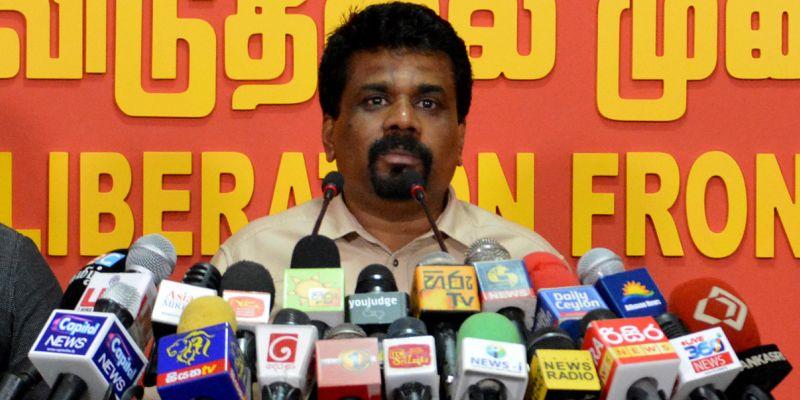
Sri Lankan ambassador to Beijing Dr. Palitha Kohona speaks to Daily Mirror regarding the present status of Sino-Lanka bilateral relations in the event of fertilizer crisis involving Chinese company Seawin Biotech which even threatened to complain against Sri Lankan state banks to the international rating agencies. The Excerpts:
Q As Sri Lankan ambassador to China, how do you view the bilateral relations in the context of the fertilizer crisis?
Our bilateral relationship is multi-dimensional. It is not dependent on one single factor or even a range of minor factors. There could be ups and downs. That could happen in any relationship whether it is personal or international. There are misunderstandings. There are issues that come up unexpectedly .The most important thing is to address them to the satisfaction of both the parties. I personally believe the fertilizer incident has been addressed. We are back on track. Hopefully, we will not have a similar situation again. Or even if something like that crops up again as it possibly might, we should be able to deal with them as two mature countries without getting carried away unnecessarily. Especially in commercial dealings, issues arise. That is why we have arbitration provisions in commercial agreements and mediation. We have the possibility of accessing to legal system, to the courts of law. All that is there because we anticipate disagreements and misunderstandings. I am sure that, given the nature of our relationship, we are capable of dealing with situations of this nature adequately to the satisfaction of both the countries.
Q But the Chinese company said that it would lodge a complaint to the international rating agencies against Sri Lanka’s state banks. How would it affect bilateral relationship?
According to information which I have received, the matter has been addressed and resolved. I have no access as to what the media is reporting and the background to it.
“We need to realize Sri Lanka is a country that cannot remain a poor third world country forever. All around us, countries are steaming ahead us. Even Bangladesh, which in 1971 was described as a basket case, is in a position today to assist Sri Lanka financially because they have taken a pragmatic approach to the world. Of course, when investors come in, we need to be careful how we manage them”
Q In which manner has it been addressed?
I must repeat that I don’t think I should go into details. Nothing has been publicly announced. I believe we should leave it at that. By stirring the pot, I don’t think we are going to get any satisfaction for either side.
Q In Sri Lanka, we notice a difference in Chinese approach to bilateral relations. The Chinese reach out to the north and seek to invest there. They remain engaged with the opposition. They made a donation to the opposition leader to carry out his Covid-related charity work. How do you see this approach as the Sri Lankan ambassador in Beijing?
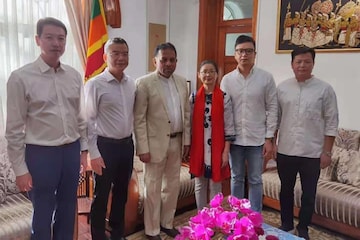
This is quite normal as any ambassador who represents his own country overseas. He does not represent his country only with the ruling party. Especially in a democracy like ours, it is quite possible, conceivable that opposition would come into power at one point or the other. It happened in 2015. It is quite normal for a diplomatic mission to maintain good relations not only with the government but also with the opposition parties as well. You see this with western embassies. They engage with a whole range of political entities, the entire spectrum in fact. It is very common for ambassadors, political officers and other diplomats to deal constantly not only with the government officials, entities but also with the entities representing other political, social and religious viewpoints etc. I think it is a very good thing that the Chinese ambassador made a visit to the north. Everyone saw the photograph of him entering Nallur temple discarding his shirt. It is good that Chinese are reaching out to our main minority and also establishing good links with them.
Q China and Sri Lanka could not carry out a lot of activities because of the pandemic. The pandemic situation has eased a bit now. How do you intend to carry out bilateral activities?
The pandemic situation has been contained to some extent in Sri Lanka. In China, they have a very rigid policy. The country remains closed. No Chinese nationals are allowed to travel outside other than for specific purposes. Tourism does not exist anymore. No foreigners are allowed into the country other than going through very rigid entry controls. As far as China is concerned, although they are probably the safest country on the earth at the moment, the movement in and out of the country is strictly controlled. I don’t see the possibility of normal travel being restored between the two nations. As you know, we are expecting a visit by the Foreign Minister of China to Sri Lanka early January. As the embassy, we are hoping that we could arrange more visits of that nature. Bilateral visits are very important. For the last couple of years, no leader other than Wang Yi and Yang Jiechi , has visited Sri Lanka. No Sri Lankan leader has visited China. We would like to see high level visits resume. But again, it all depends on how the pandemic is controlled by both sides. China is particularly sensitive about the pandemic situation here. In Xian, the number of cases were detected over the last few days. The city was kept under lockdown. Here they maintain very strict control. If there is any slightest indication of cases occurring, they introduce very rigid controls. Other than that, China remains largely free of the virus. It is a good sign. This is a country with 1.4 billion people. The Chinese authorities have taken the view that it is very important to control the infections to the strictest extent possible.
“This is quite normal as any ambassador who represents his own country overseas. He does not represent his country only with the ruling party. Especially in a democracy like ours, it is quite possible, conceivable that opposition would come into power at one point or the other. It happened in 2015. It is quite normal for a diplomatic mission to maintain good relations not only with the government but also with the opposition parties as well”
Q How would it affect the investments?
That is a very important question. Over the last 12 months, we have been talking to a large number of Chinese companies. Many have expressed interest in the potential Sri Lanka has. I know that two big companies have sent their representatives to Sri Lanka. Power China is one. KY Electric is another. Power China is interested in building residential units in Colombo and outside. KY Electric is interested in renewable energy. We held talks with China Harbour, China Great Wall, Power Steel, etc. These are only a few of them. All of them have shown keen interest in investing in Sri Lanka catering not only to the domestic market but also to the wider regional markets. We have been encouraging them. One of the reasons for nothing tangible to be eventuated so far is the inability to send their specialists to Sri Lanka to assess the situation at ground levels. Once travel is restored to some extent, we can expect many of these companies to show greater interest in Sri Lanka. We have also encouraged travel companies to invest in Sri Lanka. One company with a client base of over 40 million is interested in developing resorts in Sri Lanka, like the resorts in southern Europe or Hainan Island. We can expect it once things return to some sort of normalcy. Many other companies will make a beeline to Sri Lanka. Sri Lanka has now got a stable government. It has easy access to the regional markets. It is not an insignificant regional market whether we are looking at Africa, the Middle-East, India, Pakistan, South-East Asia, and Australia. Then of course, we have been talking to everyone about the investor-friendly policies adopted by the government. Everyone knows Sri Lanka is a friendly country at political level. This creates a level of confidence. I think it is very important for investors, mostly the type of investors we are talking about. Some of them are in the global Fortune 500. It would be good for Sri Lanka to have some of those investors. They may also work as catalysts for investors from elsewhere, whether they are from the United States, Europe, Russia, Australia, Japan and Korea. The line we have been focusing is to encourage some of the big names to invest in Sri Lanka. That will operate as an incentive or a bait for other companies from around the world to come.
Q What are the investments lined up as far as Colombo Port City is concerned?
A very serious offer has been made by Power China and China Harbour. It is quite likely that over the next few months, they will invest substantial amounts in the port city. Again, this will be a flagship investment which will hopefully be an attraction to others to follow-suit. We are hopeful that companies from India, Europe and the United States will follow these big investments in the financial centre and the marina and in the convention centre. Our expectation is that once the Chinese companies move in, the others will find it difficult not to move in simply to maintain their presence in Sri Lanka and in the region.
“A very serious offer has been made by Power China and China Harbour. It is quite likely that over the next few months, they will invest substantial amounts in the port city. Again, this will be a flagship investment which will hopefully be an attraction to others to follow-suit. We are hopeful that companies from India, Europe and the United States will follow these big investments in the financial centre and the marina and in the convention centre”
Q There is an argument by some parties that Chinese presence in Sri Lanka is too much. How do you see this?
My job is to promote Chinese investments in Sri Lanka. Sri Lanka needs investments. We can get into this type of arguments. For 300 years, we had colonial occupation of the country. We need to be a little more rational. Investments are investments whether they are Chinese, Indian or European. The Europeans occupied us, controlled us and dominated us for three centuries. This continues to dominate our financial systems. I think we need to realize Sri Lanka is a country that cannot remain a poor third world country forever. All around us, countries are steaming ahead us. Even Bangladesh, which in 1971 was described as a basket case, is in a position today to assist Sri Lanka financially because they have taken a pragmatic approach to the world. Of course, when investors come in, we need to be careful how we manage them. Not every investor should be encouraged to come to Sri Lanka. We should decide what is best for us and what will be better for our future, children. Our children need opportunities. I don’t see any pride when people proudly say that 1.4 million of our youth are driving tuk-tuks. We need to get out of that mentality and provide opportunities for our young people to do better in life. To do that, we need investments.
Q What kind of cooperation is in store for Sri Lanka to get over the foreign exchange crisis?
China has helped us a great deal in the current situation. It approved a swap arrangement amounting to 10 billion RMB. It is roughly over US$ 1.5 billion. Earlier, China made available to us funds through China Development Bank, Asian Infrastructure Investment Bank (AIIB). China has been doing its bit to help us as much as possible. We need to be conscious of that. If not for these Chinese funds, we would have been in a deeper mess now. Of course, there are circumstances which are beyond our control. Nobody expected the pandemic to affect us in this manner. Our tourism crashed. That was a major source of foreign exchange for us. Our remittances from expatriate workers also shrunk substantially. Traditional markets for our exports were affected. Hopefully, the pandemic will ease up. Our exports, tourism and remittances will recover. In the meantime, we need to cope up with the problems. We are confronting problems such as repayment of loans and interest repayment. China has been more than willing to come to our help. In addition to findings that have been made available, they gifted three million doses of Sinopharm vaccines, and another 23 million doses were provided at very low, concessionary rates.
Now, one of the main areas we are focusing is to increase Sri Lanka’s exports to China. We are not exporting enough considering that the nature of our relationship is very close. In 2020, we managed to export only US$ 280 million worth of goods whereas China exported US$ 4 billion worth of goods. Our performance is weak compared to performance of countries like Pakistan, Bangladesh and even Nepal. We cannot even fall in the same league as Malaysia, Singapore or Vietnam. They export huge quantities of agricultural, fishery and industrial products to the Chinese market. We have been working towards increasing our exports. It is essential. We just cannot continuously look for financial assistance.
“Over the last 12 months, we have been talking to a large number of Chinese companies. Many have expressed interest in the potential Sri Lanka has. I know that two big companies have sent their representatives to Sri Lanka. Power China is one. KY Electric is another. Power China is interested in building residential units in Colombo and outside. KY Electric is interested in renewable energy. We held talks with China Harbour, China Great Wall, Power Steel, etc. These are only a few of them. All of them have shown keen interest in investing in Sri Lanka”
One of the suggestions made is that we need to resume our negotiations on the Free Trade Agreement (FTA) or an early harvest agreement. This was the approach taken by Pakistan, Bangladesh. They went for early harvest agreements. As a result today, Pakistan exports even Basmati rice and mangoes. ASEAN countries have FTAs with China. Shops are full of exports from ASEAN countries including young coconuts, pineapples, Durians and Rambutans. There are other high value items. We need to take this very seriously. We are working on this at the embassy. Of course, we need the necessary support from Colombo. Colombo needs to take the bull by the horns and resume negotiations on the FTA, or at least negotiate an early harvest agreement. Any agreement depends on how we negotiate. This is the most lucrative market in the world. Chinese are spending money in a crazy manner. They are buying up everything. I did a live streaming show for Sri Lankan tea and coconut products. The goods we had on sale were sold within 30 seconds after I came on the screen. In China, there is a great demand for Sri Lankan high quality black tea, especially if they are packed attractively with geographical indication. At the moment, we export tea work US$ 57 million. We can easily bump it up to over US$ 100 million in very quick time. Then, there are coconut products such as coconut water. King coconut is a product with a huge market in this country (China). We can expand it very, very quickly. We are trying to gain a wider range of seafood products. We have succeeded in 29 varieties of fishery products. We will work on more varieties of seafood.
The Chinese market for high quality readymade garments is expanding. We need to expand on that. I have suggested that the Joint Apparel Industry locate an officer in Beijing to pursue this market on their behalf. We need someone to concentrate on this market alone. We need to work on the Chinese tourism market. When the doors open, I am confident that Sri Lanka will be a prime destination for them. In 2019, 169 million Chinese travelled overseas. We need to get a small fraction of them to help us.
Q Geopolitical rivalry involving China, India, the USA and Japan play out in Sri Lanka. How can we strike a balance while maintaining good relations with all?
This is not something new to Sri Lanka. Even in 1950s, 1960s and 1970s, there were cold wars. We maintained a non-aligned stance. Both sides respected us. We did not give away bits and pieces of sovereign territory to keep this rivalry at bay. We just managed that relation well. We benefitted from it also. It can be done. It must be done in the future. Sri Lanka is a sovereign nation. We went through horrendous internal conflicts. We maintained our territorial integrity. We should treasure what we sacrificed for so much. We should go forward keeping that mind.