Easter Sunday blasts still torment Lankan Christians and Muslims By P.K.Balachandran

A distinguished team of Sri Lankan human rights activists conducted a study of the impact of the April 21, 2019 Easter Sunday bomb attack on Zion church in the Eastern district of Batticaloa by an Islamic zealot.

Done in December 2021 and released on January 4, 2022, the study has come out with important observations. Firstly, the State is continually using the tragedy to harass, not only Muslims, but also Christians. Second, “Hindutva” groups, drawing inspiration from neighboring India, have emerged to marginalize Christians and Muslims in connivance with local Tamil State officials.

As per the 2012 census, Hindus (Tamils) are 64.6%, Muslims 25.5%, Christians 8.8%, Buddhists (1.1%) and others.

The report entitled: Fact Finding Visit to Batticaloa to Study the Impact of the Easter Sunday Bombings is authored by Radhika Coomaraswamy, Nimalka Fernando, Sakuntala Kadirgamar, Chulani Kodikara, Rehab Mahamoob, Yamini Ravindran, Thyagi Ruwanpathirana, Kumudini Samuel, Ambika Satkunanathan, Shreen Saroor and Muqaddasa Wahid.

East Sunday Blasts

On 21 April 2019, Easter Sunday, a series of bomb blasts took place in several churches in Sri Lanka and in a few luxury hotels in Colombo. Zion Church, in Batticaloa, was one such church where more than 31 people, including 14 children were killed. Government had held several inquiries, including by Presidential Commissions, but those in the highest positions of power have not been held accountable so far. On the contrary, both the Muslim and Christian communities have been subject to harassment. Over 125 Muslims, including 15 women and 2 infants from the Muslim town of Kattankudy have been detained under the draconian Prevention of Terrorism Act (PTA). Since March 2021, an additional draconian element has been added in the form of “de-radicalization” for two years.

The State now requires churches to register despite the absence of a law that requires a place of religious worship to be registered. In October 2008, the Ministry for Buddha Sasana and Religious Affairs issued a “circular” on the “Construction of New Places of Worship”, requiring any new place of worship to be registered with the Ministry.

Commenting on this a Pastor said: “When we try to construct a church building, the building approval form is not approved by local authorities and they ask us to go to the Ministry in Colombo and there we are informed that there is nothing for the Ministry to approve! Despite this, the local authorities do not let us construct a church building easily.”

State security agencies visit churches and request information about congregants, supposedly to ensure that those who are not part of the congregation, do not enter the churches (supposedly for security reasons). Perhaps it also helps keep a check on conversions.

Hindutva Forces

Targeting the Christian community now are Hindu groups that propagate “Hindutva-like ideologies and have affiliations to the Right Wing Hindutva groups in India,” the report says. Christian groups expressed dismay that Tamil politicians are supportive of the Hindutva groups. They enable anti-Christian acts or instruct state entities not to take remedial action, the report said. The Hindutva groups, like the majority Sinhala-Buddhist community, are apprehensive about conversion to Christianity.

The report sees a link between Hindutva groups in Sri Lanka, which receive financial support from groups abroad, and similar groups in other parts of South Asia, such as India. “If attacks against Christians take place in India, it was noted that a few days later an attack against a Christian church in Sri Lanka would take place,” the report said.

As for non-denominational Christians, there have been instances when they were prevented from using the public cemetery, which is often called a ‘Hindu cemetery”. They are forced to cremate and conduct last rites according to Hindu customs, Christians alleged. Usually, the local population has no objection to Christians being buried in the public cemetery, but state officials at the local level incite people to protest against it, the Christians alleged.

There were complaints of a trend of not appointing Christians to positions of authority in the administration structures at the provincial level, which is said to be increasingly occupied only by Hindus, many of whom are allegedly aligned to Hindutva groups.

“The Christian community leaders expressed deep concern that the government strategy regarding non-majority ethno-religious groups appears to be similar to that of the Indian government, i.e. state support for action by Hindutva and other right wing groups against non-majority ethno-religious groups, which they stated, will only lead to inter-community conflict and violence. They, therefore, reiterated the need to pay attention to the early warning signs and take proactive action to prevent violence and inter-community conflict,” the report said.

Motivated Detentions

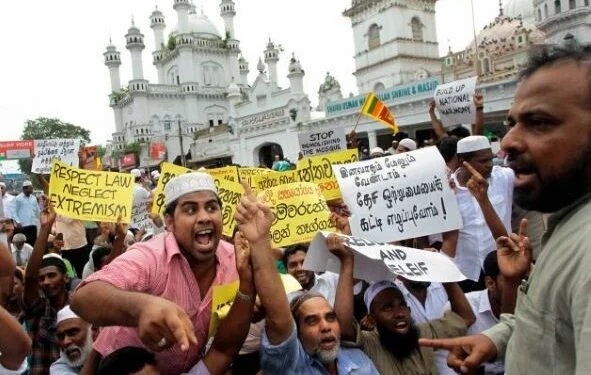
Detentions after the Easter Sunday attacks are bothering Muslims as many of the detentions they say cannot be justified. For instance, many persons were arrested prior to investigation and thereafter discharged as there was no evidence against them.

“This includes persons who, as part of the normal course of their work, booked bus seats for the Easter bombers but had no prior knowledge of the attack. Similarly, the Chairperson of the Centre for Islamic Guidance was arrested for allegedly funding Zahran’s activities. At the time of his arrest, he was portrayed in the media as a key actor in funding Zahran’s activities but was discharged after several months due to the lack of any evidence. By the time these persons were released they had lost their livelihoods and suffered reputational damage and psychological trauma,” the report said. Zahran was the mastermind behind the suicide bombings.

Further, many arrests appear to have been made not for acts deemed offences in law, but for voicing opinions or for having social or business relations with the accused.

Human Rights Watchdog Fails

The Muslims pointed out that in many instances, the Human Rights Commission of Sri Lanka (HRCSL) had not undertaken regular visits to check on the well-being of the detained persons although the Commission is mandated to visit any place of detention without prior notice.

Further, according to Section 28(1) of the HRCSL Act, any arrest under the PTA has to be told to the Commission within 48 hours and failing to inform the Commission accrues a penalty. “Since a person can be tortured at any point during administration detention which can continue for up to 18 months, regular visits are required to monitor torture and in the event of ill-treatment to immediately refer the person to be examined by the Judicial Medical Officer (JMO) to record the torture. It appears the HRCSL has not discharged its mandate effectively in this regard,” the report pointed out.

Social Boycott

The investigating team found that families of those detained in connection with the Easter Sunday bombings had been shunned by other members of the Muslim community and lawyers had refused to appear for them.

“Visits by the security agencies to the families of detained persons, and being summoned to the police station for inquiries, further isolates the families, especially women, from the community, which already views them with suspicion. At the same time, persons who assist families of detained persons are being subject to surveillance and even being interrogated by the security agencies, which prevents others from offering assistance to these families,” the report said.

De-radicalization

The De-radicalization Regulations aim to send persons who surrender/surrendered or are/were detained under the PTA, the PTA regulations or Emergency Regulations issued after the Easter attacks, to rehabilitation for two years.

But this regulation violates many rights including due process and the right to a fair trial, the report said. Even after rehabilitation, a person could be subject to surveillance by intelligence agencies and the military for years after release, which have an adverse impact on their ability to socially re-integrate and earn a livelihood.

Muslim community leaders the team met were aware of the plight of the Tamils who had been sent for rehabilitation after Eelam War IV in 2009.
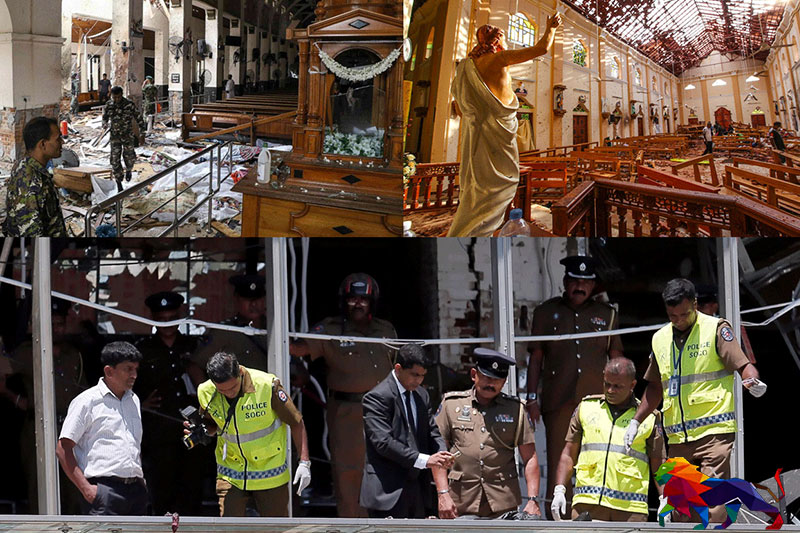
Easter attacks suspect dies in National Hospital

The Borella Police yesterday (5) reported to the Colombo Chief Magistrate’s Court that a suspect, who was remanded in connection with the Easter Sunday terror attacks of 21 April 2019, had died while receiving treatment at the Colombo National Hospital on Tuesday (4).

The deceased has been identified as Saleem Mohamed Kaleem, a resident of Church Road, Kalmunai. The Police told the court that the deceased was 42 years old.

The suspect had been admitted to the prison hospital on 23 November 2021 due to an illness. According to the Police, he had then been admitted to the Colombo National Hospital on 5 December 2021 for further treatment, where he was pronounced dead on 4 January 2022.

Minister of Public Security Sarath Weerasekera told the media last October that all investigations carried out by the Police regarding the Easter Sunday terror attacks have now been completed.

“The Police have completed all investigations with regard to the said terror attacks and have handed over the findings to the Attorney General (AG). Accordingly, nine lawsuits are currently being heard in five high courts pertaining to the bombings,” he added.

On 21 April 2019, Easter Sunday, three churches (St. Sebastian’s Church in Katuwapitiya, St. Anthony’s Church in Kochchikade, and Zion Church in Batticaloa) and three luxury hotels in Colombo (Cinnamon Grand Colombo, The Kingsbury, and Shangri-La Colombo) were targeted in a series of co-ordinated suicide bombings. Later that day, another two bomb explosions took place at a house in Dematagoda and Tropical Inn Lodge in Dehiwala.

A total of 269 people excluding the bombers were killed in the bombings, including about 45 foreign nationals, while at least 500 were injured.

New Trinco oil tank company ‘illegal’

National Bhikkhu Front General Secretary Ven. Wakamulle Uditha Thera yesterday (5) claimed that the newly formed “Trinco Petroleum Terminal (Pvt.) Ltd.”, a subsidiary jointly owned by Ceylon Petroleum Corporation (CPC) and Lanka Indian Oil Company (LIOC), is “illegal”, and said that he has written to the Department of the Registrar of Companies (DRC), requesting that it be nullified.

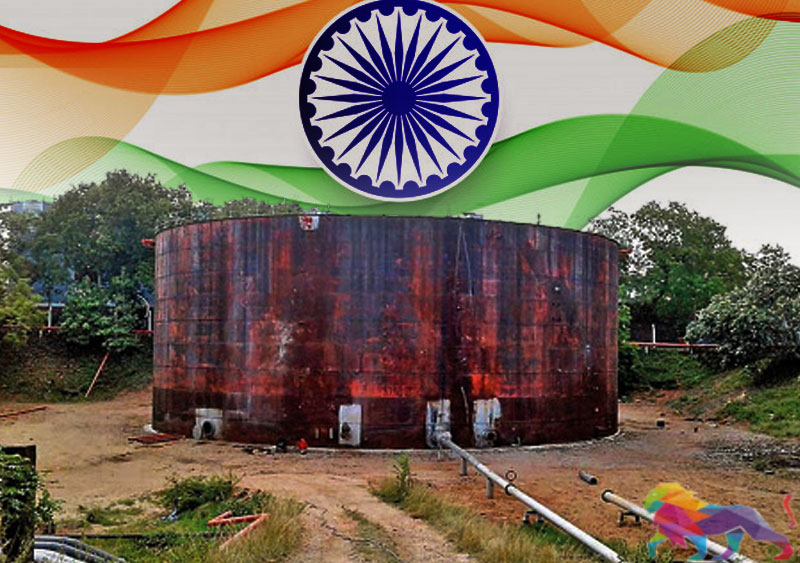
The subsidiary is to develop 61 tanks at the Trincomalee Oil Tank Farm in China Bay on a 50-year lease as part of the Trincomalee Oil Tank Development Complex Project.

“It has been confirmed that tanks at the Trincomalee Oil Tank Farm, owned by the CPC, are going to be sold off through the newly formed Trinco Petroleum Terminal (Pvt.) Ltd. This is illegal as per the CPC Act No. 28 of 1961 and under Article 12(1) of the Constitution. That is why I have written to the Companies Registrar, asking him to look into the legality of this and to nullify the company,” the monk told The Morning yesterday.

Trinco Petroleum Terminal (Pvt.) Ltd., as per Ven. Uditha Thera’s letter, which was seen by The Morning, was registered on 24 December 2021 and violates Sections 5(B) (Import, export, sale, supply, or distribution of petroleum of certain classes or descriptions vested in the CPC), 5(D) (Exclusive right to explore for petroleum vested in the CPC), and 5(E) (Power of the Board of Directors to authorise persons to sell, etc., petroleum of certain classes or descriptions) of the CPC Act.

The Morning’s attempts to contact Minister of Energy Udaya Gammanpila, Ministry of Energy Secretary K.D.R. Olga, and CPC Chairman Sumith Wijesinghe regarding this allegation proved futile.

Gammanpila said on Tuesday (4) that the Trincomalee Oil Tank Development Complex Project was approved by the Cabinet of Ministers on Monday (3) and that the agreement pertaining to this development will be signed with India within a week. Sources told The Morning that the agreement will either be signed today (6) or on the following Monday (9).

As per this week’s cabinet approval, 24 of the 99 tanks will be given to CPC, 14 tanks will be given to LIOC, and 61 tanks will be given to Trinco Petroleum Terminal (Pvt.) Ltd., the latter on a 50-year lease, with CPC having the majority stake in the subsidiary.

The Trincomalee Oil Tank Farm, built by the British as a refuelling station during World War II, is located on 850 acres of land and originally contained 101 tanks, each with the capacity to hold 12,100 metric tonnes of oil. Out of the original 101 tanks, two had been destroyed in a kamikaze attack during a Japanese air raid on Trincomalee on 9 April 1942 and when a Royal Ceylon Air Force plane crashed in the early 1960s.

The LIOC acquired a one-third stake in Ceylon Petroleum Storage Terminals Ltd., which operated the Trincomalee Oil Tank Farm in 2003. Subsequently, the LIOC entered into a memorandum of understanding (MoU) with CPC for a 35-year lease to operate 32 of the 99 oil tanks for an annual payment of $ 100,000. However, parties were unable to finalise this 35-year lease due to strong opposition by trade unions and political parties. During Minister of Finance Basil Rajapaksa’s visit to India last month, he had reportedly initiated a fresh round of talks with India and the LIOC, where India had offered support to Sri Lanka on four pillars including the early modernisation of the Trincomalee Oil Tank Farm.

Due to Sri Lanka’s current foreign reserve crisis, the country has sought financial assistance from India in the form of a $ 400 million currency swap to help Sri Lanka address the existing balance of payment issues; a $ 1 billion line of credit to cover the import of food, medicines, and other essential items from India to Sri Lanka; and a $ 500 million line of credit to cover the importation of fuel from India.

Posted in Uncategorized

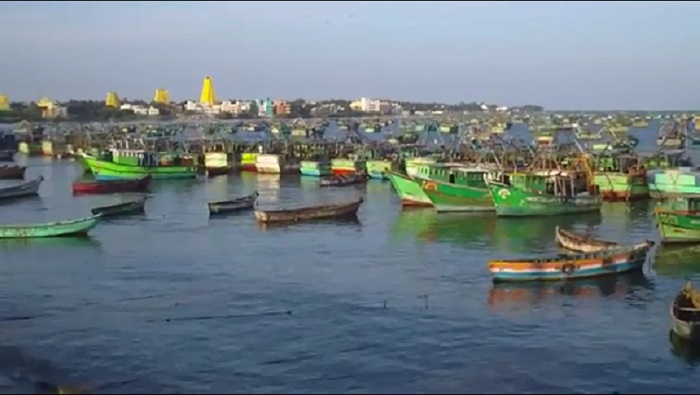
Sri Lanka frees 13 Tamil Nadu fishermen

Sri Lanka today set free 13 Tamil Nadu fishermen who were arrested for poaching in Sri Lankan waters.

The Indian High Commission said that a court in Mannar released the 13 Indian fishermen.

Officials from the Indian Consulate in Jaffna met the Indians after they were released.

The High Commission said that the Indian fishermen were offered sweets by the Indian Consulate in Jaffna.

Steps are now being taken for the early return of the fishermen.

Posted in Uncategorized

CBSL allocates USD 500 million required for ISB maturing in January – Governor

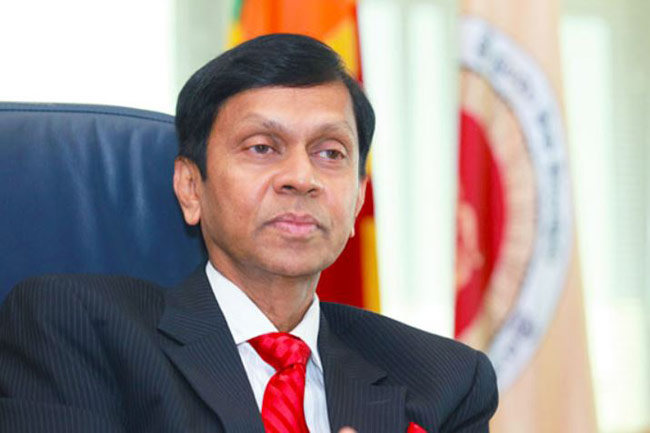
The Central Bank of Sri Lanka (CBSL) has allocated the forex required for the USD 500 million International Sovereign Bonds (ISB) that is maturing on January 18, the governor announced today.

In a tweet, Ajith Nivard Cabraal said it is a shame that some investors lost out due to the organized negative stories spread by certain vested interests.

Posted in Uncategorized

President to appoint committee to negotiate with ‘friendly nations‘ for funds

President Gotabaya Rajapaksa is likely to appoint a Cabinet-level negotiation committee to hold discussions with ‘friendly countries’ seeking financial assistance ahead of the country’s external debt repayments this year.

Based on a proposal presented by Finance Minister Basil Rajapaksa, the Cabinet Co-Spokesperson and Minister of Mass Media Dullas Alahapperuma yesterday said the Cabinet of Ministers has agreed to appoint a ministerial negotiation committee to engage in negotiations with ‘friendly countries’ of Sri Lanka and to allow President Rajapaksa to appoint members to the committee.

“The President is likely to announce it during the next Cabinet meeting,” he said.

However, he didn’t specify the list of ‘friendly nations’ the government is going to approach with this committee.

The government has been seeking currency swaps and credit lines from several countries, including India, China and some Middle Eastern countries.

Commenting on the repayment of US$ 500 million International Sovereign Bonds (ISB) maturing on 18th of this month, the Cabinet Co-Spokesperson and Minister of Plantation Ramesh Pathirana expressed confidence of repaying the full amount on time.

Posted in Uncategorized

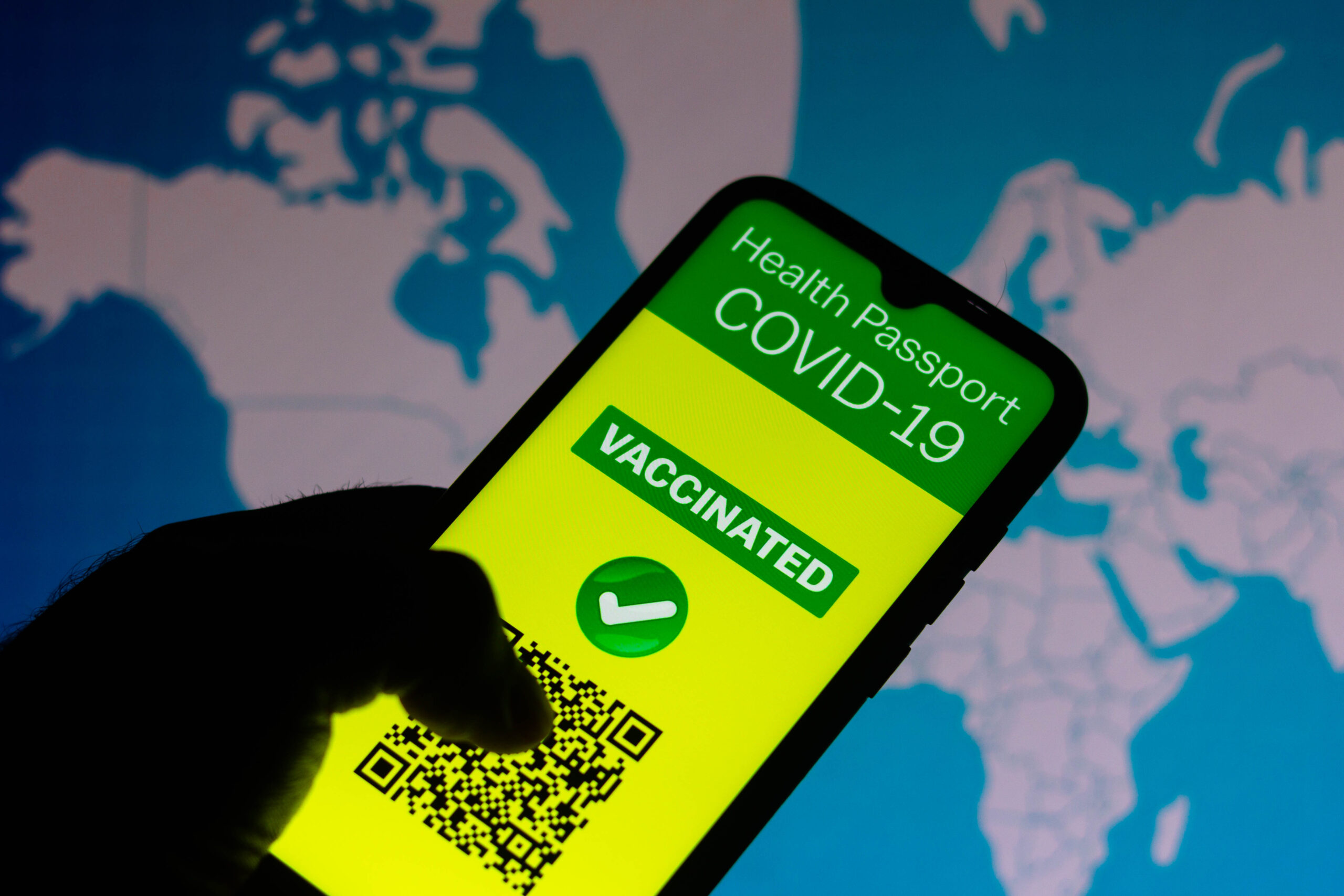
Technical issues being sorted out to make vaccine card compulsory to enter publice places

Health Minister Keheliya Rambukwella, following discussions with members of the Public Health Inspectors Association yesterday, said the technical issues pertaining to making the Covid-19 vaccination certificate mandatory to enter public places were being sorted out.

A QR code to certify that a person had already been vaccinated would be transmitted to the mobile phones of individuals via a special App, the Health minister said, adding that though there was no legal provision to make people receive the vaccine compulsory, the authorities had the power to make the vaccination certificate compulsory for everyone to enter public places for the safety of the people.

Posted in Uncategorized

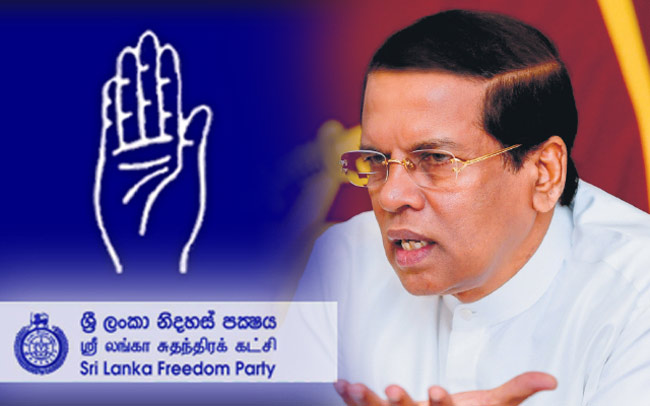
Sirisena Hits Out At Govt Over Susil’s Removal: “Why Won’t They Take Action Against Lanza? Because Lanza Knows Secrets”

Former President and MP Maithripala Sirisena strongly criticised the government over the sacking of MP Susil Premajayantha.

“As we started the new year, we got the first election result — the sacking of Susil Premajayantha. The government’s problems will not be resoved by sacking ministers,” Sirisena said.

“Recently, Nimal Lamza made a far more critical remak than Premajayantha. But I know they will not lay their hands on Lanza because Lanza knows all their secrets,” the former President added

“The government ruined Sri Lanka’s agriculture sector. Even the British rulers did not a damage of this magnitude to the agriculture sector,” Sirisena said hitting out at the government.

Sirisena leads the largest coalition partner to the government — the Sri Lanka Freedom Party.

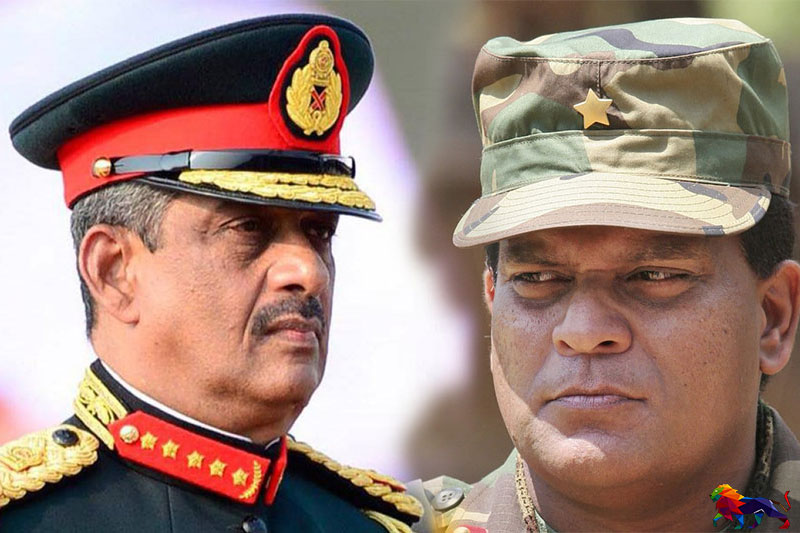
Rare meeting between Shavendra and Field Marshal Sarath Fonseka

A rare meeting took place today between Army Commander General Shavendra Silva and former Army Commander, Field Marshal Sarath Fonseka.

The face-to-face meeting took place at the funeral of Brigadier Panduka Perera, Commander, 563 Brigade of the Security Force HQ-Wanni.

The Army media unit said that General Shavendra Silva paid courtesies to Field Marshal Sarath Fonseka who had also attended the funeral.

Field Marshal Sarath Fonseka, prior to his retirement, served as Colonel of the Regiment, Sri Lanka Sinha Regiment, to which the deceased Senior Officer belonged.

Brigadier Panduka Perera passed away on Friday (31) while receiving treatment for post-recovery medical complications of the COVID-19 virus at the Infectious Disease Hospital in Mulleriyawa.

His funeral took place at the Eldeniya cemetery this afternoon (3) amidst military honours and a gathering of his close military colleagues, family members and mourners.