Testimony of John Sifton on Accountability and Human Rights in Sri Lanka

Hearing by the United States House of Representatives Tom Lantos Commission on Human Rights

Thank you for providing Human Rights Watch with the opportunity to testify on Sri Lanka today.

It is more than 12 years since the end of Sri Lanka’s brutal civil war, and the defeat of the separatist Liberation Tigers of Tamil Eelam (LTTE). However, as United Nations High Commissioner for Human Rights Michelle Bachelet said earlier this year, the country’s human rights situation is now deteriorating. The government is, under President Gotabaya Rajapaksa, “in a state of denial about the past,” and there are “warning signals” that grave rights violations may recur. Civil society groups and human rights defenders are being suppressed, and minority Tamil, Muslim, and Christian communities are being targeted with discriminatory laws, policies, and practices.

It is important to recall the brutalities in Sri Lanka that led to US action to promote human rights in the island nation, including repeatedly at the UN Human Rights Council.

The 26-year civil war that ended in 2009 was marked by serious abuses of international human rights and humanitarian law by both sides, and mass atrocities against civilians in the final months that shocked the conscience of the world. During the armed conflict, the LTTE committed political assassinations, suicide bombings against civilians, and used child soldiers, among other human rights abuses. The LTTE also used civilians as human shields. Government security forces committed countless arbitrary detentions, extrajudicial killings, and enforced disappearances, and often brutally tortured detainees in their custody. In the final months of the war, the security forces bombarded Tamil civilians inside state-declared no-fire-zones, including the targeting of hospitals, killing thousands. Videos emerged at the war’s end of soldiers summarily executing prisoners and jeering over the unclothed bodies of women combatants. Almost the entire leadership of the LTTE was killed or forcibly disappeared, in some cases after surrendering to the Sri Lankan army.

In Colombo and elsewhere, security agencies killed and disappeared journalists and other perceived opponents of the government.

In the year after the war ended, the government detained tens of thousands of Tamil civilians in militarized camps where many of them suffered torture, rape, and enforced disappearance. Those suspected of membership of the LTTE were detained for years without trial.

In 2015, President Mahinda Rajapaksa, who had been in power for a decade, was defeated in a presidential election. Between 2015-2019, under President Maithripala Sirisena, the human rights situation improved. Pressure from minority Tamil and Muslim communities and local activists, as well as from concerned countries, including the United States, led the new government to agree to address human rights abuses and war crimes. Sri Lanka joined a consensus resolution of the UN Human Rights Council in 2015, resolution 30/1, which included measures to ensure truth telling, reparations, security sector reform, and justice through a hybrid mechanism including international investigators, prosecutors, and judges. There was also a commitment to replace the draconian Prevention of Terrorism Act (PTA), which had been used to enable torture, enforced disappearance, and prolonged arbitrary detention since 1979, with rights-respecting legislation.

The level of repression inside Sri Lanka decreased. However, by the time Sirisena left office, there had been little progress on accountability or institutional and legal reform to reduce the risk of future violations. The PTA remained unamended.

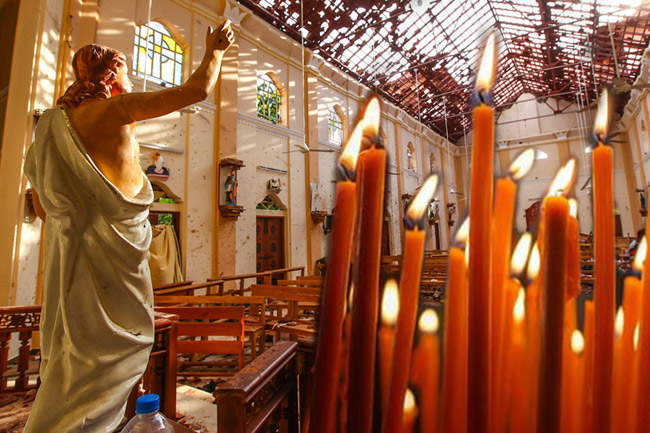
On Easter Sunday, April 21, 2019, suicide bombers attacked three churches and three hotels, killing over 260 people, including three US citizens. This led to a spate of mob attacks on Sri Lankan Muslims, often incited by Sinhalese Buddhist monks and political leaders.

Following his electoral defeat in 2015, Mahinda Rajapaksa formed a new political party, the Sri Lanka Podujana Peramuna (Sri Lanka People’s Front, SLPP). His brother, Gotabaya Rajapaksa, who was defense secretary between 2005-15, became the SLPP’s presidential candidate and began his 2019 campaign with a pledge to act against terrorists, to block international efforts towards accountability for war crimes, and instead to protect “war heroes.”

Gotabaya Rajapaksa, who then held US nationality in addition to his Sri Lankan citizenship, is implicated in war crimes committed by the Sri Lankan military between 2005-2015. Police investigations that were able to proceed under the Sirisena administration also linked him to the killing and enforced disappearance of journalists and other serious violations. In April 2019, he was served with a court summons in California after Ahimsa Wickrematunge filed a civil suit for his role in the 2009 killing of her father, newspaper editor Lasantha Wickrematunge. In July 2019, the Center for Justice and Accountability amended the complaint with details on attacks against journalists during the Mahinda Rajapaksa government.

US courts later recognized that Rajapaksa had immunity as a head of state following his election in November 2019, but a February 2020 ruling by the Ninth Circuit Court of Appeals cleared the way for litigation to resume after he leaves office. Gotabaya Rajapaksa surrendered his US nationality during his presidential campaign, as required by the Sri Lankan constitution. Following Gotabaya’s election, former President Mahinda Rajapaksa became prime minister in his brother’s administration. Other senior figures in the current Rajapaksa administration who are implicated in violations, including possible war crimes and crimes against humanity, include the defense secretary, Gen. (retd.) Kamal Gunaratne, and the chief of defense staff, Gen. Shavendra Silva, whom the US banned from travel to the United States in 2020, citing credible information about his responsibility for the commission of extrajudicial killings in 2009.

One of Gotabaya Rajapaksa’s first acts on becoming president was to establish a “Presidential Commission of Inquiry to Investigate Allegations of Political Victimization.” The aim of this commission was to derail criminal investigations into human rights abuses and corruption against political allies, officers in the security forces, and members of the Rajapaksa family, which the police had launched during Sirisena’s presidency. These included cases in which evidence implicates the president himself. The commission recommended halting these investigations, dropping prosecutions in ingoing cases, and instead investigating the investigators for allegedly fabricating evidence. A resolution to implement the commission’s recommendations is before parliament.

In addition, Gotabaya Rajapaksa repudiated the previous government’s sponsorship of Human Rights Council resolution 30/1. In response, in March 2021, the Human Rights Council adopted resolution 46/1, which mandated the Office of the United Nations High Commissioner for Human Rights (OHCHR) to collect, analyze, and preserve evidence of international crimes committed in Sri Lanka for use in future prosecutions. The Sri Lankan government opposed the resolution. The United States supported it. This work, called the OHCHR Sri Lanka Accountability Project, is expected to begin in earnest next year.

Since taking office, the Rajapaksa administration has used the security and intelligence services to harass, intimidate, and intrusively surveil civil society groups, human rights defenders, and the relatives of victims of past abuses who have campaigned for truth and accountability, including members of the group Mothers of the Disappeared. This has occurred across the country, including in Colombo, but is most severe in the predominantly minority provinces in the north and east. Since early 2020, human rights defenders and activists have described to Human Rights Watch patterns of abuses by various security and intelligence agencies, including the Terrorism Investigation Division (TID) of the police, in which their offices and homes have been visited, intimidating messages passed to their families and friends, and personal and financial information has been collected. Many organizations have had the transfer of funds from abroad blocked or delayed on the pretext of combatting “terrorist financing.” Numerous human rights defenders have told Human Rights Watch that it has become unsafe or near impossible to continue their work, and that victims and their families are too afraid to raise their cases with human rights groups.

In 2020, the parliament, in which the president’s supporters have a two-thirds’ majority, adopted the 20th amendment to the constitution, which included provisions to undermine the independence of the judiciary and of previously independent bodies, including the previously independent Human Rights Commission of Sri Lanka.

The Rajapaksa administration has pursued policies hostile to the country’s Tamil, Muslim, and Christian minorities, raising concerns of future communal violence. An early step was to end the singing of the national anthem in the Tamil language at Independence Day celebrations. During the first year of the Covid-19 pandemic, the administration banned the burial of people who died with the virus on spurious public health grounds, causing distress to bereaved Muslim families. The ban was later relaxed to allow burials of Covid-19 infected people in a remote location, often far from most families’ homes.

In June 2020, President Rajapaksa established the Presidential Task Force for Archaeological Heritage Management in the Eastern Province – a minority majority area – which is composed entirely of security officials and Buddhist monks. Members of the Tamil and Muslim communities allege that the task force is engaged in erasing their heritage in the region, and appropriating land belonging to members of their communities.

Rajapaksa has said the purpose of the task force was to “preserve our Buddhist heritage.” In October, he appointed a task force to revise personal laws affecting different religious communities, headed by a hardline Buddhist monk who has been accused of inciting communal violence.

Christian communities in Sri Lanka also face official hostility. Members of the Catholic clergy, led by Cardinal Malcolm Ranjith, have become increasingly vocal in condemning delays in the inquiry into the Easter Sunday bombings, alleging a possible cover-up to conceal official complicity. In October, Maj. Gen. Suresh Sallay, director of the State Intelligence Service, ordered police to investigate Father Cyril Gamini and others who had made these allegations.

In recent months, amid a worsening economic situation, the Rajapaksa government has begun reacting to international pressure over human rights by offering vague promises of reform to foreign diplomats, especially from the European Union, which is conducting a periodic review of rights-linked trading preferences enjoyed by Sri Lanka, known as GSP plus. This rhetoric is belied by the government’s actions. In particular, the Rajapaksa administration has issued vague promises to reform the Prevention of Terrorism Act, which it continues to use to target Tamils and Muslims, perceived opponents of the government, and members of civil society groups, with prolonged arbitrary detention.

What can the US government do about these problems?

First, US government officials, including members of Congress, should continue pressing the Sri Lankan government on the importance of repealing or substantially amending the Prevention of Terrorism Act and ending the harassment and intimidation of human rights defenders and other critics of the government. US government officials should be urging the government of Sri Lanka to scrap recommendations from the commission on “political victimization.” And the United States should maintain its renewed engagement on Sri Lanka resolutions at the UN Human Rights Council.

The United States should engage with allies to implement a coordinated and concerted strategy to protect human rights and civil society space in Sri Lanka. The Rajapaksa government has turned to China for various reasons, including providing diplomatic cover for its abusive laws and policies, but Sri Lanka’s most important economic relationships are with the United States, European Union, and India.

Congress should also communicate clearly – to both the Biden administration and the government of Sri Lanka – that failure to address Sri Lanka’s human rights situation will imperil current and future military-to-military engagements and better economic relations. The US should also be harnessing other allies – in particular the European Union – to keep pressure on the Rajapaksa government.

The country’s current economic crisis, and presumably growing anxieties about China’s dominance over its affairs, are opportunities for concerned democratic countries – Japan, the European Union, and United Kingdom – to offer Sri Lanka renewed support and communicate that more can be provided if human rights improvements occur.

At the same time, the US should make clear that it cannot engage with security officials credibly implicated in gross human rights abuses. The US government has no choice but to engage with President Rajapaksa himself, the country’s head of government, with whom the US must engage as a matter of necessity and diplomatic protocol. But State Department and Pentagon officials and officers should continue to make clear that engagement is impossible with persons and units credibly implicated in human rights, and that Sri Lanka must take steps to hold such persons and units responsible for abuses. In the absence of accountability, the US has no choice but to consider imposing targeted sanctions on those persons and units, under the US Global Magnitsky Act.

The United States has already imposed a travel ban on chief of defense staff Gen. Silva, for his alleged responsibility for war crimes. The US should also impose targeted sanctions on others in the government credibly linked to serious human rights abuses; and the US government should communicate that these sanctions will remain in place until human rights improvements are seen.

The United States should ensure that members of the Sri Lankan security forces deployed on UN peacekeeping missions are subjected to independent vetting. Vetting has until now been conducted by the Human Rights Commission of Sri Lanka, which lacks independence following the adoption of the 20th amendment to the constitution.

Lastly, given the inconclusive results so far of Sri Lankan investigations into the 2019 Easter Bombings, the United States should push for a prompt, impartial, and credible conclusion. The United States and other governments should also examine evidence of transnational corruption and money laundering in cases where the presidential commission on “political victimization” has sought to block domestic investigations.

Thank you again for allowing me to testify, and I look forward to answering your questions.

British MP continues call for sanctions on Shavendra Silva

British MP for Harrow West, Gareth Thomas, has continued his calls for Magntisky style sanctions on Sri Lankan army commander and accused war criminal, Shavendra Silva.

On Twitter Thomas asked:

In his statement, he highlighted the role Silva played as the commander of Sri Lanka’s notorious 58th division. These abuses include “extrajudicial killings and extensive use of torture, deliberate attacks on civilian targets, including hospitals, and the use of weapons that have been banned internationally, such as white phosphorus and cluster munitions”.

Thomas further requested that the government issue a response to the 50-page dossier compiled by the International Truth and Justice Project which sets out Silva’s complicity in the human rights violations that took place during the final phase of the armed conflict.

“Despite repeated efforts by the international community, the Sri Lankan Government have resisted any efforts to bring to account any of those responsible for those abuses” he noted.

Thomas urged the UK government to follow the lead of the US in imposing a travel ban on General Silva & his family.

Sen Kandiah Chair of Tamils for Labour said “this is part of the campaign by the Labour Party to get the war criminals in Sri Lanka to account. If the Police Scotland can drop out training of Sri Lankan police because of the genocidal acts of the armed forces, this is the time for FCDO to apply Magnitsky sanctions to Shavendra Silva”.

“We will continue our fight till all war criminals are punished” he added.

A number of parliamentarians from across the political spectrum have endorsed this call to sanction senior government and military officials in Sri Lanka who have been accused to be complicit in war crimes.

Posted in Uncategorized

Central Bank initiates regulatory actions against errant money changers

The Central Bank of Sri Lanka (CBSL) says it has initiated regulatory actions against four errant Authorized Money Changers engaged in activities which are not in compliance with the directions issued by the central bank.

In response to several complaints that certain Authorized Money Changers are engaged in activities which are not in compliance with the Directions issued under the provisions of the Foreign Exchange Act No. 12 of 2017 (FEA), the Central Bank said it is conducting a series of spot examinations at the places of Authorized Money Changers, thereby strengthening the monitoring and supervision of the Authorized Money Changers.

In the spot examinations conducted during the months of November and December 2021, it was revealed that the following Authorized Money Changers have not complied with the Directions issued to them under the provisions of FEA.

Accordingly, after the Minister of Finance being informed, Notices have been issued to them to comply with the relevant Directions, within a specified time period, it said.

New Natasha (Pvt) Ltd at No. 12, Super Market Complex, Wennappuwa
George Michael Holdings (Pvt) Ltd at No. 157, Chilaw Road, Wennappuwa
Royal Money Exchange (Pvt) Ltd at No. 55, Galle Road, Colombo 06
Prasanna Money Exchange (Pvt) Ltd at No. 57, Galle Road, Colombo 06
In the event the errant Authorized Money Changers fail to rectify the issues communicated through the Notices, the Central Bank says it will be compelled to suspend and to revoke the permits issued to such Authorized Money Changers.

“The general public is also informed that Authorized Money Changers have no authority to transact foreign exchange at rates higher than those offered by the banks to such Money Changers,” the statement said.

Dollar crisis : 1,000 containers with essential goods stuck at port

Around 1,000 containers with essential goods imported are said to be stuck at the port due to the dollar crisis.

Most of them are said to be containing sprats, dried fish, coriander and spices imported from India. Some food items are even said to be at the risk of going bad, reports say.

‘Lankadeepa’ reports that a major importer today (09) said that the number of containers that are to be released are piling up due to the dollar shortage and the number of containers arriving are piling up at a faster rate than they are being released.

Importers say that if banks continued to issue dollars as usual, such delays would not occur.

Posted in Uncategorized

NO development seen in militarized countries – General Ratnayake

Any country in the world led by soldiers at the forefront, have not improved, says former Army Commander Daya Rathnayake.

Expressing his views at an event recently, the former Army Commander emphasized that academics, experts, and intellectuals must be the ones leading the society as soldiers are only necessary for leading at the time of war.

Speaking further, the former Army Commander pointed out that countries with military rule implemented within haven’t improved at all, while stating that militaries can handle different tasks, however, leading a country is not one of them.

Posted in Uncategorized

Chinese Embassy in Sri Lanka slams US in paid advertisement

The Chinese Embassy in Sri Lanka has slammed the US in a paid advertisement published in a local newspaper today.

The paid advertisement has been published targeting the virtual Summit on Democracy for which China and Sri Lanka have not been invited.

The advertisement published on the widely read Daily Mirror newspaper accuses the US of having structural flaws and problematic practices in its democratic system.

India, Pakistan, Maldives and Nepal are among the South Asian countries invited to attend the Summit on Democracy.

China and Russia are among the few countries together with Sri Lanka not invited for the summit.

The list of participating countries made public by the US State Department notes that Taiwan as well as the Philippines and Mexico are among 110 countries invited for the summit.

President Joe Biden will host a virtual summit on December 9-10, 2021 for leaders from government, civil society, and the private sector. The summit will focus on challenges and opportunities facing democracies and will provide a platform for leaders to announce both individual and collective commitments, reforms, and initiatives to defend democracy and human rights at home and abroad.

For the United States, the summit will offer an opportunity to listen, learn, and engage with a diverse range of actors whose support and commitment is critical for global democratic renewal.

Posted in Uncategorized

No vehicle imports, no public sector recruitment in 2022 – Basil

Finance Minister Basil Rajapaksa says the importation of vehicles and recruitment of public sector employees will not be carried out in 2022.

Addressing an event, the lawmaker stressed that the government will have to impose restrictions on the aforementioned. Accordingly, new vehicles will not be imported and approval will not be given for recruitment to the public sector next year, he added.

Minister Rajapaksa urged the public sector authorities not to ask for new staff members. He stated that there is not enough workspace at some divisional secretariats for the employees.

Increasing the number of staff members will not improve the efficiency, he added.

Speaking further, the finance minister said an increase in foreign reserves was observed last year, but it drastically dropped this year due to the decrease in remittances sent by the migrant workers.

The country annually sends about 230,000 migrant workers overseas, but this figure shrunk to 53,000 last year, he added. However, more than 100,000 migrant workers are sent abroad now, Minister Rajapaksa continued, adding that the government’s target is to increase this number to 300,000 next year.

Posted in Uncategorized

‘One Law’ Task Force tries ‘Sinhala only’ in the East

Participants in the “One Country, One Law” Presidential Task Force’s (PTF) public consultation held at one of the divisional secretariats (DSs) in the Eastern Province alleged that the discussion was held predominantly in Sinhala, with no proper translators or language interpreters, which severely limited the accessibility of the public consultation.

“They only spoke in Sinhala and there were no translators to translate the dialogue. If a person spoke in Tamil, it was translated with support from the crowd, but this was a very basic translation. Also, there were only about 25 participants at the meeting at the DS,” a participant told The Morning yesterday (9).

He further said that a monk from the area, allegedly known to incite tensions within communities, had spoken at great length during the consultation.

“While we understand that the concept behind the establishment of the said Task Force is productive, we felt that the consultation was mainly focused on the needs of Buddhists as opposed to those of us who are living in the area.”

However, when The Morning spoke to the said Task Force’s Chairman and Bodu Bala Sena (BBS) General Secretary Ven. Galagodaaththe Gnanasara Thera, he said that there had been no language problems at the public consultations.

“There was no problem at all. Many people could speak Sinhala and even if there was a problem, people in the crowd helped with the language barriers. We also took translators with us,” the monk said.

He added that mostly educated individuals had participated in these consultations and that the positive reaction and response to the consultations held so far was overwhelming.

The Presidential Media Division (PMD) said that the Task Force received a warm welcome in the Eastern Province, after which it had held public consultations at the Batticaloa and Valaichchenai DSs. The Task Force had also visited several mosques in the area.

However, speaking in Parliament on Wednesday (8), Illankai Tamil Arasu Kadchi (ITAK) Parliamentarian Shanakiyan Rasamanickam criticised the PMD’s actions and questioned whether it is the responsibility of the PMD to make such statements. “When the PMD said that Gnanasara Thera received a warm welcome, do they mean that it was hot there? Everyone in the Eastern Province is against this Task Force. Look at the state of the PMD? Is this what the PMD is there for? It is clear that there is Buddhist extremism in Sri Lanka. We heard phone recordings which were recently released where we all heard the way Gnanasara Thera spoke to another monk. While I appreciate the other monk’s patience in his responses, look at the way we are heading as a country,” he said.

Recently, President Gotabaya Rajapaksa appointed a Task Force to formulate a conceptual framework for the concept of “One Country, One Law”, chaired by Ven. Gnanasara Thera, who has been accused of inciting hate and violence towards the Muslim community. The Task Force garnered criticism from various quarters, including the Bar Association of Sri Lanka (BASL).

In August 2018, Ven. Gnanasara Thera was sentenced to prison for six years after being found guilty of contempt of court over his conduct during a court hearing regarding the case of missing journalist Prageeth Eknaligoda. However, he only served a few months of this sentence as he was granted a presidential pardon in May 2019 by then President Maithripala Sirisena.

Sri Lanka may go bankrupt in January – Harsha

Samagi Jana Balawegaya (SJB) MP Harsha de Silva has said that by January, the government will only be left with USD 140 million after repaying the foreign debt owed.

He made these comments while participating in the budget debate in Parliament.

He pointed out that the amount of debt owed between February and October is USD 4,843 million, but by the end of this month, only USD 140 million will be available. Therefore, the balance would be a negative USD 4700 million.

“If we are unable to settle the due loan repayments, the whole system will shut down,” he warned, while reasserting that the IMF is the only alternative left.

This would eventually lead the country to bankruptcy, he noted.

Meanwhile, participating in the ‘Neth FM Unlimited’ programme which aired last night (08), the opposition lawmaker said that the statement made by the Governor of the Central Bank calling for foreign currency to be brought into the country only through formal means is not practical.

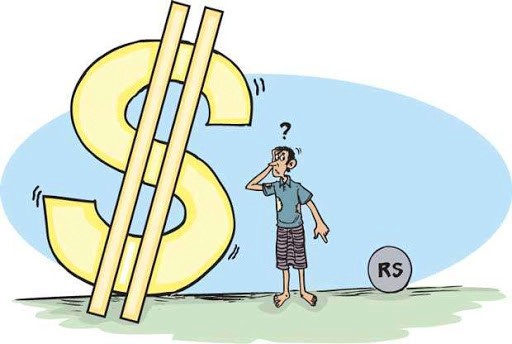
He said that maintaining the value of the dollar at Rs. 200 by the Central Bank in the background where the black market price of a dollar hovers around Rs. 240 could create a further crisis.

Dr. Harsha de Silva also stated that the Central Bank does not have the capability to keep the dollar from depreciating by force.

‘Will go before international community if threats continue’

Chief Opposition Whip Parliamentarian Lakshman Kiriella says they will go before the Supreme Court if the Speaker fails to intervene in the threats faced by opposition Parliamentarians by government members.

MP Kiriella speaking in Parliament today said they have also notified the Inter-Parliamentary Union of the developments.

He said the Samagi Jana Balawegaya does not seek to take the matter outside of Parliament, yet called on the Speaker to reach decisions on what was witnessed.

MP Kiriella said Parliament cannot be controlled by ‘chili powder gangs’ adding that tarnished the reputation of the previous Parliament as well.

Chief Government Whip Minister Dinesh Gunawardena said certain words that were exchanged were inappropriate and called for the committee to commence proceedings promptly.

Field Marshal Sarath Fonseka joining the debate said incidents have been witnessed in Parliament during the present and past government’s terms.

MP Fonseka requested the Speaker to ensure everyone’s safety and to provide the House an assurance.

MP Ranjith Madduma Bandara said all 225 Members of Parliament must help change people’s notion of Parliament adding the public is displeased.

Posted in Uncategorized