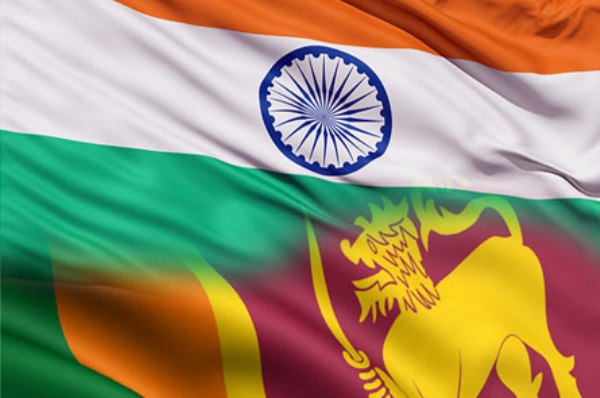
Will India’s planned bailout package snatch Sri Lanka from China’s hands? By Abishek Kumar Singh

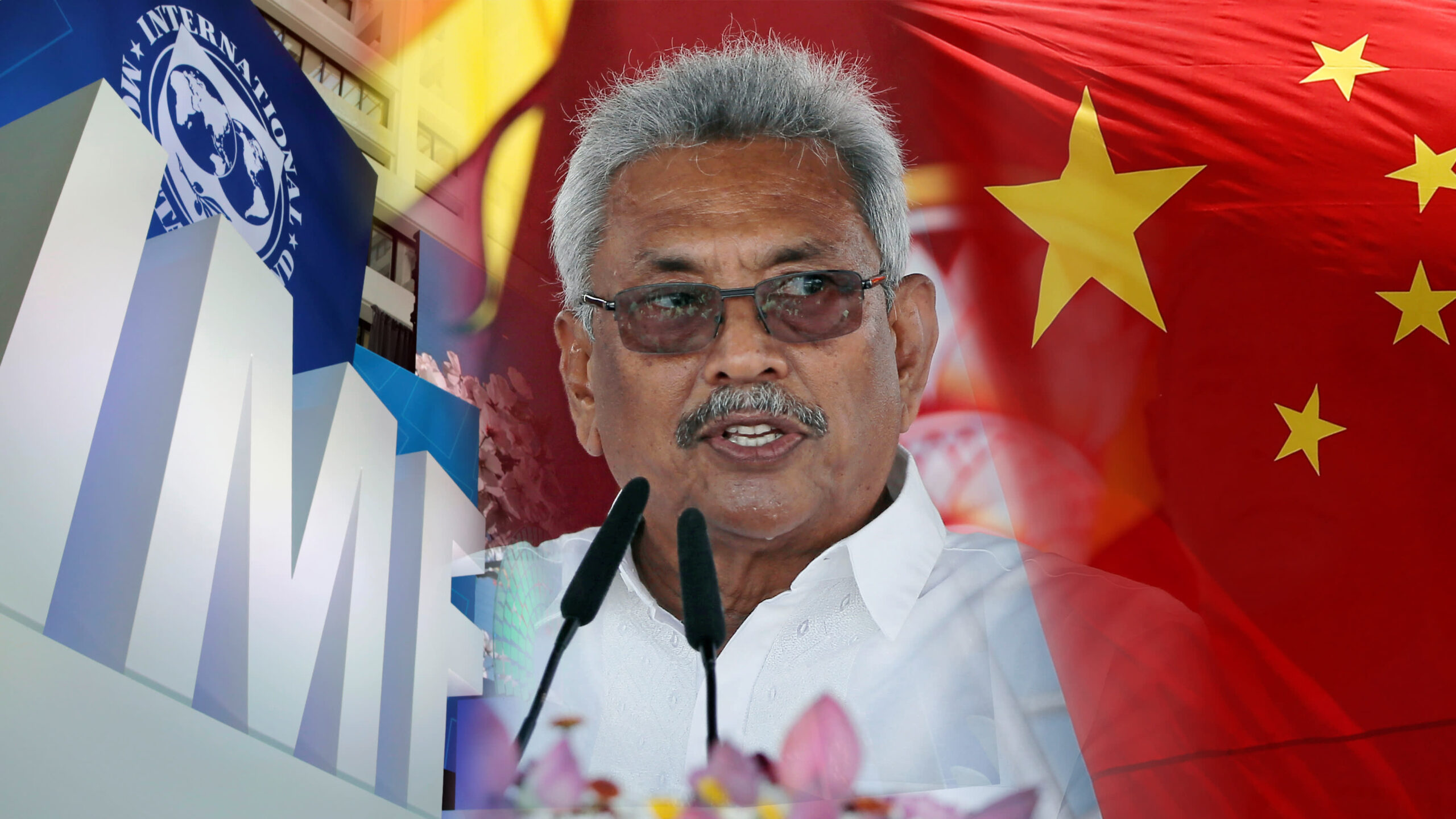
China’s neo-colonial dreama is slowly but steadily biting the dust. The latest blow to its derailment train has come from India, as the South Asian giant has embarked on a mission to permanently snatch Sri Lanka, its southern neighbour, from Chinese hands.

Multi-sectoral economic arrangements between India and Sri Lanka

The government of India and Sri Lanka are in the final rounds of talks to chalk out the modalities of a multi-sectoral economic cooperation partnership. According to a report published in Economic Times, both countries are working on a bailout package that will assist the Sri Lankan government on an urgent basis. The package is expected to boost investors’ confidence in the Island nation’s dwindling economy.

According to reports in the public domain, India will be making available four kinds of economic incentives to the Sri Lankan government.

Food and health security package: Sri Lanka is heavily dependent on imports from India when it comes to availing food, medicines, and other essential items. However, due to the recent Chinese economic colonisation and corona crisis, the Sri Lankan government is facing serious troubles when it comes to paying off its bills. India will be providing a line of credit (a borrowed money that can be used according to a borrower’s need) to the Sri Lankan government so that they could serve their population’s requirements.

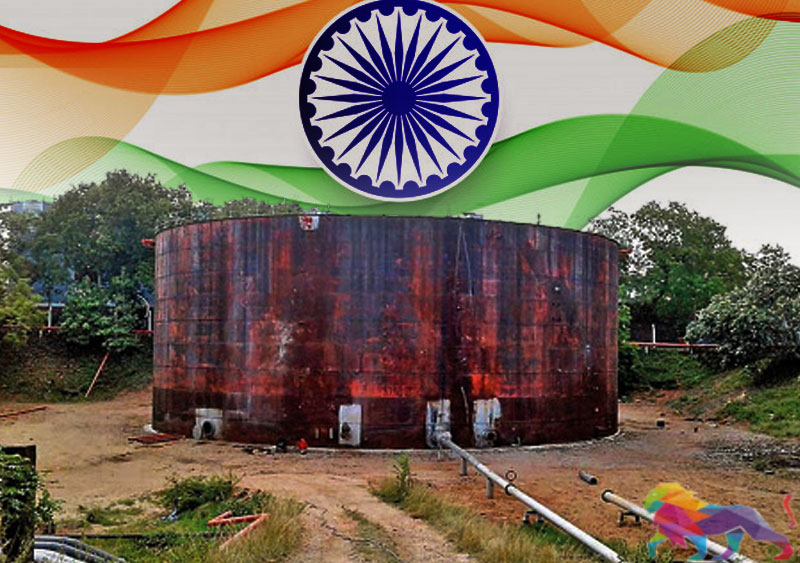
Energy security package: Like food and health, Sri Lanka is heavily dependent on India for its energy needs as well. India will be providing a line of credit to the Rajapaksa government to meet its overall import requirement for crude oil. Moreover, India will also be assisting in the early modernisation of Trincomalee Tank Farm.

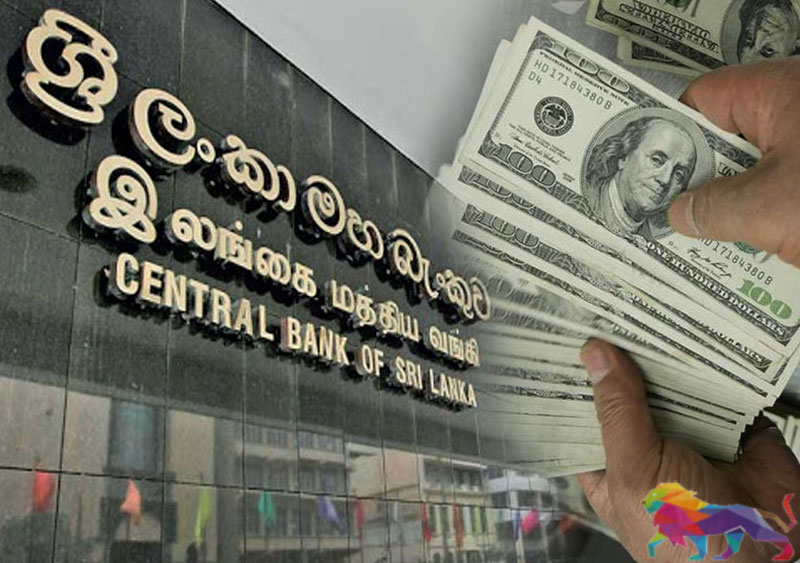
Currency swap agreement- Currently, Sri Lanka is under a balance of payment crisis. Simply put, Sri Lanka’s forex reserve is extremely low and it needs money in a currency other than its own (preferably the American dollar). India has in principle agreed to approve a currency swap agreement with the Rajapaksa government. Under this agreement, India will be providing loans to Sri Lanka in dollars. For Sri Lanka, it will be cheaper than borrowing from the international market, while for India, it will be helpful in reducing Sri Lanka’s economic dependence on China.

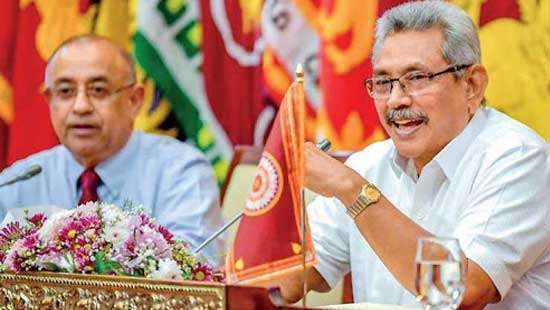
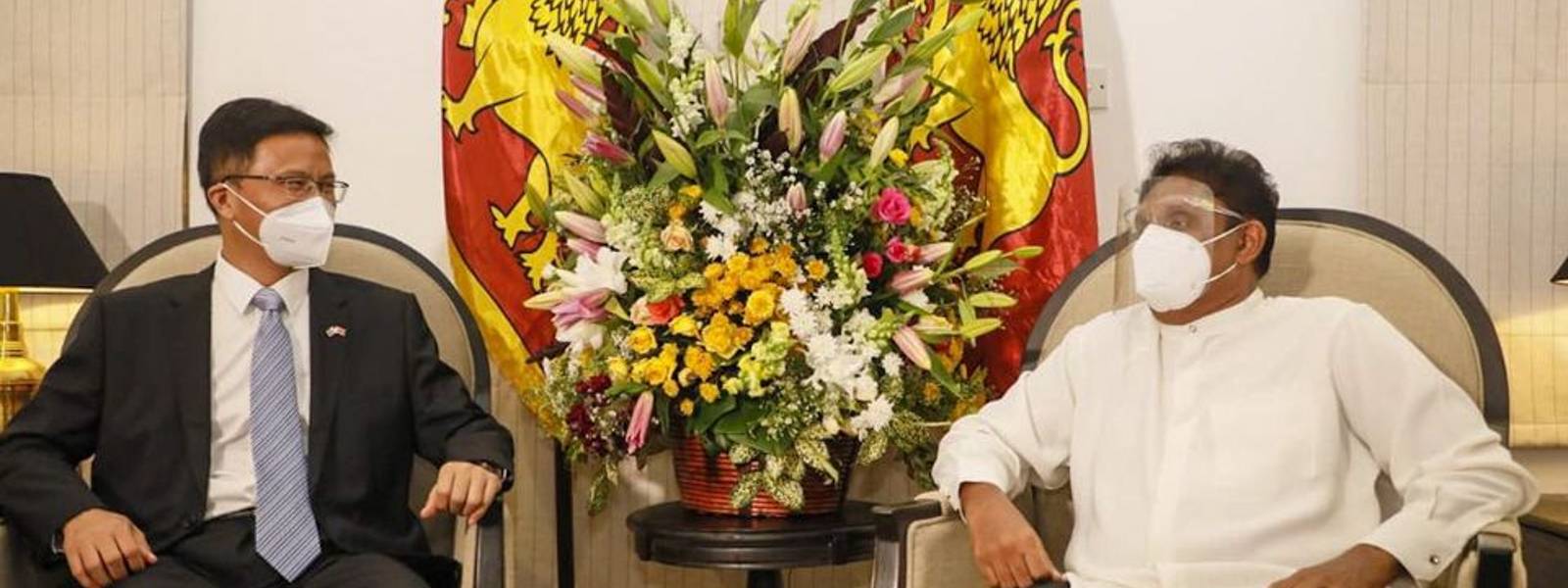
Facilitation of investments in Sri Lanka- India and Sri Lanka will also be cooperating on diplomatic as well as ministerial levels to assist Indian businesses working towards upscaling Sri Lankan economic development. Sri Lankan finance minister Basil Rajapaksa, Indian finance minister Nirmala Sitharaman and foreign minister Shri S. Jaishankar have given approval to a direct line of communication between respective ministries of both countries.

The key role played by Finance and External Affairs ministers

The deal is said to have been finalised during Sri Lankan finance minister Basil Rajapaksa’s visit to India in early December. Briefing media about Basil’s visit, the Sri Lankan government said: “The Sri Lankan finance minister’s discussions with his Indian counterpart and the external affairs minister focussed on a whole gamut of issues of mutual importance pertaining to the bilateral relationship with particular attention on the economic cooperation aspect. Both sides expressed satisfaction over the evolving trajectory of the bilateral relationship. During the discussions, they identified ways and means through which the existing bilateral economic relationship between the two countries could be further broadened and deepened.”

The age-old alliance between India and Sri Lanka

Except for Rajiv Gandhi’s poor decision to interfere in Sri Lankan internal civil war, India and Sri Lanka had a largely peaceful and cooperative relationship. The bilateral free trade agreement between both countries became operational in 2000, which led to an exponential rise in bilateral trade between both countries.

Similarly, cultural ties between both countries are extremely strong as they have shared history, which is believed to be thousands of years old. Ravan, a terrorist of his time, was dethroned by Bhagwan Ram, who crossed over the sea in order to relieve Lankans from his cruel regime. Similarly, Buddhism, the dominant religion in Sri Lanka, owes its origin to India. Based on shared history, both countries are working to chalk out a plan to start a joint tourism venture.

China’s debt-trap diplomacy

The mid-2010s witnessed a slight dip in the relationship between both countries due to Chinese intervention in Sri Lankan affairs. In terms of militaristic hegemony, China became a huge supplier of military weapons to Sri Lanka with the official excuse of modernising its military. Taking advantage of Sri Lanka’s dependence on the communist nation, China started to send businesses, students, and migrants to the island nation. These developments coupled with China financing development of Hambantota port led to Sri Lanka almost handing the port’s sovereignty to China.

Currently, Sri Lanka is heavily dependent on India to save its sovereignty in the wake of Chinese economic offence through debt-trap diplomacy. With massive amounts of debt dumped on it by Beijing, the country has been looking for a way out, and India under Prime Minister Modi has graciously accepted the olive branch extended to it by Colombo.

Recently, India, Sri Lanka, and the Maldives have been looking for a solid trilateral pact that could act as a buffer to Chinese transgression in the region, especially naval and economic ones. The recent military exercise by three nations coupled with India’s massive bailout to Sri Lanka is just enough to signal Xi Jinping that the “big boy attitude” does not work in international diplomacy.

(TFIPost)

Posted in Uncategorized

International rights body poised to downgrade Lankan Human Rights Commission

At its virtual session in October, the Sub-Committee on Accreditation (SCA) of the Global Alliance of National Human Rights Institutions (GANHRI) had recommended the downgrading of the Human Rights Commission of Sri Lanka (HRCSL) to “B status” for its structural flaws and unsatisfactory performance. The HRCSL currently enjoys A status.

However, the downgrading will not take effect till after a year in 2022, the SCA clarified. In the interim, the HRCSL has an opportunity to provide documentary evidence necessary to establish its continued conformity with the Paris Principles.

The SCA said that in February 2021, it had received correspondence from civil society organizations regarding the flawed appointment process of the HRCSL, the lack of pluralism in the HRCSL’s membership and staff, as well as its ineffectiveness in discharging its human rights mandate.


The SCA conducted a telephone interview with the HRCSL in which the latter was asked to provide responses to the following issues: (a) the selection and appointment process that took place for the current Chairperson and Commissioners of HRCSL; (b) how pluralism is ensured in the current membership of the Commissioners and staff; (c) how the 20th amendment of the Constitution of Sri Lanka (20A) has affected the HRCSL’s ability to realize and perform its mandate; (d) the steps taken by HRCSL to respond to recommendations made by international human rights mechanisms; (e) actions taken, including public statements/positions on reports of serious human rights violations including surveillance, intimidation, judicial harassment of human rights defenders, excessive use of force and arrest and detention of protesters, deaths in police custody and torture by law enforcement officials, and the use of the Prevention of Terrorism Act.

“While the SCA acknowledges that the HRCSL has provided some information in relation to the above mentioned issues, in both its interview and written submission, it considers the responses insufficient to address the substance of its concerns. In view of the information before it, the SCA is concerned that the institution’s independence and effectiveness have not been sufficiently maintained in line with the requirements of the Paris Principles,” the SCA said.


It encouraged the HRCSL to continue to actively engage with the Office of the High Commissioner of Human Rights, the GANHRI and other rights bodies as well as relevant stakeholders at international, regional and national levels, in order to continue strengthening its institutional framework and working methods.

20 th.Constitutional Amendment

The 20A passed in October 2020, had abolished the Constitutional Council, a 10-member body with three seats reserved for civil society representatives, that was tasked to recommend candidates for appointment as HRCSL Commissioners. In its place, the 20A reinstated the Parliamentary Council, composed exclusively of members of parliament, with “power to make only observations” to the President of Sri Lanka with respect to the appointment of HRCSL Commissioners.

Appointing Process

In the recent selection and appointment process in December 2020, the government did not advertise the vacancies, nor did it detail the criteria for the assessment of the candidates. This resulted in appointments made in a manner that was not wholly transparent to civil society, the SCA noted.

The HRCSL’s reply to this was that the Parliamentary Council is composed of parliamentarians who represent the public and different groups in society and therefore they knew the best interests of the country. The HRCSL also pointed out that the publication of vacancies is not a legal requirement.

In view of the available information before it, the SCA was of the view that the process currently enshrined in law was not sufficiently participatory and transparent. The process also did not provide sufficient opportunities for consultation with or participation of civil society.

READ: US Treasury sanctions Chinese face recognition company for rights violations in Xinjiang

“Based on the HRCSL written and oral response to the issues above, the SCA is of the view that the HRCSL has not effectively engaged on and publicly addressed all human rights issues, including allegations of deaths in custody and torture, nor has it spoken out in a manner that promotes and protects all human rights.”

The SCA held that a national human rights institution mandate should be interpreted in a “broad, liberal, and purposive manner to promote a progressive definition of human rights which includes all rights set out in international, regional and domestic instruments.”

Further “National Human Rights Institutions (NHRIs) are expected to promote and ensure respect for all human rights, democratic principles and the strengthening of the rule of law in all circumstances, and without exception. Where serious violations of human rights are imminent, NHRIs are expected to conduct themselves with a heightened level of vigilance and independence.” Further, the SCA highlights that regular and constructive engagement with human rights defenders and civil society organizations is essential for NHRIs to fulfil their mandates effectively.”

Source:(newsin.asia)

Sri Lanka: Opposition MPs representing Tamil-speaking people underscore 13th Amendment

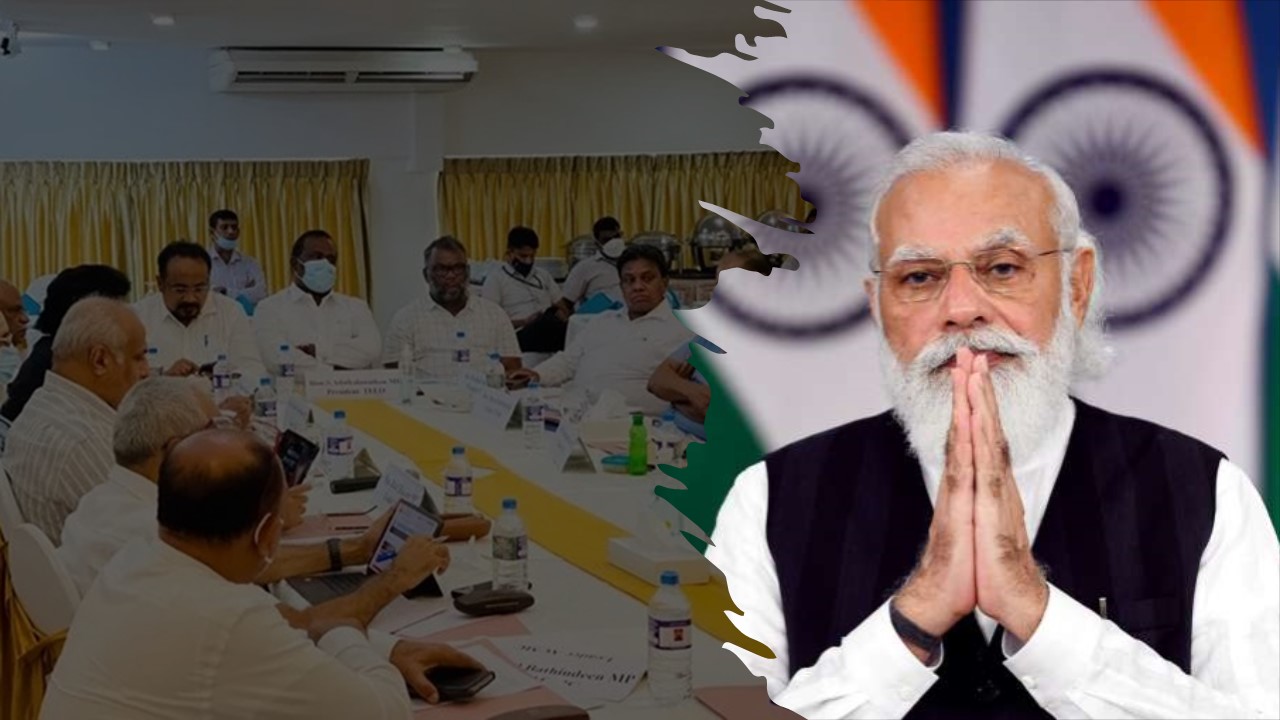
A group of Opposition MPs in Sri Lanka, representing Tamils from the north and east, hill country (Malaiyaha Tamils), and Tamil-speaking Muslims on Sunday sought the full implementation of the 13th Amendment to ensure “existing rights are not snatched away”.

The contentious 13th Amendment, born out of the Indo-Lanka Accord of 1987, has remained in Sri Lanka’s Constitution for nearly four decades without seeing full implementation, as successive regimes in Colombo have refused to part with power over crucial areas including land, and law and order. Some within the Rajapaksa administration are calling for its repeal deeming the provincial councils, created consequent to the Amendment, “white elephants”. The 13th Amendment is the only legislative guarantee thus far for a measure of power devolution that many in the southern Sinhala majority consider “too much”, and most in the Tamil polity consider “too little”.

India has repeatedly asked the Sri Lankan leadership to ensure the full implementation of the 13th Amendment. While Colombo has in turn given many assurances to “go beyond” the legislation, to ensure meaningful devolution, “that has not happened so far,” said said senior Tamil politician and Tamil National Alliance Leader R. Sampanthan. “We have gathered today from different political parties to discuss the situation. We exchanged our views on the subject, and will be taking this discussion forward,” he told a press conference, following the MPs’ meet at a Colombo hotel on Sunday.


“There is now talk of a new Constitution, but simultaneously we see the government’s efforts such as ‘One Country One Law’,” the 88-year-old Trincomalee parliamentarian said, of an ongoing initiative of the government that critics fear might further impair even the limited legislative powers of the Provincial Councils

The parliamentarians will finalise a “comprehensive document” by December 21, said Mano Ganesan, Leader of the Tamil Progressive Alliance that represents Malaiyaha Tamils. “We are challenging this government and asking them to fully implement what is already in our Constitution. Nothing has changed in this country 12 years after the war ended. Our message is not only to the Sri Lankan leadership, but also to India, the international community and UN bodies,” he said. As a signatory to the Accord of 1987, “India has an obligation,” Mr. Ganesan added. The final document coming out of the discussion would also be sent to Prime Minister Narendra Modi, according to the organisers.

Sri Lanka’s nine Provincial Councils are defunct for about two years, after their terms lapsed in 2018 and 2019. “Meanwhile, the Centre through various presidential task forces is trying to snatch our powers. If that has to be stopped, we must emphasise our rights highlighting what is guaranteed in our Constitution,” said Rauf Hakeem, Sri Lanka Muslim Congress Leader and legislator.

Jaffna MP and former Northern Provincial Council Chief Minister C.V. Wigneswaran said in demanding the full implementation of the 13th Amendment, the MPs were not abandoning the call for a federal political solution to Sri Lanka’s historic Tamil national question. “While we don’t see the Amendment as a permanent solution, we recognise its importance in the interim, until there is an acceptable permanent solution,” he said, adding: “India will be able to intervene only as long as the 13th Amendment is there.”

Tamil polity divided

In this renewed emphasis on the 13th Amendment, Sri Lanka’s Tamil polity appears divided. While TNA constituents Tamil Eelam Liberation Organisation (TELO) and People’s Liberation Organisation of Tamil Eelam (PLOTE) are part of the MPs’ initiative centred on the legislation, the Illankai Tamil Arasu Kachchi (ITAK) – chief constituent of the TNA that Mr. Samapanthan and Mr. Sumanthiran belong to – have been focusing on the prospect of a political solution in the promised new Constitution, turning the spotlight away from the 35-year-old Amendment that few Tamils consider adequate.

In August this year, Mr. Samapanthan wrote to President Gotabaya Rajapaksa expressing keenness to meet him and discuss the new Constitution. “The 13th Amendment to the Constitution was enacted in 1988 this was found to be inadequate and since 1988 every successive government has taken steps and agreed to build on the 13th Amendment to bring about meaningful devolution. There has been substantial consensus derived from these processes,” Mr. Sampanthan said in the letter reminding Mr. Rajapaksa of a pending meeting. President Rajapaksa was scheduled to meet the TNA in June, but the meeting was postponed, and his office is yet to announce a new date.

Further, TNA’s Jaffna legislator M.A. Sumanthiran recently led a delegation to the United States, where the Alliance sought a US-India collaboration in pushing for a political solution in Sri Lanka by way of a constitutional settlement. Remarking on the MPs’ initiative, Mr. Sumanthiran said in a Jaffna meeting on Saturday: “If 13th Amendment were enough, why would we have lost so many lives? Lakhs of our people died after it came into effect… The Amendment is not a meaningful way of devolving power. Even [PM and former President] Mahinda Rajapaksa has acknowledged that in the past. Why are we now asking for something that is not meaningful?” The TNA has been in discussion with India at every stage, he added.

Source:The Hindu

Suspended Chinese solar power projects will not be given to India : Dr.ramesh

Government spokesman Dr. Ramesh Pathirana dismissed media reports that the solar power generation projects in the north about to be launched by China but abandoned under controversial circumstances would be given to India.

He told the media that neither the government discussed it nor the government intends to entrust the construction of a solar power generation project to Adani Group of India as suggested by interested parties.

The Chinese Embassy in Colombo has announced that China has decided to suspend the construction of a hybrid solar power (renewable energy) project in three islands in the north, namely, Nagadeepa, Analthivue and Delft off Jaffna but decided to suspend the project owing to security concerns raised by a third party. Following the awarding of the contract to China in early this year, India vehemently protested to the awarding of the contract to a Chinese company citing security concerns.

Responding to a journalist at the news briefing, Minister Dr. Pathirana flatly rejected that the government was in a move to give the renewable energy project to Adanis of India.

Posted in Uncategorized

PMD confirms Prez leaves to Singapore on private visit

President Gotabaya Rajapaksa has left for Singapore this morning on a private visit, as confirmed by the Presidents Media Division today (13).

Earlier today, The Morning exclusively reported of this trip whereas the travel itinerary and purpose of travel was not revealed by the President’s Spokesperson Kingsley Rathnayake.

“The President will be travelling out of the island today, but due to reasons, I cannot reveal the final destination or the purpose of travel. But, he will be travelling today,” said Rathnayake this morning.

Sources said he is likely to have gone for a medical check-up.

Posted in Uncategorized

India Working on Economic Package to Aid Sri Lanka, ET Reports

(Bloomberg) India is working on an urgent package of assistance for Sri Lanka to help the island nation out of an economic crisis, the Economic Times newspaper reported Saturday, citing officials that it didn’t identify.

The measures will cover areas including food and health security, energy security and a currency swap, the officials said. The move follows a recent visit by Sri Lanka’s finance minister to India, the paper said. The plan is to extend credit lines for Sri Lanka to import food, medicine, fuel and other essential items from India.

Sri Lanka is at risk of a possible default amid dwindling foreign-exchange reserves, even as its central bank governor said he’s confident the government will service all its overseas debt. It’s also trying to revive its Covid-hit tourism industry with the reopening of borders following extended pandemic lockdowns, and is expecting increased remittance inflows as more Sri Lankans head overseas to seek employment.

The two countries have “identified ways and means through which the existing bilateral economic relationship between the two countries could be further broadened and deepened,” ET said, citing a statement from the Sri Lankan government.

EC ready for PC polls

The Election Commission (EC) will shortly begin preparatory work for the delayed Provincial Council (PC) elections, a media release from Elections Commissioner General Saman Sri Ratnayake stated yesterday.

Training programs for District, Deputy and Assistant Election Commissioners and the staff of district offices on the preparatory work for the PC elections will be conducted in the coming weeks.

The training programs will cover preparation of the voters’ registers under electoral divisions, selection of polling stations, nominations and postal voting process, enforcing election laws, conducting the election, counting and the releasing of results.

The Commission members also decided at its meeting on December 10 to publish a commemorative booklet on the work it has been doing.

The Election Commission comprises Chairman Nimal G. Punchihewa, S.B. Divaratne, M.M. Mohamed, K.P.P. Pathirana and Mrs. P.S.M. Charles.

Posted in Uncategorized

SLFP moves to revive UPFA, PA amid growing rift with ruling alliance

The Sri Lanka Freedom Party (SLFP) is working towards reactivating the United People’s Freedom Alliance (UPFA) and the People’s Alliance (PA) with the aim of forming a broad front as it increasingly tries to distance itself from the ruling Sri Lanka Podujana Peramuna (SLPP), a senior party member said.

SLFP Vice Chairman Rohana Luxman Piyadasa told the Sunday Times yesterday that talks had already begun with parties represented in Parliament and even parties not represented in Parliament. The idea of reactivating the UPFA and the PA was first discussed at the SLFP’s Central Committee (CC) meeting several weeks ago following talks between a group of Government coalition parties which were opposed to the sale of Yugadanavi power plant shares to a US-based company.

The UPFA and the PA are already registered with the Election Commission, with Mahinda Amaraweera being the UPFA General Secretary and Lasantha Alagiyawanna the PA General Secretary.

As a first step, a meeting of parties that earlier came under the UPFA banner was convened, followed by wider discussions with minor political parties that are not represented in Parliament, Prof. Piyadasa said.

He, however, said the focus for now was not on any election. “The Government is yet to call an election and we don’t know when one will be held. Our focus now is on reactivating this alliance and moving forward to form a strong, broad front.”

The SLFP has been increasingly at loggerheads with the SLPP over the past few months. All SLFP MPs, including party chairman and former President Maithripala Sirisena, voted with the Government on Friday to pass the Budget, but tensions continue to play out publicly, with accusations flying back and forth between the two sides.

During a media briefing in Kandy yesterday, Prof. Piyadasa lashed out at the SLPP over the “arrogant attitude” it displayed towards other coalition partners from the earliest days of the Government. “The repercussions of this attitude are being felt today. The country is plagued by many social issues and the people are wondering whether they have a leader they can trust,” he remarked.

This isn’t just a visa ban but a warning signal – Yasmin Sooka

The ban imposed by the United states isn’t just a visa ban against low level alleged perpetrators but a warning signal to their commanders, many of whom are still in positions of power, that they too are extremely vulnerable, said the Executive Director of the International Truth and Justice Project (ITJP), Yasmin Sooka.

The United States department of state has announced bans on two more Sri Lankan military officials for human rights violations, as the State Department expand sanctions on those accused of war crimes.

“Setting up presidential commissions to recommend dropping charges and issuing presidential pardons won’t safeguard the commanding officers, who still have a case to answer for gross violations of human rights,” she added.

See the full statement below:

10th December 2021

Human Rights Day Press release: US designation of Sri Lankans – Seeds of Hope for Victim Families.

Johannesburg: Victim families and human rights groups have welcomed the designation by the United States Government of a Sri Lankan naval intelligence official allegedly involved in enforced disappearances in 2008 and 2009, as well as a soldier convicted of extrajudicial killings of Tamils in 2000 but then controversially pardoned1.

The two named individuals are Chandana Hettiarachchi and Sunil Ratnayake respectively. Lt. Cmdr. HMPCK Hettiarachchi was a naval intelligence officer and a prime suspect, who absconded from justice, in the Fort Magistrate’s Trincomalee 11 abduction case, as well as one of the accused who was acquitted by an all-Sinhala jury for the killing of Tamil MP, Nadaraja Raviraj2.

According to Sri Lankan court documents, Hettiarachchi allegedly ran one of two special intelligence teams responsible for abductions and disappearances, operating mainly from Colombo but transporting detainees in vans to the naval base in Trincomalee3.

In Colombo, he is alleged to have worked closely with the aide-de-camp to then Navy Commander Wasantha Karannagoda. Only this week, Karannagoda, who had been charged in the same court case, was appointed as a provincial governor after the new government decided not to pursue charges against him.

While former Staff Sergeant Sunil Ratnayake was pardoned in 2020 after being convicted of the murder of 8 Tamil civilians in 2000 including three children. His case was one of very few cases where a soldier had ever been tried for war crimes in Sri Lanka and his pardon caused consternation internationally, signalling that domestic accountability is now an impossibility.

A relative whose loved one was among the eleven people who disappeared in 2008-9 at the hands of the Sri Lankan Navy, says she will now take heart from the news: “When we saw that all the charges were being dropped in the magistrate’s court in Sri Lanka, we gave up. I said to my family, what’s the point of carrying on asking for justice,” said one of the Trincomalee 11 family members.

“But now the seed of hope is growing again in my heart and you are watering it with this news. We are really happy that the Americans could at least do this; it gives us a little strength and hope. When I saw Hettiarachchi’s name on the list, I took a deep breath,” she added. Her statement confirms how important accountability for past violations remains for victims in Sri Lanka.

The ITJP’s 2019 report The Navy: A Collective Blind Eye4 analysed in detail the evidence gathered in Sri Lanka during the police investigation into the disappearances by the Navy and cross referenced it with the testimony of other survivors, eyewitnesses and insiders and the command structure at the time. The study found large number of top Sri Lankan navy commanders were allegedly complicit in the torture, disappearance and murder that occurred inside naval sites from at least 2008-2014 which resulted in the ITJP calling for a review of engagement with the Sri Lankan Navy.

“This isn’t just a visa ban against low level alleged perpetrators but a warning signal to their commanders, many of whom are still in positions of power, that they too are extremely vulnerable,” said the Executive Director of the International Truth and Justice Project (ITJP), Yasmin Sooka. “Setting up presidential commissions to recommend dropping charges and issuing presidential pardons won’t safeguard the commanding officers, who still have a case to answer for gross violations of human rights,” she added.

1 https://www.state.gov/the-united-states-promotes-accountability-for-human-rights-violations-and-abuses/

2 Tamil MP Nadaraja Raviraj was murdered 10 November 2006. An all-Sinhalese jury in 2016 acquitted all those on trial. After his release from prison, HMPCK Hettiarachchi came back to work at Navy Headquarters in Colombo despite being a suspect in the 11 Trincomalee abduction case. This is testament to the protection he benefited from at the highest level as generally speaking, as a suspect in a criminal case, he should have been suspended.

3 “Hettiarachchi and Wickramasuriya put the Dehiwala boys to a white van. Mahesh said that they were taken to be handed over to Ranasinghe in Trincomalee”, said Susantha Petty officer XC 30543, Northern camp (Kankesanthurai), 14 August 2018. Police Investigation documents. “Hettiarachchi has given him cash to get them food”, said Wijekoon Mudiyanselage Chandrakumar Leading seamen XS 37614 Puttlam Camp, 14 August 2018. Court documents (Ref 13 March 2017 B report) quote the disappeared youth Rajeev Naganathan calling his father in Feb. 2009 and alleging Hettiarachchi had brought Ali Anver to Chaitya Road Naval HQ and had him suspended and beaten. In March, the Naganathan family received an SMS saying Hettiarachchi had moved their son and other prisoners to the high security naval base in Trincomalee.

US sanctions more Sri Lankan soldiers over war crimes

The United States has announced bans on two more Sri Lankan military officials for human rights violations, as the State Department expand sanctions on those accused of war crimes.

Chandana Hettiarachchi, a Sri Lankan naval intelligence officer, involved in the ‘Trinco 11’ disappearances and Sunil Ratnayake, a soldier guilty of murdering at least 8 Tamils, are now barred from entry to the US.

Their families are also barred from entry.

The men become the second and third Sri Lankan soldiers to be barred from entry to the United States over their involvement in war crimes. In 2020, Sri Lankan army chief Shavendra Silva was barred from entering the USA “due to credible information of his involvement, through command responsibility, in gross violations of human rights”.

“We are determined to put human rights at the center of our foreign policy, and we reaffirm this commitment by using appropriate tools and authorities to draw attention to and promote accountability for human rights violations and abuses, no matter where they occur,” said the US State Department in a statement this evening.

The US named the Sri Lankan soldiers as;

Chandana Hettiarachchi, a Sri Lankan naval intelligence officer, for his involvement in gross violations of human rights, namely, the flagrant denial of the right to liberty of at least eight “Trincomalee 11” victims, from 2008 to 2009.

Sunil Ratnayake, a former Staff Sergeant in the Sri Lanka Army, for his involvement in gross violations of human rights, namely the extrajudicial killings of at least eight Tamil villagers in December 2000.

“The designation of these two Sri Lankan individuals is not the only action we are taking in support of accountability for gross violations of human rights in Sri Lanka,” the statement added.

Chandana Hettiarachchi

Lieutenant Commander Chandana Prasad Hettiarachchi alias ‘Navy Sampath’, had earlier evaded arrest over the abduction and forced disappearance of 11 people, who were predominantly Tamil. He was later released on bail.

All 11 victims were abducted in Colombo between August 25, 2008 and February 2009 and held for ransom at navy bases in Colombo and Trincomalee, before being presumably murdered.

The eleven victims have been named as Kasthuriarachchi John, Thyagarajah Jegan, Rajiv Naganathan, Soosaipillai Amalan, Soosaipillai Roshan, Kasthuriarachchi Anton, Prageeth Vishvanathan, Thilakeshwaran Ramalingam, Mohamed Dilan, Mohamed Saajid and Ali Anwar. Two fathers and their sons are among the victims and their ages range from 17 to 50 at the time of abduction.

The United Nations Human Rights Council (UNHRC) has tracked investigations and prosecutions relating to emblematic cases in Sri Lanka, including the abduction of the 11 youth. UN Human Rights commissioner Michelle Bachelet, noted in a report earlier this year that “not a single emblematic case has been brought to a successful conclusion or conviction.”

See an excerpt of an interview with the mother of one of the victims below.

Sergeant Sunil Ratnayake, was convicted in 2015 for the murder of eight civilians (including children) in Jaffna in 2000. However, in 2020, he was released following a presidential pardon.

He had been sentenced to death in 2015 for the murder of the 8 Tamils, including 3 children, in the town of Mirusuvil. The Tamils had been arrested by Sri Lankan security forces on the10th of December 2000. The following day their bodies were found in a mass grave with their throats slashed, according to the District Medical Officer’s post-mortem report. All but two of the bodies had been stripped naked. The youngest to have been murdered was a 5-year-old child.

The killings have since been dubbed the Mirusuvil massacre.

Ponnathurai Maheswaran, who managed to survive and escape from the army, testified in court and identified at least five of the soldiers responsible. After a lengthy court process only Ratnayake, a member of the military’s elite Long Range Reconnaissance Patrol (LRRP), had been sentenced. The other men were cleared of all charges.