Police accused of continuous harassment of Tamil Leaders

Human rights groups in Sri Lanka are accusing the country’s Police of continuous and unrelenting acts of harassment against activists and politicians from minority communities. The most recent incident they say is the summoning of a Tamil politician in the Eastern province by the special police crime unit without the provision of a valid reason.

Sources said that the TELO Deputy Leader and former Provincial Councilor Indrakumar Presena was summoned to be present at the special police crime unit located at the Batticaloa SP Office at 10.00 am on November 11.

Presena is the third Batticaloa based provincial politician to be summoned by the Police within a week. He is also the Deputy Leader of Tamil Eelam Liberation Organization (TELO).

Earlier, Batticaloa Municipal Councilors Thuraisingam Mathan and Thyalakumar Gowri had been summoned by the Batticaloa HQ Police for questioning over their participation in a memorial held for war victims.

According to Prenena, two Police officers had visited his home on Vanniyar Street and handed over the summons.

The summons was not an official document, he said, adding that it didn’t have an official seal. The handwritten summons merely had the details of a Police officer’s official ID number, he noted.

Sources said that number of North and East based politicians, journalists and activists in recent times have been summoned for questioning by the Counter Terrorism Investigation Division (CITD), without providing proper details of the investigation taking place.

Posted in Uncategorized

UK express concern over torture and sexual violence in Sri Lanka

Speaking in parliament, Amanda Milling, Minister of State for Asia, detailed the UK government’s concern over continued reports of torture and sexual violence by Sri Lanka’s security forces.
Her statement was in response to concerns raised by Opposition Whip, Feral Clark, who highlighted findings from the International Truth and Justice report which detailed the abduction and torture of 15 Tamils by Sri Lanka’s security forces. These abductions occurred since Gotabaya Rajapaksa took office as Sri Lanka’s president in 2019.

In her statement, Milling maintained the government’s commitment to “push the government of Sri Lanka to take action on accountability for violations committed during and after the conflict, including crimes of sexual violence”.

She further highlighted that the UK had led the UN Human Rights Council Resolution 46/1 which maintained the need for accountability and human rights in Sri Lanka. The resolution mandated the collection of evidence of war crimes that may be used in a future war crimes tribunal. The resolution also expresses concern at alleged torture and other cruel, inhuman and degrading treatment or punishment.

Milling also noted that Minister for South Asia, Tariq Ahmad, has raised his human rights concerns with Sri Lankan Foreign Minister G.L. Peiris in calls on 10 May and 24 September respectively.

Milling further claims that the current UK Foreign Secretary, Liz Truss, also raised the importance of upholding human rights when she met with Peiris on 26 October. Truss faced intense criticism from MPs and Tamil activists for this meeting and the following media statement which did not raise human rights but instead advocated for “strengthening security ties”. This comes as Scottish MPs, numerous human rights NGOs, and a former UN investigator has raised serious concerns over Police Scotland’s training contract with Sri Lanka’s abusive police authority.

The Minister of State for Asia maintained that Britain would “continue to press for a strong role for the UNHRC to help deliver accountability and reconciliation and ensure the protection of human rights in Sri Lanka”.

Former President in a discussion with representatives of 31 political parties

A discussion between the United People’s Freedom Alliance (UPFA) and representatives of 31 non-parliamentary political parties was held today (11) at the party headquarters under the chairmanship of its leader, Sri Lanka Freedom Party (SLFP) Chairman and former President Maithripala Sirisena.

Representatives of Liberal Party, Janatha Arunalu Party, Nawa Sihala Urumaya, Eksath Lanka Podujana Party, Jathika Peramuna, Muslim Ulama Party, Dravida United Liberation Front, Sri TELO Party, Lanka Janatha Jathika Party, United Lanka Janatha Party, Workers’ Liberation Front, United Ceylon General Assembly , New Democratic People’s Front, United Sri Lanka Front, People’s Party of Indian Origin, Democratic United National Front, Mawbima Jathika Peramuna, United Congress, Our Jana Urumaya, Progressive Janatha Sevaka Party, Helabima Janatha Party, Mawbima Democratic Party, Eksath Lanka Janabala Front, United Democratic People’s Party, United Freedom Party, People’s Development Party, Social Development Party, and Sri Lanka Progressive Front were present at the meeting, according to a report in Lankadeepa.

Speaking to the media, former President Maithripala Sirisena said that he had invited several fellow political parties who wished to join the United People’s Freedom Alliance (UPFA) for the discussion.

Responding to a question from the media on how to contest in the forthcoming elections, the former President said that the matter has not been discussed as there is no election to be held soon.

The General Secretary of the United People’s Freedom Alliance, Minister of Environment Mahinda Amaraweera stated that they hope to work with parties that are not represented in Parliament in the future.

Mr. Amaraweera said that they would abide by the decisions taken by the Central Committee of the Sri Lanka Freedom Party and the United People’s Freedom Alliance in any forthcoming election and that they are ready for any election.

The Minister said they know that the people are disappointed with the government, adding that although some members of the ruling party have made some statements against the SLFP members, they do not care what the people in the background says as there are no such allegations from the government leaders.

“We, the Sri Lanka Freedom Party, joined the government with 1,710,000 votes, trusting in the President and will take the necessary decisions in due course,” he said.

Senior Vice President of the Sri Lanka Freedom Party Prof. Rohana Lakshman Piyadasa, Party Treasurer, State Minister Lasantha Alagiyawanna and National Organizer State Minister Duminda Dissanayake were also present at the occasion.

Minister denies claims intelligence officials met Zahran

Minister of Public Security Sarath Weerasekera today denied claims that intelligence officials had met Zahran Hashim prior to the Easter Sunday attacks.

Weerasekera told Parliament today that the claims made by opposition Parliamentarian Harin Fernando was false.

The opposition MP had claimed that the meeting took place at the residence of Zahran Hashim.

Fernando had alleged that Zahran Hashim’s wife Abdul Cader Fathima Hadiya had stated that State Intelligence Services visited Zahran Hashim before the attacks in April 2019.

The Minister of Public Security said that Harin Fernando had made a false statement in Parliament and that no such meetings took place.

Ranil insists Sri Lankan youth who met ISIS not linked to Easter attacks

Former Prime Minister Ranil Wickremesinghe today insisted that a group of Sri Lankan youth who met the ISIS in Syria were not linked to the Easter Sunday attacks.

Wickremesinghe told Parliament that when the youth returned to Sri Lanka, intelligence officers had closely monitored them.

He said that investigations found the youth had no links to the Easter Sunday attacks.

The former Prime Minister also said that the Government must submit investigations reports into the Easter Sunday attack to Parliament.

However, Minister of Public Security Sarath Weerasekera said that investigations into the attacks are still ongoing.

He said that once the investigations are over then all the reports can be tabled.

Posted in Uncategorized

Chinese fertiliser issue: Agriculture Ministry to reject 3rd party test report

The Ministry of Agriculture has stated that it will not accept the reports of any tests carried out by a third party on the controversial fertiliser samples of China-based Qingdao Seawin Biotech Group Co. Ltd.

Speaking to The Morning, Ministry of Agriculture Secretary Prof. Udith K. Jayasinghe-Mudalige said: “It is not possible to import fertiliser from this company based on test reports of a third party. If the company wants to supply fertiliser to Sri Lanka, they should follow the prescribed procedure from the beginning by submitting samples to the local testing agencies, mainly the National Plant Quarantine Service (NPQS).”

Schutter Global Inspection and Survey Company Ltd., the third-party testing agency selected by Qingdao Seawin Biotech Group, has stated that no harmful characteristics, such as coliform bacteria, salmonella, and ascarid eggs, were found in the fertiliser samples provided by the said Chinese company.

Accordingly, the Ministry Secretary said that even though the relevant Chinese company has the power to get fertiliser samples tested by any party, a decision regarding the importation of fertiliser from it can only be taken based on the findings of the NPQS.

“Samples of these fertilisers were twice submitted to the NPQS and they have come to a conclusion that they contain harmful microorganisms. That is the end of our process. If the relevant company has got the samples tested by any other party, it is up to them, but we will not take such into account. That is because our decision is based on what the NPQS has stated based on their tests,” he said.

Meanwhile, commenting on the “Hippo Spirit” ship, which is currently in Sri Lankan seas with a stock of organic fertiliser from the Chinese company in question, Prof. Jayasinghe-Mudalige said that the ship should go back and that there would be no point of asking for compensation or submitting third-party test reports.

“We did not ask for this ship to come here. Therefore, there will be no point of giving third-party test reports or asking for compensation for something we did not ask. Furthermore, we cannot get into the ship and test the fertiliser samples in it,” he added.

When contacted by The Morning to query what action the Chinese fertiliser company would take in this situation, the local agent of the said company said that he was not aware of such.

It was also reported this weekend that this Chinese company has sent a Letter of Demand (LoD) seeking a sum of $ 8 million in damages from the NPQS.

Accordingly, the Samagi Jana Balawegaya (SJB) had organised a protest in front of the NPQS in Katunayake yesterday (11) over the said demand of the Chinese company. SJB Parliamentarian Dr. Kavinda Heshan Jayawardena, who participated in the protest, claimed that they strongly condemn the interference of the Chinese company into the NPQS, which is a state institution.

Furthermore, the Agriculture Graduates’ Association of Sri Lanka Agriculture Service (AGASLAS) is to visit the Chinese Embassy in Sri Lanka in protest over the Chinese fertiliser company’s LoD to the NPQS. In a media statement, they also said that they would hold a silent protest in front of the Chinese Embassy.

Following tests carried out by local testing agencies, including the NPQS, on the second set of samples of organic fertiliser made in China that have confirmed the presence of harmful bacteria in the said samples, the Agriculture Ministry recently decided not to import organic fertiliser from the said Chinese company.

In this backdrop, State Minister of Promoting the Production and Regulating the Supply of Organic Fertiliser, and Paddy and Grains, Organic Foods, Vegetables, Fruits, Chillies, Onion, and Potato Cultivation Promoting, Seed Production, and Advanced Technology Agriculture Shasheendra Rajapaksa told the media on 26 October that China had refused to accept the results of the tests conducted so far.

“They (China) said the tests carried out on these fertiliser samples by local agencies cannot be accepted as they were not accredited laboratories. They said that this company in question manufactures fertilisers for about 16 countries, including Australia, Canada, and the US, and, therefore, asked us to understand the quality of these fertilisers,” he said.

Posted in Uncategorized

Sri Lanka’s ‘One Country, One Law’ task force seeks to divide not unite: JVP leader

Sri Lanka’s recently appointed ‘One Country, One Law’ presidential task force led by a controversial Buddhist monk may be a step towards further division between communities rather than a means to bring them closer, opposition MP Anura Kumara Dissanayake said.

“This is serious. Some communities have expressed opposition to this committee and have shared their concerns. We must govern not in a direction that sees conflict intensify but in a direction that sees conflict resolved, not in a direction that sees communities grow apart but come closer,” Dissanayake told parliament on Wednesday (10).

The National People’s Power (NPP) MP and leader of the Janatha Vimukthi Peramuna (JVP) was seeking verbal responses from Prime Minister Mahinda Rajapaksa regarding the makeup of the controversial task force and on what grounds its head Galagodaaththe Gnanasara Thero was appointed by President Gotabaya Rajapaksa.

“I wish to ask the prime minister if he can explain whether that isn’t what this is all about. If he doesn’t offer an explanation, I shall conclude that he is of the same view as I am,” said Dissanayake.

President Gotabaya Rajapaksa gazetted the task force in late October to come up with proposals for “one law” for all Sri Lankans abolishing all other personal laws including Muslim marriage law and some other regional laws that go back centuries. The Muslim Marriage and Divorce Act (MMDA) in particular has been the focus of much debate, with many women’s rights activists within the Muslim community calling for reform and an end to child marriage.

Bodu Bala Sena (BBS) General Secretary Galagodaaththe Gnansara Thero’s appointment as the head of the task force has been widely panned by some opposition lawmakers, civil society groups and others including those within the government’s own ranks.

The task force was also criticised for not having any Tamil representation, prompting President Rajapaksa to appoint three new members, purportedly representing women and the minority Tamil community, on November 06. Justice Minister Ali Sabry was also reported to have expressed his surprise at the task force and the appointment of Gnanasara Thero as its chair without his consultation. Reports emerged later that he had tendered his resignation over the matter, but the president had refused to accept it.

MP Dissanayake asked the Prime Minister why the task force was appointed at all when a new constitution is in its final stage of being drafted, on top of a separate bill being drafted by the Justice Ministry on the ‘One Country, One Law’ theme.

Related: Sri Lanka PM confirms new draft constitution will be ready by end 2021

“And on what basis were the chairman and members of that task force appointed? What is the objective of appointing people accused of inciting racism and suspicion about other communities?”

Responding to the MP, both the prime minister and Leader of the House Dinesh Gunawardena said the president has the authority to appoint a task force.

“The task force was appointed taking into account the views of different sections of society to study and formulate a legal framework unique to Sri Lanka,” said PM Rajapaksa.

“Any recommendations will be implemented after discussing them with the justice minister. That’s the standard procedure with any presidential task force,” said Gunawardena.

In an otherwise cordial exchange with the Prime Minister, Dissanayake said that in his tenure as President between 2005 and 2015, Rajapaksa had appointed presidential task forces based on nominations following due process.

“We may have had disagreements over their findings, but there was faith in the task force itself,” said Dissanayake.

“This task force attempts to bring all personal laws under one common law. We wonder why one group who has campaigned for taking away the rights of the other was put in charge? Other than what our gut tells us, what was the logic behind it? It seems not even the Justice Minister was aware of this appointment,” he said.

Dissanayake had previously expressed fears of a scheme to whip up communal disharmony in Sri Lanka using seasonal extremist elements to distract the public from multiple crises the country is facing.

Related: JVP leader smells scheme to whip up extremist sentiment in Sri Lanka

Asked again for the prime minister’s views on the matter, Rajapaksa said: “No, there is no issue with this.”

Meanwhile, Public Security Minister Sarath Weerasekara chiming in said no one had questioned Dissanayake’s credentials when he was appointed to an anti-corruption investigative unit during the previous administration.

“None of us asked what your qualifications were or on what grounds you were appointed. Operating from Temple Trees, you brought charges against politicians of your choosing. No one questioned your credentials then. So let the president do this,” said Weerasekara.

“What’s in store for this country if the public security minister utters such nonsense?” said a seemingly amused Dissanayake.

“As I have said before in parliament, if I had the power to take action against corruption, a lot of people wouldn’t be here today [in this House]. I also believe I have earned right to speak against corruption,” he said, adding that his conscience is clean.

The ministers’ comments showed that none of them had been privy to the formation of the Gnansara Thero-led ask force, said Dissanayake.

The firebrand monk has been accused of promoting Islamophobia in Sri Lanka.

In 2012, Gnanasara Thero was allegedly at the forefront of an anti-Muslim campaign which called on the majority Sinhalese to boycott Muslim-owned businesses.

The United States in 2014 cancelled a visa issued to the monk while social media platform Facebook blocked his account after the BBS’s alleged involvement in violence against Sri Lanka’s minority Muslims in the Western coastal town of Aluthgama.

He was later arrested for contempt of court in 2018 during the previous administration but was later pardoned by President Maithripala Sirisnena.

Critics have said Gnanasara Thero has been used to create a rift between the Sinhala majority and Muslim minority for political reasons. But the monk has denied the allegation and has said Sri Lanka’s Sinhala majority has issues that have been ignored by politicians, issues that he had tried to address.

Since the 2019 Easter bombings, the monk has maintained that his cause is not against ordinary Muslims who have coexisted with the Sinhalese for centuries but with extremist, Wahabist elements in Muslim society.

Speaking to reporters on November 01, Gnanasara Thero said recommendations by the BBS, widely seen as an ultranationalist outfit, will make it to the proposals of the presidential task force he leads.

Related: BBS proposals will make it to ‘one country, one law’ task force: Sri Lanka hardline monk

The monk said the BBS had spoken about unethical conversions, destruction of archaeological monuments and cultural invasion.

“Today we have got a result of all our hard work. The president’s attention has been drawn to speak about these issues emphatically,” he told a news briefing organised by the Presidential Media Centre for handpicked journalists.

“We will have to discuss the same things we spoke about as the BBS within this gazette as well and include them in the bill,” the monk said.

For many speculative questions posed to him by journalists, the monk said he will answer after February 28, 2022, when the task force submits its report to the president. He will be fair by all, he said.

Zahran’s wife Sadiya’s audio clips available: Harin

Audio clips of Zahran Hashim’s wife Sadiya admitting that her husband had met intelligence officers are available, SJB MP Harin Fernando told Parliament yesterday adding more suspense to the Easter Sunday attack episode.

MP Fernando said even those in Vatican and Cardinal Malcolm Ranjith had listened to the clips as of today.

“ The Clips where Sadiya, the wife of Zahran admitting that her husband had met intelligence officers prior to the Easter Sunday attacks are available and Cardinal Ranjith and those in the Vatican had already seen it, I will not reveal as to where it is now because of security reasons,” the MP said.

Parliamentarian Fernando reiterated that he is willing to have a public debate with Minister of Public Security Sarath Weerasekera. “I am not scared of getting arrested and that is why I invite Minister Weerasekera for a public debate,” he said.

Whilst alleging once again that a senior DIG who ordered the lorries with explosives to be released on April 4 , the MP tabled a copy of a contract he had signed with Sri Lanka Cricket (SLC) pertaining to the post of Security advisor.” This senior DIG has been given Rs. 150,000 as a salary. How can an police officer who is serving in the police accept another post?” he questioned.

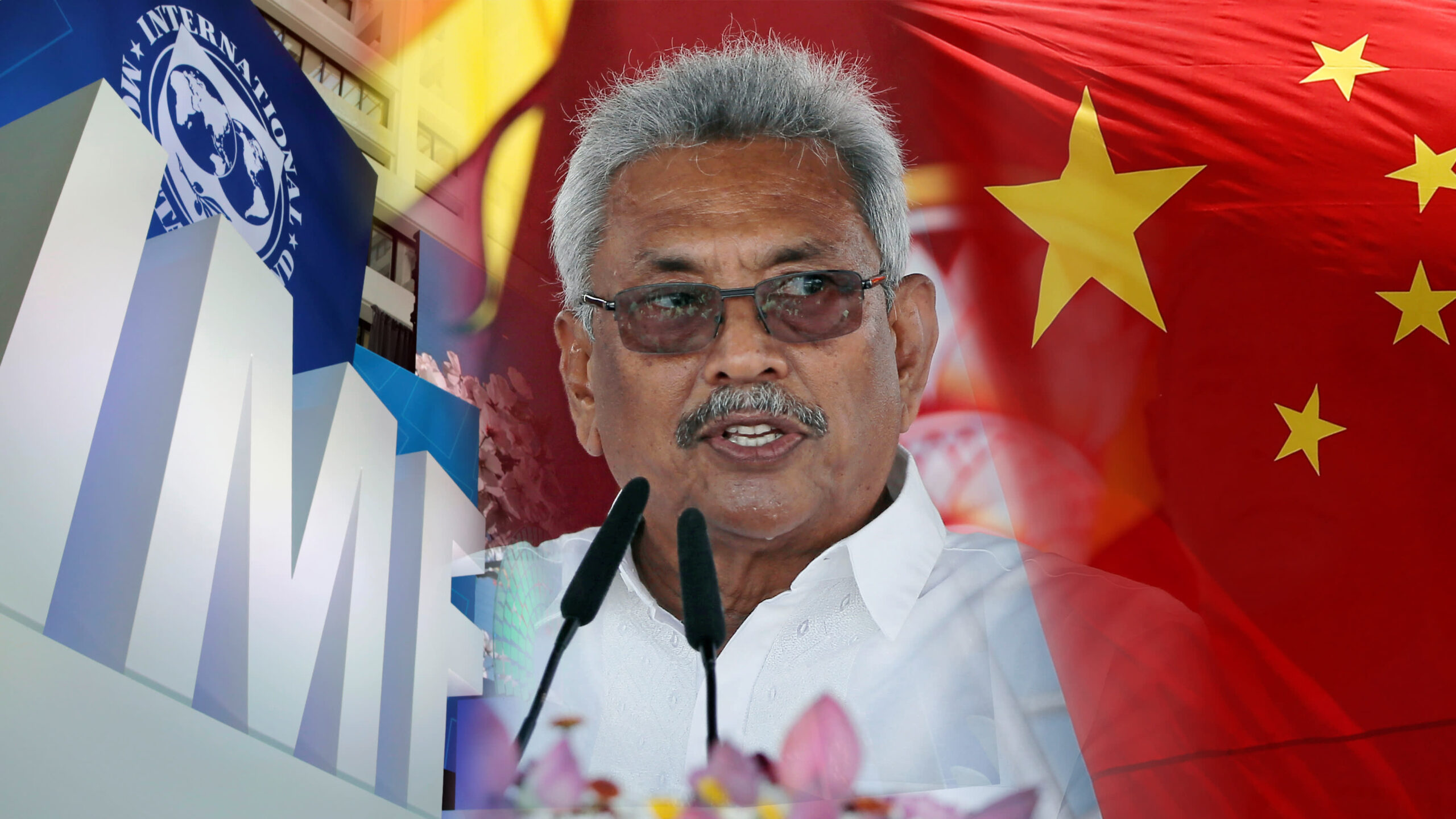
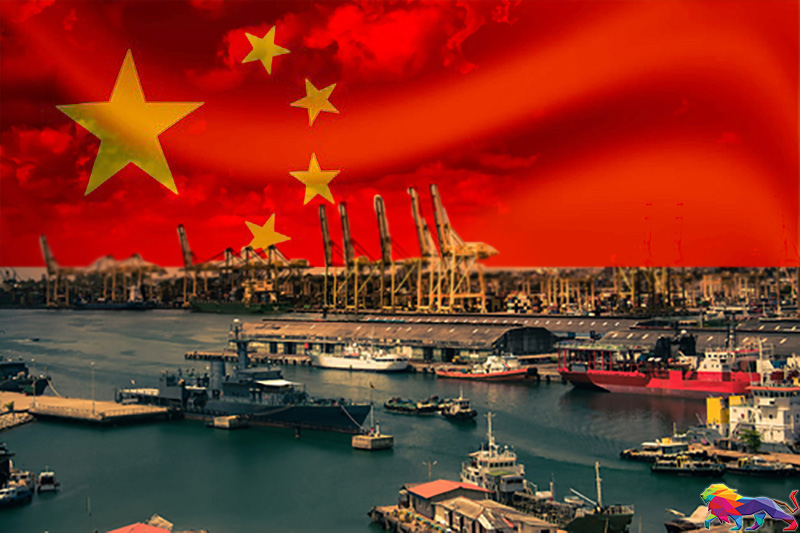
Sri Lanka Tastes China’s Wolf Diplomacy on Fertilizers

Sri Lanka is now tasting, for the first time, China’s latest weapon in its armory – wolf diplomacy.

China’s punitive actions, one against a state-owned Sri Lankan bank and the other its endorsement of a Chinese company’s Letter of Demand for US$ 8 million from a Sri Lankan government official in the organic fertilizer purity issue, has invited harsh anti-China public comments.

Although the government in Colombo has chosen to be silent, Sri Lankans as a people including the media, now see China as a threat and not a friend. This is a huge setback for China in Sri Lanka, which has so far been seen as a firm friend of Beijing’s.

Relations between Sri Lanka and China were excellent between 2010 and 2015 when the pro-China Mahinda Rajapaksa was President. During this period, China constructed the US$ 1.1 billion Hambantota port, an ultra-modern container terminal in Colombo, a state-of-the-art airport at Mattala, and had begun constructing the US$ 1.4 billion Colombo Port City.

But relations struck a bad patch when the Mahinda Rajapaksa government was replaced by the pro-West regime led by Prime Minister Ranil Wickremseinghe. The port city was stalled for a year and a half for alleged corruption. China reportedly incurred a loss of US$ 380,000 per day as a result of the suspension of work.

Eventually, the government had to bow to China. It had to give China outright possession of 20 hectares of land and another 88 ha on a 99 years lease in the Port City. Unable to pay loan instalments for the Hambantota port, the government leased it out to China for 99 years.

When Gotabaya Rajapaksa, brother of Mahinda Rajapaksa, assumed the Presidency in 2019, he jolted China by telling an Indian interviewer that he will re-examine the Hambantota deal. Eventually he restricted himself to ensuring that the security of the port was in the hands of the Lankan navy.

Under Gotabaya’s charge, China continued to fund various projects and extended financial help. But being more sensitive to India’s security concerns than Mahinda Rajapaksa, Gotabaya yielded to India’s pressure to cancel a China-funded and ABD-sanctioned solar energy project in the islands of Jaffna close to the Indian coast. The Chinese were dismayed but did not take any punitive action.

When COVID-19 struck, India took the lead in supplying Sri Lanka its Covishield vaccine. China tried to fill the gap when India stopped its supplies, but the Lankan authorities did not permit Sinophram to be used on the ground that the data given were incomplete.

The Chinese on their part refused to give more data. With the result, 600,000 does were in cold storage for months even as COVID deaths were mounting. When the bar on Sinopharm was eventually lifted, China rushed to make Sinopharm the main vaccine in the island.

President Gotabaya’s decision to ban the use of chemical fertilizers entirely and force farmers to use only organic fertilizers, created an agricultural crisis. Since Sri Lanka had no commercial production of organic fertilizer, it had to import urgently. China won a contract. But the ship carrying the organic granular fertilizer was not allowed to enter Colombo port because the Lankan quarantine authorities said that samples of the fertilizer had the harmful bacteria Erwinia.

On a court order, the State-owned Peoples Bank did not honor the Letter of Credit. The Chinese embassy and the Chinese company, Qingdao Seawin Biotech Group Co Ltd., argued that the consignment had been cleared by the Chinese authorities and that the testing at the Colombo end by the National Plant Quarantine Service (NPQS) was not technically proper.

And in a tit for tat step, the Chinese embassy blacklisted the Peoples’ Bank. The Lankan media accused China of bullying. The Chinese embassy then suggested that the samples be tested in a world renowned lab in Europe but this did not secure any response.

The Chinese company then escalated the conflict by sending a legal notice to the Lankan official at the NPQS, Additional Director W.A.R.T. Wickramaarachchi, who had issued the test reports. The Letter of Demand seeking US$ 8 million in three days. If not, it threatened to make the official who issued the test reports personally responsible and liable to legal action.

Through its local lawyers, the Chinese company stated the reasons why it considers the Sri Lankan tests invalid. After saying that the Qingdao Seawin Biotech Group is the largest organic manufacturer in China, exporting to 600 clients across 51 countries including US and Germany, the Letter of Demand said that the charge that the consignment had Erwinia was “wrong, incorrect and untrue.” It said that the National Plant Quarantine of China had certified that there was no harmful bacteria.

The letter said that the production process was Roller Double Drying at 600 C. “All pathogenic raw materials will be killed in that temperature,” it pointed out. The letter further said that the Chinese authorities had tested samples on October 3 and 13 and the reports issued by the Technical Center of the Qingdao customs clearly showed that the samples did not contain Erwinia.

Accusing the Sri Lankan quarantine authorities of not following the testing protocols they ought to have followed as signatories of the International Plant Protection Convention (IPPC), the lawyer’s notice to the Additional Director said: “The test and identification of Erwenia spp ought to be as set out in IPPC Diagnostic Protocols for Regulated Pests ISPM 27: Erweinia. However, the testing and/or isolation and the results set out in your aforementioned reports, more particularly your report dated 4, October 2021, are not in compliance or conformity with the aforementioned IPPC Diagnostic Protocols for Regulated Pests ISPM27: Erwinia amylovora, in as much as the growing temperature for Erwinia is 25c to 30c. The quarantine testing temperature for Erwinia carotovorv ought to be set at 25c to 35c and according to the applicable international standards agreed and set out in IPPC, the temperature of testing is set at 25c as per IPPC Diagnostic Potocols for Regulated Pests ISPM27 DP13. Furthermore, the pathogenicity experiment of inspection and quarantine of harmful microorganisms needs to use Koch hypothesis experiment on healthy plants.”

News reports in Sri Lanka said that the Lankan quarantine official concerned had not received the said Letter of Demand. The Sri Lankan government has also been silent. Government has the option of going by a court order if one or more of the parties approach a court. Alternatively, it could take up the matter diplomatically with the Chinese embassy since the Chinese embassy is openly pushing the Chinese company’s case.

If the dispute festers and if the media coverage, now very hostile to China, continues, Sri Lanka-China relations will be badly affected. Sri Lanka may also suffer. Although China is not a market for Sri Lankan exports (the US and EU are), it is the only source of money for infrastructure development which the war-ravaged country is thirsting for. China has also been one of the few unwavering supporters of Sri Lanka in international fora, especially the UN Human Rights Council where Sri Lanka bashing by the West is a hardy annual.

Much depends on the attitude of the Lankan President Gotabaya Rajapaksa who enjoys vast discretionary powers as the Executive President. But unlike his brother Prime Minister Mahinda Rajapaksa, he does not seem to have a natural affinity with China.

The 60 dollar question now is: will Gotabaya Rajapaksa step in and put out the fire or will he allow it to consume Sino-Lankan relations. With the US and India emerging as a possible alternative to China he could take a hard stand on the issue.

But the Chinese themselves appear to be keeping the door for a settlement. The Letter of Demand indicates that their quarrel is with the Addition Director of the Lankan Quarantine Service personally, as he had signed all the contested test reports. Perhaps making him the target is a ploy to enable the Lankan government to find a solution.

Perhaps the government could agree to the earlier Chinese suggestion for third party testing in Europe, with both the exporter and the importer agreeing to accept the results.

However, the prospects do not look bright as even the China-friendly Prime Minister Mahinda Rajapaksa had told the Chinese Ambassador that Sri Lanka could not accept tainted fertilizers and that his country would accept only consignments which met Sri Lankan standards.

Source:The citizen

Posted in Uncategorized

Indian Foreign Minister speaks to Basil

Indian Foreign Minister Dr. S. Jaishankar has spoken to Finance Minister Basil Rajapaksa.

Jaishankar tweeted saying he had a good conversation with the Finance Minister.

He said they agreed to remain in close touch.