CoA dismisses writ against Karannagoda indictment withdrawal

The Court of Appeal (CoA) yesterday (10) rejected the writ petition filed requesting to revoke Attorney General (AG) Sanjay Rajaratnam (PC)’s decision to withdraw the indictment filed in the Colombo Permanent High Court Trial-at-Bar against former Navy Commander and Chief of Defence Staff Admiral Wasantha Karannagoda in connection with the case of the Navy being implicated in the alleged abduction and disappearance of 11 youths in Colombo in the 2008-2009 period.

The Court of Appeal had stated that the AG has the discretion to indict or not, and had noted that the Court of Appeal cannot intervene in this discretion.

The petition was filed by relatives of the 11 youths. The petitioners had noted that when the AG had indicted Karannagoda, this must have been due to having sufficient evidence and that dropping the charges that led to the indictment without just cause is a misuse of the AG’s power.

Karannagoda was named as an accused in the case filed against a group of naval intelligence officers pertaining to the alleged enforced disappearance of 11 youths in Colombo in 2008 and 2009.

On 4 August, the AG had informed the Colombo Permanent High Court Trial-at-Bar not to, temporarily, proceed with the indictment against Karannagoda, as the Court of Appeal had, in connection with a writ petition filed by Karannagoda, issued an interim order, halting the hearing of the indictment filed against him. On 13 October, the AG had again informed the Court of Appeal that the indictment against Karannagoda will not proceed, when the writ petition filed by Karannagoda against naming him as an accused of this case was taken up before the Court of Appeal.

The parents of the 11 youths who were allegedly abducted and forcibly disappeared by a group of naval intelligence officers have also filed a complaint with the Commission to Investigate into Allegations of Bribery or Corruption (CIABOC) on 9 August against the AG.

SL Plant Quarantine Service receives LOD from Qingdao; NPQS maintains it position

Sri Lanka’s National Plant Quarantine Service on Wednesday (10) confirmed that it received a Letter of Demand (LOD) from Qingdao Seawin Biotech Group Co., Ltd., challenging the test results of the Chinese Organic Fertilizer shipment to the country.

Additional Director of the NPQS Dr. W. N. R. Wickramarachchi told News 1st that the National Plant Quarantine Service maintains the position that the test results are accurate and are in accordance with International Standards.

In an Exclusive Interview with News 1st, Dr. Wickramarachchi stressed all international protocols were followed with regard to the Chinese Organic Fertilizer in question.

“The NPQS was established via an act and it is state body vested with a serious responsibility of ensuring that harmful pathogens DO NOT enter Sri Lanka,” he stressed adding the NPQS tests all samples irrespective of the country of origin and the company.

He said after testing the samples, the NPQS sends those results to the relevant authorities in the Fertilizer Secretariat and Agriculture Ministry, and the NPQS does not worry if the results hurt a particular country or supplier.

Recently, Qingdao Seawin Biotech Group Co., Ltd., the Chinese Organic Fertilizer Manufacturer, sent a Letter of Demand to the National Plant Quarantine Service.

The Letter of Demand seen Exclusively by News 1st notes that Qingdao Seawin Biotech Group Co., Ltd., has suffered significant loss and damage in a sum of US$ 8 Million and continues to suffer further loss and damage due to loss of reputation and goodwill as well as existing and potential business, due to the negligent conduct of the National Plant Quarantine Service.

The LOD noted that the NPQS make a payment of US$ 8 Million within 3 days from the date hereof for the loss and damage caused to Qingdao Seawin Biotech Group Co., Ltd.

Three new members appointed to Task Force for One Country, One Law

President Gotabaya Rajapaksa has appointed three new members to the Presidential Task Force for One Country, One Law.

This was mentioned in a special gazette notification published by the Secretary to the President, P.B. Jayasundera.

The newly-appointed members of the task force are Ramalingam Chakrawarthy Karunakaran, Yogeswari Patgunarajah and Iyyampillai Dayanandaraja.

A 13-member task force, chaired by Ven. Galagodaaththe Gnanasara Thero, was appointed on October 26, to study the implementation of the concept “One Country, One Law” and to prepare a draft Act.

Hwoever, two of its members, Prof. Dayananda Banda and Lecturer Mohamed Inthikab later stepped down from the panel.

The task force now consists of 14 members in total, including Prof. Shanthinandana Wijesinghe, Prof. Sumedha Siriwardana, N.G. Sujeewa Panditharathna, Attorney-at-Law Iresh Senevirathne, Attorney-at-Law Sanjaya Marambe, Eranda Navarathna, Pani Wewala,, Moulavi Mohamed of Ulama Council in Galle, Kaleel Rahuman and Azeez Nizardeen.

The new appointments were made after taking into consideration the representations made various parties with regard to the composition of the membership and its Terms of Reference, the gazette notification read.

The focus also fell on the need for pluralistic character and gender equality of the Sri Lankan society to be reflected in the composition of the membership of this Task Force.

In the new gazette notification, President Rajapaksa also amended the terms of reference of the task force as follows: Presenting proposals for formulating a conceptual framework ideally suited for Sri Lanka after making a study of the said concept taking into account the views and opinions held by various parties with regard to the implementation of the concept: “One Country, One Law”.

Posted in Uncategorized

Sri Lanka PM confirms new draft constitution will be ready by end 2021

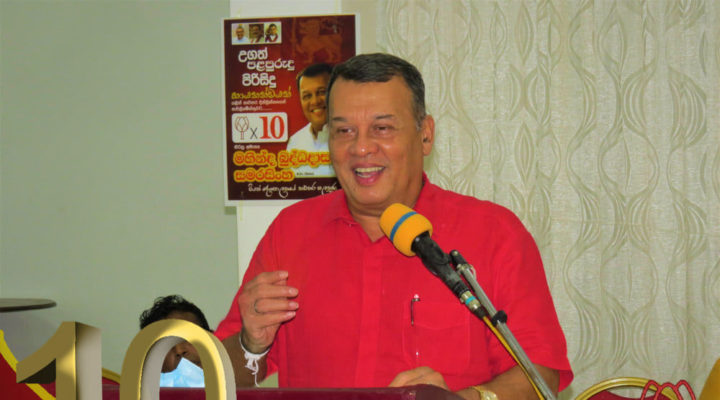
Sri Lanka Prime Minister Mahinda Rajapaksa confirmed to parliament on Wednesday (10) that a draft new constitution, currently in the final stages of drafting by a committee headed by Romesh de Silva PC, will be ready by the end of the year.

Foreign Minister Prof G L Peiris had previously said at a ruling party press conference that the draft constitution will be ready for parliamentary perusal in January 2022.

Prime Minister Rajapaksa was speaking in response to a question raised by National People’s Power (NPP) parliamentarian Anura Kumara Dissanayake.

“We pledged a new constitution to the people as per the Vistas of Prosperity manifesto. We respect the mandate the people have given us. With the approval of the cabinet, the government has appointed a committee chaired by Romesh de Silva PC to draft a new constitution after identifying issues and shortcomings in the 1978 constitution which has been amended several times,” said the premier.

“The committee is tasked only with drafting the new constitution,” he added.

According to Rajapaksa, this functions separately to the recently appointed ‘One Country One Law’ presidential which is to make recommendations on bringing about “one law” that applies to all communities living in Sri Lanka abolishing personal laws such as the Muslim Marriages and Divorces Act (MMDA).

Rajapaksa said the committee comprises: Former President of the Court of Appeal Abdul A W Abdul Salam, Director of the Centre or the Study of Human Rights Prof (Mrs) Wasantha Seneviratne, Professor Emeritus of the Peradeniya University G H Peiris, Manohara de Silva PC, Sanjeewa Jayawardena PC, Samantha Ratwatte PC, Naveen Marapana PC, senior lecturer A Sarweswaran.

“The Ministry of Justice has informed us that the committee expects to complete the draft by the end of this year and that the process is currently at its final stage,” said Rajapaksa.

Speaking to reporters on October 18, Minister Peiris said: ““The constitution is the country’s supreme law. [However], it’s not set in stone. As the nature and the needs of society change, so too must the constitution.”

“It is a convoluted (vyhaakoola) process. To do this, the president appointed a committee comprising some of the best known lawyers and intellectuals in the country,” he added.

Peiris said parliament will have the opportunity to focus on the new constitution once the final vote on Finance Minister Basil Rajapaksa’s inaugural budget has been taken.

’’After you chase us away, why elect us again?’’ President questions public

President Gotabaya Rajapaksa, today at an event questioned the public as to why they elect politicians who they had once chased away and urged them to look for new people without electing the same set of people.

He said after governing for 5 years, the opposition had failed in their performance which is why he was elected, but now after two years, the opposition behaved like they had never governed the country.

“Even if myself or the ministers in my government don’t meet your expectations, don’t elect the same set of people. Look for new people. This system has to change,” the President said.

“There is no point in electing the same group of people into power if they fail to meet the people’s expectations. I don’t know how it could be done but that is the reality,” the President said.

“Once you chase us away, again you elect us. What’s the point in that ?” he further questioned.

Posted in Uncategorized

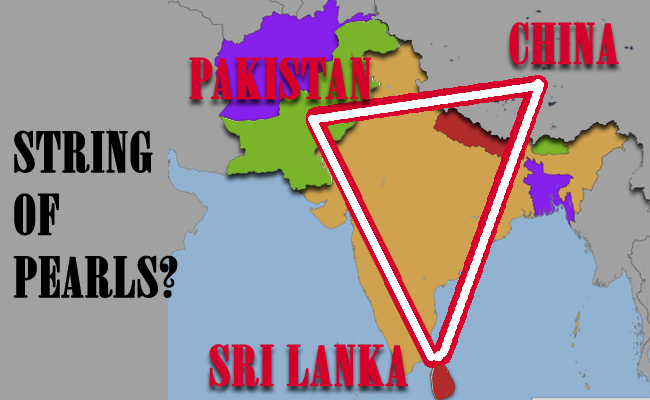
Is Srilanka a Chinese colony? – Goachronicle

Sri Lanka, that beautiful little island to our south, faces a multiple whammy (it was once called Serendip). It will dip into its foreign exchange reserves (USD 8bn) to liquidate some of its debt overhang.

This is a drastic step, to prevent debt default. Though not common, countries can, and periodically do, default on their sovereign debt.

Argentina, Russia, and Lebanon are just a few of the governments that have defaulted over the past decades.If countries default, in this era of mass, mainstream and social media, their reputation is instantly shredded and they get locked out of international credit market.

It takes decades for investor confidence to return. Governments that are composed of certain political groups with a disproportionate power level can lead to reckless spending and, eventually, default. One way that institutional investors protect themselves against catastrophic losses is through a hedging strategy known as a credit default swap (CDS).

Sri Lanka had tried this, but did not succeed. Countries that default – or risk default – experience substantially higher borrowing costs.

Of the 59 of the countries that the IMF classifies as low-income developing countries in 2021, almost 40% are in a debt crisis or at the edge of one, double the number in 2013. Outside help does kick in sometimes.

In the mid-1990s the United States helped to bail out Mexican bonds. In the 2008 global financial crisis, the International Monetary Fund (IMF), European Union (EU), and European Central Bank (ECB), came together to provide Greece with much-needed liquidity and credit stabilization.

What has happened to Sri Lanka then?

It has a serious infection of Sinitis. Sri Lanka’s financial crisis is deepening and its foreign debt in 2021 is above 100% of GDP. Most of the foreign debt is owed to China, since Colombo borrowed recklessly for infrastructure projects. Sri Lanka’s Government has officially declared the worst economic crisis in the country in since independence.

A harebrained project announced by President Gotabaya Rajapaksa to switch to organic farming overnight has destroyed Sri Lanka’s agriculture. Severe import restrictions are killing the manufacturing sector. Sri Lanka’s Energy Minister acknowledged that the crisis could lead to financial terror. In October 2021, Sri Lanka rejected a 20,000 tonne consignment of “contaminated” organic fertilizers from China ordered by a state-owned Sri Lankan company that got a court order to stay a Letter of Credit opened by the state-owned People’s Bank of Sri Lanka.

Unused to a free judiciary, the Chinese Embassy in Colombo peremptorily “blacklisted” the Bank, while the ship carrying the rejected consignment changed its name!

This is the latest version of win-win. The growth of the China-Sri Lanka relationship is anchored not on proximity but on economic and financial and military ties. Following the end of the civil war in 2009, Sri Lanka wanted to rebuild its shattered economy.

Where would the money come from?

For decades, developing nations depended on the World Bank, IMF, rich Western donors, former colonial masters.All imposed humiliating conditions, gave incessant advice on governance, corruption, environmental standards, social norms, spoke but did not listen and progressively tightened their scrutiny.

Then along came this fellow with an open cheque book and said take as much as you want for your project (including a lot for your family – off the books), no due diligence, no income checks, no conditionalities, no human rights business.

Sri Lanka, like so many others, had discovered its mesmerizing knight in shining armour. It borrowed recklessly, without due diligence or a realistic assessment of shifting geopolitics. The “debt trap” first emerged in Sri Lanka in late 2018. Hambantota Port was an economic no-go, but touted as Sri Lanka’s path to the developed world, with a spanking new deep seaport, an airport, a stadium, a giant conference center and many miles of new roadways.

The virus was a knockout blow to Sri Lanka’s fragile economic recovery. Tourism, a major contributor to Sri Lanka’s economy (about 5% of GDP), collapsed as Sri Lanka suspended all its passenger flights and ships. Tourism earnings in 2020 were less than a third of 2019.

Besides proper taxation, Sri Lanka ideally needs a more export-oriented growth to lift its economy from the current debt crisis, but global purchasing power has been slammed by the virus. Sri Lanka’s external sector vulnerabilities, including the shortage of foreign currency, will require support from outside, whether China, India, the United States, or international agencies.

Caught in a financial straitjacket, in his September 2020 virtual summit with his Indian counterpart, Mahinda Rajapaksa sought an additional USD 400 mn currency swap facility and deferment of debt payments (it owes USD 1 bn to India) till November 2022

India, concerned about Sri Lanka’s economic health, suggested that Colombo enter an IMF program. Sri Lanka obtained a USD 1.4 bn currency swap from China, tied to Chinese loans and exports. China opened its cheque book, first for a USD 307 mn loan, with the condition that Sri Lanka accept Beijing’s preferred company, China Harbor, as the new port’s builder, rather than adopt an open bidding process.

As always, Beijing lent billions of dollars (that must be repaid at a premium) to hire Chinese companies and Chinese workers. The promises of increased trade and economic wealth were quashed almost immediately as Hambantota Port opened its doors in a shambolic inauguration ceremony.

Sri Lanka sunk deeper into debt to China

China is also building a 15,000-acre industrial zone near Hambantota port, in which it will have a major stake for 99 years. This has led to violent protests by locals including Buddhist monks who fear becoming a Chinese colony. Thousands of Chinese are working on its projects in Sri Lanka, but very few Sri Lankans, except as drivers and security guards. China uses its well-worn argument of language difficulties to bring its own Han people.

Due to the influx of Chinese workers, Hambantota locals have even begun growing and selling Chinese vegetables such as Chinese cabbage, choy sum, and kale. Sri Lanka has excessively relied on China and probably hopes that just as China helped its quasi-colony Pakistan repay part of its huge loan from Saudi Arabia, it might also oblige Colombo.

In August 2020, Sri Lanka acknowledged that trading its debt to China for a 99-year lease on Hambantota Port years was a mistake, even though the money enabled Colombo to liquidate part of its huge debt overhang. In September 2021, an Indian company signed a USD 700 mn deal to build a deep-sea container terminal, the largest foreign investment ever in the port sector of Sri Lanka and a clear attempt to remove some of its eggs from the Chinese basket.

To make matters worse, Sri Lanka’s international reputation is in tatters. It may have won the war against the LTTE, but the Tamil question is far from resolved, as Colombo is soft-pedalling the devolution of power

The latest report by Michele Bachelet, the UN Commissioner for Human Rights, is damning and alleges that “in the 12 years since the end of the war, Sri Lanka has failed to…move forward on a domestic or a hybrid justice process and reparations for atrocity crimes committed”

Bachelet wants “alternative” international options for ensuring justice and reparations, including referral to the International Criminal Court, and restrictions…on alleged Sri Lankan war criminals”

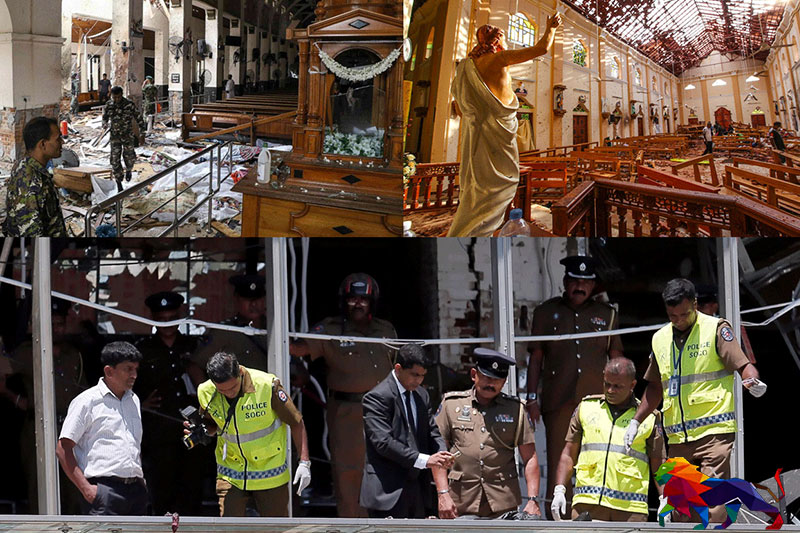
Adding to its reputational and financial woes, terrorism in Sri Lanka has acquired a more insidious dimension with the rise of Islamic fundamentalism. We remember the April 2020 Easter Sunday terror attacks on Churches that killed over 250 people

The Rajapaksa government’s worry also stems from the coming together of the Tamils and Muslims. In a show of strength, tens of thousands from both communities embarked on a long march from Ampara to Jaffna in the north a few months ago.

The government banned burials of Muslim Covid-19 victims, annoying Islamic leaders. Then there is the growing Frankenstein of climate change as the 2004 tsunami showed.

Sri Lanka confronts large-scale logging, degradation of mangroves, coral reefs and soil, air and water pollution, overfishing and insufficient waste management, especially in rural areas.

We hear rumours that the Sri Lankan Tamil diaspora that heavily supported the Tamil independence movement is dusting off its toolkit.

If civil war erupts again, neither the western world (that has left Afghanistan to its devices) nor India, which got burned once, will intervene. And if Colombo is dumb enough to seek help from China, I remind it of Ho Chi Minh’s warning to his cadres when they wanted Chinese help to forestall the return of the French in 1945: The last time the Chinese came, they stayed a thousand years

Being beholden to China can be embarrassing. In February 2021, China demanded immediate approval by Sri Lanka of its Sinopharm vaccine, as Russia’s Sputnik V was authorized, even though not then approved by the WHO. The Chinese Embassy threatened local authorities including the Foreign Ministry. The Sri Lanka National Medicines Regulatory Authority (NMRA claimed that China had not produced the data of the vaccine, while Russia’s ‘Sputnik V’ had given sufficient evidence.

For their defiance, the Sri Lankan officials were sacked by the Health Ministry

Communist China cannot change its behaviour, and expects its sidekicks to follow its autocracy template

In September 2021, Sri Lanka sought a USD 100 million loan from the IMF to buy Pfizer vaccines as young Sri Lankans do not trust the Chinese garbage

In August 2020, the present Government was voted in on the hope of security, stability and progress (all missing in Sri Lanka for a long time)

Dreams of making Hambantota and the surrounding exclusive economic zone a ‘Smart One Stop Shop’ quickly became nightmares

Hambantota handles about one ship a day as major shipping lines route cargo through Colombo

The then Sri Lankan Foreign Minister Ravi Karunanayake had said: “An activity that doesn’t bring any economic returns (is) compelling us to look at options”

Please recall US President Joe Biden’s comment about his Chinese counterpart after their first l telcon in February 2021: “He does not have a democratic bone in his body”. Nor, may I add, a truthful one?

Chinese projects in Sri Lanka, and elsewhere, are state-led

China prefers high-visibility non-strategic projects to begin with, to hide its true intentions, and touts them as win-win ideas

The first major China-funded project was the Colombo National Performing Arts Theater

A loan must be repaid. In a direct investment, the investor assumes the risk and either makes money or loses it

China gives loans (not grants) for unviable projects (against repayment guarantees) and, when the host Government is unable to repay, China simply takes over the project and the land associated with it

Does Beijing want to turn Sri Lanka into a modern day “semi-colony,” in the same way that Great Britain and Portugal turned specific cities in southern China into their own semi-colonies in the mid-19th century?

After the Second World War, Europe was rebuilt substantially through the grants of the US Marshall Plan

Whereas the United States wanted the loyalty of the countries it helped, China expects land for its money

Based on my experience of diplomacy for 50 years, and seeing what is happening in Africa that welcomed Chinese money with open (and often crooked) arms, I would urge Sri Lanka not to cut off its face to spite its nose

Brothers and sisters in Sri Lanka, open your eyes

If your country wants to be a sacrificial pawn on China’s dirty gameboard, I remind you of an African proverb: “When the elephants fight, it is the grass that suffers”

Get out of China’s clutches today. Tomorrow, as Elvis Presley sang, will be too late!

Posted in Uncategorized

International relations with China will be made stronger: G L Peiris

Referring to the demands made by the Chinese fertiliser company for USD 8 million in damages over the controversial organic fertiliser issue, Foreign Minister Prof. G L Peiris stated that if an independent judiciary gave a non-biased ruling, Sri Lanka’s relationship with China would remain and become stronger.

He made this statement during a media brief held yesterday (08).

“The lawsuit was not filed by the Chinese Government. It was filed by a Chinese company, and they have the right to do that. If an independent judiciary hears out the case, and gives an unbiased ruling, then international relationships are not being shattered. Our international relations with China will only be made stronger,” said Prof. Peiris

The Chinese fertiliser company had filed a lawsuit against the Government of Sri Lanka as well as the National Plant Quarantine Service for damages incurred due to the rejection of the consignment.

Posted in Uncategorized

Committee on Public Finance approves amendment to increase borrowing limit

The amendment to the Appropriation Act No. 07 of 2020 to increase the borrowing limit was recently approved by the Committee on Public Finance chaired by Member of Parliament Anura Priyadarshana Yapa.

Accordingly, the borrowing limit which was Rs. 2,997 billion will be increased to Rs. 3,397 billion, it was revealed at the Committee on Public Finance held via video conference, the Communications Department of Parliament said.

Secretary to the Ministry of Finance and the Treasury S.R. Attygalle had pointed out that an amendment to the Appropriation Act was needed to increase the borrowing limit due to the economic downturn in the country caused by the Covid-19 situation.

He further pointed out that this was due to the inability to achieve the expected revenue for the year 2021, the increase in supplementary expenditure and the devaluation of the rupee in the payment of foreign currency loan services.

Mr. Attygalle also pointed out that the increase in welfare expenditure during the Covid-19 pandemic led to an increase in supplementary expenditure. He also said that a sum of Rs. 200 billion had been approved by the Parliament recently for supplementary expenditure.

In addition to this amendment, as per the Cabinet decision taken on 27.09.2021, the gazette notification submitted by the Minister of Finance to revoke the licensing system for white sugar which came into effect from 29th October 2020 under the Import Export (Control) Act No. 01 of 1969 was approved by the Committee on Public Finance.

Dr. Harsha de Silva stated that he had repeatedly emphasized the need for a forensic report in this regard to clarify the crisis situation in the country regarding sugar.

The Chairman said that the Committee on Public Finance would be able to engage in a lengthy discussion on the matter soon after it is tabled by the Committee on Public Accounts.

State Ministers. Susil Premajayantha, Dr. Nalaka Godahewa, Members of Parliament Dr. Harsha de Silva and Prof. Ranjith Bandara as well as a number of senior government officials were present at the recent Public Finance Committee meeting held online.

Posted in Uncategorized

Sri Lanka reports 17 Covid-19 deaths on Tuesday, toll rises to 13,892

Sri Lanka Tuesday reported 17 deaths due to COVID-19 after the figures were confirmed by the Director General of Health Services on Monday, November 08.

Among the deaths reported today, 10 are of males and 07 of females. The majority of deaths – 14 – are of elderly people in the 60 years and above age group.

According to the data reported by the Government Information Department, the total deaths due to Covid-19 since the pandemic began last year has now risen to 13,892.

Schools in Jaffna closed owing to extreme weather

Schools in the Jaffna District have been closed today owing to the extreme weather.

The Jaffna District Secretariat said that all Government schools have been closed today.

Officials said that over 200 mm of rain had been experienced in parts of Jaffna last night.

The extreme weather has resulted in several areas being flooded.