Sri Lanka reports 23 Covid-19 deaths on Monday, toll rises to 13,507

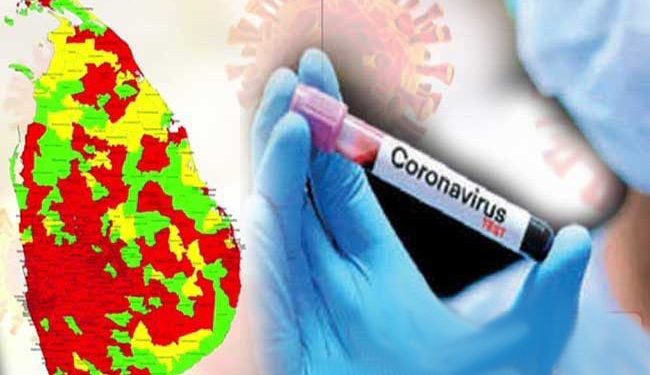
Sri Lanka Monday reported 23 deaths due to COVID-19 after the figures were confirmed by the Director General of Health Services on Sunday, October 17.

Among the deaths reported today, 10 are of males and 13 of females. The majority of deaths – 21 – are of elderly people in the 60 years and above age group.

According to the data reported by the Government Information Department, the total deaths due to Covid-19 since the pandemic began last year has now risen to 13,507.

Posted in Uncategorized

World Bank says extensive school closures had significant impact in Sri Lanka

The World Bank says extensive school closures had a significant impact in Sri Lanka.

According to the World Bank, extensive school closures led to significant learnings losses and widened disparities in human capital that could undermine growth and lower social mobility in the long term.

As Sri Lanka emerges from the crisis, the World Bank said that economic growth will be critical to restore livelihoods.

Latest projections indicate that growth will recover to 3.3 percent and poverty will fall to 10.9 percent in 2021—the latter still above pre-pandemic levels.

The World Bank said that considerations are needed to help the poor and vulnerable get back on their feet and prevent long-term scarring.

A new World Bank report, Sri Lanka Poverty Assessment: Accelerating Economic Transformation, unpacks the drivers of the success behind Sri Lanka’s recent efforts to improve the livelihoods of its people. It also carefully analyzes the initial impact of the COVID-19 crisis on livelihoods and poverty. The report highlights four priorities for Sri Lanka to further transform its economy, create more jobs and achieve a sustainable trajectory toward poverty reduction and shared prosperity.

The first priority is to increase agricultural productivity and earnings.Structural transformation is happening, but rather slowly. Supporting farmers’ transition toward higher-value, export-oriented crop mixes will be important given that farmers are significantly more likely to be poor. The sector could also benefit from a mix of programs that support the adoption of climate-smart technologies, improved agro-logistics, or expanded access to value chains.

The second priority is to address the constraints to accessing remunerative nonfarm jobs in rural areas. Nonfarm activities are an increasingly important and potentially productive source of livelihoods. Education plays a key role when it comes to livelihoods decisions: the more educated are significantly more likely to work in nonfarm sectors over farm sectors, and within nonfarm sectors, in more remunerative jobs. This implies that diversifying into low-return activities will not help increase incomes. While the nonfarm sector is diverse, strategic investments in tourism could support rural income growth, given its job creation potential for low-skilled and vulnerable groups.

The third priority is to support broader reforms to increase labor productivity and create jobs which could ultimately help improve the quality of jobs. In Sri Lanka, informality is widespread, estimated at around 70 percent, and strongly associated with inferior working conditions, limited job security, and heightened risk of poverty due to low earnings. In line with international evidence, reforms could aim to address the causes and consequences of informality rather than target informality itself.

The final priority is to promote spatial transformation and strengthen inclusion. This includes priorities to close spatial disparities and improve access to basic services. “Investments in human capital—health, education and social protection—are key to unlocking the potential of Sri Lankan children and boosting future productivity and economic growth,”says Chiyo Kanda, Country Manager for Sri Lanka and Maldives.

The World Bank noted that COVID-19 led to an abrupt halt to years of progress as the economy suffered its worst contraction on record. Jobs and earnings losses were widespread in the immediate aftermath of the outbreak. The Government acted swiftly to contain the pandemic and buffer the economic shock, but the measures were not sufficient to offset the full-blown impact. The share of $3.20 poor is estimated to have increased to 11.7 percent in 2020, or by over half a million people—a huge setback equivalent to five years’ worth of progress. Vulnerability was high among the workforce due to high informality and weak safety nets, which reduces their capacity to cope with shocks. Inequality is poised to increase as well.

Sri Lanka seeks $500 mn loan from India for fuel purchase – report

Sri Lanka has sought a USD 500 million credit line from India to pay for its crude oil purchases amid a severe foreign exchange crisis in the island nation, PTI reported.

The move came few days after energy minister Udaya Gammanpila warned that the current availability of fuel in the country can be guaranteed only till next January.

The state-run Ceylon Petroleum Corporation (CPC) owes nearly USD 3.3 billion to the two main government banks — Bank of Ceylon and People’s Bank. The state oil distributors imports crude from the Middle East and refined products from other areas, including Singapore.

“We are currently engaged with the Indian High Commission here to obtain the facility (USD 500 million credit line) under the India-Sri Lanka economic partnership arrangement,” CPC Chairman Sumith Wijesinghe was quoted as saying by local news website newsfirst.lk.

He said the facility would be utilized for purchasing petrol and diesel requirements.

The energy secretaries of both India and Lanka are expected to sign an agreement for the loan soon, the report quoted Finance Secretary S R Attygalle as saying.

The government has put on hold the expected retail price hike of fuel despite the last week’s increase in cooking gas and other essentials.

The price hike in the global oil prices has forced Lanka to spend more on oil imports this year. The country’s oil bill has jumped 41.5 per cent to USD 2 billion in the first seven months of this year, compared to last year.

Lanka is facing a severe foreign exchange crisis after the pandemic hit the nation’s earnings from tourism and remittances, Finance Minister Basil Rajapaksa had said last month.

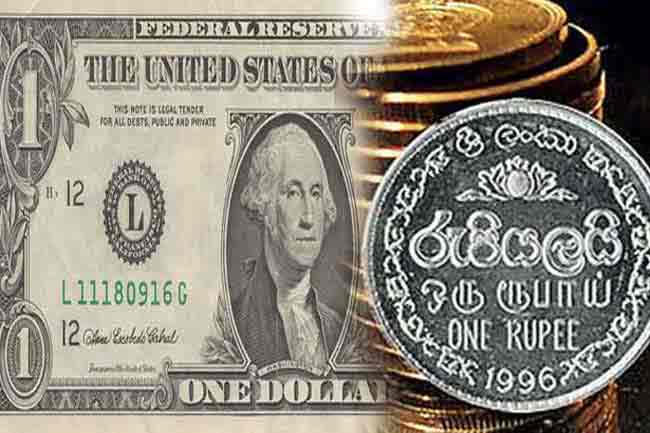
The country’s Its GDP contracted by a record 3.6 per cent in 2020 and its foreign exchange reserves plunged by over a half in one year through July to just USD 2.8 billion. This has led to a 9 percent depreciation of the Sri Lankan rupee against the dollar over the past one year, making imports more expensive.

Cardinal “shocked and horrified” over Govt.’s attitude to Easter attacks

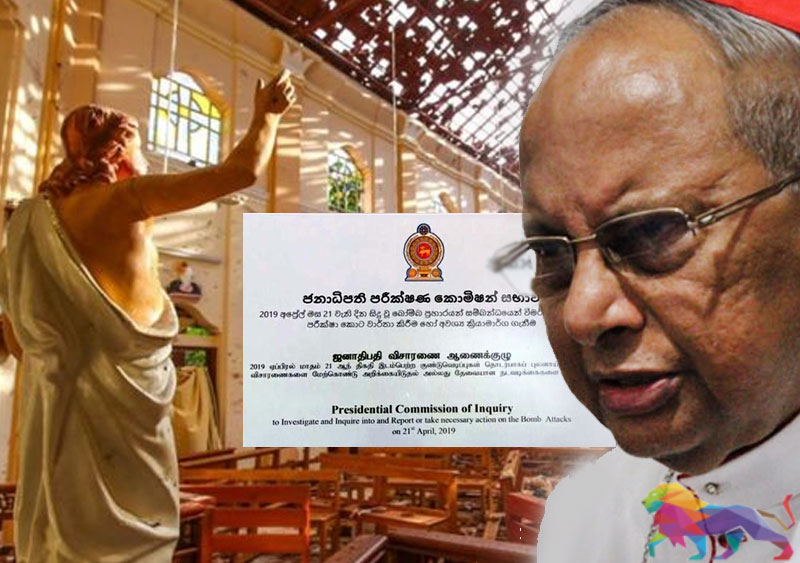
While expressing that the Catholic church is “shocked and horrified” over the Government’s attitude towards the investigations into the Easter Sunday terror attacks, Archbishop of Colombo his eminence Malcolm Cardinal Ranjith called on the international community for assistance in order to understand what really happened.

“We have been let down very badly by the present Government. We are absolutely shocked and horrified about this attitude and we want the international community to back us in this struggle to find out what really happened. Who really did it? Who made use of those characters in order to achieve political aims?” the Cardinal questioned during a webinar held yesterday (16).

He also expressed that it was clear that the attacks were not carried out by a few extremists. Instead he stated that there was something bigger behind it.

“We want to know what is behind this attack. Until we know that we will not be satisfied,” he warned.

Posted in Uncategorized

Politicians now threatening principals, alleges Trade Union Leader

The Secretary-General of the Ceylon Teacher’s Union, Joseph Starlin says that politicians are attempting to takeover the school keys from the hands of principals.

Recalling that there were several incidents of politicians calling principals of schools with less than 200 pupils, Starlin said that the politicians have threatened these principals, asking whether they are going to resume academic activities on 21 October or not.

Meanwhile, SLPP MP Dilan Perera speaking to media said that the teachers unions are attempting to launch a mud slingling campaign on the Government through their protests.

The State Minister of Transportation Dilum Amunugama emphasized that the Government has already accepted that the teachers have an issue and have promised to solve this issue by next year. He also requested the unions to not to think as teachers, but as public servants.

” When public servants have been called for work, and they do not comply then there is a big issue,” he said.

Amunugama further stated that if any of the teachers who will be engaging in academic activities after 21 October are threatened, action will be taken against them.

State Minister Dayasiri Jayasekara said that those who are threatening teachers and are issuing warnings against them are people who have never stepped inside a classroom.

Speaking to media today (16), Jayasekara said that while understanding that teachers should be respected, the unions should also consider the Government’s proposal to put an end to the protest by granting their demands in two stages.

Posted in Uncategorized

Consult PM & FM on New Fortress Deal, says President

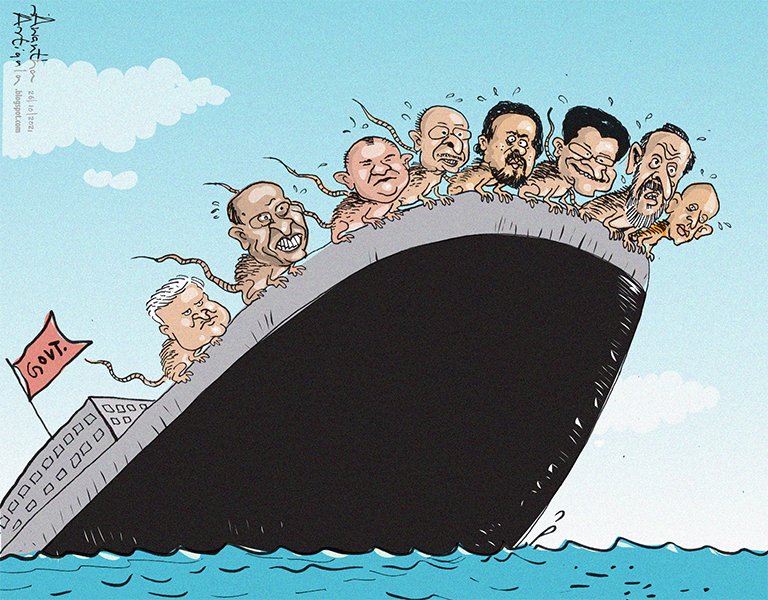
President Gotabaya Rajapaksa has instructed Government affiliated parties to hold further discussions with the Prime Minister and the Finance Minister on the agreement reached to hand over 40% of the Yugadanavi Power Plant to New Forstress Inc.

The President made this comment while responding to a letter sent by the leaders of 11 Government-affiliated parties requesting for an appointment from the President to discuss the relevant agreement.

When News 1st inquired on the matter with Minister Vasudeva Nanayakkara, he said that the President had informed the party leaders of his response in a letter.

Meanwhile, the leaders of 11 Government affiliated parties are scheduled to meet today (16) to hold discussions regarding the response letter sent by the President.

The 11 Government affiliated parties that voices concern over the agreement to hand over 40% of the Yugadanavi Power Plant to the New Fortress Inc, met with Prime Minister Mahinda Rajapaksa on September 23rd and following that discussion, the party leaders said that they would meet with the President to discuss the matter further.

Representatives of 11 Government affiliated parties, including the Sri Lanka Freedom Party, Communist Party of Sri Lanka, Lanka Sama Samaja Party, National Freedom Front, and the Democratic Left Front attended the previous discussion with the Prime Minister.

Tamil Nadu chief minister writes to PM Modi on fishermen arrested by SL navy

Tamil Nadu Chief Minister M.K. Stalin wrote to Prime Minister Narendra Modi on Friday urging his intervention to secure the release of 23 Indian fishermen from the state who were arrested by the Sri Lankan Navy and kept in custody in the island nation.

The fishermen who sailed into the high seas from Nagapattinam fishing harbour on October 13, were apprehended by the Sri Lankan Navy, when they were fishing in the “traditional fishing area” near Point Pedro. They were eventually taken to Karainagar naval base.

In his letter, Mr. Stalin condemned the action of the Sri Lankan Navy and further urged the Prime Minister to direct the Union External Affairs Ministry to take up the issue with Sri Lankan authorities so as to secure the release of these fishermen and their boats, an official release said.

“The Chief Minister noted that the recurring arrests and assault against fishermen by the Sri Lankan Navy was disturbing trend and he urged the Prime Minister to find ways to achieve a permanent solution to the issue,” it added.

Source: The Hindu

Posted in Uncategorized

India re-elected to UN Human Rights Council with overwhelming majority

The 76th UN General Assembly held elections on Thursday for 18 new members of the UN Human Rights Council who will serve for a period of three years, starting in January 2022.

India got 184 votes in the 193-member assembly, while the required majority was 97.


“I am truly delighted at this overwhelming support for India in elections to Human Rights Council. It’s a robust endorsement of our strong roots in democracy, pluralism and fundamental rights enshrined in our Constitution. We thank all UN Member States for giving us a strong mandate,” India’s Permanent Representative to the UN Ambassador T S Tirumurti told PTI.

India’s Permanent Mission to the UN tweeted “India gets re-elected to the @UN_HRC (2022-24) for a 6th term with overwhelming majority. Heartfelt gratitude to the @UN membership for reposing its faith in India.”


“We will continue to work for promotion and protection of Human Rights through #Samman #Samvad #Sahyog #Samman #Samvad #Sahyog,” India’s Permanent Mission to the UN tweeted.

India’s current term was set to end on December 31 2021. For election for the term 2022-2024, there were five vacant seats in the Asia-Pacific States category – India, Kazakhstan, Malaysia, Qatar and United Arab Emirates.

The 193-member General Assembly elected by secret ballot Argentina, Benin, Cameroon, Eritrea, Finland, Gambia, Honduras, India, Kazakhstan, Lithuania, Luxembourg, Malaysia, Montenegro, Paraguay, Qatar, Somalia, UAE and the USA for the 2022-2024 term on the Council.

India’s mission congratulated other UN Member States for their election to the Human Rights Council, which consists of 47 Member States elected directly and individually by secret ballot by the majority of the members of the General Assembly.

The members of the Council shall serve for a period of three years and shall not be eligible for immediate re-election after two consecutive terms.

The membership is based on equitable geographical distribution, and seats are distributed among regional groups Group of African States (13), Group of Asia-Pacific States (13), Group of Eastern European States (6), Group of Latin American and Caribbean States (8) and Group of Western European and other States (7).

As of January 2021, 119 of the 193 UN member States will have served as a member of the HRC. “This broad membership not only reflects the UN’s diversity, but it gives the Council legitimacy when speaking out on human rights violations in all countries,” the UN said.

In 2018, the US under the Donald Trump administration had withdrawn from the UN Human Rights Council. US Ambassador at UN Linda Thomas-Greenfield said Washington’s election to the Council has “fulfilled President Biden’s campaign pledge to rejoin the Human Rights Council” and the US will “work to ensure this body lives up to these principles.”

“Our initial efforts as full members in the Council will focus on what we can accomplish in situations of dire need, such as in Afghanistan, Burma, China, Ethiopia, Syria, and Yemen. More broadly, we will promote respect for fundamental freedoms and women’s rights, and oppose religious intolerance, racial and ethnic injustices, and violence and discrimination against members of minority groups, including LGBTQI+ persons and persons with disabilities,” Thomas-Greenfield said.

“We will oppose the Council’s disproportionate attention on Israel, which includes the Council’s only standing agenda item targeting a single country,” she said.

She said the US, as a member of the Human Rights Council, will press against the election of countries with egregious human rights records and encourage those committed to promoting and protecting human rights both in their own countries and abroad to seek membership.

“We hold others to our own standard: while we may sometimes fall short of our own ideals, we must constantly strive to be as inclusive, rights respecting, and free as possible.”

She added that in its new role as member, the US “can fully participate in the Council’s work of protecting and promoting human rights. We will use every tool at our disposal, from introducing resolutions and amendments to wielding our vote when needed. Our goals are clear: stand with human rights defenders and speak out against violations and abuses of human rights.”

Former President requests government to expedite the Provincial Council elections

Chairman of the Sri Lanka Freedom Party (SLFP), former President Maithripala Sirisena has requested the government to hold the Provincial Council elections expeditiously.

Addressing the media after attending a meeting of the Central Committee of the Sri Lanka Freedom Party Saturday, former President Sirisena said the people are under severe pressure due to the increase in prices of goods and that action should be taken to provide some relief to the people at this moment.

However, he said he does not believe there is an instant solution to the problem but a planned methodical solution should be provided.

Mr. Sirisena further said that special discussions were held at the meeting on making the reorganization program of the Sri Lanka Freedom Party more efficient and steps will be taken to strengthen the party machinery in the future to face the elections.

The Leader of the Tamil Progressive Party Mano Ganesan stated in a recent media briefing that the Minister of Finance Basil Rajapaksa had stated that the Provincial Council elections would be held early next year.

Sri Lanka reports 23 Covid-19 deaths on Saturday, toll rises to 13,472

Sri Lanka Saturday reported 23 deaths due to COVID-19 after the figures were confirmed by the Director General of Health Services on Friday, October 15.

Among the deaths reported today, 17 are of males and 06 of females. The majority of deaths – 18 – are of elderly people in the 60 years and above age group. A female below 30 years of age also succumbed to the disease.

According to the data reported by the Government Information Department, the total deaths due to Covid-19 since the pandemic began last year has now risen to 13,472.