Sri Lanka Tuesday reported 10 deaths due to COVID-19 after the figures were confirmed by the Director General of Health Services on Monday, November 01.
Among the deaths reported today, 05 are of males and 05 of females. The majority of deaths – 08 – are of elderly people in the 60 years and above age group. A female below 30 years of age also succumbed to the disease.
According to the data reported by the Government Information Department, the total deaths due to Covid-19 since the pandemic began last year has now risen to 13,770.
Sri Lanka Podujana Peramuna (SLPP) celebrates its fifth anniversary today (November 02).
A special event themed “Towards Prosperity with Pride”, graced by Prime Minister Mahinda Rajapaksa and Finance Minister Basil Rajapaksa, is taking place at the Nelum Pokuna Theatre in Colombo.
President Gotabaya Rajapaksa did not attend the ceremony as he is currently in Glasgow, Scotland for the COP26 – the UN Climate Change Conference. He, however, sent a congratulatory message to mark the party’s anniversary.
The ceremony is held in compliance with the health guidelines due to the prevailing COVID-19 pandemic situation.
Previously a minor political party registered as “Our Sri Lanka Freedom Front” (Ape Sri Lanka Nidahas Peramuna), with the symbol of a budding flower, it was re-launched as “Sri Lanka Podujana Peramuna” in 2016.
Former Defence Secretary Gotabaya clinched the victory in the 2019 presidential election as the representative of the SLPP and was sworn in as the new Head of State of Sri Lanka. The SLPP also claimed a landslide win in the parliamentary elections in August 2020.
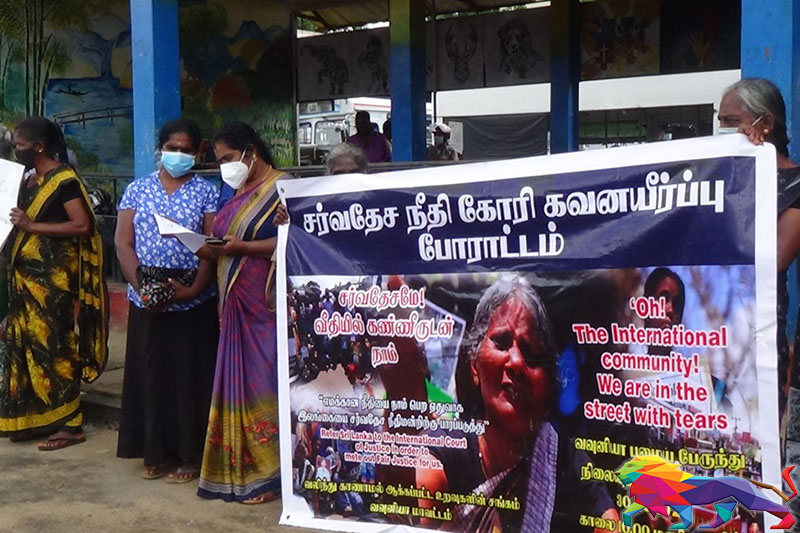
Mothers of victims of enforced dissapearances in Sri Lanka have launched a protest in the North calling for an international intervention by way of an International War Crimes
Tribunal in a bid to locate their missing loved ones.
They have pointed out that the government of Sri Lanka has repeatedly failed to provide satisfactory answers on the fate of their missing family members and deliver justice to the families of the victims.
According to provincial reporters, the mothers commenced a protest on October 30 at the Old Vavuniya Bus Stand calling for an International War Crimes Tribunal to be established.
The mothers have stressed they will not give up their struggle and intend to hold a protest monthly demanding for justice.
Two other protests on October 28 and 30 had been held in Mullaitivu and Jaffna respectively.
According to reports at least 90 parents of forcibly disappeared persons have passed away since launching their continous protests demanding to know the fate of their children.
Meanwhile, the Office of Missing Persons (OMP), established to support the families of missing persons has completed three years in office without providing any favourable solutions to the victims.
President Gotabaya Rajapaksa, who was the wartime Secretary of Defence had told Hannah Singer, the UN Resident Representative in Sri Lanka in 2020, that people who went missing during the war in the North during the rule of his brother Mahinda Rajapaksa had died.
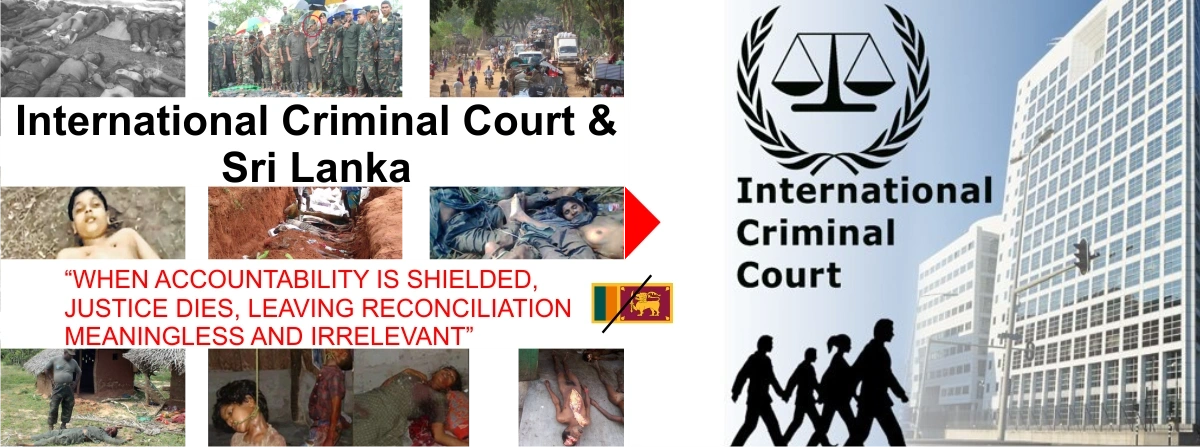
World-leading expert in international rights and humanitarian law Wayne Jordash QC is calling on the International Criminal Court (ICC) and the UK to investigate crimes perpetrated against Sri Lankan Tamils.
“It’s crystal clear that the [Sri Lankan] government has been involved in a policy of persecuting the Tamils,” he told the Tamil Guardian in an interview this week. “The evidence is quite overwhelming that these crimes are occurring, and it is quite crystal clear from the 200 victims that we represent, that there are thousands, if not tens of thousands more.”
Wayne is the co-founder and managing partner of Global Rights Compliance (GLC) which, earlier this week, filed a submission under Article 15 of the Rome Statute, requesting the ICC Prosecutor to exercise territorial jurisdiction to initiate investigations into crimes committed in Sri Lanka.
The Communication to the international tribunal names several senior Sri Lankan officials, including President Gotabaya Rajapaksa, defence secretary Kamal Gunaratne, former army commander Jagath Jayasuriya and others as individuals “responsible for crimes against humanity of deportation (through underlying acts of abductions, unlawful detention and torture), deprivation of right to return and persecution”.
To see the full interview, click the link below.
The submission was made ahead of next week’s UN Climate Change Conference 2021 in Glasgow and was also forwarded to the UK Metropolitan Police for action against President Rajapaksa and members of the Sri Lankan delegation attending the Conference.
Wayne has also worked as a legal representative to 400 Rohingya women, who are victims of crimes committed in Myanmar and Bangladesh. In 2018, he filed a submission to the ICC, on behalf of the victims, requesting the ICC pre-trial chamber to provide clarification of the ICC’s jurisdiction over the crimes of deportation, persecution, apartheid and genocide committed against the Rohingyas.
Representing 400 women in Myanmar “was an inspiration for this”. “There are not many places where you can go and find accountability for them [Rohingya]and so, the ICC opened up a very narrow possibility,” he said. “When I look at the situation of the Sri Lankan Tamils and the way in which they are treated by the [Sri Lankan] government and the way in which they leave the country, having been forced out through persecution and torture, it struck me looking at those facts, looking at those crimes and looking at the very narrow possibilities for justice for the Sri Lankan Tamils that we should try”.
When questioned on what he believed are the prospects of success of the ICC permitting an investigation into the crimes committed in Sri Lanka, Wayne answered that “this is the strongest communication I have submitted to the ICC”. “There is overwhelming evidence of the range of acts of abduction, unlawful detention, torture, deportation, deprivation of the right to return, persecution in the UK, persecution where the Tamils end up in another country seeking refugee status. There is no doubt that these crimes occurred, there is no doubt that they are continuing to occur. The question will be whether these men we allege are responsible, …, are responsible and to what extent.” “I would say the evidence against them is really looking pretty strong,” he added.
Biggest Challenge
Wayne explained the biggest challenge to the ICC and UK investigation being approved is twofold. Firstly, the UK will be “reluctant” to arrest one of the alleged perpetrators, Gotabaya Rajapaksa, due to his presidency.“On the basis of this evidence, …the challenge will not be the evidence. The challenge will be whether we can get hold of the President.”
On a positive note, he then said that Gotabaya Rajapaksa “won’t be president forever”. “If we can encourage the UK to fulfil its obligations which is to investigate these types of crimes, whether they occur on the UK soil or not and when we can encourage the ICC to investigate crimes which occur in the Rome Statute signatory states, like the UK, then we can inch forward.”
As the second challenge, Wayne mentioned that ICC processes are “very slow”. They “take a very long time and tend to, because of a lack of resources, take even longer,” he said. “Justice is a long game.”
If the request to investigate is successful, what can the victims expect to happen next?
The ICC Prosecutor would open up a full investigation which would include sending investigators to Sri Lanka and/or to the UK to start the investigation. “That’s what happens if the prosecutor is satisfied that there is a reasonable basis for believing that these crimes, crimes of deportation, persecution and deprivation of the right to return, have been committed,” said Wayne.
“On the basis of the communication we filed, there is plenty of evidence. In my view, the prosecutor could move quite swiftly or should be able to move quite swiftly to a full investigation.”
The exact location of the Hippo Spirit carrying rejected Chinese Organic Fertilizer, remains unknown.
On Sunday (31) Marine Traffic websites confirmed that the Hippo Spirit vessel, also sailing as Seiyo Explorer, had entered the Sea of Sri Lanka.
The last confirmed sighting of this vessel was on the 24th of October, some 4.18 nautical miles away from the Yala National Park.
The Hippo Spirit is carrying tonnes of rejected Chinese Fertilizer from Qingdao Seawin Biotech Group Co., Ltd to Sri Lanka.
Earlier, it was reported that the Hippo Spirit, the ship carrying Chinese Organic Fertilizer, did not return to China after the first samples were rejected by Sri Lanka.
Instead, the Hippo Spirit had sailed to Singapore and altered its course back to Sri Lanka, without returning to China.
On the 22nd of September, the Hippo Spirit ship carrying 20,000 metric tonnes of organic fertilizer left for Colombo from China’s Qingdao Port.
But the ship was diverted to Singapore after harmful bacteria was detected in the samples of this fertilizer shipment.
The Hippo Spirit ship that didn’t return to China had left Singapore declaring it would be heading to the Colombo Port.
But on the 14th of October, the automatic identification system (AIS) used to track the ship had been deactivated at the Malakka Strait.
Vessel trackers showed the last position of the ship as the Malakka Strait before it went out of range.
Data available online showed the Hippo Spirit ship in Hambantota on the 24th of this month under the name Seiyo Explorer.
The Hippo Spirit and the Seiyo Explorer both share the same IMO number, and therefore it can be confirmed the Hippo Spirit is the Seioy Explorer.
The IMO Ship Identification Number is a unique seven-digit number that remains unchanged through a vessel’s lifetime and is linked to its hull, regardless of any changes of names, flags, or owners.
Although the ship was seen in Sri Lanka’s waters off the Hambantota District on the 24th of this month, the ship has gone out of range on tracking systems.
Sri Lanka’s controversial Buddhist monk Galagodaaththe Gnanasara Thero said on Monday (01) that recommendations by his ultranationalist outfit the Bodu Bala Sena (BBS) will make it to the proposals to be made by the recently appointed presidential task force titled ‘One Country, One Law’.
President Gotabaya Rajapaksa appointed the firebrand monk to lead the 13-member task force last week to come up with proposals to implement one law for all Sri Lankans abolishing all other personal laws including Muslim marriage law and some other regional laws that had existed for centuries in Sri Lanka.
Gnanasara’s appointment comes as the administration is facing rising protests over a ban on agrochemicals and rising inflation with money printing worsening the fallout from a Coronavirus pandemic.
In his first press conference as the head of the task force, Gnanasara thero said the BBS had spoken about unethical conversions, destruction of archaeological monuments and cultural invasion.
“Today we have got a result of all our hard work. The president’s attention has been drawn to speak about these issues emphatically,” he told a news briefing organised by the Presidential Media Centre for handpicked journalists.
“We will have to discuss the same things we spoke about as the BBS within this gazette as well and include them in the bill,” the monk said.
For many speculative questions posed to him by journalists, the monk said he will answer after February 28, 2022, when the task force submits its report to the president. He will be fair by all, he said.
In 2012, Gnanasara thero was allegedly at the forefront of an anti-Muslim campaign which called on the majority Sinhalese to boycott Muslim-owned businesses.
The United States in 2014 cancelled a visa issued to the monk while social media platform Facebook blocked his account after his group’s alleged involvement in violence against Sri Lanka’s minority Muslims in the Western coastal town of Aluthgama.
He was later arrested for contempt of court in 2018 during the previous administration but was later pardoned by President Maithripala Sirisnena.
Critics have said Gnanasara Thero has been used to create a rift between the Sinhala majority and Muslim minority for political reasons. But the monk has denied the allegation and has said Sri Lanka’s Sinhala majority has issues that have been ignored by politicians, issues that he had tried to address.
Gnanasara said not all court cases against him were individual acts carried out by his person, but rather due to his intervention on behalf of people who did not have a voice.
“All those court cases are politically motivated,” he said.
“Politicians want the issues to remain the same,” said the monk who in 2019 said the Buddhist clergy should decide Sri Lanka’s parliament.
“We have been talking about tourism development and economic development. If you want to do that, national security should be secured and the bond among all ethnicities must be ensured.
“We have a number of suggestions. If we can put all these together and stand up, that will be the day we will rise as a nation. That is why we struggled,” he said.
The Presidential Task Force led by him has come under severe criticism for not including ethnic minority Tamil representation. President Rajapaksa has agreed to include Tamil representation though Gnanasara said the priority is not that.
“We are trying to create a framework at the moment. We can discuss and agree later,” he said.
Gnanasara thero was praised by some quarters after the Easter Sunday attack in 2019 as he had purportedly warned strongly against rising Islamic extremism said to be linked with foreign Islamist military groups such as ISIS.
President Rajapaksa had promised One Country, One Law in his election manifesto, which laid much emphasis on national security, particularly in the wake of the Easter bombings.
The monk also blamed the country’s public officials for the current situation of not passing the required laws that could help the country prevent another ethnic riot.
“We always blame politicians, but public administrative officials should be responsible for 70-80 percent of the current issues,” he said.
The monk said a request for a law on publications to ensure no wrong opinions are created has not been done because of public officials’ dragging their feet on the issue.
“So, it is not the sir who has failed. It is the public officials who have failed,” he said, ostensibly referring to President Rajapaksa who has come to be referred to as ‘sir’ on social media.
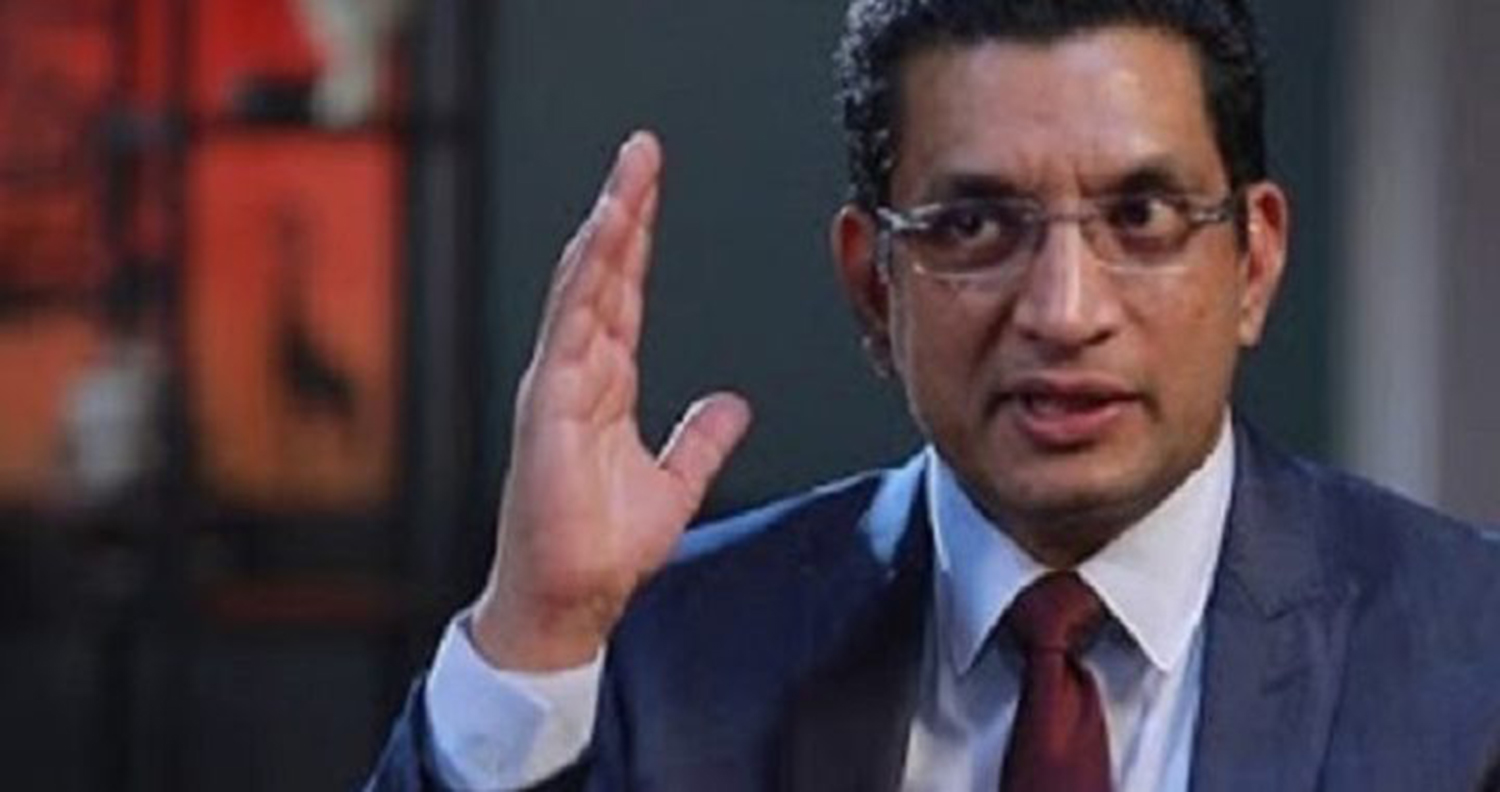
President’s Counsel Ali Sabry, the only Muslim among the Cabinet ministers, is likely to quit the justice portfolio over the recent appointment of Ven. Galagodaatte Gnanasara Thera as the head of the Presidential Task Force (PTF) to make recommendations in respect of ‘One Country, One Law’ concept.
Well-informed sources say Sabry, who campaigned alongside civil society group ‘Viyathmaga’, at the 2019 presidential election, is quite disappointed at the unexpected development.
Sabry, who appeared for Gotabaya Rajapaksa in several high-profile cases, including the controversial acquisition of MiG-27 fighters, entered Parliament on the SLPP National List. Sabry is expected to make an announcement after President Gotabaya Rajapaksa’s return to the country from the UK.
Premier Mahinda Rajapaksa has discussed the issue with the Justice Minister and advised the latter against taking a hasty decision. The Justice Ministry was not consulted as regards Ven. Gnanasara Thera’s appointment as the head of the PTF, sources say.
The Ven. Thera is the General Secretary of the Bodu Bala Sena (BBS).
Justice Ministry sources said the announcement of Gnanasara Thera’s appointment had surprised them. “Initially, we thought it was a social media prank,” they said.
The PTF has been authorised to examine the work undertaken by the Justice Ministry.
SLMC leader and one-time Justice Minister Rauff Hakeem has questioned the rationale behind accommodating Gnanasara Thera, who received a presidential pardon during Maithripala Sirisena’s tenure while serving a jail term for contempt of court, in the PTF. The SLMC is a constituent of the Samagi Jana Balavegaya (SJB), the main Opposition party in Parliament.
Lawmaker Hakeem has asked whether the new move was aimed at strengthening the hands of those trying to cause further mayhem amidst pressure on the government to implement the recommendations of the Presidential Commission of Inquiry (PCoI) into the 2019 Easter Sunday carnage.
The former minister said that such short-sighted strategies would only tarnish Sri Lanka’s image at a time the global Muslim community as well as other countries interested in post-war reconciliation process here were closely following the situation here.
Controversy has erupted over Ven. Gnanasara’s appointment as PTF head amidst speculation the monk may receive the national List slot of the Ape Jana Bala Pakshaya (AJBP) at the expense of Ven. Athureliye Rathana Thera.
The AJBP on 16 Oct, informed the Secretary General of Parliament of its decision to expel Ven. Rathana from the Parliament. Election Commission Chairman Attorney-at-Law Nimal Punchihewa told The Island that Ven. Rathana would automatically lose his seat within one month unless the monk moved court against the party’s decision.
Pointing out that Tamils and Christians hadn’t been represented in the PTF, MP Hakeem said that Gnanasara Thera’s leadership to such a vital outfit wouldn’t be acceptable under any circumstances.
Yuthukama Chief Gevindu Cumaratunga, too, raised the issue at hand with President Gotabaya Rajapaksa at a recent meeting at Temple Trees.
Meanwhile, Sri Lanka’s former Ambassador in Myanmar Prof. Nalin de Silva, in a statement, appreciated the appointment given to Ven. Gnanasara. Saying that he didn’t accept Ven. Gnanasara Thera’s views on some issues and the monk’s connections with certain persons, Prof Silva emphasised he was the most qualified to serve in that capacity.
Prof. de Silva said that the relevant the PTF should be headed by a Buddhist monk.
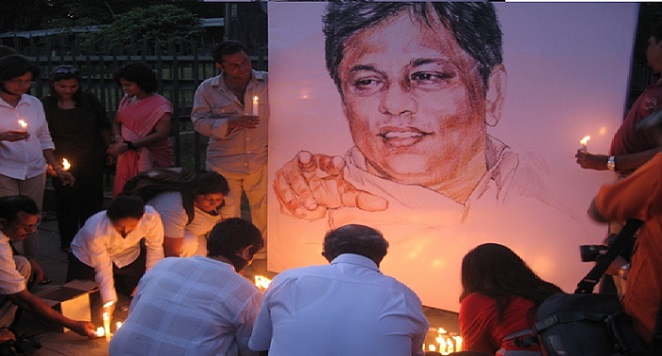
“The People’s Tribunal on the Murder of Journalists” located in The Hague, the Netherlands, will launch its Tribunal today (2) to indict the Government of Sri Lanka for the assassination of slain Editor Lasantha Wickrematunge and its prolonged failure to bring his murderers to justice.
The International Day to End Impunity for Crimes against Journalists falls today, 2 November.
In addition to the murder of Wickrematunge, the Tribunal launched by the Free Press Unlimited, Reporters Without Borders, and Committee to Protect Journalists organisations will inquire into the murders of two other journalists, namely Saudi Arabian journalist Jamal Khashoggi, who was assassinated at the Saudi Arabian Embassy in Turkey, and Maltese journalist Daphne Anne Caruana Galizia, who was assassinated in Malta. Khashoggi’s girlfriend and Galizia’s son are also scheduled to testify.
The Lasantha Wickrematunge murder case will be heard first, at which his daughter, Ahimsa Wickrematunge, who has been fighting to bring her father’s killers to justice, is also expected to testify. In a Tweet, she said that she was honoured to support the Tribunal.
The Hague is where the International Criminal Court is also located. The project, titled “A Safer World for the Truth”, is a collaboration between Free Press Unlimited, a press freedom organisation based in the Netherlands, the Committee to Protect Journalists, and Reporters Without Borders.
According to the People’s Tribunal on the Murder of Journalists, since 1992, more than 1,400 journalists have been killed, and in eight out of 10 cases where a journalist is murdered, the killers go free.
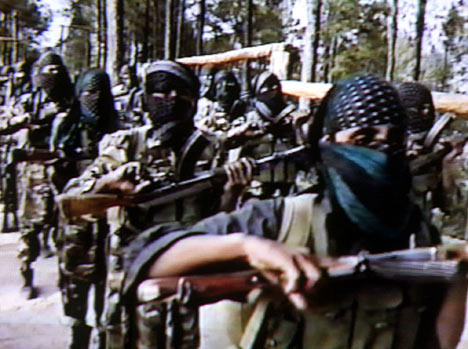
The Terrorism Investigation Division (TID) informed the Colombo Magistrate’s Court today that investigations are being carried out into 702 Sri Lankans who were found to having links with a powerful ISIS member arrested in India through his cell phone.
When the complaint was taken before Colombo Additional Magistrate Chandima Liyanage, the TID informed an IS member had been arrested in India and a search of his mobile phone “WhatsApp” account has revealed information about 702 Sri Lankans.
The Terrorism Investigation Division said that further investigations were carried out based on this information and that one of the suspects has been arrested.
The TID had informed the court that investigations were being carried out on other Sri Lankans who had links with the suspect.
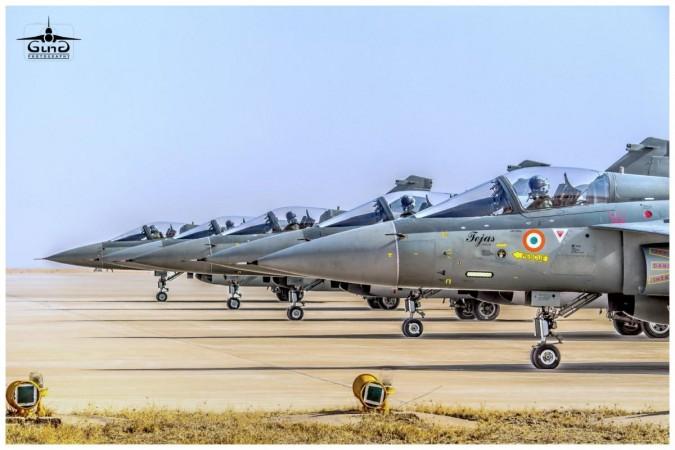
The Indian Air Force (IAF) has agreed to transport Indian liquid Nano-Nitrogen fertiliser recommended for use in agriculture, Minister Mahindananda Aluthgamage said.
He said that the decision to import liquid Nano-Nitrogen fertiliser by air was taken due to delays in shipping.
Accordingly six Indian planes will arrive in Sri Lanka carrying Nano-Nitrogen fertiliser today, the minister said at an event at Gannoruwa, Kandy.