COVID Death Toll in Sri Lanka passes 11,000 mark

A total of 157 more COVID-19 related deaths that occurred yesterday (09) were confirmed by the Director-General of Health Services today pushing the death toll to 11,152.

According to the Government Information Department, 87 females and 70 males are among the deceased.

A total of 130 people who are above 60 years of age are among the deceased while 23 of them are between 30 and 59 years of age.

Four deaths have been reported below 30 years of age.

Posted in Uncategorized

Sri Lanka’s Opposition Leader calls on Rajapaksa Govt to resign immediately

Sri Lanka’s Opposition Leader Sajith Premadasa called on the countries Government to step down immediately and call an election so that the people might decide who should lead the country out of what he called the present crisis.

He said he and the opposition was ready to lead the nation out of what was an “interminable crisis” that the current government was wholly unable to manage.

The Leader of the Opposition said that the government’s reckless, inefficient and unskilled nature is proven day by day in its activities and the only thing actually happening is the change of heads.

The Leader of the Opposition said the present government has no ability to lead the country out bankruptcy.

Lankan Tamil leaders pay homage to Bharathiyar on his 100 th. death anniversary

The Consulate General of India in Jaffna, observed the 100 th. death anniversary of India’s National Poet Subramaniya Bharathiar on Saturday 11 September.

Consul General Raakesh Natraj Jayabhaskaran garlanded & offered floral tribute to the “Mahakavi” at the Consulate & India House. Sri Lankan Minister of Fisheries Douglas Devananda, Members of Parliament Angajan Ramanathan, Dr. Suren Raghavan,ITAK M. A. Sumanthiran,TELO Leader Selvam Adaikkalanathan,PLOTE Leader Dharmalingam Siddharthan, S. Sritharan,TPA Leader C. V. Wigneswaran, former Speaker of the Northern Provincial Council C. V. K. Sivagnanam, Jaffna Mayor His Worship V. Mannivannan, former Members of Parliament EPRLF Leader Suresh Premachandran & M. K. Sivajilingam, former Head of the Department of Tamil, Jaffna University Prof S. Sivalingarajah, paid their tributes to the Mahakavi through video or audio messages.

Rajapaksa’s experiment with organic farming in Sri Lanka a warning to developing countries

An influential section of Sri Lankan agricultural economists and scientists has deplored the recent course change in the country’s agricultural policy made by the Gotabaya Rajapaksa government. The decision by the government to ban the use and import of chemical fertilisers and pesticides in pursuit of a “100 per cent organic food producer” status for Sri Lanka has already had disastrous consequences for the economy of the island nation, the Sri Lanka Agricultural Economics Association (SAEA) warned in a letter to President Rajapaksa on May 25, 2021. It pointed to the adverse effects of the policy on “food security, farm incomes, foreign exchange earnings and rural poverty.”

President Rajapaksa’s ill-conceived and extremist policy, announced in April this year, of banning the import of all chemical fertilisers and pesticides as a way of promoting organic farming, is threatening to plunge the country’s agriculture into a deep production slump. As a consequence, the export of tea, Sri Lanka’s primary agricultural export, and of other commodities are projected to decline. The economy appears set for a fall in foreign exchange earnings in the midst of the Covid-19 pandemic.

The SAEA letter provided the following detailed estimates of the potential economic loss to farmers due to the policy:

When converting from conventional agriculture into organic farming, the Government should weigh the technological, environmental, and economic costs and benefits. The preliminary findings of the studies conducted by the SAEA on potential economic losses of the import ban and respective estimations are given below for your consideration.

(a) Agronomic studies reveal that the average yields from paddy can drop by 25 per cent if chemical fertilisers are fully replaced by organic fertilisers. This loss in productivity could reduce the profitability of paddy farming by 33 per cent and rice consumption by 27 per cent if paddy is cultivated just with organic fertilisers with a complete ban on rice imports. In contrast, applying organic fertiliser with the recommended dosages of chemical fertilisers would improve the profitability of farming by 16 per cent.

(b) Absence of chemical fertiliser would drastically reduce the productivity of the Vegetatively Propagated Tea (VPT). With a 35 per cent productivity drop, the export volume of tea would go down from 279 to 181 million kg, causing an income loss of Rs. 84 billion. The estate sector will likely incur significant losses compared to those of tea smallholders. These losses could further be aggravated due to increased cost of labour to apply bulky organic fertilisers.

(c) The coconut yields would go down by 30 per cent if chemical fertilisers and pesticides are not applied. This situation will adversely impact fresh coconut availability for the production of coconut oil, desiccated coconut and other coconut products. The loss in foreign exchange earnings can be as high as Rs. 18 billion, based on the assumption that only 26 per cent of the total coconut extent is fertilised. When the additional cost for the importation of edible oils is considered, the loss of foreign exchange earnings will be even higher.

(d) The above results were derived considering the immediate effects on three agricultural sub-sectors. An analysis performed accommodating adjustments in the economy over the medium to long run reveals that a reduction in average agricultural productivity by 20 per cent could cause a decrease in Gross Domestic Product (GDP) by 3.05 per cent suggesting an overall contraction of the economy with the implementation of the import ban. (emphases added)

The letter requested the President to “substitute the import ban on chemical fertilisers and pesticides with the set of alternative measures” that included making scientifically validated Good Agricultural Practices (GAP) as a mandatory national standard and disincentivising overuse of chemicals in agriculture through an appropriate mix of legal standards, taxes, subsidies and output price support. The letter also asked for the strengthening of agricultural extension to “improve awareness of the safe use of chemical fertilisers and pesticides”.

On coming to office in 2019, President Rajapaksa promised subsidised imported fertilisers to farmers. Yet in a matter of just two years, the Sri Lankan cabinet approved Rajapaksa’s proposal to completely ban the import of inorganic fertilisers and all synthetic agro-chemicals — effectively, the imports of all chemical fertilisers, pesticides, fungicides and weedicides. A gazette notification on May 6, 2021 brought this into immediate effect. For any shipment after 6th May 2021, permissions for unloading were cancelled, and banks told not to issue Letters of Credit on the import of banned substances.

What caused this about-turn?

The two factors behind the change in policy direction, according to news reports, are first, Sri Lanka’s foreign exchange crisis, and second, the rise in food prices owing to the lockdowns and other disruptions induced by Covid-19. It is estimated that Sri Lanka spends about US$ 400 million on fertiliser imports annually. A ban on chemical fertilisers, it was thought, would reduce the pressures on foreign exchange. Added to this was the pressure from President Rajapaksa’s group of advisors that included a medical doctor, who reportedly convinced him that the use of chemicals in agriculture was leading to the spread of chronic kidney disease. Sri Lankan scientists have in fact argued that there are no links between the use of chemicals as farm inputs and kidney disease. They attributed the rise in kidney diseases to “hard water in conjunction with fluoride present in many wells” (for a short review, see here). But these voices of reason were disregarded, and the organic farming lobby pushed the policy through.

On May 10 2021, the “Presidential Task Force on Creating a Green Sri Lanka with Sustainable Solutions to Climate Change” was formed under President Rajapaksa’s Chairpersonship. The Task Force was authorised to implement the import ban and submit a plan to create a “Green Sri Lanka”. Initially, the Task Force had 46 members, but later the number of members was reduced to 25 with Mahinda Amaraweera as the Chairperson. Many senior agricultural scientists were excluded from its membership, and it appears that it was filled with people with questionable scientific credentials. One member of this task force, for example, had once claimed to have identified a self-generating rice variety of yore that had fed the ten giant warriors of the Sinhala King Dutugemunu of the Anuradhapura Kingdom between 205 BC to 161 BC. Agricultural scientists tested the claim and found that the claimed variety was of sorghum and not of rice at all! Yet another member had claimed that glyphosate even dissolved reservoir bunds! Such was the state of scientific rigour within the Task Force.

A decision was also taken to import large quantities of compost, as well as boost the domestic production of compost, to substitute for chemical fertilisers. It is well-known that compost can hardly be classed as “organic” as it contains many potentially toxic trace elements, a fact that, alas, has never persuaded the soldiers of organic agriculture to stop promoting it as an alternative to chemical fertilizers.

It is not just the SAEA that sounded the alarm over the outcome of the new policy. Growers of tea, which is the most severely affected crop in the present crisis followed by rice, pepper and cinnamon, are very worried. Herman Gunaratne, a master tea maker from Ahangama and a member of Task Force himself, says that Sri Lanka’s tea production of 300,000 tonnes may be halved due to the organic farming policy. Given that 10 per cent of Sri Lanka’s export incomes come from tea, this presents a serious potential problem. In an interview to the South China Morning Post, he said:

The ban has drawn the tea industry into complete disarray … The consequences for the country are unimaginable … The tea industry depends on nitrogen (N), phosphorus (P) and potash (K) … Mainly it is the nitrogen component that we cannot do without. Without it, you can expect the decline in production by as much as 50 per cent … I cannot subscribe to the view that it [i.e., going organic] helps the tea quality except for the fact that if we go completely organic, we will lose 50 per cent of the crop. [But] we are not going to get 50 per cent higher prices … And there is an extremely limited market for organic tea in the world. There is no way in which it can compensate for the decline in the crop.

Sensing trouble and responding to widespread protests from farmers and growers, the Rajapaksa government reversed some aspects of the policy by the end of May 2021. On 31st May 2021, the Cabinet approved the “import of carbonic fertilisers, natural minerals and chelated herbal trace minerals”. A tender was also floated to import organic fertilisers with a minimum of 10 per cent nitrogen, even though such a product is not known to exist outside blood meal, which contains about 13.25 per cent nitrogen. On 31st July 2021, some fertiliser mixtures were permitted to be imported by the “protected agriculture sector”. However, no detailed guidelines exist for the orders issued above, and much confusion exists on what can be imported and what cannot. A list of 25 agrochemicals were recommended for imports for emergency use by agricultural scientists, but this recommendation was rejected by the government. To top it all, even the import of compost was banned after officials raised questions about the violation of the regulations pertaining to plant and animal quarantine.

The muddled and unscientific policy has caused damage in other sectors as well. For instance, 20,000 out of 107,000 hectares of rubber in Sri Lanka are affected by Pestalotiopsis, a fungal leaf disease that is controlled by Carbendazim and Hexaconazole application through spraying. Further, chemical fertilisers need to be applied to promote better leaf growth. Neither are available in the market. As a result, the Colombo Rubber Traders Association expects rubber production to drop by 15-20 per cent. According to the Association, “This leaf disease is possibly best described as the equivalent of Covid-19 in the case of the rubber industry, considering both its devastation and the rapid speed at which it is spreading.”

The havoc caused by the Sri Lankan experiment with organic farming is a warning to developing countries across the world against falling into a similar trap. The irrational reduction in chemical inputs to agriculture even at low levels of productivity can spell disaster. Take a country like India where soils are generally poor in organic matter content. An estimated 59 per cent of soils are low in available nitrogen, about 49 per cent in available phosphorus, and about 48 per cent in available potassium. Indian soils are also deficient in varying degrees in micronutrients such as zinc, iron, manganese, copper, molybdenum and boron. Micronutrient deficiencies are not just yield-limiting in themselves; they also disallow the full expression of other nutrients in the soil, leading to an overall decline in fertility.

Agricultural scientists have always been aware of the nutrient deficiencies of soil, as well as the perils of overuse of chemicals and the improper/imbalanced application of fertilisers. They therefore recommend location-specific solutions to nurture soil health and sustain increases in soil fertility. They suggest soil-test-based location-specific balanced fertilisation and integrated nutrient management methods combining organic manures (i.e., farmyard manure, compost, crop residues, biofertilisers, green manure) with chemical fertilisers. Thus, while they may advocate reducing the use of chemical fertilisers in some locations, they would promote its use in others.

Such a comprehensive and integrated approach requires a firm adherence to science and the scientific method, and an equally firm rejection of anti-science models dressed up as “organic,” “eco-friendly,” “pro-nature” and so on. President Rajapaksa’s policy falls squarely into the latter category, much like the promotion of Zero Budget Natural Farming (ZBNF) by the present Government of India. Only the total withdrawal of this policy can save Sri Lankan agriculture. The Sri Lankan government would do well to listen to the country’s agricultural scientists and not to quacks masquerading as experts.

R. Ramakumar is NABARD Chair Professor, School of Development Studies, Tata Institute of Social Sciences, Mumbai. Views are personal.

The article originally appeared on the Foundation for Agrarian Studies website. It has been published with permission.

Source:The Print

SL Govt trying to keep the upcountry workers as daily labourers for another 100 years: MP Mano Ganesan

Tamil Progressive Alliance leader and Member of Parliament Mano Ganesan accused that the Sri Lankan government has allocated 1,100 acres of plantation lands to local and foreign private companies under the guise of increasing milk production, but refused to give lands for the plantation workers to increase the milk production through home based farms.

“While 31 dairy farms are under the government’s National Livestock Development Board to produce milk, the government is trying to give thousands of acres of plantation land to local and foreign private companies under the guise of increasing milk production without developing the government’s farms.”

“This government is trying to keep the upcountry workers as daily wage labourers for another hundred years. The Ceylon Workers’ Congress is silently supporting this. We cannot allow this,” Mano Ganesan said.

Posted in Uncategorized

UNHRC should maintain rigorous scrutiny on Sri Lanka – HRW

The United Nations Human Rights Council should maintain its rigorous scrutiny of Sri Lanka’s worsening human rights situation and press for genuine improvements, Human Rights Watch (HRW) said today.

At the Council’s upcoming session, which begins on September 13, 2021, UN member countries should express their alarm about the allegations on abuse and the weakening of independent governmental institutions, civilian governance, and the rule of law, the HRW stated further in its statement. “These countries should demonstrate their willingness to press the Sri Lankan government to meet its international human rights obligations.”

Speaking in this regard, Meenakshi Ganguly, the South Asia director at HRW said, “Since Gotabaya Rajapaksa took office in 2019, the limited progress Sri Lanka had made in addressing past atrocities and ending abuses has been disastrously reversed.

“Continued international attention and pressure can help reduce the risks faced by minority communities, activists, and journalists, who live in heightened fear of the authorities.”

Earlier in 2021, the Human Rights Council adopted an important resolution, 46/1, to advance accountability for alleged past rights violations and war crimes committed in Sri Lanka and the resolution also mandated regular reporting by the UN High Commissioner for Human Rights, the HRW added, noting that the Rajapaksa administration, in 2020, had renounced the previous administration’s commitments to the Human Rights Council to provide justice and end abuses.

The New York-based non-governmental organization alleged that the administration is using its security and intelligence agencies to surveil and intimidate the families of abuse victims and others who are seeking to uphold human rights.

The statement further claimed that the authorities are using arrests and threats issued under the “draconian” Prevention of Terrorism Act (PTA) to silence calls for justice in the Tamil majority north and east, and to arbitrarily detain Muslims in counterterrorism operations.

Foreign governments should take firm and coordinated action to press the Sri Lankan government to reverse course, the HRW emphasized. “The European Union should insist that Sri Lanka complies with its human rights obligations to maintain tariff free market access under GSP+, as should the United Kingdom under its similar program. Donor governments and multilateral agencies, such as the UN Office on Drugs and Crime, should immediately withhold support for Sri Lankan security forces until they take steps to halt and address violations, in compliance with UN due diligence standards.”

The HRW went on to stress that governments should also consider imposing targeted sanctions on senior figures implicated in alleged abuses, and pursue prosecutions under universal jurisdiction, as recommended by the UN human rights chief, Michele Bachelet, earlier this year.

“No one should be in any doubt that Sri Lanka’s human rights situation is deeply alarming and getting worse,” Ganguly said. “UN member states should recognize that the government is sensitive to international pressure, and make the protection of human rights in Sri Lanka their priority.”

Posted in Uncategorized

131 COVID deaths confirmed for Thursday (9); Total Fatalities increase to 10,995

A total of 131 more COVID-19 related deaths that occurred yesterday (09) were confirmed by the Director-General of Health Services today pushing the death toll to 10,995.

According to the Government Information Department, 58 females and 73 males are among the deceased.

A total of 110 people who are above 60 years of age are among the deceased while 20 of them are between 30 and 59 years of age.

One death has been reported below 30 years of age.

Sri Lankan detainees tortured while in custody, rights group alleges

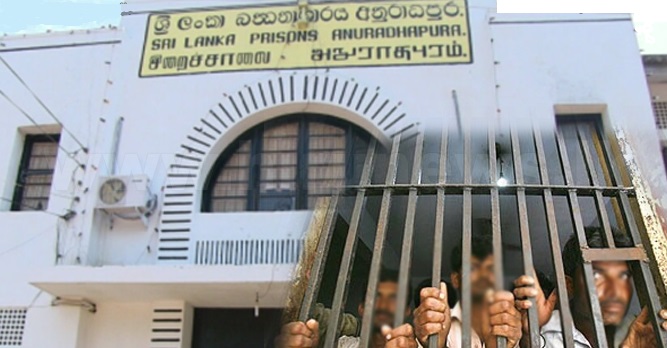
(Reuters) – Political detainees in Sri Lanka are being tortured while in police and military custody, a human rights lawyer who wrote a report on alleged abuses said on Friday, days ahead of a U.N. human rights summit.

The International Truth and Justice Project (ITJP), a rights group documenting alleged abuses in Sri Lanka, gave details in its report of 15 members of the minority Tamil community, who said they were beaten, burnt, suffocated and sexually assaulted by authorities over the past two years.

Together, their testimony is the most detailed account of alleged new abuses in the island nation since former wartime defence chief Gotabaya Rajapaksa became president in 2019.

“We are dealing with a country where torture is savage, and there is no inclination on the part of the government to do anything about it,” Yasmin Sooka, a rights lawyer who co-authored the report, told Reuters.

“What you have is a kind of tacit approval, really, of those at the highest levels who condone what is happening.”

The government denied the accusations.

“We completely refute the allegations in this report,” Keheliya Rambukwella, the health minister who also serves as a senior government spokesman, told Reuters.

Some previous allegations of kidnapping and torture had been made by “vested interests” and later proven to be false, he said, without elaborating.

Spokespeople for Sri Lanka’s military and police declined to comment on the report.

GOVERNMENT CRITICS

Sri Lanka ended a 25-year civil war between separatist insurgents from the ethnic Tamil minority and government forces in 2009. Rights groups accused both sides of abuses during the war.

The 15 – one woman and 14 men – were not identified in the report. They had taken part in commemorations for people killed in the war, worked as volunteers for Tamil political parties or received funds from abroad on behalf of people under surveillance.

Three of the 15 were members of the Liberation Tigers of Tamil Eelam, the main group that fought the government during the war, though many were children at the time.

After being detained, the alleged victims said they were subjected to treatment including being suffocated with petrol-soaked plastic bags and penetrated with an iron rod.

The alleged victims, who fled Sri Lanka are now seeking asylum in Britain, all took part in interviews over the course of several days with lawyers and human rights investigators.

Nine of the 15 cases had supporting medical reports compiled by independent experts confirming torture, the ITJP said.

Those that had not been medically examined were photographed to show their scars.

None was charged with any crime.

UN SCRUTINY

The report has been released ahead of a session of the United Nations Human Rights Council (UNHRC), which begins on Monday and will look at Sri Lanka.

The United Nations has given its human rights boss, Michelle Bachelet, a mandate to collect evidence of crimes against humanity committed during the civil war. read more

Rajapaka has put at least 28 serving or retired military and intelligence figures in key administrative posts, including some mentioned in U.N. reports on alleged war crimes and crimes against humanity, Bachelet said in January. read more

“Sri Lanka will present its point of view at the upcoming United Nations Human Rights Council sessions later this month and show the progress that has been made in taking forward reconciliation,” Rambukwella said.

The ITJP has previously assisted in two civil lawsuits against Rajapaksa, proceedings for one of which were served in a California parking lot in 2019. Rajapaksa was a U.S. citizen at the time.

Both cases were withdrawn after Rajapaksa was granted diplomatic immunity upon becoming president later that year.

Reporting by Alasdair Pal in New Delhi and Uditha Jayasinghe in Colombo; Editing by Robert Birsel

Island-wide lockdown extended till 4.00 am Sept. 21

The ongoing island-wide quarantine curfew orders will stay in effect for another week, the Cabinet Spokesman, Minister of Health Keheliya Rambukwella announced today.

Accordingly, the restrictions will be effective until 4.00 a.m. on September 21 (Tuesday).

The decision to further extend the quarantine curfew was taken during the meeting of the Special Committee on COVID-19 Control convened under the patronage of President Gotabaya Rajapaksa this morning (Sep. 10).

“With COVID-19 figures steadily declining, the government is confident that Sri Lanka will once again be able to reopen without risk,” the health minister said in a tweet.

He appealed to the members of the public to adhere to health regulations and to use the locked-down period to get themselves vaccinated against the novel coronavirus.

A ten-day island-wide quarantine curfew was first imposed on August 20, however, the restrictions were rolled over twice in a bid to mitigate the spread of the virus and to ramp up the vaccination process.

Posted in Uncategorized

Sri Lanka President to join the 76th session of the United Nations General Assembly

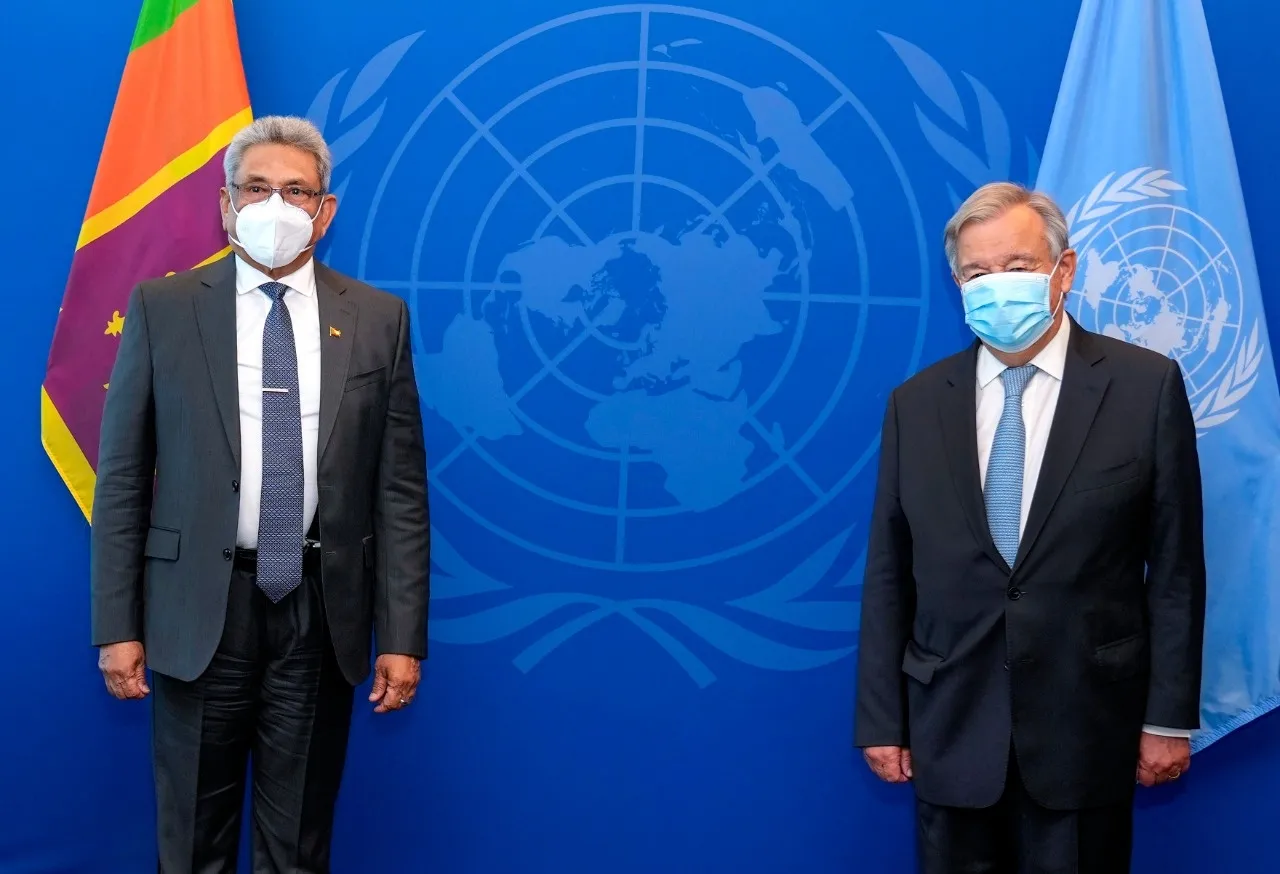
Sri Lanka President Gotabhaya Rajapaksa will attend the 76th session of the United Nations General Assembly, which begins in New York on September 21, President’s Media Division announced.

This is the first time the President will be addressing the UN General Assembly and is attending a foreign conference outside the country.

During his visit, President Rajapaksa is scheduled to hold bilateral discussions with a number of Heads of State on a multitude of areas, including the economy, education and agriculture.

Foreign Minister Prof. GL Peiris, Chief Adviser to the President Lalith Weeratunga and Foreign Secretary Admiral Prof. Jayanath Colombage will accompany the President on the visit.

Considering his personal policy and the current situation in the country, the President has decided to make the visit with the participation of a minimum number of delegates.

Accordingly, this is the lowest number of Sri Lankan delegates to the UN General Assembly in recent history, and First Lady Ioma Rajapaksa will join the tour at her own expense.