Sri Lanka’s trade deficit widens for fifth consecutive month

Sri Lanka’s trade deficit widened for the fifth consecutive month in July 2021 although earnings from export of goods increased during the month over a year earlier.

This was revealed through the Central Bank’s External Sector performance report for July 2021.

The cumulative deficit in the trading account from January to July 2021 widened to 4,922 million US dollars from 3,471 million US dollars in the corresponding period of 2020.

According to the report, workers’ remittances declined in July, following the trend observed in June 2021, while earnings from tourism remained at minimal levels.

The reports notes, exports performed well in July 2021 despite the ongoing pandemic. Earnings from merchandise exports in July 2021 recorded an increase of 1.7 percent to US dollars 1,104 million compared to July 2020 while earnings from the export of industrial goods increased by 1.1 percent in July 2021 compared to July 2020.

Total earnings from the export of agricultural goods in July 2021 increased by 2.3 percent compared to July 2020. However, earnings from the export of tea declined significantly, due to a decline in both volume and prices of tea exported.

Shedding light on imports, the report says expenditure on merchandise imports increased by 32.2 percent to 1,710 million US dollars compared to 1,294 million US dollars recorded in July 2020.

On a cumulative basis, total import expenditure from January to July 2021 amounted to 11,725
million US dollars, compared to 8,968 million US dollars recorded in the corresponding period in 2020.

Gross official reserves stood at US dollars 2.8 billion at the end of July 2021.

Posted in Uncategorized

Ajith Nivard Cabraal appointed CBSL Governor once again

Former State Minister of Finance Ajith Nivard Cabraal has been appointed as the new Governor of the Central Bank of Sri Lanka (CBSL).

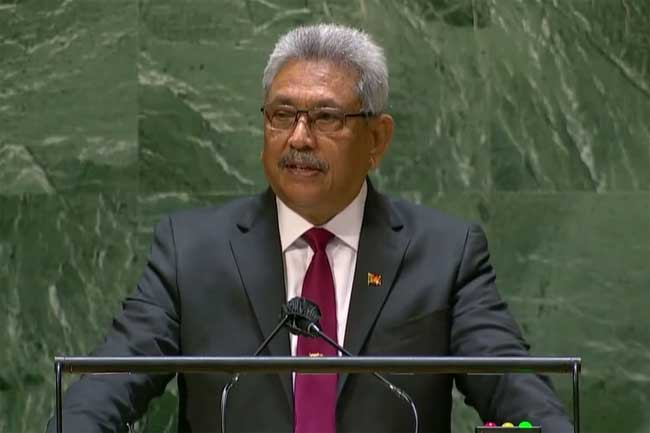
President Gotabaya Rajapaksa presented Cabraal with his new appointment a short while ago, President’s Media Division stated.

The new appointment will be in effect from Wednesday (September 15).

Ajith Nivard Cabraal submitted his resignation from his parliamentary seat this morning. Former MP Jayantha Ketagoda has been named to replace Cabraal.

Cabraal, a veteran Chartered Accountant, has previously served as the Governor of CBSL from 2006 to 2016.

SJB urges Cardinal to take up Easter Sunday issue in Geneva

Chief Opposition Whip and SJB Kandy District MP Lakshman Kiriella yesterday said that no one was happy with the way the government was investigating the Easter Sunday terror attacks.

Addressing the media at the Opposition Leader’s office in Colombo, Kiriella said that there was nothing wrong with Colombo Archbishop Malcolm Cardinal Ranjith contemplating going before the international community against the way the government was carrying out investigations into the Easter Sunday carnage.

“The Cardinal, the victims and we, in the Opposition, are calling for only one thing – that is the government should implement the recommendations of the Presidential Commission of Inquiry on the Easter Sunday carnage. The government should implement the recommendations of the final report of the presidential commission on the Easter Sunday attacks. Several international conferences are due to discuss resolutions against Sri Lanka. The current session of the UN Human Rights Council Geneva got underway yesterday (12) and the UN General Assembly sessions will be held in New York on Sept. 21. The results of these forums would be detrimental to our national interests if the government keeps bungling in this manner.

“It is incumbent Prime Minister Mahinda Rajapaksa the one who internationalised Sri Lanka’s domestic issues in 1989. He went before the Geneva Human Rights Council with a list of names of disappeared persons. Since then this has become the norm for anyone who is not happy with the actions of any government to prevent human rights violations to go there. The UN Human Rights Council is at the disposal of any person or organisation that has exhausted all means in this country to get justice done. Even other countries could complain to that Council if they think Sri Lanka does not comply with human rights conventions that it has become a party to. So, there is nothing wrong with the Cardinal taking the issue of the Easter Sunday carnage to Geneva because the government is not dispensing justice.”

The Chief Opposition Whip said that people had been waiting for two and half years to see the government taking action against those who are responsible for the Easter Sunday terror attacks. “The Cardinal’s complaint is that justice has not been served. There is a serious allegation that justice is served selectively. It prosecutes only those who are opposed to the government. When legal action is taken against anyone in the government’s good books, the prosecution fails or makes errors in the judicial process so that the judges have no option but to give their rulings in favour of the culprits. A judge has to make his or her decision on the basis of evidence placed before him or her. When the prosecution fails deliberately to provide evidence, then justice is not done. So, the government could act against those who are opposed to them while safeguarding their friends.”

SJB MP Eran Wickremaratne also addressed the press.

Posted in Uncategorized

48th session of UNHRC to commence tomorrow

The 48th session of the United Nations Human Rights Council is set to commence in Geneva tomorrow (13).

The High Commissioner for Human Rights’ oral report on Sri Lanka will be presented tomorrow as well.

The 48th session of the United Nations Human Rights Council will be held in Geneva, Switzerland from 13 September until 08 October.

The UN High Commissioner for Human Rights Michelle Bachelet will be presenting the oral report on the progress made by Sri Lanka after a resolution on accountability of Sri Lanka for reconciliation and the promotion of human rights was passed at the previous session of the Human Rights Council last year.

Posted in Uncategorized

Daily COVID cases count climbs to 2,642

The Epidemiology Unit of the Health Ministry reported that 620 more people were tested positive for COVID-19 in Sri Lanka today (Sep. 12), moving the daily total of new cases to 2,642.

According to the Government Information Department, 2,641 of them have been associated with the New Year Cluster and the remaining one was identified as returnees from overseas.

This brings the tally of coronavirus infections confirmed in the country to 485,922.

Official data showed that more than 61,800 active cases are currently under medical care at hospitals, treatment centres and homes.

Total recoveries from the virus infection reached 412,812 earlier today as 1,579 more patients were discharged from medical care upon returning to health.

Meanwhile, Sri Lanka registered 144 new COVID-related fatalities confirmed by the Director-General of Health Services on Sep. 11. The new development pushed the official death toll from the virus outbreak in Sri Lanka to 11,296.

Turmoil as new forex decisions rattle markets

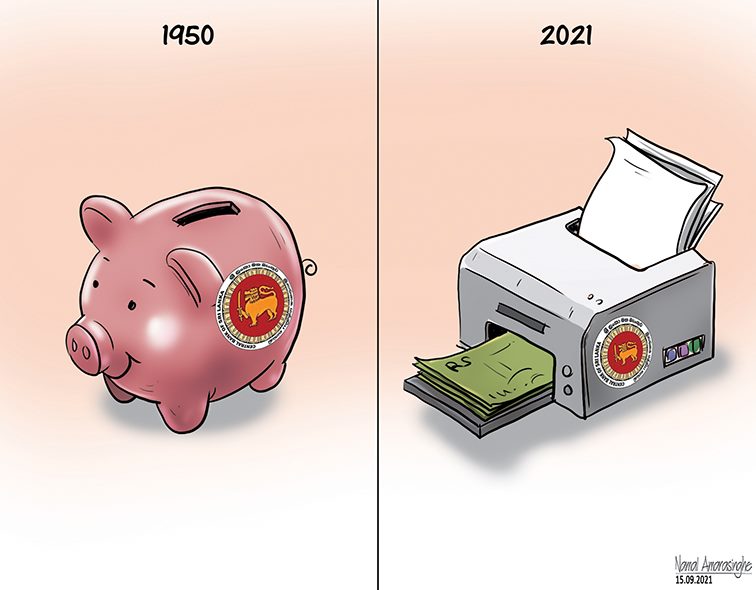
A flurry of decisions this week by the Central Bank (CB) on the use of foreign exchange and further restricting imports have rattled the money markets and triggered concerns of shortages in some imported food items, mobile phones and household appliances.

On Tuesday, the CB issued a directive to banks to stick to the CB’s daily rate of Rs.202-203 per dollar and desist from the bank-to-bank rate of Rs.210-220 which has depreciated the rupee sharply – with the move leading to confusion and exporters holding onto their dollars. Adding to the problems, the CB on Thursday introduced measures to curb imports by enforcing a 100 percent cash deposit margin on importers when opening LCs.

“This could lead to shortages as it’s difficult to provide a cash deposit against letters of credit,” one importer said. The CB also directed banks not to advance money to importers to meet the cash deposit margin. Other importers said that small importers cannot afford to block their money in LC margins and they would have to stop imports or resort to smuggling.

The total import cost of the items under the new regulations was US$871 million in 2020 and $1 billion in 2019. The import cost of these items from January to July 2021 was $753 million, Finance Ministry data showed.

The uncertainty came as former CB Governor and current State Minister for Finance Ajith Nivard Cabraal prepared to take over as the Governor, his third term in office, on September 16. Informed sources said that a Cabinet paper providing him cabinet rank status was likely to be presented at Monday’s Cabinet meeting. Prof. W.D. Lakshman at a news briefing on Friday at 3 pm announced that he was stepping down from September 14.

The changes at the CB comes after which analysts said were a series of bad decisions which culminated in a last-ditch attempt to saving dollar reserves when the Governor admonished the banks to maintain the US dollar exchange at a certain rate. In the meantime, the commercial banks planned to meet the Governor (if Mr. Cabraal has already been appointed) next week seeking a revocation of the ‘arm-twisting’ directive.

Tuesday’s move created an impasse in transactions between banks and importers with banks refusing to honour their letters of credit, a banker said. The banks have requested delayed payments from importers slapping a currency exchange risk on the latter further aggravating their issues. Money market dealers said import bills were being largely financed through remittances by migrant workers.

Banking sources said that two banks are following the CB request, but others have adopted a wait-and-see approach. However foreign banks are not heeding the regulator’s request, they said. “According to the governance structure, foreign banks cannot oblige ‘letters’ sent by anyone except if it binds them legally. So, they are not adhering to the Governor’s request,” a source told the Business Times. This will bring about a cartel situation for foreign banks, he said noting that this needs to be addressed as soon as possible,

There is a fair amount of private sector commercial transactions pending, a second banker noted. “There are unsettled oil bills, engine payments of large aircrafts and large food imports need to be settled.”

Adding to the problems a West Asian manufacturer exporting large food items to Sri Lanka through a government importer has refused to transact on credit in the future. “This manufacturer based in West Asia has told the government importer that goods will be shipped solely on cash and not on credit,” an importer in the industry said. He added that most intermediary goods like fabric, packaging, industrial chemicals, clinker for cement etc are delayed affecting some of the exports as well.

Meanwhile, export proceeds of a few million dollars are sitting in government banks without the exporters converting them into rupees, a third banker told the Business Times. Banks are fuming as they stand to lose Rs. 100 to 200 million a month if they buy and sell dollars at the CB stipulated rate.

The biggest dilemma facing the banks is honouring the already committed LCs. “A central bank has to give us a payment plan without which we have no option but to default payment,” a fourth banker pointed out. This will further bring down the credit rating in the country. Economists say that on the one side there is a food crisis and a fiscal crisis on the other – both creating a black market in the months to come. “A lot of under-invoicing will happen by exporters if the CB forces banks to maintain the dollar at the ceiling of Rs. 203,” an economist said.

Items affected by the import restrictions include mobile phones and fixed phones, home appliances such as fans, TVs, refrigerators, washing machines and digital cameras, clothing and accessories, household and furniture items, air conditioners, fruits such as fresh apples, grapes and oranges, cosmetics and toiletries, beverages such as beer and wine, other food and beverages such as cereal preparations, starches, chocolates, cheese and butter, and other non-food consumables such as musical instruments, tobacco products, toys and stationery.

Posted in Uncategorized

Drafting of new constitution: Final draft in November

The expert committee appointed to draft a new constitution has sought a three-month extension to submit the final draft to President Gotabaya Rajapaksa while an initial draft is being studied by the Legal Draftsman’s Department, The Sunday Morning learnt.

Responding to a query by The Sunday Morning, Presidential Secretariat Director General – Legal Affairs Harigupta Rohanadeera confirmed that a request was made by the committee and that it was granted.

The extension gives the committee till December to submit a final draft.

Sources close to the committee said the extension was requested due to delays caused by the prevailing Covid-19 situation in the country.

The committee is chaired by Romesh de Silva PC and includes Gamini Marapana PC, Manohara De Silva PC, Sanjeewa Jayawardena PC, Samantha Ratwatte PC, Prof. Naazima Kamardeen, Dr. A. Sarveswaran, Prof. Wasantha Seneviratne, and Prof. G.H. Peiris. The nine-member committee to draft a new constitution was approved by the Cabinet in September last year.

When contacted on the matter, Minister of Justice Ali Sabry expressed confidence that the committee will have a final draft ready by the end of November.

President Rajapaksa pledged to replace the 1978 Constitution with a new one. The appointment of the expert committee is the first step in several processes that would be required to draft a new constitution for Sri Lanka.

Several members of the Government, including some senior politicians, had called for the abolition of the provincial council (PC) system and the 13th Amendment to the Constitution. The call for the removal of the legislation prompted Indian authorities to reaffirm their stance that the 13th Amendment to the Constitution should remain.

The Tamil National Alliance (TNA) criticised the postponement of a planned meeting in June with the President to discuss constitutional reforms. The TNA had submitted proposals for constitutional reforms to the President last year, and the expert committee.

Sri Lanka Is Running Out of Money for Imports as Delta Rages – Bloomberg

Sri Lanka’s dwindling foreign exchange reserves risk spiraling into a crisis that could force the South Asian nation to tighten policy more aggressively and seek an International Monetary Fund bailout.

After meeting a $1 billion debt repayment in July from reserves, the government had only enough dollars to cover less than two months of imports. The nation buys wheat, sugar and milk powder from abroad and, with the Sri Lankan rupee down 7.3% this year, the import bill is soaring, stoking inflation and raising concerns about panic buying and hoarding.

“For investors it’s a question of when, not if, they run out of FX reserves,” said Nivedita Sunil, senior analyst for Emerging Markets at Lombard Odier in Singapore. “If you see where the bonds are trading, they are clearly telling you that they are no longer taking a longer term view.”

Sri Lanka’s foreign exchange reserves rose 26% to $3.55 billion last month, after the nation converted the IMF’s special drawing rights, which the South Asian island nation received on Aug. 23, into U.S. dollars, the central bank said in a publication on Friday.

While authorities maintain they will repay $1.5 billion of foreign bond payments due in January and July, a Bloomberg gauge of one-year default probability has risen almost 20 percentage points, to Asia’s highest level at about 28%.

Government revenue is far short of its target as pandemic curbs hurt economic activity, Finance Minister Basil Rajapaksa told parliament on Sept. 7. With a third wave of Covid-19 running across the island, the administration has taken increasingly draconian measures to deal with the crisis, from declaring a state of emergency to seizing rice stocks from private mills. Policy makers have extended lockdowns, raised interest rates, restricted imports and asked banks to offer foreign currency loans. Central bank Governor Weligamage Don Lakshman will step down Sept. 14.

The IMF has not received a request for financial support from Sri Lanka, Masahiro Nozaki, the mission chief for Sri Lanka, said in an email. “We stand ready to discuss options if requested. We continue to closely monitor economic and policy developments in Sri Lanka.”

The emergency measures are necessary “to give legal backing to stop hoarding. But with emergency and sudden lockdowns comes rumors and panic, and that creates excess buying,” said Adrian Perera, chief executive officer of Lanka Rating Agency. “Rates will need to be raised again this year to keep inflation under control and support the rupee.”

Tourism Hit

Travel restrictions have hammered the tourism industry, which contributes about 5% of the total economy, while an extended lockdown to try to halt the spread of the delta variant has hurt commerce and industry.

Among President Gotabaya Rajapaksa’s emergency measures passed by parliament this week was the appointment of Major General N.D.S.P. Niwunhella as commissioner of general and essential services, giving him the power to commandeer food supplies and regulate prices to “safeguard the interest of consumers.”

Opposition lawmakers decried the move as an attempt to extend the president’s power, arguing that the crisis could be dealt with through existing legislation.

The emergency rules allow the president “to suspend civil liberties, arrest and detain any citizen without a court order, suspend laws of the country, enter any premise without a court order and seize privately owned property,” lawmaker Eran Wickramaratne for the main opposition Samagi Jana Balawegaya party said in parliament. “No President should be given more powers than are needed to execute his responsibilities.”

The new rules were enacted swiftly. On Wednesday, officials seized stocks of rice from mills in Polonnaruwa district, one of the nation’s main growing regions, in order to distribute the grain under a government price-control system, according to the government. Authorities accused the mills of hoarding the supplies.

The following day, the government introduced a 100% cash margin for letters of credit on imports of 693 items, including chocolates, dairy products, wines, cosmetics, clothes, and electronic goods, and barred banks from extending credit to buyers to meet the cash requirement.

Bank Loans

The measures come on top of capital controls imposed earlier this year to limit how much foreign currency leaves the country. To shore up reserves, the government has also asked banks and institutional investors to propose foreign-currency term loans by Sept. 22, in multiples of $50 million.

The swapline with China and another with Bangladesh, together with funds supplied in August by the IMF through special drawing rights — a facility offered by the fund to boost global liquidity — should cover Sri Lanka’s dollar requirements until year-end at least and enable it to meet bond repayments due in January, according to Ek Pon Tay, senior portfolio manager at BNP Paribas Asset Management in Singapore. But in the “medium term, firm energy prices and the pandemic’s impact on tourism earnings pose challenges to replenishing foreign-exchange reserves.”

A total $3.6 billion of foreign debt matures in 2022 for Sri Lanka, Fitch Solutions calculates.

With currency reserves depleted and inflation now at 6% — the upper end of the central bank’s target range — investors are bracing for more rate increases. The central bank on Aug. 19 unexpectedly raised its benchmark rate for the first time since late 2018, saying lower credit costs had boosted imports more than exports, widening the trade deficit.

The rate hike helped Sri Lanka’s dollar notes erase monthly losses and gain 2.9% in August, the biggest increase across Asia, according to a Bloomberg index. But it may not be enough.

Fitch Solutions forecasts the central bank will raise rates by another 50 basis points this year, but that won’t solve Sri Lanka’s structural challenges as businesses are aware of the dollar shortage. S&P Global Ratings last month cut the outlook to negative on Sri Lanka’s CCC+ junk rating, citing concern that attempts to boost reserves may fall short.

Sunil at Lombard Odier says the government needs a longer-term solution. “In our view, that can’t happen without an IMF program.”

— With assistance by Lilian Karunungan, Ronojoy Mazumdar, Eric Martin, Asantha Sirimanne, and Ragini Saxena

(Updates with FX reserves data and IMF comments from fourth paragraph.)

Stop leasing port property, trade unions write to the President

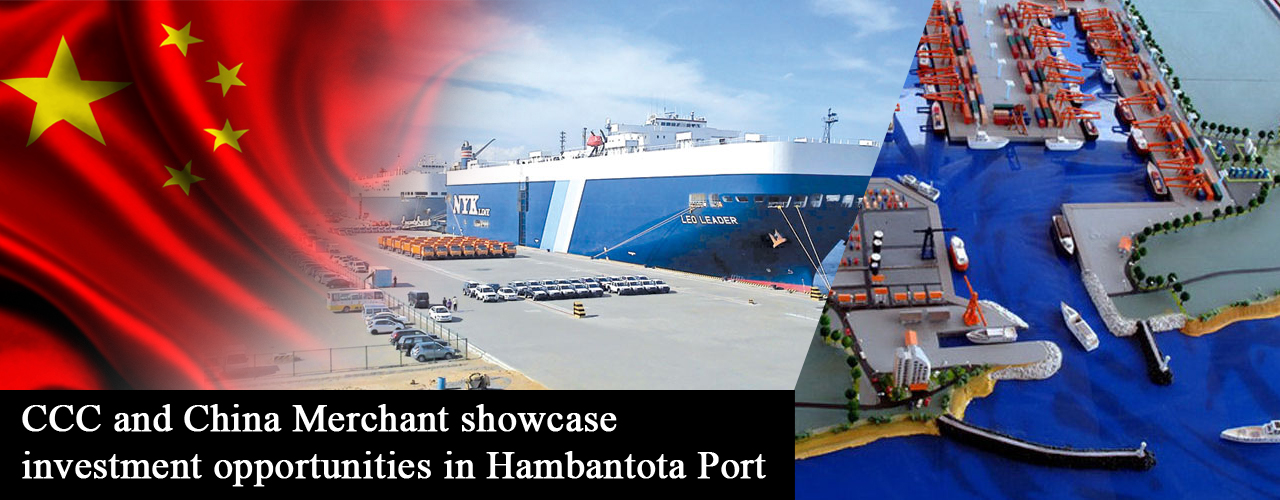
Port Trade Unions have requested the President to terminate the Cabinet Paper on the South Asian Freight Service Supply Centre, which proposes to release 13 acres of the Sri Lanka Ports Authority for a Chinese investment.

In a letter to the President, the All Ceylon Ports General Employees Union said lands which are required for the strategic development of the Colombo Port should not be released under any circumstance.

It has been proposed to hand over 13 acres of land bordering the Colombo Port City, CICT, SAGT and the access road to the Western Terminal to the Chinese majority shareholder CICT.

This proposal has been submitted as a joint venture project to develop the Port of Colombo as South Asian Freight Service Supply Centre.

The All Ceylon Ports General Employees Union points out that 70 percent of the services provided by the Ports Authority will be lost annually due to the implementation of this project.

They emphasize that this land, which is being prepared for sale for a period of 35 years, is at a strategically important point in the future development of the Colombo Port.