An influential section of Sri Lankan agricultural economists and scientists has deplored the recent course change in the country’s agricultural policy made by the Gotabaya Rajapaksa government. The decision by the government to ban the use and import of chemical fertilisers and pesticides in pursuit of a “100 per cent organic food producer” status for Sri Lanka has already had disastrous consequences for the economy of the island nation, the Sri Lanka Agricultural Economics Association (SAEA) warned in a letter to President Rajapaksa on May 25, 2021. It pointed to the adverse effects of the policy on “food security, farm incomes, foreign exchange earnings and rural poverty.”
President Rajapaksa’s ill-conceived and extremist policy, announced in April this year, of banning the import of all chemical fertilisers and pesticides as a way of promoting organic farming, is threatening to plunge the country’s agriculture into a deep production slump. As a consequence, the export of tea, Sri Lanka’s primary agricultural export, and of other commodities are projected to decline. The economy appears set for a fall in foreign exchange earnings in the midst of the Covid-19 pandemic.
The SAEA letter provided the following detailed estimates of the potential economic loss to farmers due to the policy:
When converting from conventional agriculture into organic farming, the Government should weigh the technological, environmental, and economic costs and benefits. The preliminary findings of the studies conducted by the SAEA on potential economic losses of the import ban and respective estimations are given below for your consideration.
(a) Agronomic studies reveal that the average yields from paddy can drop by 25 per cent if chemical fertilisers are fully replaced by organic fertilisers. This loss in productivity could reduce the profitability of paddy farming by 33 per cent and rice consumption by 27 per cent if paddy is cultivated just with organic fertilisers with a complete ban on rice imports. In contrast, applying organic fertiliser with the recommended dosages of chemical fertilisers would improve the profitability of farming by 16 per cent.
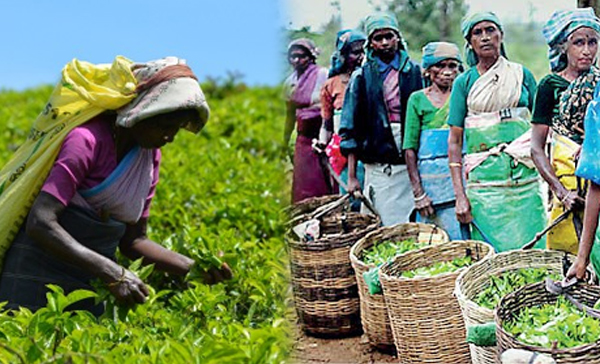
(b) Absence of chemical fertiliser would drastically reduce the productivity of the Vegetatively Propagated Tea (VPT). With a 35 per cent productivity drop, the export volume of tea would go down from 279 to 181 million kg, causing an income loss of Rs. 84 billion. The estate sector will likely incur significant losses compared to those of tea smallholders. These losses could further be aggravated due to increased cost of labour to apply bulky organic fertilisers.
(c) The coconut yields would go down by 30 per cent if chemical fertilisers and pesticides are not applied. This situation will adversely impact fresh coconut availability for the production of coconut oil, desiccated coconut and other coconut products. The loss in foreign exchange earnings can be as high as Rs. 18 billion, based on the assumption that only 26 per cent of the total coconut extent is fertilised. When the additional cost for the importation of edible oils is considered, the loss of foreign exchange earnings will be even higher.
(d) The above results were derived considering the immediate effects on three agricultural sub-sectors. An analysis performed accommodating adjustments in the economy over the medium to long run reveals that a reduction in average agricultural productivity by 20 per cent could cause a decrease in Gross Domestic Product (GDP) by 3.05 per cent suggesting an overall contraction of the economy with the implementation of the import ban. (emphases added)
The letter requested the President to “substitute the import ban on chemical fertilisers and pesticides with the set of alternative measures” that included making scientifically validated Good Agricultural Practices (GAP) as a mandatory national standard and disincentivising overuse of chemicals in agriculture through an appropriate mix of legal standards, taxes, subsidies and output price support. The letter also asked for the strengthening of agricultural extension to “improve awareness of the safe use of chemical fertilisers and pesticides”.
On coming to office in 2019, President Rajapaksa promised subsidised imported fertilisers to farmers. Yet in a matter of just two years, the Sri Lankan cabinet approved Rajapaksa’s proposal to completely ban the import of inorganic fertilisers and all synthetic agro-chemicals — effectively, the imports of all chemical fertilisers, pesticides, fungicides and weedicides. A gazette notification on May 6, 2021 brought this into immediate effect. For any shipment after 6th May 2021, permissions for unloading were cancelled, and banks told not to issue Letters of Credit on the import of banned substances.
What caused this about-turn?
The two factors behind the change in policy direction, according to news reports, are first, Sri Lanka’s foreign exchange crisis, and second, the rise in food prices owing to the lockdowns and other disruptions induced by Covid-19. It is estimated that Sri Lanka spends about US$ 400 million on fertiliser imports annually. A ban on chemical fertilisers, it was thought, would reduce the pressures on foreign exchange. Added to this was the pressure from President Rajapaksa’s group of advisors that included a medical doctor, who reportedly convinced him that the use of chemicals in agriculture was leading to the spread of chronic kidney disease. Sri Lankan scientists have in fact argued that there are no links between the use of chemicals as farm inputs and kidney disease. They attributed the rise in kidney diseases to “hard water in conjunction with fluoride present in many wells” (for a short review, see here). But these voices of reason were disregarded, and the organic farming lobby pushed the policy through.
On May 10 2021, the “Presidential Task Force on Creating a Green Sri Lanka with Sustainable Solutions to Climate Change” was formed under President Rajapaksa’s Chairpersonship. The Task Force was authorised to implement the import ban and submit a plan to create a “Green Sri Lanka”. Initially, the Task Force had 46 members, but later the number of members was reduced to 25 with Mahinda Amaraweera as the Chairperson. Many senior agricultural scientists were excluded from its membership, and it appears that it was filled with people with questionable scientific credentials. One member of this task force, for example, had once claimed to have identified a self-generating rice variety of yore that had fed the ten giant warriors of the Sinhala King Dutugemunu of the Anuradhapura Kingdom between 205 BC to 161 BC. Agricultural scientists tested the claim and found that the claimed variety was of sorghum and not of rice at all! Yet another member had claimed that glyphosate even dissolved reservoir bunds! Such was the state of scientific rigour within the Task Force.
A decision was also taken to import large quantities of compost, as well as boost the domestic production of compost, to substitute for chemical fertilisers. It is well-known that compost can hardly be classed as “organic” as it contains many potentially toxic trace elements, a fact that, alas, has never persuaded the soldiers of organic agriculture to stop promoting it as an alternative to chemical fertilizers.
It is not just the SAEA that sounded the alarm over the outcome of the new policy. Growers of tea, which is the most severely affected crop in the present crisis followed by rice, pepper and cinnamon, are very worried. Herman Gunaratne, a master tea maker from Ahangama and a member of Task Force himself, says that Sri Lanka’s tea production of 300,000 tonnes may be halved due to the organic farming policy. Given that 10 per cent of Sri Lanka’s export incomes come from tea, this presents a serious potential problem. In an interview to the South China Morning Post, he said:
The ban has drawn the tea industry into complete disarray … The consequences for the country are unimaginable … The tea industry depends on nitrogen (N), phosphorus (P) and potash (K) … Mainly it is the nitrogen component that we cannot do without. Without it, you can expect the decline in production by as much as 50 per cent … I cannot subscribe to the view that it [i.e., going organic] helps the tea quality except for the fact that if we go completely organic, we will lose 50 per cent of the crop. [But] we are not going to get 50 per cent higher prices … And there is an extremely limited market for organic tea in the world. There is no way in which it can compensate for the decline in the crop.
Sensing trouble and responding to widespread protests from farmers and growers, the Rajapaksa government reversed some aspects of the policy by the end of May 2021. On 31st May 2021, the Cabinet approved the “import of carbonic fertilisers, natural minerals and chelated herbal trace minerals”. A tender was also floated to import organic fertilisers with a minimum of 10 per cent nitrogen, even though such a product is not known to exist outside blood meal, which contains about 13.25 per cent nitrogen. On 31st July 2021, some fertiliser mixtures were permitted to be imported by the “protected agriculture sector”. However, no detailed guidelines exist for the orders issued above, and much confusion exists on what can be imported and what cannot. A list of 25 agrochemicals were recommended for imports for emergency use by agricultural scientists, but this recommendation was rejected by the government. To top it all, even the import of compost was banned after officials raised questions about the violation of the regulations pertaining to plant and animal quarantine.
The muddled and unscientific policy has caused damage in other sectors as well. For instance, 20,000 out of 107,000 hectares of rubber in Sri Lanka are affected by Pestalotiopsis, a fungal leaf disease that is controlled by Carbendazim and Hexaconazole application through spraying. Further, chemical fertilisers need to be applied to promote better leaf growth. Neither are available in the market. As a result, the Colombo Rubber Traders Association expects rubber production to drop by 15-20 per cent. According to the Association, “This leaf disease is possibly best described as the equivalent of Covid-19 in the case of the rubber industry, considering both its devastation and the rapid speed at which it is spreading.”
The havoc caused by the Sri Lankan experiment with organic farming is a warning to developing countries across the world against falling into a similar trap. The irrational reduction in chemical inputs to agriculture even at low levels of productivity can spell disaster. Take a country like India where soils are generally poor in organic matter content. An estimated 59 per cent of soils are low in available nitrogen, about 49 per cent in available phosphorus, and about 48 per cent in available potassium. Indian soils are also deficient in varying degrees in micronutrients such as zinc, iron, manganese, copper, molybdenum and boron. Micronutrient deficiencies are not just yield-limiting in themselves; they also disallow the full expression of other nutrients in the soil, leading to an overall decline in fertility.
Agricultural scientists have always been aware of the nutrient deficiencies of soil, as well as the perils of overuse of chemicals and the improper/imbalanced application of fertilisers. They therefore recommend location-specific solutions to nurture soil health and sustain increases in soil fertility. They suggest soil-test-based location-specific balanced fertilisation and integrated nutrient management methods combining organic manures (i.e., farmyard manure, compost, crop residues, biofertilisers, green manure) with chemical fertilisers. Thus, while they may advocate reducing the use of chemical fertilisers in some locations, they would promote its use in others.
Such a comprehensive and integrated approach requires a firm adherence to science and the scientific method, and an equally firm rejection of anti-science models dressed up as “organic,” “eco-friendly,” “pro-nature” and so on. President Rajapaksa’s policy falls squarely into the latter category, much like the promotion of Zero Budget Natural Farming (ZBNF) by the present Government of India. Only the total withdrawal of this policy can save Sri Lankan agriculture. The Sri Lankan government would do well to listen to the country’s agricultural scientists and not to quacks masquerading as experts.
R. Ramakumar is NABARD Chair Professor, School of Development Studies, Tata Institute of Social Sciences, Mumbai. Views are personal.
The article originally appeared on the Foundation for Agrarian Studies website. It has been published with permission.
Source:The Print