US $ 500 penalty for foreigners in SL with NO valid visa

Sri Lanka’s Department of Immigration and Emigration announced that the visa fees and fines have been revised as per the new Immigration and Emigration Regulations issued on 18th August 2021 by the Extraordinary Gazette No. 2241/37.

A foreigner staying in Sri Lanka without a valid visa will be charged US $ 500 penalty in addition to the visa fee.

Sri Lanka has announced new visa fees and fines revised as per the new Immigration and Emigration Regulations issued on August 18 via the Extraordinary Gazette No. 2241/37.

In a media release issued today (Aug. 28), the Department of Immigration and Emigration stated that a foreigner staying in Sri Lanka without a valid visa will be charged USD 500 penalty in addition to the visa fee.

Meanwhile, a fee of USD 200 will be charged from investors, employees, students, healthcare recipients, representatives of non-governmental institutions, religious workers as well as their spouses and dependent children for residence visa.

Any person whose Sri Lankan citizenship has been ceased under Sections 19, 20 or 21 of the Citizenship Act and the spouses and dependent children of such persons will be charged USD 100 for residence visa.

In addition, the residence visa fee for the following individuals will also be USD 100:

• Any person who has been registered as an Indian citizen under Section 13 of the Indo-Ceylon Agreement and his/her spouse and dependent children

• Non-Sri Lankan spouse of a demised Sri Lankan who has not remarried (with the approval for employment)

• Non-Sri Lankan spouse of a Sri Lankan citizen who is living in Sri Lanka continuously for not less than 10 years (with the approval for employment)

• Non-Sri Lanka spouse of a Sri Lankan citizen who has children below the age of 18 years (with the approval for employment)

In the meantime, the residence visa fee for the clergy and foreign national who is married to a Sri Lankan citizen and the dependent children of the non-Sri Lankan spouse will be free.

Work on the Parakrama Samudraya walking path temporarily suspended due to protest

The Irrigation Department has suspended work on a walkway planned to be built on the Polonnaruwa Parakrama Samudra tank bund due to a protest by the residents of the area and the Maha Sangha.

There were allegations from various quarters that the walkway would cause damage to the ancient reservoir and the breakwater.

This 08 feet wide walking path will extend 1.7 km from the Divisional Secretary Official Residence to the D. S. Senanayake memorial at the Number 01 Sluice Gate of the Parakrama Samudraya.

The members of the Maha Sangha in the Polonnaruwa District, farmers and residents in the area staged a protest on the tank bund yesterday.

They demanded the Irrigation Department to immediately stop removing the rocks along the breakwater using a backhoe to flatten the bund surface to make an even walking path.

Representatives of the NGOs present told the Maha Sangha that the construction was being carried out despite protests from farmers and farmers’ organizations.

The Maha Sangha sat on the bund of the tank and engaged in a Satyagraha. They demanded the irrigation officials to immediately remove the machinery and crew currently deployed to destroy the massive reservoir which is like the heart of the people of Polonnaruwa.

Polonnaruwa District Secretary W.A. Dharmasiri and other officials arrived at the protest and explained the situation to the group assuring that the walking path project will not threaten or ruin the banks of the ancient reservoir.

Afterwards an awareness meeting was held at the Polonnaruwa District Secretariat Auditorium. It was held under the patronage of Polonnaruwa District Development Committee Chairman Amarakeerthi Athukorala.

Officials of the Department of Archeology and the Urban Development Authority, as well as representatives of farmers’ organizations in the area were present at the discussion.

The Maha Sangha dispersed after the officials promised to suspend the ongoing development work on the bund and to inform the decisions to be taken after a future discussion.

Posted in Uncategorized

S&P cuts Sri Lanka rating outlook on default worries

S&P Global cut Sri Lanka’s CCC+ sovereign rating outlook to negative from stable on Friday, warning the government may find it increasingly difficult to finance itself over the next 12 months.

“The negative outlook reflects our expectation that Sri Lanka’s financing environment may get more difficult over the next 12 months,” S&P said. “This would affect Sri Lanka’s ability to service its debt.”

Worries that Sri Lanka could be heading for its first sovereign default were rising well before the Covid-19 pandemic struck.

Its debt-to-GDP level has risen above 100 per cent, it spends over 80 per cent of its revenue just on bond market interest payments and the US$3 billion of reserves it has left are barely enough to cover a couple of months of spending.

Although it is due to get an US$800 million infusion of newly approved IMF Special Drawing Rights “this will not be sufficient for the government to meet upcoming maturities of more than US$5 billion till the end of 2022,” S&P said referring to bond payments.

It added the likelihood that the government will post large fiscal deficits over an “extended period” would worsen the government’s already extremely high debt stock.

“We expect the increase in net general government debt to average 10.3 per cent over 2021-2024.”

REUTERS

Essential foods shortage looms

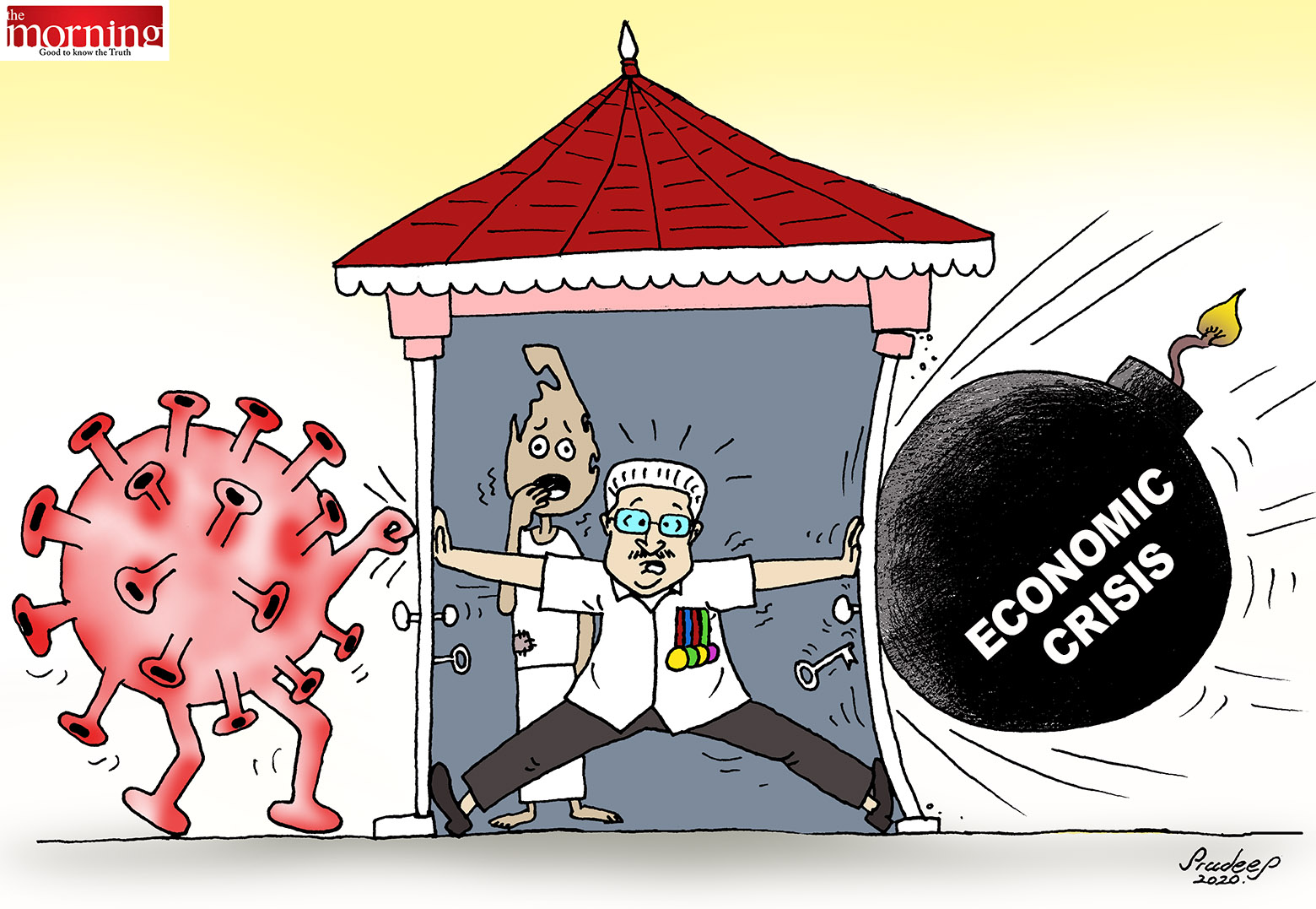
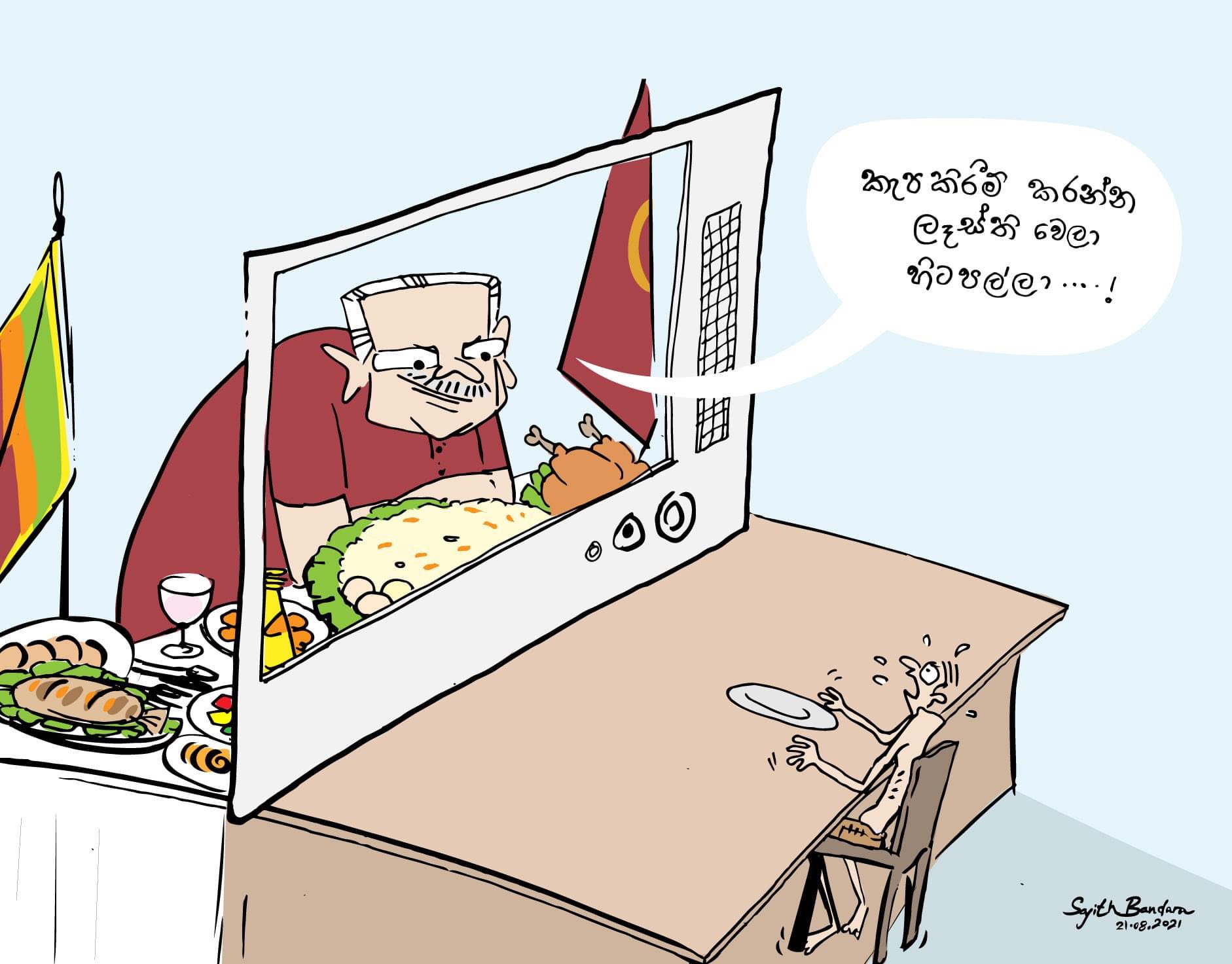
Shortage of essential food items is being forecast by the private sector due to multiple issues, including the foreign exchange crisis and the Government’s mismanagement.

They said the buffer stocks of sugar, milk powder, tinned fish, dhal and flour that are remaining will be only sufficient for another month.

The matter was also taken up at the Cost-of-Living (CoL) Sub-Committee meeting held yesterday chaired by Trade Minister Bandula Gunawardena along with Consumer Protection State Minister Lasantha Alagiyawanna and other top-level officials.

According to the importers, too much intervention, shortage of US dollars, the rupee depreciation and insufficient buffer stocks were the key reasons for the price hike that the consumers are experiencing in the market at present.

“The Government had been controlling everything – imposing price ceilings, import restrictions and allocation of resources, leading to this distortion in the market now,” Essential Food Importers Association of Sri Lanka Spokesperson told the Daily FT.

He said importers had been warning the Government on the repercussions of such extreme measures at each sitting of the CoL meetings, but they turned a deaf ear to their pleas.

It was also pointed out that since the Government stopped importation of sugar from May, authorities have not taken any steps to bring down new quantities required for consumption.

Amidst these allegations, the Cabinet of Ministers has approved importation of rice, sugar and dhal.

Last month, the Government decided to import 2500 MT sugar and dhal on a monthly basis. These stocks of sugar will be imported from India, whilst dhal will be imported from Australia through the reserves of the Co-operative Development Fund.

In June, the Cabinet of Ministers decided to use the government-to-government (G2G) import scheme to purchase 100,000 tons of samba rice. Last week too, they decided to import 6,000 tons of rice immediately, as per the provisions of the Sri Lanka – Pakistan Free Trade Agreement (FTA).

The Government justified that these importation steps were taken to secure sufficient stocks of essential goods whilst stabilising prices in the local market.

The importers said Sri Lanka requires about 50 tons of sugar per month and currently it only has about 25 tons — which are stuck in the Colombo port at present.

During the past six months, the country has imported 600,000 tons of sugar and the quantity is sufficient for the consumption for one year. As a result, the country now has an excess 120,000 tons of sugar stocks. Sri Lanka’s average sugar consumption per year is 350,000-400,000 tons.

The members of the Association said even if the Government permits imports, the banks are not supportive due to the scarcity of foreign exchange.

“We are not allowed to do forward exchange contracts. There are bills worth around $ 10 to $15 million waiting to be settled. The Government has to relax certain controls and let the supply and demand determine the prices. Inaction to take quick measures will lead the country towards a massive economic crisis,” they cautioned.

National Movement for Consumer Rights Protection (NMCRP) President Ranjith Vithanage claimed the Consumer Affairs Authority’s (CAA) enforcement of price control mechanism was not effective, as traders are selling goods at exorbitant prices ignoring the Gazette notifications.

“The price of sugar kilogram is now over Rs. 200, rice kilogram is now around Rs. 230 to Rs. 240, dhal kilogram is around Rs. 250. The price of vegetables is no longer affordable for the general public. The traders are selling these vegetables 10-fold more than what it is quoted at the economic centres. Even when the Government has imposed a Maximum Retail Price (MRP), they have failed to execute an effective mechanism to regulate the prices in the market,” he charged.

Vithanage said the prices of all essential commodities are likely to skyrocket in the next couple of weeks. The allegations poured in following the Cabinet of Ministers approving an increase in the fines against traders selling essential consumer goods beyond the maximum retail price (MRP) from a minimum fine from Rs. 2,500 to Rs. 10,000.

“The CAA, which is the apex body to protect the rights of the consumers, have failed to fulfil their duty and allowed the importers to sell essential food items keeping a profit margin, to wholesale dealers, where they in turn sell it to retail traders at a high price. In the end, the consumers buy essential commodities from them for more than the controlled price,” he said.

The NMCRP President called on both Ministers and the CAA Chairman to resign from their positions, as importers and intermediary agents have figured out that the authorities cannot take any action against them.

Posted in Uncategorized

Avoiding IMF won’t help us avoid austerity

Sri Lanka’s debt problems are a topic of national conversation. Foreign reserves, already low at $ 4 b in May 2021 fell to $ 2.8 b after the most recent bond repayment of $ 1 b in July 2021. The Government claims that the timely repayment of the bond is proof that doomsayers were wrong and that it indicates a robust economy. Is this correct?

While it is true that a default has been avoided thus far it does not necessarily mean that the economy is sound. The recent bond repayment comes at a cost: a foreign exchange squeeze. Bond holders are being repaid, but this means that foreign exchange that could otherwise have been used for imports are now being used to pay bond holders instead.

The Government seems to be adamant in avoiding the bogeyman, the IMF, perhaps to avoid the tough medication an IMF program will bring. Yet avoiding the IMF does not mean we can escape the inevitable austerity that will follow. Austerity is in fact already upon us, in the form of restricted imports. The restrictions are denying essential inputs to the local economy and medicines and food to citizens. These restrictions work in two ways:

1. The outright restrictions on imports

2. The shortages of foreign exchange in the market

The Government has banned or restricted imports of what is termed “non-essential” items although the list includes goods like some clothing items, refrigerators and food items (live fish, tomatoes for example).

In addition, the Central Bank’s attempts to control the rate of exchange have resulted in shortages of foreign exchange. The Central Bank has decreed an official rate of around 200 but only limited amounts are being converted at these rates resulting in a shortage of hard currency.

Banks are now rationing foreign exchange with the result that even items that are not banned are becoming unavailable.

“We cannot accommodate the requests for LCs so we have to ration them,” a banker said. “There is no regulation to say to ration them, but we are forced to do it.” https://economynext.com/sri-lanka-rupee-forex-markets-in-pickle-as-lc-rationing-froths-83224/.

The import restrictions were supposed to be restricted to luxury items but the currency shortage means that even medicine and some food items seem to be running short.

While foreign bondholders will undoubtedly be pleased to have been repaid, local consumers and businesses must now suffer, making do without everyday products. The shortages in supply mean that prices rise: of whatever available imported products as well as local products.

This affects not only consumers, but also businesses. With banks being unable to open a Letter of Credit (LCs), imports of intermediate goods, even exports by SMEs which have no access to BOI facilities are at risk.

Unable to trade or operate due to lack of stocks or input material, import dependent businesses are losing out. The net result is an overall decline in economic activity and welfare of all Sri Lankans.

A person interviewed for this report explained the difficulty in obtaining asthma medication for his mother. He had to try four different pharmacies to get the required drugs. He said that he believes larger stores have fewer stocks available as the volume of people going to them is much higher.

Another respondent said chemotherapy drugs brought in from Europe were no longer available with only cheaper products from India, Bangladesh or Argentina being available. As he had no other choice he used the substitutes for part of his wife’s chemotherapy treatment but was worried about the quality and safety.

The knock-on effects of these are palpable. Prices of basic goods are increasing. Inflation in January 2019 according to the NCPI was 127 index points which increased to 146 in June 2021. That means prices have increased by 15% in little over two years as a whole. But prices of essential food prices have increased by a lot more. Food inflation particularly has dramatically increased by 25% (NCPI). According to the Advocata Institute’s Buth Curry Indicator, prices of food that would be consumed in a rice and curry meal have increased by 45% from July 2020 to July 2021.

The effects don’t end there. Importers of seeds were complaining that their sales have dropped by 50% because of uncertainty over fertiliser imports. These importers bring in seeds that are not produced in Sri Lanka, for vegetables like beetroot and carrots. Sales have fallen as they are not being purchased by domestic farmers. Farmers are holding back from cultivating due to the uncertainty caused by the shortages of fertilisers needed for production.

A consequence of this would be shortages and rising prices of fruits, vegetables and other produce in the coming months. This will not only affect farmers’ incomes but also result in higher consumer prices. The Government may have to resort to importing more food, thereby negating the impact of the fertiliser ban to begin with. Only recently, the Cabinet approved the importation of 6,000 metric tons of rice from Pakistan to manage the shortage in the market.

This fertiliser fiasco has affected the poor disproportionately. Larger businesses are able to stock up on fertiliser, but not everyone can afford to do that. It’s the small farmers that lose out on income. The incomes of these small farmers are in jeopardy. Coupled with the milk powder and gas shortage, prices of these essential commodities are forced to increase at an already difficult time.

Economic policy affects the ordinary person in a society. These may be individual stories but they are certainly not one-off situations.

The fact of the matter is that the country is undergoing a self-imposed austerity program in the form of import restrictions and more recently a foreign currency shortage that has resulted in the rationing of even items that are not subject to control.

The basic principles of economics cannot be ignored in policymaking. By avoiding the IMF for fear of austerity measures, has resulted in more damaging self-imposed austerity. We need to ask ourselves how sustainable this really is in the long term. The longer we wait, more stringent austerity measures will be needed.

(Rehana Thowfeek is an economics researcher by profession. She has an MSc in Economics from the University of Warwick and a BSc in Mathematics and Economics from the University of London. She has worked previously for Sri Lanka-based think tanks; Verité Research and the Institute for Health Policy. At present she works for a US-based food technology company as a researcher. Naqiya Shiraz is a Research Analyst at the Advocata Institute and can be contacted at naqiya@advocata.org.)

(Learn more about Advocata’s work at www.advocata.org. The opinions expressed are the author’s own views. They may not necessarily reflect the views of the Advocata Institute, or anyone affiliated with the institute.)

Posted in Uncategorized

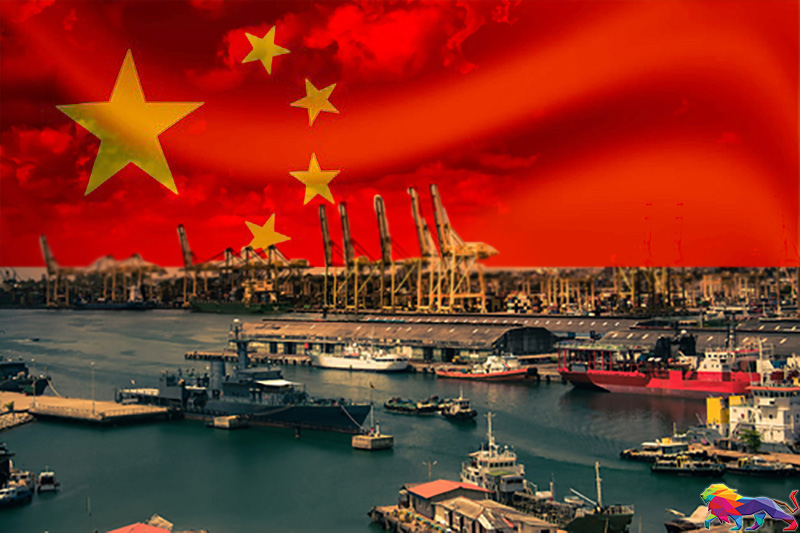
China to extend full support to Sri Lanka to fight Covid-19

Chinese Ambassador to Sri Lanka Qi Zhenhong has called on Speaker of Parliament Mahinda Yapa Abeywardena on Thursday (Aug. 26).

During the meeting held at the Speaker’s official residence, the Chinese Ambassador reiterated that the Chinese Government would continue to extend its full support to the Government of Sri Lanka for the control of COVID-19 situation at a time when both countries are working with utmost commitment to control the current Covid-19 situation.

They also discussed economic and financial cooperation between the two countries as well as the strengthening of inter-parliamentary relations.

The Speaker also expressed his gratitude to the Chinese Government for its continuous support as a long standing friend of Sri Lanka.

Posted in Uncategorized

Tamil Nadu CM announces INR 3,174 million welfare package for Sri Lankan refugees

Tamil Nadu Chief Minister MK Stalin on Friday announced welfare measures worth Indian Rupees 3,174 million for Sri Lankan Tamil refugees living in special camps in the state.

Making a suo motu statement under Rule 110 in the Tamil Nadu Assembly, Stalin said the refugees would be ensured decent and better livelihood opportunities by the state government based on the inspection carried out in the special camps.

Stalin announced that a total of 7,469 houses which were in dilapidated condition would be reconstructed at a cost of INR 2,315.4 million. In the first phase, 510 new houses will be built at INR 1,088.1 million, he said.

Stalin said that each refugee family would be provided with a cooking gas connection and a stove free of cost. A subsidy of 400 Indian rupees per cylinder will be provided for five cylinders a year, he announced.

The chief minister said the government would bear the educational costs for the first 50 students selected for engineering courses in Tamil Nadu.

The Tamil Nadu government will fund the education of the first five toppers in the agricultural or agri-engineering courses. Similarly, scholarships would be provided for postgraduate students and their hostel fees would be paid by the government.

Dravida Munnetra Kazhagam (DMK) chief Stalin-led Tamil Nadu government also decided to hike scholarships for around 750 students — polytechnic (from INR 2500 to INR 10,000), undergraduate courses in arts and science (from INR 3,000 to INR 12,000) and undergraduate vocational courses (from INR 5,000 to INR 20,000).

Additionally, Stalin told the Tamil Nadu Assembly that a committee would be formed to ensure sufficient assistance to the refugees. Efforts to improve the basic amenities in the camps will also be taken care of the government, he said.

Posted in Uncategorized

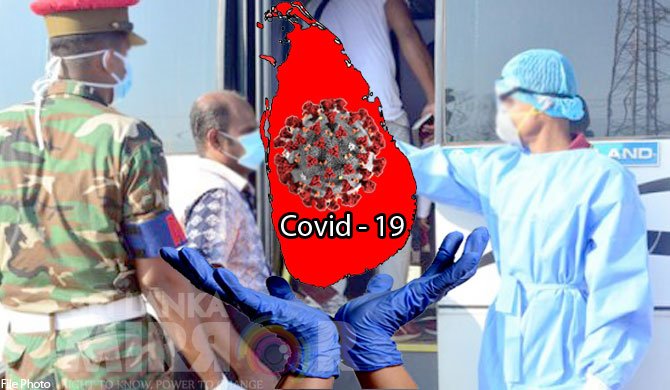
Sri Lanka records highest daily deaths from COVID-19 Friday, total rises to 8,371

Sri Lanka Friday confirmed that 214 people had died from the coronavirus on Thursday August 26, 2021, the country’s highest death toll since the outbreak of the COVID-19 virus last year.

The Director General of Health Services has confirmed 214 deaths due to the COVID-19 for Thursday, August 26.

Among the Friday’s reported deaths, 120 are of males and 94 of females. The majority of the deaths numbering 151 are of elderly people in the 60 years and above age group. Five people under 30 years of age including two females also died of the viral disease.

According to the data reported by the Government Information Department, 8,371 people have died due to Covid-19 since the pandemic began.

Islandwide lockdown extended till Sept. 6

The ongoing islandwide lockdown has been extended till September 6, 4 am, Health Minister Keheliya Rambukwella said.

The current COVID curfew will continue till Monday, September 6, following an observation that Sri Lankan citizens have not taken the curfew to heart. In order for this to be effective I implore again to refrain from unnecessary travel, work from home and abide by the curfew, Rambukwella said.

The decision was taken by President Gotabaya Rajapaksa at the COVID-19 Task Force meeting held this morning.

Those who did not receive Rs. 2,000 allowed to appeal

Those who did not receive the Rs. 2,000 allowance have the opportunity to appeal, the Presidential Task Force on Economic Rehabilitation and Poverty Alleviation says.

The Task Force mentions that an allowance of Rs. 2,000 is being given to persons who have lost their income.

However, those who have lost their income but have not yet received the allowance are allowed to appeal, the Task Force says.

The Presidential Task Force on Economic Rehabilitation and Poverty Alleviation added that steps have been taken to expedite the payment of the Rs. 2,000 allowance in many areas.

Posted in Uncategorized