209 more Covid deaths reported: Death toll exceeds 8,000 mark

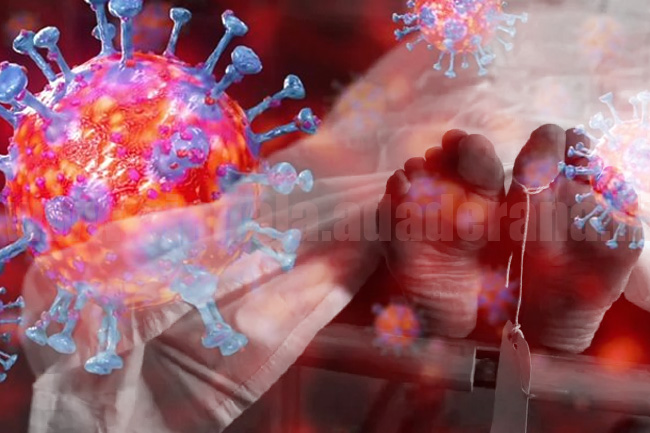
The Covid-19 death toll in Sri Lanka exceeded 8,000 mark with 209 more deaths being reported today, the Government Information Department said.

A total of 209 more COVID-19 related deaths that occurred yesterday (25) were confirmed by the Director-General of Health Services yesterday pushing the death toll to 8,157.

According to the Government Information Department, 101 females and 108 males are among the deceased.

A total of 163 people who are above 60 years of age are among the deceased while 46 of them are between 30 and 59 years of age.

No deaths have been reported below 30 years of age.

This is the first occasion where the Covid death toll in Sri Lanka surpassed 200 mark.

Posted in Uncategorized

Indian FM looks forward to working with Sri Lanka’s new FM

Indian Foreign Minister Subrahmanyam Jaishankar says he looks forward to working with Sri Lanka’s new Foreign Minister, Professor G.L Peiris.

In a letter to Peiris, the Indian Foreign Minister said he looks forward to working closely with the new FM of Sri Lanka in accordance with the vision of the leadership and imperatives of the good neighbourliness and friendship that guide the relationship between India and Sri Lanka, the Indian High Commission in Sri Lanka said.

Last week the High Commissioner of India to Sri Lanka Gopal Baglay also called on Professor G.L. Peiris after his assumption of duties.

Foreign Minister Peiris expressed appreciation and continuous support being provided by India for combatting the COVID-19 pandemic. Minister Peiris thanked the Government of India for supplying emergency consignments of liquid oxygen from east Indian ports, even by using Indian naval ships.

The discussion also centred on enhancing religious tourism. Foreign Minister Peiris also appreciated the offer of US$ 15 million by the Government of India to preserve and promote Buddhist cultural sites in Sri Lanka and expressed interest in early implementation of the offer.

Both sides also discussed on the possibility of the early convening of the Indo-Lanka Joint Commission, which was last convened in 2016. It was agreed that the six Working Groups under the Joint Commission, covering specific subject areas under education, science & technology, tourism, trade & investment, fisheries and the power sector, should meet at the earliest feasible opportunity.

Matters relating to fisheries were also discussed and both sides agreed to search for a meaningful, pragmatic solution to the issues. Indian assistance to develop fisheries harbours in Sri Lanka was greatly appreciated.

WTTC warns SL could suffer Rs. 8 b loss monthly due to being in UK’s ‘red list’

Research conducted by the World Travel & Tourism Council (WTTC) has revealed Sri Lanka’s economy could face losses of more than Rs. 260 million for each day it remains on the UK’s disruptive and damaging ‘red list’ for travel.

According to pre-pandemic figures, the UK was one of the top inbound markets for Sri Lanka, representing 10% of all inbound arrivals in 2019, just behind India.

Based on 2019 levels, Sri Lanka’s status as a UK’s ‘red list’ country will pose a significant threat to the nation’s struggling travel and tourism sector and its overall economy, which have been seriously damaged by the COVID-19 pandemic.

For those countries on the UK’s ‘red list,’ even fully vaccinated travellers are forced to quarantine in expensive hotels and bear the cost of COVID-19 tests, which is deterring UK citizens from travelling to Sri Lanka.

WTTC’s data unveils the dramatic consequences these restrictions could pose for the Sri Lankan economy, with the country facing a drain of nearly Rs. 1.9 billion each week it’s on the UK’s ‘red list,’ equating to more than Rs. 260 million every single day.

Senior Vice President Virginia Messina said: “Every week Sri Lanka remains on the ‘red list,’ the nation’s economy faces losing millions. The restrictions faced by ‘red list’ countries on the UK’s traffic light system are not only damaging for the travel and tourism sector, but also the already devastated economy.

“With international travel coming to almost a complete halt, 214,000 travel and tourism jobs were lost in Sri Lanka last year, disrupting the livelihoods of those who rely on a thriving travel and tourism sector.

“As long as international travel remains stagnant, we are delaying the path to a global socio-economic recovery. A safe restoration of international mobility would rescue the devastated travel and tourism sector.

“WTTC believes an acceleration of the vaccine program is key for the recovery of the economy, and it will act as a catalyst to restart international travel and salvage the struggling travel and tourism sector.”

Latest data shows that less than one third of Sri Lankan population has been fully vaccinated, making it crucial for the nation’s government to ramp up the vaccination rollout and work closely with its UK counterpart, so the country can be moved from the economically damaging ‘red list’.

WTTC’s annual Economic Impact Report (EIR) unveils the dramatic impact COVID-19 has had on the Sri Lankan travel and tourism sector, with its contribution to the national GDP falling from Rs. 1,665.5 billion (10.4%) in 2019, to just Rs. 739.9 billion (4.9%) in 2020.

The EIR also reveals international visitor spending plummeted by 73.8%, from more than Rs. 884.1 billion in 2019, to merely Rs. 231.9 billion in 2020.

Sinopharm less effective than others? By Shahaen Vishak

A study from Bahrain suggesting the Sinopharm vaccine may be less effective than three other Covid-19 vaccines was shared to a Sri Lankan audience on social media yesterday (26) by renowned immunologist Sri Jayewardenepura University Head of Department of Immunology and Molecular Medicine Prof. Neelika Malavige.

Prof. Malavige had shared the study on her official Twitter handle and subsequently stated: “Sinopharm appears to be less effective than Pfizer in older individuals, based on data from the study from Bahrain.”

When contacted by The Morning for elaboration, Prof. Malavige said that it was important to note that the study was conducted in Bahrain, not in Sri Lanka, while noting that inoculation with any of the vaccines is still an effective method of preventing deaths.

“When so many people are dying, it is very wrong for people to misquote or misinterpret information to discourage people from taking vaccines. All vaccines are effective in preventing deaths. That’s why you should take your vaccine today if you haven’t done so already,” she said.

The four vaccines considered in the study were the Sinopharm, Pfizer-BioNTech, Covishield/Oxford-AstraZeneca, and Sputnik V vaccines. The study, which awaits peer review, is titled “Morbidity and mortality from Covid-19 post-vaccination breakthrough infections in association with vaccines and the emergence of variants in Bahrain”. It compared unvaccinated persons with the vaccinated, and found that the percentage of deaths reported were comparatively higher among those that had received the Sinopharm vaccine, versus those that had received the other four vaccines.

The study had shown considerably higher rates of survival in those over the age of 50 among those that had taken the Pfizer, AstraZeneca, and Sputnik V vaccines, compared to those that had taken the Sinopharm vaccine, as no deaths had been recorded among those inoculated with the former three vaccine types. Sinopharm had fared better among those below the age of 50, although here too, the other three vaccines proved more effective, according to the study.

The report on the study stated: “Despite the overall effectiveness of all four vaccines in decreasing risk of Covid-19-related hospitalisations, intensive care unit admissions, and deaths when compared to unvaccinated individuals, our initial analysis showed that there was a higher risk of Covid-19 infection and clinical escalation among recipients of the Sinopharm vaccine compared to other vaccine recipients.”

“After censoring early vaccine recipients of Sinopharm vaccine, compared to Pfizer/BioNTech recipients, individuals vaccinated with Sinopharm had a higher risk of post-vaccination infections, hospitalisations, ICU admissions, and deaths, especially in those over 50 years old.”

The authors of the study had however concluded that all four vaccines were effective in reducing infections, hospitalisations, ICU admissions, and deaths in vaccinated individuals, compared to the unvaccinated, prior to and during the period when the Delta variant became dominant in Bahrain.

They had noted: “Our overall findings support the value of vaccination in preventing Covid-19-related events even with the advent of the Delta variant. These data support the urgent need to expand vaccination access around the world, and may serve to guide the choice of vaccines in the context of the Delta variant.”

Speaker certifies Covid-19 Temporary Provisions Bill

Speaker Mahinda Yapa Abeywardena has certified the Corona Virus Disease 2019 (Covid-19) (Temporary Provisions) Bill on August 23, 2021,Secretary General of Parliament Mr. Dammika Dasanayake said.

The Bill was passed in Parliament without a vote on August 17.

The purpose of this Bill is to make temporary provisions in relation to situations where persons were unable to perform certain actions required by law to be performed within the prescribed time periods due to Covid-19 circumstances; to assign alternative courts where a court cannot function due to Covid-19 circumstances; to conduct court proceedings using remote communication technology to facilitate the control of coronavirus disease 2019 (Covid-19); to grant relief in relation to parties to certain contracts who were unable to perform contractual obligations due to Covid-19 circumstances and for matters connected therewith or incidental thereto.

Accordingly, the Corona Virus Disease 2019 (Covid-19) (Temporary Provisions) Act No. 17 of 2021 will come into force from 23rd of this month.

Posted in Uncategorized

IFJ urges Sri Lankan government immediately release arrested Lanka e News journalist

The International Federation of journalists (IFJ) and its Sri Lankan affiliates, the Free Media Movement (FMM), the Federation of Media Employees Trade Union (FMETU) and the Sri Lanka Working Journalists Association (SLWJA) urge the authorities to immediately release Keerthi Ratnayake, a journalist affiliated with Lanka e News.

Ratnayake was arrested on August 14 by Sri Lanka’s government and accused of providing intelligence information to the Indian embassy in Sri Lanka. He was charged under the draconian Prevention of Terrorism Act (PTA).

Police from the Colombo Crime Division (CCD) handcuffed Keerthi Ratnayake on August 14. Following his arrest, Ratnayake was asked to lead police to his home. The CCD team then raided his home, seized his personal laptop, mobile phone and other devices. He was not allowed to talk with family members or consult with lawyers.

Ratnayake was then taken to the CCD headquarters in Dematagoda, where he was kept until August 19 and handed over to the Colombo Criminal Investigation Department (CID) for investigation, extending his detention order to 90 days. Further, the CID police is reported to have raided the house of a friend of Ratnayake and their some of their computers.

Keerthi Ratnayake, who had predicted the assassination of drug kingpin Makandure Madush just few days before he was killed, informed authorities that the Indian Embassy in Colombo was at risk of attack from Taliban extremists working with the Chinese government in Sri Lanka.

Similarly, in similar incident of attack on journalists, Tamil journalist, Punniyamoorthy Sasikaran, was interrogated on August 23 by the Batticaloa police. Police also summoned the journalist, Punniyamoorthy Sasikaran, on terrorism charges July 4, 2021 and raided the house of social media activist Thushara Wanniarachchi.

The Media Organizations Collective, which includes the IFJ’s three affiliate unions in Sri Lanka, the Free Media Movement (FMM), the Federation of Media Employees Trade Union (FMETU) and the Sri Lanka Working Journalists Association (SLWJA) strongly condemn the incident and urged the government to guarantee law and order during detention while ensuring the safety of journalists in custody.

In a letter written to the Inspector General of Police, Chandana D. Wickramaratne, the Media Organizations Collective said, “We urge that the investigations be done under the proper regulations, as his editors have informed us that the Police are currently questioning him about unrelated details – those about the news website. We would like to remind that journalists have a responsibility to not reveal their sources, and only reveal what is necessary for legal proceedings.”

“The IFJ notes that the Sri Lankan government is employing different means to harass journalists, invoking dubious terrorism charges under the problematic PTA. We urge the Sri Lankan government to stop using the PTA as a means to silence the voice of journalists and ensure that those taken into custody are released safely. Keerthi Ratnayake must be released immediately,” the IFJ said.

Posted in Uncategorized

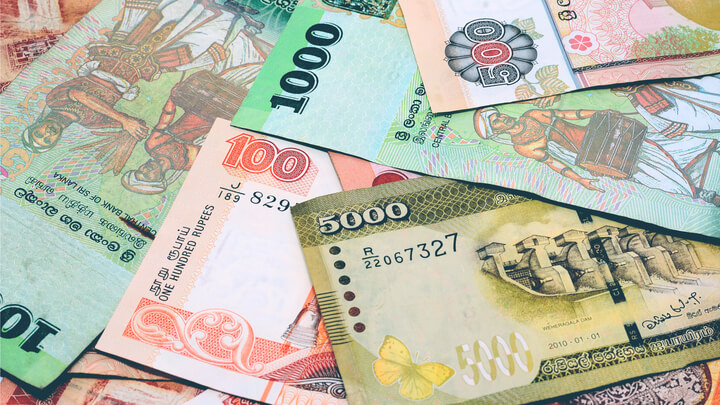
Sri Lanka central bank orders 5.0-pct ceiling on foreign currency deposits

Sri Lanka’s central bank has ordered a 5.0 percent ceiling on foreign currency deposits in a bid to reduce a gap between rupee yields and dollar yields, an order under the country’s banking law shows.

Sri Lanka last week raised the policy rate at which overnight money is printed to 6.0 percent from 5.50 percent and also a 12-month de facto rate through which large volumes of money is printed to keep gilt yields down by 55 basis points to 5.93 percent, which is still below the overnight rate.

Dollar yields had moved up to around 7 percent.

“The maximum interest rates that may be offered or paid by a licensed commercial bank and the National Savings Bank on all foreign currency deposits shall not exceed an Annual effective Rate of up to 5 percent,” the order said.

In the case of special deposit accounts, introduced recently, a higher rate could be paid.

Low rupee rates and expectations of a devaluation had led exporters and others to hold on to dollars an and borrow rupees.

Borrowing rupees to hold dollars should in normal circumstances led to a reduction in credit for other activities and therefore imports, squeezing the current account, but with the central bank printing new money, the correction does not happen.

Sri Lanka is also planning to borrow dollars abroad through various credit lines, pushing up long term indebtedness and widening the short term current account deficit further.

Domestic dollar yields began to rise rupee yields from late 2020 as money printing (stimulus) and an inconsistent flexible exchange rate (now you give convertibility to the note issue, now you don’t) and a widening budget deficit triggered three rate cuts in less than a year.

The downgrade pushed up bonds on sovereign bond yields and also led to a trimming of limits on cross-border lending by counterparty banks, creating a severe dollar liquidity crunch in domestic credit markets.

State run banks were also funding a massive dollar position in state-run Bank of Ceylon, built up in years when money printing (call money rate targeting, output gap targeting and MMT), created forex shortages.

Banks also had to repay loans taken to buy domestic law dollar bonds (Sri Lanka Development Bonds) where yield also went up.

Sri Lanka’s monetary policy had deteriorated sharply over the last five years, with unusually discretionary policy involving a ‘flexible’ exchange rate (discretionary external anchor) and ‘flexible’ inflation targeting (discretionary domestic anchor) worsening years of monetary anchor conflicts.

The central bank instead of shifting to a consistent policy framework started to control bond auctions through so-called ‘Stage III’ method, and also imposed lending rate controls and deposits rates controlled.

Razeen Sally, a classical economist had warned Sri Lanka against a steady shift away from markets and back to a controlled or centrally planned economy.

“Underlying all this is a misguided world view,” Sally said delivering a lecture marking 69 years of Sri Lanka’s central bank in 2019, after two currency crises in rapid succession triggered import controls.

“It is a world view Lord (John Maynard) Keynes and his Bloomsbury circle had shared. And (Friedrich) Hayek accused Keynes and his ilk of suffering from a fatal conceit, for that very reason,”

“Why is the world view misguided?

“It is as if you could get a committee of really good super qualified, intelligent people, together. Who are platonic guardians as it were, who only have the public interest in mind. They are the best committee to sort out the complex problems of the world because they know best.

“They also assume they have the requisite knowledge to intervene here, there and everywhere as superior to the market, in particular situations.”

“Let me choose a generic example. And this happens around the world, sometimes also here in Sri Lanka.

“The generic example is, say, the monetary board of a central bank that actually tells market actors beginning with commercial banks what interest rates they should charge, to whom they should lend and under what conditions.

“And when these market actors don’t behave accordingly, they are ticked off like naughty school children and sometimes threatened with punitive action.”

“In a market economy that is not appropriate and I think it is a fundamental mis-understanding of what a market economy is about.

“Not least because it assumes that a certain committee of good men, have better interests and knowledge,” he said.

Advisory Board appointed to make recommendations on suspects detained under PTA

President Gotabaya Rajapaksa has appointed an Advisory Board to make recommendations and advise the President on the investigation, release, granting of bail and future action related to the persons imprisoned over terrorist activities and detained under detention orders.

The Director-General of Legal Affairs of the Presidential Secretariat Attorney-at-Law Harigupta Rohanadeera said the Advisory Board was appointed as per the Section 13 of the Prevention of Terrorism Act, No.48 of 1979.

The Chairman of the Advisory Board is retired Chief Justice Asoka de Silva and retired high Court Judge A.A.R. Heiyanthuduwa and retired Solicitor General Suhada Gamalath have been appointed as the other members.

The Advisory Board is expected to make recommendations and advise the President on the investigation, release, granting of bail and future action related to the persons imprisoned over terrorist activities and detained under detention orders.

“Hitherto, the persons who have been imprisoned had no opportunity to make representations on their rights since an Advisory Board has not been established for a long time,” the Presidential Media Division (PMD) said.

Mr. Harigupta Rohanadeera further said that the prisoners will be given the opportunity to submit their issues with the appointment of the Advisory Board.

Sri Lanka reports 198 Covid-19 deaths on Wednesday, toll rises to 7,948

Sri Lanka Wednesday reported that 198 deaths due to COVID-19 confirmed for Tuesday, August 24, 2021.

The Director General of Health Services has confirmed 198 deaths due to the COVID-19 for Tuesday, August 24.

Among the Tuesday’s deaths, 119 are of males and 79 of females. The majority of the deaths numbering 146 are of elderly people in the 60 years and above age group. A male below 30 years of age also succumbed to the disease.

According to the data reported by the Government Information Department, the total deaths due to Covid-19 since the pandemic began has now risen to 7,948 including Tuesday’s deaths.

Posted in Uncategorized

Chinese Army gifts Sinopharm Covid-19 vaccines to Sri Lankan Military

Chinese Embassy in Sri Lanka said that People’s Liberation Army (PLA) has gifted
300,000 doses of Sinopharm COVID19 vaccines to Sri Lankan Military.

“Based on the longstanding friendship & firmest solidarity between and at the request of Sri Lankan military, 300,000 doses of Sinopharm COVID19 vaccines have been gifted by the Chinese People’s Liberation Army (PLA) and will be airlifted to Colombo on 28 August.”

“It is the first ever military-aid vaccines received by Sri Lankan Armed Forces, which will strongly strengthen the immunity protection to its brave soldiers combating COVID19 in the front line. The donation shows highest respect & appreciation from PLA to their colleagues,” Chinese Embassy in Sri Lanka tweeted.