Estate children: Trapped by poverty, destined for labour By Sumudu Chamara

It is an open secret that Sri Lanka’s plantation sector community is a segment of the population that receives step-motherly treatment from the authorities, and endures abysmal living conditions. Poverty has become the community’s defining characteristic, and what is more unfortunate is how it persists through generations, despite some attempts to provide better education and a better life for children from plantation sector areas.

The death of a 16-year-old girl who had allegedly been employed as a maid at MP Rishad Bathiudeen’s house sparked fresh controversy over the state of the lives of plantation sector children, at a time the country is already enraged at the numerous incidents of child sexual abuse and exploitation reported during the past few weeks.

The girl, who passed away on 15 July, had been admitted to the Colombo National Hospital on 3 July after sustaining burn injuries, and the subsequent judicial medical examination revealed that she had been subjected to prolonged sexual abuse. It was reported that the girl in question had come from a plantation area, which led to discourse about the brokers that facilitate the process of supplying child labourers for jobs in Colombo.

A new discourse

Speaking in this regard with The Morning on Monday (19), a collective of over 56 organisations named the Malayaha Organisation for Democracy (MOD) said that they had commenced a discussion about the issue.

“Some of these families have no choice other than to send their children to work. There are brokers here who facilitate this process, although with the onset of the pandemic, many who had left for work in Colombo lost their jobs and have since come back to the plantations,” stated Movement for Plantation People’s Land Rights (MPPLR) Convenor and Plantation Workers’ Wage Rights Movement (PWWRM) Co-ordinator S.T. Ganeshalingam.

Meanwhile, it was reported that Plantation Housing and Community Infrastructure State Minister Jeevan Thondaman had requested Public Security Minister Sarath Weerasekera to launch a thorough investigation into this matter. Speaking to the media yesterday (20), Thondaman confirmed he had made such a request, and that investigations have been launched to look into two aspects of the matter; namely, why a girl of that age was sent to the house in question as a domestic worker, and the circumstances that led to her death.

Thondaman noted: “These types of incidents show the harsh truth that child labour is very real in Sri Lanka, and we need to deal with it. Actions will be taken against the perpetrators of the above incident, regardless of their status. I urge the people living in plantation areas to register their children with the existing educational and vocational training facilities in those areas. These sorts of incidents have been happening for a long time; however, so many cases have gone unheard. If the public too can extend their co-operation, we would be able to address these situations.”

Child labourers

The working definition of “child labour”, which the International Labour Organisation (ILO) formulated with the International Programme on the Elimination of Child Labour (IPEC), is “any child between five and 17 years who are engaged in for one hour or more in an economic activity during the reference period of the past seven days”. In this context, “economic activity” refers to an activity in which a child is engaged for a payment, profit, or family gain.

As far as Sri Lanka is concerned, the legal parameters pertaining to the minimum age for employment changed quite recently. Last month, the National Child Protection Authority (NCPA) announced that the minimum age for employment had been increased from 14 to 16 years, in light of this year’s World Day Against Child Labour. Even though this is still one year less than the ILO recommended minimum age, this increase of the minimum age from 14 to 16 was considered a progressive step by many who commented on the decision.

This decision was based on an earlier decision to extend the age of compulsory education to 16 years, which was made under the Education Ordinance’s regulations pertaining to compulsory education. In this regard, NCPA Chairman Prof. Muditha Vidanapathirana said: “On 18 January 2021, we were able to pass a special Act (the Employment of Women, Young Persons and Children Act, No. 2 of 2021) with regard to child labour. The Employment of Women, Young Persons, and Children Act, No. 47 of 1956, as amended, had prohibited children up to 14 years of age from working. This new Act, however, increases the minimum age to 16 years.”

According to the NCPA, children between the ages of 16 and 18 years can only be recruited for jobs that do not pose a threat to their life, health, education, and moral development, and it is strictly prohibited to recruit them for unsafe jobs or jobs that require them to work at night. Recruiting children for street vending activities, the drug and liquor trade, circuses, entertainment activities for monetary benefits, and prostitution, as well as using children for commercial activities via the cyberspace, are offences under Sri Lanka’s criminal law.

State of life of child labourers from the estate sector

According to a comprehensive ILO study conducted in 2008, a child can be influenced into engaging in economic activity for payment by a host of mutually non-exclusive factors, including parental poverty and illiteracy, poor social and economic circumstances, the lack of awareness, the lack of access to basic and quality education and skills, the high rate of adult unemployment and/or under employment, and attitudes towards child labour (particularly in South Asia where children are expected to perform physical work as early as when they are 10 years old in some countries).

The ILO based its findings on a study conducted with the participation of 100 respondents (heads of households, regardless of the age) each from plantation sector estates in the Badulla, Kandy, Matale, Nuwara Eliya, Ratnapura, and Kegalle Districts. The ILO said that even though Sri Lanka had tended to create an impression that child labour is not a serious issue in plantations due to the plantation management being unable to hire children legally as labourers, tea plantations have been a traditional source of child domestic labour.

Of the samples, 0.2% of the respondents were between 15 and 19 years old, and were heads of households. The ILO explained that as a majority of households (72.2%) were headed by people over 40 years old, the families sought the support of their children to maintain expenses, which in turn made the children feel they should financially support the family/elders.

A slightly better picture was painted in terms of children’s education. Out of a total of 2,999 children, only 43 had been employed as workers. Of those in the five-13 age group, 98.4% were students, while 0.8% were employed; and out of those in the 14-17 age group, 73.8% were students, while 16.9% were employed.

The marital status of parents is also a factor that leads children to become child labourers, the ILO said, as it plays a role in determining a household’s economic and social characteristics. A total of 16% of household heads were widowed, which seems to be a very high figure. Also, a widowed parent would most often lose support from others, being forced to manage the household with the income of a single breadwinner, compelling children to seek employment to support the family.

With regard to the reasons for child labour, 33.3% of household heads had said that the family required the child’s income, while 28.6% of them had said they could not afford schooling. In 83.3% of the cases, the child had made the decision to work, while the parents had made that decision in 11.9% and 4.8% of the cases, respectively.

Based on the interviews conducted in the Kandy District, the study concluded: “The younger generation does not like to work in the estates. They wait till they reach working age and then migrate to find employment outside the estates. Boys find employment mainly in and around Colombo. Girls seek employment in garment factories. They find employment through persons who are already employed in these institutions.

“Many children aged 14-15 years stop schooling and spend their time playing. Children older than 10 years go to nearby villages for clove-plucking during the harvest season, although this is a dangerous task. Money attracts many children into this activity, though the harvesting season for cloves lasts only a few months, if not weeks. Though the school administration often takes stern action against this practice, children engage in this activity after school hours, over which the school administration has no control. These children give their earnings to their parents and guardians, and spend a portion of it themselves. Even the parents do not object to their kids making money at the expense of schooling.”

However, this need for additional income sometimes has a darker cause at its root. The interviews conducted in the Nuwara Eliya District had led to the following conclusion: “Alcoholism is a burning problem in the estate areas. Often, the male member of the household – i.e. the household head – is addicted to alcohol. There are cases where both parents are addicted to liquor. When the father is under the influence of alcohol, he quarrels with the mother. The calm family environment is shattered as a result. Often, their children are the victims of this process. Sometimes the drunken father beats up the children as well. The fear psyche disturbs the minds of the children and they lose concentration on their studies. Since the plantation houses are built in line rooms, the children are even disturbed by problems in the nearby households.

“Students report to school without having their breakfast. This leads to the loss of concentration and falling sick during school hours. Absenteeism and irregular attendance to school are prevalent in the plantation sector. The main reason for child labour is poverty. Parents do not have sufficient income to meet expenses on education, though it is given free. Parents prioritise earning money over giving children a good education. The perception of parents is such that sending the child to work is seen as credit (the child earns money), while sending them to school is seen as debit (the parents have to spend money).”

The report also noted that this disregard for education by household heads stemmed from a lack of education on their own part. “Almost 90% of the parents – particularly the father – do not seem to care about their children’s education. Neither have they cared for their children’s welfare. All they need is financial support from their children to maintain the family. Levels of education of the head of household will be an important factor having a direct impact on child labour, as it conditions their perception of children’s education and attitudes towards child labour. It was reported in the survey that more than half of the household heads have received only primary education. Only 2.2% of the heads of households have received upper secondary education,” the report further said.

Late last year, Amnesty International warned that the disruption of school education caused by the Covid-19 pandemic was risking children belonging to plantation communities being left behind, adding that if the State fails to deliver effective, innovative, timely, and multifaceted responses, children in plantation communities are in danger of not only dropping out of school, but also being pushed into child (including bonded) labour.

Sri Lanka’s plantation sector contributes almost 30% of the foreign exchange income to the country, and nearly one million people live in plantation areas. They are not only a considerable part of the country’s economy, but are also a considerable portion of the country’s general public – and so it is concerning that such a large and important segment of our society is left impoverished, even while the nation benefits from their hard work.

Studies suggest that besides poverty, the lack of education and unawareness of its importance are the main reasons why plantation sector-based parents allow and encourage their children to work. However, these issues are not new – authorities have been discussing their living conditions for years, if not decades. How their struggle to get a minimum daily wage of Rs. 1,000 was dealt with only highlights how ignored they are by mainstream political authorities, and it is indeed tragic.

Perhaps it is time that Sri Lankans, both the public and the authorities, change the mindset that divides such matters into “their issues” and “my issues”, and look at others’ issues as their own, because when it comes to addressing issues such as child abuse, there is a lot the general public can do to tackle the problem at its root.

Posted in Uncategorized

Hirunika files petition against Presidential pardon for Duminda Silva

Former Member of Parliament Hirunika Premachandra, the daughter of the late Bharatha Lakshman Premachandra, has filed a fundamental rights petition in the Supreme Court against the Presidential pardon for Duminda Silva, who was sentenced to death for the murder of her father.

Ms Premachandra requests the Supreme Court to declare that granting a presidential pardon to Duminda Silva is unconstitutional.

Therefore, Hirunika Premachandra has requested the Supreme Court to nullify the President’s order granting pardon to former Parliamentarian Duminda Silva who was sentenced to death.

The Attorney General for the President, Minister of Justice Ali Sabry and the Attorney General have been named as respondents in the petition.

Ms. Premachandra pointed out that Defendant Duminda Silva was convicted and sentenced to death by a two-thirds majority of the three-judge panel of the Colombo High Court for the shooting death of Bharatha Lakshman Premachandra, a trade union adviser to former President Mahinda Rajapaksa.

The death sentence was later upheld by a five-judge bench of the Supreme Court, but the convicted was released on June 24 under a presidential pardon.

Petitioner Hirunika Premachandra has stated in her petition that the President has taken steps to grant such a pardon without following the provisions of the Constitution.

The petitioner seeks the court to declare the release of the respondent Duminda Silva under a presidential pardon as unconstitutional, to nullify the Presidential pardon order and to summon the relevant documents to hold a hearing on the pardon of Duminda Silva.

No-confidence motion against Minister Udaya Gammanpila defeated by 91 votes

The no-confidence motion brought in by the Samagi Jana Balawegaya against Minister of Energy Udaya Gammanpila was defeated in Parliament today (20).

The no-confidence motion Minister of Energy Udaya Gammanpila was defeated by a majority of 91 Votes.

When a vote was taken this evening at the end of the two-day debate held regarding the no-confidence motion 61 votes were casted in favour of the no-confidence motion and 152 votes were casted against it.

Talks underway to increase flights to SL

Discussions have been held with several international airlines to commence additional flights to and from Sri Lanka.

32 airlines across the world operate flights to Sri Lanka, while Minister of Tourism Prasanna Ranatunga said discussions are underway with four new airlines, to commence flight operations with Sri Lanka.

They include airlines operating locally as well as from France and the Middle East.

The number of flights operating to and from Sri Lanka is expected to be increased in line with the programme to promote tourism and to return normalcy to the tourism industry.

The Tourism Minister said he believes over 1,000 tourists will arrive in Sri Lanka daily in future, with the number of flights being increased.

Posted in Uncategorized

Talks with teachers, unsuccessful

The discussion held today (20) between the Education minister and teachers’ trade unions has ended unsuccessfully, General Secretary of the Ceylon Teachers’ Service Union – Mahinda Jayasinghe said.

Thereforre, a trade union action currently underway to strike online teaching will continue with a protest to be held on Thursday (22).

Although the minister has pledged to make suggestion during next week’s cabinet meeting (July 26) to resolve issues faced by teachers, Mr. Jayasinghe had stated they are not prepared to halt their TU action until they are offered a solid resolution.

Meanwhile, Prof. Peiris has said that they hope to re-open schools by the end of August.

He has added that 63% of teachers islandwide and 97% of teachers in Western Province have now been vaccinated.

Posted in Uncategorized

Ranil’s amendment to no-confidence motion against Gammanpila deemed irrelevant

Former Prime Minister Ranil Wickremesinghe’s amendment to the no-confidence motion against Minister Udaya Gammanpila has been deemed not acceptable.

Speaker of Parliament ruled that the proposed amendment to the No-Confidence Motion against the Minister of Energy Udaya Gammanpila, handed over to the Secretary-General of Parliament by MP Ranil Wickremesinghe is out of order, and cannot be accepted.

Speaker Mahinda Yapa Abeywardena informed of this to the parliament today (July 20) when the debate on the no-confidence motion against the Minister of Energy was resumed for the second day.

The Speaker stated that Wickremesinghe’s amendment is irrelevant and therefore, not acceptable.

The no-confidence motion filed by the Samagi Jana Balawegaya (SJB) against Energy Minister Udaya Gammanpila over the recent hike of fuel prices commenced in the parliament yesterday (July 19).

When the case of no-confidence motion was tabled at the parliament yesterday, former Premier Ranil Wickremesinghe proposed to amend the motion against all ministers of the government instead of just the Energy Minister.

However, as SJB objected to this proposition, the no-confidence motion was taken into debate.

Parliament is expected to take a vote on the motion of no confidence at 5.30 p.m. this evening (20).

Sri Lanka ‘Caa1’ sovereign on downgrade review by Moody’s

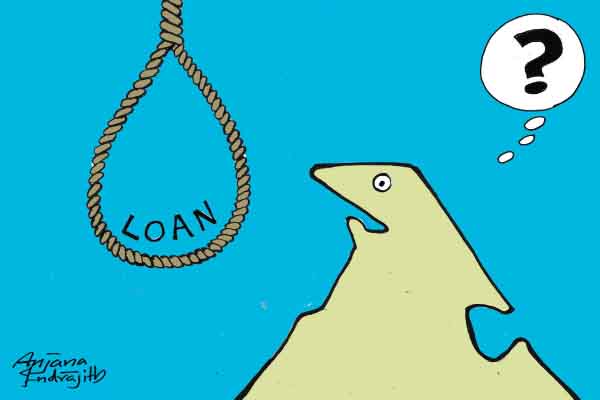
Sri Lanka’s ‘Caa1’ sovereign rating has been place on review for downgrade by Moody’s citing weak external position and decreasing institutional strength.

“The decision to place the ratings under review for downgrade is driven by Moody’s assessment that Sri Lanka’s increasingly fragile external liquidity position raises the risk of default,” Moody’s said in a statement.

“This assessment reflects governance weaknesses in the ability of the country’s institutions to take measures that decisively mitigate significant and urgent risks to the balance of payments.

The full statement is reproduced below:

Rating Action: Moody’s places Sri Lanka’s Caa1 rating under review for downgrade
19 Jul 2021

Singapore, July 19, 2021 — Moody’s Investors Service (“Moody’s”) has today placed the Government of Sri Lanka’s Caa1 foreign currency long-term issuer and senior unsecured debt ratings under
review for downgrade.

The decision to place the ratings under review for downgrade is driven by Moody’s assessment that Sri Lanka’s increasingly fragile external liquidity position raises the risk of default. This assessment reflects governance weaknesses in the ability of the country’s institutions to take measures that decisively mitigate significant and urgent risks to the balance of payments.

Although the government has secured some financing, mainly from bilateral sources, its financing options remain narrow with borrowing costs in international markets still prohibitive. Absent large and sustained capital inflows through a credible external financing strategy, Moody’s expects Sri Lanka’s foreign exchange reserves to continue declining from already low levels, further eroding its ability to meet sizeable and recurring external debt servicing needs, and increasing balance of payment risks. Extremely weak debt affordability — with interest payments absorbing a very large share of the government’s very narrow revenue base — compounds the debt repayment challenge.

The rating review will focus on assessing whether the sovereign is able to use a period of time provided by its current foreign exchange reserves and bilateral arrangements to implement measures that widen and increase its financing sources for the medium term, and thereby avoid default for the foreseeable future.

Sri Lanka’s foreign currency country ceiling has been lowered to Caa1 from B3, while the local currency country ceiling remains unchanged at B1. The three-notch gap between the local currency ceiling and the sovereign rating balances relatively predictable institutions and government actions against the low and declining foreign exchange reserves adequacy that raises macroeconomic risks as well as the challenging domestic political environment that weighs on policymaking.

The three-notch gap between the foreign currency ceiling and local currency ceiling takes into consideration the high level of external indebtedness and the risk of transfer and convertibility restrictions being imposed given low foreign exchange reserves adequacy, with some capital flow management measures already imposed. These ceilings typically act as a cap on the ratings that can be assigned to the obligations of other entities domiciled in the country.

RATINGS RATIONALE / FACTORS THAT COULD LEAD TO AN UPGRADE OR DOWNGRADE OF THE RATINGS RATIONALE FOR INITIATING THE REVIEW FOR DOWNGRADE

Sri Lanka’s low and declining foreign exchange reserves adequacy, limited and narrowing set of external financing options for the government, and the extremely large share of government revenue taken up by
interest payments raises the risk of debt default. The increasing fragility of the situation and continued worsening of credit metrics without decisive actions are indications that institutional credibility and effectiveness have weakened compared with Moody’s prior assessment. In contrast to the urgency of the situation — and notwithstanding the government’s stated commitment to repay its debt — Moody’s expects a credible and durable financing strategy to only materialise over a number of years.

Meanwhile, Moody’s expects the coverage by foreign exchange reserves of external repayments to continue
falling from already low levels. As of the end of June, Sri Lanka’s foreign exchange reserves (which in Moody’s definition exclude gold and Special Drawing Rights) amounted to just around $3.6 billion, down 30% since the start of the year and insufficient to cover the government’s annual external debt repayments alone of around $4-5 billion over the next 4-5 years.

Taking into account plausible projections for the balance of payments, the country’s foreign exchange reserves will fall further over the next 2-3 years, unless Sri Lanka manages to markedly raise capital inflows.

Moody’s baseline scenario assumes that the government and the Central Bank of Sri Lanka (CBSL) will
continue to secure some foreign exchange resources and financing support through a combination of projectrelated multilateral loans, official sector bilateral assistance including central bank swaps, commercial bank loans, and the divestment of some state-owned assets — albeit at a relatively slow pace.

Measures introduced by CBSL, such as the required sale of a share of all inbound remittances and export proceeds to the central bank, will also generate additional reserves, while capital flow management measures restricting imports and outbound remittances and investment will help retain some foreign exchange resources in the country.

These measures can only shore up reserves temporarily and marginally; they also come at a cost to the economy.

Meanwhile, Sri Lanka’s current account deficit is likely to remain stable and relatively narrow compared to peers at around 1-2% of GDP over the next few years, with the gradual recovery of the tourism sector partly hampered by the ongoing wave of infections and border restrictions. Foreign direct investment has the potential to pick up with the development of the Colombo Port City and the government’s privatisation plans, although amounts are likely to increase only gradually over time.

By contrast, Moody’s does not assume that the government will enter into programme-based financing facilities with multilateral development partners at this stage, which significantly narrows its external financing options.

Furthermore, while the government has historically relied on international market access to finance its fiscal deficits and external repayment needs, borrowing costs remain prohibitive with Sri Lanka’s government bond spreads to US Treasuries still very wide at more than 1600 basis points, compared to around 500 basis points before the onset of the coronavirus pandemic.

Sri Lanka’s long-standing fiscal weaknesses complicate the government’s policy choices. Moody’s expects Sri Lanka’s economy to grow by around 3.5% this year, taking into account less stringent pandemic-containment measures compared to last year. Economic growth is likely to accelerate further next year on base effects and the reopening of borders, providing some boost to government revenue.

However, even with some revenue increases, Moody’s estimates that the government’s fiscal deficit will remain wide at around 9.5-10% of GDP this year and average 8.5% over the next two years. In turn, the government’s debt burden will likely rise further to around 110% of GDP over 2022-23, from around 100% at the end of 2020 and around 87% in 2019.

Extremely weak debt affordability magnifies debt repayment risks. Interest payments exceeded 70% of government revenue in 2020 and will likely remain around 60-70% over the next few years — highest across sovereigns that Moody’s rates by some distance — even as revenue rebounds from very low levels. Indeed, government revenue is likely to remain around 10% of GDP over the next few years, unless the government’s efforts to enhance tax administration and impose special taxes can sizeably and durably expand its revenue base.

While domestic resources have been sufficient so far to finance the government’s wider deficit in local
currency, limited fiscal resources impose difficult policy choices to rationalise social spending and
development expenditure, if interest payments continue to be prioritised.

Given very weak credit metrics, there is material risk that falling reserves precipitate a crisis of confidence, involving a negative spiral of a rapidly depreciating exchange rate, rising inflation, higher domestic interest rates, higher debt payments in local currency terms, and a weaker domestic economy. In this scenario, default risk would increase sharply. Conversely, the sovereign’s track record at securing some financing options, from foreign and domestic investors, may keep such an adverse scenario at bay for some time.

The rating review will focus on assessing whether the sovereign is able to use a period of time provided by its current foreign exchange reserves and bilateral arrangements to implement measures that widen and increase its financing sources for the medium term, and thereby avoid default for the foreseeable future.

ENVIRONMENTAL, SOCIAL, GOVERNANCE CONSIDERATIONS

Sri Lanka’s ESG Credit Impact Score is highly negative (CIS-4), reflecting its highly negative exposure to environmental and social risks. Ongoing challenges to institutional and policy effectiveness constrain the government’s capacity to address ESG risks.

The exposure to environment risk is highly negative (E-4 issuer profile score). Variations in the seasonal monsoon can have marked effects on rural household incomes and real GDP growth: while the agricultural sector comprises only around 8% of the total economy, it employs almost 30% of Sri Lanka’s total labour force.

Natural disasters including droughts, flash floods and tropical cyclones that the country is exposed to also contribute to higher food inflation and import demand. Moreover, ongoing development projects to improve urban connectivity have increased the rate of deforestation, although the country continues to engage development partners to preserve its natural capital, such as its mangroves.

The exposure to social risk is highly negative (S-4 issuer profile score). Balanced against Sri Lanka’s relatively good access to basic education, which has continued to improve throughout the country in the post-civil war period, are weaknesses in the provision of some basic services in more remote and rural areas, such as water, sanitation and housing.

As the country’s population continues to grow, the government will face greater constraints in delivering high-quality social services and developing critical infrastructure amid ongoing fiscal
pressures.

The influence of governance is highly negative (G-4 issuer profile score). While international surveys point to stronger governance in Sri Lanka relative to rating peers, including in judicial independence and control of corruption, institutional challenges remain, particularly in the pace and effectiveness of reforms.

Domestic political developments also tend to weigh on fiscal and economic policymaking.

The ratings would likely be confirmed at their current level if the risk of external debt default were to diminish materially and durably. This could stem from the government demonstrating its capacity to use short-term financing sources as a means to gain time to secure a medium-term external financing strategy that maintained a manageable cost of debt, and a faster and more sustained buildup in non-debt creating foreign exchange inflows.

Additionally, likely implementation of fiscal consolidation measures, particularly greater
revenue mobilisation, that pointed to a material narrowing of fiscal deficits in the next few years and
contributed to lower annual borrowing needs, would also support a confirmation of the rating.
The rating would likely be downgraded in a status quo scenario where the financing of Sri Lanka’s large
external debt repayments remained uncertain while foreign exchange reserves adequacy still looked likely to continue deteriorating.

GDP per capita (PPP basis, US$): 13,215 (2020 Actual) (also known as Per Capita Income)

Real GDP growth (% change): -3.6% (2020 Actual) (also known as GDP Growth)

Inflation Rate (CPI, % change Dec/Dec): 4.6% (2020 Actual)

Gen. Gov. Financial Balance/GDP: -11.1% (2020 Actual) (also known as Fiscal Balance)

Current Account Balance/GDP: -1.3% (2020 Actual) (also known as External Balance)

External debt/GDP: 61.0% (2020 Actual)

Economic resiliency: ba2

Default history: No default events (on bonds or loans) have been recorded since 1983.

On 14 July 2021, a rating committee was called to discuss the rating of the Sri Lanka, Government of.

The main points raised during the discussion were: The issuer’s economic fundamentals, including its economic strength, have not materially changed. The issuer’s institutions and governance strength, have materially decreased. The issuer’s fiscal or financial strength, including its debt profile, has not materially changed. The issuer’s susceptibility to event risks has not materially changed.

Posted in Uncategorized

Court calls for phone records of Bathiudeen’s wife over death of teenage domestic worker

Court has ordered service providers to produce telephone conversation records of Rishad Bathiudeen’s wife and three others in connection to the death of the 16-year-old domestic worker at the parliamentarian’s house.

Colombo Additional Magistrate Rajindra Jayasuriya ordered for the records to be handed over to the Borella Police when a motion filed by the Police on the case was taken up today (July 19).

In addition to the phone records, the court also ordered the relevant banks to produce bank account details of the intermediary who brought the teen to Bathiudeen’s house as domestic help.

On July 15, a 16-year-old girl, who had served as domestic help at the Bathiudeen residence, succumbed to severe burn injuries while receiving treatment at the Colombo National Hospital. She had been under medical care for 12 days since her admission to the hospital on July 03.

The girl, who was residing in the Dayagama area, had been 15 years of age when she was brought to the parliamentarian’s residence at Bauddhaloka Mawatha for domestic work last October.

The judicial medical officer who conducted the post-mortem on the girl’s death concluded that she had been sexually exploited.

On July 18, a protest was held in Hatton demanding the arrest of the perpetrators who sexually abused the deceased teen.

TNA to vote in support of no-confidence motion

The Tamil National Alliance (TNA) today informed Parliament that it will vote in support of the no-confidence motion against Power and Energy Minister Udaya Gammanpila.

Tamil Eelam Liberation Organization (TELO) MP, S. Noharathalingam said that the TNA will support the motion.

The motion was moved in Parliament today for a two day debate and the vote will be taken tomorrow (Tuesday).

Noharathalingam said that as the second biggest member of the opposition, the TNA has been compelled to support the motion.

He however noted that the motion would have carried more weight if it was drafted with the support of the TNA and the Janatha Vimukthi Peramuna.

The motion was moved by Samagi Jana Balawegaya (SJB) Parliamentarian S.M Marikkar and was seconded by MP Kabir Hashim.

The SJB said the motion was presented accusing the Energy Minister of being responsible for the recent fuel price hike.

President to contest a second term at Presidential elections

President Gotabaya Rajapaksa today said that he will contest a second term at the next presidential election, making a u-turn from what he said earlier that he will hold the seat only for one term.

Speaking to heads of the media institutions, Rajapaksa, in a surprising statement said he is willing to contest at the next presidential race.

“Not only next three years, but there are five years after that for me to implement my policies,” Presidential Spokesperson Kingsley Ratnayake in a tweet, quoting the President said.