Weakening external finances to pressure corporate ratings: Fitch

Fitch Ratings yesterday warned that Sri Lankan corporates could face rating pressure should the Government further restrict imports amid weakening external finances.

Issuing a new report, Fitch said it expected corporates that import finished goods in sectors that are considered non-essential to be more affected than those that import raw materials for local value addition.

Consumer durable importers are the most vulnerable to tighter import restrictions among Fitch-rated issuers, owing to the discretionary nature of their products and limited domestic value addition.

“However, consumer durable retailers have been able to import buffer stock and secure longer credit terms from global suppliers, which we believe mitigates pressure in the next six months,” Fitch said.

The Government removed requirements to import most goods on 180-day credit terms in June, but the Central Bank said on 28 June that imports of essential intermediate and capital goods would be given priority. Fitch expects cash flow of corporates that sell domestically manufactured goods using imported raw materials to rise due to a shortage of imported finished goods in a number of sectors.

Fitch believes curtailment of raw material and capital goods imports used for domestic value addition is less likely in the near term, as such imports support the country’s long-term import substitution drive.

Foreign-currency reserves fell to $ 4 billion in May 2021 (May 2020: $ 6.5 billion), due to weak tourism receipts amid the coronavirus pandemic and a sharp rise in the price of crude oil, a major import.

Consequently, import cover stood at 2.5 months in May 2021, against 6.5 months in May 2020. Foreign reserves are also pressured by large debt maturities of around $ 4 billion per annum until 2026.

Posted in Uncategorized

Three including Rishad’s wife under arrest

The wife of MP Rishad Bathiudeen and two others have been apprehended in connection with the death of a 16-year-old domestic helper at the parliamentarian’s private residence, says the Police Spokesman.

According to Senior DIG Ajith Rohana, the father of Bathiudeen’s wife and the intermediary who brought the teenage girl to the Bathiudeen residence are also among the three arrestees.

The arrests have been made by the officers of Borella Police and Colombo South Crimes Division in the early hours of Friday (July 23).

The police spokesman stated that nearly 20 statements were recorded so far with regard to the incident.

Shabdheen Ayesha – the 46-year-old wife of MP Bathiudeen, her father Mohamed Shabdheen and the middleman in question identified as a 64-year-old named Ponnaiyah Pandaram were placed under arrest based on these testimonies, autopsy results as well as the evidence gathered by the investigating officers which pointed to the fact that the deceased girl was subjected to abuse, he explained.

The three suspects are expected to be produced before the Colombo Magistrate’s Court later today.

The police plan to seek a court order permitting the detention of the trio for 72 hours for interrogation, SDIG Rohana added.

On Thursday (July 23), the Borella Police had interrogated the parliamentarian’s wife over the incident.

In addition, the mother, stepfather, brother, and sister of the deceased teen as well as two former domestic workers of the Bathiudeen residence were also questioned by the police teams.

Meanwhile, the Attorney General appointed a Deputy Solicitor General and a team to provide legal advice for the action on the case.

On July 15, a 16-year-old girl, who was serving as domestic help at the Bathiudeen residence, succumbed to severe burn injuries while receiving treatment at the Colombo National Hospital. She had been under medical care for 12 days since her admission to the hospital on July 03.

The girl, who was residing in the Dayagama area, had been 15 years of age when she was brought to the parliamentarian’s residence at Bauddhaloka Mawatha for domestic work last October.

The judicial medical officer who conducted the post-mortem on the girl’s death concluded that she had been sexually exploited.

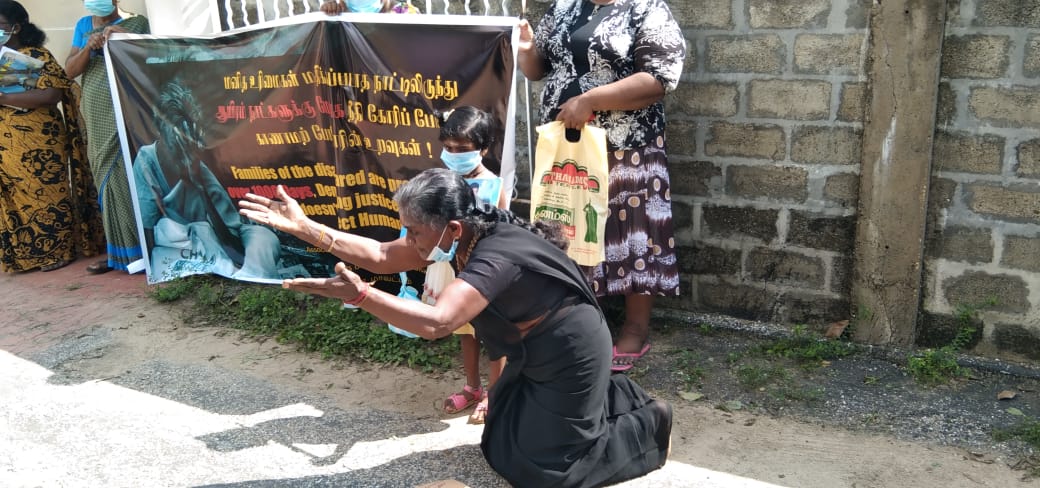
Velikkadai Sirai Padukolai

Tamil rights: reconciliation still far away

Colombo (AsiaNews) – In late July 1983, a terrible wave of anti-Tamil violence broke out in Sri Lanka, sparking the country’s long and bloody civil war. Since then, “Black July” has left an open wound in the country.

To mark the anniversary, the Christian Solidarity Movement has launched an awareness campaign in order to overcome ethnic tensions that still persist after 38 years.

The campaign’s main event was a meeting held on Tuesday at the Maradana Centre for Society and Religion. Buddhist monk Udawala Nanda Thero gave the keynote speech.

“The real reasons that led to this tragedy have not yet been addressed,” Thero said. “Laws have been introduced, but no realistic solutions” have been found.

For the religious, “We must sincerely ask ourselves where we are going. In today’s Sri Lanka are we really following in the footsteps of Desmond Tutu or Martin Luther King? No, we are just following an ideology that divides minorities from the majority. We need instead a common language and educational path to help Tamils, Sinhala and Muslims live together from childhood.”

An ethnic Tamil Anglican priest, Fr Marimuttu Sathivel, also spoke at the meeting. “In 2003,” he said, “citizenship was granted to people of Indian origin, but not to those who fled to India because of the war.”

At present, “There are still 107 refugee camps in various parts of India and 58,000 people who are not recognized as citizens in either country. This is the legacy of Black July 1983.”

For Fr Sathivel, “Tamils have not yet been involved in the economic development process of this country.” Hence, “Today there are 146,000 workers in the hill plantations, but three or four times as many young people work in Colombo in factories or as servants without any form of protection.”

What is more, “Racism continues to perpetuate itself. We just want the right to live on this earth in safety.”

At the end of the meeting promoted by the Christian Solidarity Movement, participants held a symbolic protest at the Lipton Circus in Colombo, raising signs with the slogans “No to racism” and “Protect Minority Collective Rights”.

Bathiudeen’s wife grilled over death of teen domestic worker

The wife of Rishad Bathiudeen is currently being interrogated by the Borella Police over the death of the teenage domestic worker at the parliamentarian’s residence.

Police teams, yesterday (July 22), recorded statements from six persons in Dayagama in connection to the incident.

The mother, stepfather, brother, and sister of the deceased teen and two former domestic workers of the Bathiudeen residence have been questioned by the police.

Meanwhile, the Attorney General appointed a Deputy Solicitor General and a team to provide legal advice for the action on the case.

On July 15, a 16-year-old girl, who had served as domestic help at the Bathiudeen residence, succumbed to severe burn injuries while receiving treatment at the Colombo National Hospital. She had been under medical care for 12 days since her admission to the hospital on July 03.

The girl, who was residing in the Dayagama area, had been 15 years of age when she was brought to the parliamentarian’s residence at Bauddhaloka Mawatha for domestic work last October.

The judicial medical officer who conducted the post-mortem on the girl’s death concluded that she had been sexually exploited.

Posted in Uncategorized

Rajapaksa family works out compromise to keep family in power By P. K. Balachandran

COLOMBO – Given the intense speculation that incumbent President Gotabaya Rajapaksa will be replaced by his brother Basil Rajapaksa as the Sri Lanka Podujana Peramuna (SLPP) candidate in the 2024 Presidential election, Gotabaya’s announcement on Monday (19) that he intends to seek a second term came as a surprise to many.

He had earlier said he would be president only for one term, and given his reputation, people believed him. But his inability to fulfil his promises (principally to put Sri Lanka on the path of sustained and sustainable economic development) had made him rethink his resolution to stick to one term. The COVID-19 pandemic and other issues had stymied his attempts. On Monday, he told the media that he has time beyond 2024 to fulfil his goals, thereby saying he is looking for a second term.

In the weeks preceding Gotabaya’s statement, the expectation was that Basil Rajapaksa, the behind-the-scene economic and political manager of the SLPP and the government, would return from the US, set the house in order, get the economy going, and be set up as the SLPP’s 2024 Presidential candidate. But resistance from Gotabaya to this plan was intense as he needed a free hand to carry out his agenda as per his wishes.

According to sources, there were intense, and at times, acrimonious discussions within the Rajapaksa clan. But finally, a compromise formula was worked out in the best interest of the family and the SLPP, which is but a Rajapaksa family creation. The compromise appears to be that Gotabaya will seek a second term and Basil will help him win again, thus maintaining family unity as well as national power in the hands of the Rajapaksas.

At present, all key executive positions in the government, including the presidency, the premiership and the finance ministry are in the hands of the Rajapaksa siblings. For decades, the family had gained immensely by being united, and it was unlikely that this solidarity would be destroyed when the family’s hold was being seriously questioned due to non-performance in the last two and a half years under the Gotabaya Presidency. It was time members of the family put their shoulders to the wheel to save the regime and win the provincial elections in 2022 and the 2024 presidential poll.

Basil had single-handedly created the SLPP after his elder brother, Mahinda Rajapaksa, quit the Sri Lanka Freedom Party (SLFP) and struck out on his own. He led the party to a decisive victory in the local bodies elections against the then ruling United National Party – SLFP combine. He was instrumental in getting Gotabaya elected as President in 2019 and the SLPP getting a two-thirds majority in the 2020 parliamentary elections. When COVID-19 struck, he successfully managed the social and economic side of the dire situation created by the pandemic, wining kudos from international organizations.

But over time, power shifted from Basil’s hands and went straight into the hands of the military, with the backing of President Gotabaya, himself a former army officer. The military’s involvement in civil administration had kept increasing by the day much to the dismay of the Rajapaksa family, wedded as they were to the supremacy of civilians over the military. Basil Rajapaksa left for the US (as he is a dual citizen) and did not come back till the political and economic situation in Sri Lanka was ripe for his return. The time came when the Gotabaya regime was losing ground rapidly.

Initially welcomed by the majority of Sri Lankans on the expectation that Gotabaya will restore orderly government and push the country back onto the economic developmental path, he did not live up to expectations. Pandemic-triggered disruption of economic activities (lockdowns and movement restrictions) inconsistent actions, frequent changes in policy and decisions, lack of consultations with stakeholders including party people in touch with the grassroots, and rising prices of essentials, made people wonder if the SLPP will win the next elections.

There was a call for the return of Basil from America to set the house in order before facing the next polls. As one insider said: “Basil is our last hope.”

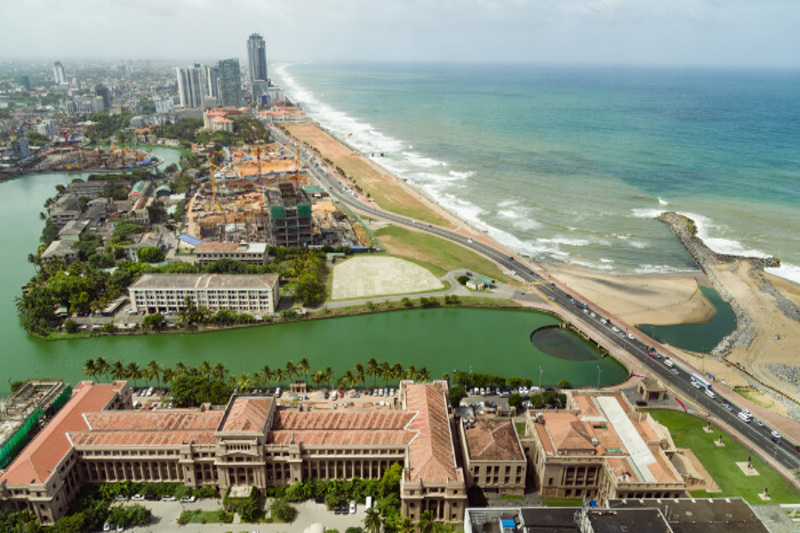
But Basil apparently wanted the Ministries of Finance and Economic Development and also the foreign investment department. Sri Lanka had lurched towards China, thus alienating India and the West. This put investment prospects in the China-funded and executed US$ 1.4 billion Colombo Port City in jeopardy. Basil, known for his broadminded and pragmatic approach could secure the co-operation of India, the West, and China at the same time, it was felt. The world sees both Gotabaya and Mahinda as doctrinaires.

Eventually, Basil got the finance and economic development portfolios after a hard-fought battle, because these were in the grip of the president aided and advised by his influential Secretary Dr. P. B. Jayasundara. As part of the compromise, it appears Basil will continue with some of the pet projects of the President but handle the rest of the economy independently. He has already met the envoys of the Western countries, India and China. The West is now opening up to Sri Lanka with the announcement of some investments and vaccine supplies. India is looking for openings and China is keen on Sri Lanka’s continuing to encourage Chinese investments. Basil’s aim, like President Gotabaya’s, will be to secure FDIs and not loans, the latter having cast a very heavy burden on Sri Lanka, driving it towards the International Monetary Fund (IMF).

Both Basil and Gotabaya have promised to open the Sri Lankan economy by September after widespread vaccination with the help of Chinese, Western, Russian and Japanese inputs.

Basil has also announced that the SLPP intends to go for provincial elections in 2022. The provincial elections will help revive the dormant party organization and enthuse the cadres, both necessary ingredients for winning the 2024 presidential election, no matter who the SLPP candidate is.

-ENCL

Posted in Uncategorized

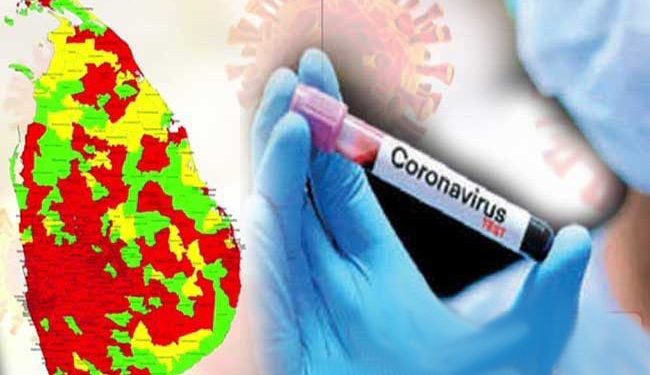
Sri Lanka confirms 42 Covid-19 deaths occurred on Wednesday, toll rises to 3,959

Sri Lanka Thursday reported that 42 deaths due to COVID-19 occurred on Wednesday, July 21, 2021.

The Director General of Health Services has confirmed that 42 deaths occurred on Wednesday, July 21 due to the COVID-19.

Among the Wednesday’s deaths, 25 are of males and 17 of females. The majority of the deaths numbering 35 are of elderly people in the 60 years and above age group.

According to the data reported by the Government Information Department, the total deaths due to Covid-19 since the pandemic began last March has now risen to 3,959 including the deaths confirmed Wednesday.

Our lands are under threat, say Tamils in Sri Lanka’s Eastern Province

Over the last few months, farmers of Mavadi Odai in Sri Lanka’s eastern Batticaloa district frequently spotted something crop up on their land overnight — a border stone they had not planted.

“The Forest Department people come and put their stones when we are asleep, and then claim the land to be theirs,” says Marimuthu Raveendrakumar, 51, speaking of a growing insecurity among residents over land that they returned to only in recent years, after years of displacement during the civil war. According to many in Batticaloa, the land where Tamil communities have resided and farmed for generations, is increasingly under threat from different governmental bodies that oversee agriculture, conservation and archaeology.

The 36 Tamil families in Mr. Raveendrakumar’s village which lacks motorable roads — it takes over 45 minutes to cover a 3-km stretch to reach here — do small-scale farming for a living. A plot of land is all they have assuring them of a livelihood. A majority owns under 5 acres. “But every day, the Forest Department is claiming a new patch of land here to be theirs,” he says.

The government’s forest conservation efforts come alongside growing criticism over its environmental policy that activists view as being “destructive”.

Apart from tackling the Forest Department’s moves, the people of Mavadi Odai constantly dread wild elephants, and more recently, powerful humans eyeing their natural resources. Not far from their homes, a rapid sand mining operation has begun, with huge machines extracting truckloads of sand on a daily basis, villagers note. Following the intervention of local MPs, district authorities ordered that it be paused.

Locals have not been able to obtain permission to mine sand in the resource-rich area. “We would be far more careful and not mine as deep as them, because we know our terrain, we know how our village gets flooded every monsoon,” says a farmer. Some of them work as labourers in the sand mines, earning a daily wage of LKR 700 to 1,000 (about ₹385) that could prove precious in the face of an acute job scarcity.

‘Sand mafias’

“The mining companies exploit the villagers’ poverty, get cheap labour, and make huge profits selling the sand. They don’t care about how that damages the environment here,” says Kanapathypillai Mohan, who heads ‘Thamizh Unarvaalargal’, a locally-run organisation that “stands up for Tamil people’s rights”.

“We had seen sand mafias only in films, but here we see them in action right in front of our eyes, that too with the blessings of some prominent local politicians aligned to the Rajapaksa government,” he alleges.

Admitting that sand mining is going on in a “drastic manner” in the province, Anuradha Yahampath, Governor of the Eastern Province, says the Geological Department takes “all factors into consideration” while issuing licences, but some who obtain the licence are “violating” the conditions.

Asked about allegations of the Forest Department taking over agriculture land, the Governor, the highest official in the Province appointed by and representing the President, said in some instances, land is being freshly demarcated to indicate forest areas. “There are some other cases where people have encroached into forest areas, and we are looking at alternative lands that can be offered to them. It is very important that we provide agricultural land to our people, and at the same time, protect our forests,” Ms. Yahampath says, adding that a “strong environmental committee” headed by the Governor, with members of the Navy, Army and special task force, is looking into the concerns over land, “the biggest issue” in the Province.

Land-related conflicts

The government’s efforts are yet to inspire confidence among the people, going by their accounts. In fact, land-related conflicts in Batticaloa have escalated after President Gotabaya Rajapaksa came to power, they note.

Livestock farmers in Mayilathamadu, about 70 km from town, have been agitating for months, against colonies of Sinhalese agricultural families, set up reportedly by the country’s Mahaweli authority that administers land and irrigation, on fields their cattle have been grazing for decades. Like some other farmers’ organisations and residents in the civil war-affected north and east, they too have recently filed a case, accusing governmental departments of taking control of their lands in the pretext of expanding forest cover, boosting domestic agriculture — in some areas involving the Civil Defence Force — or carrying out archaeological investigations, according to Jaffna parliamentarian M.A. Sumanthiran, a senior lawyer appearing for them. At least a dozen such cases have been filed in the last year.

Task force

Further, six months into office, President Rajapaksa set up a task force for Archaeological Heritage Management in the Eastern Province last June that has emerged another source of apprehension for Tamils. The panel, with only majority Sinhalese members — including senior Buddhist monks — has taken steps that Tamils fear, will threaten their places of worship, like the Kusalanamalai Kumaran temple in Batticaloa. The stones placed by the Archaeology Department around the shrine have already made temple administrators nervous. “The motive appears to assert Buddhism in these traditional Tamil areas,” says an office bearer, requesting anonymity.

The Tamil-majority district is flanked by Trincomalee and Ampara, that together make the multi-ethnic Eastern Province that has been home to Tamils, a sizeable Muslim population who are also Tamil speaking, and a smaller proportion of Sinhalese. The clamour for land from different agencies, according to Batticaloa parliamentarian Shanakiyan Rasamanickam, is not a coincidence, but has a more sinister motive. “It is nothing but a systematic effort to change the demographics of the Tamil-majority areas.”

Pointing to past moves by “majoritarian governments” in post-Independence Sri Lanka, of “settling” Sinhalese people in Tamil-speaking areas, the MP said: “We are only seeing similar attempts now. And they are happening at an accelerated pace after the Rajapaksas returned to power.”

Source:The Hindu

Posted in Uncategorized

COVID-19 vaccination top priority in Sri Lanka’s Tamil-majority North and East

The Sri Lankan government will give top priority to COVID-19 vaccination and livelihood support in the Tamil-majority North and East of the island nation, according to an official tasked with overseeing the efforts.

Nearly 60,000 people across the Northern Province — Jaffna, Kilinochchi, Mannar, Mullaitivu and Vavuniya — and about 74,000 people in the Eastern Province —Trincomalee, Batticaloa and Ampara — have received both doses of the vaccine, according to Geethanath Cassilingham, coordinating secretary to Prime Minister Mahinda Rajapaksa.

“We should be able to fully vaccinate everyone over 30 years of age very soon,” said Mr. Cassilingham, who is also the Resettlement Facilitator for the North and East. Locals are hoping for wide vaccine coverage in the region so they can return to their jobs. There is some vaccine hesitancy in the community, according to Sureshkumar Ushanandini, president of a Kilinochchi-based organisation of women who are sole bread winners in their families. “We need credible information on the vaccines, like who should avoid them, and what symptoms to look for in case of a reaction. The government could use its network of midwives to take this message to the community effectively.” she said.

The vaccination drive, however, cannot by itself turn the tide of economic distress, unless the government redoubles its efforts towards resettlement and livelihood revival, residents said. Although the pandemic has severely impacted the national economy and livelihoods across the country, families living in the North and East are worse off, as they were already struggling to put the devastating effects of a long civil war behind them. Studies have found that a quarter of those households are headed by women.

Economic hardships

Survivors of the war have repeatedly blamed the former Mahinda Rajapaksa administration [2005-2015] for their persisting economic hardships. While officials point to “an estimated $1 billion” post-war investment on infrastructure in the area, people’s lives hardly show a corresponding improvement.


In fact, most families in the northern and eastern districts resorted to predatory microfinance loans to survive during the last decade, getting entangled in a stifling web of debt. The successor Maithripala Sirisena-Ranil Wickremesinghe government [2015-2019] introduced some programmes to support indebted families but failed to see them through.

If housing needs in the area have increased, with families multiplying over time, retrieving land remains a challenge as owners return to their former plots, held by the military until recently. After successive governments’ efforts, some 3,500 families who were internally displaced remain to be resettled, data shared by an official source showed. While military-held land has been returned to the people in many areas, at least a few thousand acres of state and private land, including some six school buildings in Jaffna, are still with the tri-forces, according to the data.

“We are working with all stakeholders to ensure housing needs are met swiftly, and people are provided with land,” Mr. Cassilingham said. Additionally, building “strong livelihoods” in the agriculture and fisheries sectors is a “key priority”, he added.

Land, that is closely tied to people’s livelihoods, is being fiercely contested in the region, according to N. Vethanayahan, a former top bureaucrat, who has served as Government Agent [corresponds to the district collector in India] in all four northern districts.

“People’s lands, including agricultural lands, in many areas have been gazetted as forest lands now. They should be re-gazetted and returned to the people, who are the rightful owners of those lands,” he said.

On pending projects, he said completing the development of the Palaly airport and the Kankesanthurai Harbour in Jaffna – both India-backed – is crucial to drawing investments as well as creating jobs.

Twelve years have passed since the civil war ended, but the Tamils, especially women, of the north and east are yet to receive suitable support to sustain themselves economically, Ms. Ushanandini observed. “The government needs to focus on boosting production, value addition, and then access to markets. We need more manufacturing units or factories to come up here and provide jobs. All these have to happen for our battered economy to be revived,” she said.

The government also needs a clear plan for families who are still in India [about 1 lakh refugees] and are waiting to return, according to Mr. Vethanayahan. “They need support with documentation, land, and housing,” he said.

Source:The Hindu

Inter-provincial movement restrictions remains until further notice: Army Chief

The inter-provincial movement restrictions will remain in place until further notice, Army Commander General Shavendra Silva said.

He said no decision was taken yet to ease the movement for normal services between provinces.

On June 10, Director General of Health Services had issued a circular easing the travel restrictions.

After having relaxed the travel restrictions, a limited number of inter-provincial buses and trains had been permitted to operate from July 14 for essential duties.

However, two days after the decision, buses and trains that were deployed to a limited extent despite the inter-provincial travel restrictions had to be suspended until August 01.

Although, the limited buses and trains services will operate between the provinces till August 1, the inter-provincial movement restrictions will be in place until further notice, the Commander said.

SLAF Kfir Tender halted over dollar shortage

Tenders called for the purchase of spare parts, communication systems and antennas for Kfir fighter jets have been immediately suspended by the Air Force in the wake of the shortage of dollar reserves.

It is said that the Ministry of Defence has initiated an investigation yesterday (20) to ascertain as to how these Tenders were called without the knowledge of government authorities.

It is reported that the above Tenders were called despite the Israeli Aerostate Company installing spare parts and accessories for Kfir fighter jets.

Police Tender abandoned as well?

Meanwhile, it is reported that an attempt by the Police Department to place a Tender to import equipment to modify the Department, has also been thwarted.

On his Youtube channel, journalist Chapa Bandara has accused three persons of being involved in this Tender.

These 03 persons include Aruna Amarasekera (former DG of the TRC during the Chandrika Kumaratunga Government) who is currently an advisor of State minister – Sarath Weerasekara, Owner of Sekura Tec private limited – Lalendra Dhanawardena and Director of Traffic Police – Indika Hapugoda.