Pakistan seeks economic ties with Hambantota

Trade and Investment Attaché in the Pakistan High Commission in Sri Lanka, Ms. Asmma Kamal, visited the Hambantota District Chamber of Commerce and met with the management and members.

She was briefed on the working and initiatives of the oldest regional chamber of Sri Lanka.

A detailed discussion was held regarding trade and investment opportunities specific to Hambantota district, collaboration in the IT sector, vocational training of the youth and promotion of women entrepreneurship in the district.

Ms. Kamal briefed the participants on bilateral trade between Pakistan and Sri Lanka and the various targeted initiatives underway for economic cooperation in high potential sectors

Posted in Uncategorized

IMF says no request for financial support from Sri Lanka

The International Monetary Fund (IMF) says it has not received a request for financial support from Sri Lanka.

IMF mission chief for Sri Lanka, Masahiro Nozaki told Inner City Press that IMF staff continue to engage with Sri Lankan authorities.

He said they plan to discuss macroeconomic developments, outlook, and macroeconomic policies in the context of the next Article IV consultation.

Nozaki said the next Article IV consultation is expected to take place later this year.

“We have not received a request for financial support from Sri Lanka recently, but stand ready to discuss options if requested,” the IMF said.

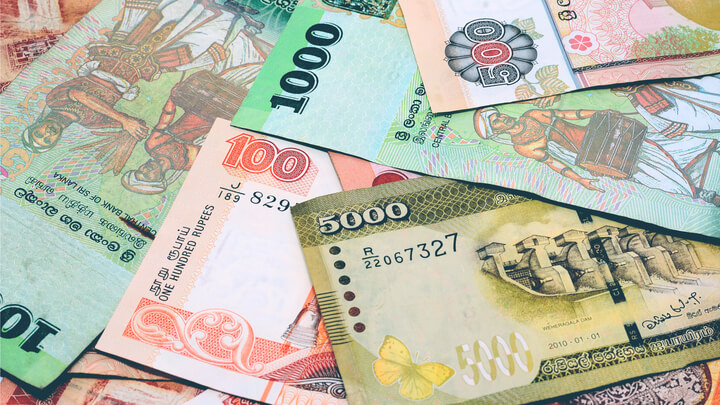
Ajith Nivard Cabraal, Minister of State for Money and Capital Markets and State Enterprise Reforms was quoted as saying this week that the IMF has decided to provide US $ 800 million (Rs. 160 billion) in August to boost the country’s economic strength.

State Minister Cabraal also stated that this is a grant and not a loan to be repaid.

TNA demands N&E remerger

Tamil National Alliance (TNA) leader R. Sampanthan has told US Ambassador Alaina B. Teplitz that the provincial council system is not enough to resolve the issues faced by the Tamils in the North and East and that both provinces must be merged and administered by the Tamil people.

Sampanthan yesterday told the media that they had had a lengthy discussion with Teplitz about the promises made by the government to the international community on resolving the issues faced by the Tamil people.

Sampanthan also said they had discussed the UN resolution against Sri Lanka. Teplitz and several other Embassy staffers met a TNA delegation at the TNA leader’s official residence in Colombo.

“We told the Ambassador that all governments were not sincere in their proposals to resolve the grievances of the Tamil people in the North and the East. Therefore, this issue had been dragging on for decades,” he said.

The TNA delegation told the US Ambassador that the international community must directly intervene to provide a solution to the struggle of the Tamils. “The time has come for a concrete solution to the issues faced by the Tamils in the country,” Sampanthan said.

TNA MPs M. A. Sumanthiran and TELO Leader Selvam Adaikalanathan and former MP ITAK Leader Mavai Senathirajah also took part in the meeting.

Rishad Bathiudeen hospitalised

MP Rishad Bathiudeen who is being detained by the Criminal Investigations Department (CID)I has been hospitalised.

Police Spokesman SDIG Ajith Rohana said that Bathiudeen was admitted to the Colombo National Hospital for a medical examination due to an illness.

Bathiudeen is currently being detained under a detention order issued under the Prevention of Terrorism in connection with the Easter Sunday attacks.

Posted in Uncategorized

Rajapaksa Raj and student power – By Dr.Dayan Jayatilleka

A few things became obvious since my last column.

Firstly, the ruling clan doesn’t know why the notification or announcement in the elevator—even a Chinese-built elevator—says it can carry only so many passengers.

Secondly, the phrase ‘the optics are wrong’ and the colloquialism ‘cringeworthy’ do not figure in the Rajapaksa vocabulary. The PM stood for a photo-op with the man convicted by the Supreme Court of murdering his Labour advisor (during his second presidency) and pardoned by his brother, the President.

Thirdly, they haven’t noticed that no administration which frontally took on the student movement of this country, prospered or even survived politically.

Fourthly, they do not know that Joseph Stalin, the tubby trade unionist, not the wartime Soviet leader, was quoted in The Economist (London) a few years ago.

Fifthly, they haven’t grasped the decisive importance of soft power, which depends on the narrative, the story of the country in the world. The piece in the world’s most influential newspaper the New York Times was titled ‘In Sri Lanka the Government Looks Increasingly Like a Family Firm’.

Family bloc

With Chinese money and support, the Gotabaya Government is building the kind of unjust order that the Communist Party of China was founded a century ago to overthrow.

There are four Rajapaksa brothers, Gotabaya, Mahinda, Basil and Chamal, and a son/nephew, Namal, constituting a Cabinet cluster of a Rajapaksa Quintet clustered in Cabinet. Add to the mix nephew Shasheendra as the State Minister whose list of subjects “cannot fit on a business card” (NYT).

An institutional mapping of the State should show just how great a share of State power, authority, patronage, resources and access to resources is in the hands of one family, given the interlock.

True, every one of these individuals were elected. But that is where my analogy of the elevator and the number of persons permitted, comes in. Though the analogy is mine, the point isn’t. If I may recycle a story, it was Dr. George Yeo, at the time the Foreign Minister of Singapore and one of the most incisive minds I have met, who told me when I paid a farewell call on him, that the main problem faced by President Mahinda Rajapaksa was not the Tamil diaspora but the fact that his system was “far too top-heavy to last”. He was right. MR lost the next Presidential Election (2015). When Dr. Yeo sounded that prophetic note (end-2010), the system was nowhere as top-heavy as it is now.

Sri Lanka has never witnessed so extreme a concentration of familial power. Nor has South Asia, which is familiar with the familial in politics.

Nowhere in the world today is power concentrated so thickly in a family. Not in the liberal democracies; not in the illiberal democracies; not in the autocracies.

Nowhere in the world in modern times, i.e., in current and contemporary history, has there been such a formal concentration and institutional occupation of State power in a ruling clan outside of Arabian despotisms: Rajan Phillips has correctly noted the Saudi parallel; I’d add some Gulf states.

Even in Latin American oligarchies or post-war Middle Eastern/North African autocracies, the model was the autocrat making his brother the defence minister or army commander, and his brother, son and grandson being the successors. Succession was sequential; there was never a simultaneous occupation and domination of state power by a family bloc, remotely to the extent there is in Sri Lanka today.

Better management is no compensation for structural hyper-concentration in a family cluster, which among other things will only marginalise further, the non-family members in the Government. Their hope of feeding at a Chinese or Chinese-built trough will not offset their loss of politico-institutional real-estate, and anyway, they may find themselves crowded-out even at the trough.

One of two dictums carved on the Temple of the Delphic Oracle in ancient Greece was ‘Nothing in Excess’. Due to systemic overload—excess—the Rajapaksa Raj cannot sustainably stay alight or afloat.

Throughout history, people have put up with authoritarian political superstructures so long as their standards of living were manifestly improving. That’s how the UNP lasted 17 years in government. Broadly speaking this was also true of the SLFP’s 20 years in office. It won’t work today because (a) authoritarianism has turned autocratic and (b) there is a collapse in the everyday standards of living of the citizenry, unprecedented since the Sirimavo Bandaranaike years—but even she didn’t touch the peasantry.

President Gotabaya seems to have only two policies: Ban and militarise. (I feel a Ban-ki-joke coming on). Ban imports including industrial inputs and fertiliser, and throw the military and police at every problem. President Gotabaya is not trying merely to plug the holes in the global supply chain due to COVID-19 or survive the economic effects of the pandemic; his project is terminating the 45-year Open Economy.

The rulers will find that (i) imposing the heavy burden of a political structure overladen with a conspicuous clan, (ii) increasing material burdens on all classes of the people barring a small elite, (iii) reversing the Open Economy and squeezing the middle classes, and (iv) cracking down on peaceful protest and dissent, will prove a combustible combination.

According to social theory, what catalyses revolt, rebellion and revolution is not absolute poverty but relative deprivation. In short, it is poverty into which they are plunged after a long period of comparative prosperity; or democratic space that is lost after a period of enjoying it. In Sri Lanka it is both.

KNDU Bill and student power

Mapping the political sociology of the island would reveal two vitally important zones: The peasantry and the students, especially the university students. Every leader since D.S. Senanayake took care to cultivate—the pun is intended—the rural peasantry. To antagonise the peasantry was unthinkable because it was recognised as socioeconomic and electoral suicide. Gotabaya Rajapaksa is the first ever, since the British, to do the opposite.

The second, smaller but no less crucial zone is the student community, which broadens out into the students and teachers, and narrows down to the live wire of the university student community. The student community is crucial because free education is inextricably embedded into the country’s ethos and has expanded this into a large, influential constituency.

The two zones of political sociology overlap and intersect. Most students come from rural backgrounds, as do a sizeable community of teachers. Today there is a more intense interface: the heart-breaking spectacle of students and teachers in rural areas, studying at night on treetops and hilltops, by torchlight, tossing large fire-crackers to scare off marauding elephants.

It has taken the presidency of Gotabaya Rajapaksa to take on both these social constituencies at the same time.

Several governments have taken on the university students and none have succeeded.

The Dudley Senanayake Government had a confrontationist Sinhala nationalist man of letters, IMRA Iriyagolla, as the Minister of Education. Today, Sarath Weerasekara seems to be playing the role with more pugnacity and greater truculence. In 1965-1970, the Police and the Army confronted the university students in 1966 and 1968 at Colombo and Peradeniya respectively.

Not only did clashes erupt which provided a base of recruitment for Wijeweera’s JVP, but more relevant to this story, the leftwing student organisations went on house-to-house campaigning at the 1970 elections and helped defeat the Dudley Senanayake Government, ensuring a landslide for Madame Bandaranaike’s United Front coalition. The students especially targeted Iriyagolla, who was never re-elected.

The Sirimavo Bandaranaike government, with its two-thirds majority, antagonised the student community in the north and south, just as the Gotabaya Rajapaksa government is doing. The discriminatory policies of district-wise and media-wise standardisation in university admission awoke two powerful organisations: the Manavar Peravai and the Ilaingar Peravai, i.e., the Students Federation and the Youth Federation, which formed the backdrop and feeder of radical, militant Tamil nationalism.

That was the avoidable result of government policies and a Police shooting at the outdoor event following the IATR conference of 1974. The Bandaranaike Government was wiped out by the TULF in the Northern Province at the 1970 election.

More dramatic, though nor perhaps more consequential, was the development in the south. The opening of Police posts on campus led to unrest at Peradeniya University around 1975. In November 1976, the freshman Arts student Weerasooriya from the village of Uhumiya was shot dead when Police opened fire on students early one morning.

The student movement boiled over, with all universities on strike, soon to be followed by schools, including Colombo schools. The students uprising fed into a festering working struggle which had started with the strike at the Government Printers in the mid-1970s. The most decisive factor was the Railways strike that triggered a General Strike.

The convergence and cumulative force of the students and workers strike caused a major crack in the regime, with the Communist Party and progressive SLFP MPs leaving the government. With its two-thirds majority lost, the Sirimavo Bandaranaike government had to abandon any thoughts of remaining in office beyond the date of the scheduled general election. The Government was wiped out at the election and J.R. Jayewardene won by a landslide.

When the JVP was de-proscribed and its leaders released by the Jayewardene Government as per a pre-electoral agreement reached through the good offices of Ronnie de Mel and more particularly his wife Mallika, Rohana Wijeweera had no intention of ever returning to armed rebellion. He concentrated on wiping out firstly the old left and then the SLFP politically, winning over the middle classes, and strengthening his legitimacy. Space was provided for him by Minister of Local Government and later Prime Minister Premadasa who gave him the Colombo Town Hall for his mammoth May Day meetings.

The trouble started with Minister of Education Ranil Wickremesinghe whose followers indulged in picking up leftwing student activists off buses and taking them to the UNP headquarters Siri Kotha for rough treatment. Ven Baddegama Samitha, who died recently of COVID-19, rose to hero status in 1978 when he led a group of students in defending themselves from an incursion by UNP goons at Kelaniya University. The goon-squad was headed by Christopher Jayatilaka, a Kelaniya gangster, who was killed in the clash. His funeral was attended by Minister Wickremesinghe.

The real radicalisation of the university student movement during the post-1977 Jayewardene administration came with the White Paper on Higher Education (the infamous “Davala Pathrikaava”) presented by Minister Wickremesinghe.

The student agitation on that lasted from 1980-1982, included a hunger strike at the Moratuwa University (then known as the Katubedde campus), and a baton charge by mounted Police of demonstrating students on Galle Face Green, with a young woman student breaking her leg when falling off the embankment. It was these student struggles that drew the JVP back into militant (unarmed) agitation, and it is these students, radicalised by the government’s policies and tactics, who became the cadre of the JVP’s second uprising—which itself was caused by its banning on utterly false grounds of participation in the July 1983 anti-Tamil riots.

The ‘officer corps’ of the JVP and smaller revolutionary groups of the 1980s came from the generation of university students politically incubated and gestated in the five years spanning the Weerasuriya shooting of 1976 through to the agitation against Ranil Wickremesinghe’s White Paper on Education in the early 1980s.

The Jayewardene government, the ruling UNP, the democratic system and the market economy were almost overrun and eliminated by the second (1980s) uprising of the southern youth.

President Mahinda Rajapaksa’s 2015 defeat proved a little easier due to the militaristic ‘leadership training’ that university students were subjected to mandatorily and involuntarily. The JVP went flat-out against him.

The tide of public opinion against the SAITM bill, helped defeat the Yahapalanaya government—especially the Wickremesinghe UNP.

Today’s Kotelawala National Defence University (KNDU) Bill, which has evoked widespread fears of the militarisation and privatisation of education, has all the signs of having the same catalytic radicalising effect as Ranil Wickremesinghe’s 1980 White Paper.

Globalising solidarity

Meera Srinivasan registers in The Hindu, more than two dozen ex-military brass in the Lankan bureaucracy/administrative structure. Logically, if the normal, civilian democratic system and dialogic politics which facilitated the political rise of Rajapaksa clan since the days of the State Council, remains blocked and distorted by militarisation and despotism, there will be a radical reversal of that upward trajectory, culminating in deadfall.

The Government obviously thinks that it can hand over the Sri Lankan State and the destinies of its citizenry to one family; depress the living standards of almost all classes and strata (north and south); jeopardise the livelihoods of the peasants, workers and fisherfolk; send schoolkids up trees and hilltops instead of deploying television and radio for distance education; ‘rendition’ peaceful demonstrators to distant military camps under cover of quarantine, and ignore its neighbours and international opinion.

Nothing since 1948 indicates that such conduct can succeed. It is ‘Time for Outrage’ as Stefane Hessel, one of the co-authors of the UN Declaration of Human Rights, famously put it.

Firstly, any repression of a non-violent segment of society or even one person, must be understood as a danger to all. Freedom, democracy and justice are indivisible and must be fought for. Every single injustice, every single act of repression, must be non-violently challenged in the media, the Courts, the Parliament, Pradesheeya Sabhas and every possible space.

Secondly, the struggles of the students, teachers, peasants and fisheries workers must converge. Urban resistance must not far outstrip the rural, and must draw the latter along.

Thirdly, all currents of the Opposition, except for the unrepresentative and collaborationist, must resolve to present a united platform for a protest vote at any referendum on a new Constitution. The defeat at the October 1988 referendum triggered Pinochet’s fall.

Fourthly, all Opposition parties must resolve to help each other to form an administration at any Local Authorities and/or Provincial Council election.

Fifthly, “the globalisation of solidarity” that Pope Francis urged in a Papal encyclical, must be embraced.

Globalisation of solidarity must not be confused with lurid labels of ‘genocide’ or lobbying foreign governments—though if the Gotabaya Government (re)turns to the Rathupaswela model of military (or STF) repression, the latter option becomes imperative, before Sri Lanka becomes another Myanmar.

The ‘globalisation of solidarity’ was manifested in global protests against the murder of George Floyd and later, in sympathy with the Palestinians, against the war on Gaza.

Students, teachers, peasants, workers, women, fisherfolk, minorities, parliamentarians, lawyers, poets, consumer activists, mass and social media— every victimised or threatened Lankan sector can and should reach out across borders to their organised counterparts and relevant international organisations. With legal avenues to suppress Sirasa being officially explored, its Board should alert and mobilise counterparts in the international television networks and associations of the global media industry.

The ‘globalisation of solidarity’ is people-to-people, community-to-community. The objective is to raise global consciousness and generate global action. The weapon is world opinion.

Posted in Uncategorized

COVID-19 death toll in Sri Lanka increases to 3,702

41 COVID-19 related deaths have been recorded, increasing Sri Lanka’s death toll to 3,702.

The Government Information Department said 23 males and 18 females were among the victims.

A majority, 29, among those who succumbed to the virus were identified as 60 years or above.

Meanwhile 12 persons who passed away to the virus were between the ages of 30 and 59.

Sajith writes to Speaker over sudden removal of officers from Elections Commission

Leader of Opposition Sajith Premadasa in a letter addressed to Speaker Mahinda Yapa Abeywardene today urged the latter to convene the Parliament Council to discuss about the sudden transfer and removal of officers attached to the Elections Commission.

Premadasa in his letter informed the Speaker that Parliament Council which is ultimately responsible for the appointment of persons to independent commissions and officers servicing those commissions under the constitution should be convened to discuss the transfer and removal of officers attached to the polls commission.

“The procedures pertaining to officers attached to the Elections Commission goes beyond normal procedure and norms pertaining to the removal and transfer of normal state officers. It is also essential to keep the officers attached to the polls commission without transfering them to other institutions. This is because their expertise is essential to ensure free and fair elections. Besides such transfers and removal of officers will prevent free and fair elections in the future,” he said in his letter.

The latter was signed by SJB MP Kabir Hashim as well.

Posted in Uncategorized

Sri Lanka’s Bank of Ceylon ‘CCC’ rating confirmed amid operating risks

Fitch Ratings has confirmed a ‘CCC’ rating on Sri Lanka’s state-run Bank of Ceylon with a negative outlook amid concerns over sovereign credit and the possibility of further weakness in the operating environment.

“The outlook on the operating environment assessment remains negative due to the potential for further risk from the deterioration of the sovereign credit profile or pressure on domestic operating conditions beyond our expectation independent of changes in the sovereign rating,” Fitch said in a statement.

“The operating environment for Sri Lankan banks has a high influence on banks’ ratings, as it is likely to constrain their intrinsic credit profiles through its effect on financial and non-financial key rating factors.”

The Bank of Ceylon has seen steep loan growth from lending to government and state enterprises.

“The bank’s increased lending to the state and state-owned enterprises (SOEs) resulted in loan expansion of 27.7 percent in 2020 and 8.6 percent 1Q21, which far exceeded that for the sector, and increased its loan book concentration to the state and SOEs,” Fitch said.

“BOC’s risk appetite is more susceptible to pressure, as its status as a large state bank has led to an increased policy role in intermediating relief to businesses and individuals affected by the pandemic.”

Bad loans had fell to 9.7 percent by the end of the first quarter from 10.3 percent at the end of 2020. Though provisions had also increased, there could be more impaired assets ahead.

“Pressure on impaired loans could manifest across an extended period of time due to relief measures that halted the recognition of credit impairments and ongoing discretionary restructuring,” Fitch said.

“Despite an increase in loan loss allowances/ impaired loans to 59 percent by end-2020 from 56.6 percetn at end-2019, net impaired loans/common equity Tier 1 capital deteriorated to 65%, underscoring the pressure on BOC’s capitalisation.”

The Bank’s loan to deposit ratio had also risen. Banks generally see a rise in the loan to deposit ratio in Sri Lanka amid monetary instability as liquidity injections drive credit, analysts say.

The full statement is reproduced below:

Fitch Ratings – Colombo – 16 Jul 2021: Fitch Ratings has affirmed Bank of Ceylon’s (BOC) Long-Term Foreign- and Local-Currency Issuer Default Ratings (IDR) at ‘CCC’. The ratings do not carry an Outlook because of the potentially high volatility at this rating level, in line with Fitch’s rating definitions.

BOC’s National Long-Term Rating has also been affirmed at ‘AA -(lka)’. The Outlook is Stable. At the same time, Fitch has affirmed BOC’s Viability Rating at ‘ccc’, Support Rating at ‘5’ and Support Rating Floor at ‘NF’ (No Floor).

A full list of rating actions is at the end of this commentary.

KEY RATING DRIVERS

IDRS, VIABILITY RATING and NATIONAL LONG-TERM RATING

BOC’s Long-Term IDRs are driven by the bank’s intrinsic credit profile, as reflected in its VR. There are no changes to our assessment of the bank’s intrinsic credit profile since our last review in December 2020. The ratings are constrained by the sovereign IDR (CCC). BOC’s VR remains highly influenced by the operating environment and asset quality.

Our assessment of the operating environment for Sri Lankan banks reflects the risk of doing banking business due to the sovereign’s credit profile and the impact of the coronavirus pandemic. Sri Lanka’s economy contracted by 3.6% in 2020 as a result of the pandemic, and our expectation is for an expansion of 3.8% in 2021. Our forecasts are subject to a high degree of uncertainty depending on the evolution of the pandemic.

The outlook on the operating environment assessment remains negative due to the potential for further risk from the deterioration of the sovereign credit profile or pressure on domestic operating conditions beyond our expectation independent of changes in the sovereign rating. The operating environment for Sri Lankan banks has a high influence on banks’ ratings, as it is likely to constrain their intrinsic credit profiles through its effect on financial and non-financial key rating factors. The negative outlook on risk appetite and most of the financial profile factors reflect the pressure from the operating environment.

BOC’s risk appetite score of ‘ccc’/negative reflects heightened risk from its significant exposure to the sovereign and also from non-state exposures that could be susceptible to deteriorating operating conditions.

The bank’s increased lending to the state and state-owned enterprises (SOEs) resulted in loan expansion of 27.7% in 2020 and 8.6% 1Q21, which far exceeded that for the sector, and increased its loan book concentration to the state and SOEs. BOC’s risk appetite is more susceptible to pressure, as its status as a large state bank has led to an increased policy role in intermediating relief to businesses and individuals affected by the pandemic.

BOC’s asset quality score of ‘ccc’/negative is aligned with its risk appetite score and reflects our expectation of persisting risks to asset quality. Its impaired loans/ gross loans ratio fell to 9.7% by end-1Q21 from 10.3% at end-2020 due to the rapid increase in loans. Pressure on impaired loans could manifest across an extended period of time due to relief measures that halted the recognition of credit impairments and ongoing discretionary restructuring. Despite an increase in loan loss allowances/ impaired loans to 59% by end-2020 from 56.6% at end-2019, net impaired loans/common equity Tier 1 capital deteriorated to 65%, underscoring the pressure on BOC’s capitalisation.

BOC’s capitalisation and leverage score of ‘b-‘/negative factors in the heightened constraints on accessing capital from the state due to its credit profile, although capital deficiencies are not envisaged. In the absence of a capital infusion from the state, the bank has continued to retain more profit since 2019, and has raised additional Tier 1 capital through perpetual unlisted bonds. BOC’s exposure to the state bolsters its reported capitalisation ratios, as the exposure is mostly risk-weighted at 0%. Still, the bank’s capital buffers remain thin, relative to its exposure to risks from the operating environment and sovereign credit profile.

BOC’s earnings and profitability score remains at ‘b-‘/negative to reflect our expectation of sustained pressure in this area through high credit costs, despite the potential for improved pre-provision profit buffers. Its operating profit/risk-weighted assets ratio recovered in 1Q21 to 5.3% after dropping to 2.0% in 2020, alongside a sharp increase in impairment charges that consumed 54% of pre-impairment profits in 2020.

BOC’s funding and liquidity score of ‘b-‘/negative reflects the challenges in accessing foreign-currency funding due to the sovereign credit profile, despite the benefit from its state linkages, which support its entrenched domestic deposit franchise and perception of safety. BOC has the largest foreign-currency deposit base in Sri Lanka, supported by its leading position in channelling inward worker remittances. In addition, the bank also relies on foreign-currency non-deposit funding, although its share in non-deposit funding has declined since end-2019. BOC’s loan/deposit ratio rose sharply to 91% in 1Q21 from 84% across 2017-2020 driven by rapid loan growth in 2020 and 1Q21.
BOC’s National Rating is also driven by its standalone strength and reflects its entrenched domestic franchise, but higher risk appetite and smaller capital buffers relative to private-bank peers that have the same national rating. The ratings are constrained by our assessment of Sri Lanka’s sovereign rating and the operating environment.

SUPPORT RATING AND SUPPORT RATING FLOOR

The Support Rating Floor of ‘NF’ and Support Rating of ‘5’ reflect our opinion that extraordinary sovereign support for the bank cannot be relied upon in our ratings. We believe the sovereign’s ability to provide extraordinary support is severely constrained by its weakened financial flexibility, the size of the banking sector relative to the economy and the banking system’s high vulnerability to large losses in a downturn, despite a high propensity for the sovereign to extend support to the bank.

SUBORDINATED DEBT

The Basel II Sri Lanka rupee-denominated subordinated debt of BOC is rated two notches below its National Long-Term Rating, in line with Fitch’s baseline notching for loss severity for this type of debt and our expectations of poor recovery.

RATING SENSITIVITIES

Factors that could, individually or collectively, lead to positive rating action/upgrade:

IDRS, VIABILITY RATING and NATIONAL RATING

Upside to BOC’s IDR, VR and National Rating is constrained by our assessment of the sovereign’s credit profile and the operating environment. We do not anticipate developments that might lead to positive rating action in the near-term given the pressure on the sovereign rating and the challenging operating environment.

SUPPORT RATING and SUPPORT RATING FLOOR

BOC’s Support Rating and Support Rating Floor are constrained by the sovereign rating. An upward revision of the ratings is possible provided the sovereign’s ability to provide support improves materially. However, we do not expect this in the near to medium term.
Factors that could, individually or collectively, lead to negative rating action/downgrade:

IDRS, VIABILITY RATING and NATIONAL RATING

Pressure on BOC’s IDR, VR and National Rating is most likely to stem from a deterioration in Sri Lanka’s sovereign rating, constraining BOC’s standalone credit profile, including the operating environment. Operating conditions are likely to deteriorate significantly in such a scenario, resulting in heightened risk for BOC’s financial profile, such as through a lack of access to foreign-currency funding that restricts operations or a significant deterioration in loan quality that erodes its capital. Weaker assessment of the operating environment independent of changes in the sovereign rating, or a deterioration in credit metrics past our base-case expectations relative to peers, would also lead to increased pressure BOC ‘s National Rating.

SUPPORT RATING and SUPPORT RATING FLOOR

The ratings are already at their lowest level and thus have no downside risk.

SUBORDINATED DEBT

BOC’s subordinated debt rating will move in tandem with the National-Long Term Rating

BEST/WORST CASE RATING SCENARIO

International scale credit ratings of Financial Institutions and Covered Bond issuers have a best-case rating upgrade scenario (defined as the 99th percentile of rating transitions,
measured in a positive direction) of three notches over a three-year rating horizon; and a worst-case rating downgrade scenario (defined as the 99th percentile of rating transitions, measured in a negative direction) of four notches over three years. The complete span of best- and worst-case scenario credit ratings for all rating categories ranges from ‘AAA’ to ‘D’. Best- and worst-case scenario credit ratings are based on historical performance. For more information about the methodology used to determine sector-specific best- and worst-case scenario credit ratings, visit https://www.fitchratings.com/site/re/10111579

REFERENCES FOR SUBSTANTIALLY MATERIAL SOURCE CITED AS KEY DRIVER OF RATING

The principal sources of information used in the analysis are described in the Applicable Criteria.

ESG CONSIDERATIONS

Bank of Ceylon has an ESG Relevance Score of ‘4’ for Governance Structure due to ownership concentration. The state owns 100% of the bank and BOC has several related-party transactions with the state and state-owned entities. This has a negative impact on the credit profile, and is relevant to the ratings in conjunction with other factors.

Unless otherwise disclosed in this section, the highest level of ESG credit relevance is a score of ‘3’. This means ESG issues are credit-neutral or have only a minimal credit impact on the entity, either due to their nature or the way in which they are being managed by the entity. For more information on Fitch’s ESG Relevance Scores, visit www.fitchratings.com/esg

Sri Lanka suspends Inter-Province Bus & Train Services

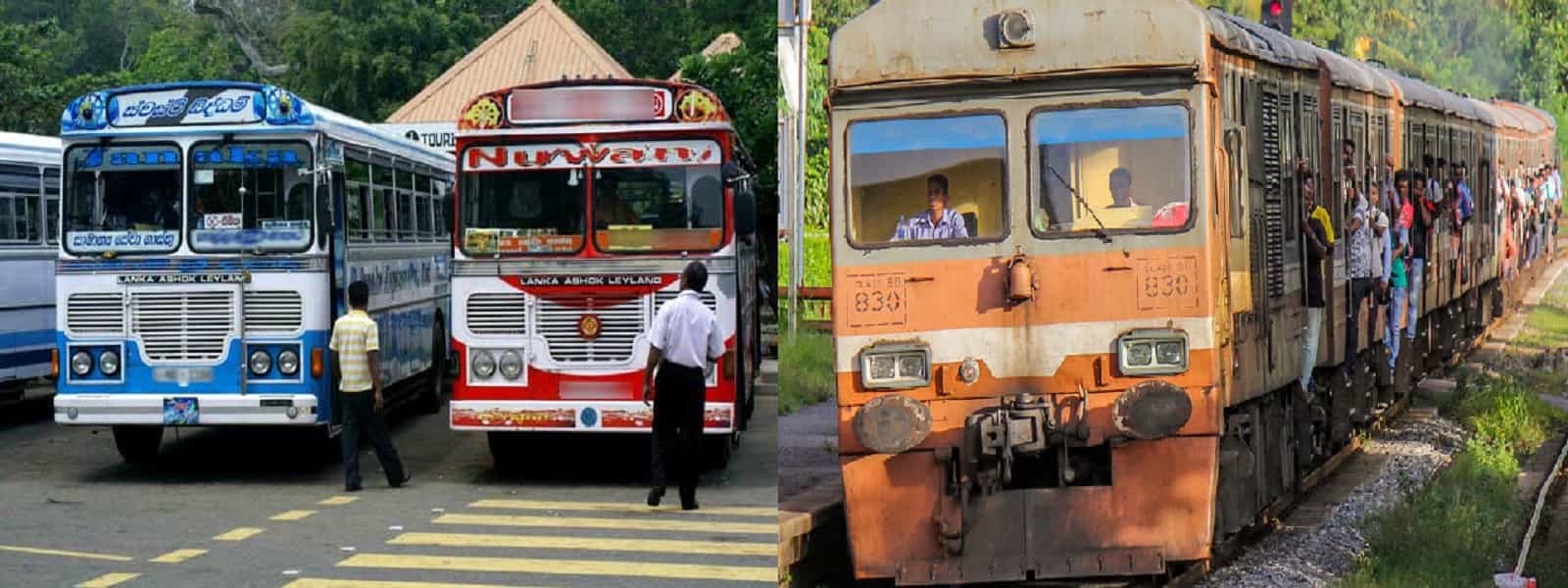
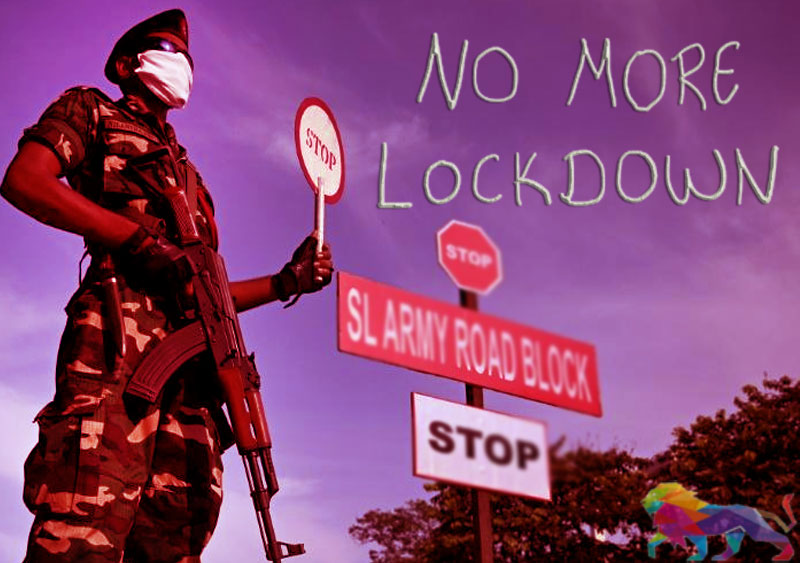
Sri Lankan authorities will once again suspend Inter-Province Bus Services and Train Services with effect from Saturday (17) to the 01st of August 2021.

State Minister of Bus Transport Services and Train Compartments Dilum Amunugama speaking to reporters on Friday (16) said several buses were added to service between provinces for the benefit of personnel attached to essential services, however, it was impossible to transport these passengers in accordance to the health guidelines.

‘Therefore, were compelled to impose those restrictions once again,’ he said adding that health authorities have warned that the Delta COVID variant spread is high in the Colombo District compared to other areas and there is a need to prevent it from spreading to the villages.

Sri Lanka’s Rajapaksa dynasty is not as secure as it appears The family that runs everything is running out of cash – The Economist

Since winning the presidency in a landslide nearly two years ago, Gotabaya Rajapaksa has worried not that he has too many relatives in government, but that he has too few. One of the 72-year-old’s elder brothers, Mahinda, himself president for ten years until a surprise election defeat in 2015, is prime minister. Another, Chamal, is minister for irrigation. Chamal’s son, Shasheendra, is minister of state for “paddy and grains, organic food, vegetables, fruits, chillies, onions and potatoes, seed production and high-tech agriculture”. Mahinda’s son, Namal, is minister for youth and sports. And state minister for digital technology and enterprise development. And everything else, to judge by his hyperactive Twitter feed.

But there is always room for one more Rajapaksa, 69-year-old Basil above all. “Gota” and Mahinda acknowledge him as the brains and organiser-in-chief of the family. He devised the electoral strategy behind its return to power, founding a new party, the Sri Lanka Podujana Peramuna (slpp), which used digital wizardry to rally chauvinists from the ethnic majority, the Sinhalese—all while in prison on a corruption charge stemming from his time as economy minister (his detractors called him “Mr 10%”). On July 8th he was back in the cabinet.

Basil’s return to government required both a constitutional amendment to allow dual nationals to hold senior government positions (he has an American passport) and the resignation of a docile member of Parliament to free a seat for him. He faces a budget and current-account mess caused by poor policy under Gota and Mahinda, from whom he inherits the finance portfolio, and exacerbated by the pandemic.

On coming to power, his older brothers slashed taxes as a stimulus. Tax receipts fell by a quarter and the budget deficit climbed to 14% of gdp. Two-thirds of government revenue now goes on interest payments. A downgrade by credit-rating agencies late last year shut Sri Lanka off from international capital markets. The Sri Lankan rupee is sliding. Foreign debt is being serviced from the central bank’s reserves. These, warns Deshal de Mel of Verité Research, a think-tank in Colombo, the capital, are now down to less than three months’ worth of imports. Default is becoming more likely.

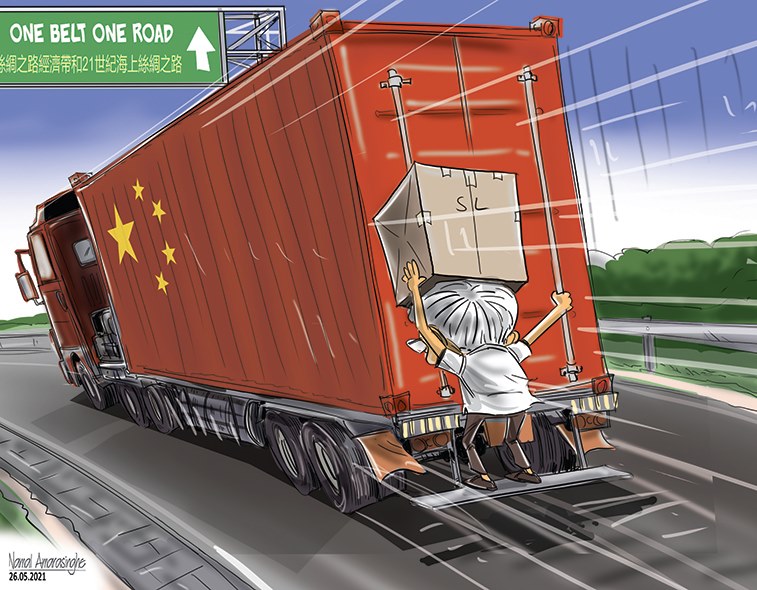
The obvious solution is to apply to the imf for an assistance programme to help restore confidence among external creditors. Such a move would not sit easily with Gota’s talk of “prosperity and splendour”, however. An easier first step will be to seek more help and forbearance from a major creditor, China. The central bank recently minted gold coins to celebrate the Chinese Communist Party’s 100th birthday.

In following their next moves, however, never fail to bear in mind what is in it for the Rajapaksas themselves. The next parliamentary and presidential elections are a way off. Basil presumably calculates that economic recovery by then will return them to power. But there are complications.

One has to do with Mahinda, who is rumoured to be suffering from ill health. Basil is his obvious replacement as prime minister. Yet it is from Mahinda’s folksy charisma that the family’s aura derives. When he goes, so does a big part of the Rajapaksa appeal.

The obvious family response would be to tighten its hold on power yet further. The tendencies are there. Gota, who as defence secretary prosecuted the end of Sri Lanka’s brutal civil war in 2009, retains the defence and intelligence portfolios. By temperament a martinet, he has stuffed his administration with ex- and current brass. During Mahinda’s presidency the security services were all-powerful, and critics were intimidated and on occasion wound up dead.

The complication here is getting Sri Lankans to play along. These days, Gota’s irascibility inspires more scorn than fear. Farmers decry Gota’s ill-considered push for organic farming free of imported fertiliser. Others call for justice for the civil war’s victims. Activists who recently took to the streets against the expansion of a military-backed university that is exempt from national oversight were bundled away for supposedly breaking coronavirus restrictions and given 14 days’ enforced quarantine. In response, the country’s teachers have gone on strike. Even slpp members grumble that the Rajapaksa tribe is taking too much power, leaving too little for the hangers-on. Sri Lankans have a history of hoofing overweening governments out. That makes the Rajapaksas’ suffocating hold on power look like a weakness.

👉https://www.economist.com/asia/2021/07/15/sri-lankas-rajapaksa-dynasty-is-not-as-secure-as-it-appears