Travel restrictions relaxed for several more sectors

While revising the health regulations under the topic of relaxing travel restrictions, the Health Services Director General issued new set of guidelines that will take effect from today.

Accordingly, conducting indoor musical shows is permitted with 50% attendance.

No permission has been granted to conduct outdoor musical shows and carnivals. Accommodation and boarding houses are permitted to operate according to health guidelines.

Children’s parks are permitted to open under the health guidelines.

Adventure sites or camping sites were permitted to open according to health guidelines.

25% of people can enter the zoological gardens at a given time.

All places of worship, including Buddhist temples, Christian churches, Mosques and Kovils, were permitted to open and separate health guidelines were issued for them.

Even though the travel restrictions are relaxed, if certain areas are isolated for a period of time, the relaxation of the travel restrictions will not apply to those areas. (Chaturanga Samarawickrama)

SL should have mixed electoral system-PAFFREL

Election monitoring body the People’s Action For Free and Fair Elections has informed the Parliamentary Select Committee on Electoral Law Reforms, that Sri Lanka should have a mixed electoral system that includes the First-Past-the-Post system and Proportional Representation.

PAFFREL Executive Director Rohana Hettiarachchi yesterday proposed to increase the number of electoral districts from 22 to 40, taking into account geographical factors, population and other diversities.

The meeting was held yesterday Chaired by Leader of the House Minister Dinesh Gunawardena. Explaining the need for an advance voting system, PAFFREL stated it is essential that all eligible voters be given the right to vote.

PAFFREL also addressed limitations of candidate expenses, holding the Presidential and General Election on the same day, implementing an election calendar, identifying and updating loopholes in the electoral process and existing electoral law, preventing misappropriation of state power and state property, updating fines and election law, ensuring the right to information of all voters, the laws on advertising and ensuring adequate women representation.

The Executive Director also commented at length on the declaration of assets and liabilities of candidates as well as the selection of candidates from the national list, the protection of the independence of the Election Commission and the method of registration of political parties.

Former Chairman of the Election Commission Mahinda Deshapriya said it is impractical to hold the Presidential and General Elections on the same day adding that only the Parliamentary and Provincial Council Elections could be held on the same day.

Deshapriya noted that legislation should be enacted promptly to control election campaign expenditure.

Minister Nimal Siripala de Silva, State Minister Jeevan Thondaman, Members of Parliament Anura Dissanayake, Kabir Hashim, Ranjith Madduma Bandara, M. A Sumanthiran, Mano Ganeshan, Madura Vithanage and Sagara Kariyawasam , officials from the Election Commission and the Attorney General’s Department were also present.

Girl working at fmr minister Bathiudeen’s house dies of burn wounds

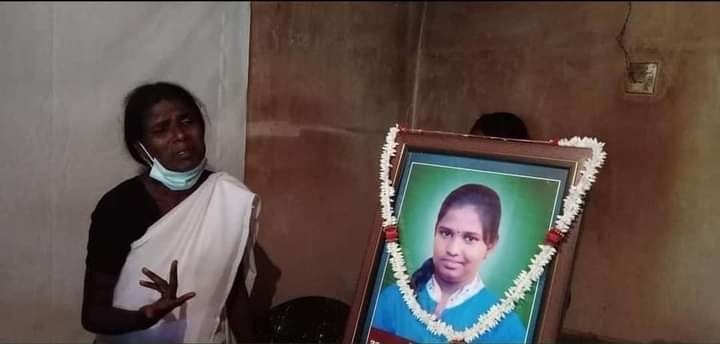
A 16-year-old girl who was hospitalized with burn injuries while working as a domestic helper at the house of former Minister Rishad Bathiudeen in Borella has died at the Colombo National Hospital today, Police said.

They said the girl, a resident of Hatton Dayagama Estate, had reportedly set herself on fire and was admitted to Hospital last week with burn injuries.

The Borella Police said that her parents brought her to the former minister’s house a few months ago.

It was reported that she was staying in a room next to the kitchen when police found a bottle of kerosene and a lighter in the room.

She came out of the room while her clothes were on fire, and another domestic helper and several others at the house along with Bathiudeen’s wife covered her with a wet blanket and rushed her to hospital.

The Borella Police as well as the Government Analyst have gone to the house and inspected the place where the incident took place.

The Police have recorded statements from the residents of the house over the incident and the Borella Police is conducting further investigations

Posted in Uncategorized

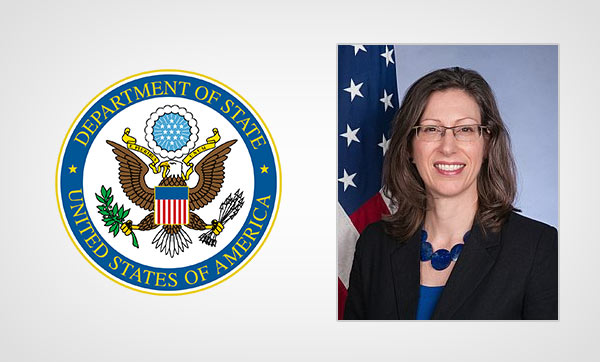
TNA raises concerns with US Envoy

Tamil National Alliance (TNA) Leader and Parliamentarian R. Sampanthan today (15) met the US Ambassador to Sri Lanka Alaina B. Teplitz to discuss the assurances given by the Sri Lankan Government to solve the national ethnic question.

The meeting was attended by the President of the Tamil National Alliance Sampanthan, the leader of the ITAK Mavai Senadhirasa, TELO leader Selvam Adikalanath and the Member of Parliament MA Sumanthiran had discussed a number of issues with Teplitz today.

Media reports last week also indicated that the TNA is unhappy with the appointment of the retired Inspector General of Police (IGP) Jayantha Wickramaratne as the Office on Missing Persons (OMP) Chairman, which was established during the previous United National Front led Government and is mandated with protecting the rights of the disappeared and their families.

Earlier this year, the United Nations Human Rights Council (UNHRC) passed the Resolution A/HRC/46/L.1, which recognises the importance of preserving evidence relating to violations of human rights in Sri Lanka to advance accountability, and as such a call has been made to implement an “evidence preserving” mechanism in the country. It was adopted on 23 March at the UNHRC with 22 votes in favour of it and 11 votes in opposition while 14 Member States abstained from voting.

Further, a recent meeting to be held between the TNA and President Gotabaya Rajapaksa was called off and postponed by the latter.

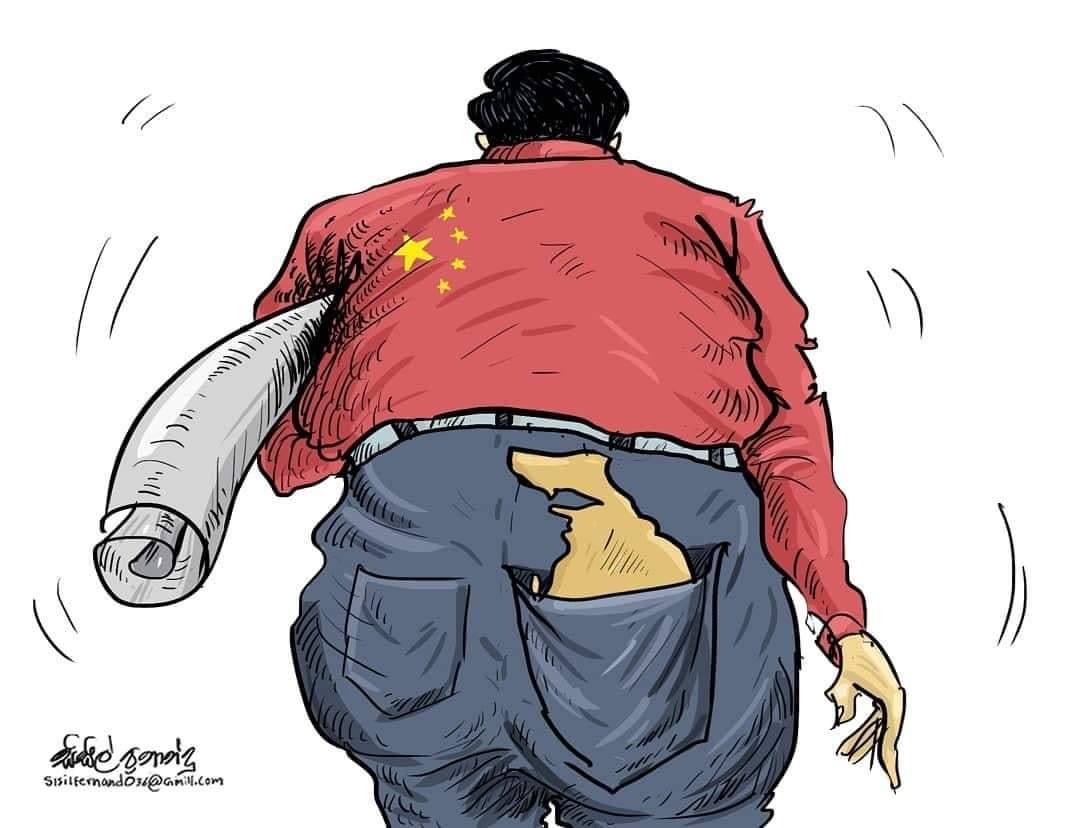
China building another enclave in Sri Lanka: Colombo Port City

China is building yet another enclave in Sri Lanka, Colombo Port City (CPC), raising concerns not only about its impact on local livelihood and traditional ways of being but even on the environment and the sovereign status of the land that would constitute the City.

As per International Forum for Rights and Security (IFFRAS), China seems to have found its gateway to the Indian Subcontinent in the island country of Sri Lanka, barely a few hundred kilometres from India’s southernmost tip.

CPC is being constructed by reclaiming several hectares of land from the Indian Ocean to give China a strategic edge as part of its much talked about Maritime Silk Road.

This would also give impetus to Beijing’s wolf-warrior diplomacy centred Belt and Road Initiative, effects of which the world has already witnessed when Sri Lanka was forced to hand over its Hambantota Port to China on a 99-year lease as part of a controversial debt-swap arrangement.
By aggressively developing naval ports in the Indian Ocean region, it is believed that the Chinese are executing their string of pearls policy which aims to encircle potential rival nations such as India and dominate the trade routes involving the high seas as part of their quest for economic and thereby political supremacy, reported IFFRAS.

On May 20th, 2021 the Parliament of Sri Lanka passed the Colombo Port City Economic Commission Bill that lays out the governance and administrative framework for the CPC which makes it function like a Chinese sovereign territory independent of the Sri Lankan legal setup.
As part of the project, the 269 hectares of land which is being reclaimed from the ocean will be annexed to the city of Colombo to form the country’s first special economic zone (SEZ) for service-oriented industries.

CPC is by far Sri Lanka’s biggest foreign direct investment project worth about USD 1.4 billion, expected to further spur a USD 13 billion in secondary investment.

Currently, CPC is a joint project between China Communications Construction Company Ltd and the Sri Lankan Port Authority.

The project was launched in September 2014, when the Chinese President Xi Jinping landed in Colombo to fulfill the dream of Mahinda Rajapaksa, the then Prime Minister of Sri Lanka.

It is widely known that the Rajapaksa brothers, Prime Minister Mahinda, and President Gotabaya, have had a special relationship with China for more than a decade particularly after Beijing helped Sri Lanka with arms and ammunition during the civil conflict that ended in 2009.

Such has been the association between the Rajapaksa family and the Chinese that in June 2018, a New York Times (NYT) report alleged that the Chinese had paid the Rajapaksas substantial sums to see the CPC project through. The NYT also disclosed that a Chinese firm had financed the brothers’ campaign during the country’s 2015 parliamentary elections, reported IFFRAS.

Though the project was launched in 2014, it was delayed causing daily losses of USD 380,000. This did not deter the Chinese as they very cleverly managed to acquire extra land in compensation from the Lankans.

Moreover, once, the Rajapaksa government came back to power in 2019, work on the project began at an expedited pace. Tens of Sri Lankan ships sponsored by China are working overtime to dread sand from the bottom of the Indian Ocean to develop this area of 269 hectares.

Out of this, only 125 hectares of land will be taken by the Sri Lankan Government, about 88 hectares is being given to China on a 99 year Lease plus the Chinese have been offered a free hold on additional 20 hectares of land. This effectively means that Sri Lanka has sold its land and precious resources to China in the hope of seeking some economic benefits and development, reported IFFRAS.

With features that seemingly compromise the island nation’s sovereignty and free will, the CPC Bill has been vehemently opposed by different political parties, civil society groups and the public at large.

The Bill also provides overarching powers to the Commission to act independent of the country’s laws and allows foreign investors unbridled control over the local resources; in the process completely bypassing local laws.

Experts in fact, state that the Chinese do not have an interest in establishing any kind of partnership with Sri Lanka, instead, all they desire is a strategic overseas province. They seem to have already achieved their goals, first with the Hambantota Port and now with the CPC.
The CPC related Bill also empowers the President of Sri Lanka to establish a seven-member Commission to govern the Port City. Though overtly the exercise may seem fair, in reality the Commission has been bestowed with supreme powers over the province, including control of taxation, approval of new projects, investments and the right for firms to trade in their own currencies in the SEZ.

The Commission would also have foreign board members (say, Chinese) who would aid in the decision making process which will effectively introduce the Chinese undemocratic way of using force and pressure to ha

ve one’s way within the system in the absence of any elected representative, reported IFFRAS.
Besides, the people of Sri Lanka have also raised other issues related to the CPC. The first dimension is social as the bill brings in discrimination wherein high end apartments, malls, luxurious facilities shall all be extended with concessions to foreigners and the locals will be alienated in their own land.

The second dimension is economic wherein the benefits that are likely to accrue from the SEZ will be mostly short term and limited, given the unfair clauses and terms & conditions of engagement between the Sri Lankans and the Chinese.

The third dimension is developmental wherein it is felt that the nature of jobs generated will be in the construction sector or in the hospitality sector with locals working in the lower rungs as workers at sites or as waiters and staff at malls, hotels etc.

There does not seem to be any emphasis on developing skills, adding value to employment generation that would be beneficial to the island nation in the long term. Moreover, it is feared that all the above mentioned factors would actually widen the gap between the rich and the poor, creating social inequalities and possibly, anarchy.

It is pertinent to note that Beijing’s actions are part of an aggressive encirclement strategy aimed to counter India’s strategic presence in the Indian subcontinent. More than half of the India’s container traffic passes through this region.

Once the project is complete, it would be a regular affair to have Chinese ships buzzing in India’s backyard thus posing a major security threat to the country, reported IFFRAS.

Sri Lanka seems completely taken over by the Chinese juggernaut. It is increasingly evident that China has emerged as the leading influencer of this small island nation almost with the sole intention of displacing India.

Source:ANI

Posted in Uncategorized

Turkey wants Sri Lanka to carry out surveillance on FETÖ

Turkey wants Sri Lanka to carry out surveillance on members of the Fetullahist Terrorist Organization (FETÖ).

The Ambassador of the Republic of Turkey to Sri Lanka, R. Demet Şekercioğlu said that Turkey is deeply appreciative for the support extended by the Sri Lankan authorities to eliminate FETO presence in Sri Lanka.

In a message to mark the occasion of the fifth year commemoration of the thwarted coup attempt on July 15, 2016, the Ambassador said that since her inception on 29 October 1923, the Republic of Turkey has faced with many challenges threatening her national sovereignty, territorial integrity and communal unity.

However, she said the thwarted coup of 15 July 2016 was the bloodiest coup attempt and the most organized terrorist attack that Turkey had ever experienced.

The members of the Fetullahist Terrorist Organization used 74 tanks, 246 armoured vehicles, 03 military ships, numerous weapons, 37 military helicopters and 35 military aircrafts belonging to the Turkish Army to bomb the Turkish Grand National Assembly, the Presidential Complex, the Police headquarters and the National Intelligence Organization’s premises.

“Yet, hundreds of thousands unarmed civilians who took the streets that night proved the attachment of the Turkish nation to the democratic and republican values. Today, on the occasion of the fifth anniversary of the thwarted coup, we are commemorating the 251 martyrs who sacrificed their lives and over 2500 wounded, who fought fearlessly in unity and solidarity to save the Republic. Despite the magnitude of the heinous attack, the victory gained on that night is just a clear reflection of the self-power of Turkish people,” the Ambassador said.

She said that in order to effectively fight this terrorist organization, it is important to understand what exactly FETÖ is, how it started, how it operates and of course its goals.

Starting from 1970s, FETO became known as a charity and education movement inside and outside of Turkey. Its ringleader, Fetullah Gülen, who is considered “Imam of the Universe” by his followers, gradually put his sinister plan into action. Members of FETO have been infiltrated into the critical positions of the military, police, judiciary, intelligence and other state institutions.

Within time, this charity-oriented movement turned into a secretive criminal network and especially since 2013, its ultimate aim revealed: Taking control of Turkish state apparatus by toppling the democratic, secular and constitutional regime. In order to reach this demonical target, FETO did not abstain from using any illegal means possible.

Document forgery, faked evidences, sham trials, illegal wiretapping, money laundering, illegal cash transfers, power abuse against those opposing the organization, blackmailing and intimidation were only some of those strategies used for this purpose. Once the new state order successfully established in Turkey under the absolute rule of Fetullah Gülen, their ultimate objective was to replicate the same in other countries of the world.

“It is also worth mentioning that FETÖ tries to gain the hearts and minds especially in the West by presenting itself as the representative of moderate Islam. It has also unfortunately succeeded into a certain extent. However, sermons of Fetullah Gülen, released in social media by his former followers clearly showed his radical views on non-Muslims, violence to be inflicted to women in total disharmony with both Islamic and modern values,” the Ambassador said.

After FETÖ revealed its dark face, the Government of Turkey started to exert great efforts to completely eradicate its presence inside and outside of the country. Following intensive operations, FETO has now lost its controlling power in Turkey; however, it is still striving to survive in countries where it has established its presence.

Due to its broad international network, FETO essentially poses beyond a national threat, the Ambassador said.

She said that considering its secretive and unique structure, FETO could cause immeasurable danger to all countries where it remains active still.

In order to eliminate the international network of FETO, Turkey resolutely continues her cooperation with its international partners. So far, our official initiatives with other countries resulted in concrete outcomes, such as FETO’s declaration as a terrorist organization by several countries and organizations, closure of FETO affiliated schools and education centres in 40 countries, transfer of the schools to the Turkish Maarif Foundation in 20 countries.

Over 110, out of 800 FETO members whose extradition were requested from 105 countries were handed over to the Turkish judiciary. Turkey has also called upon her international partners to freeze the assets of FETO members from the countries where they are residing.

“In the wake of these developments, we are pleased to note that our collective efforts with international partners reached success to a greater extent and Sri Lanka is also among those countries,” the Ambassador said.

She said that from the very beginning, Turkey has warned Sri Lankan authorities against the malicious activities of FETO, which was active through an affiliated school and some business organizations in this country.

“We are deeply appreciative for the support extended by the Sri Lankan authorities to eliminate FETO presence in Sri Lanka,” she said.

The Ambassador said that as Turkey continues to intensify her operations all around the world, FETO members are feeling trapped more than ever and have been seeking a safe haven. At this juncture, it has gained much more importance to rigorously follow the activities of FETO affiliates in every corner of the world.

“As FETO was active in Sri Lanka until recently, this beautiful island might be considered as an option by its members in the future, as well, if they could find a way to return. Therefore, Turkey will maintain her close cooperation with her Sri Lankan counterparts to prevent any possible attempt from FETO elements to take shelter in Sri Lanka,” Demet Şekercioğlu said.

The Ambassador said that Turkey strongly believes that as a country which has gained a unique victory against one of the most dangerous terrorist organizations, Sri Lanka will also continue to carry out surveillance on all suspicious terror elements including FETO members at present as well as in the future.

Posted in Uncategorized

Sri Lanka allows vaccinated tourists without quarantine after PCR test

Sri Lanka will allow vaccinated tourists to travel around the country without quarantine if a Coronavirus test taken after landing is negative, the island’s tourism authority said.

“Once the ‘Day One’ PCR test report is negative, travellers will be able to leave the Level 1 Hotel and enjoy their holiday, they will be required to undergo a PCR test once again on the seventh day during their travels at a Ministry of Health approved laboratory,” Sri Lanka Tourism said.

A vaccinated person can get Coronavirus, but usually in a milder form, which however can be deadly to anyone who meets them.

All travellers will also have to produce a PCR test taken 72 hours before boarding to the airline and get a electronic visa https://www.srilanka.travel/helloagain/ and purchase a mandatory Covid-19 insurance for 12 dollar which provides a 50,000 dollar cover for a 30 day stay.

Sri Lanka earlier allowed tourists to travel under a ‘bio-bubble’ with multiple PCR test for 14-days.

“These measures have helped curb the spread of the pandemic while preventing new variants from entering the island,” Kimarli Fernando, Chairperson of Sri Lanka Tourism said.

“With the success of the National vaccination rollout programme, we are ready to commence operations as usual for fully -vaccinated arrivals and the tourism industry is well prepared to welcome our international travellers while ensuring the safety and security of our communities.”

All other visitors who are not vaccinated or not vaccinated will have to stay in a Level 1 hotel and take the required tests.

Travel restrictions will however still apply to certain countries, travellers with a travel history (including transit) in the past

Visitors with a 14 day travel history to India, Vietnam, South America, South Africa, Angola, Botswana, Mozambique, Zimbabwe, Lesotho, Namibia, Swaziland and Zambia will not be permitted to disembark in Sri Lanka.

Posted in Uncategorized

Basil meets diplomatic community in Sri Lanka

Members of the diplomatic community in Sri Lanka called on new Finance Minister Basil Rajapaksa yesterday (14), the Finance Ministry said.

The Ambassadors of the United States of America, Germany, China, Russia, and the European Union as well as the High Commissioners from the United Kingdom and India visited the Finance Ministry for talks.

Incidentally, this was the new Finance Minister’s first meeting with the diplomatic community.

During talks with the Ambassadors and High Commissioners, the Finance Minister had noted that more attention will be given towards creating a green economy in Sri Lanka under the President’s National Policy Framework Vistas of Prosperity and Splendor.

He had noted that the government is focused on upgrading infrastructure facilities to develop a more eco-friendly transport sector.

The UK High Commissioner and the EU Ambassadors had praised the Sri Lankan Governments’ efforts towards promoting renewable energy and a green economy.

The Indian High Commissioner called on Finance Minister Basil Rajapaksa and handed over a letter from India’s Finance Minister Nirmala Sitharaman conveying her felicitations.

They also discussed several matters of mutual interest in the economic sphere especially in the context of economic recovery across the globe post-COVID.

The Chinese Ambassador has assured Sri Lanka will continue to receive COVID vaccines and will also connect top-tier investors in Sri Lanka to the Hambantota Economic Zone.

The German Ambassador in his meeting with the Finance Minister has assured support to upgrade facilities of German Technical Colleges in Sri Lanka and direct investors towards small and medium industries.

According to a Finance Ministry statement, the US Ambassador to Sri Lanka has discussed the possibility of investments in the LNG energy sector in the island nation.

The Russian Ambassador has assured continuous support towards Sri Lanka’s vaccination drive.

Posted in Uncategorized

Who really did 21/4?

Addressing the Media on Tuesday (13), Archbishop of Colombo, Malcolm Cardinal Ranjith said there were several mysterious circumstances about the Easter Sunday attacks that still remained unanswered almost two years on.

He urged the Government to refrain from trying to sweep the entire tragedy under the carpet by making a few arrests and stop conducting haphazard investigations.

However, with a Police force, a CID, and legal system that act according to agendas of the political elite, there is a serious question as to whether it is possible to resolve these riddles.

The Cardinal cast doubt on the functioning of the Police, CID and legal system claiming that they seem to be operating parallel to the agendas of the political elite and questioned if the mysterious circumstances surrounding the worst terror attack committed in Sri Lankan soil since the end of the separatist conflict would ever be brought to light.

He said a letter has been sent to President Gotabaya Rajapaksa with several questions regarding the probes into the Easter attacks pointing out the urgent need for answers.

The current regime came to power promising to punish all those involved with the terror plot. The public at that time was aghast with the deadly carnage; nobody thought that Sri Lanka would ever taste the bitter fruits of terror after 10 years of peace and prosperity. Almost overnight, the economic honeymoon driven by the tourism boom lost its momentum with several countries imposing travel advisories.

Things were not looking entirely rosy in 2019, with uncertainties looming over the country like a dark shadow. The authorities started probing a sophisticated network of Jihadi terror cells that had been growing in plain sight. With every raid the media followed quickly with sensational headlines; pushing the public to the polls to vote for a change that will make Sri Lanka safe again.

But despite almost a year’s worth of investigations resulting in a final report thick as a phonebook, there are many things that remained puzzling. Who can really plan a terror attack of this scale while hoodwinking the authorities? How sophisticated is the terror network in the region and who are they funded by? And most importantly: Who benefited from these horrendous attacks?

The Catholic leadership has called for an in-depth, impartial probe to find the truth. Cardinal Malcolm Ranjith said the document has been prepared by the National Catholic Proclamation Committee comprising seven Bishops, priests and scholars.

Persons who contributed towards executing those attacks, by foiling attempts by Police and State intelligence to probe the terrorists who killed 269 people, remain free and had even been awarded promotions, it further said.

The Archbishop said the matter needs further investigation since the former Attorney General, Dappula de Livera, claimed that the attacks were a grand conspiracy. The mysterious circumstances surrounding Pulasthini Rajendran still sticks up like a sore thumb in the entire affair that has sparked several theories.

The Easter Sunday attacks will always be regarded as flashpoint in Sri Lankan history that exposed its vulnerabilities when politics, national security and social issues intertwine. However, the truth cannot be hidden for long.

Even if the public is spared the details, the issues that led to the radicalisation and mayhem will only resurface to terrorise the country again. With full disclosure this administration will fulfil its pledge to seek justice and respect all those who lost their lives on that fateful Easter Sunday.

PAFFREL summoned before PSC today to present election law reform proposals

Sri Lanka Election monitoring organization, People’s Action For Free and Fair Elections (PAFFREL) has been summoned before the Parliamentary Select Committee (PSC) on Election law reforms appointed to identify appropriate reforms of the election laws and the electoral system and to recommend necessary amendments.

The Select Committee chaired by the Leader of the House and Foreign Minister Dinesh Gunawardena is scheduled to convene in Parliament this afternoon (14) and at the invitation of the Committee, PAFFREL will present its proposals for the reform of election laws and regulations.

Meanwhile, the proposal made by Minister Gunawardena to invite Chairman and members of the Elections Commission to the committee meetings has been approved by the PSC, said its Secretary and Deputy Secretary – General and Chief of Staff, Kushani Rohanadeera.

In addition, the Committee has decided to invite the relevant officials of the Attorney General’s Department in every meeting of the Committee, said Ms. Rohanadeera.

The deadline for political parties to submit proposals to the Special Parliamentary Committee on Electoral Structure and Election Law Reform expires on July 15.