Sri Lanka reports 31 more COVID-19 deaths

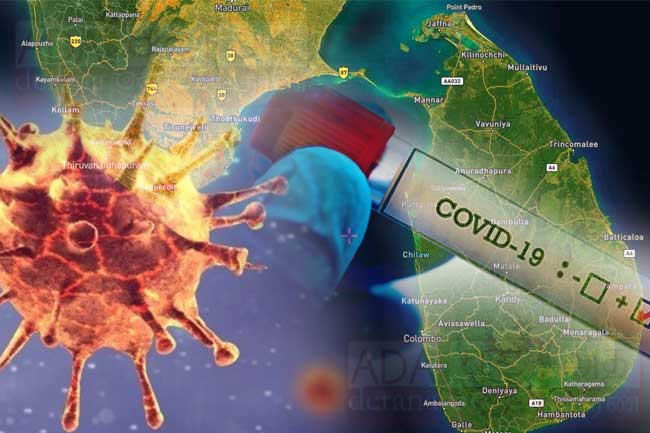
The Director-General of Health Services has confirmed 31 more COVID-19 related fatalities that have occurred yesterday (July 12).

The new development has pushed the official death toll due to the virus in Sri Lanka to 3,533.

According to the data released by the Department of Government Information, the new victims confirmed today include 15 females and 16 males.

None of them are aged below 30 years, five victims are between 30-59 years and the remaining 26 are aged 60 and above.

Posted in Uncategorized

edia Minister confirms seeking legal advice on Sirasa telecasts

Media Minister Keheliya Rambukwella says he has recently sought legal advice pertaining to what he calls the conduct of Sirasa TV.

Denying Opposition Leader Sajith Premadasa’s accusations that the government was conspiring to suppress Sirasa, Rambukwella, who is also the co-cabinet spokesperson, told The Island, the Samagi Jana Balavegaya couldn’t challenge his right to take action according to the law.

Responding to another query, Minister Rambukwella emphasised that he didn’t do anything clandestine. “I consulted our lawyers regarding a section of the media brazenly abusing their privileged status,” the Media Minister said, urging the media not to propagate lies.

Minister Ranbukwella alleged that some interested parties had reacted as if he had called in underworld elements to discuss the issue.

Minister Rambukwella said that he had not been present in Parliament last Wednesday (7) when the SJB Leader alleged a plot to deprive Sirasa of its transmission licence. A group of SJB lawmakers invaded the Well of the House in protest, following the Opposition Leader’s claim.

Rambukwella said that the government wouldn’t hesitate to take measures against any media organisation if it violated the law.

MP Premadasa urged the government either to confirm or to deny claims as regards alleged moves to suppress Sirasa. Minister Rambukwella confirmed that the Sirasa coverage of various developments had been discussed with lawyers.

A spokesperson for Sirasa asked how they could be faulted for factually reporting what was happening. Except for those who had been profited by various illegal and clandestine ventures turning a blind eye to various developments, independent media courageously reported events.

Former Director General of Government Information Department attorney-at-law Sudarshana Gunawardena said that instead of addressing the grievances of those who had been badly affected by shortage of fertilizer, massive ecological disaster caused by sinking of container carrier X-Press Pearl off the Colombo port and basically disruption of supply services due to rampaging Covid-19 epidemic, the government was bent on controlling the media.

Referring to strong condemnation the Bar Association of Sri Lanka (BASL) of police action against those engaged in public protests Gunawardena pointed out that the government was trying to discourage people from protesting. Sending those protesters who had been granted bail by courts to quarantine centers run by the military in Mullaitivu was aimed at achieving the government’s objective, he added.

Civil society activist noted that the Government Medical Officers’ Association (GMOA), too, has strongly criticized the Kotelawela Defence University Bill.

SJB MP Mujibur Rahman said that the situation was so bad the government couldn’t deceive the public by suppressing the media. The government was in disarray and quite clearly experienced difficulties it couldn’t cope with, he added. Accusing the government of mishandling the fertilizer issue, MP Rahman said the government was making a desperate effort to cover up the insufficient supply.

Duminda Silva meets Prime Minister at Temple Trees

Duminda Silva, a former Parliamentarian and convicted murderer who was recently pardoned, met Prime Minister Mahinda Rajapaksa at Temple Trees today.

Duminda Silva posted images of the meeting on his Facebook page.

Silva was granted a presidential pardon last month and was set free.

He was convicted over the murder of Presidential Advisor Bharatha Lakshman Premachandra in 2011.

The Colombo High Court sentenced Duminda Silva to death on September 8, 2016 for the murder of Bharatha Lakshman Premachandra.

However, in 2019 when the current administration took over there had been strong speculation that Duminda Silva will be freed.

A petition was also signed last year by several Government Parliamentarians seeking a pardon for Silva.

Electoral laws in SL should be consolidated into one code: Women Parliamentarians Caucus

The Women Parliamentarians Caucus has recommended that all electoral laws in Sri Lanka should be consolidated into one electoral code and should be proposed to the Parliamentary Select Committee on electoral law reforms to make necessary amendments in this regard.

The decision was taken at a recent meeting of the Women Parliamentarians Caucus chaired by State Minister Dr. Sudarshani Fernandopulle, in Parliament.

The MPs of Women Parliamentarians Caucus also agreed to propose a uniform electoral system for all elections in Sri Lanka (local, provincial, and national levels) with a uniform quota for womens representation

The Women Parliamentarians Caucus is proposing to the Parliamentary Select Committee on electoral law reforms to introduce specific legal provisions relating to the prevention of violence in elections, and more specifically violence against women in elections. The Caucus is also proposed to introduce legislation to strictly implement quotas for women in political party structures to create an enabling environment for women to be involved in governance.

In addition, the Women Parliamentarians Caucus has recommended regulations and accountability on campaign financing to ensure equal opportunities for participation. The caucus will also propose to increase the number of nominations for women to at least 30% in Parliamentary, Provincial Council and Local Government elections, as well as to ensure 50% representation of women in national lists of all parties.

The meeting was attended by members of the Women Parliamentarians Caucus MPs Manjula Dissanayake, Geetha Kumarasinghe, Muditha Prishanthi, Diana Gamage and Secretary to the Caucus, Deputy Secretary General of Parliament and Chief of Staff Kushani Rohanadeera.

Posted in Uncategorized

No change in stance on dual citizenship: Wimal

While claiming that silence itself was a voice, Industry Minister Wimal Weerawansa said there was no change in their stance in allowing dual citizens to enter Parliament.

The Minister told reporters that they expressed their objections to the matter concerning dual citizenship in the 20th Amendment to the Constitution and that their stance remained unchanged.

He said they did not protest against Basil Rajapaksa or any other entering Parliament.

Responding to a question, Weerawansa said it was important if Basil Rajapaksa could win the economic challenges.

“We don’t know if he could overcome the economic challenges. If he can do so, it will be vital,” he said.

Posted in Uncategorized

Protect Sri Lanka garment workers’ rights during pandemic – Human Rights Watch

The Sri Lankan government, factory owners, and the international clothes brands sourcing from Sri Lanka should protect the safety and employment rights of garment workers during the Covid-19 pandemic, Human Rights Watch said today.

The Sri Lankan government has used a strict lockdown, first imposed on May 21, 2021, and other measures, including travel bans and bans on public gatherings, to contain a fresh wave of Covid-19 cases. However, President Gotabaya Rajapaksa ordered garment factories to remain open. Trade unions and public health inspectors have reported numerous virus outbreaks in factories, as well as in the congested boarding houses where many workers live, and alleged that employers were under-testing and under-reporting cases to maintain production levels.

“Sri Lanka’s garment workers are entitled to work in safety and be properly paid even when they fall sick or need to quarantine,” said Meenakshi Ganguly, South Asia director at Human Rights Watch. “The government and employers should fully implement existing agreements and guidelines, be transparent about Covid-19 infections in factories, and provide for workers’ welfare instead of intimidating and silencing them.”

One in seven Sri Lankan women work in the garment sector, according to the International Labour Organization (ILO). There have been repeated outbreaks in garment factories since April. Yet, five labour rights activists from four organizations told Human Rights Watch they have received complaints from workers that factory managers pressured workers to work without adequate occupational health and safety measures.

All five said that numerous workers from different factories complained to them that they lost pay when they fell sick or needed to quarantine. The activists said that the police or military personnel had intimidated them to stop them from speaking out.

Following an October 2020 Covid-19 outbreak in a factory owned by Brandix Lanka Limited, the government made it mandatory for all factories to have a Covid-19 health committee, including management and workers’ representatives. As of early July, people interviewed said, most factories had not established the committees.

On October 25, the Sri Lankan government issued guidelines requiring garment factories to take occupational health and safety measures for ventilation, screening, testing, and isolating infected workers. Labour rights activists have consistently raised concerns in written statements that employers were flouting guidelines, despite government claims that health measures are enforced. “Labour rights are reserved to a piece of paper,” one activist said, adding that workers, “are scared of losing their jobs, so even when they have symptoms they continue to go to work.”

Another labour activist said, “If factories are aware of a positive test, they don’t do anything about it or share the information” with health authorities. An activist who had assisted workers who were sick with the virus said, “The employers are busy with their orders and workers are not given PCR [Covid-19] tests, because if they are positive, they will not be able to employ them in production.”

Many, though not all, garment factories in Sri Lanka are located within industrial areas called Free Trade Zones (FTZs). Systematic data on Covid-19 cases in the garment sector, which contributes 6 percent of Sri Lanka’s GDP and 44 percent of exports, is not available.

On May 20, a court in Galle detained a manager from the Koggala FTZ on charges under the Quarantine and Prevention of Diseases Act, after the manager allegedly concealed information and failed to follow instructions from public health officials following an outbreak in the factory. Although this prosecution was unusual, activists told Human Rights Watch they believed factory violations of quarantine rules are widespread.

In April, police dispersed a workers’ protest outside a factory in Bingiriya, where the management was alleged to have kept staff working despite an outbreak. On July 8, trade unionists were detained at a labour rights protest in Colombo and forcibly taken to a Covid-19 quarantine facility, two days after the government banned public protests on purported public health grounds.

Quarantine facilities are run by the Sri Lankan military, which the government has placed in control of its response to the pandemic. When employees are sent to quarantine facilities, their absence is typically deducted from their annual allowance of 14 days unpaid leave.

Following the major outbreak at a Brandix factory in October, trade unions filed a complaint with the Human Rights Commission of Sri Lanka alleging that soldiers “rounded up” 98 workers in the middle of the night and arbitrarily detained them in an unsanitary quarantine facility. In response, the army accused the complainants of pursuing “hidden plans,” and said the military should not be “insulted or downgraded.” Human Rights Watch wrote to Brandix seeking information about the October outbreak but received no response.

Many factories have hired former army officers in management roles, and their tendency to enforce military-style discipline has “instilled fear” in workers, activists said. One activist said that she was threatened earlier this year by a garment factory manager, a retired army officer, who called her and told her he had “dealt with terrorists” and warned against “raising issues.”

The labor rights activists also reported increased surveillance and intimidation by government security agencies. One woman said military intelligence asked her organization why it had spoken to the international media. Another activist said that members of the police Criminal Investigation Department visited her office in April.

“It’s very risky for anyone to talk about these things,” one activist said. “People are very afraid to speak out,” said another.

The government has also taken formal steps to prevent the sharing of information related to the pandemic. In May, the health secretary, Maj. Gen. Dr. S H Munasing, issued a circular banning health officials from speaking to the media, because they were allegedly sharing “incorrect” information and “criticizing health policies.”

In June, the police issued a statement entitled “circulation of fake news, photographs, videos causing disunity, hate and obstructing the Covid-19 programme.” The Bar Association of Sri Lanka said the powers cited “could be misused by police officers in order to stifle the freedom of speech and expression.”

Security force intimidation of workers is particularly acute in the Tamil-majority north of Sri Lanka, which has remained heavily militarized since the end of the civil war in 2009. In Maruthankerny, security officials reportedly told workers they would lose pay and benefits if they did not report for work, despite safety fears related to the spread of Covid-19.

Most garment workers in FTZs live in crowded boarding houses operated by private landlords. Workers’ representatives said that because people with suspected or confirmed cases of Covid-19 are frequently not placed in isolation but instead sent back to their boarding house, there is a risk of transmitting the virus among workers of different factories who live in the same building.

Many garment workers come from parts of the country different from where their factory is located, so they do not qualify for the Rupees 5000 (US$25) relief packages distributed by local governments to low-income workers whose incomes have been affected by the pandemic.

The government and factory owners should take effective steps to isolate workers who test positive, and ensure that those receiving treatment or in isolation or quarantine receive full pay, Human Rights Watch said. Relief packages should be distributed to workers irrespective of which part of the country they come from, and safety measures and guidelines previously agreed upon with worker representatives should be followed.

Attempts to intimidate or coerce workers and their representatives, attacks on freedom of association, including the right to join a trade union, and attempts to stifle freedom of expression, should be immediately withdrawn. Foreign companies that buy clothes from Sri Lanka, and trading partners, including the European Union, whose GSP+ trading arrangement includes commitments to uphold labour rights, should press Sri Lanka to adhere to its commitments.

International and local labour rights groups from numerous countries have started a campaign for brands to help support workers and shore up social protection systems by joining a Wage Assurance Fund and Severance Guarantee Fund. Brands should support such initiatives, Human Rights Watch said.

Sri Lankan garment manufactures have applied for loans from the International Finance Corporation (IFC), a part of the World Bank Group. The IFC should rigorously ensure that companies receiving loans adhere to its performance standards on labor and working conditions, and uphold fundamental labour rights enshrined in ILO conventions, including freedom of association and collective bargaining.

“Sri Lankan garment workers don’t just provide for their families, they help to keep the entire economy afloat during these very difficult times,” Ganguly said. “Their safety needs to be protected and their rights respected by the global garment industry that relies on their labour.

NFF threatens to vote against Kotelawala Bill!

The Government affiliated National Freedom Front (NFF) has informed that they would vote against the proposed Kotelawala Defence University Bill if the provision allowing the establishment of private medical colleges is not removed.

State Minister and Deputy Chairman of the NFF – Jayantha Samaraweera says that he has informed minister Chamal Rajapaksa about this.

He has told the media that due to the protests against the Bill and the NFF’s stance in this regard, it has been compelled to postpone the Bill until August.

He has also emphasized that his party will not agree in any way to establish a private university through this Bill.

The leader of the NFF is Minister Wimal Weerawansa.

Posted in Uncategorized

The JVP congratulates China’s communists – The Island

The JVP’s congratulatory message to the Chinese Communist Party over the latter’s centenary seems a tad disconcerting. This is the same party that rails against “Chinese colonisation” in this country, the same party that worries about the country’s ruling elite modelling itself on the Chinese state. Reading the message, one rubs one’s eyes: in around 430 words, it praises the CPC for its efforts to bring “modernity and prosperity” to the Chinese people, for saving them from the clutches of “feudal overlords” a hundred years ago, and for taking the lead in the fight against Western imperialism. As befits such hopeful messages, it concludes on a hopeful note, with its belief that the Communist Party will strengthen “coordinated work among the Left parties to lead the world towards Socialism.”

Clearly, more than a mere rift between rhetoric and practice marks the JVP’s attitude to China. Yet its message to the CPC should not be viewed in isolation: it’s a reflection of other parties and their Janus-faced responses to the China question.

All the same, it’s intriguing how oppositional outfits, despite their anti-China rhetoric, keep going back to China in one sense or the other. The JVP is a case in point: this is not the first time it has despatched a congratulatory message to the much maligned monolith that is the CPC. In 2017, for instance, it sent a message to the CPC’s 19th National Congress, in which it not only referred to Xi Jinping as “Comrade”, but lauded the party’s efforts at establishing a “moderately prosperous society in an all-round way.”

These sentiments are, no doubt, in keeping with the JVP’s Maoist roots. But they remain a far cry from the JVP’s present conjuncture; it’s no coincidence, perhaps, that while the party badmouths China’s leaders in the vernacular, mostly in Sinhala, it despatches, and publishes, its congratulatory messages to those same leaders in English.

Perhaps it assumes that the Chinese aren’t familiar with Sinhala, or that they are tolerant of opposition parties badmouthing them in public within the country. Whatever the reason, it must be acknowledged that ambivalent though its response to China may be, such ambivalence is hardly the JVP’s preserve. Champika Ranawaka’s 43 Senankaya, for instance, borrows many of its political ideas from China’s example, in particular the achievements of Deng Xiaoping’s reforms; Mr Ranawaka correctly, and lucidly, contrasts the latter reforms with the oligarchy and family bandyism that have come to pass for development here today.

As for the SJB, the anger at Sajith Premadasa’s refusal to give a direct answer to an Indian (WION) journalist over her questions about Chinese footprints in Sri Lanka is an indication of where certain critics of this regime want his party to go: down a petty, pro-West path, in line with the UNP’s policies during the yahapalana years. Mr Premadasa’s measured reply shows that the SJB, far from embracing those policies, is firmly rejecting them.

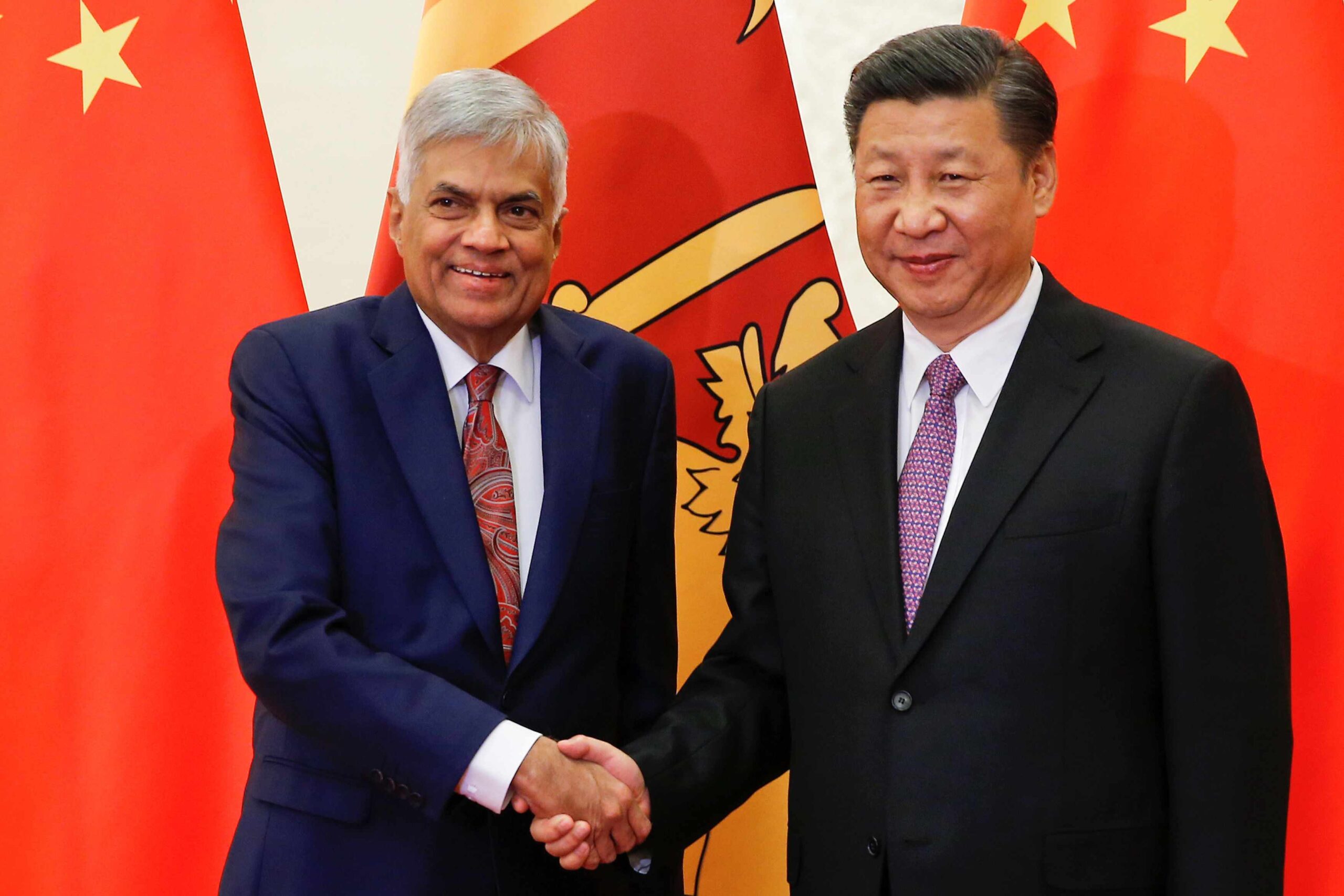
In fact, the only parties which seem consistent in their opposition to China’s presence in Sri Lanka are the TNA and the UNP; thus a TNA MP summons fears of “Cheelamism” against the Port City Bill, while sharing an image of what he alleges to be a Chinese worker in the north on Twitter (which he later takes down when it’s shown to be a Sri Lankan). Surprising as it may seem, the UNP, by contrast, is not too intense over China; thus none less than Mr Ranil Wickremesinghe praises Beijing for its “role in preserving peace”, adding that Sri Lanka “has also benefited in a very big way.” This represents a turnaround for the UNP, even though it does not detract from the China-bashing it indulged in not too long ago.

What distinguish the almost hysterical responses of these parties to China from the more rational, reasoned responses of every other party, including the SJB, are the lines of critique they take with regard to the regime’s dalliance with Beijing. There are, at present, two such lines the opposition can opt for: it can critique the politico-military-security risks the regime is opening itself to through its ever growing proximity to China, or it can critique China itself from a human rights, liberal democratic, Western lens.

The second line should be dropped and abandoned, and the first preferred to all other lines. This is not because we are, or should be, beholden to Beijing, but because Beijing’s political power and economic clout cannot, and must not, be ignored.

The logic of Sri Lanka’s critics of China is that we should look to the West for better values, such as human rights, the rule of law, and a free press. But to stake a country’s hopes on the fulfilment of these objectives, while foregoing on the more urgent imperatives of economic and national security, indeed of state and popular sovereignty, would be as short-sighted as thinking a country can plug itself to China’s meteoric rise forever.

There is much to learn from China, and not (just) in matters of security. Dayan Jayatilleka puts it best: “China is the role model of the Gotabaya regime only in the security realm, not the socio-economic.” Deng Xiaoping’s reforms, mistakenly assumed to have been on par with Western neoliberalism, provide us an ideal case study of how to liberalise an economy while liberating it from dependence on the West. Xi Jinping is demonised and vilified today, by the Western press, for the same reason Deng was viewed cynically, with much disfavour, by that press decades ago: because his reforms are bolstering Beijing’s prospects as the West’s, particularly the US’s, most formidable peer competitor.

It goes without saying that one must take such briefings with a pinch of salt. Only then can we come up with a critique of Sri Lanka’s tilt to China which pinpoints this regime’s failures without demonising the only all-weather friend we have.

That is why Dr Dayan J’s critique of Mangala Samaraweera’s barely disguised diatribe against China stands out. What is interesting about Mr Samaraweera’s piece, published in this paper last week, is that it inverts China’s political history against its present situation.

Samaraweera dwells at considerable length on the Opium War, the Nanjing Treaty, and the Century of Humiliation, and depicts all these as the backdrop against which Beijing seeks to dominate the world today. He cautions the present government against taking isolationist stances on the world stage and advises it against getting closer to China. There is a cosmetic critique of Western colonialism – which, he says, civilised savages (in what way, he does not say), but at a cost to the natives of the colonies – yet what he does with this important point isn’t so much as to critique Western colonialism’s successor, neocolonialism – as logic would dictate – as it is to raise the alarm about Bejiing’s imperial ambitions.

The question of whether China is dominating the world on Western colonial lines has been answered by several Western academics, writers, and journalists. Jacobin Magazine puts it in perspective in a recent piece: “China Is Not the Enemy — Neoliberalism Is.” The Socialist Equality Party, no friend of the Gotabaya regime, has noted the bankruptcy of propagating Western myths about Beijing’s ambitions when critiquing matters concerning symbols of Sri Lanka’s proximity to China, such as Port City. Much closer to home, Dr Dayan J distinguishes between China’s largely assumed colonial ambitions and its inescapable political influence, deconstructing Samaraweera’s interpretation of Cold War history.

These interventions show that it is possible to criticise the government without depicting a dependable ally (whose views on sovereignty, as Dr Dayan noted in an interview with Sergei De Silva-Ranasinghe in Policy Magazine, makes for much value congruency with Sri Lanka) as a fire-breathing dragon hell-bent on dominating the country’s political life; to put it pithily, a critique of the government’s proximity to China which places emphasis on the government’s agency rather than on Beijing’s supposed “sinister designs.”

The SJB, hopefully, is evolving on these fronts, throwing out what didn’t work for the UNP and embracing a new set of policies. The JVP should evolve on similar lines as well, but as I noted in my piece on that party a few weeks back, its confused response to China masks an almost schizoid attitude to politics. Perhaps the best summing up of this attitude would be that while the JVP, which sent those congratulatory missives to the CPC, is officially tied to a socialist worldview “under the guidance of Marxist-Leninist theory and practice” against the forces of “capitalism and imperialism led by the USA and its allies”, the JVP’s parliamentary outfit, the NPP, stands on a Kautskyist (an authoritative promulgators of orthodox Marxism after the death of Engels) social democratic base which does not shy away from attacking the very communist parties and allies it wishes well elsewhere.

The JVP’s problem is that it does not seem able to define itself. As things stand, it does not know where to stand. On China as on politics in general, it has lost the thread. Other parties have shown the way for the opposition, at least when it comes to China. If the JVP does not follow this course, it will lose itself. It should course-correct now.

The writer can be contacted at udakdev1@gmail.com

UN envoy in Sri Lanka defends right to hold peaceful demonstrations

The United Nations (UN) envoy in Sri Lanka has defended the right to hold peaceful demonstrations.

UN Resident Coordinator Hanaa Singer tweeted saying the right of assembly includes the right to hold peaceful demonstrations.

“It helps exercise other rights; freedom of expression & influence public policies. Vital that restrictions imposed as measures against the pandemic don’t go beyond the legitimate protection of public health,” she said.

Singer’s tweet comes after the Bar Association of Sri Lanka (BASL) had said that quarantine is a health precaution and should not be used as a punishment or mode of detention.

The BASL wrote to the Director General of Health Services, Dr. Asela Gunawardena and Inspector General of Police (IGP) Chandana D. Wickramaratne with regards to the arrests and detention of protestors by the Sri Lanka Police ostensibly for violating Health Regulations relating to COVID-19.

“As such quarantining has necessarily to relate to a person who has contracted the disease or is suspected to have contracted the disease and to no other. Clearly, quarantine is a health precaution and should not be used as a punishment or mode of detention,” the BASL said.

The BASL raised concerns on the excessive force used by the Police in dealing with the protestors.

The Director General of Health Services was urged to ensure the health guidelines are not abused in a manner which has a chilling effect on the freedom to dissent.

The BASL has also urged the IGP to direct the Police to refrain from arresting and detaining persons who are exercising their peaceful right to protest.

Lanka goes to IMF for US$ 800m

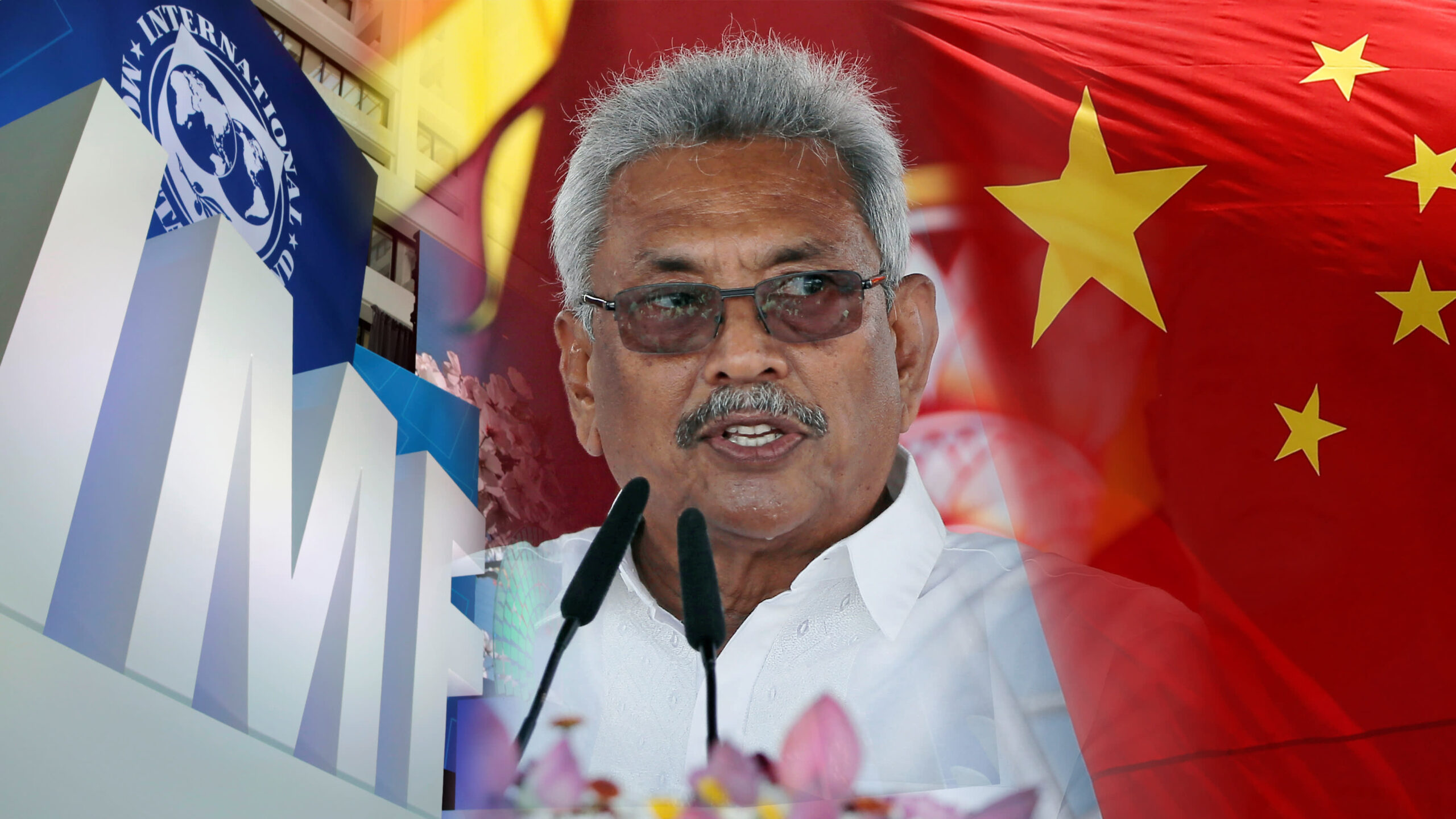
Sri Lanka will apply to obtain up to USD 800 million worth of reserves from the International Monetary Fund (IMF) under the Special Drawing Rights (SDR) facility during August-September.

A senior Treasury official said that under the current allocation, Sri Lanka should obtain reserves amounting to about USD 800 million. The SDR is an international reserve asset created by the IMF in 1969 to supplement its member countries’ official reserves. The value of the SDR is based on a basket of five currencies — the US dollar, the euro, the Chinese renminbi, the Japanese yen, and the British sterling pound.

The SDR is deposited with the Central Bank of Sri Lanka’s (CBSL) reserve to stabilize the country’s foreign reserves over the next few months, a senior CBSL official said. After Sri Lanka obtains the SDR, it sells the dollars to countries that purchases dollars, usually the US dollars.

The SDR will be vital to stabilise foreign reserves as the country has to pay off a sovereign bond repayment of USD 1 billion this month, the official pointed out. As of now, the country’s foreign reserves have dwindled to USD 4.2 billion.

The CBSL official, however, said the country would still need at least three investments amounting to at least USD 400 million each even with the SDR to offset the country’s immediate dollar shortage.

Meanwhile, the Finance Ministry has submitted a Cabinet paper proposing that an amnesty be declared for the public to bring in any undisclosed funds to Sri Lanka. Once those funds are declared, only a 1 percent tax will be declared on them, subject to the rest of the funds being invested in the country. The amnesty is proposed to be in effect till December 31, 2021.

Treasury officials are hoping that the proposal will be approved and the measure implemented by the end of this month.

The Treasury has also put on hold a CBSL proposal to impose a ban on what it terms ‘luxury items, such as mobile phones, TVs and refrigerators. The CBSL’s contention had been that there were enough stocks of these items available in the country for the next six months. However, the proposal has now been put on hold after it was leaked to the media, causing a public outcry.