Another 34 COVID-related deaths confirmed in SL

34 persons have succumbed to the novel coronavirus during the past 24 hours.

The Department of Government Information said Sri Lanka’s COVID-19 related death toll has accordingly increased to 3,191.

21 males and 13 females were among the group that succumbed to the virus yesterday.

28 individuals among those who succumbed were identified as 60 years or above while six victims were between 30 and 59 years of age.

A plea for justice for Sri Lankan Tamil refugees By V Suryanarayan

The magnificent victory of the DMK and the assumption of office by MK Stalin as the Chief Minister marks a turning point in Tamil Nadu politics. The election campaign and assurances given in the manifesto have raised hopes of the people in the state for a clean, corruption-free and efficient government and establishment of an egalitarian social and economic order. The ambition of the father of our nation was to remove the tears from every eye. It may be beyond our reach, but as long as there are tears, our work would not be complete.

In particular, the government should pay attention to the tragic plight of the nearly 1,00,000 refugees, both living in camps and outside. They have been living between fear that they would have to go back to Sri Lanka with an uncertain future and the hope that they would be conferred Indian citizenship and given a chance to get assimilated with the local people.

The DMK manifesto has succinctly spelt out two interrelated issues of the refugee predicament. On the question of voluntary repatriation of refugees, the manifesto has pointed out that the Government of India “should make arrangements and extend all support to those who wish to return to Sri Lanka”. Voluntary repatriation could be sped up if shipping service is immediately resumed between Rameshwaram and Talaimannar. The refugees could be allowed to take back, without duty, all that they have acquired over the years, such as almirahs, gas stoves, bicycles, motorcycles and three wheelers. At present, repatriation takes place through air and naturally there is a limit to what the refugees could carry back to Sri Lanka.

Repatriation is taking place at a snail’s pace. According to UNHCR sources, between 2002 and 2020, 17,718 refugees have been repatriated. According to the Policy Note 2019-20, between 2014 and March 2019, only 4,017 refugees have gone back to Sri Lanka.

Secondly, the state and Central government should impress upon Sri Lanka to confer special privileges on repatriates. It may be recalled that New Delhi conferred on displaced persons from Pakistan, for a period of 50 years, free land for the construction of houses, government loans, free medical aid, scholarships for education and reservation in government jobs. Unfortunately there is no such demand in Sri Lanka. Even the Tamil National Alliance is silent on the issue.

On the second issue, the grant of Indian citizenship, the manifesto highlights the necessity to “grant citizenship to Sri Lankan Tamils, Indian-origin Tamils (hill country Tamils) and their descendants who are in India as refugees for more than 30 years”. For the first time, a distinction has been made between Sri Lankan Tamils and Indian-origin Tamils. All Sri Lankan Tamils are Sri Lankan citizens, and, if they want to acquire Indian citizenship, would have to renounce Sri Lankan citizenship. As far as Indian-origin Tamils are concerned, many of them are stateless. It may, however, be pointed out that the Sri Lankan government had enacted a legislation in 2003 by which all Indian Tamils—stateless as well as the residue of the Sirimavo-Shastri Pact—could acquire Sri Lankan citizenship. My interactions with the refugees, spread over many years, have made me realise that the overwhelming majority would like to acquire Indian citizenship. This is especially true of the younger generation who are born in India.

The question of grant of Indian citizenship has to be analysed in the backdrop of the welcome changes introduced by the Narendra Modi Government in refugee policy. India’s refugee policy, during the earlier period, was based on three premises that Jawaharlal Nehru spelt out in the Lok Sabha in 1959 with reference to Tibetan refugees: 1) India’s hope to maintain cordial relations with China; 2) protection of the territorial integrity and security of India and 3) India’s deep sympathy for the people of Tibet. The BJP had always been concerned about the plight of Hindus and Sikhs, who had been persecuted by the Islamic states of Pakistan, Afghanistan and Bangladesh and had sought asylum in India. The result is the Citizenship Amendment Act that was enacted in 2019.

There are two obstacles in the way of Sri Lankan refugees acquiring Indian citizenship. The first is a circular issued by the Government of India to the Government of Tamil Nadu in 1983 that Sri Lankan refugees are not entitled for Indian citizenship. We should immediately demand that this circular be withdrawn so that the refugees could apply for Indian citizenship by naturalisation. The second is on the legal status of the refugees. Answering a question in the Rajya Sabha a couple of years ago, the home ministry clarified that their status is that of illegal immigrants. And, according to Union Home Minister Amit Shah, “An illegal migrant is not eligible to acquire citizenship by registration or naturalization.” We should demand that Tamil refugees be treated on par with the refugees who have sought asylum in India from Pakistan, Afghanistan and Bangladesh.

Why is New Delhi discriminating against Tamil refugees? Home Minister Amit Shah declared that Pakistan, Afghanistan and Bangladesh are theocracies, whereas Sri Lanka is not one. Is systematic discrimination and ethnic violence in Sri Lanka different from that suffered by the Hindu and Sikh minorities in Pakistan, Afghanistan and Bangladesh? Though constitutionally, Sri Lanka is not a theocracy, the Constitution stipulates that it is the duty of the state to protect and foster Buddhist religion. According to Hindu organisations, nearly 200 Hindu temples have been desecrated by Buddhist goons since the dawn of independence. It was the burning alive of a Brahmin priest in Panadura, among other things, that made LTTE founder Prabhakaran take up arms against the government. Arson, murder, loot and rape, whether committed by a Muslim or a Buddhist, remain the same. A criminal does not become a saint if he is a Sinhala Buddhist.

In a landmark judgment delivered on 17 June 2019, Justice G R Swaminathan of the Madurai Division of the Madras High Court instructed the Indian government to consider the applications for citizenship submitted by Indian-origin Tamil refugees living in the Kottapattu camp. Two years have elapsed, but the Kumbakarnas in the home ministry have not woken up. This is an appropriate time for the TN government to appeal to the Supreme Court for the issue of a writ of Mandamus to compel the home ministry to implement the recommendations of Justice Swaminathan.

I had the good fortune to interact with the Malaiha Tamil refugees in the Kottapattu camp on several occasions. They live, as I stated earlier, between fear and hope. We in Tamil Nadu can understand their predicament only if we realise that we can all become refugees. As Benjamin Zephaniah, the refugee poet, has written: We can all be refugees, nobody is safe. / All it takes is a mad leader or no rain to / bring forth food. We can all be refugees. / We can all be told to go. We can be hated / by someone for being someone.

V Suryanarayan
Founding Director (Retd), Centre for South & Southeast Asian Studies, University of Madras
(suryageeth@gmail.com)

Posted in Uncategorized

Sri Lanka and Russia discuss ways to boost economic and technical cooperation

A meeting of the Co-Chairs of the Sri Lanka-Russia Intergovernmental Commission on Trade, Economic, Scientific and Technical Cooperation took place in a video conference format on 15 June.

The Co-Chairs discussed the development of existing and promising areas of cooperation in detail at the meeting.

The Russian side was headed by Federal Agency for Fishery Head Ilya Shestakov and represented by the officials from the Federal Agency for Fisheries, Ministry of Economic Development, Federal Customs Service, Ministry of Energy, Ministry of Industry and Trade, Rosinfokominvest JSC.

The Sri Lankan side was headed by Ministry of Trade Secretary Badrani Jayawardana and represented by officials from the Ministry of Trade, Foreign Ministry, Department of Commerce and Sri Lanka Embassy in Russia.

In his welcome speech, Co-Chair of the Russian side Ilya Shestakov emphasised that Sri Lanka was a longstanding and reliable partner of Russia in South Asia. He further stated that Russia was convinced that cooperation between the two countries had a significant potential for further development and it was prepared to work together with Sri Lanka for the successful implementation of the areas agreed by both parties.

In her opening remarks, Co-Chair of the Sri Lankan side Badrani Jayawardana mentioned that Russia being a longstanding trading partner with Sri Lanka, it was obvious that a number of untapped opportunities are available to expand bilateral trade. Further, both sides would be able to strengthen ties in other areas such as investment, tourism and science and technology through proceedings of the Intergovernmental Commission.

The Russian side agreed for further cooperation in the customs affaires and assistance for mutual trade. Cooperation in the fields of energy, chemical, pharmaceutical and agriculture were also discussed. The importance of organising the proposed working group on agriculture between the two countries and the Russian-Sri Lankan Fisheries Commission at the earliest, was highlighted. Cooperation in the IT sector was also in the agenda of the meeting.

The Sri Lankan side outlined in detail about ways and means of expanding market access in the gem and jewellery sector, Ceylon tea, and fisheries sector in the Russian market, and briefed on the issues that are faced by Sri Lankan partners. In the sphere of technical assistance, the Sri Lankan side requested R&D for improvement of the pharmaceutical sector, agro-based products, cooperation in the establishment of food safety management facility and improving of its standards.

The Russian side proposed, if the sanitary and epidemiological situation permits, to hold the third session of the Sri Lanka-Russia Intergovernmental Commission on Trade, Economic, Scientific and Technical Cooperation in offline format during autumn 2021 in Moscow. The Co-Chairs meeting was concluded with remarks that the forthcoming third session of the Sri Lanka-Russia Intergovernmental Commission would be the right platform to discuss, at length, the ways and means of enhancing the bilateral cooperation between the two countries.

Champika Ranawaka says he is now ready to give leadership

SJB MP Patali Champika Ranawaka yesterday said the ‘43rd brigade’, the movement led by him, is ready to give leadership to a common political platform against the ruling party.

Mr. Ranawaka told a press conference that he had already explained about the 43rd Brigade to Opposition Leader Sajith Premadasa on the role played by it.

“Mr. Premadasa is not involved in the 43rd Brigade. But we have already informed him about the role played by the 43rd Brigade,” he said in response to a question raised by journalists. “I don’t believe in individual playing. Therefore I would like to say that 43rd Brigade is ready to give the leadership to a common political platform against the present government. The 43rd Brigade is involved in building a new breed of leaders who would become an alternative to the present government,” he added.

Mr. Ranawaka said political movements such as Pivithuru Hela Urumaya led by Minister Udaya Gammanpila are invited to join a common platform against the present regime.“we will not invite individuals to join the common platform but would like to invite other political movements to join us,” he said in this regard.

Posted in Uncategorized

Public dismayed by actions of Govt -SLFP

The Sri Lanka Freedom Party says the youth and the general public are dismayed by the actions of the Sri Lanka Podujana Peramuna-led government.

Senior Vice President of the SLFP Prof. Rohana Luxman Piyadasa said the country is facing a political and economic crisis, at present.

Speaking to media in Kandy today, Prof. Rohana Luxman Piyadasa said the public will continue to keenly observe the moves of the government which promised to usher in an era of prosperity.

On a separate note, Rohana Luxman Piyadasa said the government started attacking the constituent parties of the SLPP-led alliance during the last Parliamentary election.

He said the SLFP arrived at separate agreements with the President and the SLPP before the election but they were violated as soon the new government was formed.

Rohana Luxman Piyadasa said the SLFP did not received the number of Ministerial and the national list posts, as agreed before the election.

He said former Minister Basil Rajapaksa was at the forefront in creating issues between the SLPP and SLFP.

Rohana Luxman Piyadasa said the SLPP members have now stated attacking other political leaders within the alliance and are even attempting to remove Minister Udaya Gammanpila from his post.

He added that although Basil Rajapaksa is expected to return to Parliament and become a Minister, it is unlikely that the public will receive massive concessions.

Posted in Uncategorized

Duminda pardon: Slain former Sri Lanka MP’s family reluctant to go to int’l community

Slain former Sri Lanka MP Bharatha Lakshman Premachandra’s family has expressed reluctance to take the matter of the controversial presidential pardon granted to murder convict Duminda Silva before the international community.

Premachandran’s widow Sumana Premachandra told reporters Friday (02) that the family does not wish to hurt Sri Lanka’s standing in the world which has already taken a beating over a number of issues.

“We have been thinking about it. Sri Lanka is becoming unpopular in the international community for various reasons. If we take this issue before them, it will further affect things like GSP Plus and foreign loans,” she said.

The European parliament adopted a resolution on June 10 calling for the repeal of Sri Lanka’s Prevention of Terrorism Act (PTA) and inviting the European Union (EU) Commission to consider temporarily withdrawing Sri Lanka’s access to the Generalised Scheme of Preferences Plus (GSP+) concession.


International organisations have criticised the move. The United Nations Human Rights Commission said Silva’s pardon is another example of selective, arbitrary granting of pardons that weakens rule of law and undermines accountability.

The Human Rights Watch said on June 29 that Silva’s release highlights the need for genuine rule of law in Sri Lanka.

Mrs Premachandra said since the release of Silva, civil society activists, human rights groups and friends from Sri Lanka and abroad have been asking the family about their next step.

“It is the poor people in the country who will have to face the consequences. Not the president or those dreaming about becoming president or the Rajapaksa royal (raja) family,” said Premachandra.

However, the family has yet to arrive at a final decision, she said.

Silva’s release could also pose a threat to the lives of her family, said Premachandra.

“If any harm comes on any of us, President Gotabaya Rajapaksa should be responsible for it,” she said.

Premachandra said that the Bar Association of Sri Lanka (BASL) and her daughter former MP Hirunika Premachandra have written to President Gotabaya Rajapaksa seeking an explanation on the legal basis of Silva’s pardon.

“The president has not responded to either of the letters. I hope he’ll at least respond to the BASL,” she said.


Silva was released from prison on a “special presidential pardon” on June 24. The former MP, along with two others, was sentenced to death over the murder of Premachandra that occurred in 2011. Silva’s release from prison had been speculated since the change of government in 2019, though no such move had been initiated until last month.

Posted in Uncategorized

Schools with less than 100 children to reopen in July: Minister

The Education Ministry is hoping to launch a practical program to open schools with less than 100 children in July following recommendations from the health sector, Education Minister, Professor GL Peiris said.

He said the Ministry came to such a decision after having a discussion with the President yesterday. The above decision was taken as the first step and in the face of the urgent need to re-open schools that have been closed due to the COVID epidemic and with the aim of providing education to all.

Accordingly, 2,962 schools, including 1,439 schools with less than 50 children, and 1,523 schools with 51-100 children, will be re-opened in July. Other schools are expected to open as part of a special plan.

To implement the decision, the President said that it was compulsory to vaccinate all teachers in the first place before re-opening the schools, the Minister said.

Providing vaccinations for teachers, officials and principals, parents will be able to send their children to school with confidence.

Posted in Uncategorized

Gazette notification issued, outflow of forex restricted

A special gazette notification has been issued to restrict the flow of foreign currency out of the country.

The relevant gazette notification has been issued with the signature of Prime Minister Mahinda Rajapaksa.

Accordingly, remittances from an asset in Sri Lanka and funds received by an emigrant as cash prizes under the Migration Allowance, have been suspended.

It also limits the repatriation of emigrant funds to a maximum of US $ 10,000 or its equivalent, while the general immigration allowance for migrants is limited to a maximum of US $ 30,000 or the equivalent at the relevant time.

The relevant gazette notification has taken steps to subject the repatriation of migrant provident funds, pensions or such benefits to a maximum of US $ 30,000 or equivalent.

The issuance of reciprocal remittances or foreign exchange for Sri Lankans who have obtained residence or temporary residence visas in a country other than Sri Lanka is limited to a maximum of US $ 20,000.

Sri Lanka informs EU of action to review PTA and discusses GSP+

The Government of Sri Lanka has apprised the European Union (EU) of progress in specific areas of reconciliation, as part of its regular engagement and dialogue with the organization, said the Foreign Ministry of Thursday (01).

Accordingly, the Foreign Ministry on 25th June, informed the EU of action underway to revisit provisions of the Prevention of Terrorism Act, No 48 of 1979, with the study of existing legislation, past practice, and international best practices.

The EU was informed of the decision made by the Cabinet of Ministers on 21st June to appoint a Cabinet Sub-committee and an Officials Committee to assist the Cabinet Sub-Committee, to review the PTA, and to submit a report to the Cabinet within three months, it added.

The EU was further informed of the granting of pardon by the President, exercising his powers in terms of Article 34 of the Constitution, to sixteen (16) former LTTE cadres convicted and serving sentence under the PTA, on 24 June. The organization was also apprised of the process that has been set in motion to release detainees who have been in judicial custody for a prolonged period, under the PTA.

With reference to progress in ongoing reconciliation mechanisms, the Government has informed the EU of the release of Rs 79 million to the Office of Reparations in June to settle 1,230 processed claims for reparation. An addition, Rs 80 million was released on 29 June to settle a further 1,451 processed claims, out of a total 3,389 processed claims.

The Government of Sri Lanka maintains a regular, cordial and multifaceted dialogue with the EU. This includes the constructive cooperation existing between Sri Lanka and the European Commission on the review of the country’s EU GSP+ compliance with the 27 core International Conventions.

In this regard, the Third Cycle of Review of Sri Lanka in the GSP+ Monitoring Process for 2020-2021 is ongoing. As part of this process, the Foreign Ministry has provided to the European Commission through diplomatic channels, the comprehensive Response of the Government of Sri Lanka to the List of Follow-up Questions on the current GSP+ monitoring cycle, in adherence to the agreed timeline. The Response was compiled by the Foreign Ministry in consultation with 26 line ministries / state ministries / agencies and commissions. A GSP+ Monitoring Mission for the Third Cycle is scheduled to visit Sri Lanka on mutually convenient dates in September/ October 2021.

As per the regular engagement between Sri Lanka and the EU, plans are underway to convene the Working Group on Governance, Democracy, Human Rights and Rule of Law on mutually agreed dates in the fourth quarter of this year. The Foreign Ministry looks forward to convening, in consultation with the EU, the 24th session of the EU-Sri Lanka Joint Commission in the first quarter of 2022, to review all aspects of bilateral cooperation.

The Government of Sri Lanka will continue its close and cordial dialogue with the EU with regard to commitments, while demonstrating the country’s substantial progress in areas of reconciliation and development.

Foreign Minister Dinesh Gunawardena and Foreign Secretary Admiral Prof. Jayanath Colombage have met senior representatives of the Joint Apparel Association Forum (JAAF) Sri Lanka, the Seafood Exporters’ Association of Sri Lanka (SEASL) and trade unions, and reassured them of the Government’s commitment to ensuring that the EU GSP+ would continue to remain beneficial to the country. Meetings with the relevant Chambers of Commerce are scheduled, with a view to updating them on the Government’s engagement with the EU.

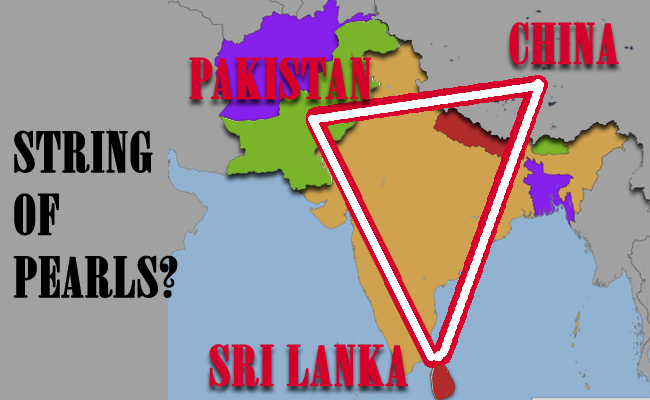
Sri Lanka morphing into ‘Xi-Lanka’?

As the Communist Party of China (CPC) celebrates 100 years of its founding today, much has been said and written about Communist Chinas infrastructure and development activities in Sri Lanka. While commentaries have waxed eloquent on how Sri Lanka’s landscape is being transformed, precious little has been done to critically examine whether the average Sri Lankan on the street has actually benefited.

CPC-funded projects in Sri Lanka are executed by Chinese entities and undertaken using equipment, machinery, and material from China. A significant proportion of labour and most of the top management is also from China. In effect, while Sri Lanka pays for the project, plough-back is into Chinese coffers.

Chinese infrastructure projects have also been associated with a steep rise in Chinese imports into Sri Lanka and reduction of exports to China. This has resulted in a growing trade deficit with China, putting tremendous pressure on the Sri Lankan Rupee.

The only way to offset this trade deficit is by substantial export-oriented Foreign Direct Investment (FDI) flowing into Sri Lanka from China, which is unfortunately not in the Chinese scheme of things.

Chinese projects have also not provided any significant benefit to the average Sri Lankan. More often than not, these are vanity projects, which have been used by powers-that-be for enrichment of self, kith, and kin.

The Lotus Tower, cricket stadium and port at Hambantota and Mattala airport have had no impact on the citizens, who are left struggling with rising prices and dropping income.

The $104 million Lotus Tower was inaugurated in September 2019 with much fanfare. Yet, as with other Chinese projects, it was mired in controversy, with then President Maithripala Sirisena claiming that Chinese contractors were absconding with US$11 million.

The $20 -million airport built at Mattala is now infamous as the ‘Worlds Emptiest Airport’. Sri Lanka’s Strategic Enterprise Management Agency had opposed construction of this airport and recommended that Colombo airport be expanded instead.

The Mattala airport, located in then President Mahinda Rajapaksa’s home constituency, was built anyway, while Colombo airport continues to burst at its seams. Was it a coincidence that Mattala airport was financed by a loan from EXIM Bank of China while expansion of the Colombo airport was to be financed by Japan?

Similar issues have dogged Hambantota Port, which was built at a cost of $1.4 billion. Sri Lanka was forced to lease out the port for the long-term to the Chinese since the revenue generated by the port was not even enough for repayment of the interest component of the project’s Chinese loans.

In 2017, the port earned only $2 million, whereas the annual loan repayment was in excess of US$70 million. Even at an annual growth rate of 20 per cent, the port would not have been able to cover its interest payments for the next 30 years. Clearly, this port was never intended to be viable in Sri Lankan hands!

Notwithstanding pronouncements to the contrary, the Sri Lanka Ports Authority has an extremely limited role in running and controlling operations at Hambantota. The Sri Lankan Navy also has to plead with the Chinese to berth their own ships at the port.

The Chinese authorities are now pushing for acquisition of 15,000 acres of land around the port to set up an export zone, claiming that the port does not make economic sense without this zone.

Pushed by Communist China, government officials are forcing families to part with fertile agricultural land. This is a standard Chinese tactic seen all over the world and particularly evident in Pakistan, Sri Lanka, and Maldives. However, violent protests by locals have stalled creation of this zone, for now.

The much-publicised US$1.5-billion Colombo Port City being built by CHEC (China Harbour Engineering Company) has also seen its share of controversies. One of the members for the Environmental Impact Assessment of the project was also a consultant for the parent company of CHEC.

When the project was initiated, it was decided that dredging would be done at least five km away from the coast to prevent erosion and damage to local fishing activity. Due to sustained protests by local fishermen who stood to lose their livelihood, dredging was shifted to 10 km away from the coast.

This was subsequently quietly re-established to 8 km, under pressure from CHEC. Dredgers were, thereafter, observed to be operating as close as 3 km from the coast, due to connivance of local authorities and CHEC.

CHEC has also subverted the political and bureaucratic apparatus to ensure that the project is executed in accordance with Chinese requirements. It is being claimed that 83,000 jobs would be created for locals and investment of up to $15 billion would flow into the country.

These claims by the Chinese seem unrealistic and it is likely that the project would only bring gains to a select few. Contrary to assertions being made of the overall benefit of the Colombo Port City project, the livelihood of fishermen along the coast to the North and South of Colombo has already been affected by the project.

Large-scale sand mining and quarrying for granite being undertaken for the project will also impact Colombo, Gampaha and Kalutara, the three most populous districts in the country and home to a quarter of the country’s population.

The malignancy of Chinese infrastructure projects is not restricted to economic and environmental domains but is beginning to have a societal impact as well since Chinese projects have not resulted in any job opportunities.

The Port City Project is estimated to have 22 per cent Chinese workers. An average Chinese construction worker is paid 1,000 LKR a day compared to 1,500 LKR that has to be paid to a Sri Lankan. In addition, the Chinese worker is also expected to work longer.

This has obviously made Chinese labour more desirable. Whilst official estimates state that there are 15,000 Chinese workers in Sri Lanka, the unofficial figure is closer to 100,000.

There is also no transfer of skill and knowledge to the local labour force. In a telling indication of the Chinese stranglehold on the local labour market, most major projects came to a standstill when Chinese workers, who had gone home for the Chinese New Year, could not return due to Covid-19 crisis.

Sri Lankan fishermen also face the brunt of poaching by Chinese IUU fishing vessels. IUU stands for Illegal Unreported and Unregulated. Recently, Chinese fishing vessels were found to be operating just outside the territorial waters of Colombo, but government authorities, unable to confront the Chinese, let these vessels off on a technicality.

The tourism sector has also not been spared. A controversy erupted when it emerged that Chinese nationals were moonlighting as unauthorised guides for visiting Chinese tourists.

It is also commonplace to see Chinese symbols and signage on business establishments. The mushrooming of Chinese shops throughout Sri Lanka had reached such alarming proportions that former president Sirisena had raised this issue in one of his Cabinet Meetings.

There is indeed a strong case to examine whether Sri Lanka has actually benefitted from Chinese projects. While some projects have proven to be beneficial, such as the China International Container Terminal and expressways, a vast majority have only benefited the Chinese at the expense of the common Sri Lanka citizen. Word on the street is – Sri Lanka will soon be called Xi-Lanka.

(N.C. Bipindra is Chairman, Law and Society Alliance, and Editor, Defence.Capital magazine. He can be reached at ncbipindra@gmail.com)

–IANS

Posted in Uncategorized