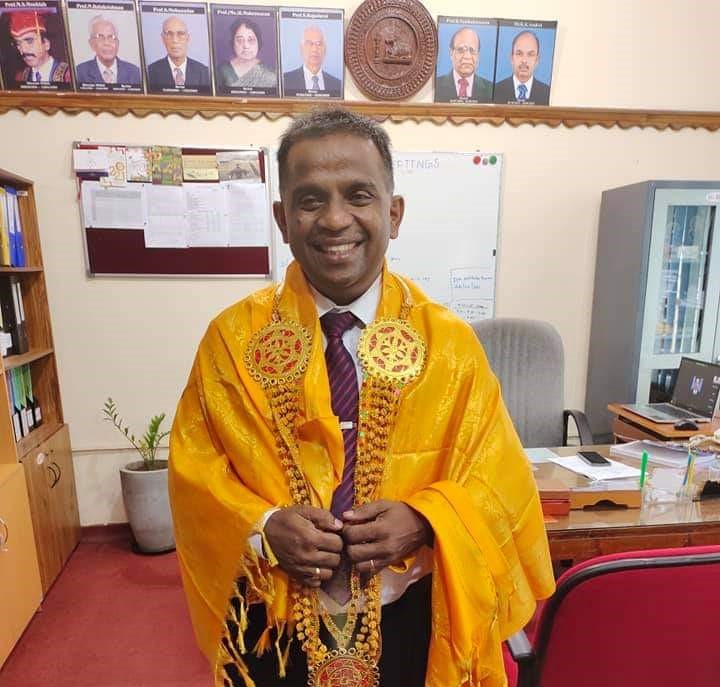
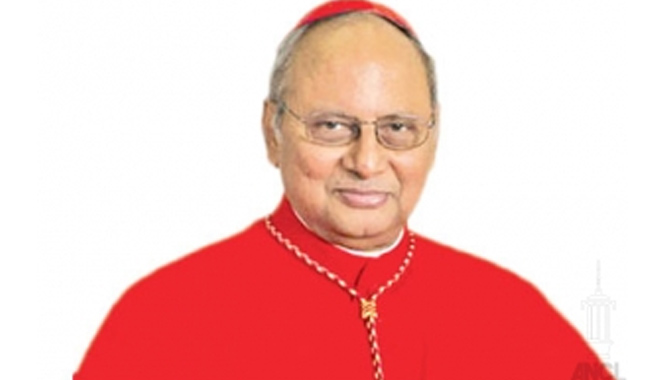
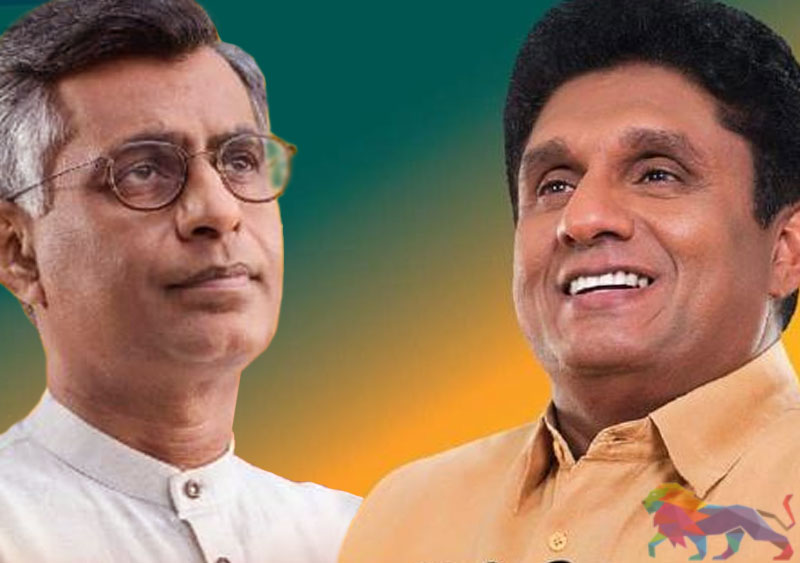
SJB (Samagi Jana Balawegaya) MP Patali Champika Ranawaka, in an interview with the Daily Mirror speaks about his political plan. He shares his views amids speculation that he is planning to be a candidate for the 2024 presidential elections.
Excerpts:
Q:We learned from media reports that the 43rd brigade, the movement led by you, is ready to give political leadership to the opposition. Does it mean you are planning to contest the 2024 Presidential Elections?
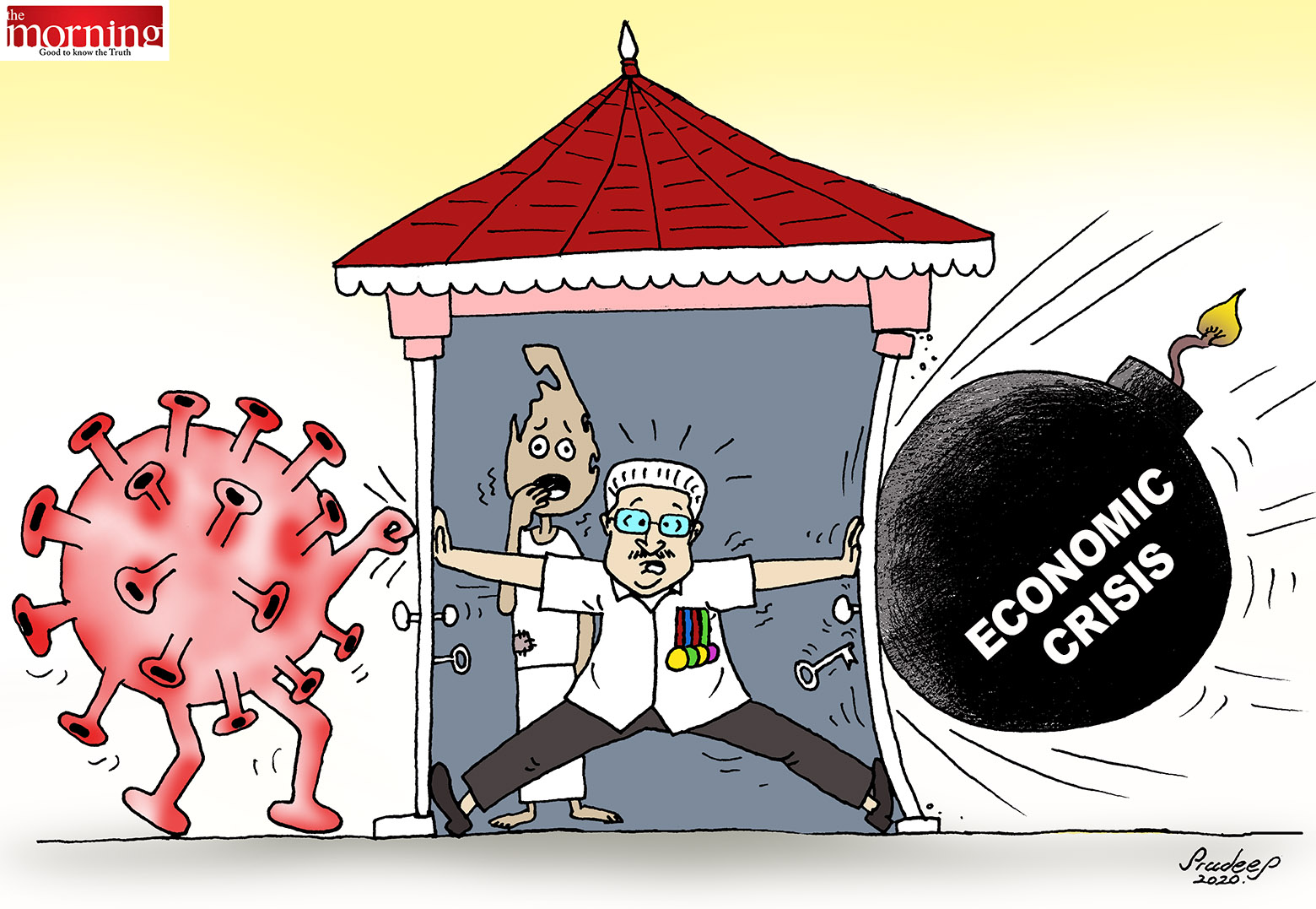
It is nothing like that. It is true that this country endured many a crisis during the post–independence era. There were security related issues, economic crises, political, racial and religious turmoil. There were negative growth rates. The debt component, as a percentage of the Gross Domestic Production (GDP) exceeded more than 100 percent. But, we never experienced bankruptcy. For the first time we have taken the first step in the direction of bankruptcy. Today, the foreign reserves in the banking sector have dropped to minus levels. The pandemic is not the reason. It is nothing but the government’s weakness in fiscal management. We have raised U.S. dollar loans from the international financial market since 2005. We invested them without forethought on returns on investments. Today, we have to settle these loans with ‘very high interest rates’. It will affect us. Debt repayment is a big issue. For example, our external debt payment accounted for two billion dollars in 2013. It is U.S. $ 7 billion this year. The government is looking forward to have U.S. $ 3 billion currency swaps. We are supposed to settle them next year. It will amount to U.S. $ 10 billion with all accrued. It means our debt servicing cost will have a fivefold increase within a decade since 2013. Our GDP has increased only by 20 percent during the period. This is the real crisis. International rating agencies have lowered our ranking to level CCC (challenging foreign-currency sovereign external debt repayment burden). We are only one notch above default level. We were about to raise US $ 100 billion by issuing Sri Lanka Development Bonds. There were bids only for 35 percent of it. Such a crisis has not occurred in the post-independence era. Today, dollars are sold in black market at Rs. 240. It is bound to increase to Rs. 300. The Government has opted for import controls as a strategy to face this situation. They restricted imports starting from vehicles to chemical fertilizer. Now, a food crisis is imminent with the pandemic situation. A crisis in the energy sector is also foreseen. The previous Yahapalana Government printed money valued Rs. 29 billion. But, the present government printed money valued Rs. 880 billion. This is the roadmap of Zimbabwe.
We can’t get out this crisis by a mere change of the government. In our country, we have professionals with merits. In politics, doors are closed for such professionals. In the business sector too, there is no room for them to some extent. So, we need a new breed of leaders to tide over this crisis and work out a new economic path. That is the generation of people who scaled up the social ladder based on meritocracy. That is what we called ‘43rd brigade’. The Free Education Act was introduced in 1943.
Q:There are no quick solutions to economic problems you mentioned in a practical context. What do you propose to increase the GDP and resolve the debt crisis?
First and foremost a team, with a clean track record in performance and not tainted by corruption, should take over the country. I identify professionals in four categories. You find one set of professionals with fine rhetoric, but a dismal performance in the duties assigned to them. There is the next category comprising those with high academic credentials, but no practical competence to deliver on the ground. Those who identified themselves as economic wizards in the Ranil Wickremesinghe Government belong to this category. They are thorough about theories, but unable to deliver. In the third category, you come across professionally qualified people. But they are an utterly corrupt lot. In the fourth category I see professionals and academics who are aware of reality of the country. However, they remain mute since they are servile to their political leaders. But we won’t involve anyone belonging to these four categories in our political work.
Q:Who are the professionals and academics you have identified outside these categories?
We are in the process of identifying them. There are politicians as well as professionals. We have also social activists. Within a short span of time we intend to create a brigade of 10,000 such people. After that we invite those who are the products of free education to come forward to rebuild this country.
Q:What is your answer to the question I asked about your solution to the economic woes mentioned earlier?
Ok. This is the first step. That is for the creation of a breed of leaders, who are patriotic, well- performing and empathic, to take over this country. We want to increase revenue for the government. We want to do away with tax concessions given to the wealthy by President Gotabaya Rajapaksa. We want to tax them. That is also the policy of G7 countries. President Rajapaksa is ultra-neoliberal. He is slavishly neoliberal. Even neoliberal leaders such as U.S. President Joe Biden want the big companies to be taxed.
Q:But, tax reductions were announced for the small, medium entrepreneurs. They benefitted due to a VAT reduction. Doesn’t it run counter to what you said?
Tax cuts announced for them have not translated into overall economic benefits. The economic growth was 1.6 percent (negative) during the first quarter of 2020.
The debt component, as a percentage of the Gross Domestic Production (GDP) exceeded more than 100 percent. But, we never experienced bankruptcy. For the first time we have taken the first step in the direction of bankruptcy. The pandemic is not the reason. It is nothing but the government’s weakness in fiscal management
The Government has opted for import controls as a strategy to face this situation. They restricted imports starting from vehicles to chemical fertilizer. Now, a food crisis is imminent with the pandemic situation. A crisis in the energy sector is also foreseen
In our country, we have professionals with merits. In politics, doors are closed for such professionals. In the business sector too, there is no room for them to some extent. So, we need a new breed of leaders to tide over this crisis and work out a new economic path
We want to do away with tax concessions given to the wealthy by President Gotabaya Rajapaksa. We want to tax them. That is also the policy of G7 countries. President Rajapaksa is ultra-neoliberal. He is slavishly neoliberal. Even neoliberal leaders such as U.S. President Joe Biden want the big companies to be taxed.
The network of expressways should be built according to a proper feasibility study. What is not feasible can be feasible in the future. For example, the Dambulla- Kurunegala expressway will be feasible in 2030. The Hambantota- Matara expressway will be feasible in 2035. But, it has already been constructed
6.The president counts on a few entrepreneurs to do all business activities from house building to sugar imports. We won’t violate procurement guidelines no matter what. Today, what we see is ‘state capture’ by a lumpen political and entrepreneur class. We are going to liberate the country from them
Q:From another perspective such concessions are meant to serve as a stimulus to increase investments. Aren’t they?
Secretary to the President Dr. P.B. Jayasundara has experimented this economic model since 2005. Tax revenue remained 28 percent in 1977. P. B. Jayasundara reduced tax revenue from 14 percent of the GDP to nine percent. This is a strategy that is tested and failed.
Secondly, we need to reduce expenditure of the country. Today, the government is going to make unnecessary expenditures. There is a plan to build an expressway to Dambulla investing Rs 1 billion. There is also a move to build the Athurugiriya- Dematagoda road as a U.S. $ 1600 million investment. Besides, U.S. $ 450 million will be spent for a road project between Chaitya Road to Kollupitiya in Colombo. Then, there is the Kahatuduwa-Ingiriya expressway. These are not expenses that should be borne by the country at this juncture.
Q:You have been critical of building expressways for some time. Don’t you think expressways are needed for fast connectivity in the country?
The network of expressways should be built according to a proper feasibility study. What is not feasible can be feasible in the future. For example, the Dambulla- Kurunegala expressway will be feasible in 2030. The Hambantota- Matara expressway will be feasible in 2035. But, it has already been constructed. The actual cost of the Dematagoda- Athurugiriya expressway is only US $ 380 million. But, the government is planning to pay US $ 1620 million. The actual cost of the road project connecting Chaitya road with Kollupitiya is US $ 150 million. But, they are going to pay US $ 450 million.
The chairman of SriLankan Airlines admitted that the national career lost US $ 1 billion due to the airbus transaction. Now, the Government is planning to pay US $ 500 million. Of it, US $ 240 million has already been paid. The government stopped fertilizer imports to save only US $ 180 million. A member of the Rajapaksa family is responsible for the airbus transaction. We have to stop such transactions. We have to make capital expenditures only after studies on feasibility, financial viability and returns on investments.
Q:How can you avoid payment for international transactions which Sri Lanka is legally bound?
What transactions do you mean?
Q:I mean the payment involved in the airbus transaction, for example?
Whatever anyone might say the Yahapalana Government scrapped the payment of one part of it. As for debt management we have raised foreign currency loans in terms of International Sovereign Bonds, Sri Lanka Development Bonds, multilateral lending and bilateral lending. Of them, we have to renegotiate loans other than those raised through sovereign bonds and development bonds. While renegotiating, we should give an assurance that we would resettle them in the future . Then, we have to do structural reforms in economy. Alongside, we have to introduce fast income generation projects. We plan for the introduction of a digital economy. I am saying these things based on my experience. I am someone who converted loss making ventures into profitable ones. Today, the government institutions are run at a loss. I challenge anyone to show me a government institution turned around by the Rajapaksas. There are also others who performed like me. For example, Minister Nimal Siripala de Silva can be taken. He is the one who made Sri Lanka Central Transport Board profitable.
Q:Who are the others identified with better performance levels?
I have identified a lot. I am not going to disclose them now.
We have to gather all of them regardless of their party affiliations. I believe the JVP should drop its ideology. Instead, it should team up with us in this endeavour. There are people with competence in Samagi Jana Balawegaya (SJB), Sri Lanka Podujana Peramuna (SLPP) and Sri Lanka Freedom Party (SLFP) who can deliver. They should gather together on a common platform. But, the majority should be from outside. The Tamil National Alliance (TNA) cast aside its separatist ideology. Professionals in the Tamil community should come forward to build this country. We cannot undertake this journey by alienating them. In the Muslim community, genuine politicians, professionals and entrepreneurs should team up with us. We are in touch with all the ethnic groups in this regard.
Q:You talk about structural economic reforms. When you implement such reforms acceptable to the International Monetary Fund (IMF), it can lead to hardships for people. What do you say about such hardships?
Anyway, in another six months people won’t have income sources and sufficient food on the table. Whether the IMF says or not the country is in need of structural reforms. Our target is to bring the primary balance of the country to zero level. We will create a level playing field for entrepreneurs. The president counts on a few entrepreneurs to do all business activities from house building to sugar imports. We won’t violate procurement guidelines no matter what. Today, what we see is ‘state capture’ by a lumpen political and entrepreneur class. We are going to liberate the country from them.
Q:You mentioned about the move to form a body of 10,000 professionals and intellectuals. Viyath Maga was also formed in a similar fashion to promote President Gotabaya Rajapaksa as the presidential candidate. Is this the political movement that promotes your candidacy at the 2024 presidential election?
It is a movement meant not to enthrone a family, but to empower a generation. That is the difference between Viyath Maga and us. Earlier, I talked about four types of professionals and academics. Viyath Maga comprised them. We won’t include them.
Q:ou are insinuating that you are ready for 2024?
In 2024 or before, no matter what, we have to be ready with a new breed of leaders to take over this country. That should happen. Otherwise, there is no future for the country. The young generation has decided to leave the country. We need to stop them from leaving. For it, we should do what we plan.
Q:What is the chemistry between you and SJB Leader Sajith Premadasa?
We joined SJB under historical circumstances that prevailed at that time. SJB people gave us a mandate. We respect it and are with SJB. Yet, we think of future politics beyond the scope of SJB. We believe in the departure from traditional politics to opt for a new political culture to salvage this country.
Q:Today, Sri Lanka is sandwiched in the struggle of super powers. China has launched its Belt and Road Initiative (BRI). To counter it, G7 countries have proposed a programme called B3W (Build Back Better World). What is your plan to manage foreign relations?
When the Port City remained under my purview, nobody talked about it being a Chinese colony. We gave the environmental licence to the project company and imposed 72 regulations.
The company was not incensed with us. It was a good reputation for that company to execute the project without any damage; at least in terms of a crack in buildings, in Colombo. We took over freehold land from the company. We wanted to bring Cambridge University to invest here. We wanted to establish a franchise hospital of Singapore’s Mount Elizabeth hospital. We negotiated with France to bring an international convention centre here. We remained open. We advocated friendship with all.
The United States has remained a wold power since 1875. Today, its super power status is challenged economically, militarily, technologically, financially by China. It is reality. The U.S. is launching counterattacks. The U.S. and G7 countries have launched B3W. They say they will help us develop sustainable projects. We are ready to look at their list. It is yet to be elaborated. We won’t accept anything with political strings. But, we will accept anything with economic strings.