Covid-19 in Sri Lanka: People of North and East in economic crisis

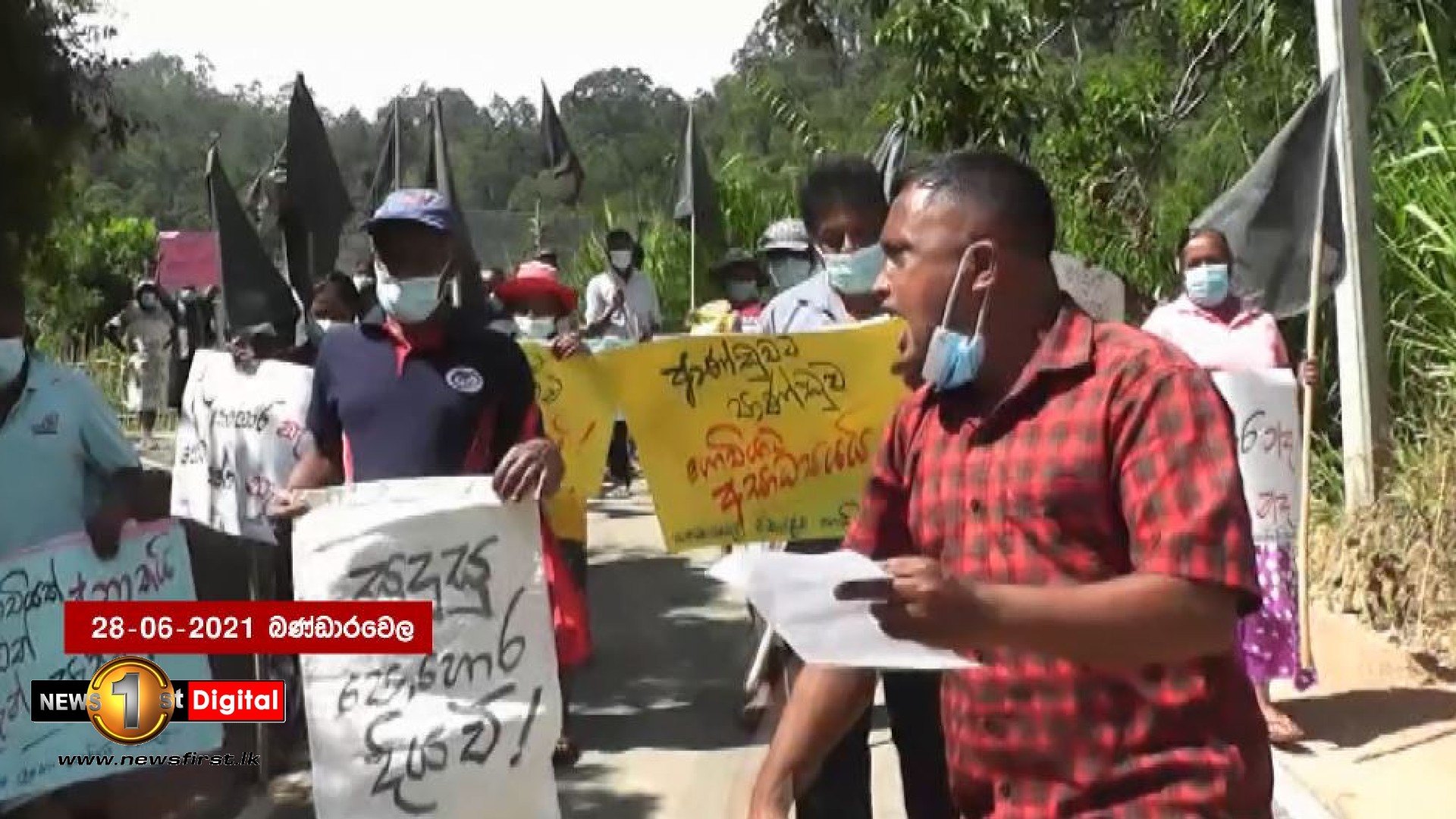
The extension of Covid-19 related travel restrictions by Sri Lankan government are severely affecting the Tamil daily wage workers in North and Eastern Province of Sri Lanka.

The assistance scheme provided by Sri Lankan government through Divisional Councils reach a certain number of people, and its does not reach economically deprived people of the community .

The local observers are urged that the diaspora organisations should work with the Tamil political parties at home to carry out a plan to save the Tamil people from the growing economic crisis. The diaspora should take note that the assistance given through Sri Lankan government are not reaching the poor Tamil families in North and East, they said.

Posted in Uncategorized

India to recalibrate ties with Sri Lanka as Colombo ‘sways towards China’

India is looking at a “recalibration” of its bilateral ties with Sri Lanka as China is gaining massive inroads in the Indian Ocean island nation, ThePrint reported today (14).

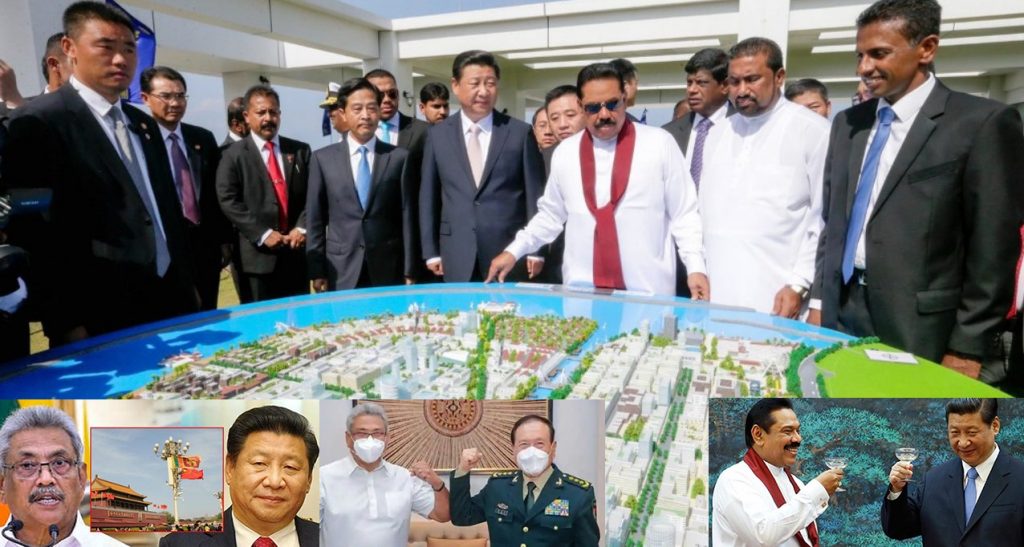
Colombo had last month decided to go ahead with the controversial $1.4 billion special economic zone (SEZ) project, the Colombo Port City project, funded by Beijing.

New Delhi, which aimed at resetting bilateral ties with Colombo following the return of the Rajapaksa regime, now believes that Sri Lanka has taken a firm decision on “completely aligning” with China even if that means doing away with the balancing act with India, sources said.

Last month, the Sri Lankan parliament passed a controversial bill — the Colombo Port City Economic Commission Bill — which will establish a Colombo Port City Special Economic Zone (SEZ) and the Colombo Port City Economic Commission (CPCEC).

The bill was passed despite stiff resistance from opposition parties and concerns that the Colombo Port City could turn into a ‘Chinese province’ inside Sri Lanka.

The proposed new CPCEC is expected to have wide-ranging powers and the port city will not be subject to laws and regulations of the Municipal Council and Urban Development Authority of Sri Lanka, thereby raising concerns that it will not function democratically.

According to one source, with the port city coming up and coupled with what happened in the Hambantota Port (where there is speculation that Colombo is looking to extend the 99-year lease to Beijing), Sri Lanka has now “completely come under China’s control” and this will pose a challenge for all future governments there while posing a security threat to India.

Ties between India and Sri Lanka began plummeting in February when Colombo scrapped the strategically important East Container Terminal at Colombo port, which was a tripartite pact with Japan. It instead offered India the West Container Terminal (WCT) as a private deal unlike the previous government-to-government agreement.

It is now clear that the initial bonhomie between Indian Prime Minister Narendra Modi and the Rajapaksa brothers — President Gotabaya Rajapaksa and Prime Minister Mahinda Rajapaksa — and Sri Lanka’s adherence to an ‘India-first’ policy are now “fast fading away”, said another source.

This has happened because Beijing has “worked towards” drifting the island nation away from India so that it can maintain its presence in the Indian Ocean region as the Indo-Pacific strategic construct takes shape, sources said.

However, the sources said, India is now banking on the West Container Terminal, being developed by the Adani Group to make its “strategic presence” felt there.

“They (Adani Group) will remain invested there for a long time. Be it private or public, as long as India has a presence there where China is present in a big way, New Delhi is satisfied,” said a source who refused to be identified.

Source: The Print

Growing Chinese shadow in Tamil Nadu’s backyard – TOI

CHENNAI: The enactment of the Colombo Port City Commission Act in Sri Lanka last month has created a lot of disquiet and dismay among the people on both sides of the Palk Strait. There has been much hype in the media about increased threat to south India as a result of China gaining control of the special economic zone coming up in the Colombo Port City (CPC), overlooking Colombo port.

In the next two decades, the CPC is poised to grow into an international financial hub like Dubai and Singapore. The only difference is, the state-owned China Harbour Engineering Co (CHEC), a subsidiary of the China Communications Construction Company, holding a 99-year lease on 85% of land, will be calling the shots.

Apprehension about CPC is real, not merely for south India, but India as a whole. Commercially Colombo port is important because nearly 70% of India’s container traffic passes through it. In strategic situations, Chinese presence close to it would make a difference. But, more than that, the CPC legitimises the huge presence of multifaceted Chinese interests —trade and commerce, logistics, communication, finance and infrastructure.

This gives China a big advantage in challenging India’s domination of the Indian Ocean Region (IOR). It will also enhance China’s ability to use its unmatched money power, to progress its influence in India’s neighbourhood in the name of development aid.

Many Sri Lankan leaders are equally worried about the increasing Chinese influence in Sri Lanka. The Archbishop of Colombo Cardinal Malcom Ranjith, obviously referring to the CPC Commission enactment, said, “Development is not selling the country’s resources … the politicians are responsible for protecting the country. Please do not offer our land to different countries.” Former President Chandrika Kumaratunga had warned that Sri Lanka “has all but become a colony of China.”

The SEZ will confer not only commercial and financial benefits to China, it will also augment its intelligence and counter-intelligence operations to eavesdrop with Indian communication, track warship movements, enhance cyber threat and satellite tracking. And more than all this, the SEZ can be a useful take-off point for infiltrating agents acting against Indian interests. In the past, Pakistan had used its high commission in Colombo to infiltrate agents and terrorists into south India. The southern states, in particular, will have to tighten their coastal and airport security to prevent such efforts.

Sri Lanka’s unique geographic location, midway astride the sea lanes of Indian Ocean, makes it an essential part of China’s maritime security architecture in the Indo-Pacific. China’s concern about Indian Ocean countries joining the Quadrilateral Security Dialogue (Quad) framework of the US, India, Japan and Australia has been increasing. The China-centric Quad aims at ensuring a free and open international order based on the rule of law in the Indo-Pacific.

China’s state councillor and defence minister General Wei Fenghe briefly visited Dhaka and Colombo in May-end, when a political controversy was raging in Sri Lanka over the draft CPC commission bill. After meeting with President Gotabaya Rajapaksa and Prime Minister Mahinda Rajapaksa, Gen Wei remarked that peaceful development and win-win cooperation is the global trend and the ‘right way’ forward. Without mentioning the Quad framework, he said certain major countries were keen to form cliques and factions and seek regional hegemony, which goes against peoples shared aspiration and harms the interests of regional countries. He had made a similar reference during his meeting with Bangladesh President Abdul Hamid, emphasising the two sides should make joint efforts against powers outside the region setting up military alliance in South Asia and practising hegemonism.

It is obvious Sri Lanka would come under tremendous pressure from China in the coming months in tandem with the criticalities of Indo-Pacific strategic situation. Under such circumstances, it is going to be extremely difficult for President Rajapaksa to resist the lure of the yuan, when the Sri Lankan economy is struggling to manage its mounting debts.

India and Sri Lanka have a good understanding of each other’s security concerns. According to Sri Lanka foreign secretary Admiral Jayanath Colombage’s statement in November 2020, President Gotabaya Rajapaksa has made it clear that Sri Lanka’s strategic security policy will have an “India first” approach, though Colombo was dealing with other countries for economic development. But such sentiments did not prevent Colombo from going back on its commitment to India, whether it is on jointly developing the Eastern Container Terminal or other projects like strategic development of Trincomalee port.

India should be prepared for dynamic changes in the trilateral relations involving Sri Lanka and China. As China firms up its presence within the CPC, we can expect it to increase its influence with the body politic of Sri Lanka. It is poised to become an indispensable part of the party politics, similar to a position India had occupied some years ago.

Obviously, India cannot compete with China’s money power and its development, but it can use its strength in shared history and culture with Sri Lanka. In this regard, India has not used the potential of cross-strait relations among Tamils to Sri Lanka’s advantage, ever since the muscular intervention during PM Rajiv Gandhi’s era.

(The writer is a former MI specialist on South Asia. He served as head of Intelligence of the Indian Peace Keeping Force in Sri Lanka between 1987 and 1990)

Trinco oil tank reclamation at snail’s pace

Regardless of an agreement being finalised between the Sri Lankan Government and its Indian counterparts in February for Sri Lanka to develop the Upper Oil Tank Farm in Trincomalee, discussions are still ongoing with the relevant officials to proceed with the next step.

Speaking to The Sunday Morning Business, Energy Minister Udaya Gammanpila stated that the progress is very slow despite the discussions held with official Indian counterparts to develop the Upper Oil Tank Farm.

“This is not urgent right now, hence no one is rushing into it. Both parties are trying their best for the best possible outcome in respect of their country’s wishes. However, nobody knows when this will be completed,” Gammanpila said.

Further, Gammanpila noted that this development in Trincomalee will enhance the oil storage capacity in Sri Lanka, as there are a total of 84 unutilised tanks with a capacity of 12,500 metric tons each, adding that money will be required to purchase facilities to store the tanks in the country.

We also spoke to Ceylon Petroleum Corporation (CPC) Chairman Sumith Wijesinghe who also stated that the progress has been slow and will require a little more time to move forward. “The Energy Ministry is having discussions with the High Commissioner of India, and to my understanding, it will take some time,” he noted.

Nevertheless, Lanka Indian Oil Company (LIOC) Managing Director Manoj Gupta told The Sunday Morning Business early this year that the discussions held with the Energy Ministry and its Indian counterparts had been very positive.

“This is a very important development for Sri Lanka. The discussions are very sensitive but also positive, as both the countries are trying their best for the best outcome,” Gupta added.

In February, the Indian High Commission (HC) said in a statement that India and Sri Lanka have identified an energy partnership as one of the priority dimensions of their co-operation, and noted that consultation and discussions have been undertaken to promote mutually beneficial co-operation for the development and operation of the Upper Oil Tank Farms in Trincomalee.

Meanwhile, Gammanpila, when contacted during the same month (February), clarified that both parties were able to come to a consensual agreement to jointly develop the oil tank farm by the LIOC and CPC with majority shares.

“We have not yet come to a conclusion over the management period, the agreement between the shareholders, and the number of tanks that would be released to the CPC. These details are yet to be discussed,” Gammanpila said.

He also noted that only 15 out of 99 oil tanks are currently being used by the LIOC and in 2003, the entire tank farm was leased out to the LIOC for $ 1,000 for a period of 35 years.

The development of the Upper Oil Tank Farm in Trincomalee was initially signed by the previous Government with a Memorandum of Understanding (MoU) on Co-operation on Economic Projects in order to set up a joint venture between the LIOC and the CPC.

According to the agreement signed in the presence of Indian Prime Minister Narendra Modi and then-Sri Lankan Prime Minister Ranil Wickremesinghe in 2017, India had agreed to the Sri Lankan proposal to refurbish and use the 84 giant oil tanks in the Upper Tank Farm as a “joint venture”.

The then Sri Lankan Government proposed the idea of developing and running the tanks as a joint venture in 2016 to store the fuel for power generation in an emergency situation. However, abandoning the measures taken by the previous Government, the present Government initiated fresh rounds of talks with India and LIOC, which have been ongoing for months.

The Sri Lankan Government showed keen interest in reclaiming the tanks, after the country was unable to take advantage of global oil prices dropping to negative levels in the peak of the first wave of the pandemic, due to the lack of storage facilities to store oil.

SLPP’s presser to respond Gammanpila cancelled on order from the top

The Sri Lanka Podujana Party has cancelled a press conference which was to be held today(14) to respond to Petroleum Minister Udaya Gammanpila over the fuel hike controversy, sources said.

The press conference was to be addressed by SLPP General Secretary Sagara Kariyawasam who had previously demanded Gammanpila to accept the responsibility of the fuel hike and resign from his ministerial post.

Gammanpila responded to Kariyawasam on Sunday, saying the fuel hike was a collective decision of the government and had even challenged Kariyawasam for a debate.

Accordingly, the press conference was organised to respond to Gammanpila and it is now learnt that on the instructions from the top level, the presser has been cancelled.

Posted in Uncategorized

Oppression of the Tamils in Sri Lanka must end now: European MP Nikolaj Villumsen

Speaking at an emergency meeting on Sri Lanka at the European Parliament on June 10, Danish European MP Nikolaj Villumsen urged to end the oppression of Tamils in Sri Lanka.

He was elected as a Member of the European Parliament in 2019, representing Red-Green Alliance of Denmark.

His speech at the Parliament:

https://www.facebook.com/watch/?v=473723187029714


Posted in Uncategorized

Coronavirus update: 2,361 new COVID-19 cases identified Sunday, total rises to 223,638

According to Epidemiology Unit of the Health Ministry, 2,354 new COVID-19 cases were reported so far on Sunday.

Among the positive cases identified Sunday 2,329 are from the New Year COVID-19 cluster and 32 foreign arrivals currently in quarantine.

According to the Epidemiology Unit report at 9 pm Sunday, a total of 223,638 COVID-19 cases have been reported and 32955 infected patients are being treated at hospitals, while 188,547 patients have fully recovered and been discharged from hospitals.

According to the Epidemiology Unit report, so far total of 2,259,385 people have received a first dose of COVID-19 vaccine and 509,998 have received the second dose.

Government’s attempt to suppress opposition by PTA would forfeit GSP plus- JVP

At a time when Sri Lanka’s economy is in a critical condition, the government would lose the European Union’s GSP+ tariff concession due to the government’s use of the Prevention of Terrorism Act (PTA) to suppress the opposition, the Opposition party Janatha Vimukthi Peramuna (JVP) said.

Speaking at a media briefing Saturday (12) at the party headquarters, the General Secretary of the JVP Tilvin Silva said instead of controlling the Covid pandemic, the government is using draconian laws to suppress the dissent and cover up the political failures.

“One and a half years after the present government came to power, there is a crisis on all sides and instead of controlling the Covid epidemic, they are using repressive laws to cover up their political shortcomings. They are wasting money by importing vehicles for the powerful without proposing a program to rebuild the collapsed economy. Also, human rights are being violated to suppress anti-government forces. The country has been pulled down on all sides,” Silva said.

The European Parliament last week adopted a resolution on the human rights situation in Sri Lanka calling for the repeal of the Prevention of Terrorism Act (PTA). The resolution also called for the temporary withdrawal of the Generalized Scheme of Preferences (GSP+) granted to the island nation as the law is deemed incompatible with the conventions that the country has to implement under the GSP+ facility.

JVP General Secretary said there is a risk of losing the GSP+ facility regained in 2017 by the previous government on the condition that it replaces the PTA and effectively implements 27 international conventions, including on human rights.

The European Parliament which met on June 10 moved a resolution suspending the GSP+ concession with 628 votes in favor. Only 15 votes were cast against while 40 countries abstained.

“When a resolution against Sri Lanka is passed by a large margin of 628 votes in the European Union, it is a huge defeat for Sri Lanka in the international arena,” Tilvin Silva said.

“The government brags that there is no problem with those resolutions. But there is a serious problem with this. Sri Lanka’s export earnings from the European Union were 2.3 billion Euros. Most of the exports to the EU from the GSP Plus concession were garments and fish products. If the GSP concession is stopped, the quota for our garments will be lost. We have to compete in the open market. The same goes for fish production. As a result, the loss of revenue of 2.3 billion Euros will have a huge impact on the country’s workforce. The European Union is the second-largest export market. This market will be lost while the country is burdened with debt and is forced to borrow from Bangladesh as well.”

He said the government is using the PTA to take revenge from political opponents and suppress the opposition to the government. Three names have been specifically mentioned in the EU resolution for using this Act to suppress the opposition. Detention of Hijaz Hezbollah, Attorney-at-Law, Anas Jazeem and Shani Abeysekara, former Director of the CID have been noted especially and the resolution proposes that they be formally prosecuted or acquitted.

Mr. Silva said the problem of militarization in the country is also threatening. The government is using every means available to them to suppress the opposition. He explained that even quarantine laws are being used at this time for this purpose. The travel restrictions extended until the 21st to suppress the public opinion against the increase in fuel prices.

“The government has closed the country whenever it gets stuck in politics. If factories work, if government institutions function, if some business people are working with permits, if some shops are open, how can the country be closed?” Mr. Silva asked.

“Therefore, travel restrictions are not maintained to control the disease, but to suppress opposition to the government,” Silva said pointing out that the Covid deaths and cases are still increasing.

“This country has been brought down. Losing even the GSP relief income is not a simple matter at this time. If our economy is strong, of course, GSP relief is not needed. But at a time when the country is sick, and oxygen is being given to the country’s economy, due to the arbitrary and stupid policies of the government, what is currently available is being lost. It has become the government’s policy to silence those who point out shortcomings instead of getting those mistakes corrected. JVP General Secretary said the government should be held responsible for the economic damage caused by the possible loss of GSP+ concession and urged the people to unite to protect and build the country and to oppose repressive policies.

Security on high alert in Tamil Nadu after infiltration threats

The Tamil Nadu state police and Central intelligence agencies have stepped up vigil after threats of an armed group trying to infiltrate from Sri Lanka were received.

An alert was issued by a Central intelligence agency on Saturday evening and the police have stepped up vigil in the towns of Kanyakumari, Toothukudi, Rameswaram, as well as in Chennai, the Indian media reported.

According to informed intelligence sources, a boat carrying armed operatives was headed towards Rameswaram coast.

However, the sources told IANS that the exact identity of these people are not known as also of the organization that they belong to.

A senior police officer at the state police headquarters in Chennai told IANS: “Yes there is an alert but I can’t reveal more than this at present. We have deployed armed policemen across all the main roads leading to coastal areas through the state.”

With the police stepping up security measures, the sources indicated that more navigating ships have been deployed in the sea by the Coast Guard patrolling units to thwart any attempt to reach the Tamil Nadu coast.

Intelligence sources in Kerala police have indicated that they have also stepped up vigil across the coastal towns of the state after tip-offs from the agencies.

Posted in Uncategorized

Chinese Admiral Zheng He and the Tamils of Sri Lanka By Dr.Nirmala Chandrahasan The Island

The recent discovery of name- boards in public institutions which have omitted one of the national languages, namely Tamil, only to replace it with Mandarin Chinese has caused a furor with Tamil members of Parliament and other politicians voicing their protests.

Certainly, this is most unfortunate but rather than blame the Chinese it is the Government Authorities in charge of the implementation of the Official languages policy who should be blamed. They have been remiss in this instance which is only a small part of the general malaise in respect of the implementation of the official languages policy.

This however is not within the remit of this article. In this article, I would like to focus on another trilingual inscription on a stone tablet stele, left by the Chinese Admiral Zheng He, and dated 15th February 1409, in Sri Lanka.

It was originally inscribed in Nanjing in China itself and discovered in 1911 in Galle, and now preserved in the Museum in Colombo. This stone tablet with inscriptions in Chinese, Persian and Tamil signals the arrival of the Chinese fleet and invokes the blessings of Buddha and the Hindu God Vishnu whom the inscription mentions as “Thenavaran Nayanar” and refers to an endowment that Zheng He, had presented to the Vishnu Devale at Devinuwara and to a Mosque.

Prof. Sasanka Perera in a very interesting and historically researched article titled “Veera Alakeshvaras Phlight signals from the past,” published in The Island of 28th April 2021, to which I am indebted, refers to this inscription as a “subtle but obvious way of appealing to the socio political sensibilities of large and important communities in The Island at the time”.

So it would appear that the Tamils were an important community in the island at the time. Sinhala does not feature in the inscription.

Veera Alakeshwarar’s clash with the Chinese which I refer to in my article is part of the historical perspective which I wish to draw attention to. It has many lessons for the present , and brings to light the Chinese presence in this country many centuries ago.

To continue with the purpose of Admiral Zheng He’s naval journey, it was part of what was known as the “Ming Treasure voyages”. To quote Prof. Perera, the seven voyages under this naval scheme took place between 1405 -1433 AD and was the brainchild of the Ming Emperor Yongle. These voyages were undertaken to expand China’s military, political and commercial Authority across the oceans and to find local allies and establish Chinese spheres of influence in different parts of Asia, parts of the Middle East and places like Mogadishu and Mombasa in Africa.

Before arriving in Sri Lanka Zheng He’s fleet had visited other south east Asian countries where also steles were left behind. All these interventions were made to ensure the stability of maritime routes for Chinese vessels. This is very much in line with what is happening today, with the Chinese “Belt and Road initiative”.

The Chinese of that era were aware of the Tamil language and culture both because of the maritime traditions of the Tamils during the era of the great Chola empire but also because Tamil Buddhist monks from Kancheepuram had brought Buddhism to China. The Chola empire in South India which held sway over Sri Lanka also included parts of south east Asia, and had a large maritime fleet and merchant navy. Furthermore, Tamil traders and merchant guilds were active in the Indian ocean and in south east Asia. With the decline of the Chola empire the seas were open for a new naval power and we find the Ming emperor making a strategic move.

To turn to Sri Lanka and Veera Alekeshvara’s encounter with the Chinese, I will have to go back in time to the Alagakkonara/Allagakone family, of which he was a member. This feudal family originally from Madurai or Kancheepuram in Tamil Nadu, settled down in Lanka and became very powerful in the Gampola Kingdom. The father of Veera Alakeshvara also known as Alakeshvara became a Minister in the Kingdom. He fortified a marshy region around the present city of Colombo and called the fortress he built there Jayawardenepura, and the area around became known as Kotte, (which means ‘fort’ in Tamil).

From his fortifications he drove out the northern army of the Arya Chakraverti, who ruled the kingdom of Jaffna, and the tax collectors from this kingdom who were raiding the south western region. Thus, he came to overshadow King Vikramabahu I11rd of Gampola. Subsequently after some infighting with family members Veera Alakeshvara, his son, became king of the Gampola kingdom as Vijayabahu VI , and ruled from 1397- 1411 AD.

However, Veera Alakeshvara like some of our present China critics, was hostile to Chinese intentions in Sri Lanka and launched piracy attacks on the Chinese fleet in Sri Lankan waters with the help of some Muslim chieftains. As a consequence, Zheng He, left Sri Lankan waters as he had other ports of call, but returned to take revenge on Alakesvara.

In 1410/11 Zheng He and his troops attacked Kotte and captured Veera Alakeshvara and his family together with other key political figures allied with him. He was taken as a prisoner to China. In the collected works of Yong Rong 1515, his capture is described as well as his subsequent pardon by the Emperor as follows: “thus the August Emperor spared their lives and they humbly kowtowed making crude sounds ( a reference to their language) and praising the sage like virtue of the Imperial Ming ruler.”

But this was not the end of the matter. As Prof. Sasanka points out regime change was the object, and Parakramabahu the Sixth ascended the throne. Chinese records reveal that the new king was chosen by Sinhalese emissaries present at the Ming Court, nominated by the Emperor and installed by Zheng He, using the Chinese military and naval power at his disposal, as a ruler more amenable to Chinas intentions. Parakramabahu VI created a political alliance with the Chinese that allowed expansive political projects such as the Ming Treasure fleet easy access to local waters as well as local political support.”

It is also of interest to note that Sembagha Perumal alias Sapumal Kumaraya, an ethnic Tamil and adopted son of Parakramabahu the Sixth, subsequently conquered the northern Jaffna Kingdom and built the Nallur Kandasamy kovil in Jaffna. His exploits are commemorated by the poet Sri Rahula thera in the Kokila Sandesaya and the Selahini Sandesaya.

Aside from the sense of ‘deja vu’, which Prof. Perera remarks upon, Alakeshvarar’s story has many lessons for us today. We learn that the Tamil community in Sri Lanka was a powerful and respected one, hence the inscriptions in Mandarin along with Tamil and Persian. In the north the Kingdom of Jaffna under the Arya Chakravarti dynasty was as powerful as the other kingdoms and at that time was threatening Kotte and even extracting taxes from regions in the South.

Here too it was ethnic Tamils such as Alakeshvara senior who led the defense of the Kotte and Gampola kingdoms, and built Jayawardenapura, and it was Sembagha Perumal who later defeated the Arya Chacraverti and brought the Jaffna kingdom under the rule of Parakramabahu VI.

Ethnic differences were subsumed, and Sinhalese and Tamils worked together as one people. The wars were for territory, with kings fighting kings and not between ethnic groups. It was only with the arrival of the Western colonial powers starting with the Portuguese that ethnic differences surfaced, perhaps as a consequence of a divide and rule policy.

Another lesson we learn is that the Chinese political presence in the island is not something new. Furthermore Chinese trade was a key factor in the Sri Lankan economy as vindicated by the large collection of Chinese coins in Yapahuwe, which fact is adverted to in Prof. Perera’s article citing Prof. Sudarshan Senviratne. So, the resumption of Chinese political and economic activity in the island is not suprising.

Chinese history records that after the great naval expeditions of Zheng He, there was a change in China’s policy and internal constraints made the country turn inwards. It is now clear that China is resuming its old policy as evidenced by Admiral Zheng He’s naval expeditions, and is once again engaging in expanding its military, political and commercial authority across the globe vide the Belt and Road Initiative.

The Port City project in Sri Lanka is part of this grand design. The Port City project can bring benefits to Sri Lanka too, but it is the responsibility of the Sri Lankan Government and people to see that Sri Lanka’s interests are adequately protected and they cannot fault China for any short fall as every country looks after its own interests.

In the context of the lessons we learn from the Veera Alakeshvara episode, Tamil politicians would be well advised to be more mindful when making protests at what they perceive to be Mandarin taking precedence over Tamil. We do not have to kowtow to the new Emperor in Beijing, and protests must surely be made when called for, but made courteously, recognizing that our cultures Tamil and Chinese, have co -existed enriching each other over many centuries as in the spreading of Buddhism by monks from the Tamil country, and the extensive trade as in the exchange of cotton goods for silk between the two civilizations.

We have seen from the Galle Inscription that China gave the Tamil language pride of place in Sri Lanka at a certain point of time, and I may mention similar inscriptions have also been left by them in other south Asian countries. At that time Tamil was a language of commerce and trade in the Indian Ocean region and the Tamil Kingdoms of South India were powerful entities.

Similarly, the Persian language held sway for these reasons. Interestingly we learn from the Moroccan Traveller of the 14th Century, Ibn Batuta, who visited the kingdom of Jaffna, that the king Arya Chackraverti held control of the trade in pearls, had contact with foreign merchants and could speak Persian.

It remains to be seen whether the Tamil language once again regains its lost position and the respect that entails. The Trilingual stele in Galle invokes the blessings of the Hindu deity the “Thenavaran Nayanar” Vishnu, for a peaceful world built on trade.

For the present. we have to recognize that China has come to stay as a power in the region, in a world built on trade. We can be proud that two Asian nations India and China are emerging as the super powers of the 21st century and go with the trend giving due consideration to both countries in our political and economic policies.