Travel ban is only to stop Tamils from commemorating their loved ones: TELO Youth Wink Leader Saba Kugadas

TELO Youth Wink Leader and former member of the Northern Provincial Council Saba Kugadas, has said that the ruling regime is using ironclad repression to ban Tamils ​​from commemorating their dead and murdered relatives and erecting memorials to them only on the island of Sri Lanka.

When Valikamam East Pradeshiya Sabha chairperson Thiyagaraja Nirosh tried to pay homage to the 47th death anniversary of Thiyagi Pon Sivakumaran at his memorial, police blocked him, citing the spread of the corona.

Kugadas, commenting on this said,

“In the name of Corona in the northeast, police stop even relatives are being from commemorating. But in the south, this is not the situation. they are free to do what they wish.

The term does not include dictatorial repression of investigators in the North East, indirect threats, detention of police at monuments, and restraining orders in the courts.

Many monuments have been demolished in the Tamil homeland in the past and it is still going on. The monument to martyr Pon Sivakumaran has been broken five times in the past. As well as the monument to the Thamizhachi massacre, the monument to martyr Dilipan. The Mullivaikkal monument at the University of Jaffna and the monument at Mullivaikkal were earlier demolished. And many more monuments have been broken.

In fact, the Sinhala chauvinist regime not only massacred the Tamils ​​but also smashed their monuments. At present, commemorations are being banned by the state apparatus.”

Chamuditha says he is faced with death threat to his life

Journalist Chamuditha Samarawickrema says that he is facing a serious threat to his life.

Speaking with an online channel, he said that he responsibly states that it is possible for him to be even murdered in the near future.

He said he had a host of evidence pointing towards this conclusion and details pertaining to some cannot be revealed.

He also said that two infamous racketeers and several others are engaged in a mudslinging campaign against him.

Posted in Uncategorized

Health Ministry announces updated quarantine measures for overseas arrivals

Mandatory Home Quarantine NOT APPLICABLE to fully vaccinated Sri Lankans or Dual Citizens arriving/ transited/ having a travel history from India, Vietnam, South Africa & South American Countries in the last 14 days, said the Sri Lankan Health Ministry in an updated statement on Sunday (06).

German Embassy hands over consignment of masks to Health Ministry through WHO

In an effort to combat and control the current surge of COVID-19 cases in Sri Lanka, Germany recently handed over a consignment of protective surgical masks to the Ministry of Health through the World Health Organization country office for Sri Lanka (WHO Sri Lanka).

The consignment, which includes a total of 924,000 surgical face masks, was jointly handed over by Mrs Claudia Tietze, Head of Press and Culture of the German Embassy, and Dr. Olivia Nieveras, Public Health Administrator for WHO Sri Lanka, to Dr. Asela Gunawardena, Director General of Health Services of the Ministry of Health.

Dr. Gunawardena welcomed the substantial donation from Germany and expressed confidence that the masks will be efficiently distributed by the Medical Supplies Division to health workers to strengthen infection prevention and control in health facilities and in delivering community services. He thanked both Germany and WHO Sri Lanka for their steadfast commitment in supporting Sri Lanka through this pandemic.

Mrs Tietze said that Germany is delighted to lend a helping hand to Sri Lanka and support its battle against COVID-19 and is hopeful that this timely contribution will reach its intended beneficiaries in the coming weeks with the support of WHO and help to reduce the immediate impact of the virus. She commended the frontline healthcare workers and their invaluable work during this critical and stressful time and noted that it is ever more crucial to take the necessary precautions and adhere to the health guidelines.

Dr Olivia Nieveras thanked Germany for their generous support and reinforced the value of such products during this crucial time for Sri Lanka. She noted that wearing masks is one of the most powerful tools to prevent the spread of COVID-19, along with physical distancing, hand hygiene, and other social measures.

With an all of society approach, Sri Lanka will be able to reduce the spread of COVID-19, protect vulnerable groups, and build back better, she added.

Posted in Uncategorized

Dragon’s New Lair: How China’s Expansionism is Taking Root in Sri Lanka

China always wanted to set up a strong base in Sri Lanka, India’s southern neighbour. Doing so would give it two advantages. First, it will be a direct challenge to India’s naval superiority in the Indian Ocean region. Second, China will gain a foothold in a critical commercial seaway and will be in a better position to secure its maritime trade of crude oil.

About 80% of China’s crude oil being imported from the Arabian countries passes through the Strait of Malacca. And India and other countries, in case of growing hostility or war, can easily choke the passage. The western approach of the Strait of Malacca is near the Andaman and Nicobar Islands while the United States can easily block its eastern approach.

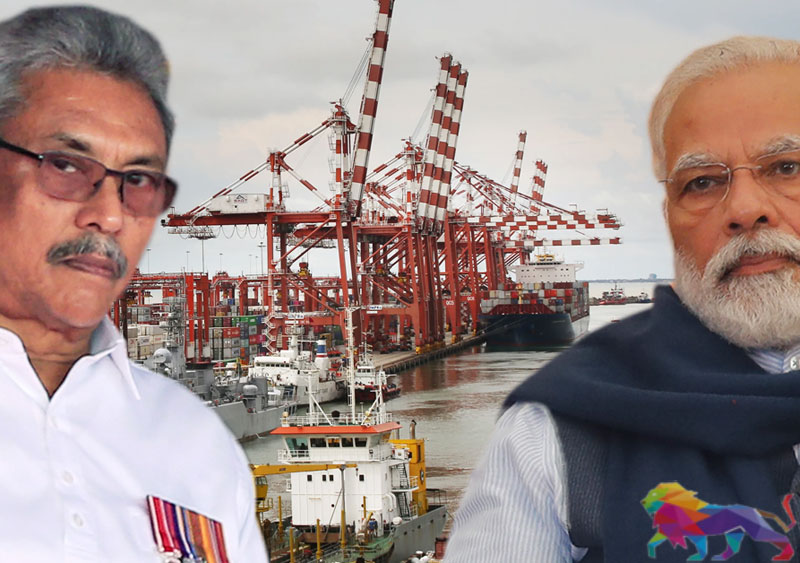
And going by the current developments in Sri Lanka, China seems well on its way to get a strong foothold in the country. The absolute control of the Colombo Port City and the 99-year lease of the Hambantota Port as well as 15,000 acres of land surrounding it in Sri Lanka are signs of Chinese expansionism taking root in the 21st century.

Sri Lanka recently passed the Colombo Port City Economic Commission Bill. The legislation gives China absolute authority in an area that is just 700 km away from Chennai in India. Opposition parties in Sri Lanka have alleged that the bill is intended to undermine the country’s sovereignty and create a Chinese colony. Sri Lanka’s Supreme Court, while hearing petitions against the bill, also said that certain provisions of it were unconstitutional.

Direct implications of the bill

Sri Lanka is now going to have a Chinese colony that will not only affect the nation’s sovereignty but also its culture in the long run. China is building the port city on reclaimed land near the Colombo Port and the $1.4 billion project is totally loaned and financed by China.

Sri Lanka’s legal and constitutional oversights will not apply to this port city. Also, the bill allows the port city area to have its own currency and that means China may introduce the Yuan soon. Also, China will regulate movement of the people in the area.

The area may also see Mandarin language imposition, as, according to an IANS report, two recent big events in Sri Lanka saw signboards of government projects replacing Tamil with Mandarin.

So how has China got its way in Sri Lanka?

First make the ruling government pro-Beijing

China sensed an opportunity to make inroads in Sri Lanka during the last phase of the 26-year civil war with terrorist outfit LTTE. The country, under the Mahinda Rajapaksa government, fought a bloody battle that ended in 2009. The war compromised even civilian lives and Sri Lanka faced growing calls from the United Nations and other countries on human rights violations.

No country including India was ready to provide Sri Lanka with lethal weapons in the final days of the civil war. China realised it was time to move in. It supplied Sri Lanka with arms and ammunition and extended strong diplomatic support in the United Nations over the allegations of human rights violations. These moves made the existing Sri Lankan leadership heavily pro-China.

Then create a trap

Years of civil war had largely ravaged Sri Lanka and the country desperately needed financial support to rebuild its economy and infrastructure. It was a golden opportunity for China based on the recent goodwill it had earned. The loan requirements of the Rajapaksa government saw a rapid increase and China never said “no” to any Lankan loan request.

The past 15 years have seen Sri Lanka’s external debt rising over threefold mostly due to projects conceived by the Rajapaksa government in consultation with the Chinese. As per the Trading Economics website database, Sri Lanka’s external debt in 2020 was $49.211 billion, or 58.58% of the country’s 2019 GDP of 84 billion dollars.

This year, loans worth $4.5 billion are maturing in Sri Lanka, higher than its foreign exchange reserve base of $4 billion, as per a Financial Times report. That means the country is bound to take additional loans to settle even its maturing debts and a Rajapaksa regime back in power will find an easy solution in China.

Extending the Hambantota trick

In June 2018, the New York Times published a story, ‘How China Got Sri Lanka to Cough Up a Port’, that clearly relates to the Chinese intent.

China’s designs behind a port on the southern coast of Sri Lanka were always strategic. Most of the feasibility studies done for a port in the small fishing town Mahinda Rajapaksa was native of said the product would never be commercially viable, especially in a small country like Sri Lanka. The island nation already had the strategically located Colombo Port and it was not advisable to develop another big port when the existing one needed expansion.

India and the US denied Sri Lankan requests for a loan to develop it but China welcomed it, though on conditions like China’s state-owned company with Chinese labourers would develop the port. Also, Beijing gave this loan to Sri Lanka on a higher interest rate.

Loans by global agencies like the World Bank or the IMF range between 1 to 3% interest rates. Many times, loans are given even at sub-one per cent rates. As per the New York Times article, the first loan for the port project, $307 million, was settled at 1 to 2% interest rates after the 2008 global financial crash. But when Sri Lanka needed more loans for the same project and approached China for it, with a loan request proposal worth $757 million, Beijing forced Sri Lanka to accept a higher interest rate and applied the same even to the first loan it had given for the project.

The first phase of Hambantota Port started operations in November 2010 but, as the feasibility studies had predicted, the port could never be commercially viable. Under mounting debt, Sri Lanka’s new government tried to renegotiate the debt repayment timeline. But China was not ready to listen. Instead, it asked for equity or ownership. Also, it demanded 15,000 acres of land around the Hambantota Port to develop an industrial zone to be controlled by China.

Sri Lanka’s new government under Maithripala Sirisena had no option but to agree to it. So, for a debt of $1.4 billion, China got a controlling stake in a port in Sri Lanka that is just 300 km from the Indian mainland for 99 years.

The Rajapaksa angle

Mahinda Rajapaksa’s frequent loan requests raised Sri Lanka’s government debt to around $45 billion in 2015, the year he lost the election. He was always seen as a person more than willing to accept the terms and conditions put by China. The result: much of Sri Lanka’s recent loans are from China, based on Beijing’s terms.

The Rajapaksa regime had become so indispensable for China that its ambassador took part in his election campaign. Also, China released at least $7.6 million from a Chinese bank account of the Hambantota Port to support him, adds the New York Times report.

And that indispensable Rajapaksa regime is back in Sri Lanka and the heavily pro-China port bill may just be the beginning. China has successfully extended yet another Hambantota example in Sri Lanka.

A larger People’s Liberation Army Navy base possible in future?

Going by the past example, China may use its increasing foothold in Sri Lanka to increase its naval presence in the Indian Ocean region. A Chinese submarine docked at Colombo Port in November 2014. Current prime minister Mahinda Rajapaksa was president then. A similar Chinese request was refused by the Maithripala Sirisena government in 2017.

Now with the Rajapaksa brothers back at the top of the Sri Lankan government, the region may see increased incidents of Chinese ships and submarines being docked at Sri Lankan ports and a possible PLA(N) presence in the future disguised in the name of securing its trade interests in the industrial zones that it is building and operating in Sri Lanka with its own currency and people.

Source:News18

Posted in Uncategorized

Port City Commission placed under Presidential Secretariat

The Colombo Port City Economic Commission has been brought under the purview of Presidential Secretariat.

President Gotabaya Rajapaksa issued an extraordinary gazette notification placing the Port City Commission under the Presidential Secretariat.

Meanwhile several state institutions have been placed under the purview of Minister Namal Rajapaksa who was recently appointed as the State Minister of Digital Technology and Entrepreneur Development.

The Industrial Technology Institute, Sri Lanka Standards Institute and all Information Technology Parks have also been assigned to the State Minister of Digital Technology and Entrepreneur Development.

Posted in Uncategorized

Foreign Ministry unaware of Chinese flag at Jaffna building

The Ministry of Foreign Affairs says it is unaware of a Chinese national flag being hoisted at a building in Jaffna.

The Chinese flag had been seen hoisted at the office of a Chinese construction company in Jaffna.

Foreign Minister Dinesh Gunawardena told Daily Mirror that the incident has not been reported to the Foreign Ministry as yet.

He said that under normal circumstances, foreign companies do not display their nation flags at their premises.

However, he said national flags are hoisted at the premises under special circumstances such as a function or event to show links to the mother country.

Minister Gunawardene further said this particular incident falls under the jurisdiction of the Local Government body in charge of the said area.

He pointed out that it is essential to see if a function had been held at the premises and if the company had obtained permission and made a payment to the Local Government body to display the Chinese national flag at its premises for the event.

The Foreign Minister said the matter must be looked into by the Local Government body in charge of Jaffna, and not the Foreign Ministry.

This is the latest incident to be linked to the abuse of power connected to China in Sri Lanka.

Initially, concerns were raised over several name boards being displayed in the Chinese language, Mandarin, at the Colombo Port City. The name boards contained Mandarin, in place of the Tamil language.

The Chinese Embassy and the Attorney General’s Department were thereafter in the spotlight after a name board at the AG’s office for an electronic library constructed with Chinese funding had contained Mandarin and Sinhalese and not Tamil.

The name board was later removed.

Posted in Uncategorized

65 years before Sinhala only bill that caused bloodshed in Sri Lanka was introduced on this day

Today is the day that the Sinhala-only bill that led to the great bloodshed in Sri Lanka was introduced in Parliament.

The Sinhala Only Act was officially introduced in the Sri Lankan Parliament on June 5, 1956, by the government led by SWRD Bandaranaike under the name “Official Languages ​​Act No. 33 of 1956”.

“Sinhala is the only official language of Sri Lanka”. With the passage of this Act, English, the official language of Sri Lanka, was abolished and Sinhala, the language spoken by the majority Sinhalese, was made the official language.

The bill, which was passed amid fierce opposition from Tamil MPs, immediately led to massive bloodshed in Sri Lanka. The bill also played a key role in the escalation of the ethnic conflict into an armed struggle.

In 1948, Sri Lanka gained independence from the British and gained Dominion status. In 1951, Bandaranaike left the United National Party and started a new party, the Sri Lanka Freedom Party. The party’s Mahajana Eksath Peramuna alliance won a landslide victory in the 1956 elections.

Within 53 days (June 5, 1956, June 5, 1956) of Bandaranaike’s cabinet, only Sinhala law was passed in the House of Representatives. The bill was supported by the United National Party. The Tamil parties, as well as the LSSP and Communists, voted against it.

Due to this bill, Tamils ​​in government service were also forced to study Sinhala. Many Tamils ​​in government service resigned in protest.

The law was also opposed by some Tamil and Sinhala left-wing members. Many struggles and initiatives were carried out under the leadership of SJV Selvanayagam. Government activities were disrupted in Tamil areas such as Jaffna, Vavuniya, Batticaloa, and Trincomalee.

It is noteworthy that Dr. Colvin R. de Silva, the Lanka Sama Samaja Party leader, had prophesied at the time during the parliamentary debate on this issue that “One language is two nations! two languages one nation!

In the midst of all this, Bandaranaike stood firm and implemented the bill. He thus laid the foundation for a massive bloodbath in the country.

Memorial day of Pon. SivaKumar, the first martyr hero for the liberation of the Eelam Tamil people

Today is the 47th anniversary of the martyrdom of Tiyagi Pon Sivakumaran, the first heroic hero for the liberation of the Eelam Tamil people.

Pon Sivakumaran, born on August 26, 1950, was the first martyr in the history of the Eelam war. He poisoned himself on June 5, 1974, during a police patrol in Urumpirai at Jaffna.

A memorial statue has been erected in his memory near the Urumpirai Public Market in Jaffna. A special feature is the erection of a memorial to him at Urumpirai Vempati Cemetery.

Sivakumaran was only 23 years old at the time of his death. The beginnings of the history of the Eelam struggle were largely filled with student movements.

Educational standardization has contributed to the educational oppression of Tamils. Pon. Sivakumaran is an old student of Jaffna Hindu College who fought against the oppression when it was imposed on Tamil students and eventually embraced martyrdom by drinking poison (cyanide). Even a senior guide who spearheaded the great revolution and uprising of the students.

The first martyr Pon. Sivakumaran’s Remembrance Day is celebrated on June 6 in Eelam and Diaspora.

He embraced martyrdom on June 5, 1974, as the first volunteer of the liberation struggle by drinking cyanide with the lofty goal of not being captured alive by the enemy. Sivakumaran’s death caused a stir among the youth at that time.

His final event was the first time women came to the cremation.

The government announced that Sivakumaran would be rewarded with five thousand Sri Lankan rupees for his head as Sivakumaran’s uprising activities attracted the younger community at the time and all of them began to mobilize.

Being a first student in the Eelam War. He died as a volunteer after drinking cyanide, a seed in the history of the Eelam struggle!

No limit on number of tourists arriving in Sri Lanka via bio bubble

There is no limit on the number of tourists arriving in Sri Lanka via the bio bubble, the Tourism Ministry said today.

A maximum of only 75 passengers are permitted to arrive in Sri Lanka in an aircraft if they are not arriving via the Sri Lanka Tourism Bio Bubble Route.

However, there is no limit in the number for passengers permitted to arrive via the Sri Lanka Tourism Bio Bubble Route holding tourist visas, resident visas and dual citizens.

Meanwhile, the Tourism Ministry said that foreign nationals arriving via the Sri Lanka Tourism Bio Bubble Route with an approved Electronic Travel Authorization do not require any further approval from the Ministry of Foreign Affairs, Civil Aviation Authority of Sri Lanka or the Sri Lanka Tourism Development Authority.

Dual citizens, resident visa holders and Sri Lankan passport holder family members of foreign passport holders arriving via the Sri Lanka Tourism Bio Bubble Route with a confirmation letter from the Sri Lanka Tourism Development Authority and a confirmed booking at a Level 1 Hotel do not need further approval from the Ministry of Foreign Affairs or the Civil Aviation Authority of Sri Lanka.

Airlines have been instructed to adhere to the provisions of the instructions issued by the Tourism authorities.

Posted in Uncategorized