Ten killed, over 200,000 affected due to inclement weather

Ten individuals have died while 219,027 people from 54,126 families in eight districts had been affected due to the prevailing adverse weather conditions, the Disaster Management Centre (DMC) said today.

The affected people are from Nuwara Eliya, Ratnapura, Puttalam, Colombo, Gampaha, Kegalle, Kandy and Kalutara.

Moreover, one person has gone missing while two persons have been injured. Also, 11 houses have been completely damaged while 724 houses have been partially damaged due to inclement weather.

The DMC warned of further floods with the water levels in several reservoirs and rivers were increasing rapidly while some were overflowing because of incessant rains.

Posted in Uncategorized

Sajith claims Sri Lanka now turned into a land for auction

Opposition Leader Sajith Premadasa on Thursday claimed that Sri Lanka had now been turned into a land for auction and warned the whole country was in danger because of irresponsible rulers selling national resources to foreigners and close friends, destroying the heritage of future generations.

In a special communiqué, the Opposition and Samagi Jana Balawegaya Leader said details had been revealed about a proposal to hand over several historically-important Government buildings in Colombo and Fort, built during the British era, to private investors under the guise of a so-called development.

“While the national resources of the country are being destroyed in such a manner, a ship is also being destroyed, wreaking irreparable damage on the coast, the country’s economy as well as the ecosystem for years to come. The Government that came to power by posing as a golden fence to secure the country has already shown its true emptiness,” he said.

Premadasa pointed out there were huge shortcomings in hospitals and many reports of irregularities in the quarantine process. He charged the coronavirus vaccination process had been politicised and there was a severe shortage of drugs for Non-Communicable Diseases such as cancer, diabetes and heart disease.

According to the World Bank, 70% of Sri Lanka’s workforce is informal and they are utterly helpless due to travel restrictions and the lockdown process.

“Foreign exchange, tourism, and apparel industries are the main sources of cash flow to Sri Lanka and today all those major sources of income are blocked,” the Opposition Leader said, adding that production and services in the country had declined and Sri Lanka had lost the expected export earnings of all products, including tea.

“The market for exports has lost ground in the US and Europe and all those who have made a living from it are under severe pressure,” he said.

The Opposition Leader said the present Government had amply demonstrated that it had neither the ability nor the need to protect the country.

British HC commends Govt’s efforts to control COVID-19 pandemic

British High Commissioner to Sri Lanka Sarah Hulton called on President Gotabaya Rajapaksa at the Presidential Secretariat this morning (04).

The High Commissioner commended the Government’s efforts to control the COVID-19 pandemic and expressed views on the assistance that can be provided for the vaccination drive.

She also drew attention to the contribution the UK Government can provide to the President’s efforts to create a trade economy.

High Commissioner Hulton agreed to exchange technical know-how to support the Government’s programme to generate 80% of the country’s energy from renewable energy sources by 2030 and to assist in the storage and transmission of solar energy.

The High Commissioner commended the President’s decision to safeguard the environment by focusing on the use of organic fertilizer. The government has made plans to increase the forest cover from 20.8% to 30%.

The High Commissioner also paid attention to provide the knowledge and discussed the methods required for this.
President Rajapaksa requested the UK to provide technical assistance to study and evaluate the damage caused to the environment by the X-Press Pearl.

The President explained about the Geneva Resolution as well as the steps taken by the Government to resolve land issues and other matters.

First Secretary of the British High Commission Andrew Price, Principal Advisor to the President Lalith Weeratunga and Foreign Secretary Admiral Jayanath Colombage were also present.

Sri Lanka: Another cause for failure By Victor Ivan

Sri Lanka now lies in a depth of a deep abyss not so easy to recover from. The health crisis caused by COVID-19 pandemic is one of the major crises faced by Sri Lanka. The collapse of the socio-political system is another. The bankruptcy of the country caused by the inability to repay foreign loans is yet another crisis. All these crises are interconnected, and mutually affecting each other.

Under the circumstances Sri Lanka can be considered as a country that has failed completely. A country could reach such a situation only when there is a complete breakdown of the critical intellect of the society of the country. My observation in this regard can be confirmed in terms of the indicators used internationally, to measure the level of intelligence of a country.

However, discussing the international indicators would result in lengthening this article, and as such I will opt to talk about an important factor that has hugely contributed to the failure of Sri Lanka, which has not received the attention it deserves.

Transition to the modern age

As an outcome of the Colebrooke reforms introduced during the British rule, Sri Lanka detached itself, to a greater extent, from the feudal system that prevailed during the pre-colonial times in the country. It marked the beginning of a process of modernisation.

This process of transformation is described as the advent of Sri Lanka into the modern age. The progress Sri Lanka has made despite all its limitations since then, and over a period of nearly 100 years up to independence, had been amazing, compared to other colonies ruled by the British.

In terms of education and health, Sri Lanka was ranked first or second among other Asian countries. It had achieved a significant improvement in infrastructure development also. It was endowed with a fully-fledged parliamentary system of governance. The civil service and judiciary had gained a prominent place. By 1950, Sri Lanka remained second only to Japan in terms of per capita income among Asian countries. The foreign exchange surplus available at the time of independence was equal to the outlay of one year’s import expenditure

Sri Lanka was able to achieve such remarkable progress during the British rule, mainly because the British rulers, who were at the helm of the emerging democratic system of governance, functioned on the basis of liberal principles. But after independence, the situation completely changed, rather reversed.

The indigenous leaders who came to power after that were not acquainted with liberal thinking. There were some with liberal thinking among the Burghers, who were derisively referred to as ‘Cockroach Lansi’ or ‘Thuppahi Lansi’, and most of them left Sri Lanka, en masse, realising that they had no future here after independence. By that, not only have we deprived ourselves of an important ethnic factor that could probably have been utilised to enhance the level of intelligence of Sri Lankan society, but also contributed to making Sri Lanka, from a political sense, a desert devoid of liberal-minded leaders .

Dharmapala and Marx

It was the Sinhala chauvinists inspired by the thinking of Anagarika Dharmapala and the internationalists inspired by Marxism, who had become the leading political scholars of this country, have turned Sri Lanka into an intellectual desert devoid of liberal-minded political leaders.

Dharmapala and Marx can be considered as the two prominent figures whose ideology, to a greater or lesser degree, had influenced the indigenous leaders who came to power after independence. Dharmapala influenced the psyche of the Sinhala leaders of the Ceylon National Congress. Marxism influenced the leaders of the leftist movement. Thus, the Sinhala leaders of the Ceylon National Congress can be considered as the followers of Dharmapala and those of the leftist parties as the adherents of Marxism.

Gunadasa Amarasekera attempted to create a hybrid national ideology for Sri Lanka combining the ideas of Dharmapala and Marxism. He even wrote a book titled ‘Is Dharmapala a Marxist?’ Later, he abandoned Marxism and became a theorist advocating Dharmapala’s Sinhala chauvinism.

However, Gunadasa Amarasekara did not combine the ideas of Marxism and Dharmapala, yet in the passage of time a popular ideology which constituted a combination of both emerged, influencing to a greater or lesser extent, the thinking of the rulers of Sri Lanka. This ideology has equally influenced the revolutionaries in Sinhala society. Both Wijeweera and Patali Champaka can be considered as a product of this ideology, of them the former had placed more weight on Marxism while the latter depended heavily on Dharmapala.

The democratic system of governance and the basic tenets of it can be considered as liberal creations. Those tenets were built based on the philosophical concepts of freedom, equality and the rule of law. After independence, the helm of the socio-political and economic system was handled by the adherents of Dharmapala or the Marxists who were not conversant with the liberal concepts on which the Constitution has been based. Their anti-liberal approach led to reversing the course of the country after independence, eventually resulting in Sri Lanka being plunged into a level of a completely failed state after 73 years.

The early signs of decline

Had our leaders possessed a liberal vision and discipline associated with it, Sri Lanka would not have fallen into such a pathetic state. The concept that defines sovereignty as a power possessed by the people, which constitute one of the most important cornerstones of democracy, is also a liberal creation. Therefore, State power per se is not an authority that can be used indiscriminately and arbitrarily. The rulers should govern in accordance with the treaty (the Constitution) they have entered into with the ruled.The constitution should not be violated. The State power is always subject to the will of the people.

The first Prime Minister of independent Sri Lanka violated the Soulbury Constitution even before the ink dried on it. The Indian plantation workers were deprived of citizenship rights in such a way that dispossessed even a section that was entitled to those rights. It was in violation of the Constitution that Bandaranaike enacted the Sinhala Only Act in 1956, depriving the Tamils of the right to work in the Tamil language.

It is evident that the rulers of Sri Lanka, from the very beginning did not have the necessary restraint to act in accordance with the Constitution. At the time of enactment of the two Acts mentioned above, the Judiciary had the ‘power of review’ vested in it by the Soulbury Constitution. Accordingly, the Judiciary had the authority to repeal the two Acts if they were not in conformity with the Constitution, but the Judiciary did not do it.

At the time of independence, a large number of higher positions of the Judiciary were held by the members of the Burgher community. Most of those who were appointed to fill the vacancies created when the Burghers left the country were not as competent and proficient as the burghers. This situation led to the weakening of the professional standards of the Judiciary.

Similarly, a large number of Tamil intellectuals left the country due to the Sinhala State Language Policy. These circumstances served as a significant factor leading to the deterioration of the intellectual milieu of the country.

In addition, the Sinhala Language Act put an end to the bilingual character of education, restricting it to a single language education. This situation greatly diminished the quality of education which eventually led to causing a major decline in critical thinking of the society.

Failure to establish a Covenant on Civil Liberties

The Liberals had recognised that the oppression based on majority rule would be possible even within a democratic system of governance. A government that represents the majority could impose its views forcibly on those who do not accept them. Such a situation can be prevented by including a covenant that guarantees civil liberties in addition to individual liberty, in the Constitution.

From the time of the Ceylon National Congress, there were differences which were not easy to be resolved, between the Sinhala and Tamil leaders on how the system of representation should be structured. There were fears about the domination by the majority Sinhala nation not only among the Tamil leaders, but also among the leaders of other minorities as well. Similarly, there was a fear among non-Sinhala Goyigama and non-Tamil Vellala people about the domination of the people of Goyigama and Vellala castes.

The best democratic measure to resolve such doubts would have been to incorporate a Covenant on Civil Liberties into the Constitution. But neither Sinhala nor Tamil leaders at the time were aware of this concept. Had there been leaders among them who had an understanding of liberalism, solving this issue would not have been difficult.

I remember having read about a remark made by K.M. de Silva, somewhere in his writings, that a Covenant on Civil Liberties was not included in the initial draft of the Constitution prepared by Ivory Jennings because D.S. Senanayake strongly opposed it. It is not clear why DS opposed such a move. I think it was due to lack of clear understanding of the concept itself. Had there been such a Covenant included in the Soulbury Constitution itself, it would have been difficult for DS to deprive the citizenship rights to those who were entitled to them. Even Bandaranaike would have found it difficult to deprive the Tamil people of their language rights.

Slaying the democratic system of governance

Under the guise of liberating the country from British domination, Colvin, with the Republican Constitution which he drafted in 1972, disrupted the democratic foundation of the Constitution. A fundamental principle of constitution making was violated by enacting the Republican Constitution solely on the basis of the two-thirds majority commanded by the government in Parliament regardless of the consensus of the Tamil people.

The same mistake was made by J.R. Jayewardene in 1978. Colvin deprived the Judiciary of the ‘power of review’ and civil servants of their independence .Furthermore, the secular nature of the Constitution was destroyed.

JR, while providing a solution to the language problem of the Tamil people killed the democratic essence of the Constitution, completely. In a democratic system of governance, there cannot be any authority above the law. He did not stop at placing the President above the rule of the law, and created a corrupt and unethical system in which he could appropriate public property which were placed under his temporary custody, on himself and also transfer them to his cronies.

He also launched a system that allowed the ruling party MPs to transact business with the Government, contrary to the law of the country, in order to keep them pleased. Eventually, this corrupt and unethical system became a practice sanctioned by all the political parties represented in Parliament, and continued to be pursued with their implicit consent. Now we have approached the hell at the far end of this corrupt and immoral path opened up by JR, and has been pursued by all the Presidents who have succeeded him irrespective of

party politics.

Will we be able to come out of the hell we are now trapped in? Are we destined to come out of it by ourselves and on our own effort? Or will a hero emerge and save us? Are there any leaders among the old lot who can safeguard their survival at least by admitting their mistakes? If so, who are they? If salvation lies completely at the hands of new leaders, have they already emerged, at least partially? Otherwise, when will they emerge? If they have already emerged, who are they?

The country has been destroyed by the chauvinistic or Marxist leaders and the leaders who belong to both ideologies at the same time. In this backdrop, it is only a liberal-minded decent leader with a far-reaching vision who could rescue Sri Lanka from the corrupt, uncivilised and immoral situation the country is facing. Do we in Sri Lanka have the capacity to produce such leaders?

Appointment Of Ex-IGP Who Concealed Evidence In Journalist’s Murder Probe To Missing Persons Office A Blow To Victims Says Ahimsa

Victims and rights activists including the daughter of slain Sunday Leader Editor Lasantha Wickrematunge are dismayed by President Gotabaya Rajapaksa’s decision to name former IGP Jayantha Wickramaratne as Commissioner to the Office of Missing Persons.

This is the second highly problematic appointment to the Office mandated to investigate the truth about thousands of persons missing and disappeared in Sri Lanka.

On May 20, the Parliamentary Council, which ratifies President Rajapaksa’s nominees to so-called independent commissions, recommended the former IGP as a member of the Office of Missing Person (OMP).

Wickramaratne has been linked to the conspiracy to conceal vital evidence in the Lasantha Wickrematunge murder investigation. The former IGP was questioned by the CID in connection with efforts to derail the Lasantha Wickrematunge murder investigation in 2009, after three police officers provided statements alleging as IGP, Wickramaratne had directed officers from the Mount Lavinia police to deliberately conceal evidence including the slain journalist’s notebook, found inside his car after he was murdered.

Tweeting about the appointment on Sunday (30), Ahimsa Wickrematunge, daughter of the slain Sunday Leader Editor said the appointment proved President Gotabaya Rajapaksa’s contempt for victims of atrocities. As IGP, Wickramaratne had “derailed investigations” into her father’s murder, Wickrematunge claimed.

Image

“Heartbreaking for victims of enforced disappearances Sandya Ekneligoda and others still seeking answers,” Wickrematunge’s daughter tweeted.

Wickramaratne went to Supreme Court to pre-empt his arrest after he was questioned by the CID about the whereabouts of Lasantha Wickrematunge’s notebook found inside the journalist’s car after the murder. In March 2018, former IGP Jayantha Wickremaratne received a stay order against his arrest by the CID from the Supreme Court.

The former Police Chief became a person of interest in the CID’s Lasantha Wickrematunge murder investigation after statements were made by three police officers, including a former DIG, that evidence had been concealed or destroyed to botch the investigation into the journalist’s murder on Wickremaratne’s directive.

An interim order staying the former IGP’s arrest by the CID was granted by former Supreme Court Justice Eva Wanasundera.

Former Justice Wanasundera was the senior judge on the bench that issued a stay order against Gotabaya Rajapaksa’s arrest by the FCID in connection with the 2006 MiG-27 deal. Details about the corrupt military procurement was extensively reported in Wickrematunge’s Sunday Leader newspaper when Gotabaya Rajapaksa held office as Defence Secretary.

The 20th Amendment was enacted, granting the Head of State untrammelled executive control, President Gotabaya Rajapaksa has actively undermined independent commissions and state agencies tasked with delivering on accountability and reconciliation by appointing tainted officials to lead them.

In July 2021, President Gotabaya Rajapaksa appointed Wanasundara Chairperson of the Bribery Commission.

President Gotabaya Rajapaksa named former Supreme Court Justice Upali Abeyratne OMP Chairman in December 2020.

The appointment was made after Abeyratne, in his capacity as Chairman of the Presidential Commission investigating political victimization determined that several military officers indicted by the Attorney General on charges of abduction and murder should be exonerated and were victims of a political witch-hunt.

Among the accused Abeyratne exonerated were Wasantha Karannagoda and dozens of former Navy officers indicted for the abduction and murder of 11 Tamil boys in 2009 and military intelligence officers, including Lt. Col. Shammi Kumararatne who are indicated on charges of abduction and conspiracy to murder journalist Prageeth Eknaligoda.

Both the Navy Abductions and the Eknaligoda disappearance are emblematic cases before the Office of Missing Persons that Abeyratne now chairs.

Activists fear this latest inclusion of Wickramaratne as commissioner at the Office, will not only ensure OMP investigations reach a dead end, but will also endanger witnesses and victims who have provided sworn statements and testimony to the formerly independent office, activists fear.

The OMP, which has functioned nominally since the election of Gotabaya Rajapaksa in 2019, formed the cornerstone of the Government’s assertions at the UN Human Rights Council (UNHRC) in Geneva that Sri Lanka had the domestic capacity to pursue truth and justice for victims of the 26-year civil war and two violent insurrections.

The caseload of missing persons complaints before the OMP is in the tens of thousands. Under the Chairmanship of President’s Counsel Saliya Peiris the OMP made several proactive interventions, including by funding the excavation and investigation of a mass gravesite in Mannar.

Sri Lanka’s disappearances caseload is the second larges before the UN Working Group on Enforced Disappearances. Cycles of political violence have established a clear pattern of enforced disappearance being used a tool of state terror and repression against critics and dissidents, rights groups say.

In March, the Government insisted that as a sovereign nation, it must be permitted to pursue reconciliation and accountability strategies to reckon with the legacy of war nationally, through agencies tasked with truth-seeking and reparations like the OMP and the Office of Reparations. Both offices were established by the Sirisena-Wickremesinghe Government, in line with its post-war transitional justice commitments to the UN and other international partners. The SLPP-led Opposition opposed the establishment of both offices when they were being enacted by statute of Parliament.

Posted in Uncategorized

With Rajapaksa Clan in Full Control, Chinese Grip Over Sri Lanka is Getting Tighter

Chinese Defence Minister Gen. Wei Fenghe was in Sri Lanka last week seeking to shore up support for Chinese projects at a time when new faultlines have emerged in the island nation on China’s growing footprint. This was the second high profile Chinese visit to Sri Lanka after the one by Yang Jiechi, Director of the Office of the Central Commission for Foreign Affairs of the ruling Communist Party, in October last year. Even during the pandemic, Beijing’s overtures to Sri Lanka have continued unabated with an awareness that perhaps this a unique moment to push Chinese influence as the Rajapaksa clan is in full control. The Chinese embassy in Sri Lanka has taken an unusually high profile role in pushing the cause of the Chinese-built Port City in Colombo.

The Colombo Port City project is important for China as a key node in its Maritime Silk Road in the Indian Ocean and so it is to be expected that Beijing will go all out in ensuring its finalisation. Sri Lanka is touting this $1.4 billion project as the single largest private sector development ever in the island nation in an attempt to justify bending the domestic laws in its favour. And this has generated a massive outcry from various groups in the country who see this as a violation of Sri Lankan sovereignty.

Apart from President Rajapaksa Gotabaya’s ruling party—Sri Lanka Podujana Peramuna—most other political stakeholders, including the Buddhist monks, have opposed this contentious project. Despite this hue and cry, the Colombo Port City Economic Commission Act is now effective with its validation by the Speaker of the Sri Lankan Parliament. It is likely to give China unfettered control over some prime real estate, with the Sri Lankan government’s authority becoming marginal even when issues of movement of people and use of Yuan are concerned.

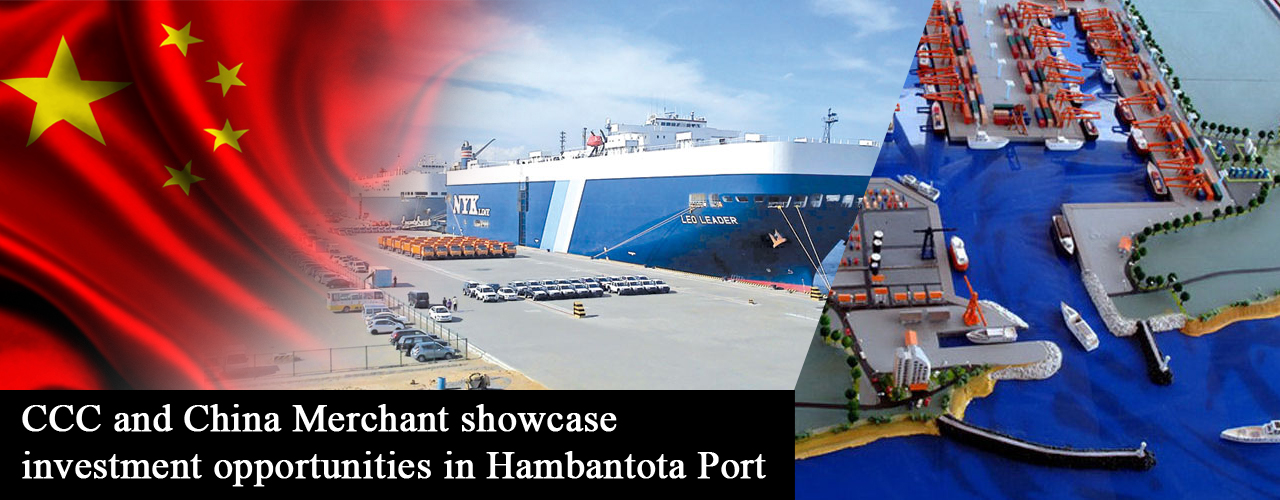
China’s growing economic footprint in Sri Lanka in recent years is no longer news as more than $8 billion worth of infrastructure projects have been undertaken by Beijing. But the costs have been rising as was reflected most categorically in the case of Hambantota port which despite its unwillingness, Rajapaksa’s successor was forced to hand over to China in 2017 on a 99 years lease. It was Mahinda Rajapaksa who had signed the Hambantota deal with Sri Lanka to begin with and today once again the Colombo Port project is being pushed by the Rajapaksas without any suggestion that past behaviour of China has been taken into account. Today, Chinese influence is so palpable that in place of Tamil, it is Mandarin is being included in the signboards of government projects in contravention of the official trilingual policy in the country wherein Sinhala, Tamil and English are used.

China had used the previous term of the Rajapaksas to its advantage and this time around it’s looking to be the same story. Beijing’s foothold is getting firmer by the day and it is ordinary Sri Lankans that will have to bear the brunt of Rajapaksa largesse eventually. After an initial positive outreach to India, the Rajapaksa’s famous tilt to China is back.

Earlier this year, Sri Lanka cancelled its $500 million agreement with India and Japan to develop the East Container Terminal (ECT) project under the pretext of local opposition. It changed tack and sought investments from the two countries for the West Container Terminal of the Port of Colombo under a public-private partnership model. Where the Rajapaksa government has had no compunction in pushing through a highly unpopular Colombo Port City Project under the Chinese influence, it decided to give India and Japan short shrift.

Amidst rapidly shifting geopolitical trends in the Indo-Pacific, Sri Lanka understands that it will be much sought after and has suggested that it is “observing the rise of Quad as an exclusive military alliance.” This is a sentiment in tune with the Chinese worldview. How this can be reconciled with Sri Lanka’s Foreign Secretary Jayanth Colombage’s remarks that “we will not, we cannot be, we should not be a strategic security concern to India” remains to be seen.

Chinese grip over Sri Lanka is getting tighter and the challenges for India will continue to mount. President Gotabaya has made it clear that Sri Lanka wanted to learn from the Chinese Communist Party’s “governance experience.” This learning has so far entailed ‘white elephant’ infrastructure projects being pursued that had only enriched the Rajapaksas even while severely indebting the nation.

At a time when several nations around the world are reassessing Chinese investments and its model of economic partnership, Sri Lanka under the Rajapaksas has decided to double down on their economic engagement with China. This economic engagement is already having a strategic fallout by enhancing the ability of the Chinese Navy to project power in the waters of the Indian Ocean. India-Sri Lanka ties seem to be entering turbulent waters and the Rajapaksas are making it clear that for all their rhetoric, they are not really interested in balancing between New Delhi and Beijing.

This article was first published by CNBC TV18

Posted in Uncategorized

Chinese scientists help Sri Lanka cope with marine disasters, climate change

On June 2, hundreds of security personnel in COVID-19 protective clothing were busy removing tons of chemical pollutants and plastic from a beach in Colombo. About 9.5 nautical miles into the sea, they could see the charred remains of a foreign vessel swaying in the gusty monsoon wind.

On May 20, the X Press Pearl container vessel loaded with chemicals exploded and caught fire off Colombo Port. Many of the containers and other polluting materials on board fell into the sea and were being washed ashore, posing a serious threat to the environment.

On day two after the explosion, Chinese experts from the China-Sri Lanka Joint Center for Education and Research (CSL-CER) received a request from Sri Lanka’s National Aquatic Resources Research and Development Agency (NARA), the principal national institute responsible for safeguarding aquatic resources in the country.

Through a forecast model, the CSL-CER helped evaluate the scale of the pollution caused by the debris and the extent to which the chemicals could spread.

The southwest monsoon makes frequent landfall in Sri Lanka in May. At the observation site of the CSL-CER based on the campus of the University of Ruhuna in the south of the island nation, an Automatic Weather Station (AWS) has been recently updated to study the effects of the monsoon outbreak.

Luo Yao, associate professor at the CSL-CER, told Xinhua that the AWS can improve the accuracy of forecasting models, and it can forecast marine environmental disasters caused by the burnt cargo ship.

“The AWS can monitor the atmospheric pressure, wind speed and direction, solar radiation and other marine atmospheric parameters. The accumulated data through long-term observations can be used to study the impact of climate change, sea level rise and other issues in the Indian Ocean and surrounding areas,” Luo said.

Sri Lanka is located in an area with warm currents between the Indian Ocean and Pacific Ocean and is one of the most active regions on the path of the monsoon, with frequent marine meteorological disasters. Due to the shortage of marine scientific research personnel and the lack of a mature monsoon climate forecast system, Sri Lanka is vulnerable to marine disasters.

Enomous amount of debris was cleared by the Lankan armed forces personnel. Photo:.Gayan Sameera/Xinhua
In order to strengthen the capacity to cope with climate change, the CSL-CER was established in 2015 at the University of Ruhuna, the only university in Sri Lanka with a faculty of fisheries and marine sciences.

Gamini Zoysa, former Sri Lankan minister of fisheries, once spoke highly of the observation network, saying that “the network has provided scientific and technological support for the development of the marine economy in Sri Lanka and the reduction of marine meteorological disasters caused by extreme weather such as tsunamis and storms, which are related to people’s livelihood and economic development.”

Although the COVID-19 pandemic has caused some difficulties for personnel exchanges at the center, it has not stopped its activities. In March this year, the China-Sri Lanka Joint Workshop on Monsoon Climate and Marine Environmental Resource was held as scheduled in both China and Sri Lanka simultaneously by combining online and offline methods.

“As an island country, Sri Lanka is particularly concerned about the monsoon. The enhanced cooperation between China and Sri Lanka on the monsoon issue will enable us to better understand the impact of the monsoon on the environment and reduce disasters caused by climate change,” said Tilak Gamage, co-director of the CSL-CER.

“The successive bilateral seminars on the ocean and climate have greatly enhanced Sri Lanka’s capacity to address climate issues and influence in the international arena,” Gamage said.

Zhang Changsheng, director of the CSL-CER, told Xinhua that since its establishment, the CSL-CER has not only done research but also paid attention to cultivating marine science talent in Sri Lanka.

The center has trained about 30 Sri Lankan graduate students in the fields of marine science and environmental science. They have later engaged in further scientific research in Sri Lanka.

The center has also conducted hydrological training for Sri Lankan institutions and trained personnel for meteorological observation, instrument use, and maintenance.

Charith Madusaka, a research fellow currently employed by both the CSL-CER and his alma mater the University of Ruhuna, is the first China-trained master’s degree student in oceanography from Sri Lanka.

Madusaka said, “Since I went to China, many of my classmates have turned to China.”

Nalin Wikramanayake, a senior Sri Lankan oceanographer, told Xinhua that the CSL-CER has made a major contribution to marine sciences and oceanography in Sri Lanka. Enditem

Source:Xinhua

CID summons ITSSL Chairman over statement on govt. websites under cyber attack

The Criminal Investigation Division has summoned the Chairman of the Information Technology Society of Sri Lanka Yasith Kuruwita due to the statement released by the society alleging that many government websites have been subjected to a mass cyber attack.

Information Technology Society Sri Lanka (ITSSL) said that several other government websites, including the official website of the Presidential Secretariat, came under cyber attacks, earlier today.

However, cyber security experts denied that such a cyber crime had taken place as all the information that was initially in the website is still present.

Sajith And Sirisena Indicate Likely Political Alliance

Speculation is rife that Opposition Leader Sajith Premadasa will enter into a political alliance with former President Maithripala Sirisena, informed political sources said.

This development has taken place against the backdrop of rising tensions between the SLPP and the SLFP within the ruling alliance.

Both Premadasa and Sirisena have expressed their admiration for each other in public and this has given strong indications that a political allince between the two is being discussd.

However, Sirisena’s possible affiliation with the SJB-led opposition has been greeted with mixed reactions among parliamentary group members of the party.

Some even fear that Sirisena will be offered the premiership in a future SJB government.

Meanwhile, opposition stalwart Sarath Fonseka’s supporters have launched a campaign indicating that the former Army Commander will be appointed the Prime Minister under Premadasa’s presidency.

This campaign has also sparked concerns among some senior members of the SJB who are of the view that it is “inappropriate” to talk about the premiership at this point.

Posted in Uncategorized

JVP calls for independent probe on allowing MV X-press Pearl

The Janatha Vimukthi Peramuna (JVP) today urged the government to initiate an independent investigation into allowing the MV X-press Pearl vessel that caught fire in Sri Lankan waters, claiming that the whole episode involving the ship was suspicious.

JVP Leader Anura Kumara Dissanayake told a news conference that the government should reveal all the facts with regard to this whole incident involving the ship to the people and take proper action against the political authority and the officials responsible for the disaster, one of the worst the country had faced.

“It is reported that there was some smoke in the ship when it reached Sri Lankan waters. The ship has been denied entry to two other ports. It is suspicious that who gave permission to the ship to enter Sri Lankan marine territory. What are the reasons for making such a decision,” he asked.

MP Dissanayake said it was suspicious that why the authorities failed to douse the fire or tow it to deep seas before it sank and added that all these issues should not be allowed to submerge with the ship.

“There was a time when ships carrying hazardous substances and waste were sunk in African seas with the support of corrupt rulers of some African countries. People raise doubts whether the same thing is happening in Sri Lanka. We heard one minister saying that Sri Lanka would receive compensation. We doubt if the government has made it a source to earn dollars by sinking ships. The government should give a clear response to this issue,” he said.

He said a huge damage has been caused to the marine environment that could not be restored or repaired for decades and the fishery industry is also in deep crisis due to this disaster.