40th Anniversary of BURNING JAFFNA LIBRARY, AN INTENT OF GENOCIDE

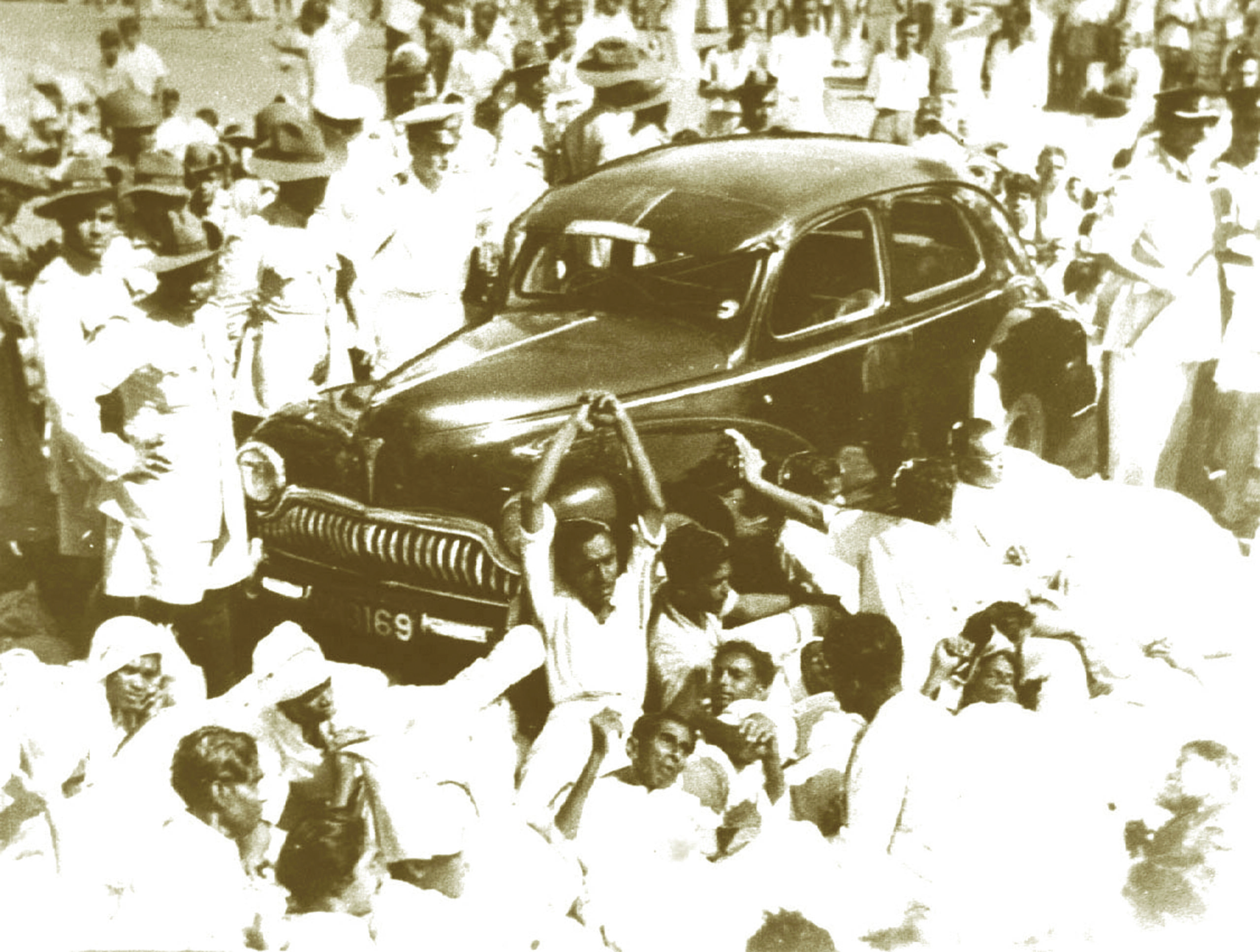
At midnight on May 31, 1981, the Jaffna Public Library, the crucible of Tamil literature and heritage, was set ablaze by Sri Lankan security forces and state-sponsored mobs. The burning has since been marked by Eelam Tamils as an act of genocide.

Where they have burned books, they will end in burning human beings.” – Heinrich Heine – a German poet, writer and literary critic.

Today is the 40th anniversary of the burning down of Jaffna library on 31st May 1981 by the Sinhala mob brought down from the South of Sri Lanka by senior ministers of the Sri Lankan state.

Over 95,000 unique and irreplaceable Tamil palm leaves (ola), manuscripts, parchments, books, magazines and newspapers, housed within an impressive building inspired by ancient Dravidian architecture, were destroyed during the burning. Some texts that were kept in the library, such as the Yalpanam Vaipavamalai (a history of Jaffna), were literally irreplaceable, being the only copies in existence. It was one of the largest libraries in Asia.

The destruction took place under the rule of the UNP at a time when District Development Council elections were underway, and two notorious Sinhala chauvinist cabinet ministers – Cyril Mathew and Gamini Dissanayake – were in Jaffna. Earlier on in the day, three Sinhalese police officers were killed during a rally by the TULF (Tamil United Liberation Front).

The burning continued unchecked for two nights.

Homes and shops across Jaffna town were also set alight by the mob, including the TULF headquarters and the offices of the Eelanadu newspaper.

Virginia Leary wrote in Ethnic Conflict and Violence in Sri Lanka – Report of a Mission to Sri Lanka on behalf of the International Commission of Jurists, July/August 1981, that “the destruction of the Jaffna Public Library was the incident, which appeared to cause the most distress to the people of Jaffna.”

This is a key event in the history of the Sri Lankan state’s genocide against Tamils, as the library was attacked in an aggressive act of biblioclasm, the deliberate destruction of books. By intentionally burning one of the oldest and respected collection of ancient Tamil manuscripts in the whole of south Asia, Sri lankan state deprived Tamils of their immeasurable treasure of cultural heritage.

This was intentional as there was no provocation in the area in which the library stood. The Jaffna district Police Headquarters was in the vicinity of the library when this occurred which shows intent as they were led by former ministers Gamini Thissanayake and Cyril Matthew. These are evidence that the burning of Jaffna Library was an intentional act of cultural genocide as the Sri Lankan government purposefully wanted to erase parts of Tamil history.

70 years of acts of genocide against Tamils calls for the need of justice through an international judicial mechanism and a process to protect the Tamils in the North-East of Sri Lanka.

Nurses go on Strike

The All Ceylon Nurses’ Union launched a trade union action by reporting sick leave this morning (May 31).

This is due to the failure to provide proper solutions to the issues faced by nurses engaged in COVID-19 treatment, the General Secretary of the Union H. M. S. B. Mediwatta said.

Accordingly, a trade union action launched today will conclude tomorrow morning (June 01), he added.

adstudio.cloud

Posted in Uncategorized

If govt. had cared to order vaccines in Jan. country would have been safe now

The JVP yesterday said that the Covid vaccination drive was doomed to fail owing to the government’s inefficiency and political interference.

JVP Propaganda Secretary MP Vijitha Herath, addressing the media, at the party headquarters, said that the government had not made timely decisions to launch the vaccine rollout. “There is a vaccination crisis. The government could not place orders in time for the vaccines. Even countries much poorer than Sri Lanka have done better. Morocco obtained its stock by Jan 21. Myanmar had purchased 3.7 million vaccines, Bangladesh purchased seven million vaccines. They were among the first countries to place orders with vaccine producing companies. Some ministers said that the government would vaccinate half of the population by the end of May.

MP Herath said that if the government had made right decisions at the right time and implemented them, the present crisis could have been averted. The Indian Foreign Minister visited the country on Jan 5 to 7 and stated that his country was willing to accommodate Sri Lanka on priority list to give vaccines. However, at that time the Medical Research Institute had not given approval for the vaccines from any country. “So we missed the bus.”

It was on Jan 22 the approval was granted for AstraZeneca vaccine. But the government placed the orders much later. If the government had done so in January, there would not have been any crisis situation now. Even the vaccines that had been procured were not given to people properly. They were given to people who carried chits from politicians. Political leaders of various levels were messing up with the inoculation process.

“During the first round of inoculation 600,000 doses were given to people but the government did not stock enough doses for booster shots. People in Colombo who had their first dose gathered at the Abhyaramaya temple even overlooking health regulations. Finally, the monks there too admit that the government’s vaccination drive was a failure.

“It is heartening to see that in some places health officials openly disregarded the chits and requests of favours by politicians. We should appreciate their courage and be proud of the fact that we still have brave health workers with backbone to stand against the unjust.”

Sri Lanka sovereign rating confirmed at ‘CCC+’ by S&P

Sri Lanka’s CCC+ sovereign rating has been confirmed by Standard and Poor’s with the rating agency said loose policies while boosting growth worsened debt and would also pressure the exchange rate.

“While expansionary macroeconomic policies will provide relief to the economy, they risk further weakening the government’s fiscal position and worsening the risks associated with the government’s already high debt burden,” the rating agency said.

“At the same time, domestic interest rates have been kept extremely low through massive liquidity injections by the central bank.

“While this has reduced the effective interest rate on the government’s domestic debt, an increase in domestic liquidity will also pressure the exchange rate. ”

Sri Lanka could run a 10.2 percent budget deficit in 2021.

“If revenue growth disappoints, we believe that the government has some flexibility to cut capital expenditure to contain the fiscal deficit,” the rating agency said.

“High fiscal deficits over an extended period will worsen the government’s extremely high debt stock.”

S&P said it could downgrade the credit if “foreign reserves decline by substantially more than we forecast, including if the government is unable to further boost reserves by issuing Sri Lanka Development Bonds (SLDBs).

SLDB rollover depended on the ability of local creditors to access foreign funding.

The full statement is reproduced below:

Sri Lanka Ratings Affirmed At ‘CCC+/C’; Outlook Remains Stable

Overview

• Sri Lanka’s external financing risks remain acute as the country’s high debt burden and large fiscal deficits weigh on investor confidence.

• While the economy is likely to expand modestly this year, uncertainty over the evolution of the COVID-19 pandemic threatens recovery.

• We affirmed our ‘CCC+/C’ long- and short-term sovereign credit ratings on Sri Lanka.

• The stable outlook reflects our view that the government has access to official creditors, but remains dependent on favorable business, financial, and economic conditions to boost foreign reserves.

Rating Action

SINGAPORE (S&P Global Ratings) May 31, 2021–S&P Global Ratings today affirmed its long-term foreign and local currency sovereign credit ratings on Sri Lanka at ‘CCC+’. We also affirmed our short-term foreign and local currency credit ratings at ‘C’. The transfer and convertibility assessment is ‘CCC+’. The outlook remains stable.

Outlook

The stable outlook reflects that, at this rating category, risks to Sri Lanka are relatively balanced over the next 12 months.

The threat of external deterioration is partially offset by the country’s access to official funding and accommodative macroeconomic policies, which are likely to boost domestic demand recovery.

Downside scenario

We could lower our ratings if foreign reserves decline by substantially more than we forecast, including if the government is unable to further boost reserves by issuing Sri Lanka Development Bonds (SLDBs).
This would hurt its debt-servicing capacity.

Upside scenario

We would raise the rating if external buffers are significantly boosted, or if economic recovery is much stronger than expected for the next two years. This could lower the risks associated with the government’s debt-servicing capacity.

Rationale

Our ratings on Sri Lanka reflect our assessment that risks to debt-servicing capacity remain elevated, and the government’s access to external financing is increasingly dependent on official support and favorable economic and financial conditions.

The country’s relatively modest income levels, weak external profile, sizable fiscal deficits, heavy government indebtedness, and hefty interest payment burdens significantly constrain our ratings.

While the economy is likely to expand this year, uncertainty over the COVID-19 pandemic fallout in Sri Lanka and the surrounding region poses significant headwinds to economic activity and recovery in sectors such as tourism.

While expansionary macroeconomic policies will provide relief to the economy, they risk further weakening the government’s fiscal position and worsening the risks associated with the government’s already high debt burden.

Institutional and economic profile: Pandemic uncertainty still hinders growth

• Following a sharp contraction in 2020, economic activity is expected to recover this year, although more slowly than previously forecast.

• The new deadly wave of infections sweeping across the surrounding region will likely keep borders closed for the rest of the year, while vaccine rollout has been hampered by supply issues.

• We expect policies to remain expansionary, as the government maintains a strong parliamentary majority.

Sri Lanka’s economy recorded its most severe contraction in 2020 as the government shut down international flights and implemented a nationwide lockdown in response to the COVID-19 outbreak. This resulted in real GDP plunging 16.4% year-on-year (yoy) in second quarter (Q2) 2020.

With the lifting of the lockdown and a revival in external demand for goods, Sri Lanka’s economy stabilized in the second half of the year and recorded growth of 1.3% yoy. Although the country experienced a second wave of coronavirus infections in Q4 2020, it was able to finally open its border to travelers in the first few months of this year. However, a third wave of infections that started in late April, which has proven to be the largest so far, has halted international travel again and we do not expect any meaningful uptick in tourism for the rest of the year.

Nevertheless, economic activity is likely to recover this year from the low base in 2020. We do not expect the government to reimpose a nationwide lockdown that would severely disrupt economic activity. Instead, it is likely to continue with localized restrictions and ad-hoc curfews to control the spread of the coronavirus. External demand is also likely to support the economy, especially if end-demand markets sustain their economic recovery.

However, downside risks to growth are still substantial, particularly given the unpredictable nature of the pandemic and the emergence of new infectious variants. A further serious escalation in the sanitary crisis could overwhelm Sri Lanka’s health care system, which is already operating at the brink. This could also increase the risk of strict movement restrictions. Meanwhile, due to supply disruptions, the vaccination campaign is likely to proceed more slowly than the government initially expected.

We forecast the economy will expand by 3.7% in real terms in 2021, following the 3.6% contraction in 2020. With better vaccination progress in 2022, we expect real GDP growth to accelerate to 4.0% and average 4.2% from 2022-2024.

This will bring per capita income to around US$3,900 in 2021, translating into real GDP per capita growth of 2.0% on a 10-year weighted-average basis. Although this growth is in line with peers at a similar income level, it is substantially below Sri Lanka’s potential.

Sri Lanka’s institutional setting has been a persistent credit weakness over the past few years. Frequent political infighting and occasional unpredictable developments have hindered policy predictability and weighed on business confidence, in our view.

While the current administration’s clear victories in both the presidential and parliamentary elections are likely to ease such uncertainty over policy direction, there has been further consolidation of power in the executive.

This could potentially undermine social stability, particularly if divisions along religious or ethnic lines persist, in our view.

S&P Global Ratings believes evolution of the coronavirus pandemic remains highly uncertain.

Reports of vaccines that are highly effective gaining approval in more countries are promising, but this is merely the first step toward a return to social and economic normality; equally critical is the widespread availability of effective immunization, which could come by the middle of next year.

We use this assumption in assessing the economic and credit implications associated with the pandemic (see our research here: www.spglobal.com/ratings). As the situation evolves, we will update our assumptions and estimates accordingly.

Flexibility and performance profile: Fiscal position will to continue deteriorate and external financing risks remain heightened

• The external profile remains weak, given that the high share of dollar-denominated debt exposes the government to shifts in risk sentiments.

• Sri Lanka’s fiscal deficit is likely to remain elevated due to subpar growth and revenue measures announced in the budget.

• This will likely worsen the government’s heavy indebtedness and add to the repayment burden.

The government’s external financing conditions have become more challenging, and uncertainty over access to official creditors remains high, in our view. The government recently received US$500 million in official loans for budgetary support.

Sri Lanka is also expected to benefit from the proposal for new Special Drawing Rights allocation by the International Monetary Fund. This is likely to increase Sri Lanka’s foreign exchange reserves by around US$780 million.

The government is also establishing bilateral credit lines with other central banks. A stronger network of bilateral swap lines will help to augment reserves to some extent.

However, we see increasing risks that funding from multilateral or bilateral partners will not be sufficient to cover all external financing needs over the next 12 months.

While financing conditions on the international capital markets remain difficult, the government has been able to issue SLDBs to domestic creditors, particularly domestic banks and eligible corporates.

Success in rolling over SLDBs will become increasingly crucial to the government’s debt-servicing capacity. In turn, this will heavily depend on domestic creditors’ ability to access external financing under favorable terms.

Persistent deficits in Sri Lanka’s fiscal and external positions remain rating constraints. The government’s heavy debt burden limits its ability to accumulate policy buffers, which are crucial in times of stress. The COVID-19 pandemic has further devastated government finances by dampening domestic economic activity and lowering excise duty earnings.

In the latest budget, the government committed to keeping the wide-ranging tax cuts, including a lower value-added tax (VAT) rate, increasing the VAT turnover threshold, and removing the 2% Nation Building Tax, for five years.

Instead of one-off measures to counter the economic impact of the pandemic, these expansionary measures are likely to increase the deficit for an extended period, in our view.

In the absence of extremely favorable economic and financial conditions, these measures are expected to constrain revenue growth and could be only partially offset by new revenue measures, such as the Special Goods and Services Tax.

The government is planning to significantly ramp up infrastructure spending over the next few years.

While recurrent expenditure has been relatively contained, room for further cuts is limited due to the high interest burden. Health care-related spending may also increase fiscal pressure, particularly if the hospital system comes under further strain.

We expect the fiscal deficit to remain elevated at 10.2% of GDP in 2021 and narrow gradually to 8.4% in 2024. If revenue growth disappoints, we believe that the government has some flexibility to cut capital expenditure to contain the fiscal deficit.

High fiscal deficits over an extended period will worsen the government’s extremely high debt stock.

We expect the increase in net general government debt to average 10.3% over 2021-2024. Net general government debt has exceeded 100% of GDP in 2020 and will continue to increase over the next five years, in our view.

Sri Lanka’s debt profile is also vulnerable due to the high share of the total debt being denominated in foreign currency, although this has been reducing over the past year.

The government has been increasing the share of domestic financing to fund the fiscal deficit.

At the same time, domestic interest rates have been kept extremely low through massive liquidity injections by the central bank. While this has reduced the effective interest rate on the government’s domestic debt, an increase in domestic liquidity will also pressure the exchange rate.

The government’s interest payment as a percentage of revenues has reached 68.8%in 2020–the highest ratio among the sovereigns we rate.

We assess the government’s contingent liabilities from state-owned enterprises and its relatively small financial system as limited.

However, risks continue to rise due to sustained losses at Ceylon Petroleum Corp., Ceylon Electricity Board, and Sri Lankan Airlines.

Also, Sri Lanka’s financial sector has limited capacity to lend more to the government without possibly crowding out private-sector borrowing, owing to its large exposure to the government sector of more than 20%.

The country’s external position remains vulnerable. While the current account deficit has narrowed substantially to 1.3% of GDP in 2020 from 2.2% in 2019, this was achieved through wide-ranging restrictions on non-essential imports.

We estimate the current account deficit will rise marginally to 1.9% of GDP in 2021. While most of the import restrictions will likely remain in place, higher fuel prices this year will likely result in a larger import bill, offsetting the earnings from robust workers’ remittances. Latest high frequency data shows a strong recovery in imports alongside sustained improvements in exports.

Sri Lanka’s external liquidity, as measured by gross external financing needs as a percentage of current account receipts plus usable reserves, is projected to average 122% over 2021-2024. We also forecast that Sri Lanka’s external debt net of official reserves and financial sector external assets will remain elevated at around 167% in 2021.

Sri Lanka’s monetary settings remain a credit weakness, although it has seen some structural improvements. The Central Bank of Sri Lanka has been preparing an updated Monetary Law Act in recent years. The passage of this act, which enshrines the central bank’s autonomy and capacity, will be crucial to improving the quality and effectiveness of monetary policy, in our view.

Posted in Uncategorized

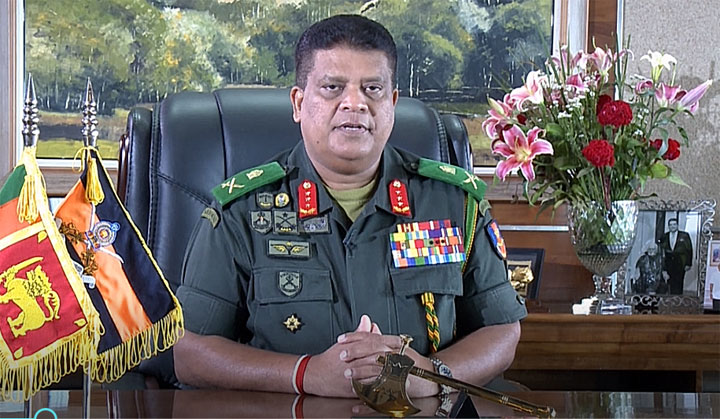
No decision yet on extending Sri Lanka’s unofficial lockdown: army chief

No decision has been taken yet to extend the ongoing movement restrictions in Sri Lanka beyond June 07 but it may be decided at any point until then, Army Commander Gen Shavendra Silva said.

Silva told the state-run Independent Television Network (ITN) on May 31 that there is no truth to reports circulating on social media that the unofficial lockdown has been extended.

Any decision regarding the restrictions will be informed to the public through an official press conference that will be organised by the Government Information Department, he said.

“It won’t come as a WhatsApp message,” he added.

Silva said decisions regarding movement restrictions are taken after consulting experts across multiple sectors, subject to the president’s approval.

“We will consider every recommendation from each party, and a decision may be made any day from now to June 07,” he added.

With the restrictions in place, the army chief said, health authorities have been able to COVID-19 identify patients and direct them to treatment or to quarantine centres.

“We won’t see the results of the ongoing controls right away, but we will after mid June,” he said.

Public Health Inspectors (PHI) Union Chairman Upul Rohana told the privately owned Derana TV that tracing and quarantining close contacts of COVID-19 patients were carried out successfully as a result of the restrictions.

“These restrictions helped us in a very big way to trace contacts and quarantine people. PCR tests results are now issued within three days,” he said.

However the number of PCR tests has dropped significantly, from 25,000 to 15,000, said Rohana.

Health authorities have suspended random PCR tests and are testing only close contacts of confirmed cases, he added.

Posted in Uncategorized

Sri Lanka facing its ‘worst beach pollution’ from burning ship

Sri Lanka is facing its worst beach pollution crisis as tonnes of plastic waste from a burning container ship wash ashore, a senior environment official said Saturday.

Fishermen have been banned from an 80-kilometre (50-mile) stretch of coast near the Singapore-registered MV X-Press Pearl as an international firefighting operation went into a 10th day.

“There is smoke and intermittent flames seen from the ship,” navy spokesman Captain Indika de Silva told AFP. “However, the vessel is stable and it is still in anchorage.”

Authorities are more worried about millions of polyethylene pellets washing up on beaches and threatening fish-breeding shallow waters.

The affected seafront is known for its crabs and jumbo prawns as well as its tourist beaches.

“This is probably the worst beach pollution in our history,” said Dharshani Lahandapura, head of Sri Lanka’s Marine Environment and Protection Authority (MEPA).

Thousands of military and security personnel in hazmat suits are cleaning the beaches of plastic waste and other debris from the ship, which caught fire on May 20.

The impact on mangroves, lagoons and marine wildlife in the region was being assessed.

The jobs of thousands of fishermen are at risk, according to authorities, and the MEPA said a possible oil leak would only add to the devastation.

Much of the ship’s cargo, including 25 tonnes of nitric acid, sodium hydroxide, lubricants and other chemicals, appeared to have been destroyed in the fire, officials said.

The X-Press Pearl caught fire as it waited to enter Colombo harbour and remains anchored just outside the port.

Authorities believe the fire was caused by a nitric acid leak that the crew had been aware of since May 11. The 25-member crew were evacuated after an explosion on the vessel.

Four Indian ships have joined Sri Lanka’s navy in the battle to contain the fire. Two vessels were equipped to deal with an oil slick, officials said.

Salvage operations are being led by the Dutch company SMIT, which has sent specialist fire-fighting tugs.

SMIT was also involved in dousing a burning oil tanker off Sri Lanka’s east coast last September after an engine room explosion that killed a crew member.

The fire on the New Diamond tanker took more than a week to put out and left a 40-kilometre (25-mile) long oil spill. Sri Lanka has demanded the owners pay $17 million for the clean-up.

Source: AFP

Posted in Uncategorized

China’s urban waste is Sri Lanka’s organic fertilizer?

The JVP alleged that the government is attempting to import China’s urban waste labeling it as Organic Fertilizer.

JVPs Vijitha Herath on Sunday (30) said the government is paving the way for business associates to achieve various objectives through this scheme.

Vijith Herath said that the garbage that is to be imported from China is currently being exported to other countries under the guise of organic fertilizer.

“This will pose a serious threat to cultivations, and would be severe than the destruction caused by chemical fertilizer,” he said.

On the 11th of May 2021, President Gotabaya Rajapaksa appointed a Presidential Task Force to transform Sri Lanka’s economy into a green socio-economy with sustainable solutions to climate change.

A main responsibility of the task force is to prepare a roadmap for the complete transition from chemical farming to organic farming using organic fertiliser products instead of chemical fertilisers, pesticides and herbicides.

Posted in Uncategorized

British tribunal recognises the risk of torture for Tamil political activists in Sri Lanka

In a landmark decision, the British Upper Tribunal has recognised the risk of arrest and torture Tamil activists face in Sri Lanka in a judgement granting an appeal to two Tamil asylum seekers in the case known as KK & RS vs the Home Secretary.

The case centred on the asylum appeal of two Tamil refugees who were detained by Sri Lanka’s security forces and subject to torture. The Home Office rejected their claims and alleged that they were not at risk of abuse upon returning to Sri Lanka as they were not high-profile figures. The tribunal rejected this claim.

The International Truth and Justice Project (ITJP) has documented 178 credible cases of torture from 2015-2018, excluding 22 individuals abroad who reported torture following the UN special investigation. A further 5 cases have been documented since Gotabaya Rajapaksa came to power with the ITJP noting that, “this likely represents the tip of the iceberg”.

The tribunal further defined the Government of Sri Lanka (GoSL) as “an authoritarian regime with a poor human rights record and a hostile attitude towards Tamil separatism”.

In this judgement, the tribunal noted that the Government of Sri Lanka (GoSL) drew “no material distinction between, on the one hand, the avowedly violent means of the LTTE in furtherance of Tamil Eelam, and non-violent political advocacy for that result on the other” and viewed separatist demands as “a threat to the integrity of the Sri Lankan state”. The judgement further noted that the GoSL maintains, “extensive intelligence-gathering regime” which has engaged in infiltrating Tamil groups, photographing demonstrations, and monitoring social media.

Expert evidence

In making this judgment the tribunal took into consideration the expert witness statements of Dr Sutha Nadarajah of SOAS and independent analyst Dr Chris Smith and Professor Rohan Gunaratne.

In his submission, Smith maintained that Sri Lanka viewed all Tamil diaspora sur place activities are political and in opposition to GoSL and further stated that it was very unlikely “for an individual to engage in political separatist activities within Sri Lanka without being detained and ill-treated”.

He further notes that the GoSL was unlikely to “differentiate between a person advocating federalism and one who urged confederalism” as both were seen as “two sides of the same coin.”

Smith further highlights not only the death threat protesters faced by former Defence Attaché, Brigadier Priyanka Fernando in February 2018 but case studies of family members in Sri Lanka who “had been harassed (or worse) by the authorities on account of a relative engaging in diaspora activities”.

In addition, Nadarajah, notes the wide-ranging proscription of hundreds of individuals and several Tamil diaspora organisations in March of this year. The ostensible purpose behind this was to enable authorities to take action against suspected members or supporters under Sri Lanka’s draconian Prevention of Terrorism Act. This act has been widely condemned by the international community as it permits Sri Lankan authorities to detain individuals without charge and has been linked to torture. In March Sri Lanka expanded upon this legislation despite having previously claimed a commitment to repeal it.

The Tribunal further upheld the “HJ Iran principle” which maintains that people can’t be expected to abandon their political activities so as to avoid persecution. The report notes,

“RS is aware of this risk and we have found that at least a material reason for her concealing her separatist beliefs would be to avoid being ill-treated”.

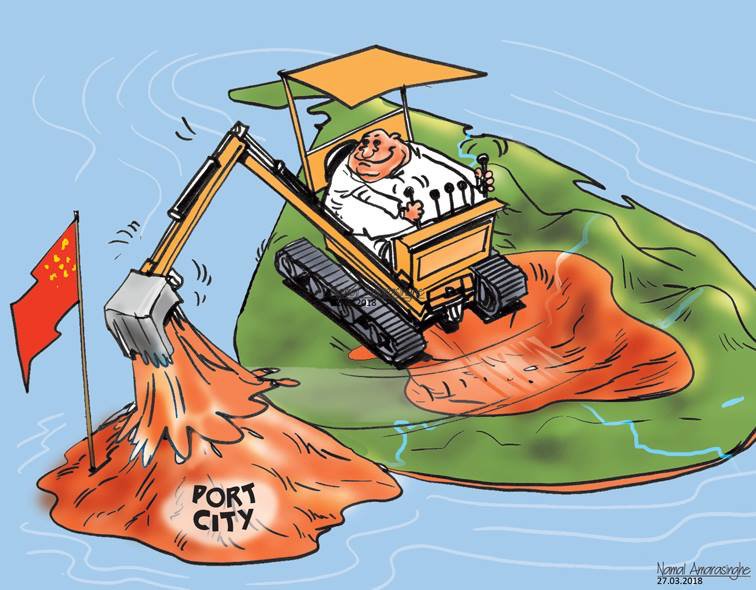
China backed Port City told to comply with Sri Lanka language policy: Minister Peiris

Sri Lanka has officially informed a state enterprise of China that reclaimed Colombo Port City to adhere to language policy of the country following controversy over a name board, though it was not a matter for concern Education Minister G L Peiris said.

“We have officially informed them,” Minister Peiris told reporters. “That is not a matter which is cause for concern. That has been corrected.

“That has been brought to the notice of the relevant people and adherence to the language policy of the country will be mandatory.”

The Port City firm ran into a social media storm after a picture of a sign board with English, Chinese and Sinhala started circulating.

The Port City said the sign had been erected by a contractor.

“Port City Colombo is still under construction and all signboards erected by the contractor within the site re for the benefit of site employees or authorised visitor,” the firm said in a statement.

“Although construction sites do not require to have temporary signboards in all official languages, as the majority of employees are locals, the contractor had use Sinhala for the signboards while also using English and Chinese, as there are a considerable number of foreign workers also at the site.”

The Port City firm said it requested the contractor to remove the signboards and “follow standard signboards within the site.”

“There has to be compulsory compliance with the language policy of this country,” Minister Peiris said.

“The language policy, Sinhala, Tamil and English. There is going to be no departure from that.

“Port City Project any other project will obviously have to comply.”

The comments came shortly after Sri Lanka’s Attorney General unveiled plaque involving a Chinese funded project which had also replaced Tamil with Chinese.

The AG’s office told reporters that he was unaware of the lack of Tamil until it was unveiled and was taking steps to add Tamil.

Before chauvinism given legal effect through nationalist legislation in a law-making assembly inherited from the British, such as through the ‘Sinhala only law’, Sri Lanka’s ancient rulers had used Tamil in many surviving stone inscriptions.

Sri Lanka confirms another 36 Covid-19 deaths Sunday, toll rises to 1,441

Sri Lanka confirmed 36 deaths due to COVID-19 on Sunday, May 30, 2021.

The Director General of Health Services Sunday confirmed 36 deaths that included seven deaths that occurred on Sunday and 29 deaths occurred from 02nd May to 29th May due to Covid-19 virus infection.

The total number of deaths due to Covid-19 infection in Sri Lanka is 1,441 by now.

Daily COVID-19 cases count moved to 2,849 on Sunday (May 30) as 663 more people were tested positive for the virus in Sri Lanka.

This brings the total number of confirmed cases of coronavirus reported in the country to 183,442.

Posted in Uncategorized