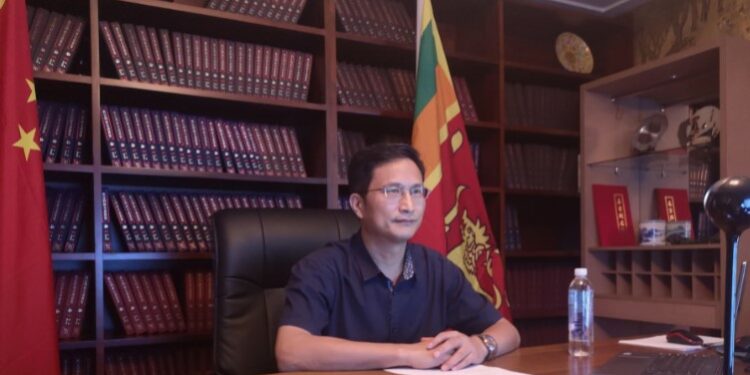
China gives one dose of Sinopharm vaccine at higher price to Sri Lanka?

Responding to reports that China has given one dose of Sinopharm vaccine at a higher price ($15) to Sri Lanka than it has given to Bangladesh ($10), Production, Supply and Regulation of Pharmaceuticals State Minister Professor Channa Jayasuma said there is no such an agreement to give the vaccine at $10 for Bangladesh.

He said they had been informed by the Chinese Embassy and the Sinopharm company that there is no such an agreement to give the vaccine at $10 for Bangladesh.

The State Minister said the procurement agreement of Bangladesh is still under discussion.

A stock of 20 million of China’s Sinopharm vaccines is expected to arrive in Sri Lanka next month. It is reported that Sri Lanka has purchased one dose of the vaccines at $15.

However, Sri Lanka is reported to have purchased one dose of AstraZeneca vaccine for $5.50.

Meanwhile, Director-General of Health Services Dr Asela Gunawardena said they had obtained the Sinopharm vaccines at the minimum cost.

He said they had procured the vaccines under the due tender procedure and after meetings held via zoom technology with relevant officials.

“We have procured the vaccines with the minimum cost we could and at a competitive price,” he said.

“The prices of COVID-19 vaccines ranges from $18 to $40. The prices are subject to changes due to numerous reasons,” the Health DG underlined.

Meanwhile, referring to social media reports, the Chinese Embassy of Sri Lanka said the Bangladesh has not yet finalized their procurement agreement including pricing.

“We checked with Chinese Embassy in Dhaka as well as #Sinopharm group. Bangladesh Health Minister has clarified last week that their procurement agreement including pricing is not finalized yet. The fake news on social media has already disturbed their ongoing negotiation,” the Chinese Embassy said.

https://www.unicef.org/supply/covid-19-vaccine-market-dashboard

China’s Sri Lankan port grab adds a pearl to its string – Mint

On 20 May, the Sri Lankan parliament passed the Colombo Port City Economic Commission Bill that lays out the country’s legal framework governing the China-financed project built on land reclaimed from the Sri Lankan capital’s seafront, adjoining Colombo’s port. The bill effectively turns these 660 acres into Chinese sovereign territory.

But this should not come as a surprise. China’s shadow seems to loom dark over Sri Lanka whenever the Rajapaksa brothers—Mahinda and Gotabaya—win elections and come to power. Mahinda Rajapaksa is currently prime minister and minister for finance. He was president from 2005 to 2015, when Gotabaya served as defence minister. Today, Gotabaya is president; the Rajapaksas returned to power after the 2019 elections.

The previous Rajapaksa government had revelled in Chinese loans and projects, most famously the ambitious port built at Hambantota. Even though feasibility studies warned against it, the port was built by a Chinese state-owned enterprise with Chinese money. As expected, the port failed spectacularly. And the Chinese came to collect on their debt.

This was transparently the debt-trap-foreign-policy that has marked China’s world-girdling Belt and Road Initiative. Lend a country money to build infrastructure, get it constructed by Chinese companies, then, as per the not-so-fine print on the contract, take over the infrastructure built after the country fails to pay its Chinese debt. Sri Lanka fell for it. Or more likely, the Rajapaksas knew exactly what was going to happen, and were quite okay with it.

A New York Times report published in June 2018 after a months-long investigation alleged that the Chinese had paid the Rajapaksas substantial sums to see the project through. The NYT even listed specific details of how China Harbour, the company that had built the port, supposedly financed the brothers’ campaign during the country’s 2015 parliamentary election, from hard cash to saris for prospective supporters. The Rajapaksas lost those polls, but China’s plan would succeed anyway.

The new government struggled to service the debt the Rajapaksas had taken on. Repayments ballooned to nearly 85% of revenues. In 2017, a hapless Sri Lanka handed over Hambantota and 15,000 acres of nearby land to China on a 99-year-lease that was modelled, ironically, on the 19th-century concession for Hong Kong that Britain had extracted from China.

The port-grab had been China’s objective from day one. It now owns strategic territory only a few hundred kilometres from India. Chinese military submarines have been docking at Hambantota, which is today a key part of China’s ‘string of pearls’ strategy to encircle India somehow. And with Colombo Port City, Beijing is closer than ever to Kanyakumari.

In the meantime, China has also been active in other areas proximate to India. A recent report in Foreign Policy magazine reveals that Beijing has built at least three villages inside Bhutan, south of the Tibet border. The villages are served by more than 100km of new roads, a hydropower station, two Chinese Communist Party administrative centres, a signals and satellite communications base and military outposts.

The villages are part of a project to build hundreds of settlements along Tibet’s border. The residents, who are termed “soldiers without uniforms”, are exhorted to make “every village a fortress and every household a watchpost”. Their primary task is to guard China’s border and catch Tibetans attempting to flee to India or Nepal. Foreign Policy sees the Chinese moves as a shift from “nibbling at a neighbour’s territory to swallowing portions of it wholesale”. The message to Bhutan is clear: “Cut your ties with India, or else…”

And on 27 May, Chinese state media CGTN carried an article by a Pakistani scholar that claimed that “the China-Nepal relationship is taller than Mount Everest”.

Elsewhere in the Himalayas, the deadlock on the military de-escalation in Ladakh continues. China appears to be relying on its well-worn but effective playbook of dragging on negotiations endlessly, while the People’s Liberation Army (PLA) builds roads and permanent structures on the disputed land and its soldiers make themselves at home. The PLA appears to have settled in for the long haul all along the Ladakh border.

It is essential for India to recognize that being nice and hospitable to China does not work. Beijing almost certainly interpreted India’s past civility as simply a weakness of resolve. China is a civilizational state that operates with a strong sense of manifest destiny. That destiny, it believes, is tianxia, ‘all under heaven’ coexisting harmoniously. Harmony, however, means living by the rules that China and its ‘son of heaven’ emperor—a role that Xi Jinping has cast himself in—lay down. For three decades, China followed Deng Xiaoping’s ‘tao guang yang hui’ policy—conceal ambitions, hide your claws. Xi thinks that the time to maintain a low profile is past, and China can pursue its hegemonic goals openly and unabashedly. In fact, the word ‘hegemony’ barely describes what China thinks is its rightful place in the world—or rather above it.

India no longer has the excuse that China lied to us. Today, Beijing sees no need for subterfuge or camouflage. It’s all out there in plain sight. India must shed those shibboleths of the world being one family and act in unhesitant self-interest.

Sandipan Deb is a former editor of ‘Financial Express’, and founder-editor of ‘Open’ and ‘Swarajya’ magazines

The Colombo Port City – The Island Editorial

However hard the government tries to claim that it won a famous victory in getting through the legislature the controversial Colombo Port City Bill, now an Act of Parliament following its certification last week by Speaker Mahinda Yapa Abeywardena, the fact remains that the Supreme Court (SC) found as many as 25 of its 74 clauses in conflict with the constitution. This is more than a third of the Bill that was originally presented and has been described as a “stinging rebuke” by critics. The SC held that many of the clauses, if not amended, required a two thirds majority of the House for their enactment; and there were others that required both the special majority plus the people’s consent at a referendum. It goes unsaid that the government will under no circumstances wade into a referendum. If we by some miracle have one, people will not bother about any Port City question that is put. They will vote on whether they do or do not want the incumbent government to remain in office. That is reason enough for any government to avoid referendums like the plague.

As promised, the impugned clauses were amended in line with SC guidelines to pass muster. After that, there was no need for the two thirds majority – which the government failed to get by a single vote – or any referendum. Readers will remember the one referendum we had was when the J.R. Jayewardene government asked the people to vote for either the ‘pot’ or the ‘lamp’ to indicate whether they consented to extend the massive mandate JRJ won in 1977. He asked for authority to continue to hold, without an election, the five sixths majority he won in that unprecedented landslide. That was in 1982 and the then incumbent Parliament got six more years without an election. There were numerous allegations that the referendum was rigged but nothing was proved. But it was as clear as daylight to anybody with eyes to see that the prohibition on the display of symbols was flagrantly violated.

It is true that JRJ applied some whitewash over this highly undemocratic act of canceling an election. He did that by requiring sitting ruling party MPs who could not carry their constituencies when he sought re-election (actually a misnomer as we will presently explain) in 1982 and the referendum that followed some weeks later. The misnomer is that he was not elected president in 1977. He was elected prime minister and was later “deemed” president by his 1978 constitution creating the executive presidency. Even in the whitewashing, there was dilution. Then Finance Minister Ronnie de Mel was exempted from facing a by-election and moved from Devinuwara to Bulathsinhala and no by-election was held at Panadura, out of the fear of Dr. Neville Fernando elected on the UNP ticket in 1977, who later resigned from Parliament following differences of opinion with the president.

We have been told by government MPs that there was a miscount in the parliamentary voting on the Bill and an inquiry of whether this was so would be held. Although there were different tallies, none of them hit the magic 150 number which constitutes the two thirds majority in the 225-member legislature. Voting in Parliament is now electronic and not physical. Gone are the days of voice votes of ‘ayes’ and ‘noes’, MPs standing at their seats for physical counts, or the calling of names where a vote by name is called for. Mr. Dhammika Kitulgoda, a former Secretary General of Parliament had been appointed as inquirer into this matter but had not begun his inquiry as this is being written. However the government’s Information and Communication Technology Agency (ICTA) was called to investigate and a report, not yet published or publicized, had been presented. Readers will agree that if the finding was in favour of the government contention, this would not have been the case.

We run in this issue a call by Mr. Chandra Jayaratne, a former Chairman of the Ceylon Chamber of Commerce who headed the CTC Eagle Insurance Company when the Ceylon Tobacco Company was in the insurance business, calling for the creation of an Independent Parliamentary Counsel in this country. This institution exists in the United Kingdom and Australia and Jayaratne, a civil society activist sees the Port City Bill (now Act) as a good reason for Sri Lanka too setting up such an institution to carry out the duties now undertaken by the Legal Draftsman. The people of this country will join him is asking how a Bill, with more than a third of its clauses in variance with the Constitution, could have in the first place been gazetted and then presented to Parliament with such defects. It presumably went through the Legal Draftsman, Attorney General, Ministry of Justice and the Cabinet before it came to Parliament. In fact the state-controlled Daily News reported over a month ago that AG had informed the Secretary to the President that “provisions of the Bill are not inconsistent with the Constitution. The Bill is not subject to any prohibitions or restrictions imposed by the 13th Amendment to the Constitution and may be enacted by Parliament.” Thereafter when the various unconstitutional defects were being pointed by counsel supporting the 19 petitions before the SC, a series of intended amendments were presented.

We are all familiar with the police arresting suspects on Friday evenings so that they can be held in custody until Monday morning without being produced before a Magistrate. The Port City Bill was presented to Parliament in the middle of the New Year holiday season limiting the time-frame open for citizen to challenge it. Nevertheless 19 petitions were filed and considered by a five-judge bench of the SC that made a unanimous determination. Whether the creation of the institution promoted by Jayaratne will make any difference to mala fide acts of governments seeking political advantages, we doubt. Perhaps the Port City will make a difference to the economy of our country. But that is no excuse for attempting to push through legislation that is bad in law.

Posted in Uncategorized

The Bangladeshi example – The Morning Editorial

Even though the Government and Central Bank of Sri Lanka have to date remained mum on the matter, Bangladeshi media has been making a song and dance about that country now assuming the mantle of a monetary lender, thereby joining a select group of nations to achieve that status. That “achievement” comes at the expense of its South Asian compatriot, Sri Lanka, which had sought assistance to overcome its worsening financial headaches.

Sri Lanka is a country that boasts of a written history spanning 2,500-plus years while Bangladesh will be commemorating 50 years since its founding in 1971. Bangladesh was born out of what used to be East Pakistan, as a new nation that had to start basically everything from scratch, following the genocide unleashed by Pakistani forces that led to the creation of the country. Therefore, Sri Lanka is the more senior of the two nations, and was way ahead on economic terms when Bangladesh was born. But today, the senior has gone crawling to the newborn, seeking a bailout from its financial woes.

More than the fact that Sri Lanka has had to obtain a three-month currency swap facility from Bangladesh, what has got eyebrows raised is the quantum of the facility – $ 200 million, which is equivalent to a day’s GDP output. Could Sri Lanka be that desperate, is the unspoken question lingering in many an economist’s mind. The Bangladesh facility comes on the back of two similar facilities obtained from two other Asian countries in the past two months, namely South Korea and China, each of whom have committed to disbursing $ 500 million loans.

While the Korean facility is more accommodative, with a 40-year repayment period at a concessionary interest rate of 0.20 and inclusive of a 10-year grace period, not so with China, which has been only too happy to lend all the money that Sri Lanka wants, but on “competitive terms” – which in effect is a pseudonym for commercial terms, meaning that this particular Chinese loan has to be paid back in 10 years. This comes on the back of a credit swap with China to the tune of $ 1.5 billion, which deal was inked just this February in order to overcome an acute foreign exchange crisis, the worst since 2008, that also sent the rupee crashing.

While Chinese funds are there for the asking, the caveat is that if and when Sri Lanka fails to repay, they will walk away with an asset of equal or greater value in lieu of the funds. And that in essence is how the now-infamous Chinese debt trap ensnares its victims, a system that has worked well for Beijing across many third world nations from Asia to Africa, including Sri Lanka, where the Hambantota Port became the first of such acquisitions.

So how is it that a country that shares many similarities of a South Asian nation, and has been on the world map for a mere 50 years, today boasts of being a frontier global market and one of the top 10 fastest-growing economies in the world, with ten times the foreign reserves of Sri Lanka, which from an economic perspective should be the one doing better? The answer must surely lie in the quality of leadership in the two nations, whose peoples and economies share many parallels.

Bangladesh’s phoenix-like growth in the last decade can be attributed to enlightened and astute leadership. A clear roadmap for growth and stability, relentlessly pursued by successive governments, has placed the country on a firm foundation for economic take-off. Today, Bangladesh is the new darling of the global apparel trade and Sri Lanka risks losing out on its breadwinner if it fails to get its act together, quickly. Already, there are reports of some of the bigger apparel producers based here shifting production to Bangladesh, if for no other reason than its investment-friendly, pro-business operating environment.

Not so long ago, Bangladesh used to be considered the laughing stock in this part of the world due to what seemed like perennial political problems, but all that is now history. That same joke is now on us. Today, the only companies that see investment potential in Sri Lanka seem to be the ones from China. The big boys from the West are flocking to places like Bangladesh, Vietnam, Thailand, etc., and the reasons are not that hard to fathom.

Our politicians have refused to see the writing on the wall, simply because they have been unable to see beyond their collective noses. It is unfortunate that “visions” and “missions” that abound during election time go no further once elected. The disconnect that occurs from one elected government to the other is another issue. The other danger lies in getting the investment mix wrong, because it could potentially affect export revenue. China does not import anything significant from Sri Lanka; 90% of Sri Lanka’s exports head to the West, not the East. Therefore, it is important to keep this equation in mind for obvious reasons.

The fact of the matter is that Sri Lanka’s economy shrank by 3.6% last year, the biggest contraction since the Central Bank began keeping records in 1950. While the pandemic is naturally at the root of it, it is noteworthy that the slide began before the pandemic kicked in, pointing to bigger, systemic issues. The end result has been a foreign exchange crunch that has had far-reaching implications on every aspect of the economy.

Notwithstanding this reality, prominent Cabinet Ministers have gone on record in the past few days that the Treasury has enough and more cash to purchase whatever it deems necessary, be it luxury vehicles for MPs, or vaccines to fight Covid-19. It is regrettable that despite the ministerial bombast, much of the vaccination that has taken place so far has been due to donations received from India, China, Russia, and the WHO’s Covax. Only 500,000 of the vaccines actually purchased have arrived in the country, while the millions that have supposedly been purchased remain mere orders on paper. To add to the contradictions, we have some other ministers directly appealing to the people for private funds.

Be that as it may, the controversy surrounding the utilisation of funds from the Government’s official Covid response fund, Itukama, has not helped the cause either, with the Government, by its own admission, stating that Rs. 1.3 billion from the fund remains unutilised, while the limited amount spent has also been shrouded in controversy. The contradictions don’t end there. Last week, a key Covid Task Force media briefing was presided by the Highways and Tourism Ministers, while the three health ministers were conspicuous by their absence.

The time has come to focus on substance rather than the superfluous to keep the masses happy. It is this recipe that has resulted in Sri Lanka Inc. becoming an underperforming asset and a liability for its 21 million citizens, who now have a debt exceeding Rs. 700,000 on each of their heads.

Politicians will come and politicians will go, but it is the people that have to face the consequences of their short-sighted actions for generations to come. Playing to the gallery is not going to bring in investors or pay back loans. For that to happen, the economic fundamentals need to be strengthened – and the only way to do that is to let professionals do what they do best while politicians take a backseat.

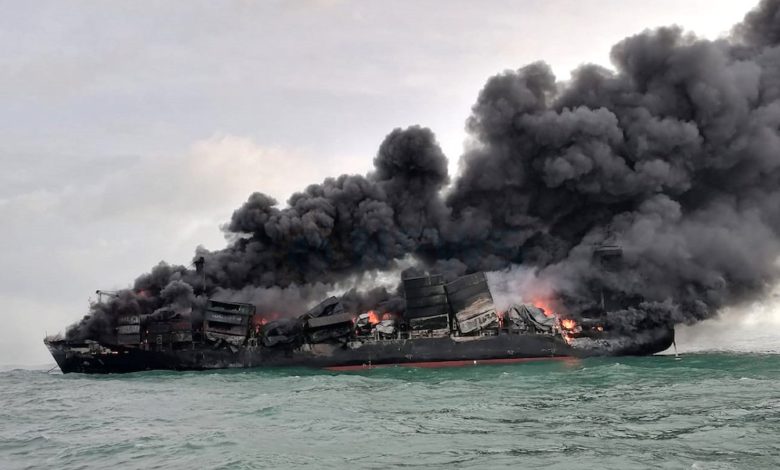
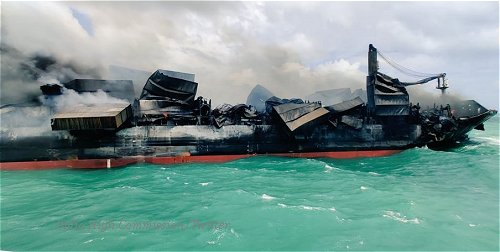
The need of the hour is to strengthen and ensure the independence of public institutions, which in the end, is the only thing that will create confidence for investors, not incentives. That is the only way the rule of law can be ensured, and the only way that progressive nations have succeeded. The Shipping Minister “issuing instructions” to port officials on extinguishing the fire on board the X-Press Pearl no sooner the fire began, is a moot point. The rest is now dark history in the making.

In short, if this country is to come out of the hole it has dug for itself, politics will have to take a backseat. That is what the people voted for at the last presidential election.

China denies reports claiming SL paid more for Sinopharm jab

The Chinese Embassy in Colombo has denied reports citing that Sri Lanka is paying $5 more for a Sinopharm vaccine compared to Bangladesh.

In a Tweet, the embassy has said that they had checked with the Chinese embassy in Dhaka as well as with the Sinopharm group.

“FYI: Bangladesh Health Minister has clarifed last week that their procurement agreement including pricing is not finalized yet. The fake news on social media has already disturbed their ongoing negotiation,” the Tweet added.

Social media was all abuzz after ‘Lanka C News’ had reported that Sri Lanka is purchasing the Sinopharm vaccine at a unit price of US$ 15 while Bangladesh is purchasing it at US$10.

The back story

Earlier, Bangladesh media had reported that the country would purchase the vaccine at a unit price of US$10.

The Bangladesh English daily ‘The Daily Star’ had said that the Cabinet Committee on Government Purchase on Thursday (27) had approved a proposal for buying 1.5 crore doses of Sinopharm’s Covid-19 vaccine, paving the way for the final agreement.

“Immediately after the meeting, chaired by Finance Minister AHM Mustafa Kamal, a Cabinet Division official told reporters at a briefing that they were purchasing the vaccine at $10 per dose,” it added.

“However, as the news spread online through different media outlets, including The Daily Star, ministry officials contested the disclosure saying that the price had not been approved yet,” it further said.

‘The Daily Star’ had further reported :

A finance ministry official sent a text to the messenger group of reporters covering the ministry, requesting the media not to mention the price for the “greater interest of the country”.

Contacted, Health Minister Zahid Maleque declined to disclose the price of the vaccine.

“As the purchase committee has approved the proposal, we hope that the procurement agreement between the two countries will be signed very soon,” he said.

Price ranges

According to the prices of COVID-19 vaccines as mentioned in the ‘COVID-19 Vaccine Market Dashboard’ published on unicef.org, all vaccines have different price ranges across different regions in the world.

CE 700px 21 05 29

Posted in Uncategorized

Government reiterates giving Hambantota Port to China was wrong

he Government today reiterated that giving the Hambantota Port to China was a wrong move.

State Minister of Finance and Capital Markets and Public Enterprise Reforms Ajith Nivard Cabraal told reporters today that the Hambantota Port was given to China by the former Government.

He said the former Government claimed it had no choice but to give the port because it was caught in a debt trap.

However, Cabraal said that the current Government feels the decision taken on the Hambantota Port was a wrong move and it will not follow a similar policy.

Cabraal was speaking at a virtual media conference on the Colombo Port City.

This is not the first time that the Government has been critical of the decision to give the Hambantota Port to China.

President Gotabaya Rajapaksa had also been critical of the move and had even considered renegotiating the deal with China.

Cabraal said that the Colombo Port City land belongs to Sri Lanka and only a part of it has been given to China on a 99-year lease.

Speaker Mahinda Yapa Abeywardane signed and validated the Colombo Port City Economic Commission Bill this week.

Thereby the Colombo Port City Economic Commission Act will be implemented in full from this week.

Posted in Uncategorized

Explained: What Bangla-Lanka currency swap means

Bangladesh’s central bank has approved a $200 million currency swap facility to Sri Lanka. What does this mean and why is it significant?

What is the arrangement?

Bangladesh Bank, Bangladesh’s central bank, has in principle approved a $200 million currency swap agreement with Sri Lanka, which will help Colombo tide over its foreign exchange crisis, according to media reports from Bangladesh, quoting the bank’s spokesman.


Sri Lanka, staring at an external debt repayment schedule of $4.05 million this year, is in urgent need of foreign exchange. Its own foreign exchange reserves in March year stood at $4 million.

The two sides have to formalise an agreement to operationalise the facility approved by Bangladesh Bank. Dhaka decided to extend the facility after a request by Sri Lankan Prime Minister Mahinda Rajapaksa to Bangladesh’s Prime Minister Sheikh Hasina.

What is a currency swap?

In this context, a currency swap is effectively a loan that Bangladesh will give to Sri Lanka in dollars, with an agreement that the debt will be repaid with interest in Sri Lankan rupees. For Sri Lanka, this is cheaper than borrowing from the market, and a lifeline as is it struggles to maintain adequate forex reserves even as repayment of its external debts looms. The period of the currency swap will be specified in the agreement.

Isn’t it unusual for Bangladesh to do this?

Bangladesh has not been viewed so far as a provider of financial assistance to other countries. It has been among the most impoverished countries of the world, and still receives billions of dollars in financial aid. But over the last two decades, its economy has pulled itself up literally by the bootstraps, and in 2020, was the fastest growing in South Asia.

Bangladesh’s economy grew by 5.2 per cent in 2020, and is expected to grow by 6.8 per cent in 2021. The country has managed to pull millions out of poverty. Its per capita income just overtook India’s.

This may be the first time that Bangladesh is extending a helping hand to another country, so this is a landmark of sorts.

Bangladesh’s forex reserves in May were a healthy $45 billion. In 2020, despite fears that the pandemic would hit remittances, Bangladeshis living abroad sent over $21 billion. It is also the first time that Sri Lanka is borrowing from a SAARC country other than India.

Why didn’t Sri Lanka approach India, the biggest economy in the region?

It did, but did not get a reply from Delhi. Last year year, President Gotabaya Rajapaksa knocked on Prime Minister Narendra Modi’s door for a $1 billion credit swap, and separately, a moratorium on debts that the country has to repay to India. But India-Sri Lanka relations have been tense over Colombo’s decision to cancel a valued container terminal project at Colombo Port.

India put off the decision, but Colombo no longer has the luxury of time. With the tourism industry destroyed since the 2019 Easter attacks, Sri Lanka had lost one of its top foreign exchange pullers even before the pandemic. The tea and garment industries have also been hit by the pandemic affecting exports. Remittances increased in 2020, but are not sufficient to pull Sri Lanka out of its crisis.

The country is already deep in debt to China. In April, Beijing gave Sri Lanka a $1.5 billion currency swap facility. Separately, China, which had extended a $1 billion loan to Sri Lanka last year, extended the second $500 million tranche of that loan. According to media reports, Sri Lanka’s owes China up to $5 billion.

What about last year’s credit swap facility that India gave Sri Lanka?

Last July, the Reserve Bank of India did extend a $400 million credit swap facility to Sri Lanka, which Central Bank of Sri Lanka settled in February. The arrangement was not extended.

RBI has a framework under which it can offer credit swap facilities to SAARC countries within an overall corpus of $2 billion. According to RBI, the SAARC currency swap facility came into operation in November 2012 with the aim of providing to smaller countries in the region “a backstop line of funding for short-term foreign exchange liquidity requirements or balance of payment crisis till longer term arrangements are made”.

The presumption was that only India, as the regional group’s largest economy, could do this. The Bangladesh-Sri Lanka arrangement shows that is no longer valid.

Source:Indian Express

Posted in Uncategorized

A Ceylonese ‘Princess’ in China, Internet Erupts in Anger and Dismay in Sri Lanka

Atweet by BRISL (an Organisation covering news, analysis & research on Belt & Road Initiative from a Sri Lankan perspective), claiming the “Lanka Princess” Xu Shi Yin’e attended this year’s Vesak celebrations at the Sri Lankan Embassy in Beijing on May 26 and she is a 19th generation descendant of a prince from the court of King Parakramabahu VI of Kotte, has set the internet on fire across Sri Lanka and its diaspora all over the World.

Many Sri Lankans who are already wary of the growing presence of China and Chinese nationals across the Indian Ocean island nation have taken to social media platforms to question and ridicule these claims. Some are expressing anger and dismay over the brazenness of China.

According to Sri Lankan mythology, a 15th-century Sinhalese prince had stayed back in China after he married a Chinese girl. Chinese media and officials claim Xu Shi Yin’e is a direct descendant of that prince.

In the 1990s, her identity came to light when a development project threatened to destroy her family’s burial tombs in Shijia Tomb on Mt. Qingyuan. Hence, the history of the Ceylon Prince in Quanzhou was unveiled. Legends state that a Ceylon prince visiting China was not able to return to his country because of a cousin who had usurped his father’s throne at Kotte (more or less, the present-day Colombo) and killed his brothers. So, he stayed in China, married and settled down, taking up the name of ‘Shi’. According to Yin’e, the reason he did not return is not political but simply love. Some even argue that the prince was Alakeshvara, the brave king of Kotte who was abducted and taken to China by the generals of Ming dynasty. After pardoning him, the Ming emperor had installed Parakramabahu VI as the new king in Sri Lanka.

All these stories are shrouded in mystery and no one is ready to authenticate them.

According to Sasanka Perara of South Asian University, there is a deafening silence on the Chinese belligerence in the 15th century even though there are adequate references to the incident from records of the time as well as from the work of latter-day scholars such as Edward Dreyer, Louise Levathes, Senarath Paranavitana and others. All these sources collectively offer a reasonable sense of what happened not only in Lanka but the overall contexts and politics of Chinese naval expansion in the 15th century.

The latest claims are being dubbed as a Chinese joke on Sri Lankan history. Some are even calling it a Chinese psychological operation to capture Sri Lanka by planting such “nonsensical” stories to establish an ancient link.

Philip Friedrich, a historian and researcher, rubbishes the Ceylonese prince theory. He said, “The Mahavamsa and Sinhala vamsas (texts like the Rajavaliya and Rajaratnakaraya) don’t offer a clear genealogy of Parakramabahu VI’s royal household. This whole period is a historiographic morass”.

In a series of tweets, he has tried to debunk the Ceylonese “princess” story.

“I don’t know what the intentions behind the ‘Ceylon Princess’ story are – if it’s part of long-con, Chinese influence operation in SL, at least they got the Quanzhou part right! But one thing that the story can’t offer is an unmediated link to an ‘authentic’ Sinhala sovereignty,” he said.

China has invested heavily in Sri Lanka and the island nation has borrowed billions of dollars from it in the last 10 years to take up huge infrastructure projects. China already controls the Hambantota port in the south and is building an international port city right next to the Sri Lankan President’s official residence on the land reclaimed from the Indian Ocean. This port city will be like a Chinese colony in the Sri Lankan capital, allege many locals.

Though the Sri Lankan government is not commenting on the newly-found Ceylonese “princess” in China, the public mood is more or less against it.

Posted in Uncategorized

After Port City, Gota Set To Sell Colombo Fort, Slave Island Heritage Buildings To China-Backed Firms

The Government of President Nandasena Gotabaya Rajapaksa looks set to sell hundred acres of prime land to Chinese companies in the Colombo Fort and Slave Island areas, as Beijing continues to seize strategic control of Sri Lanka’s capital city, its major highways, and ports, Colombo Telegraph learns.

China Harbour Engineering Corporation (CHEC) is the company that built and now has virtually complete management, administration and jurisdiction of the Colombo Port City, the reclaimed landmass that was annexed to Sri Lanka’s territory.

This week in a brazen move, the Nandasena Government which is already under fire for rushing through the Port City Bill in the middle of a major coronavirus outbreak, handed over an elevated highway project to CHEC. The Cabinet of Ministers decided to award the contract to build the 17 km Kelaniya-Athurugiriya elevated highway to the Chinese state-owned CHEC sans a competitive bidding process. By winning the bid worth USD 1 billion, CHEC will become the first foreign company to own a major highway in Sri Lanka on which it will operate a toll.

CHEC will operate the New Kelaniya Bridge highway for 15 years, during which it will earn revenue. In 18 years, the Highway will be transferred back to Government of Sri Lanka ownership, Cabinet Spokesman Udaya Gammanpila said. The Cabinet made the decision to hand the project over to CHEC on the basis that the company would take the least amount of time to complete the project and the shortest period by which it will recover the cost, Gammanpila said, without elaborating on a transparent bidding process.

The Company was exposed by a 2018 New York Times investigation for “donating” over Rs 800 million to Mahinda Rajapaksa’s presidential re-election campaign in 2014/2015 through its Standard Chartered Bank account in Colombo. The payments were made from a subaccount controlled by CHEC named the HPDP Phase 2, shorthand for “Hambantota Port Development Project”, the New York Times revealed in its report. In 2011, the World Bank officially blacklisted China Communications Construction Company and all its subsidiaries after an investigation into fraudulent practices in a Phillipines Highway project. CCCC is CHEC’s parent company.

CHEC has reaped massive returns after the Rajapaksa family was returned to power in November 2019 but the procurement of thousands of acres of land in Colombo City would be essentially a seizure of Sri Lanka’s most strategic landmass by China. Beijing is vying for geo-political influence with other foreign powers including the US, Japan and India and Sri Lanka has become an important linchpin in this process.

But the Gotabaya Rajapaksa Administration has much bigger plans for CHEC, a company that has a reputation for oiling the palms of corrupt politicians world over.

Over the next two years, the Government plans to sell hundreds of acres of prime state-owned land in Colombo Fort and its adjacent Slave Island area, including property currently being used by the Sri Lanka Air Force and Sri Lanka Army. Colombo Telegraph learns that the bulk of these properties have been reserved for China Harbour Engineering Corporation, through an intermediary local firm created specifically for the purpose of easing the path for transfer to the Beijing-owned entity and other affiliated investors.

Many of these properties were already listed for diversification by the Yahapalanaya Government and other administrations who hoped to transform Colombo City into a commercial and financial capital and move the state administrative headquarters inland. However, that diversification was to be streamlined under a competitive bidding process for interested investors.

Selendiva Investments Limited in which the Treasury holds 100 percent of shares was established last year.

According to a Cabinet Paper submitted on May 17 by Prime Minister Mahinda Rajapaksa, in his capacity as Urban Development Minister Selendiva Investments has been tasked with transforming several underperforming state-owned assets into “viable, profitable and marketable” assets. Selendiva Investments is empowered to enter into long-term lease agreements with commercial entities about any land owned by the UDA. With private investors in these UDA properties and holdings, Selendiva will “smooth the way” for easy approvals from the state sector.

Based on the proposal now before Cabinet Selendiva Investments will set up Special Purpose Vehicles for specific investments.

According to the Cabinet Paper, the UDA is seeking approval to move ahead with three investment portfolios – namely: The Colombo Fort Heritage Square, The Immovable Property Development and The Government-owned Hospitality Sector under Selendiva Investments.

The proposal seeks to open multiple state-owned properties and UDA holdings for investment.

Ear-marked for “investment” under these portfolios are the Grand Oriental Hotel (GOH), the Gafoor Building, York Building, Republic Building (Ministry of Foreign Affairs), the General Post Office building (Slave Island), Hilton Hotel, Water’s Edge Hotel, Cey Nor Restaurant (Slave Island), International Coordination Centre, Kankesanthurai (Jaffna), and Grand Hyatt Colombo.

Colombo Telegraph learns that the second phase of this Rajapaksa leasing/selling spree will include the Sri Lanka Air Force HQ, SLAF Grounds, other military holdings including the FCID headquarters on Chatham Street where CHEC already has its plush offices in Colombo.

The moves are especially ironic for the Government that swept to power on the basis that the previous Sirisena-Wickremesinghe administration was selling national assets.

Colombo Telegraph learns that the Chinese Government hopes the transactions will be complete by 2022. Chinese firms are often preferred investment partners for the ruling Rajapaksa family because of the potential for massive kickbacks.

Spearheading the work for this major acquisition by the Beijing owned company is Urban Development Authority Secretary Siri Nimal Perera.

Perera was reportedly instrumental in securing the former Army Headquarters in Galle Face for sale to the Hong-Kong based Shangri-La corporation without a tender process on a free hold basis. Perera held office as Chairman of UDA when President Mahinda Rajapaksa was in power.

When the Rajapakasa were last in power, China built a port, an airport, a cricket stadium and a series of other white elephant constructions in the Hambantota region.

Eight years later, with the Government having changed and struggling to pay back massive foreign loans due to Beijing, China wrested control and operation of the Hambantota Port, the most strategically important of the Rajapaksa vanity projects it had bank-rolled when Mahinda Rajapaksa was president of Sri Lanka. Of Sri Lanka’s deep-water ports, Hambantota lies closes to the busiest international east-west shipping lane.

The Rajapaksas are engaged in a sustained effort to make their political survival in Sri Lanka, Beijing’s official business, a foreign policy analyst told Colombo Telegraph.

Unseating the Rajapaksas will be a herculean task, with any Government that hopes to succeed this one likely to be compelled to pledge fealty to Sri Lanka’s overlords in Beijing, the analyst noted.

“By the time Gotabaya Rajapaksa concludes the first term of his presidency, China will have wrested control of several ports in the island and strategic inland property. It will own the bulk of Sri Lanka’s debt, as Colombo repeatedly leans on President Xi Jingping for bailouts amidst a serious debt crisis. Any Government that follows this regime will be saddled with this economic and strategic subjugation – there will almost be no way out,” the analyst, who did not wish to be named, told Colombo Telegraph.

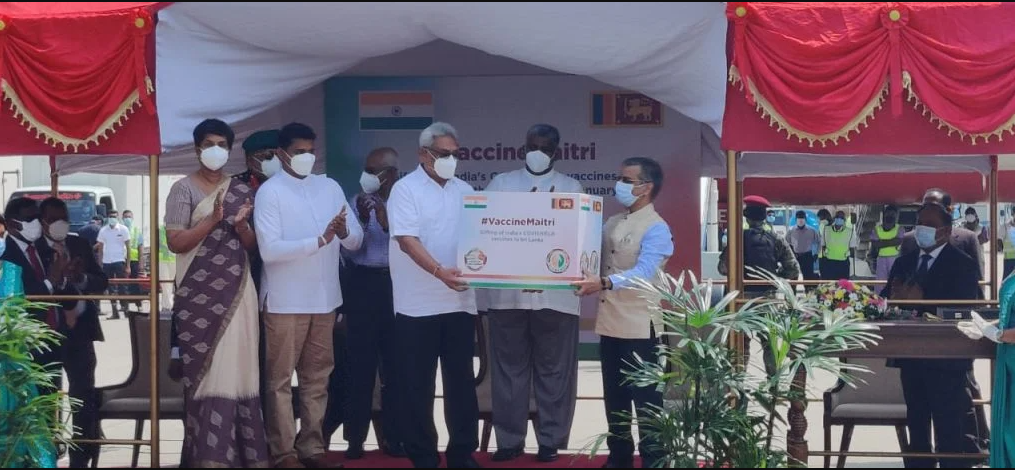
Colombo was already behaving like a vassal state, with the President himself or five-man ministerial delegations going to the airport to accept delivery of the Sinopharm vaccines being donated by Beijing, the analyst pointed out. “There is no question that with every move it makes, the Rajapaksa administration making it known that it is a willing client of the Chinese Government and a supporter of Beijing’s expansion in the Indian Ocean,” the analyst told Colombo Telegraph.

As it expands its strategic advantage in Sri Lanka, Beijing has been careful to invest in all influential sections of society in the island – Buddhist temples and their chief incumbents, senior journalists and media houses, powerful trade unions in the port and medical sectors and local politicians, Colombo Telegraph learns authoritatively. Beijing also has assets situated in senior levels of the ruling Gotabaya Rajapaksa administration that are constantly looking out for China’s interests in all matters, it is learnt. Beijing’s cyber-intrusion into Sri Lanka’s social media landscape has also been noteworthy, and seen an escalation in recent months it is learnt.

It was the determination to create a monopoly on the island’s ports that led to Beijing’s mobilisation of monks and trade unions and other stakeholders to staunchly oppose the lease of the East Container Terminal in the Colombo Port to an India-Japan led joint venture, the analyst explained.

“The west terminal of the Colombo Port is very different – there is nothing there yet in terms of infrastructure, and the way the deal was manoeuvred to be handed over to the Adhani Group of India, it doesn’t look like the Indian Government will have a major role to play in the transaction,” the analyst noted. In the coming years, Sri Lanka’s national electoral battles will also become a form of proxy war between Beijing Vs. The Quad. We saw some measure of that in the 2015 presidential election when the Chinese Ambassador in Colombo himself became a canvasser of votes for the sitting President. We should expect to see this on a much bigger scale in the future,” the analyst added. (By Nimal Ratnaweera)

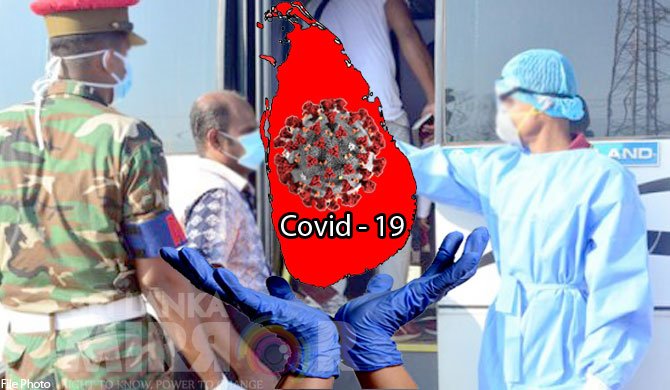
Covid death toll in Sri Lanka rises to 1,363

The coronavirus death toll in Sri Lanka rose to 1,363 today.

The Ministry of Health said that another 38 deaths linked to the virus were confirmed today.

Another 602 COVID-19 cases have been detected today in the country, raising the number of confirmed infections to 177,706.

Accordingly, 2,845 coronavirus cases have been detected in Sri Lanka today.

The Epidemiology Unit of the Ministry of Health said 30,019 persons are currently receiving treatment for coronavirus at several facilities across the country.

Earlier today, 2,573 persons who recovered from COVID-19 were discharged from hospitals, raising the number of recoveries in the country to 146,362.

1,452 suspected COVID-19 cases are also under medical observation at present.