India keeping an eye on China-backed Colombo Port City project

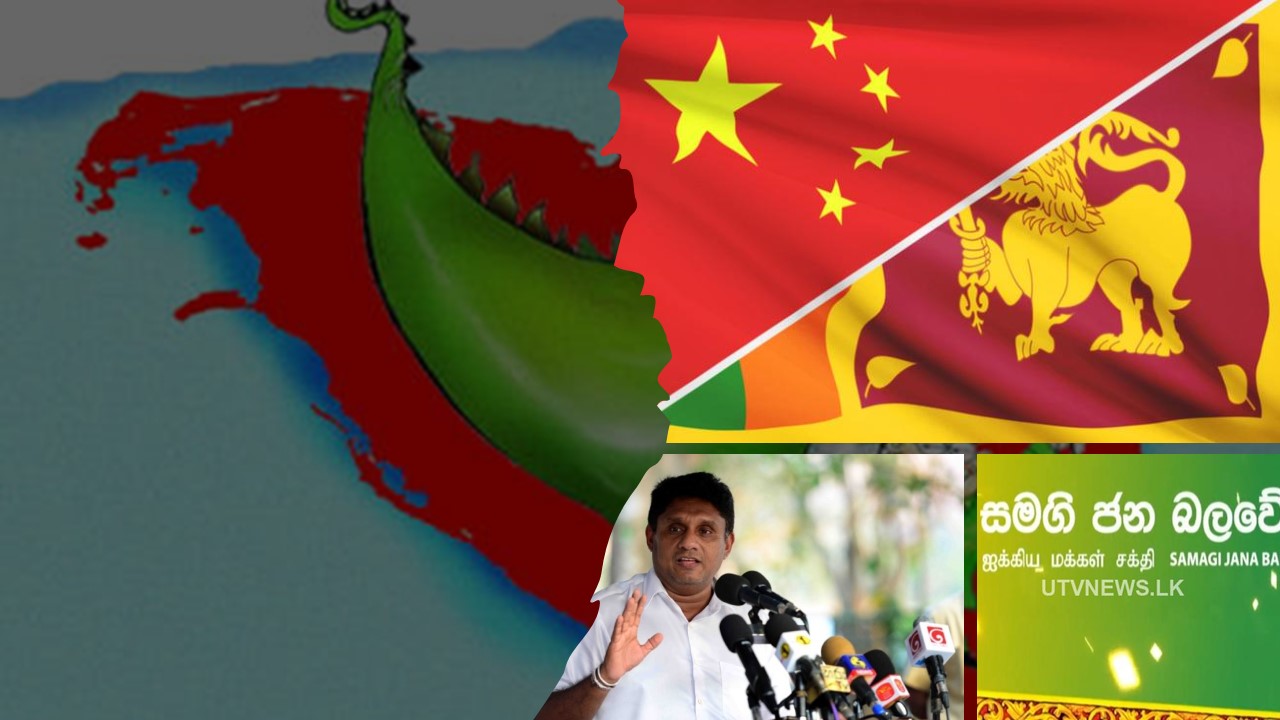
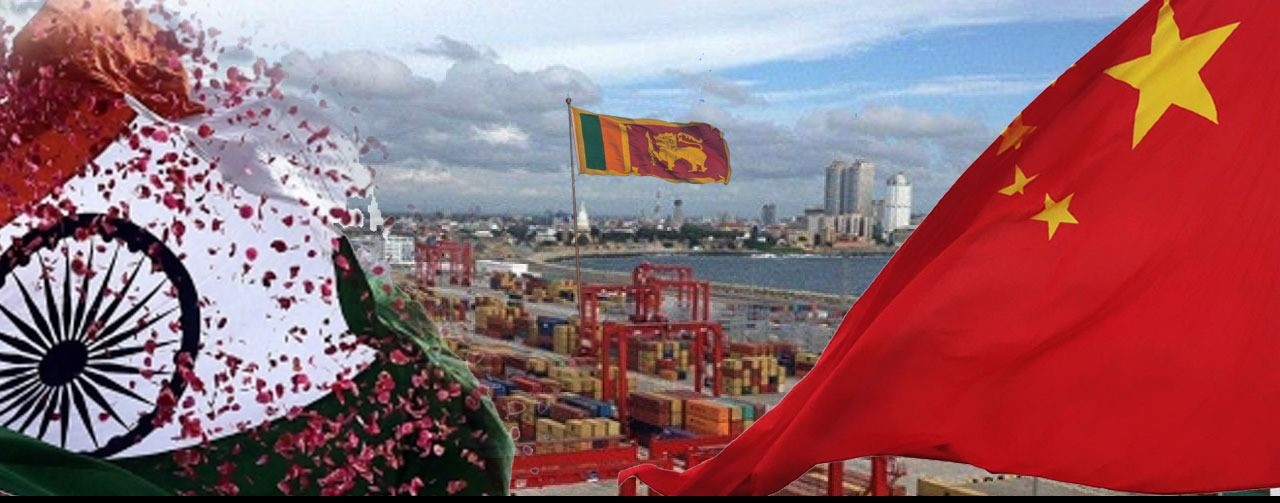
India has said it is keeping an eye on the China-backed Colombo Port City project in Sri Lanka that is being touted as a big ticket investment drawing scheme which would boost the island nation’s economy, Live Mint reported.

The project has been in the works for a while but this week, the Sri Lankan parliament approved the Colombo Port City Economic Commission Bill after a two-day debate on it. The Opposition parties in Sri Lanka are against the bill which they say will lead to the creation of a Chinese colony in Sri Lanka. The 225-member Sri Lankan Parliament approved the bill 148-59, according to news reports.

“I don’t think we have formally raised this issue” with the Sri Lankan government, a person familiar with the matter said on Thursday. “But our concerns on this matter are evident,” the person said against the backdrop of reports that the Chinese backed project was at a distance of about 300 kilometers from India. India views China as a strategic rival and the project in India’s sphere of influence – ie within South Asia that New Delhi considers its backyard – is a matter of concern for India.

“We have certain benchmarks – it should be transparent, there is talk of who will it benefit, is it China….we hope that the concerns that the Sri Lankans have themselves raised are addressed within the framework of the Sri Lankan democracy and that if there are other issues to it, it should follow the principles of openness, transparency and financial responsibility,” the person said. “And of course that respects the sovereignty and territorial integrity” of Sri Lanka.

“So I think those elements are important that it (the project) should be following internationally recognised norms… and any development that happens so near to our country we will of course keep a very close eye on that, on whether in any way it impacts our security. But at this point I think there are discussions within Sri Lanka, queries and questions, what are the implications of this for Sri Lanka itself,” the person said.

“If it is commercial venture only, then we don’t have much to say, thats their choice. But if there are other elements we will certainly have a look at it,” the person said.

The $ 1.4-billion Colombo Port City project is expected to play a key role in China’s ambitious ‘Maritime Silk Road’ project in India’s backyard. It is also said to be the single largest private sector development in Sri Lanka. China has built the port city on reclaimed sea, adjoining the Port of Colombo.

The Port city bill aims to provide for a special economic zone to establish a commission to grant registrations, licenses, authorisations and other approvals to operate business in such economic zones. On the importance of the bill, the Sri Lankan government on Wednesday said the port city would attract foreign direct investment, giving the much-needed impetus to the economy. Sri Lanka’s Minister for Capital Markets Ajith Cabraal projected that the initial construction of the port city would bring in investment of $ 15 billion, creating over 200,000 jobs. Sri Lanka, in recent years, has carried out various development projects with an estimated $ 8-billion in loans.

India views China’s Belt and Road Initiative and Maritime Silk Route as ventures of Beijing to boost its own influence in the world and saddle countries, taking China’s loans for the projects within the initiatives, with debt. New Delhi has also objected to the environmental costs of the projects.

CB lifts limits on short-term forex borrowing by banks

Central Bank has decided to revoke the limits set for short-term foreign currency borrowings for one year.

The previous limits as a percentage of total assets ranged from 1.5% (for banks with credit rating of BBB+ to BBB- or equivalent or Below BBB-) to 2.5% for banks with higher credit rating. Short-term means one year (remaining term of maturity).

The new move is whilst requiring banks to maintain the existing total foreign currency borrowing limit up to 10%. The latter is subject to banks ensuring through appropriate risk mitigation practices that such foreign currency borrowings do not give rise to any excessive forex risk. Banks are also required to inform the Central Bank prior to undertaking any borrowings.

The Central Bank said the new move is after considering the need to stimulate capital formation within the real economy and supplement foreign currency needs of the country.

Banks also have been asked to report their total foreign currency borrowings position at the end of each month within 15 working days starting from 30 June.

The latest stance by the Central Bank will encourage banks to tap more foreign sources to secure short-term funding which is easily available as opposed to long-term.

Some of the banks which had raised funds via foreign sources since last year include Bank of Ceylon, People›s Bank, National Savings Bank, Commercial Bank, Nations Trust Bank, Pan Asia Bank, Sanasa Development Bank etc. Commercial Bank and NDB managed to attract equity investment from abroad as well. Several finance companies too have raised funding from overseas.

“Banks have been regularly sourcing foreign funding both short and long-term. The removal of short-term limit is a big boost,” a senior banker told the Daily FT yesterday.

The relaxation will also help Sri Lanka enhance its forex reserves amidst the challenge of substantial foreign debt servicing and the COVID-19 pandemic.

As of end-April, gross official reserves were estimated at $ 4.5 billion, equivalent to 3.2 months of imports. This does not include the bilateral currency swap facility (worth 10 billion yuan) with the People’s Bank of China (PBoC).

Last year eight companies, mainly banks, had 16 listed debenture issues raising Rs. 22 billion, whilst in 2019, the amount raised was Rs. 58 billion. So far this year, several banks have opted for the same. Sampath Bank raised Rs. 6 billion in April, whilst Commercial Bank has announced a Rs. 10 billion debenture issue. Banks also rely on public deposits to boost their liquidity levels.

In 2020, despite the challenging business environment, off-balance sheet exposures reported a growth of 16.1% (Rs. 675.2 billion) compared to a negative growth of 5.3% (decrease of Rs. 233.5 billion) during 2019. The main increases during 2020 were in undrawn credit lines (Rs. 279.9 billion), FX exposures (Rs. 278.3 billion) and guarantees and bonds (Rs. 66.8 billion).

The net foreign currency exposure as a percentage of banks’ on-balance sheet foreign currency assets stood at 0.3% as at end-2020, decreasing from 1.1% at end-2019.

During 2020, on-balance sheet foreign currency assets increased mainly due to the increase in placements with banks and investments, while the increase in off-balance sheet assets was from forward purchases and other derivative products.

The increase in on-balance sheet foreign currency liabilities was attributed to the increase in customer deposits while the increase in off-balance sheet liabilities was mainly from forward sales.

In 2018, the limits were set based on the maximum outstanding amount of foreign currency borrowings obtained by a licensed bank shall be determined as a percentage of total assets as per the latest annual audited accounts or interim accounts certified by the External Auditor of the licensed bank.

The percentage of foreign currency borrowings of a licensed bank was based on the sum of scores assigned for each licensed bank based on the external long-term credit rating and the total capital adequacy ratio of the bank.

In its original November 2018 direction to set limits, the rationale was that though forex borrowings are an important source of funding for banks, excessive and unregulated foreign capital flows were likely to cause unwarranted macroeconomic and financial stability concerns.

At that time, the Monetary Board introduced a policy framework for foreign currency borrowings of licensed banks with the objectives of addressing the high dependence on foreign currency borrowings and the resulting exposure of licensed banks to foreign exchange risk and minimising the pressure on the reserves and exchange rate of the country arising from large borrowings in foreign currency.

In 2018, off-balance sheet exposures of banks grew significantly by 14.7% (Rs. 569.4 billion) compared to the growth of 5.3% (Rs. 194.6 billion) during 2017.

Undrawn credit lines accounted for the largest share of off-balance sheet exposures with a share of 27.8% at end-2018.

Foreign exchange (FX) exposures accounted for 32.5% of the total off-balance sheet exposure and was caused mainly by unsettled FX purchases (16.8%) and FX sales (15.7%).

The net foreign currency exposure as a percentage of banks› on-balance sheet foreign currency assets stood at 0.8% at end 2018. The banking sector reported a long foreign currency position of Rs. 11.7 billion in 2018 in comparison to a long position of Rs. 19.9 billion in 2017.

Posted in Uncategorized

X-Press Pearl came to China run terminal, SLPA says rendered all assistance

State-run Sri Lanka Ports Authority said the MV X-Press Pearl which caught fire came to China-run Colombo International Container Terminals (CICT) and the port rendered all possible assistance to the distressed vessel when made aware of the fire.

It is customary among seafarers in particular to give whatever possible help to distressed vessels at sea.

No prior notice was given of an acid leak, the SLPA said.

SLPA said the following sequence of events took place.

*The crew on board the vessel through radio on 19th the May 2021, had informed the SLPA controls that the vessel would arrive the waters of the Port of Colombo on mid-night and that she would call at the port control area during early dawn.

*As the berth was not ready at that time, the vessel was permitted to remain anchored in the harbor waters, as is usually the process during container operations.

*At that time SLPA had not been informed of any specific event or occurrence verbally or in writing by the vessel.

*The vessel was scheduled to be called at the Port after 23 hours. The Harbor Master only then received an email from the ship’s agent requesting permission to unload and reassemble a TEU containing leaking nitric acid.

*At noon that day, the port control room was notified that there was smoke inside the ship. A few minutes later, the ship’s administration had informed the port control of the SLPA that the vessel itself suppressed the situation.

*However, then two hours later, the vessel again informed of a smoke out of the ship and Sri Lanka Ports Authority (SLPA) taking prompt action at this point, deployed the services of its Fire Brigade at the distressed vessel within a short period of an hour.

X-Press Feeders, the vessels owners said request to offload the cargo at Hamad Port and Hazira Port had been denied and it proceeded to the next port of call, which was Colombo.

The two ports had said they lacked the facilities to do it.

Travel restrictions NOT lifted on May 31 & June 04 – Army Chief

The ongoing travel restrictions will continue until June 7 and will not be relaxed on May 31st and June 4, Army Commander General Shavendra Silva said.

He said the decision was taken during a meeting held with the President and the COVID-19 task force this morning.

Earlier, the Government said travel restrictions will be relaxed on the 25th, 31st May and June 4 to allow people to pick up essential items during the travel period extended for June 07.

General Silva said that essential items will be delivered through the cordination with divisional secretariat.

Meanwhile, it was also decided to distribute Rs.5,000 to the low-income families

Posted in Uncategorized

Eyebrows raised over inordinate delay in seeking Indian help

Controversy surrounds the inordinate delay on Sri Lanka’s part to seek Indian assistance for fighting the fire onboard Singaporean flagged X-Press Pearl anchored 9.5 nautical miles northwest of the Colombo port.

Sri Lanka sought Indian assistance on the afternoon of 25 May, five days after the Captain of the container carrier MV X-Press Pearl requested SLN support to douse the fire.

The SLN has responded to the distress call on the afternoon of 20 May.

The fire erupted on the night of 19 May 19 at a time the vessel operated by the world’s largest feeder operator, X-Press Feeders was in anchorage.

The examination of available information revealed that the SLN requested for Indian backing to fight the major conflagration as well as pollution control after a huge blast on the vessel, which had a raging fire among some of the containers on its deck for more than four days.

Well informed sources said that the blast ripped through the stack of containers at 4.30 am, on May 25th. Sources said that the blast deprived the firefighters whatever chance they had in bringing the situation under control.

Responding to The Island queries, sources explained by the time Indian assistance was sought, the battle was clearly lost.

Sources pointed out that by the time Sri Lanka sought Indian intervention, the brand new vessel had been abandoned with the 25-member crew comprising 25 Philippine, Chinese, Indian and Russian nationals evacuated by the firefighters. The evacuation coincided with the fire overwhelming the firefighters, sources said, acknowledging Sri Lanka obviously lacked the capacity to undertake such a daunting challenge.

Evacuation of all-foreign crew had been carried out by tug ‘Hercules’ chartered by Sri Lanka Ports Authority (SLPA). Sources said that in spite of the huge risk, the ‘Hercules’ crew carried out the evacuation, successfully, under extremely difficult conditions and they were brought ashore. By the time, Indian assistance had been sought, the ship was even listing and some of the containers on its deck had fallen overboard, sources said.

Inquiries revealed that the SLPA lacked the strength to engage in such a firefighting exercise. The SLPA tug ‘Megha’ in spite of being dispatched to the scene of the fire on May 20th hadn’t been able to make a difference. The vessel hadn’t been properly equipped therefore the SLPA had no option but to withdraw it and send two tugs ‘Hercules’ and ‘Posh Hardy’ on May 21 and May 22, respectively.

The Island learns that the SLPA had taken those tugs on long lease from Sri Lanka Shipping Company in 2018. However, another tug ‘Posh Husky’ also taken on long lease from the same company hadn’t been in a position for deployment due to what some sources called ‘equipment issues.’

Subsequently, two other tugs, ‘Mahawewa’ and ‘Aries’ owned by Sri Lanka Shipping Company had been deployed as the situation rapidly deteriorated. Two foreign tugs, ‘Posh Teal’ and ‘Shalwar’ that had arrived here on the night of May 22 and May 23 morning, respectively failed to bring the situation under control either. They belonged to world renowned ‘Salvors.’

By the time Indian assets arrived in Sri Lankan waters the firefight had been lost and the operation transformed to a pollution control mission. Sources said that the country hadn’t experienced a similar situation since independence though the SLN with Indian Coast Guard backing managed to control a fire onboard oil tanker ‘New Diamond’s carrying more than a quarter of a million tonnes of crude oil off the East coast in early September 2020.

Sources said that in spite of successive governments vowing to transform Colombo harbour to a maritime hub a genuine attempt hadn’t been made to achieve that privileged status. The fire onboard ‘New Diamond’ and the ongoing inferno off the Negombo coast exposed the failure on the part of the SLPA to build up its own firefighting capacity.

When Indian assets, Coast Guard vessels Vaibhav, Vajra and Samudra Prehari and tug ‘Water Lilly’ dispatched by Director General Shipping there, in addition to Dornier aircraft for aerial reconnaissance had been on their way, the firefight had been lost, sources said. According to a statement dated May 25th issued in the evening by the Indian High Commission in Colombo, having received Sri Lanka’s request in the afternoon, Dornier aircraft reached Colombo at 4 pm on the same day and the first vessel was to reach the scene by 7 pm.

X-Press Pearl carried 1,486 containers with 25 tons of Nitric Acid, several other chemicals and cosmetics from the port of Hazira, India on 15th May 2021.

Speculation is rife that those responsible, including the X-Press Pearl crew hadn’t made a proper assessment of the situation therefore failed to take tangible measures, on time.

The initial SLN deployment on May 20th afternoon comprised Offshore Patrol Vessels (OPVs) SLNS Sagara, Sindurala and a Fast Attack Craft (FAC).

According to an SLN statement, the ill-fated vessel had arrived at the location (9.5 nautical miles northwest) on the 19th of May and was awaiting its entry into the Colombo harbour.

Inclement weather hampered operations, sources said, pointing out that the government had to address the issue as it was battling both fast spreading Covid-19 pandemic and floods.

Regardless of inclement weather the Air force on two days dropped dry chemical powder on the vessel.

Sources said that Sri Lanka should acquire firefighting capability. Perhaps, following the end of the war, 12 years ago some of the SLN vessels could have been properly equipped to meet emergency situation, sources said. The SLPA should apprise the environment and take whatever tangible measures as such expertise and strengths couldn’t be procured overnight, sources said.

Posted in Uncategorized

Gazette issued declaring several services as Essential Services

An Extraordinary Gazette has been issued declaring several services as essential services considering the current COVID-19 situation in the country.

The following are the services declared as essential services

All services, works or labour of any description carried out or required to be carried out by or in connection with the Sri Lanka Ports Authority established by the Section 3 of the Sri Lanka Ports Authority Act, No. 51 of 1979.
The supply and distribution of all fuels, including petroleum products and liquefied gas.
All services, works, labour of any description whatsoever, necessary or required to be carried out in connection with the discharge, carriage, landing, storage, delivery and removal of oil or fuel from vessels within any port, as defined as such,for the purposes of the Customs Ordinance.
Freight transport by Sri Lanka Railway Department and all public transport services carried out by the Sri Lanka Transport Board for passenger transport.
Maintenance, security and operational aspects that are essential to carry out such public services in line with service requirements.
All type of services, works, or labour contributions which should be carried out or required to be carried out by District Secretariats, Divisional Secretariats, Grama Seva Officers, Samurdhi Development Officers, Agricultural Research Assistants including all field level officers of all District and Divisional Secretariats.
All state banking and insurance services including the Central Bank of Sri Lanka’
Waste management services carried out by the Local Authorities.
The gazette notification was issued on May 27 carried the signature of President’s Secretary P.B Jayasundara under the instructions of the President.

Posted in Uncategorized

27 more deaths push Sri Lanka’s COVID-19 fatality count past 1,300

The Director-General of Health Services confirmed that Sri Lanka has reported 27 more deaths related to the COVID-19 pandemic on Wednesday (May 27).

As per the Department of Government Information, the reported deaths had occurred between May 22 and May 27.

They are identified as residents of Gurutalawa, Badalkumbura, Kandy, Agalawatta, Wennappuwa, Polonnaruwa, Welipenna, Matale, Aluthgama, Maggona, Darga Nagar, Morapitya, Kalutara-South, Galpatha, Beruwala, Galle, Wattegedara, Boossa, Millewa, Neboda, Bulathsinhala, Kadawatha, Wattala, Wellampitiya, and Colombo 15.

Accordingly, the total number of deaths due to Covid-19 infection in Sri Lanka has risen to 1,325.

Posted in Uncategorized

Female Special Riders Monitor Spread of COVID-19 in Jaffna

A Quick Reaction Special Rider Team, made up of woman soldiers of 7 Sri Lanka Army Women’s Corps was formed on the instructions of Major General Priyantha Perera, Commander Security Forces-Jaffna and Colonel Commandant of Sri Lanka Army Women’s Corps.

The Team has been operational since Tuesday (25) under the supervision of the Commanding Officer, 7 Sri Lanka Army Women’s Corps Major Rashmi Galhena.

This Special Women Corps Quick Reaction Rider Team would operate in an emergency situation and assist COVID-19 prevention work and controlling process. They had their first operation covering populous Jaffna city and its suburb on Tuesday (25).

TELO leader Selvam MP requests India and Britain to provide ‘test equipment’

Leader of the Tamil Eelam Liberation Organization and Member of Parliament for the Vanni District, Selvam Adikalanath has requested the Indian and British Embassies to provide test equipment for the Vanni District Hospitals.

As stated in the request letter,

In the Vanni district, it is not possible to identify corona infected people immediately due to lack of testing facilities.

It takes three or four days for the results to come out as there are only a limited number of tests that can be done to prevent infections.

This tragedy is due to the lack of equipment and testing for this infection. This should be rectified immediately.

Therefore, it has been requested to provide equipment to the Vanni District Hospitals to identify the infected without delay and get immediate results.

Meanwhile, he has requested Health Minister Pavithra Vanniyarachchi to immediately hand over the test equipment to the Vanni District Hospitals on a special basis.

He added in his request that the people of the Vanni could be protected by taking these measures before a dangerous situation arises in the Vanni district.

Posted in Uncategorized

Transparency International Sri Lanka continues to have serious concerns about new Colombo Port City Law

• The hasty process adopted failed to uphold the right to information of the people.
• Parliamentarians were not given adequate time to review the revised version of the Bill.
• Establishment and inadequate oversight of offshore banks and companies could lead to Port City attracting money laundering and illicit financial flows.
• Lack of public access to beneficial ownership information could lead to Port City becoming a secrecy jurisdiction that provides a safe haven for proceeds of crime.
• Sri Lanka faces the risk of being downgraded by the FATF due to the Port City.
May 26, Colombo: Transparency International Sri Lanka says serious concerns continue to linger about the new Colombo Port City Law passed recently.

On the 20th of May 2021, the Parliament of Sri Lanka passed the Colombo Port City Economic Bill into law. Two days prior to the vote on the Bill, the Speaker of Parliament revealed to the members of Parliament and the general public the determination given by the Supreme Court of the Country with regard to the constitutionality of the Bill. Transparency International Sri Lanka (TISL) was one of the petitioners that had challenged the Port City Bill. While welcoming the determination of the Supreme Court, TISL continues to have serious concerns about the new legislation.

At the outset it should be noted that the manner in which the legislation was rushed through, was an affront to the right to information of the citizens of Sri Lanka. The proposed bill was not gazetted in advance, and there was no opportunity given for public consultation and public review, even after the Supreme Court determination was announced, as the Bill was debated soon after and passed, even amidst the height of the third Covid wave in the country. Such timing of this critical Bill raises the concern as to whether the constitutionally guaranteed fundamental right to information of the people of Sri Lanka was respected in this crucial endeavor to impose a law with such far reaching impact on the country. TISL notes with grave concern that this process did not even provide sufficient time for Sri Lanka’s Members of Parliament to fully review and understand the changes made and to reach an informed decision.

One of the primary concerns that TISL raised through its petition against the Bill, was that the establishment of offshore banks and companies could open pathways for money laundering and illicit financial flows. The Supreme Court determination has eased some of these concerns by expressly stating that The Convention on the Suppression of Terrorist Financing Act No. 25 of 2005, Prevention of Money Laundering Act No. 5 of 2006 and the Financial Transactions Reporting Act No. 6 of 2006 apply within the Area of Authority of the Colombo Port City. However, the Registrar of Companies has limited control over offshore companies, and the Supreme Court has not expressly stated whether the Banking Act would apply to these offshore Banks.

The recently enacted Port City Bill does not make it mandatory for Companies operating out of the Port City, to disclose beneficial ownership information. Disclosure of information of individuals who ultimately own the companies is paramount to prevent misuse of legal entities for money laundering or terrorist financing. While law enforcement may be able to access such information, the lack of public accessibility would result in minimal scrutiny over such entities by the public, which will lead to many illicit transactions not being apprehended. Publicly accessible beneficial ownership information is not only a best practice, but also allows for the observation of trends and red flags in transactions.

The rise of risks pertaining to attracting and facilitating black money, could also lead to Sri Lanka being downgraded in the Financial Action Task Force (FATF) rankings, which in turn would have a detrimental effect on the country’s ability to obtain foreign aid, loans and lawful investments.

According to the Tax Justice Network, an estimated US$ 21 to US$ 32 trillion of private financial wealth is located, untaxed, in secrecy/offshore jurisdictions around the world. These offshore jurisdictions result in corporate tax abuse, private and capital tax evasion as well as cross border illicit financial flows. Targeting the United Nations Special Session of the General Assembly (UNGASS) against Corruption that is scheduled to be held on the 24th of June 2021. Transparency International (TI) has submitted a public interest petition to UNGASS calling for “an end to the abuse of anonymous companies and other legal vehicles that facilitate cross-border corruption and other crimes”. It urges the United Nations Member States to make firm commitments to create online public registers of the beneficial owners of companies. Following the exposure of Panama Papers and Paradise Papers since 2006, TI expects that identifying the beneficial owners will end secrecy and uncover systemic corruption and legal entities that enable companies around the world to hide proceeds of crimes, launder public funds and evade taxation.

TISL notes with regret that while the world is coming together to redouble its efforts to tackle illicit financial flows through beneficial ownership transparency, Sri Lanka through the passage of the Port City bill, has created a financial hub that falls short of taking sufficient steps to address the issue of illicit financial flows.