Adding a military dimension to Sino-Lanka relations By P. K. Balachandran/Daily Express

The visit of the Chinese Defence Minister Wei Fenghe to Sri Lanka which begins on Tuesday (27) is significant as it indicates Sino-Lankan relations may go beyond economic engagement to acquiring a military dimension.

A local Sunday paper reported that Wei’s visit will result in China giving Sri Lanka equipment to modernize the army, navy and air force and enhancing the training component. Though independent confirmation of this has not been possible, what is clear is that China is looking beyond infrastructure development projects in Sri Lanka. It views the island nation as a strategic asset in the military sense also.

China has been a supplier of military hardware to Sri Lanka during the long drawn out war against Tamil separatists when other countries refused to supply arms on humanitarian grounds or because they were partial to the Tamil movement. China did not have any such considerations. After the war ended in 2009, training of Sri Lankan troops and the supply of new hardware continued, albeit on a limited scale. The focus then shifted to infrastructure development in a significant manner with China building highways, a container terminal, a whole new port and a new airport with amazing speed.

Earlier in April, Sri Lanka inked an agreement with the State-run China Development Bank for a loan of US$ 500 million. A month or so earlier it signed a currency swap deal worth US$ 1.5 billion with China to ensure fiscal stability in the face of the unceasing pandemic. “The US$ 500 million loan was a part of the US$ 1 billion loan (signed before), out of which US$ 500 million was released last year,” the Sri Lankan embassy in China explained. A Sunday paper added that another US$ 700 is being sought.

Apparently under pressure from the Chinese President, Xi Jinping, who spoke to his Sri Lankan counterpart Gotabaya Rajapaksa, the Sri Lankan government tried to speed up implementation of the languishing US$ 1.4 billon Colombo Port City project. A hurriedly drafted Port City Commission Bill was submitted to Parliament. But the Bill was immediately taken to the Supreme Court by 19 litigants who alleged the Bill bristled with unconstitutionalities. The most embarrassing allegation was that the Sri Lankan government was creating a “Chinese colony in Sri Lanka” through the Colombo Port City Commission Bill. The Court’s verdict is awaited.

It is in this situation that the Chinese Defence Minister Gen.Wei Fenghe comes to Sri Lanka for a three-day stay which ends on Thursday (29). Chinese sources described the visit as a routine one undertaken as part of a trip to other countries. On the face of it, this could very weIl be just that, but there is more to it than meets the eye.

Wei’s sojourn in Vietnam, just prior to his arrival in Colombo, may provide a clue to what might emerge from his trip to Sri Lanka. On Monday (26), Wei met the General Secretary of the Communist Party of Vietnam Central Committee Nguyen Phu Trong and the Vietnamese President Nguyen Xuan Phuc. On the Sino-Vietnamese conflict in the South China Sea, Trong was soft, saying the two countries should properly handle the issue based on mutual trust and respect, and prevent any related negative effect on bilateral relations. President Phuc said Vietnam firmly upholds the One-China principle and opposes any forces’ interference in China’s internal affairs.

“Vietnam will stay on guard against and firmly resist any schemes to undermine the Vietnam-China relations, and will never follow other countries in opposing China,” Phuc noted.

Both countries spoke about enhancing military cooperation. But no details were given.

Likewise in Sri Lanka too, military cooperation is likely to be discussed. In his phone conversation with President Rakapaksa on March 29, President Xi Jinping had said that “China attaches great importance to the development of bilateral ties, and stands ready to work with Sri Lanka to determine the strategic direction and achieve steady growth of the relationship.”

There was no mention of military cooperation in Xi’s remarks, but the use of the term “strategic direction” is noteworthy in the context of the US and Indian interest in recruiting Sri Lanka as a partner in their ventures to safeguard their maritime security interests against alleged Chinese expansionism in the Indian Ocean Region. Sri Lanka is already a part of the India-inspired Indian Ocean Maritime Domain Awareness Structure. The Secretariat for this is located in Colombo.

However, China has a long way to go before it can claim to have achieved a credible presence in Sri Lanka and the Indian Ocean Region (IOR). Its naval reach is still short of the requirement in the IOR, which is still dominated by the US and India. But at the same time, China has a pressing need to safeguard its ships plying on the East-West route which lies just south of Sri Lanka. Its efforts to get a foothold in Sri Lanka will thus continue.

But progress in this sphere will necessarily be incremental as alarm bells will started ringing in India the moment Colombo talks of military cooperation with China. India, which considers Sri Lanka as being within its legitimate strategic ambit, got alarmed in 2014 when President Xi Jinping’s visit to Colombo almost coincided with the secret visit of a Chinese submarine to Colombo port.

The US-based Sri Lankan expert, Nilanthi Samaranayake argues in a special report for the United States Institute of Peace, that South Asian leaders are well aware of the Indian military’s operational reach into their countries—whether invited or uninvited. As a result of their fundamentally asymmetric relationship with India, South Asian countries do not have the political will or capability to meaningfully cross this rising power. This includes providing military basing access to China, Samaranayake warned..

More recently, India objected to the Sri Lankan government’s giving a Chinese company the contract to build three small power plants on some islands in North Lanka located very near Indian shores across the Palk Strait. The Lankan government had to keep that project in abeyance.

SLFP willing to back the Port City Commission bill

The Sri Lanka Freedom Party says it is willing to support the proposed Colombo Port City Commission bill, as long as all determinantal clauses to the country are removed.

Speaking to media in Colombo, General Secretary of the SLFP State Minister Dayasiri Jayasekera said the clauses that challenge the unitary status of the country, the sovereignty and the territorial integrity must be removed.

He said such concerns will be discussed with the President and the government.

State Minister Jayasekera noted that the country requires investments, irrespective of where it comes from, in order for Sri Lanka to move forward.

On a separate note, General Secretary of the SLFP State Minister Dayasiri Jayasekera said they will seek for alternatives if the government proposes changes to the Provincial Council Elections Act that are unfavourable to the party.

He said they have concerns pertaining to proposals to the ward-based system and bonus seat allocations.

State Minister Dayasiri Jayasekera noted several SLFP organisers are eager to contest the upcoming elections, and therefore they cannot disregard their interest.

He said they will hold discussions with the Sri Lanka Podujana Peramuna before arriving at a decision pertaining to the Provincial Council Election.

Posted in Uncategorized

Port City will have more powers than Prabhakaran: Ranil

The Port City Commission Bill is a very controversial and sensitive issue in Sri Lanka. The Port City itself faced a lot of criticism from the time the project kicked off. And the former government of President Maithripala Sirisena and Prime Minister Ranil Wickremesinghe had in fact suspended the project temporarily when there were some concerns that were raised on the environment. Daily Mirror spoke to former Prime Minister Ranil Wickremesinghe on the Bill, the Port City and Sri Lanka’s relations with China.

Excerpts of the interview:

Q:Let me start off by asking you if the Port City project something that Sri Lanka really needs?

Well, there are two items. One is Port City. That is really off the CESMA Plan, which we got in 2004 to have a new central business district for Colombo, because Fort was getting filled up. So that’s a real estate development area. What the then government added was Formula One night racing track.

So, when we came in, we had three issues. One was the environment which was cleared and also that involved certain issues about fishermen and other issues. The major issue was freehold land. But we didn’t want to give freehold land to anyone. And I spoke with the Chinese government and they agreed to a 99-year leasehold.
Thirdly, we told the Chinese, look, we are not here to have these racing tracks inside the city and we took it off. So that’s the first part.

The other was having a regional hub where we will develop our ports, airports, and get financial services and offshore services. On the other hand, we are looking at a digital economy and a green economy. So, then this concept of one centre, which can be developed for these services came along.

But it is not something that can be done in one year. It takes anything like 10 to 15 years. And firstly, your economy had to be stable and we had just got that in 2017. So we had to carry that on. But in the meantime, we could have passed the laws and got the other offshore services developed.

You know, we were on the money laundering grey list and we had to get off that. So we started looking at this to run parallel to our development in transport logistics as a part of the hub of the Indian Ocean. That is what we were looking at. And it’s a long term project.

Q:But, you know, when this project came up initially, there were concerns raised by our neighbour, India. I believe even America also raised some concerns that this might be misused by the Chinese. Is that something that you had addressed or discussed at your time?

No, it was really a question of real estate. The issue raised by some security agencies was whether those buildings would dominate the Port. That was the only one. And I mentioned it to China Harbour. I thought we could come up with some solution to it at that time. The concern was if it will be used to monitor the Colombo Port. We also didn’t want the port monitored.

Q:But with the concerns still remaining on the environment and on security and all of that, wasn’t there an alternative that Sri Lanka could have looked at as opposed to going for a project like this with the Chinese?

Well, it was already filled by the time we came.

Q:But in your opinion do you think that we could have gone for something else?

No. We needed to have the Colombo Central Business District (by creating a Port City). So they decided on China Harbour and China Harbour had filled more than half of it. So we couldn’t stop it there. The best was to fill the rest of it. The question of buildings coming up would have come up whether it was built by the Chinese or others.
We thought if we are going to be a hub for the Indian Subcontinent with transshipment going to India, then we will look at services that we can use in South Asia. In the meantime, as you stabilize the banking will also come in. So, we were looking at things like insurance which was completely untapped, legal services and arbitration which would have given us a better reputation to go in for banking. We spoke to the UK, EU and China. We spoke with the Reserve Bank of India and the IMF and the Pakistan Bangladeshi and Maldives banks.

Q:But when consecutive governments tend to change policies, do you think investors will also lose hope?

The investors will lose hope. If we have this controversy, no one will come in. They think all this will get changed next time. Also, we have to look at the whole issue of taking away the powers of Parliament and by Cabinet and the Judiciary (through the Port City Commission Bill).

Q:So let’s go into that Bill, What is your main concern about the Bill?

We were also creating a law. It was going to be a framework law. If you were going to have any Offshore Laws Parliament was going to pass them. Also, it would be judged by the Supreme Court.

The other is public finance. Public finance is a part of Parliament powers. Richard Musgrave’s Theory of Public Finance is that it includes economic stabilization. Parliament is responsible for economic stabilization. But if you are going to Balkanize the Finance Ministry and the Central Bank, then what control will the Parliament have over this? Because this body (Port City Commission) doesn’t answer anyone.
The Minister of Finance and the Central Bank do not have any powers. So, you have basically Balkanized your controlling authorities. Then you lose control and this Commission can go into debt, which the rest of the country has to pay.

Secondly, in that situation, how can the government and the Parliament react to a Minsky Moment? You know, Hyman Minsky said stability breeds instability. Like in 2009. With this Bill, you cannot react to a 2009 situation for the simple reason that part of it is under another authority, who can do what they want. So just imagine, you lose control of the economy and no one would come into a country that cannot control its own economy.

Q:And there is also a concern that this would lead to a situation where foreigners can also come and be part of this Commission.

Why should a foreigner come into this? What is he bringing in? We have Sri Lankans who left the country who can come in.

Q:What if this will help bring in more knowledge and expertise?

For knowledge, you can bring in an advisor. We had a whole lot of advisors. They have to make clear why they want foreigners-people who are not Sri Lankans. And that links up to why we are having a consolidated fund with a contribution from outside.

When we met with China Harbour they were willing to help us. So we said we will put the money into the general treasury and the treasury will disburse the funds. So we don’t understand that area. So this is basically having an agency that is outside the legislature, outside the judiciary, outside the Cabinet.

This is the only country in the world where the authority for offshore matters, as well as gambling, is in the same authority. In all the countries, whether it is Hong Kong, Shanghai, Tokyo or Singapore, it’s all done by the Central Bank. They don’t have a separate authority as England had a Financial Services Authority. They knocked it off after 2009.

So why do you want this agency? And then why are you having gambling? Hong Kong doesn’t have gambling. Shanghai doesn’t have gambling. Why are you doing it then? You will later have money laundering. Then immediately you get hit. We were already on the grey list in 2010. The whole economy is at risk. So that is why we are asking, why don’t we use the Central Bank and other people you have appointed there? We have rules and regulations here for good order and civil government. We need a financial centre and we should have the legislation made by Parliament.

No one is going to block a good piece of legislation. Then we should have judges review it before it is enacted and the Cabinet finally must be responsible. But that is not the case here. So this is the big issue. One is a constitutional issue. You can also bring all the contraband into this place. And it’s a gated community. We never had a gated community.

Q:How will this affect investments from other countries?

If you do not conform to the standards you have set down you get isolated as a tax haven that is non-compliant with the rules and also for money laundering.

Q:Some are saying that this might lead to Port City becoming a Chinese colony. Do you think that is an exaggeration?

I don’t know-how. I have heard this being said about a Chinese colony, but what it can be is an area that will have more power than the area that Prabhakaran ran during the war. And I’m surprised the people who said one country one law are having two laws for the same country.

Q:National security is something that this government has been focusing a lot on. Will this Bill pose a threat to national security?

You can do anything you want as long as the Commission approves. We still get criticized by a lot of governments.

Q:How will this affect Sri Lanka’s overall relations with its neighbours and other countries?

Geopolitics wise it will affect us. What we are saying is to come the proper way. Get everyone involved, China, India, Japan. But we are just busting it up. Why are they in such a hurry? I think some of the ministers have been misled.

Q:Let’s talk about our overall relationship with China. I mean, I know when you were in office, you all looked at maintaining a balanced relationship with all countries. It looks like that is now shifting. We are becoming pro-China again. How do you see that?

What I see now is that we are fighting with certain countries like Japan and India, fighting with the West. So that bad. You need all of them. We are just picking a fight with everyone.

Q:Is it because China is the first to always comes and help us while the others don’t?

China has helped us. But then China didn’t tell us to make a statement in Geneva recognizing North Korea. So that’s the problem. Problem is that you can’t be angry with India. You can’t be angry with Japan.

China, India, Japan are the three key players. ASEAN is also needed. We need Bangladesh and Pakistan. Our relationship with Pakistan is good. But you also need the EU, you need the UK, the fifth-largest economy. They are looking at us to come and park themselves. You need the US too. I can’t understand how this foreign policy is being done.

Q:Finally, let’s talk about the UNP, what are your plans? What are you going to do to ensure that the government is on track?

As the UNP we will carry on our campaign. We are redoing the party completely. And we are looking at the present situation, using the new tools available. But we have to only make the people aware of what’s happening.

Q:And there are a lot of calls for you to bring your knowledge into Parliament. Are you going to
accept that?

Well, people have asked me.

Just left it at that.

Western Diplomats Meet Opposition Leader

Ambassadors of the European Union called on Sri Lanka’s opposition leader Sajith Premadasa on Tuesday (27) morning, hours ahead of the arrival of Chinese Defence Minister Wei Fenghe’s visit to Sri Lanka.

Ambassador Extraordinary and Plenipotentiary of the Delegation of the European Union to Sri Lanka Denis Chaibi led the delegation comprising of;

01. Eric Lavertu, Ambassador of France for Sri Lanka
02. Rita Giuliana Mannella, Ambassador of Italy for Sri Lanka and Maldives
03. Holger Seubert, Ambassador of Germany for Sri Lanka
04. Dr. Victor Chiujdea, Ambassador of Romania for Sri Lanka.

According to a statement posted on Sajith Premadasa’s official Facebook Page, meeting was based on the current situation face by Sri Lanka while attention was drawn towards Sri Lanka’s shortcomings in managing the COVID-19 pandemic.

“The meeting was also based on the government’s suppressive programs,” said the statement adding the efforts taken by the Samagi Jana Balavegaya led Opposition was also discussed.

The Opposition Leader had told the diplomats that as the alternative government, the Samagi Jana Balavegaya will commit towards securing the rights of the people.

Later on Tuesday (27), China’s Defense Minister General Wei Fenghe will arrive in Sri Lanka, on an official visit until the 29th April 2021.

During the visit, China’s State Councilor and Defense Minister General Wei Fenghe is scheduled to call on President Gotabaya Rajapaksa and Prime Minister Mahinda Rajapaksa, the Department of Government Information said.

General Wei Fenghe was appointed to head Ministry of National Defense of The Republic of China, at the 13th National People’s Congress on 19th March 2018.

ho is General Wei Fenghe?

Born in February 1954, General Wei Fenghe is from Chiping, Shandong province, China.

He joined the People’s Liberation Army (PLA) in December 1970 and the Communist Party of China (CPC) in January 1972.

He is a graduate of the PLA National Defense University(NDU) where he majored in Coordinated Operations Command and was awarded a Bachelor degree.

General Wei is currently a member of the 19th CPC Central Committee, a member of the CPC Central Military Committee, a member of the Central Military Committee of the People’s Republic of China (PRC), State Councilor, a member of the Leading Party Members’ Group of the State Council, and Defense Minister who holds the rank of General.

On 1st December 2020, China’s Defense Minister General Wei Fenghe was conferred Nishan-e-Imtiaz (military) in recognition to his illustrious services for strengthening defence relations between Pakistan and China, reported foreign media.

He received the award from Pakistan’s President Dr. Arif Alv

Posted in Uncategorized

Sri Lankan cabinet approves to ban the Burka and Niqab

Cabinet approval was granted to ban all face coverings including the burqa and niqab, Public Security Cabinet Minister Dr Sarath Weerasekara said.

Weerasekara told the Daily Mirror that the decision will be implemented as a law after parliamentary approval is obtained.

The cabinet approval was granted according to the public bill of Prohibition on covering the full face in public places.

“I requested approval to draft a law for the covering of full-face adhering to the quarantine law which means there will be no prohibition to wear face masks to prevent the COVID-19 virus,” Minister Weerasekera said.

The covering of the full face automatically includes the burqa and niqab.

He said the move came nearly two years after a wave of coordinated attacks on hotels and churches on Easter Sunday.

On March 11, Minister Weerasekara signed the cabinet paper over the ban on wearing the burqa in public places and the reason for the move directly affects the national security of the country.

Posted in Uncategorized

All schools, tuition classes island-wide temporarily closed

Education Minister Professor G.L. Peiris stated that all pre-schools and Piriven will also be closed until Friday (April 30).

The government has decided to close all schools and tuition classes across the island until the 30th of April, says Minister Keheliya Rambukwella.

The decision has been taken during the meeting of the Cabinet of Ministers held today (April 27).

Minister Rambukwella noted that all other educational institutions also should take measures to remain closed until Friday (April 30).

The country has been seeing a surge in the infections following the festivities of Sinhala and Tamil New Year last week.

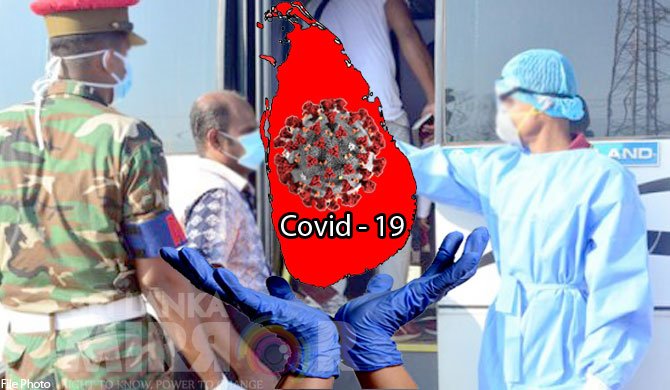
Sri Lanka on Monday (April 26) witnessed the highest single-day COVID infections with a total of 997 including 45 arrivals from foreign countries and 8 from the prison cluster. Accordingly, confirmed coronavirus cases in the country now stand at 102,376. The death toll meanwhile reached 647.

Meanwhile, the health authorities revealed that a new highly transmissible, airborne variant of novel coronavirus has entered the country.

Accordingly, the members of the public have been urged to wear face masks properly and to adhere to the health protocols introduced by the authorities to prevent the further spread of the virus.

Posted in Uncategorized

Heated Verbal Exchange Breaks Out During Discussion Between Basil Rajapaksa And SLFP Delegation Over Current Issues

A heated verbal exchange had broken out during the discussion between SLPP National Organizer Basil Rajapaksa and a delegation of SLFP seniors.

Rajapaksa, during the discussion, had told the SLFP delegation not to involve the other alliance parties in the issues between the SLPP and the SLFP.

It is reported that an exchange of words had taken place between the two parties after this remark.

Rajapaksa was referring to the recent discussion between SLFP Chairman Maithripala Sirisena and other party leaders of the ruling alliance, including Wimal Weerawansa and Udaya Gammanpila.

The SLFP also decided to conduct a seperate May Day rally with the support of some constituent parties of the ruling alliance.

Speaking to Asian Mirror, Senior Vice President of the SLFP and General Secretary of the United People’s Freedom Alliance (UPFA) Mahinda Amaraweera confirmed that such a discussion took place between Basil Rajapaksa and the SLFP, and that the discussion had ended without an agreement.

Posted in Uncategorized

New Port of Colombo could become a ‘Chinese colony’

Colombo (AsiaNews) – In Colombo, there is widespread belief among the city’s middle class, including people who voted for President Gotabaya Rajapaksa, that the city’s new port will become a “Chinese colony” if parliament adopts a bill setting up a Special Economic Zone (SEZ) in the artificial island especially created for the facility.

A number of petitions have been submitted to the Supreme Court, suggesting that the Colombo Port City (CPC) Commission Bill will place the port under Chinese influence and violate Sri Lanka’s territorial integrity and sovereignty.

The United States is also annoyed by the bill. On 10 April, the US Ambassador to Sri Lanka, Alaina B. Teplitz, said that the bill must take into account the economic impact of the new port.

“It (the Bill) also has to be considered for unintended consequences,” she said, such as “a haven for money launderers and other nefarious actors who want to take advantage of what was perceived as a permissive business environment for activities that would actually be illegal.”

For some observers, a new Chinese loan induced Sri Lankan government to favour the bill and not review the lease of Hambantota Port to Chinese interests.

On 22 March, Sri Lanka’s ambassador to China, Palitha Kohona, told the South China Morning Post that Sri Lanka had no plans to renegotiate the southern port agreement, describing news claiming otherwise as “rubbish”.

With the signing of a memorandum of understanding on 12 April, Sri Lanka would receive a US$ 500 million loan from the state-run China Development Bank.

Two weeks before the CPC Commission Bill was presented when negotiations for the second tranche of the loan were still ongoing, Sri Lankan Ambassador to the UN in Geneva C. A. Chandraprema slammed the UN Special Rapporteur’s report on ‘Religious Freedom’ at the 46th Session of the UNHRC, defending China on the Uyghur Muslim issue.

“I don’t think that a significant concern has been expressed by anyone about the condition of Uighurs,” he said. “As in the case of Sri Lanka, there are certain countries which are determined to raise issues in situations where there are no issues; create confusion, where there is no confusion”.

However, the authoritarian attitude of the Chinese embassy in Colombo has reinforced the idea of a quid pro quo between the two governments.

After the Sri Lankan government tabled the bill in parliament, Chinese diplomats offered local MPs a guided tour of the capital’s new port.

Opposition MP Harshana Rajakaruna asked why the Chinese embassy wants to take Sri Lankan MPs to the port, noting that the new facility is owned by the Sri Lankan government, and that Sri Lankan MPs do not need Chinese diplomats to visit it.

The Chinese embassy responded saying that it saw no problems with the matter, stressing that visits to the facility had been organised before, even during the pandemic.

(*) Colombo-based Journalist and political and economic analyst

Imbulagoda & Katudampe of Rathgama to be isolated

The Imbulagoda and Katudampe Grama Seva Divisions of the Rathgama Police area will be placed under isolation from 8pm today.

Accordingly, eight Grama Niladhari Divisions in the Gampaha, Kalutara and Trincomalee Districts and two Grama Seva Divisions of the Galle District will be placed under isolation as of 8pm today.

The National Operation Centre for Prevention of COVID-19 Outbreak earlier said the Polhena, Heeralugedara, Kaluaggala and Aswennawatte East Grama Niladhari Divisions of the Gampaha District will be isolated from 8pm.

In the Kalutara District, the Miriswatte Grama Niladhari Division and Pelanwatte North and East will also be under isolation orders from today.

Furthermore, isolation orders will also come into effect in the Poompuhar Grama Niladhari Division of the Trincomalee District.

As China’s defence minister heads for Sri Lanka, should India be worried?

The Chinese Defence Minister Wei Fenghe’s visit to Sri Lanka on Tuesday is as much about boosting political and economic cooperation as it is about military links, experts say.

Wei will become the second senior Chinese official to have visited the country since the onset of the coronavirus pandemic when he arrives for the three-day visit, which follows a trip by China’s foreign policy chief Yang Jiechi in October 2020.

Wei is expected to hold talks with President Gotabaya Rajapaksa and Prime Minister Mahinda Rajapaksa and other senior officials. Wei is also to visit Dhaka.

But while the visit is likely to raise hackles in India, which has been locked in a military confrontation with China along their disputed Himalayan border for the past year, experts say the timing suggests military issues might not be the main thing on Beijing’s agenda.

Wei’s visit is likely to coincide with a ruling by Sri Lanka’s Supreme Court on Port City Colombo, a controversial Chinese-funded US$1.4 billion development project to be built on reclaimed land that opponents – who have lodged 19 petitions against it – say violates the country’s sovereignty, constitution and labour laws.

The project is the latest in a string of Chinese investments in the country that some believe are aimed at gaining influence among South Asian nations and luring them away from India’s orbit.

NOT ABOUT THE MILITARY?

Ranjan Mathai, a former Indian foreign secretary, said there was nothing to suggest Wei was coming to clinch a significant military deal.

“The visit is aimed at strengthening bilateral ties at a time when Sri Lanka is saying it does not want to get drawn into military confrontation between great powers,” he said.

Rather, said Mathai, who was India’s top diplomat from 2011 to 2013, the visit was aimed at ensuring Sri Lanka stayed “neutral” in regards to tensions over China’s increasingly assertive actions in the Indo-Pacific.

The Quadrilateral Security Dialogue, a four-nation group comprising the United States, India, Japan and Australia that is aimed at countering Chinese influence in the Indo-Pacific, has been increasing the pressure on Beijing in recent months by seeking a common front with other coastal states in the region.

However, the Quad’s overtures to Sri Lanka have not always been entirely welcome, with the Sri Lankan Foreign Secretary Jayanath Colomboge expressing concerns about the grouping in October last year.

“We are observing the rise of the Quad as an exclusive military alliance. That is the problem,” he said at a seminar, though he added: “If the Quad is aiming at economic revival, there are no issues.”

Mathai said Sri Lanka and other nations in South Asia shared China’s concerns about the Quad. He said the recent passage of an American warship through India’s exclusive economic zone without Delhi’s consent could be highlighted during Wei’s visit as a way of illustrating US double standards.

“It also ensures India’s Quad-based strategies will find critics in India’s neighbourhood,” Mathai added.

‘A WRONG SIGNAL TO INDIA’

China’s efforts to expand its influence in South Asia in recent years have followed a two-pronged approach.

The Japanese ambassador in New Delhi, Satoshi Suzuki, said in February that India and Japan were cooperating with other countries, including Sri Lanka, to strengthen the Quad under the Indo-Pacific framework.

In addition to deepening defence cooperation, it has poured billions of dollars into infrastructure projects under its Belt and Road Initiative.

Both approaches have led to concerns in New Delhi that Beijing is trying to make inroads into India’s traditional sphere of influence.

The rising India-China rivalry has been compounded by a year-long face-off between their militaries along their disputed border in Ladakh, and the clash has in turn increased New Delhi’s sensitivities to defence deals between China and India’s neighbours.

Wei visited both Nepal and Pakistan in December last year.

“Hosting the Chinese defence minister when India and China are locked in a military stand-off sends the wrong signal,” said Rajiv Bhatia, distinguished fellow at the Mumbai based think-tank Gateway House.

Bhatia, a former Indian diplomat, said relations between India and Sri Lanka had been strained since March, when Delhi abstained from voting on a UN Human Rights Commission resolution that sought a mandate to collect evidence of human rights violations during the Sri Lankan civil war.

The UN believes up to 100,000 people died in the 26-year conflict between government forces and the Tamil Tiger rebels. Both sides are accused of atrocities in the fighting, which ended in 2009, but the UN resolution accused the Sri Lankan government of “obstructing accountability”.

Sri Lanka is not going to bargain away its unique position of having good relations with both India and China
George Cooke

During the war, China had backed the Sri Lankan government against the Tigers, supplying it with weapons.
However, defence cooperation largely dried up after the war. The presence of a Chinese submarine and a warship at Colombo harbour in 2014 led to strong protests from New Delhi. In 2019 Beijing supplied Sri Lanka with a refitted frigate but its plan to set up an aircraft repair factory was subsequently dropped following India’s objection.
George Cooke, a former Sri Lankan diplomat, said India needn’t be concerned over Wei’s visit.

Sri Lanka had assured India it would not allow any country to have a military base on its soil and it would not encourage activities that could jeopardise Delhi’s security interest, said Cooke, who pointed out the two countries had strong military links of their own.

India and Sri Lanka have enhanced cooperation on counterterrorism since the 2019 Easter bombings, in which Islamist suicide bombers targeted three churches and three luxury hotels, and their two navies (along with that of the Maldives) hold regular joint exercises and security dialogues to ensure peace and stability in the region.
“Sri Lanka is not going to bargain away its unique position of having good relations with both India and China,” Cooke said.

CHINA’S INFLUENCE RISING

But China’s influence in Sri Lanka has grown since Beijing lent its support to Colombo on the UNHRC resolution, in sharp contrast to India’s abstention. Sri Lanka recently negotiated a US$500 million loan from China Development Bank and a US$180 million loan from the Beijing-headquartered Asian Infrastructure Investment Bank.
The two countries have also agreed a US$1.5 billion currency swap.

Some experts said China’s relations with Sri Lanka were predominantly based on economic cooperation and the development of infrastructure. Defence cooperation would deepen only if the Indian Ocean were to become more militarised, they said.

In a telephone conversation with Chinese President Xi Jinping last month, the Sri Lankan president said his country wanted to learn from the Chinese Communist Party’s experience of governance. The two leaders also discussed the need for the speedy implementation of Colombo Port City and Hambantota Port, another China-backed project, to help Sri Lanka’s economic recovery from the pandemic.

As with Colombo Port City, critics claim the Hambantota Port project is an example of how China is using “debt-trap diplomacy” to gain leverage in the region. In 2017 Sri Lanka was forced to lease the port to China for 99 years after it realised it would struggle to repay its Chinese investors. The deal erased US$1 billion in debt, but Sri Lanka is now even more indebted to the country.

Colombo recently ruled out extending the Hambantota lease beyond 99 years but it has also clarified that it will not renegotiate the lease agreement either.

There is speculation in diplomatic circles that Colombo’s assurance was linked to the US$500 million loan from the China Development Bank. It is also being suggested that despite concerns over the Colombo Port City and the Hambantota projects, the Rajapaksa government will push for their early implementation as it will not risk alienating China.

Said Colombo-based political commentator Malinda Seneviratne: “China is a global economic power. It makes sense to have China as a friend.”

Source:SCMP.COM

Posted in Uncategorized