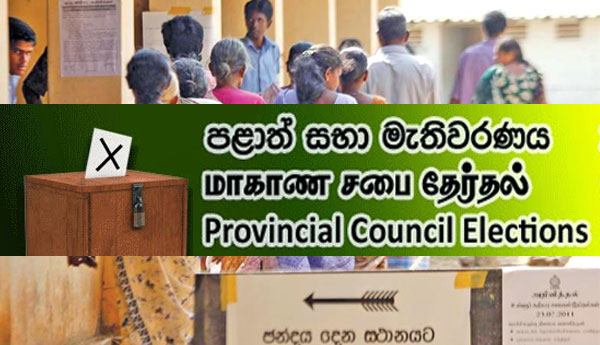
The holding of the delayed provincial council (PC) elections is likely to see a further delay due to the obstacles faced in finalising the draft PCs Amendment Bill that was presented to the Cabinet of Ministers last month. Given the manner in which the amendments to PC elections are being dragged out, it is likely that the elections will not be held this year. Reaching a consensus on the amendments, approval by the Cabinet, parliamentary approval, finalising the delimitation, and acquiring its necessary approvals would likely push the elections to 2022.
While amendments to the PCs would take another week, at least, to reach a consensus, the Government continues to hold a dialogue with alliance partners to iron out issues.
Towards this end, Prime Minister Mahinda Rajapaksa has called a meeting of government party leaders at Temple Trees on Tuesday, 4 May to reach a final agreement on the necessary amendments. The latest party leaders’ meeting was decided following the non-attendance of members of 10 political allies of the governing Sri Lanka Podujana Peramuna (SLPP) at last Monday’s (19) meeting.
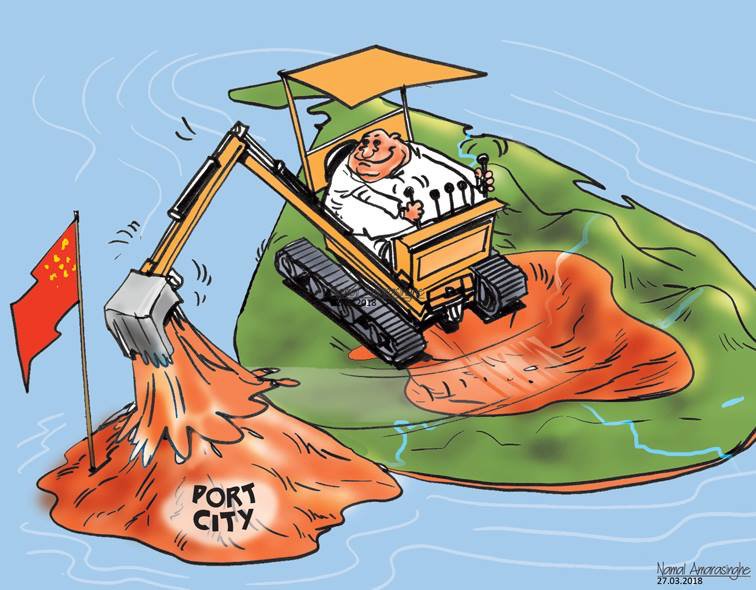
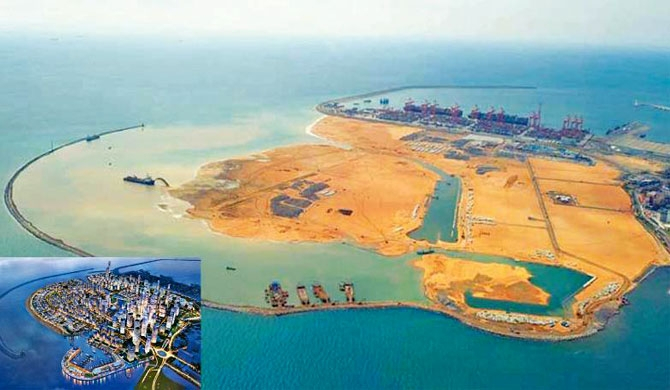
The Government, meanwhile, is also faced with mounting pressure on the proposed Colombo Port City Economic Commission Bill that resulted in marathon hearings of petitions challenging the Bill as well as intervening petitions before the Supreme Court. The hearings commenced last Monday and continued till Friday (23), and the five-judge bench headed by the Chief Justice is likely to deliver its determination tomorrow (26) on the constitutionality of the proposed bill.
Meanwhile, the actions of the Chinese in Sri Lanka did not help the ongoing issue with the Port City. First, it was a study tour for parliamentarians organised by the Chinese Embassy that resulted in Opposition parliamentarians questioning the grounds on which the Chinese mission was organising such a tour of the Port City, which is part of Sri Lanka. Also, on an earlier occasion, a similar tour had been organised for MPs through the Sri Lankan Urban Development Authority (UDA).
The next issue was the vessel to China that docked at the Hambantota Port with radioactive material onboard. The failure to declare the contents of the vessel caused much concern even among government members last week. However, the Government acted promptly upon learning of the radioactive material onboard and immediately asked that the vessel be taken out of the Port.
However, by the weekend, it was evident that the week that is ahead would be quite an eventful one, with the Government having to make some hard decisions.
Controversy over meeting
The much-anticipated party leaders’ meeting chaired by Prime Minister Rajapaksa at Temple Trees on Monday at 10.30 a.m. ran into last-minute issues following sudden changes made to the list of attendees to the meeting.
Allies of the governing SLPP got activated last Sunday (18) evening after hearing that the SLPP seniors have decided to invite SLPP district leaders also to the party leaders’ meeting. Accordingly, around 51 members including SLPP district leaders had been invited for Monday morning’s meeting.
Hearing this, a majority of the allied parties of the SLPP had raised objections, claiming that a party leaders’ meeting with the Prime Minister should not include district representatives of the SLPP.
A senior government member representing an alliance party of the SLPP said the last-minute inclusion of such a large number of SLPP members is an intimidating tactic in a bid to bulldoze its way in the alliance with the proposed amendments to the Provincial Councils Act.
“The SLPP district leaders mean a majority of the government members who are publicly critical of alliance partners and openly calling for their ouster from the Government. They have been invited at the 11th hour to shout down the alliance partners whenever they raise objections over the current political situation of the country and the proposed PC legislation,” the senior government member observed last Sunday night. When asked whether they would attend the party leaders’ meeting the following day, the party leader observed that a decision would be reached after consulting with other SLPP alliance partners.
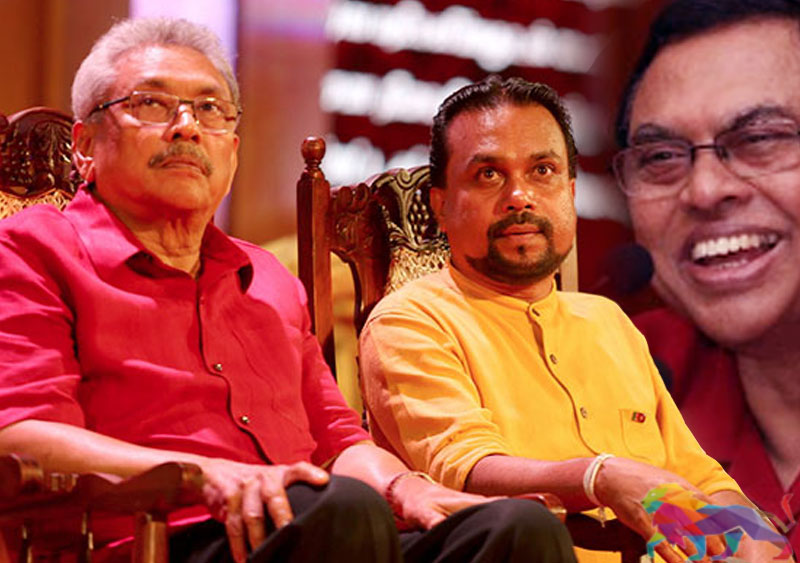
A round of telephone discussions was first held to discuss the latest situation, and several party leaders hurriedly met at Minister Wimal Weerawansa’s residence in Colombo. Finally, the group of 10 (G-10) governing party allies – the National Freedom Front (NFF) led by Minister Weerawansa, Pivithuru Hela Urumaya (PHU) led by Minister Udaya Gammanpila, Democratic Left Front (DLF) led by Minister Vasudeva Nanayakkara, and others – decided to boycott the party leaders’ meeting chaired by the Prime Minister.
However, it was decided that the concerns of the party leaders would be raised with the Prime Minister, and Weerawansa together with Gammanpila had explained to Premier Rajapaksa on Sunday night that some of the alliance partners were displeased with the inclusion of persons who are not party leaders in Monday’s meeting.
Rajapaksa has then asked the concerned party leaders to meet him prior to the scheduled meeting on Monday morning. Accordingly, a group of party leaders had met with Prime Minister Rajapaksa at 9 a.m. and expressed their concerns. They had said that a party leaders’ meeting should not be compromised by including other individuals in it.
The G-10 members had explained that while they had the highest regard for the Prime Minister, their decision not to attend the meeting chaired by him was solely due to the fact that the meeting had been expanded beyond its original scope of a meeting of 14 SLPP party leaders.
When pointed out that while there are only 14 party leaders in the SLPP, the total number of persons invited for the meeting was 51 and most of them were not even district leaders, Prime Minister Rajapaksa had called his Chief of Staff Yoshitha Rajapaksa and inquired about the persons attending the meeting. Yoshitha had confirmed that 51 persons were due to attend the meeting.
The group of party leaders had also said they were opposed to several clauses in the draft PCs Amendment Bill.
Nevertheless, they had said they would not be attending the party leaders’ meeting that was to commence a short while from then, as they objected to the manner in which the SLPP was trying to engage with its alliance partners.
After listening to the concerns raised by the group, the Prime Minister, after saying he understood the concerns, had said he would convene another party leaders’ meeting on a later date to discuss issues of party leaders. Accordingly, a meeting is now to be convened on 4 May to finalise the PC elections.
SLFP debates stance
Meanwhile, Sri Lanka Freedom Party (SLFP) leaders met at Party Leader Maithripala Sirisena’s residence on Monday morning at 9 a.m. to discuss the unexpected situation that has arisen with regard to the party leaders’ meeting chaired by the Prime Minister.
Party Leader Sirisena, General Secretary Dayasiri Jayasekara, National Organiser Duminda Dissanayake, Mahinda Amaraweera, Treasurer Lasantha Alagiyawanna, and other senior party members attended the meeting.
The discussion focused mainly on whether the SLFP should attend the party leaders’ meeting, given the last-minute changes.
While several members including Jayasekara opined that the SLFP should also take a stand similar to the parties led by Weerawansa, Gammanpila, Nanayakkara, and others, Dissanayake, Alagiyawanna, and several others have noted that the SLFP should attend the meeting to officially express its concerns over the proposed legislation to the PCs Act and to oppose any move by the SLPP to bulldoze its way with the amendments.
Dissanayake had further explained that as a political party with a separate identity, the SLFP should look at making a political decision where it would not be seen as the party is either aligned with the G-10 parties led by Weerawansa, Gammanpila, and others or to fall in line with SLPP’s agenda.
Jayasekara has continuously pointed out that the SLPP was trying to make a scapegoat out of the SLFP and therefore, they should be able to make firm decisions.
At this point, another senior SLFP member has turned towards Jayasekara and explained that not every political decision needs to be made in a harsh manner. It has further been observed to Jayasekara that his participation at the meetings organised by the group of 11 SLPP allies was not an official decision of the SLFP, but a personal decision made by Jayasekara.
Jayasekara had explained that he had attended the meetings in his capacity as General Secretary of the SLFP. However, several senior party members had then questioned Jayasekara on when the party had made an official decision to attend the meetings convened by the G-10 SLPP allies. They had further added that the meeting convened by the SLFP at its headquarters with the G-10 SLPP allies earlier this month was aimed at discussing the proposed amendments to the PCs Act, which the party had officially decided.
The SLFP, at its last central committee meeting, decided to hold discussions with allied political parties of the SLPP.
However, a point that a majority of the SLFP seniors had expressed at Monday morning’s meeting was that the party has not reached any official decision to form an alliance with the group of SLPP allies led by Weerawansa and co.
After an hour of deliberations, it was decided that the SLFP would attend the meeting convened by the Prime Minister and would raise objections to some of the proposals included in the draft PCs Amendment Act.
Accordingly, Sirisena, Dissanayake, Jayasekara, and Amaraweera had attended the meeting at Temple Trees.
Parties express concerns
The party leaders’ meeting led by the Prime Minister commenced without the participation of Weerawansa, Gammanpila, Nanayakkara, Prof. Tissa Vitharana (Lanka Sama Samaja Party), Gevindu Kumaratunge (Yuthukama Sanwada Kawaya), Ven. Athuraliye Rathana Thera (Our People’s Power Party), Tiran Alles (National People’s Front), M. Athaullah (National Congress), Communist Party of Sri Lanka, and Sri Lanka Mahajana Party.
The SLFP, Mahajana Eksath Peramuna (MEP) led by Minister Dinesh Gunawardena, Ceylon Workers’ Congress (CWC), Eelam People’s Democratic Party (EPDP) led by Minister Douglas Devananda, Tamil Makkal Viduthalai Pulikal (TMVP) led by Sivanesathurai Chandrakanthan alias Pillayan, and several other alliance partners had attended the meeting chaired by the Prime Minister, along with the SLPP district leaders. SLPP Founder/National Organiser Basil Rajapaksa also attended the meeting.
At the meeting, the CWC had expressed concerns over the proposed draft of the PCs Amendment Bill.
CWC Vice President Senthil Thondaman had pointed out the issues faced especially by the plantation sector community if the amendments are implemented.
He had explained that while there are currently around 25 representatives of the plantation sector community in the PC system, if the proposed amendments are implemented, it would reduce the number to around five.
“I raised this issue on behalf of the plantation sector community. The Prime Minister asked us to submit our alternative proposal and to co-ordinate with the minister in charge of PCs,” Thondaman had noted.
Meanwhile, SLFP’s Dissanayake had also raised concerns over the proposed amendments.
He had claimed that the proposed amendments looked very impressive, but the SLPP had only focused on securing its victory at the PC elections without considering the plight of the alliance partners.
Dissanayake had stated that the SLPP should consider the plight of alliance partners as well when introducing amendments to PC elections.
The MEP had also raised objections to the fielding of three candidates from each party to an electorate.
While Government Ministers Chamal Rajapaksa and Dullas Alahapperuma had also agreed with the concerns raised by the CWC, SLFP, and MEP, Basil together with Minister Prasanna Ranatunga had held an opposing stance.
However, the Prime Minister had agreed that concerns of the alliance partners have to be taken into consideration. The Premier and Basil have then requested the CWC and SLFP to submit their alternative proposals to the proposed draft bill within two weeks.
India weighs in
Meanwhile, India has last week supported the call of the international community for the Sri Lankan Government to fulfil its commitments on the devolution of political authority, including through early holding of PC elections. This was stated by Indian External Affairs Minister S. Jaishankar.
This also covers the commitment of ensuring that all the PCs are able to operate effectively in accordance with the 13th Amendment to the Constitution of Sri Lanka. Jaishankar had stated in his letter sent recently to AIADMK MP (Rajya Sabha) M. Thambi Durai, The Hindu reported.
According to the Indian media report, the Minister’s reply was in the context of the AIADMK Leader raising the Sri Lankan Tamil issue in the Rajya Sabha last month in the context of a resolution adopted by the United Nations Human Rights Council (UNHRC).
Pointing out that the position of India was conveyed during the deliberations on the motion at the Council, Jaishankar had said the country voted in abstention at the UNHRC but it made a “strong statement” as Explanation of Vote, stressing “our abiding commitment to aspirations of the Tamils of Sri Lanka for equality, justice, peace, and dignity”. It had also urged the Sri Lankan Government “to carry forward the process of reconciliation, address the aspirations of the Tamil community, and continue to engage constructively with the international community”.
During the consideration of the resolution at the Council on reconciliation, accountability, and human rights in Sri Lanka, he had said India had remained “closely in touch” with all countries and made a statement at the interactive debate on 25 February, outlining its position.
Assuring Thambi Durai that “all efforts are being made to ensure that the safety and interests of Tamils in Sri Lanka are fully safeguarded”, the Minister had stated that the country “attaches high importance” to the matter.
SLFP goes solo
After the meeting at Temple Trees, the SLFP parliamentary group scheduled a meeting again on Monday (19) evening at the party headquarters to reach a final decision on SLFP’s May Day plans.
The party seniors held a lengthy discussion on the invitation extended by the SLPP to hold a joint May Day rally with alliance partners as well as from the group of 11 that was in discussion to hold a separate May Day rally.
While all senior SLFPers had agreed that the party should hold a separate May Day rally in line with its ongoing reforms programme, Alagiyawanna had opined that the SLFP should join the May Day rally of the SLPP alliance.
Alagiyawanna, who also seems to be engaged in a cold war with Jayasekara, had said that the SLFP should not be seen as aligning with the group of 11 SLPP allies by not attending the SLPP rally and holding its own.
However, Dissanayake had said that the SLFP had not reached any decision to form an alliance with any other parties and holding a separate May Day rally would not be a politically negative move for the SLFP. He had added that the SLFP has always held its own May Day rally and the party should do so to safeguard its identity.
It was finally decided that the SLFP would hold a separate May Day rally.
However, SLFP senior Nimal Siripala de Silva, who was in quarantine last week, had telephoned party Leader Sirisena and had tried to change the party’s decision of holding a separate May Day rally.
Nevertheless, a majority of the SLFP seniors vetoed the move and the decision to hold a separate rally was upheld.
Sirisena on Tuesday (20) stated that the party will celebrate May Day and hold a rally separately.
“We will celebrate May Day by celebrating the labour of all citizens. It is a trait of our party and it has been seen in our history to provide the necessary assistance and rights to the workforce, including the farmers,” he stated.
He said the May Day rally of the SLFP will be held in Colombo on the approval of the Central Committee and the parliamentary members of the party.
Last Tuesday morning, the SLFP officially informed the SLPP that the party had already made arrangements to hold a separate May Day rally when SLPP’s official invite to hold a joint May Day rally was received on Monday. Therefore, the SLFP had informed the SLPP that the party had to decline the invite and hold a separate May Day rally.
The SLFP on Tuesday evening met with its affiliated trade union leaders and discussed the parties May Day rally in detail.
Despite initial considerations of holding the rally in Polonnaruwa, SLFP seniors decided that the rally should be held in Colombo. The next issue they faced was deciding on the venue for the party’s May Day rally.
The SLFP first considered Campbell Park in Colombo, but later opted to consider the holding of the rally at the land in Battaramulla where the party is to set up its new headquarters.
Meanwhile, the likes of Gammanpila (PHU) and Weerawansa (NFF) had also by then indicated that they would not be attending the SLPP May Day rally.
However, on Tuesday evening, the Government announced that all May Day rallies and events have been cancelled as part of its Covid prevention programme.
On Thursday (22), the Janatha Vimukthi Peramuna (JVP) and the United National Party (UNP) announced that they will organise May Day celebrations in line with the health guidelines.
Basil assures solutions
The cold war between the SLPP and its main coalition partner, the SLFP, was becoming a problem for the governing party, and the need to address this issue became clear to the SLPP leaders after the SLFP’s decision to hold a separate May Day rally as well as due to the possibility of the party forming an alliance with the group of 11 SLPP allies.
SLPP Founder Basil Rajapaksa on Wednesday (21) evening met with representatives of the SLFP to discuss and iron out the issues that have erupted between the SLPP and SLFP.
At the outset of the discussion, Basil had looked at SLFP General Secretary Jayasekara and said that 80% of the SLFP’s issues lay with him. Jayasekara had then asked what Basil had meant by that.
However, SLFP National Organiser Dissanayake had intervened and said that statements made by an individual or their actions should not be reason to prevent engagement with the party.
Basil had agreed and said he was keen on resolving issues between the two parties.
Dissanayake had also explained that there would not be any issue if the governing party treated its alliance partners with respect and shared governance work as it should.
Basil had listened and after discussing wide-ranging issues had assured he would do everything in his power to resolve the issues.
Victimisation resolution withdrawn?
Meanwhile, a resolution submitted by Prime Minister Rajapaksa seeking to implement recommendations of the report of the Presidential Commission of Inquiry (PCoI) into alleged acts of political victimisation during the tenure of the United National Front (UNF)-led Government raised objections last week with claims that it is an attempt by the Executive to undermine the work of the Judiciary.
The Centre for Policy Alternatives (CPA) released a statement last Monday (19) on the resolution submitted by Premier Rajapaksa on 9 April, which had sought to implement the decisions and recommendations made by the aforementioned PCoI, including the withdrawal of ongoing criminal cases.
“This is the latest attempt by the Executive to undermine the work of the Judiciary and this must be robustly countered to ensure that each arm of (the) government is able to work independently. This action would open the door to politically motivated action against investigators and prosecutors for carrying out their duties and would result in a climate of fear and paralysis among investigators and prosecutors, stifling all current and future investigations involving persons of political influence,” said the statement by the CPA.
The PCoI, led by Supreme Court (SC) Judge (Retd.) Justice Upali Abeyratne, was appointed early last year to inquire into alleged acts of political victimisation that took place in the wake of investigations conducted by the Commission to Investigate into Allegations of Bribery or Corruption (CIABOC), the Financial Crimes Investigation Division (FCID), the Criminal Investigation Department (CID), and the Special Investigation Unit of the Police from 8 January 2015 to 16 November 2019.
The Janatha Vimukthi Peramuna (JVP) also raised concerns regarding the resolution last week in a press conference.
“The implementation means that alleged criminals would be released from their trials. Is that what two-thirds of this country voted for? By this resolution, Minister Udaya Gammanpila’s court case on his alleged corruption would be withdrawn. He could just raise his hand in Parliament and vote for that. Is that correct?” questioned JVP Leader and parliamentarian Anura Kumara Dissanayake.
Meanwhile, JVP Politburo Member Wasantha Samarasinghe had said that further action regarding this matter was being deliberated within the party.
“We requested a debate on the report. Instead, a resolution was tabled,” Samarasinghe had noted.
It was announced that the adjournment motion on the report of the PCoI would take place on Thursday (22) and Friday (23) following a decision reached at the party leaders meeting.
Meanwhile, the Bar Association of Sri Lanka (BASL), in a statement on 17 April, had stated that it was deeply concerned about the recommendations of the PCoI to withdraw ongoing criminal cases.
“The BASL will firmly resist any attempt to use the said motion to withdraw any criminal action pending before a court of law,” the statement further noted.
The Commission had not made its report public, a fact which the BASL had raised concerns about since “the contents of the report may undermine the rule of law in this country, impair the independence of the Judiciary, and erode the impartial and efficient functioning of the Attorney General’s (AG) Department”.
According to news reports, the Commission has recommended that criminal cases pertaining to investigations into the editor Lasantha Wickrematunge’s murder, the murder of 11 Tamil men allegedly by the Navy, the Welikada Prison massacre, murder of Mohomed Shiyam, murder of Wasim Thajudeen, and alleged money laundering in the Carlton Sports Network Case, among many others, be withdrawn and all suspects acquitted or discharged.
However, while the debate commenced in Parliament last Thursday, the proposed motion that was submitted by the Prime Minister was not taken up in the House.
Easter attacks anniversary
Archbishop of Colombo His Eminence Malcolm Cardinal Ranjith had on Sunday (18) claimed that politics was also linked to the Easter Sunday attacks.
Speaking at an event held in Borella, the Archbishop said that religious extremism was not behind the Easter Sunday attacks.
He said that religious extremism was used by some to strengthen their political future.
Cardinal Ranjith said that the Easter Sunday attacks were used to strengthen certain individuals.
He appealed to the public to not use religion, race, or language to harass another person.
The Archbishop also said that people’s lives should not be used to strengthen one’s future.
He further requested the public to observe two minutes of silence at 8.45 a.m. on 21 April as a mark of respect for the victims of the Easter Sunday bomb attacks.
His Eminence expressed these views after opening a monument at the Borella cemetery to commemorate the victims of the Easter Sunday attacks.
Over 250 people including 45 foreigners were killed when suicide bombers attacked two Catholic churches and a Protestant church during Easter worship services in multiple cities on 21 April 2019, as well as three five-star hotels in Colombo. More than 500 people were injured in the attacks.
The Islamic State was accused of having links to the attacks while the former Government was also accused of failing to prevent the bombings.
However, the following day, Monday (19), the Cardinal backtracked on his statement made the day before saying it was misunderstood.
“My remarks on Sunday have been misunderstood by many. I did not refer to a local political group when I said politics was behind the Easter Sunday attacks but international forces. There are some forces who develop weapons and use religious and ethnic extremism such as Wahhabism to create conflicts. This is done to market their weapons. I was referring to such groups,” the Cardinal told a press conference.
Archbishop of Colombo His Eminence Cardinal Ranjith stated on Wednesday (21) that delaying exposing the whole truth behind the Easter Sunday terror attacks would endanger the security of the entire country, while Prime Minister Mahinda Rajapaksa stated in Parliament that the parties responsible for the bombings are to date socialising various lies, influencing investigations, and diverting social attention on the issue.
The commemorations to remember those who died in the Easter Sunday terror attacks that took place two years ago were held islandwide on Wednesday.
The commemorations began by observing two minutes of silence at 8.45 a.m., which was when the first bomb was detonated at St. Anthony’s Shrine in Kochchikade on that fateful day.
Speaking at the main commemoration event held at the Kochchikade St. Anthony’s Shrine, one of the main locations that suffered the attacks, Cardinal Ranjith said that the protests will continue until the truth of the Easter attacks is revealed and justice is served.
The Cardinal said that it was essential to expose the whole truth behind the Easter attacks in order to do justice to those who died in the attacks and those who were rendered disabled, adding that the delaying of the truth would endanger the security of the entire country.
“Two years after the series of attacks on Easter Sunday, in an environment where no one has been prosecuted, I say to the families of the victims and all Sri Lankan brothers and sisters that the protest campaigns we have launched to expose the truth of the Easter attacks and to bring justice to the victims will continue.”
A minute of silence was observed in Parliament upon the request of Premier Rajapaksa to commemorate those who lost their lives. Addressing the Parliament, he said that all those responsible for the brutal Easter Sunday terrorist attacks will be brought to justice.
Meanwhile, revelations made by Samagi Jana Balawegaya (SJB) MPs Harin Fernando and Manusha Nanayakkara with regard to the Easter Sunday attacks in Parliament resulted in an uproar on Tuesday (20).
According to Fernando and Nanayakkara, Naufer Moulavi, who the Government has declared as the mastermind behind the attacks, was not the mastermind.
“A person who had consulted with Zahran Hashim was arrested by the Police just after the Easter Sunday attacks in 2019. However, some officers attached to the Army Intelligence Unit had got this person released from the Police, stating that it was their project to carry out investigations. We feel that someone is trying to hide information and sabotage the investigations on the Easter Sunday attacks,” Nanayakara had alleged.
“I feel that even the MPs who disturb me in the House today are also doing so to hide something,” he had added.
Nanayakkra had also alleged that someone referred to as “Sonic Sonic” had communicated with ISIS.
“This person, codenamed Sonic Sonic, had asked the persons from ISIS whom he communicated with as to why the ISIS Chief had not undertaken the project to carry out the Easter Sunday attacks. Later, he was informed that the ISIS Leader had accepted the task of carrying out the attack. Also, the attackers had been divided into two groups and had been functioning from safe houses in Panadura and Ja-Ela. Those two groups had then discussed the delay in carrying out the attacks,” the MP had claimed.
Concerns over an ‘all-powerful’ commission
Making submissions on behalf of the United National Party (UNP) at the Supreme Court of Sri Lanka in opposition to the proposed Colombo Port City Economic Commission Bill, Attorney-at-Law Eraj de Silva argued on Monday (19) that if enacted, this Bill will empower the Commission to regulate all social aspects of life within the area of authority (the Port City). Through the powers contained within the Bill, the Commission will be able to enact “rules” within the Port City that will see punishments comprising fines of a maximum of Rs. 5 million as well as imprisonment.
In Sri Lanka, it is the Parliament that decides on the laws of the country; however, in this instance, it will be the Commission comprising individuals who have been appointed at the sole discretion of the President.
Furthermore, while the Commission has the power to offer tax exemptions to investors, they have also been empowered in enforcing taxes on purchases and other services within the Port City. The decision to levy parking charges on vehicles or toll levies on vehicles travelling within the region will be at the discretion of the Commission.
Accountability over the Commission has been removed and the role of Auditor General has been negated with the option of the Commission seeking out the services of international audit firms. More importantly, the Commission is not answerable to the Cabinet of Ministers or the Parliament of Sri Lanka.
As this entity is not a public corporation, but simply an appointed commission by the President, it has the potential to take on a life of its own. There are no clear rules governing their code of conduct. In the case of land, the land of the Port City will be vested with the Commission. They will be free to do what they wish with the land. If the Government attempts to reclaim the land, the option of legal challenge is available for the Commission. It is not clear as to which courts will be hearing these challenges – local courts or international arbitration.
Along with the monopoly over residence, the Commission also maintains a monopoly over businesses. It will be at their sole discretion to decide who can conduct any business in the area of authority. Lawyers, doctors, and teachers are amongst the professionals who would require special licensing from the Commission.
In the example of lawyers, this will mean that despite them being licensed by the Supreme Court of Sri Lanka to practise law in Sri Lanka, they will need a separate license to practise in the Port City. This license is issued at the discretion of the Commission.
A serious question has arisen over the commissioners themselves. They will be appointed by the President, and no qualification or guidelines have been outlined in determining who is eligible for appointment. Furthermore, foreign citizenship is not a disqualifying factor. The question was raised in court as to whether or not the commissioners need to reside in Sri Lanka, or whether they are able to discharge duties from overseas. This has not been addressed in the Bill; however, provisions have been made for the Director General to act on behalf of commission members in their absence.
In the event these members are absent from the country, the question of legal jurisdiction is raised. If necessary, are the courts capable of calling back to the country a foreign commissioner?
This Bill in essence provides for the possibility of a parallel state to the state of Sri Lanka.
Counsel appearing on behalf of the Centre for Policy Alternatives (CPA) and Transparency International Sri Lanka (TISL), President’s Counsel Kanageeswara had submitted to the court that the Bill, if enacted, will affect the fundamental structure of sovereignty.
He had submitted that the Bill attempts to create an all-powerful commission that is answerable to no one.
Kanageeswaran had referred to the commission as an alter-ego of the current and future presidents.
He had further highlighted the fact that although the Bill on multiple occasions refers to the objective to be “advancement of the national economy”, the provisions of the Bill do not reflect this.
He had pointed out that there is no advancement of the national economy through the Port City, as investors are not liable to pay taxes to Sri Lanka, and also noted that there is no parliamentary oversight for this all-powerful commission administering the Port City and therefore is contrary to constitutional provisions that vest the control of public finances with Parliament.
Also making submissions in court, President’s Counsel M.A. Sumanthiran had highlighted the provisions allowing non-citizens to be appointed to the all-powerful commission proposed to be established under the Bill, which would affect the sovereignty of Sri Lanka.
He had further pointed out that the tax exemptions and exemptions from other levies included in the Bill would be detrimental to the economy of the country.
He had stated that the Bill disallows citizens of Sri Lanka who have legally earned money in Sri Lanka to invest in the Port City, and discriminates among citizens and non-citizens to the detriment of the citizens of Sri Lanka.
Regarding the offshore banking businesses in the Special Economic Zone, the Additional Solicitor General stated that no license can be granted without the permission of the Monetary Board adding that the commission is aimed at investors who have to feel that they do not have to go before a multitude of institutions.
She added that the existing regulatory authorities are not capable of coping with the requirements in the Special Economic Zone.
Meanwhile, the Attorney General on Friday (23) had agreed to some changes to the Bill including ensuring the oversight of regulatory power and finances of the commission. The Supreme Court, which concluded hearing the petitions on Friday, recommended to the Attorney General that the phrase “to visit” in Clause 30(1) be omitted, as it would otherwise violate Article 14 of the Sri Lankan Constitution, and require Sri Lankan citizens to get the commission’s approval to enter the Port City area.
Furthermore, as per clause 7(1) regarding the composition of the Colombo Port City Economic Commission, the President will appoint members of the Commission ensuring that the majority are Sri Lankans.
Amendments are also to be brought in respect of clauses 3 (4), 3 (6), 3(6) (n), 30(1), 40(2), 46(9), 53(1), 58(1), 62(5), 63(1) and 68(1) of the Bill at the Committee Stage in Parliament.
Source: The Morning.lk