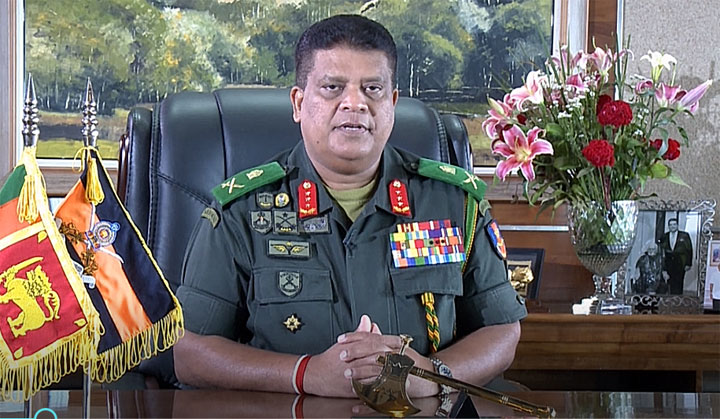
All State and private functions banned for two weeks

All State and private functions have been banned for two weeks, the President’s Office said today (Sunday).

The President’s Office said that all State events and functions have been suspended.

Meanwhile, all private events and functions scheduled for the next two weeks have been suspended using the quarantine laws.

The President’s Office said that the decision has been taken to contain the spread of the coronavirus.

Sri Lanka is currently facing the threat of the coronavirus third wave.

Health authorities said earlier that several coronavirus sub-clusters have been reported from across the country since the Sinhala and Tamil New Year.

Public Health Inspectors (PHI) Association Secretary M. Baalasooriya told Colombo Gazette that sub-clusters were initially reported from the Piliyandala, Maharagama, and Pamunuwa areas.

He said thereafter more infected people were reported across the country, including from Kurunegala, Narammala, Allawwa, Gampaha, Colombo, Puttalam, Trincomalee and Jaffna after the festive season.

Baalasooriya said sub-clusters have also been reported from the garment sector, with infected individuals having already been detected at a few factories.

Urgent talks between Basil, SLFP

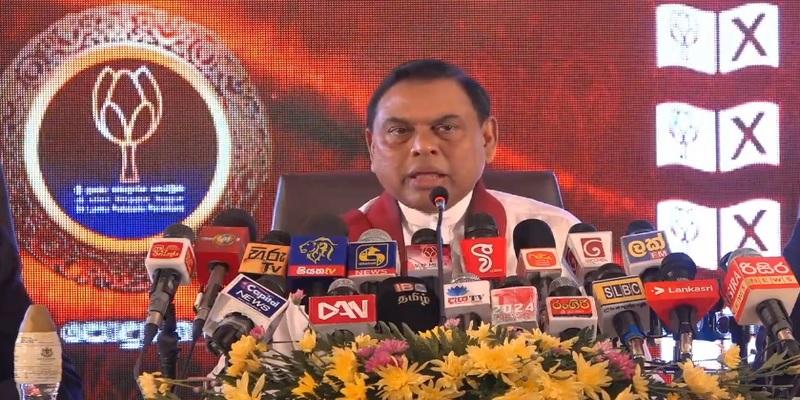
Founder of the SLPP, Basil Rajapaksa, had reportedly held urgent talks with leaders of the SLFP on 21 April, as part of a well coordinated programme initiated by the SLPP to sort out internal political wrangling among its coalition members.

SLFP Leader MP Maithripala Sirisena, SLFP General Secretary State Minister Dayasiri Jayasekera, Ministers Nimal Siripala de Silva, Mahinda Amaraweera and Suren Raghavan attended this discussion with Rajapaksa.

During the discussion the SLFP members had highlighted the failure of SLPP top brass to accommodate SLFP activists at grassroots level, especially its LG members in the various development programmes being initiated at district level.

Rajapaksa had then urged SLFP Minister Mahinda Amraweera to submit proposals from his party on this and promised that he will look to accommodate SLFP members in future without any undue advantage to the SLPP.

Posted in Uncategorized

PC elections: Govt. caught between India and legal snags BY M.S.M Ayub

The impression the government had instilled in the minds of the people soon after the Sri Lanka Podujana Peramuna (SLPP) captured power that the provincial council system would be scrapped has by now vanished into thin air.

Barely a fortnight after assuming office as the President, Gotabaya Rajapaksa stated in India that it was through development and not through devolution that the problems faced by the Tamil people could be resolved. And he had assigned the subject of Provincial Councils to Rear Admiral Sarath Weerasekara who is dead set against the concept of devolution of power and provincial councils. And Weerasekara in turn had been expressing his antipathy towards the provincial council system.

However, now the government and the ruling SLPP is said to be discussing about holding of provincial council election which has delayed for over two years. The backpedalling is obviously due to the pressure exerted by India and the United Nations Human Rights Council (UNHRC). Indian leaders, though not interested in the merger of Northern and Eastern Provinces now, have been insisting on conferring more powers to the provincial councils.

It must be recalled that Indian External Affairs Minister Dr. S. Jaishanker arrived in Sri Lanka within 24 hours after Gotabaya Rajapaksa taking oaths as the President on November 18 with a personal message from Indian Prime Minister Narendra Modi and held talks with the new Sri Lankan President. Dr. Jaishankar had conveyed to President Rajapaksa “India’s expectation that the Sri Lankan government take forward the process of national reconciliation to arrive at a solution that meets the aspirations of the Tamil community for equality, justice, peace and dignity.”

On November 29, 2019, eleven days after assuming office, President Rajapaksa visited New Delhi. During the joint Press briefing with the new Sri Lankan leader, Modi also echoed the same sentiments with the same sentence. However, as if he wanted to allay doubts and stress what he specifically meant, he added that “it also includes the implementation of the 13th Amendment.”

On February 2, two days after the Cabinet decided to pull out from the Memorandum of Cooperation (MOC) signed in May 2019 with the Governments of India and Japan for the development of the Eastern Terminal of the Colombo Harbour, the Indian Deputy High Commissioner, Vinod. K. Jacob met two Tamil leaders from the Eastern Province, former Chief Minister and current MP, Sivanesathurai Chandrakanthan alias Pillayan, and former Deputy Minister Vinayagamurthi Muralitharan, alias Karuna Amman, and discussed the 13A. He had reiterated that meaningful devolution is the way forward for achieving the aspirations of the Tamil people and stressed full implementation of the 13th amendment.

At a time when Sri Lanka was desperately longing for India’s support last month as well, the latter used the devolution issue as a precondition. When Sri Lanka was facing a harsh resolution at the recent UNHRC session, India’s Permanent Representative to the UN Indra Mani Pande, while addressing the council on last February 25, insisted that aspirations of the Sri Lankan Tamils must be addressed “through the process of reconciliation and full implementation of the 13th Amendment to the Constitution of Sri Lanka.”

It is vivid that India has been using the Sri Lankan Tamil issue to advance its own interests. The issue is a lever for India to tame its southern neighbour when needed. Yet, these facts point that Sri Lanka would have to pay a heavy price if it resorted to abrogate the provincial council system arbitrarily, especially ignoring India.
Against this backdrop, India now wants provincial council elections held soon. India’s position in this regard had been asserted in a letter to AIADMK Rajaya Sabha member M.Thambi Durai recently by Dr. Jaishankar. The Indian External Affairs Minister in his letter had linked India’s stand in this regard to his country’s abstention from voting for the last month’s UNHRC resolution on Sri Lanka.

However, Sri Lanka is in a catch 22 situation in respect of conducting of provincial council elections due to a legal hiccup that has been created by an amendment to the Provincial Councils Election Act brought in by the last Yahapalana government. The Amendment introduced in September 2017 provides for conducting of elections for the provincial councils under the mixed electoral system of first-past-the-post system and the Proportional Representation (PR) system.

Yet, the mixed electoral system has run into controversy after it was experimented at the local government elections held on February 10, 2018, as many flaws in the new system were identified. In the wake of the LG elections even former President Mahinda Rajapaksa under whose leadership the SLPP swept the electorate had stated that the new system had to be changed again, as it had created a mess in many LG bodies.

There are strong grounds not only for the politicians but also for the people to reject the mixed electoral system in its present form, despite it having been experimented only at the last LG polls. It doubles the number of council members (from around 4,000 to 8,000 LG members) and it is the public coffers that have to maintain and facilitate them. Without a cut-off point for political parties to be eligible to represent the councils, many small parties won seats, creating an Opposition larger than the ruling party in many councils.

This muddled situation was further aggravated by the ridding of the bonus seat system that had earlier strengthened the winning parties to be above the collective strength of the Opposition parties. The mess resulted in unethical deals among political parties, although those settlements helped later for the smooth functioning of the councils. Besides, wards have to be demarcated within each provincial council area under the new system. Political parties are now divided over the system with one group preferring to revert to the old PR system and others wanting to stick to the new system, but with changes.

The second group is also in turn divided. During a recent discussion among the constituent parties of the ruling coalition, one group had proposed to field three candidates from each party for each ward which had been opposed by a section of the SLPP and smaller parties in the coalition. The proposal would definitely reintroduce the preferential voting system which would again lead to intra-party conflicts. There is no sign of any settlement to these controversies either.

Interestingly, no complaints were heard about the absence of elected provincial councils for the past three years even from the politicians representing the Northern and Eastern Provinces for which the devolution of power was originally meant. Nevertheless, the country has to maintain the system for two reasons – external pressure and Tamils would feel alienated if the system is done away with.


US provided a great deal of assistance to SL in 2020 – US Ambassador

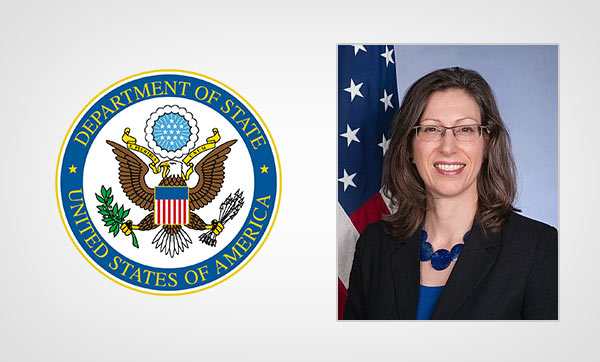
U.S. Ambassador Alaina B. Teplitz said the United States provided a great deal of assistance to Sri Lanka in view of COVID-19 last year – US $7.6 million in direct support and 200 ventilators that were provided last year, in 2020.

During a recent media round table discussion on the economic relations between the two countries, she said the pandemic had shifted things dramatically.

“We have a pre-COVID and a post-COVID world to look at. But what is continuous as we consider our context, of course, is the strong economic relationship between Sri Lanka and the United States. In fact, there’s a trade imbalance in Sri Lanka’s favour with the U.S. that continues to make the United States Sri Lanka’s largest export market. Over the last decade or so there’s been an almost ten-fold shift. It’s a pretty impressive number. I’m pleased to say there are Sri Lankan companies that invest in the United States and there’s a little bit of importation here that rounds things out.

First, we obviously have a development partnership with Sri Lanka that has economic dimensions. I just want to say a few words about that in the COVID context because it’s important as we think about what we’re going to do heading forward into the future.

This support was meant for immediate response so we supported the WHO and we supported UNICEF and their public health interventions in support of the Sri Lankan Ministry of Health.

We also re-directed some of our programming, because we knew there would be longer term consequences beyond these immediate needs. We were looking specifically at the economic aspects of this and we have thought a lot about how to support businesses getting back on their feet, or frankly, entrepreneurs who are just trying to get started in an environment that has been constrained by the tremendous downturn of the pandemic,” she said.

Posted in Uncategorized

Public urged not to visit North Central province & Trinco

Governor of the North Central Province – Maheepala Herath has urged the public to refrain from visiting the Atamasthana in Anuradhapura as well as the religious sites in Polonnaruwa during the upcoming long weekend.
The province has been identified as an area which is at risk of a COVID-19 surge.

Health and security officials as well as the Additional District secretary of Anuradhapura had briefed the leading Buddhist monks of the region and the decision was taken afterwards, the governor added.

Meanwhile, the governor of the East Province – Anuradha Yahampath had also urged the public not to visit the Trincomalee district unless it was absolutely necessary.

She had also said that security units were informed to curb unnecessary travel by placing roadblocks.

Meanwhile, East educational secretary – Christy Lal Fernando has said that three schools in Trincomalee district have been closed down indefinitely.

(Source : ITN)

Posted in Uncategorized

Sri Lanka’s COVID-19 death toll increases to 638

Four more COVID-19 related fatalities have been recorded in Sri Lanka, increasing the death toll to 638.

The Director General of Health Services said among the fatalities confirmed were an 18-year-old girl from Wattala. She passed away at a private hospital on Wednesday due to COVID pneumonia and heart complications.

A 35-year-old male from Nittambuwa also passed away on Wednesday at the Homagama Base Hospital due to COVID pneumonia.

Meanwhile, a 40-year-old male from Pannipitiya passed away yesterday at the Homagama Hospital after contracting the novel coronavirus.

Furthermore, a 71-year-old female from Maharagama passed away yesterday at the Kotelawala Defence University due to COVID pneumonia and several other health complications.

She was admitted to the hospital after exhibiting symptoms while self-isolating at home after arriving in the country recently.

Posted in Uncategorized

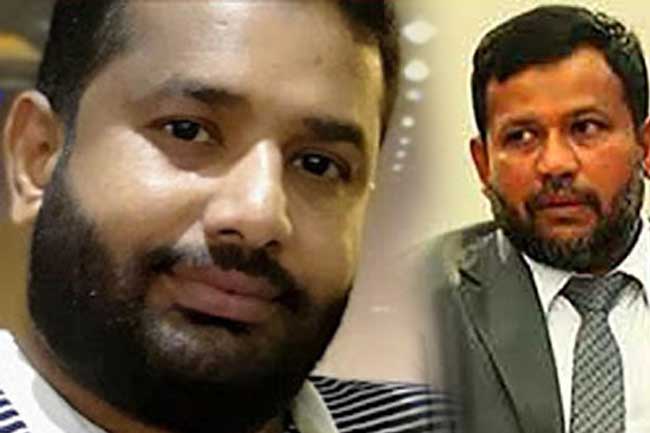
Rishad Bathiudeen and brother arrested over Easter attacks

The Criminal Investigation Department on Saturday (April 24) arrested former Minister Rishad Bathiudeen and his brother Riyaj Bathiudeen, the Police Spokesperson DIG Ajith Rohana said in a statement.

The two brothers were placed under arrest for allegedly aiding and abetting the suicide bombers who carried through the deadly terror attacks on Easter Sunday in 2019.

Reportedly, the former minister was taken into custody at his residence in Bauddhaloka Mawatha in Colombo while his brother Riyaj Bathiudeen was apprehended in Wellawatte area in the early hours of this morning.

Legal action will be sought against the duo under the provisions of Prevention of Terrorism Act, the police spokesperson noted.

Rishad and Riyaj Bathiudeen were taken into custody based on the direct, circumstantial and forensic evidence uncovered during the investigations, he explained.

Posted in Uncategorized

Tuition, parties, night clubs, public gatherings temporarily banned

Tuition classes, parties and public gatherings have been banned until 31st May with Sri Lanka being placed on Alert Level 3 following the Sinhala and Tamil New Year.

State Minister for Primary Health Services, Pandemics and COVID Prevention Sudarshani Fernandopulle issued a new set of health guidelines valid until 31st May.

According to new health guidelines issued today, casinos, night clubs, spas and beach parties have also been temporarily banned.

Children’s parks, carnivals and musical shows are also banned while swimming pools must also be closed until 31st May.

Spas and day rooms as well as home stays are also not permitted to operate during this period.

Government and private offices have been told to operate with minimum staff while others work from home.

Supermarkets are allowed to accommodate only 50 percent of costumers at one time based on the space available.

Day care centres, preschools and schools are allowed to operate with only 50 percent of the capacity.

Weddings can be held with a maximum of 150 guests while funerals can have only 25 people at any given time.

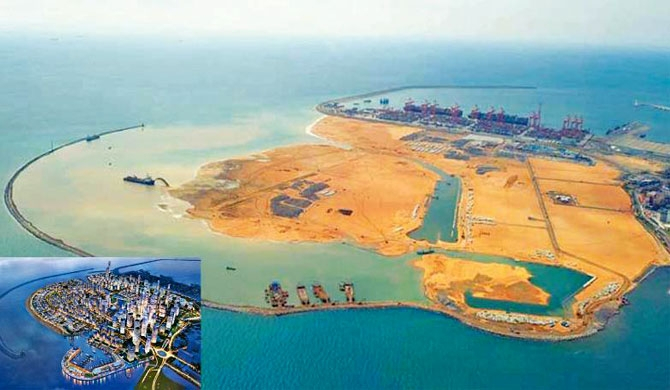
Top Lankan Buddhist monks support Colombo Port City project

The top Buddhist monks in Sri Lanka, called the ‘Maha Sangha’, have extended their support to the government on the Colombo Port City project.

A Presidential press release said that at the tenth meeting of the Buddhist Advisory Council here on Friday, the monks told the Sri Lankan President Gotabaya Rajapaksa that “a country should not remain in one place. It should endeavor to progress commercially towards success.”

However, in the light of the criticism of the Colombo Port City Economic Commission Bill, now before the Supreme Court for its determination on its constitutionality, the Maha Sangha emphasized that “the citizenry should be properly educated and clarified about the actual position, to remove their doubts with regard to the project in order to garner their support and accomplish the aims of the Colombo Port City project.”

State Minister Ajith Nivard Cabraal spoke about the project in-depth, enlightening the monks about its benefits both to the economy and the country.

“Expanding the landmass of the country and paving the way to new investment opportunities is a victory for the country. Instead of propagating falsehoods and opposing everything, we must unite to stand tall as a nation,” he said.

Army Chief says no lockdowns this weekend, urges public to stay home

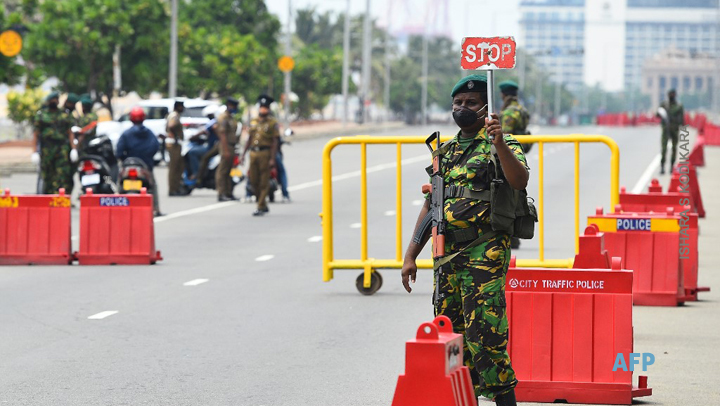
Commander of the Army General Shavendra Silva announced today (April 23) that there will not be any lockdowns in the island during this long weekend.

Addressing a special media briefing at the Government Information Department this afternoon, the Army Commander said no decision has been yet to lock-down the country.

However, he appealed to the members of the public to limit their travels and to stay home as far as possible.

The Army Commander also requested people to avoid large gatherings and not to organize any events that gather large crowds.

The general public has been urged to comply with the health protocols introduced to prevent the spread of novel coronavirus.

Sri Lanka’s daily COVID-19 cases count is now on the rise with an uptick in the figures following the festivities of Sinhala and Tamil New Year last week.

The country detected 672 new positive cases on Thursday and 578 on the day before as the confirmed cases tally reached 98,722. As per Epidemiology Unit’s data, more than 4,000 active cases are currently under medical care at designated hospitals and treatment centres.

Posted in Uncategorized