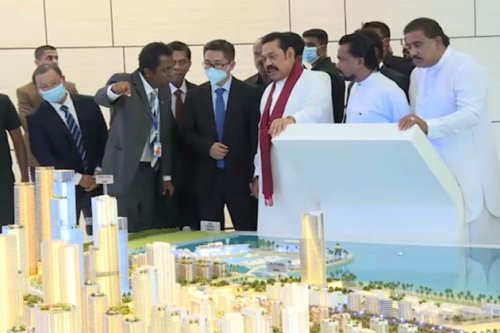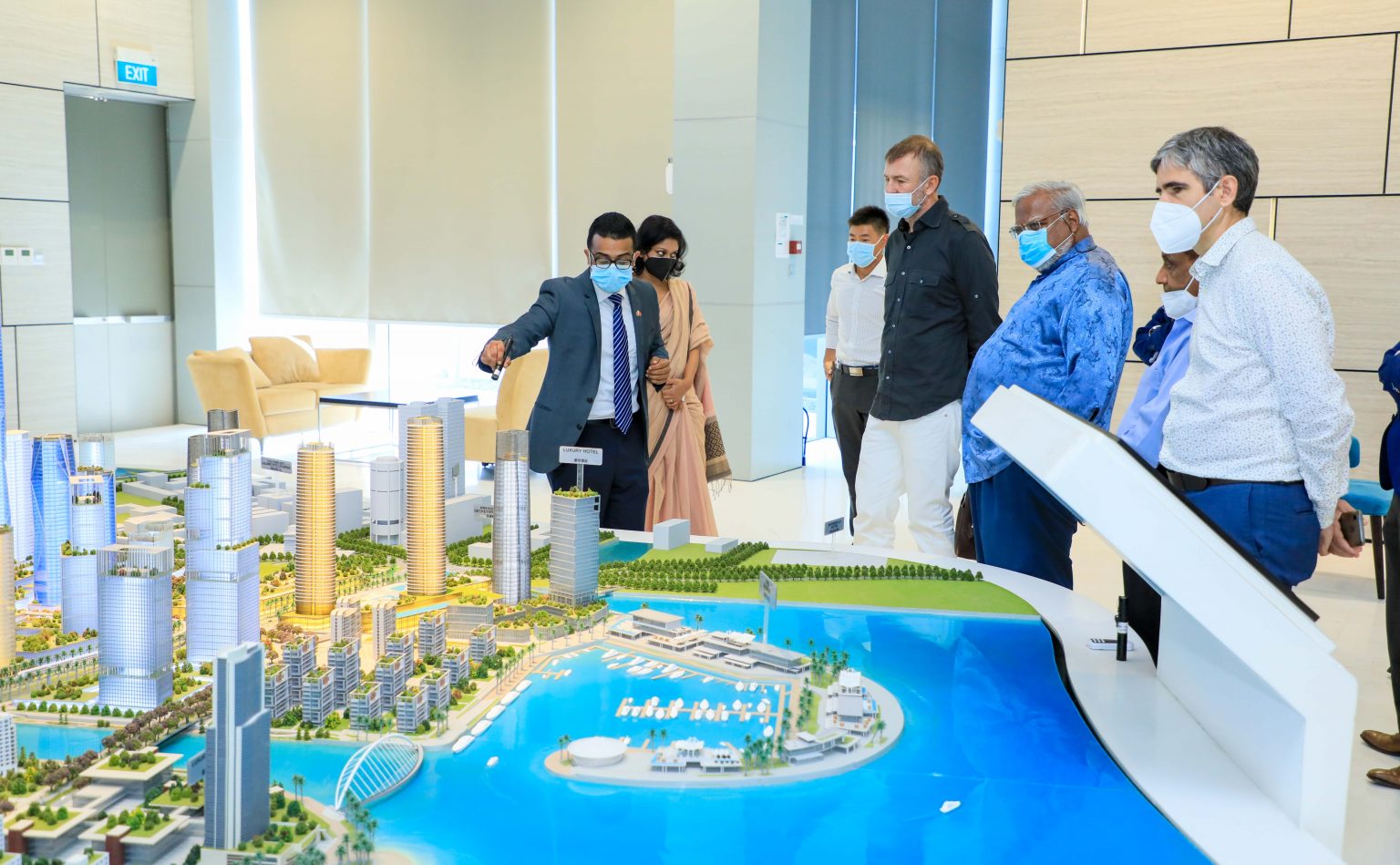
China-funded US$ 1.4 billion Colombo Port City project faces legal challenge

A five-judge bench of the Sri Lankan Supreme Court will go into a number of petitions filed against the US$ 1.4 billion China-funded Colombo Port City Commission Bill presently in parliament.

The petitioners contend that the proposed legislation is in contravention of the Sri Lankan Constitution. They have sought a two-thirds majority and a referendum to get the controversial bill passed.

Among the petitioners are: the United National Party (UNP) General Secretary Palitha Range Bandara, Janatha Vimukthi Peramuna (JVP) MP Wasantha Samarasinghe, the Bar Association of Sri Lanka (BASL), Transparency International Sri Lanka (TISL), the Centre for Policy Alternatives (CPA) and Engineer G. Kapila Renuka Perera.

The petitions filed by Perera and CPA will be taken up on Monday next before a panel of five judges headed by Chief Justice Jayantha Jayasuriya comprising of Justices P.B. Aluwihare, Priyantha Jayawardena, Murdu N.B. Fernando and Janak de Silva.

The petitions said that several clauses of the Constitution would be breached by the passage of the Port City Commission Bill. Several petitions called for the Bill to be changed only through a two-thirds parliamentary majority and a referendum.

Transparency International Sri Lanka raised corruption concerns, including the possibility that the Bill could pave the way for facilitating or enabling illicit financial flows and money laundering. The TISL also drew attention to the lack of transparency in the ownership of the “offshore” businesses that will be set up at the Port City, since the ultimate owners of the businesses need not be disclosed. TISL said it is concerned also about the lack of transparency in offshore banking operations that could be free from the purview of the regulatory framework governing local Sri Lankan banks.

Several petitions also alleged that the Bill evaded parliamentary oversight on public funds, which they argued, infringes the rights of the Sri Lankan public.

The Bar Association of Sri Lanka questioned why the government decided to enter the Bill into the order book ahead of the New Year holidays, which severely limited the amount of time for the public to exercise their right to examine the bill and offer their comments.

“The Executive Committee of the BASL notes that the provisions in the Bill that directly affect the judiciary and the legal profession which are found in Part XIII (International Commercial Dispute Resolution Center) and Part XIV (Priority Hearing in Legal Proceedings) of the Bill. These could lead to an ouster of the jurisdiction of Courts, infringe on judicial discretion and violate the principle of the equality of parties before the law and therefore may violate Articles 3, 4, 12 and 14 of the Constitution. The aforesaid Articles of the Constitution pertain inter alia to the Sri Lankan State, the Unitary Status of the Republic, the Sovereignty of the People, the fundamental rights of the people and the powers of Parliament,” the BASL statement said.

The BASL committee appointed to study the Bill recommended that the Association should file a petition before the Supreme Court, challenge the constitutionality of the Bill under Article 120 of the Constitution, call for observations from its Members, including Members who have the required expertise, and request the Government to defer any further action on this Bill for a reasonable time to enable the BASL to engage with and consult the relevant stakeholders and contribute fully in this important national endeavor.

“The Interim Report and the recommendations of the Committee were unanimously approved and adopted by the Executive Committee at a Special Meeting on 12 April. Therefore, in furtherance of the Objects of the Association set out in Article 2.1 of the Constitution of the BASL, the Executive Committee directed the President and Secretary to challenge the Bill under Article 120 of the Constitution before the Supreme Court and also to write to the President and the Prime Minister bringing to their attention the concerns of the BASL,” the statement added.

The Executive Committee of the BASL appealed to the government to defer further action on the Bill, until the views of all stakeholders, including the public, are sought and given due consideration. Shortly after the statement was released, Bar Association President Saliya Peiris also filed a petition before the Supreme Court.

The Government has, however, maintained that the Bill will not undermine the Constitution or infringe on the sovereignty of the people.

Background

The Colombo Port City project, which China considers as being part of President Xi Jinping’s Belt and Road Initiative (BRI), has had many hiccups. The previous Sri Lankan government headed by President Maithripala Sirisena and Prime Minister Ranil Wickremesinghe had alleged high corruption indulged in by the Mahinda Rajapaksa regime and stalled the project for a year and a half in 2015-16. Ultimately, no corrupt act could be proved and the government settled the matter with the Chinese State owned company concerned through some give and take.

The land for the project, reclaimed from the sea, is now ready to be parceled and sold to investors. The Port City will not have industries but only financial and commercial institutions and the laws applicable to it will be international, very different from Sri Lanka’s laws.

But the former as well as the present Gotabaya Rajapaksa regimes took an inordinately long time to finalize the special laws for the Port City. President Xi Jinping had to talk to President Gotabaya Rajapaksa to get the project moving.

Given the abject dependence of the Lankan government on China for financial help to meet its expenditures on COVID control and meet international debt obligations, the bill to manage the Port City was hurriedly finalized and placed in parliament. When the contents of the bill were published in the newspapers, concerns arose among a cross section of Sri Lankans.

The matter now rests with the Supreme Court. If the court has no objections to the bill, government will be able to pass it easily as it has two thirds majority in parliament. But if the court says that the bill has to be amended (drastically to fit into the present constitution) the government will have great difficulty. On the one hand it will have to manage China, its sole financial benefactor, and on the other it will have to get the bill passed in a referendum which is not going to be easy given the strength of nationalistic sentiments among Sri Lankans.

Source:Newsin
Posted in Uncategorized

JVP wants referendum to approve Port City Bill

The JVP says a public referendum must be held in order to approve the proposed Colombo Port City Economic Commission Bill.

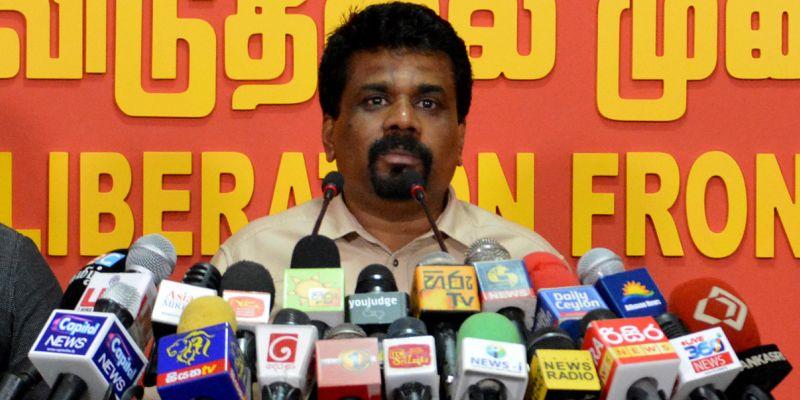
Speaking during a media briefing in Colombo today, Leader of the JVP Anura Kumara Dissanayake said several clauses that challenge the country’s sovereignty have been included in the proposed bill.

Parliamentarian Anura Kumara Dissanayake pointed out that the Board of Investment is an independent body that could oversee such investment projects.

Therefore, the JVP leader questioned why the government could not go through the BOI and needed to appoint a separate commission for Port City Activities and tax concessions.

He questioned why it would not be included as a part of the Local Authorities framework, and why salaries would be paid in foreign currency, why duties would be taxes would be levied when moving purchases out of the region and why would investors be given tax exemptions.

Therefore, the JVP leader accused the Chinese of trying to invade trade in Sri Lanka through long-term plans.

He stressed that the Port City Commission Bill must not be passed in parliament without seeking public opinion through a referendum.

MP Dissanayake explained that to be a patriot simply does not mean one will kiss the land he was born in.

Parliamentarian Anura Kumara Dissanayake pointed out that Sri Lanka has become a beggar’s nation which has to plead for loans from foreign nations as the country has been blacklisted on the international markets.

Therefore, MP Dissanayake claimed China is brokering a deal to disburse loans, only if Sri Lanka gives the Port City to them, and also provides three islands in the North to build power plants.

He also claimed India followed the same strategy to invade local resources within the port. The JVP leader said Sri Lanka had no option but to agree to terms and plead for loans from China.

Wijedasa claims life under threat by President

Sri Lanka Podujana Peramuna (SLPP) Parliamentarian Wijeyadasa Rajapakshe claims he was verbally abused and threatened by President Gotabaya Rajapaksa today.

He said that the President had abused him during a telephone conversation.

The Government MP said that Rajapaksa was elected to office on the promise that State resources will not be sold.

However, he said that concerns had been raised over the proposed Port City Economic Commission Bill.

The MP said that he had raised concerns over the Bill and the serious implications that may arise from it.

He said the President had then contacted him today and spoken in an abusive and threatening manner.

Wijeyadasa Rajapakshe said that he expected the President to speak in a diplomatic manner as a President should.

“However, he spoke in a manner not suitable to a State leader,” he said.

Wijeyadasa Rajapakshe said that he had no option but to respond in the same tone.

“We have concerns over our safety now,” he said.

He also said that he had complained to the Police over the threat.

Wijeyadasa Rajapakshe said that the President had threatened others in the same manner as well.

Six political parties will be temporarily inactivated

The Election Commission has decided to temporarily suspend the activities of the parties which are currently battling in court due to conflicts within the party.

Chairman of the Election Commission Attorney-at-Law Nimal Punchihewa stated that six such parties have been identified so far.

Due to the legal issues that have arisen in the face of several candidates contesting for the posts of secretaries and chairmen of those parties, those parties have resorted to legal action to resolve the relevant issues.

The Chairman of the Election Commission stated that it has been decided to suspend the relevant parties temporarily until the end of the court proceedings.

Accordingly, these parties will not have the opportunity to contest elections until the relevant legal proceedings are completed, said the Election Commissioner.

The Election Commissioner has declined to name the identified parties as it would be prejudicial to the parties concerned.

Posted in Uncategorized

Sri Lankan Rupee appreciates against US dollar

The Sri Lanka Rupee appreciated against the US Dollar today, in relation with the loan of a US$500 million which was granted from China yesterday.

The Central Bank of Sri Lanka (CBSL) said the selling rate of the US Dollar was Rs. 201.28.

The Bank said the buying rate of the US Dollar stood at Rs.195.72 today.

However, the Sri Lanka Rupee further depreciated against the US Dollar yesterday.
The selling price of a US Dollar was at Rs 204.62 and the buying rate was at Rs 199.80.

The loan has been obtained in a bid to shore up its foreign exchange reserves as the local currency hit a record low.

Posted in Uncategorized

Govt. should stick to mandate – Udaya Gammanpila

Energy Minister Udaya Gammanpila takes questions from the Daily Mirror on internal squabbles of the government and his criticism of certain actions. The Excerpts:

Q Recently at a function in Avissawella, you said the government was deviating from the mandate. How seriously did you view it?

If we were to stick to the mandate, the government shouldn’t have brought the 20th Amendment in its original form and it shouldn’t have attempted to sell the East Container Terminal to India, a gross violation of the promise given on page 58 of the President’s manifesto. The government shouldn’t have sought the support of Muslim extremists for the 20th Amendment, if the government wanted to stick to its mandate. Similarly, politicians shouldn’t have harassed and interfered with the good work of public officials. I have a list of such instances. I am not yet ready for a public discussion. We are strong of the view that the government should stick to its mandate and fulfil the aspirations of 6.9 million people who voted for the government at two successive elections. For that, several key public officials should be changed. Unnecessary political interference should be stopped.

Q What do you mean by referring to ‘unnecessary political interference and removal of key public servants’?

We are still confining these discussions to the coalition.

Q Does this political interference come from the top?

My wish is that I should never be able to discuss these things in public. Let our internal struggle be victorious! I don’t want to see that dark day when we discuss these issues in public.

Q You have already been critical of the government. Doesn’t it make it uncomfortable for you to be in the government?

Since I am a co-cabinet spokesman, I have been very cautious of whatever is uttered by me. Whenever I have been critical, those were on the instances where the government has violated its mandate. There is indeed a collective responsibility among the Cabinet members. But, our responsibility towards the public is much greater than the responsibility towards my Cabinet colleagues. Unless for the people who elected me as an MP, the President would not have got the opportunity to appoint me as a Minister. Because of that, my responsibility and accountability towards my Cabinet colleagues are less significant than my supreme responsibility towards the public.

Q Are you optimistic that the Government can be put on track?

When I misbehaved as a child, my parents were more sensitive than anybody else. They were the ones who blamed me the most. They were the ones who had punished me the most. They punished me not because they were angry, jealous or vicious, but they loved me. We underwent a lot of pain and difficulties to bring this coalition to power. For us, this government is a child of our own. We have the feelings of parents. That is why we blame the government where it is necessary. It shouldn’t be confused with the behaviour of the opposition. The opposition blames the government with the aim of toppling it. We blame the government to put it on the correct track.

Q How has such internal squabbling affected the realization of economic goals?

Everybody should admit that this government could not achieve economic goals set before the elections because of the unexpected emergence of the pandemic. We should also be genuine enough to admit that the President was able to manage the economy very well in the backdrop of the pandemic. The statistics reflect this. The world economic growth in 2020, was -6%. We were able to do that without locking the country down. Unfortunately, this remarkable achievement has not been appreciated in the political arena. The pandemic has indeed caused a lot of challenges and difficulties.

Similarly, it has brought a lot of new opportunities. If we could come out of the pandemic earlier than our neighbours, there would have been great opportunities for us to grab. After the pandemic, a lot of European, US and Japanese business giants have decided to relocate their factories and regional headquarters from China to anywhere else in Asia.

Considering our ideal geographic location, sound legal system coupled with a well-educated, disciplined workforce, we can attract these investments. India is struggling with the pandemic causing the US software companies to look for alternatives. Sri Lanka is an ideal alternative. Masks and hand gloves have become new day-to-day essentials in the pandemic atmosphere. Sri Lanka’s main export is garments. So, we can easily switch to manufacture masks. Sri Lanka is a leading natural rubber producer in the world. There are several rubber-based producers in the world having factories in Sri Lanka. We can easily grab the emerging demand for gloves.

“Everybody should admit that this government could not achieve economic goals set before the elections because of the unexpected emergence of the pandemic. We should also be genuine enough to admit that the President was able to manage the economy very well in the backdrop of the pandemic”

Q The government is getting ready to conduct the elections to the Provincial Council. How does it go with the mandate?

The President promised to bring the new constitution in the manifesto. He promised to do so before the completion of his second year into office. If the new constitution suggests a new election method for the provincial councils, it may contradict the Provincial Council Elections Act drafted by the government.
Hence, the government should consider both these documents in parallel. According to unofficial sources, the constitution formulation committee chaired by Romesh de Silva has almost finalized the draft. Unfortunately, the SLPP (Sri Lanka Podujana Peramuna) has not shown keen interest in pursuing the formulation of the new constitution. According to the source, they have refused to make submissions to the committee appointed by the President to draft the constitution.

Q It means the new constitution does not see the light of the day. Doesn’t it?

If we are to stick to the mandate, we should bring the new constitution before November 18, this year.

Q When talking about your subject, you promised to enlist Sri Lanka a gas and oil-producing country. How far have you progressed?

As I have explained to you previously, I made an in-depth analysis of why we have failed in the past. We identified four issues. We drafted the new Bill not only consulting stakeholders in Sri Lanka, but also potential investors in the oil industry. It has received the approval of the Cabinet and the Legal Draftsman. It is now with the Attorney General.
We are hopeful that the AG’s nod could be obtained shortly. After that, with confidence, we have planned to go before the industrial giants to invite them to Sri Lanka for oil exploration. Sri Lanka’s prospects are very positive. When we drilled four wells in 2011, three out of the four brought positive results. The industry norm is one out of seven wells.

“Unless for the people who elected me as an MP, the President would not have got the opportunity to appoint me as a Minister. Because of that, my responsibility and accountability towards my Cabinet colleagues are less significant than my supreme responsibility towards the public.”

Q What is the present status of the petroleum project in Trincomalee?

As I mentioned earlier, we have agreed in principle. Details are under negotiations.

Q Is there any plan for fuel price revision?

The world market prices are rising. The last revision was done on September 1, 2019. Then, the crude oil price was around US$ 60 a barrel. The present prices are in the range of US$ 70. It reflects that a price increase is overdue. We are trying to absorb the cost and not to burden the already-burdened consumers.

Port City qualifies to be a state; would become a Chinese colony -Wijeyadasa cautions

The Colombo Port City qualifies the four prerequisites — population, territory, sovereignty, and government — required to qualify as a statement, lawmaker Dr Wijeyadasa Rajapakshe has cautioned.

“That (the Colombo Port City) would become a Chinese colony. Foreigners can acquire that land and sell them,” Rajapakshe said during a media briefing on Thursday.

He pointed out that matters regulations concerning the Port City will not be brought before Parliament.

“The payment of salaries in this area will be made in foreign currency,” Rajapakshe said. “If we purchase goods in that area, we must pay taxes for that. That is similar to paying taxes in a foreign state”.

The parliamentarian pointed out that the Special Economic Commission of the Port City has powers to enter into agreements with foreign states as well.

Rajapakshe also claimed that President Gotabaya Rajapaksa has not been making decisions of his own will and that Basil Rajapaksa has been influencing him since his election to power.

“Gotabaya Rajapaksa is only a puppet of Basil Rajapaksa,” the parliamentarian remarked.

Posted in Uncategorized

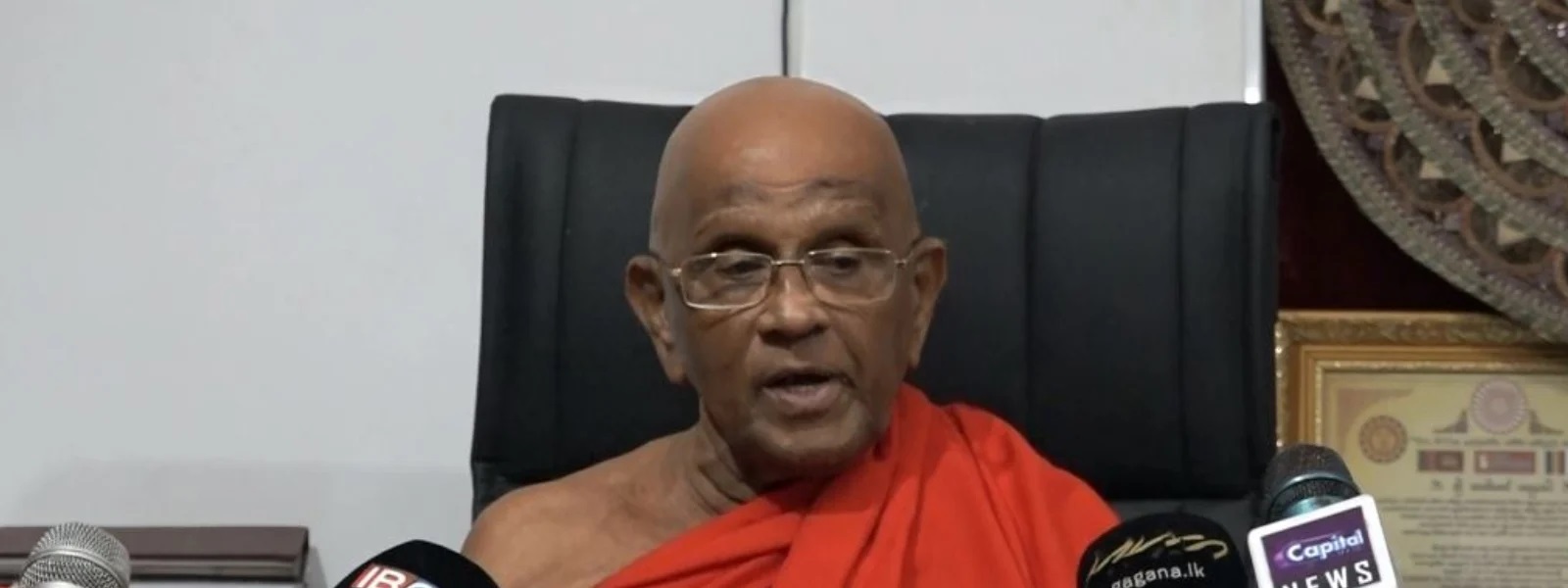
‘We will not allow Sri Lanka to become a Chinese Colony’ – Muruththettuwe Thero

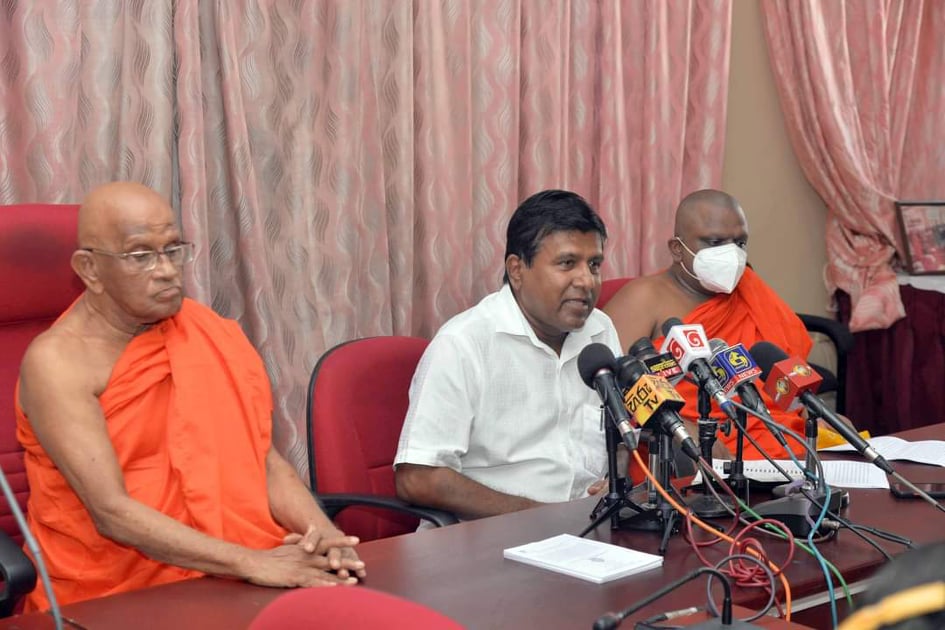
‘We will not allow Sri Lanka to become a Chinese Colony’, said Venerable Muruttettuwe Ananda Thero, the Chief Incumbent of the Abhayarama Temple in Narahenpita.

Speaking to reporters the Venerable Thero said the clergy do not oppose the Colombo Port City or investments, however, the Colombo Port City is posing a threat to Sri Lanka’s sovereignty and is to become a Chinese Colony.

The Venerable Thero was instrumental for the present government to be elected to power and he told reporters that the Sri Lanka Podujana Peramuna and the present leadership were created from the Abhayarama Temple in Narahenpita.

“It is clear the country is heading on the wrong path,” said the Venerable Thero.

“We cannot allow anyone to destroy this country and whatever was destroyed must be rebuilt,” said Venerable Muruththettuwe Ananda Thero.

Sri Lanka’s Western Province will face challenged because of the Port City, he said adding the country’s leadership was elected to build the country and not to sell it, let alone lease it.

‘The leadership should not ink agreements in secret. Any agreement should be subject to discussion,” he said.

The country’s leaders must understand that just as the people voted to elect the President and the Government, the people would also rise against destructive programs.

Port City Economic Commission Bill challenged in Supreme Court

A number of petitions have been filed at the Supreme Court challenging the Government’s proposed Port City Economic Commission Bill.

The United National Party (UNP) filed two separate petitions today on behalf of the General-Secretary of the UNP and the Chairman of the UNP. The Attorney-General has been named as a respondent in the petition.

Issuing a statement, the UNP pointed out that the Port City project is of national importance and if properly implemented will greatly benefit the country’s economy.

The Party further questioned as to why the process of this Bill, which is of national importance, has been carried out in a hurried manner, lacking any proper transparency.

This important piece of legislation has been presented to the Parliament on the eve of the Sinhala and Tamil New Year, failing to allow for proper examination and consultation, the UNP said.

The Party said, accordingly, it has challenged the Bill on the grounds that it is inconsistent with the Constitution of the country and will fail to fulfill its purposes.

“This Bill, in its current form, is inconsistent with Parliament’s control over public finances, allows for the abuse of power and fails to ensure a transparent system of checks and balances, “it said.

The UNP said furthermore, the Bill is considered to be in violation of Articles 3 & 4 of the Constitution in regard to the Legislative, Judicial and Executive powers of the citizens of the Democratic Socialist Republic of Sri Lanka.

Meanwhile, the Bar Association of Sri Lanka also filed a petition with the Supreme Court challenging the Colombo Port City Economic Commission Bill.

The Centre for Policy Alternatives (CPA) had also filed a petition today challenging the Colombo Port City Economic Commission Bill.

Ranil has declined party calls to take up UNP national list seat: spokesman

Former Prime Minister Ranil Wickremesinghe has declined a unanimous request from the United National Party (UNP) working committee to take up the party’s national list seat in parliament, a spokesman said.

Media spokesman for the UNP leader Dinouk Colombage told EconomyNext that Wickremesinghe had told the working committee that a younger member should take up the one seat the party is entitled to.

However, UNP Chairman Vajira Abeywardena told reporters in Galle yesterday that the party leader will be representing the UNP in parliament in about two months.

“The UNP has taken a unanimous decision that the seat should be taken up by Mr Ranil Wickremesinghe. There is no debate over it. Even people bearing different political opinions to us say that he should be the one to represent the party in parliament,” he said.

Another source close to the UNP leadership told EconomyNext that Wickremesinghe is of the position that, since he was defeated at the polls, he ought not to enter parliament through the national list.

The UNP suffered the party’s worst defeat in its history at the August 2020 parliamentary elections, failing to secure even a single seat barring the one national list seat allotted to the grand old party.

The breakaway of the faction led by then UNP deputy leader Sajith Premadasa contributed significantly the party’s spectacular defeat.