PM Modi ensured safety of Tamil minorities in Sri Lanka: J P Nadda

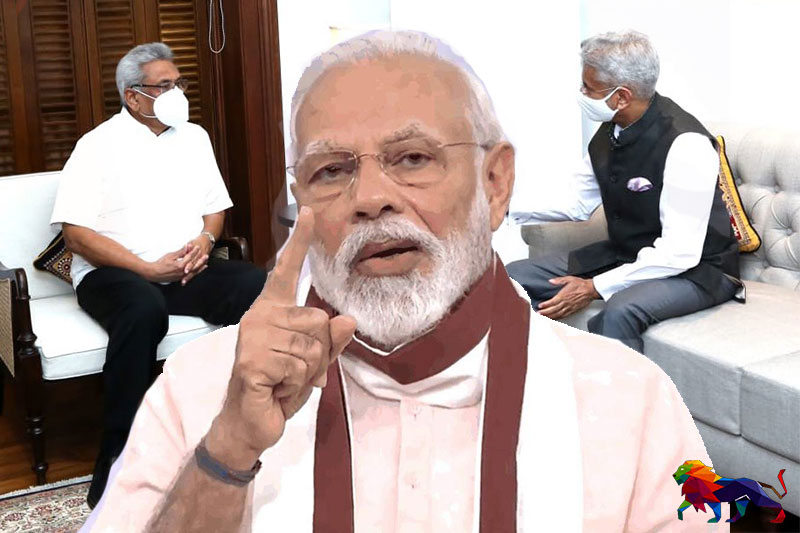
Ahead of upcoming Assembly elections in Tamil Nadu, Bharatiya Janata Party (BJP) National President J P Nadda attended a public meeting at Modakurichi, Erode on April 3 and said Prime Minister Narendra Modi is the first PM who visited Jaffna and ensured safety of Tamil Nadu minorities. “Modi Ji is the first PM to visit Jaffna in Sri Lanka. He visited bombarded houses, got them reconstructed. He also sent EAM S Jaishankar to Sri Lanka and ensured that Tamil minorities were safe. While Stalin never condemned Karuppar Koottam,” said Nadda. “PM Modi has brought Tamil Nadu in the mainstream. In the 13th Finance Commission, Tamil Nadu got only Rs 94,000 crores. While in the 14th Finance Commission under PM Modi, the state got Rs 5.42 lakh crores, which was 4.5 times more,” he said. “11 medical colleges have been given to Tamil Nadu, the highest number in the nation is given to Tamil Nadu,” he added.

Posted in Uncategorized

A timeline of investigation into 2019 Sri Lankan bombings

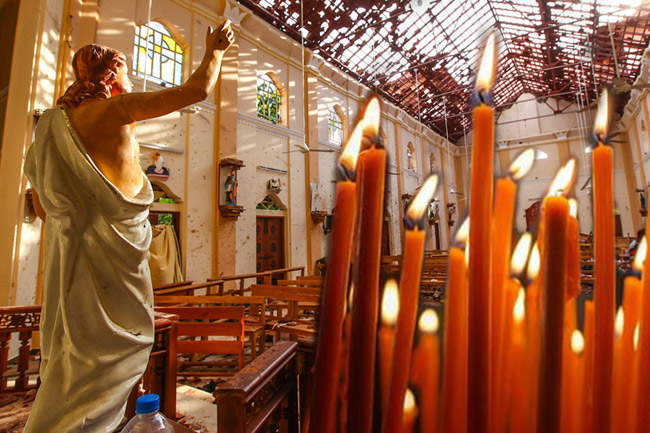
As Easter Sunday approaches this year, it is time to take stock of the developments following the series of bomb blasts on April 21, 2019 that ripped through churches and luxury hotels in Sri Lanka, killing over 250 people and injuring hundreds.

The explosions targeted Christians at Easter Sunday church services in Colombo, Negombo and Batticaloa, and tourists staying in luxury hotels in the capital. The toll puts the attacks on par with the deadliest atrocities since the 9/11 attacks in the United States  Throughout the morning and afternoon, in and around the capital, Colombo, Negombo, and in the eastern city of Batticaloa, the bombs went off at churches and upscale hotels.

The world watched the mayhem unfolding in the Indian Ocean island, which was still recuperating from the 26 years of bloodshed and violence during the civil war. The attack was claimed by the Islamic State of Iraq and Levant (ISIL).
The Easter Sunday attacks exposed multiple gaps in Sri Lanka’s security architecture.

Shortly after the attacks, the Sri Lankan government admitted that it failed to act on multiple warnings from intelligence agencies, including from India and the United States.

In February, an investigation into the 2019 Easter Sunday bombings in Sri Lanka called for the country’s former President Maithripala Sirisena as well as senior police and intelligence officials to be prosecuted.

The commission of inquiry said that “criminal proceedings” should be brought against former President Maithripala Sirisena, who left office in November 2019, for “criminal liability on his part” over the attacks.

In March, the Sri Lankan parliament held a three-day debate on the inquiry.

Here is a timeline of the investigation into the gruesome attacks that shook the nation and the world.

April 21, 2019: A wave of deadly blasts hit Sri Lanka on Easter Sunday. Nine suicide bombers launched a coordinated series of attacks on three Catholic churches and three luxury hotels across Sri Lanka. Over 250 people died and many suffered injuries.

April 22, 2019: Then-President Maithripala Sirisena of Sri Lanka appointed a three-member committee headed by a retired Supreme Court judge to investigate the Easter Sunday bombings.

April 22, 2019: Sirisena declared a nationwide emergency, giving the military a wider berth to detain and arrest suspects – powers that were used during the civil war, but withdrawn when it ended.

April 23, 2019: Sri Lankan then-Defence Minister Ruwan Wijewardene said in parliament that the government believed the attack was in retaliation for the Christchurch mosque shootings on March 15, 2019.

He accused National Thowheed Jamath (NTJ), an extremist group, for the bombings. Wijewardene said that along with NTJ, another local group, Jammiyathul Millathu Ibrahim (JMI) was also believed to be involved in the attacks. “It was done by National Thowheed Jamath along with JMI,” he said.

April 24, 2019: Sirisena asked security officials—the defence secretary and the national police chief–to step down.
Sirisena moved to replace then-defence secretary Hemasiri Fernando and then-national police chief Pujith Jayasundara after security forces failed to act on warnings before the Easter suicide bombings.

April 25, 2019: Hemasiri Fernando, then Sri Lanka’s defence secretary, resigned following the security forces’ failure to stop the deadly church and hotel attacks on Easter Sunday.

April 25, 2019: The Criminal Investigation Department (CID) released names and photos of six suspects wanted in connection over the Easter Sunday bombings, seeking public assistance.

On April 26, 2019: the Sri Lanka Army and the Special Task Force (STF) carried out a search operation in Sainthamaruthu town where three explosions and a shootout occurred when they attempted to raid a suspected hideout following a tip-off.

Three suicide bombers blew themselves up, killing nine of their family members, including three women and six children, while three other terrorists were shot dead by the soldiers. One civilian was caught in the crossfire and died, according to police, while a wounded woman and child were taken to hospital.

April 26, 2019: Sirisena said Pujith Jayasundara has resigned over failures that led to the deadly bomb attacks.
April 26, 2019: Sirisena admitted “a serious lapse” on the part of the country’s defence secretary and top police official, who failed to inform him about an April 4 letter from a “friendly foreign country” warning about a possible attack.

April 27, 2019: Jayasundara refused a request by Sirisena to step down over the failure to thwart the Easter Sunday attacks. Sirisena earlier claimed that Jayasundara has resigned.

April 27, 2019: Sirisena banned two groups linked to the Easter bombings – NTJ and Jammiyathul Millathu Ibrahim (JMI) – under emergency powers.

Perfecting the failure BY Victor Ivan

Sri Lanka is now in an unfortunate plight in which the failure of the state has entered the phase of its completion both internally and externally. The rule of the country is eclipsed by dark shadows of disintegration and anarchy. The state and the political system are also in a state of disarray and virtual collapse. The economy is on the brinks of virtual bankruptcy. In the sense of geo-politics, the country is largely under siege.

Anarchy

The anarchic situation and bankruptcy the country is facing have become an oppressive and tangible reality which the people could feel. Gotabaya Rajapaksa can be considered as a President elected solely by the Sinhala Buddhist votes. His Government was able to secure a two-thirds majority in the Parliament. However, it is clear that the recognition maintained so far, by both the President and the Government has now eroded.

Another significant characteristic of this trend is that no opposition party movement has been able to enhance their public acceptance in proportion to the extent of decline in the governing party. This clearly explains that the crisis of Sri Lanka is more a crisis of the system itself which has rendered all traditional leaders and traditional political parties failures than a crisis of the leader, the head of state or the government.

Despite the fact that the President has adopted a policy with more weight being placed on a military approach which undermines the civilian rule, obviously he has not been able to achieve any of the intended objectives. A significant number of not only civilians, but also army officers who have been appointed to key positions have abandoned them. It can also be considered as an important trend.

In this crisis, the functioning of the judiciary also can be said to have shrunk and degenerated to a greater extent. It can be said that the Sri Lankan judiciary has reached a level where it finds itself incapable of meting out justice fairly, and providing protection not only to the general public but also to the socio-political system. The pathetic plight faced by Shani Abeysekara is a good example revealing this situation. All investigations carried out by him were pursued with necessary guidance from the Attorney General’s Department and the judiciary. Yet, both these institutions have failed in providing him with necessary protection.

Almost everything in the country is being conducted in an informal and absurd manner. It is only in three areas where active and effective performance could be seen viz in acquitting the leaders of the present Government who were prosecuted during the previous regime, prosecuting the opponents of the Government and looting public property in various fields.

Bankruptcy

The bankruptcy of the economy which is visible and tangible has become a major factor that oppresses the people. It is unavoidable that this situation will soon develop into an unbearable scale. The exchange rate of the US dollar has already crossed the limit of Rs. 200 and according to the Minister Finance himself, it might reach Rs. 350. Under the circumstances, a bag full of money will be required to buy a bag of goods in the future. The imported goods could be purchased only as long as they are available in the market. Already there are signs of a shortage of tires in the market, and a situation might arise where the motor transportation might collapse at any moment.

A large number of people have already lost their jobs and the number of those whose income has declined though they have been able to preserve their jobs is even greater. There are already signs of mass protests and demonstrations, and probably a situation might arise that such protests will develop drastically in the future.

The lack of having a practical vision needed to overcome the crisis Sri Lanka is facing can be considered as a common feature inherent not only in the Government but also in the Opposition as well. The failure to build the nation and the plundering of public property associated with the ruling power can be considered as the two main factors that have contributed to the current deplorable state of Sri Lanka. The nation must be rebuilt and the State and the political system which have crumbled must be restructured.

In doing so, it is imperative that there must be a large-scale inquiry into human rights abuses while the opportunity gained by the rulers to exploit public property which has become a permanent feature of state administration, is completely abolished. Neither the ruling party nor the opposition parties have apparently felt any disenchantment about the great catastrophe that has befallen the country due to their misdeeds. Both parties have not shunned their greediness for plundering of public property. Both parties are in a state of extreme bankruptcy, devoid of honesty and creative thinking. All opposition parties seem to be thinking that the solution to the crisis in Sri Lanka lies in their seizing the ruling power in the next general election.

Ignoring the geopolitical reality

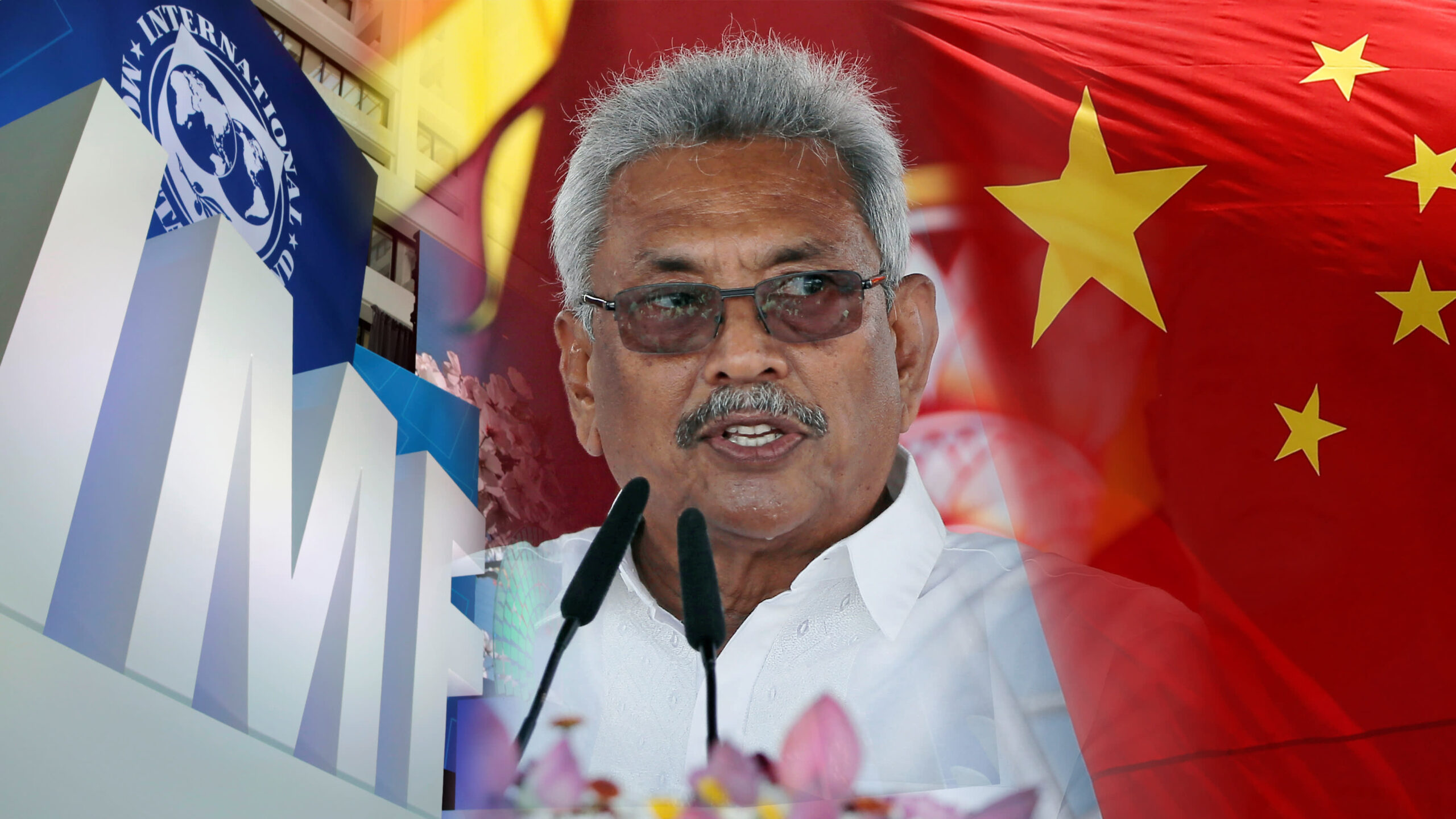
The extreme pro-China policy followed by Sri Lanka in the field of geopolitics is likely to push the crisis in Sri Lanka to an explosive level. The country is already trapped in a crushing debt burden with China which is not easy to escape from. Sri Lanka is an island located in a strategically important location from which the Indian Ocean could be controlled. India can be considered as the closest neighbour of Sri Lanka. It can also be considered as the major power of the region as well as the one that aspires to become the dominant or the super power in the region.

The location of Sri Lanka cannot be changed. Geographically it lies at the mouth of India and not that of China. Under the circumstances, a pro-Chinese policy that ignores expectations of India can cause great anger in India. If India pushes itself for a policy that interferes with Sri Lanka, certainly the latter will not have a real chance of resisting it.

The recent resolution passed by the UN Human Rights Council on Sri Lanka will inevitably act as a significant element having a major impact on Sri Lanka which is already merged in a deep crisis. If Sri Lanka continues to act arbitrarily, it might lead to a situation in which sanctions could be imposed on Sri Lanka. A major outcome of this resolution would be the establishment of a 12-member UN human rights office on Ceylon in the High Commissioner’s Office to streamline the investigations into alleged human rights abuses in Sri Lanka which are said to have occurred in the past and occurring at present. A sum of $ 2.8 million has been set aside for the office for a period of 22 months.

UN human rights office on Ceylon

This office will undoubtedly be a crucial turning point on alleged human rights violations and have a greater impact on the internal affairs of Sri Lanka in many ways, not just one. It will act as an important institution for the protection of Tamil and Muslim people who have been significantly deprived of their human rights and also the rights of the Sinhalese people who have been and continued to be deprived of human rights. It will also act as an important centre for those who have been affected in various ways during the two insurrections of Sinhala people who have not been able to receive justice for their grievances, and the victims of human rights violations during the Tamil uprising in the north and the Muslims who have been subjected to human rights abuses subsequently. All affected parties would be able to present their grievances to this office and seek redress.

All the victims involved in the cases such as the disappearance of 11 youths arrested for extorting ransom, murder of MP Ravi Raj, abduction and disappearance of Prageeth Ekneligoda, abduction of journalists to undermine investigations into horrific incidents of assault can also seek assistance of this office and urge for justice. In particular, people like Hijaz Hezbollah, Attorney-at-law and Shani Abeysekera can seek assistance from this office for their defence and protection.

Also, all political leaders who are threatened with deprivation of civic rights by a system of Commissions which are contrary to the law could also seek assistance from this office to resolve their issues. Similarly, people like me, Tony Emmanuel Fernando and Palitha Bandaranaike who had sought redress for serious human rights violations from Geneva Human Rights Commission under the International Covenant on Civil and Political Rights, and being adjudged that their rights have been violated and the respective government ordered to pay compensation for the victims, but so far the orders issued by the Commission have not been honoured by the Government, can also appeal to the Bureau to do justice on them.

Apart from that, those who are interested in overcoming the degenerated state of Sri Lanka and keen in having structural reforms adopted for that, and also those who are interested in making a participatory People’s Constitution to effect a real transformation of the system, could also seek necessary guidance and technical assistance from this office.

The challenge on the judiciary

The biggest challenge of this resolution will be in the judiciary. Internationally the judiciary of Sri Lanka does not entertain a good reputation. The new changes that may arise in the judiciary of Sri Lanka in the wake of this resolution is likely to create an alternative mechanism for victims to go before a court of a foreign country and seek justice in the event they fail to get justice administered by the highest court in Sri Lanka. It will inevitably become an uncontrollable stream if the doors of the courts of India are opened for this purpose in addition to the courts in European countries. How will the judiciary in Sri Lanka take up this signal?

Indian HC invites applications for four scholarships

The Indian High Commission in Sri Lanka has invited applications for four scholarship schemes concerning undergraduate, postgraduate, and PhD studies.

“All scholarships cover full tuition fees for the entire duration of the course, monthly sustenance allowance, and annual grant for books and stationery,” the high commission noted.

It added that selected candidates would also be provided hostel facilities inside the campus.

The four scholarships for which applications have been invited are as follows;

  • Nehru Memorial Scholarship Scheme: Undergraduate courses (except Medical/Paramedical& Fashion Design course) including Engineering, Science, Business, Economics, Commerce, Humanities and Arts).
  • Maulana Azad Scholarship Scheme: Masters Degrees (except Medical/Paramedical& Fashion Design course) including Engineering, Science, Economics, Commerce, Humanities and Arts. However, preference would be given to the fields of Engineering, Science and Agriculture.
  • Rajiv Gandhi Scholarship Scheme: Undergraduate courses in the field of ‘Information Technology’ leading to a B.E or B.Tech Degree.
  • Commonwealth Scholarship Scheme: PhD Degrees in all subjects except Medical/ Paramedical& Fashion Design course.

Guidelines issued for Tamil and Sinhala New Year

Guidelines have been issued for the Sinhala and Tamil New Year, the Ministry of Health said today.

The guidelines cover the activities approved for the Sinhala and Tamil New Year.

It includes restrictions placed on some Avurudu games.

State Minister of Primary Health Care, Epidemics and COVID Disease Control, Dr. Sudarshani Fernandopulle said that so far no decision has been taken to enforce travel restrictions during the Sinhala and Tamil New Year holidays.

However, she said that large gatherings will be prohibited to ensure there is no spread of the coronavirus.

The State Minister said that the public will be urged to ensure existing health guidelines are strictly followed during the holidays.

She said the Government is not keen to enforce travel restrictions as that would prevent families from being united during the festival.

Police Spokesman, Deputy Inspector General (DIG) Ajith Rohana warned that the threat of the coronavirus pandemic still exists in Sri Lanka.

As a result, he said the health guidelines must continue to be strictly followed to ensure the virus does not spread.

Posted in Uncategorized

Former Gotabhaya Rajapaksa Ally Major General (retd) Boniface Perera Pledges Support To Sajith And Joins SJB

Retired Major General Boniface Perera, a well-known supporter of the Viyathmaga organisation, has pledged support to the Samagi Jana Balawegaya.

He met Opposition Leader Sajith Premadasa at the latter’s office yesterday and expressed his solidarity with the party.

Perera will be appointed an Advisor to the Professionals group of the party.

He holds a Diploma in Human Resource Management, the Diploma in Advanced Defense Management and the National Defense Degree in China.

He has been awarded the Ranashura Medal and the Ranavikrama Medal for bravery in the face of the enemy on the battlefield, as well as twelve medals, including the Distinguished Service Medal for Excellence in Discipline.

Posted in Uncategorized

SLPP PC members claim party wants early elections, but some monks disagree

A group of Buddhist monks has appealed to President Gotabaya Rajapaksa and members of Parliament, representing all political parties, to put on hold Provincial Council polls, pending early enactment of the proposed new Constitution.

The group has, in a two-page letter dated March 29, 2021, stressed that the Provincial Council polls should be conducted in terms of the new Constitution as much desired changes were likely to be introduced in respect of the electoral system, as well as devolution of powers.

The signatories were Ven. Omare Kassapa, Ven. Muruththettuwe Ananda, Ven Bengamuwe Nalaka, Ven. Kirama Vimalajothi, Prof Ven Ithhademaliye Indrasara, Prof. Ven Madagoda Abayatissa, Prof. Malwane Chandrarathana, Ven Hegoda Vipassi, Ven. Valimitiyawe Gnanaratne and Prof. Ven Kapugollawa Ananda.

A nine-member team of experts led by eminent lawyer Romesh de Silva, PC, is engaged in formulating a new draft Constitution.

Referring to President Gotabaya Rajapaksa’s directive to conduct Provincial Council polls as early as possible, the monks said that they believed the declaration was made in the run-up to a high profile vote on an ‘accountability resolution’ on March 23. Asserting the presidential statement was meant to influence India to vote against the resolution moved by Western powers and their cronies, the monks pointed out India not only skipped the vote but demanded Provincial Council polls and full implementation of the 13th Amendment to the Constitution.

The group questioned the rationale in India raising purely a domestic matter at the Geneva-based United Nations Human Rights Council (UNHRC). Therefore, Sri Lanka shouldn’t succumb to unwarranted pressure in that regard, the group said, urging President Gotabaya Rajapaksa not to disappoint those who exercised their franchise in support of him at the 2019 presidential election and the 2020 general election.

The group also warned of unnecessary complications in amending the relevant laws-enactment of new Provincial Council Act or an amendment to pave the way for Provincial Councils polls under the discarded previous PR system.

The monks also expressed serious concerns over allocation of funds for Provincial Council elections deemed a while elephant by vast majority of people at a time the country was experiencing dire financial crisis.

The monks declared their strong objections to proposed Provincial Council polls in the wake of Sri Lanka Podujana Provincial Council Members’ Forum demanded tangible measures are taken without further delay to conduct the polls. The forum declared that it wouldn’t mind having the Provincial Council polls under whatever system. Blaming the previous UNP-led administration for indefinitely postponing Provincial Council polls, Chairman of the grouping Kanchana Jayaratne said that President Gotabaya Rajapaksa, Prime Minister Mahinda Rajapaksa and SLPP founder Basil Rajapaksa recently called for Provincial Councils. Therefore, there was no justification in further delaying the elections, Jayaratne said, pointing out that the Provincial Council system was functioning without the presence of people’s representatives.

Referring to Janaka Bandara Tennakoon responsible for Provincial Council portfolio submitting the same cabinet paper in respect of Provincial Council polls, Jayaratne urged the cabinet of ministers to decide on the matter. Jayaratne alleged that some of the constituent members of the SLPP at the forefront of the struggle against the then government were strangely silent today.

The Forum requested Ministers Dinesh Gunawardena, Vasudeva Nanayakkara, Wimal Weerawansa and Udaya Gammanpila to take a clear stand on this matter. Jayaratne said that they shouldn’t allow the cabinet to quietly sideline Minister Tennakoon’s cabinet paper.

Jayaratne insisted that those who respected democracy couldn’t condone efforts to sabotage Provincial Council system.

Jayaratne also urged Public Security Minister Rear Admiral (retd.)Sarath Weerasekera, who had been strongly opposed to Provincial Councils system to change his thinking in line with present requirements. Jayaratne requested Minister Weerasekera to throw his weight behind their efforts to fully restore the Provincial Councils. Noting that Minister Weerasekera had issued controversial statements in that regard, Jayaratne called upon the former Navy Chief of Staff to give up opposition to a system that could be immensely beneficial to the public.

The forum stressed that it would be the responsibility of the cabinet to take tangible measures to hold Provincial Council polls as the Rajapaksas had acknowledged the need and assured the elections would be conducted.

The Provincial Council system was introduced in terms of the 13th Amendment to the Constitution enacted in the wake of the Indo-Lanka accord meant to disarm terrorist groups once trained, armed and deployed by India.

Sri Lanka is experiencing a debt overhang – World Bank

Sri Lanka’s government debt as a share of gross domestic product is expected to rise to 115 percent in 2021 and poverty to 10.9 percent, the World Bank said in the wake of several years of mostly monetary ‘stimulus’ followed by the inevitable stabilization policies.

Import controls would reduce growth, while high debt and reduced access to markets were threatening debt sustainability, the agency said in a report on South Asia.

Sri Lanka’s economy is expected to recover to 3.6 percent in 2021, from a 3.6 percent contraction in 2020 amid a Coronavirus shock.

Sri Lanka public and publicly guaranteed debt is estimated to have risen to 109.7 percent of GDP in 2020 from 94.3 percent in 2019 and is expected to rise to 115.0 percent in 2021 and 117.7 percent in 2021.

Lower-middle-income-poverty defined as 3.2 dollars in 2011 PPP dollars had jumped to 11.7 percent in 2020 from 9.2 percent and will moderate to 10.9 percent in 2021 as growth recovers.

Fiscal Hit

In 2020 Sri Lanka’s budget deficit is expected to have worsened to 12.6 percent of GDP from 6.8 percent of GDP in 2019 due to the combined effect of a Coronavirus pandemic and tax cuts for a ‘fiscal stimulus’.

“The fiscal deficit is expected to be high in the forecast period, despite tightly controlled expenditures, as revenue collection is expected to remain weak,” the World Bank said.

“The combination of a stimulus package in 2019 (pre-pandemic) and low revenues in the aftermath of the COVID-19 shock resulted in a steep deterioration in fiscal balances.

“The deficit is believed to have increased to 12.6 percent of GDP in 2020 and public and publicly guaranteed debt to have increased to 109.7 percent of GDP.

“In turn, public and publicly guaranteed debt is expected to reach 115.0 percent of GDP in 2021 and to rise further between 2022-2023. High gross financing requirements will exert pressure on the domestic financial market”

In 2020 Sri Lanka’s central bank has bought large volumes of debt, injecting liquidity and triggering forex reserve losses, which has mopped up most of the liquidity, though private credit has been weak.

The World Bank is expecting inflation to rise to 5.2 percent in 2021 from 4.6 percent in 2020.

“Inflation is projected to increase gradually, as domestic banking institutions, including the central bank, are contributing to finance the government deficit,” the World Bank said.

Sri Lanka’s central bank has been printing unprecedented volumes of money in 2020 and in the first two months of 2021, ratcheting up liquidity injections that brought currency crises in 2012, 2015 and 2018 to new levels under so-called ‘Modern Monetary Theory’ despite running a pegged exchange rate regime.

The rupee has collapsed from 113 to 200 to the US dollar from 2011 under monetary ‘stimulus’.

Return of John Law

Monetary stimulus, broadly dating back to Scottish Mercantilist John Law, gained sudden respectability among policymakers after the ‘Great Recession’ as reserve currency central banks injected large volumes of money into damaged credit systems, seemingly without driving up inflation.

Such policies also known as ‘Go’ policies whether accompanied with deficit spending or not, has historically triggered balance of payments troubles in pegged regimes and asset price bubbles and commodity price booms in floating reserve currency areas followed by low growth critics say.

Sri Lanka’s growth has also fallen as monetary stability worsened and policy makers directed most of their efforts to firefighting the effects of ‘stimulus’ including rate hikes, import controls (Nixon shock) and exchange controls.

Since around 2016 Sri Lanka was also hit by ‘revenue based fiscal consolidation’ a peculiarly leftist or statist framework advocated by the International Monetary Fund that sought to put more money into the hands of politicians and bureaucrats with tax hikes while downplaying the need to cut spending.

No emphasis was placed on monetary stability or restraining the central bank either.

Instead the central bank was encouraged to follow un-anchored monetary policy in the form of a ‘flexible’ exchange rate (no credible external anchor) and ‘flexible’ inflation targeting (no credible domestic anchor) with predictable results.

The central bank was also taught to calculate an ‘output gap’ inciting an agency which had already deprecated the currency from 4.70 to 113 since its inception in the worst performance in South Asia, to follow ‘Go’ policies and trigger external imbalances.

However the agency has no growth mandated in its constitution.

Sri Lanka’s central bank is a top IMF customer due to past anchor conflicts and keeping down interest rates as a final target, critics have said.

In 2018 Sri Lanka cut rates and injected money through a variety of tools, including outright purchases of bonds, term reverse repo injections and overnight injections and dollar rupee swaps (buy/sells) amid tax hikes to reduce the deficit.

The injections pushed the rupee down from 153 to 182 before rates were raised at liquidity tightened in ‘Stop’ policies, leading to a growth shock.

Sri Lanka’s began another round of ‘Go’ policies from August 2019, and in December 2019 value added taxes were slashed worsening budgets again. Rates were cut in 2020 and injections worsened from around March 2020.

Debt Sustaintability

Sri Lanka is still the ‘Go’ mode. Gross official reserves which were at 8.5 billion US dollars when ‘Go’ policies and output gap targeting started have fallen to 4.5 billion US dollars by February 2021.

With liquidity injections and prospects of a private credit recovery, analysts had warned that Sri Lanka would find it difficult to repay foreign debt, which requires a government to have solvency in domestic debt auctions and there was a danger of a Weimar Republic phenomenon.

Meanwhile the World Bank said annual debt payments were around 4 billion US dollars and access to foreign markets have been limited amid downgrades.

“External buffers are expected to weaken relative to external liabilities as reserves may need to be used to service the external debt,” the World Bank said.

“A longer downturn could push many small and medium enterprises from illiquidity to insolvency, further holding back the recovery process and the return to a path of poverty reduction.

“Lower growth would also put additional strain on public finances and increase
risks to macroeconomic stability.

“Depleted fiscal buffers, high indebtedness, and constrained market access will continue to pose risks to debt sustainability.”


Sri Lanka’s rejection of the UNHRC resolution: A shift towards China?

In Geneva, a tough resolution on promoting reconciliation, accountability, and human rights in Sri Lanka was passed with 22 votes out of 47 countries supporting the resolution. The current resolution gives more teeth to the Office of the United Nations High Commissioner for Human Rights (OHCHR) to investigate and collect evidence of human rights violations, not limiting to the past unaddressed concerns by the government but also to the future concerns in President Gotabaya Rajapaksa’s government, which is explained by Elisabeth Tichy-Fisslberger, speaking on behalf of the European Union at United Nations Human Rights Council (UNHRC). Backed by the US Secretary of State Anthony Blinken, he ‘called on the Council to adopt resolutions due to Sri Lanka’s lack of accountability for war crimes.’ Sri Lanka’s Foreign Minister Dinesh Gunawardena was quick to respond soon after the vote, “The UN Core Group failed to secure 25 votes from the 47 member UNHRC,” calculating the nations who did not support and abstained as one group; an illogical victory was projected. The result at UNHRC was quickly weaponised by the government in their favour, catering to their majoritarian voter base. The ultra-nationalist political view of the government is a readily available feature that could be used to call it an attempt by Western countries to bully countries such as Sri Lanka.

It has been 12 years since the end of the Civil War and all subsequent governments have failed to implement a domestic mechanism that could win the Tamilian and the international community.

This projection itself gives a bad start to work towards the resolution; the need of the hour is correcting the path towards addressing minority concerns, not narrating an alternative view with unacceptable arguments and rejecting the resolution. Before the vote in Geneva, Sri Lankan foreign secretary assured India will vote for Sri Lanka, this was his own assessment and not a commitment that came from New Delhi. India abstained, with the Tamil Nadu election on the cards and much pressure from the Tamilian polity due to the present Sri Lankan government’s unfulfilled commitments where nothing substantial was spoken or achieved on Tamilian concerns. India to abstain from voting at UNHRC is justifiable due to the internal pressure from Tamilian polity and non-commitment from Sri Lankan government towards the devolution of power and absence of a genuine reconciliation process, clearly highlighted by minister Jaishankar’s visit in early January. It has been 12 years since the end of the Civil War and all subsequent governments have failed to implement a domestic mechanism that could win the Tamilian and the international community. The trust deficit has widened from co-sponsorship of its own resolution in 2015 to a complete withdrawal by the present government. This was due to an inconsistent policy on reconciliation and multiple voices of several foreign ministers pledging its support from different solutions, speaking at previous UNHRC sessions in Geneva. The new feature of the present resolution not only limits to the Civil War, thus giving more emphasis to the last two years of the deteriorating human rights environment, adding new concerns such as on militarisation of the present government.

The danger of this resolution is two-pronged. First, if the Sri Lankan government completely rejects the resolution, which was referred by Sri Lanka’s Ambassador in Geneva, C.A. Chandraprema as “unhelpful and divisive.” A similar rejection was expressed after the vote by Foreign Minister Dinesh Gunawardena. President Gotabaya Rajapaksa expressed his displeasure pointing out to geopolitics and India’s devolution plea “I will not allow these countries to achieve their geopolitical needs by introducing separatism under the guise of power devolution.” The complete rejection of the resolution could directly impact the relationship with the west and deteriorate Colombo’s commitment towards international norms, moving the foreign policy balance away from rules-based order, Indo-Pacific norms, and its allies. Second, it could impact the overall country’s exports to the western nations, with the EU and the US being its largest export markets. This would also impact the country’s image to attract western investments, initiating an inexorable drift of Sri Lanka towards China.

The new feature of the present resolution not only limits to the Civil War, thus giving more emphasis to the last two years of the deteriorating human rights environment, adding new concerns such as on militarisation of the present government.

Anchorage to IOR

United States (US) Secretary of State, Anthony Blinken, and National Security Advisor, Jake Sullivan, met with China’s most senior diplomat, Yang Jiechi, and State Councilor, Wang Yi, in Anchorage, Alaska, marking the beginning of the Biden administration’s China policy. Both parties were to exchange their views to ease the US-China tension that had exacerbated in the last few years. The US position on China was clearly articulated, highlighting China’s aggressive behaviour and violation of human rights in several geographies. According to senior US diplomat Richard Haass, the discussion was “mishandled and a terrible start” to the de-escalation efforts, where both sides accused each other on their respective policies.

A day before the Alaska summit, the US escalated its sanctions on China over its crackdown of political freedoms in Hong Kong. According to Wang Yi, “Chinese people are outraged by this gross interference in China’s internal affairs…this is not supposed to be the way one should welcome his guests…this is miscalculated and only reflects the vulnerability and weakness inside the US. And this will not shake China’s position.” Adding to that, Yang Jiechi said, “the time had passed when a small group of wealthy Western nations could dictate the shape of the global order and the US no longer represents world opinion…” While both sides depicted the same hostility, it is perhaps a deliberate recalibration, well-orchestrated by the US to continue the anatagonism to build strong relationships with her allies, which is a priority for the Biden administration. A Japanese scholar Satoru Nagao argues that ‘the more China escalates the situation, more the defence capabilities of the Quad will be institutionalised.’ In the meantime, due to US administration’s unfavourable China policies, Beijing is charting a course ahead that depends less on the West, with its ‘dual circulation’ economy which is a more self-reliant economic model.

The recent tripartite agreement between Sri Lanka, the Maldives, and India is considered to be a move in the same direction of minilateral successes.

The tense US–China posture in Anchorage will impact the Indian Ocean Region (IOR). China’s belligerence could propel nations to expand their security footing in the IOR. Strengthening Prime Minister Modi’s Security and Growth for All the Region (SAGAR), the Indian Foreign Minister Dr Jaishankar made repeated visits to the Maldives to establish the coast guard naval operational base in at Sifvaru–Uthuru Thilafalhu (UTF), which will be developed and supported by Indian naval assistance, further extending US$ 50 million credit line for defence. Sifvaru, which is geographically situated closer to the southern Indian shores, is a perfect location for Indian logistics, HADR efforts, and maritime security operations. The Maldives has been a strategic location even during the British Empire where Gan (Addu Attoll) in the Maldives was used for a similar purpose by the Royal Navy and the Royal Air Force. The second leg of Dr Jaishankar’s visit was to Mauritius where security and defence cooperation was further strengthened. The northern island of Agaléga in Mauritius has already been developed by India for military use. A P-8I reconnaissance aircraft could easily land on the newly built runway. All these, and more security partnerships such as those with Japan to access Djibouti are clear security expansions made in the western IOR by India. The recent tripartite agreement between Sri Lanka, the Maldives, and India is considered to be a move in the same direction of minilateral successes.

During the Quad leaders’ summit with India, US, Australia, and Japan, where Joe Biden, Scott Morrison, Yoshihide Suga, and Narendra Modi pledged their commitment to safeguard the interests of democratic nations and to sustain a rules-based order in the Indo-Pacific where Chinese aggression is a concern to the Quad. The US commitment to a rules-based order in the Indo-Pacific was reiterated in Sri Lanka by the most senior US General, Kenneth S. Wilsbach, who visited the island after a decade. The US, along with Quad commitment and the role of the Quad has strengthened due to the assertive behaviour of China in the Indian periphery, the only Quad member who shares a land border with China. In this geopolitical equation, it is vital that India strikes a balance and deter Chinese expansion, especially towards the IOR. Indian scholar, Brahma Chellaney, correctly observed, ‘it is imperative that the Quad gain strategic heft so as to bring an expansionist China under pressure.’

The growing Chinese space in India’s periphery will be of great concern for New Delhi.

Sri Lanka’s foreign policy posture is to balance the US and China, being part of both BRI and the Indo-Pacific. Neither can it afford to move away from India nor the rules-based alliance, where Sri Lanka could play an important strategic role rather than a passive partner, silently accommodating China’s expansion in the island. However, there are clear signs that the Rajapaksa administration will continue to tilt in favour of China in certain sectors due to China’s unconditional support in defending the Sri Lankan administration on its human rights record in Geneva, questioning the OHCHR report. Along these lines, China will support the domestic political position on minority concerns taken by the Rajapaksa regime to make strategic inroads into the politics of the island. Few days ago, President Gotabaya Rajapaksa thanked President Xi for China’s support at UNHRC over the recent telephonic concertation they shared. During which President Xi also gave a firm pledge to stand by Sri Lanka in case of undue pressure exerted by western countries.

This growing Chinese space in India’s periphery will be of great concern for New Delhi. Sri Lankan foreign policy bureaucrats and advisors should clearly understand the geopolitical concerns, not limiting to mere rhetoric of ‘India first’ approach from the front door while welcoming ‘China preferred’ approach from the back door. While the Sri Lankan government has drafted a 20-point Foreign Policy Directive in an attempt to have a more consistent foreign policy, approved by the cabinet without inputs from the Parliament, that is privy to only a few ministers, needs a broader view and a collective approach to calibrate the balance.

Source:ORF

Posted in Uncategorized

‘No one cares more about human rights than us’: Foreign Secretary

The United Nations announced last week that it would launch a mission to investigate war crimes in Sri Lanka. The body’s Human Rights Council approved a mandate to collect evidence saying that “trends emerging over the past year, which represent a clear early warning sign of a deteriorating situation of human rights in Sri Lanka.”

DW’s Tim Sebastian spoke with the Sri Lankan Secretary to the Foreign Ministry, Jayanath Colombage, on the UN’s upcoming investigation. The secretary insisted that his country’s government takes the issue seriously: “No one else is [more] interested in human rights than Sri Lankans and Sri Lanka.”

Colombage told Conflict Zone that while progress had been made in Sri Lanka since the end of the country’s 25-year old civil war 12 years ago, work still needed to be done.

“We had a war for one generation, and it takes time to heal completely,” he said from Colombo.

Colombage told Sebastian he would not comment on the specifics of a controversial pardon by the president of a soldier.

“The president will never, ever take the side of a criminal,” Colombage said.

The former admiral pointed out that thousands of former Tamil insurgents had been pardoned as well and that child soldiers had been reintegrated rather than prosecuted.

The COVID-19 pandemic has also played a role in sectarian tension in the country, with the government initially decided to insist that victims of the virus be cremated, which outraged Sri Lanka’s Muslim population.

The foreign secretary insisted the decision was not “political” but driven by “science” and that “now we have corrected it.”

In the wake of the 2019 Easter bombings in which churches and hotels were targeted, Sri Lanka implemented harsh new counterterrorism procedures, which led to what the United Nations concerns about arbitrary detention in the country. Colombage insisted the measures were necessary in the wake of the bombings: “It would have been utter chaos” without the authority to detain suspects, he told Sebastian.

The coordinated Jihadi suicide bombings claimed nearly 300 lives and injured more than 500 people.

“There is a lot of evidence surfacing regarding the Easter bombing,” the foreign secretary insisted.

Sebastian asked Colombage why the Sri Lankan president had sought to stoke sectarian anxiety by implying the Sinhalese were being “threatened with destruction.”

Colombage said, “In the same statement if I remember right, he made it very clear that he is the president for all communities, all people in this country.”

Source: DW