ISI-Sponsored Narco-Terrorism Flourishing in Sri Lanka, Say Officials as Boat With 300Kg Heroin Seized

NCB said investigations so far have revealed that an unknown vessel carried the heroin and arms consignment from Chabahar Port, Iran, and handed it to the Sri Lankan boat.

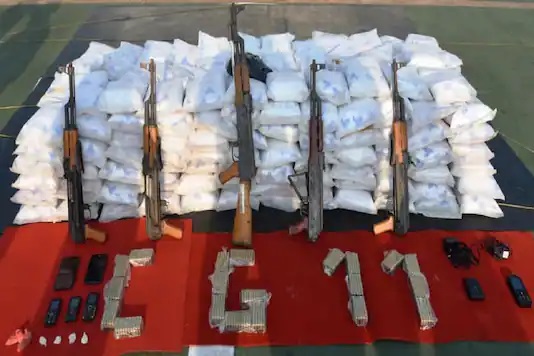
The interception of a Sri Lankan boat carrying 300 kilograms of heroin, five AK-47 guns and ammunition off the coast of Vizhinjam in Kerala points to ISI-sponsored narco-terrorism flourishing in Lanka, Indian security officials told CNN-News18.

The Indian Coast Guard and the Narcotics Control Bureau had seized the boat carrying the drugs and arms consignment on March 25, the second such major seizure in March.

Officials, on the condition of anonymity, said Pakistan’s intelligence agency ISI has created sleeper cells in Sri Lanka and other neighbouring countries, and exports drugs to foment trouble. The drug income is then used to fund illegal activities, including extremist activities, they said.

In the March 25 seizure, Coast Guard and the NCB had found heroin worth Rs 3,000 crore stashed in the boat along with AK-47 rifles and 1,000 rounds of 9mm ammunition. “A number of incriminating documents were also seized from the occupants of the vessel,” said the NCB, adding that six Sri Lankan nationals were arrested.

The agency said that investigations so far have revealed that an unknown vessel carried the heroin and arms consignment from Chabahar Port, Iran, and handed it over to the Sri Lankan fishing boat, Ravihansi, in the high seas near Lakshadweep. Ravihansi then attempted to traffic the consignment to Sri Lanka when the Indian authorities intercepted it.

Intelligence inputs and the investigations so far have indicated that a Pakistan-based drug trafficking network is involved in the current seizure.

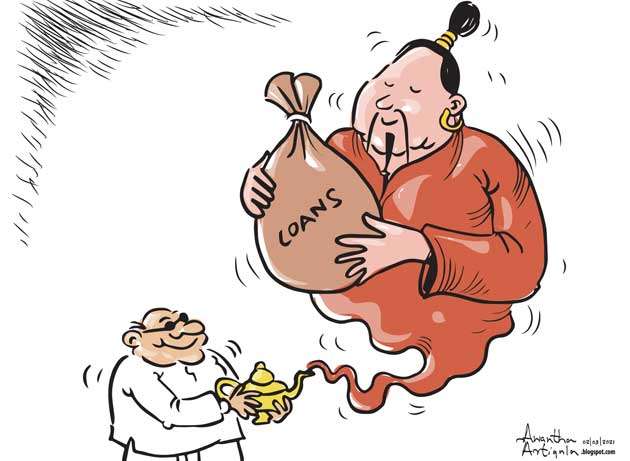
Officials said that earlier, Sri Lankan authorities, too, had seized drugs worth Rs 2.5 billion that had been smuggled from the Gwadar port, which is controlled by China.

Pointing to a nexus between China and Pakistan, they said smuggling of such huge quantities of drugs was not possible without the support of China.

Sources said that one Dubai-based smuggler is working for this ISI-sponsored and China-controlled drug smuggling racket, and the money from this has been used to create unrest, and fund extremism. They said the money was used for the 2019 Sri Lanka Easter bombings, fuelling the farmer protest in India, and for sending weapons to Punjab and Jammu border from Pakistan.

According to Rakesh Asthana, the Director-General of the NCB, this network has Pakistani nationals based in Sri Lanka, Maldives, Dubai, and East Africa to assist the kingpins in Pakistan.

Source:News18

Sri Lanka: Discrimination against Muslims and Tamils is getting worse – Middle East Eye

Sri Lanka recently passed regulations allowing detention without trial for two years for those suspected to have caused “religious, racial or communal disharmony”. This is a significant expansion of the already notorious Prevention of Terrorism Act (PTA), which has historically been used to target Tamils and Muslims.

Alongside a proposed ban on Islamic face coverings and the closure of more than 1,000 Islamic schools, this move is a further indication that Sri Lanka seems determined to repeat its past. Sri Lanka has consistently used laws to marginalise vulnerable communities, and these latest actions continue policies designed to oppress Tamils and Muslims, while strengthening the majoritarian ethnocracy that has dominated the country since shortly after its independence in 1948.


The Sinhalese, the majority of whom are Buddhist, make up more than 70 percent of the country’s population. Sri Lanka’s post-independence nation-building project emphasised Buddhism to the detriment of other communities. Leaders envisaged the island as a Buddhist stronghold, and their particular brand of Theravada Buddhism was ethno-nationalist in nature.

According to Sinhalese scriptures, Sri Lanka was the land of the Sinhalese from ancient times, and a place where Buddhism must be protected. Other communities were invaders, who either didn’t belong or were there at the benevolence of the majority. This was formalised in the country’s constitution, which says it is the state’s role to “protect and foster” Buddhism.

The systematic privileging of Sinhalese Buddhism was done initially through legislation, by enacting discriminatory laws against Tamils, but took on increasingly violent forms, including the targeting of Tamils in pogroms that killed thousands and destroyed thriving Tamil commerce, particularly in the capital.

The initially peaceful Tamil resistance of the 1960s and ‘70s, demanding equal rights and autonomy, was met with violence, which in turn fuelled popular demands for a separate Tamil state. The state, in response to militant Tamil youth, enacted the PTA in 1979, which gave security forces and the judiciary wide-ranging powers.

Declaring a state of emergency, Sri Lankan security forces arrested Tamil youths en masse, torturing them and in many cases forcibly disappearing them. The violence of the state pushed more and more Tamils to support the armed resistance, giving rise to a fully-fledged militancy that fought an all-out war with the Sri Lankan military, until its end in 2009.

The state’s brutal crackdown, supported and presaged by oppressive legislation, was successful in its own eyes.

Historic homeland

It is important to understand why the Sri Lankan state targeted Tamils in the way it did. Eelam Tamils, as Tamils native to Sri Lanka are also known, had a distinct identity and the concept of a historic homeland in the island’s northeast, which was at odds with what the majority envisaged. Rejecting the minority label, Tamils purposefully declared themselves as a separate nation within Sri Lanka, and increasingly mobilised around this identity.

This was a major obstacle to Sri Lanka’s nation-building project, and thus could not be tolerated. The common Tamil view of this situation as a genocide stems from the belief that the Sri Lankan state’s intent is to dismantle the Tamil identity and subsume it within a primarily Sinhalese-Buddhist Sri Lankan national identity, in which other communities play a subordinate role.

While Sri Lanka’s war ended 12 years ago with the defeat of the Liberation Tigers of Tamil Eelam, the conflict didn’t end. The state continued to oppress Tamils through the suffocating militarisation of the northeast. But it also set its eyes on a new target: the Muslim minority, most of whom also speak Tamil and had largely aligned with the state in its fight against Tamil militants. When the war ended, they had outlived their usefulness in the eyes of the state.

After the perceived vanquishing of the Tamils, Sri Lanka was in need of a new enemy. Islamophobia became commonplace, escalating into violence targeting Muslims and their businesses. The state took no action against perpetrators, and anti-Muslim campaigns, often led by Buddhist monks, proliferated.

After the Easter bombings by Islamic State-linked militants in 2019, Islamophobia exploded. Instead of acting to protect Muslim Sri Lankans, however, the state continued to marginalise them.

Wanton cruelty

The state also forced the cremation of Muslim Covid-19 victims, denying a dignified laying to rest in a burial, as per Islamic beliefs. This wanton cruelty, which began in March 2020 and continued despite global outrage, ended only recently, with the UN Human Rights Council session giving increased attention to Sri Lanka’s failure to pursue accountability for mass atrocities committed during the war.

But while international pressure did cause the government to somewhat relent this time, more is to come. The current government under President Gotabaya Rajapaksa, himself accused of overseeing gross human rights violations, has been particularly committed to seizing any opportunity to hurt non-Sinhalese communities. As soon as the forced cremations were halted, the government announced it would look at banning Islamic face coverings and closing Islamic schools.

Tamil memorialisation activities, linked to the war and the armed resistance, also remain restricted. Last year’s Tamil Remembrance Day commemorations faced severe restrictions by the government, and this past January, a memorial was demolished – the latest among dozens of Tamil memorials and war cemeteries destroyed by the state.

Human rights groups have been calling for the repeal of the PTA since the 1980s. Yet, the draconian legislation, first said to be a temporary measure, remains in place.

The greatest opportunity for repeal was during the 2015-2018 “good governance” regime, but instead of holding Sri Lanka to its commitment to do so, the US and the EU prematurely rewarded Sri Lanka with increased political, trade and military links, reinforcing the ethnocratic structures that are so easily leveraged against minority communities.

And notably, despite the recent uptick in violence against Tamils and Muslims, the EU has just agreed to fund capacity-building for Sri Lanka’s counterterrorism efforts and its war crimes-accused security forces, together with the UN and Interpol, in a project worth $5m.

International pressure

Last Tuesday saw the UN Human Rights Council pass an important resolution that would place Sri Lanka under further scrutiny and establish an international mechanism to collect evidence of rights abuses. Sri Lanka’s immediate rejection of the resolution confirms that there is no political will to deal domestically with the crimes that occurred.

It’s also further evidence that the international community cannot rely on this forum alone. While efforts at the council are limited by institutional constraints, they are still useful leverage. Sri Lanka certainly seems to focus on the council as the biggest “threat” it’s facing – but the international community cannot rely on this very limited forum alone.

Individual countries have to use their own bilateral relationships in ways that give Sri Lanka limited options, other than to address longstanding grievances. In parallel, international efforts have to get underway to address international crimes. If Sri Lanka is allowed to continue to go down the path it’s going, its future will look remarkably like its past.

The views expressed in this article belong to the author and do not necessarily reflect the editorial policy of Middle East Eye.


Posted in Uncategorized

Committee to probe if political parties named on racial, religious basis

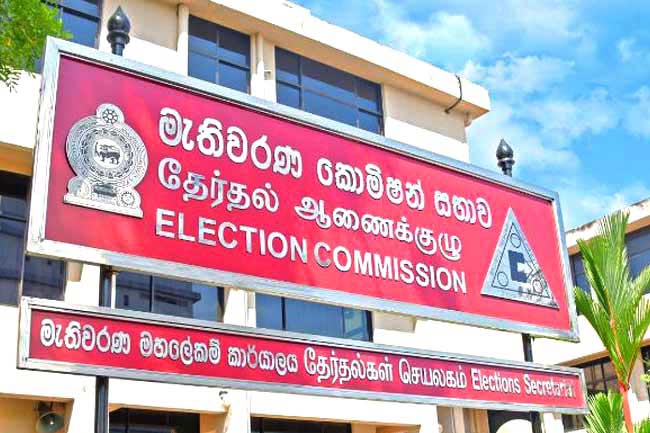
The Elections Commission has decided to appoint a five-member committee headed by an Additional Elections Commissioner to look into and report whether registered political parties had been named on religious or racial basis.

The decision was taken at the meeting of the Elections Commission held yesterday.

The Committee will also look into whether the constitutions of the registered recognized political parties include clauses related to religious or racial matters.

The Chairman and the Secretary of the Elections Commission and another member of the Commission are expected to supervise the task of the committee.

Rupee hits new record low against USD

The Sri Lanka Rupee hit a new record low against the US Dollar today.

The Central Bank of Sri Lanka (CBSL) said the selling rate of the US Dollar closed at Rs. 202.04 today.

Meanwhile, the buying rate of the US Dollar stood at Rs. 197.62 for the day.

According to CBSL data, the Rupee has seen a continuous depreciation against the US Dollar over the last few weeks.

Posted in Uncategorized

China gifts 600,000 doses of Sinopharm jab to Sri Lanka; Chinese workers first in line

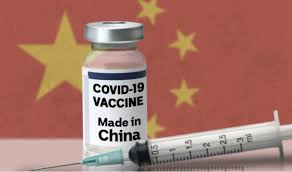
Sri Lanka received 600,000 doses of the Chinese donated Sinopharm vaccine today, some of which will be used to vaccinate Chinese nationals employed in the country starting next week, an official said.

Chief Epidemiologist Dr Sudath Samaraweera told EconomyNext that the consignment has been transported from the Bandaranaike International Airport (BIA) to the health ministry’s central storage facilities.

“As per the Chinese government’s request, we will first vaccinate Chinese workers in Sri Lanka, most likely starting next week,” he said.

However, said Samaraweera, the exact number of the Chinese nationals working in the island cannot be determined at the moment.

On March 20, the National Medicine Regulatory Authority (NMRA) approved a decision to bring the donated vaccine into the country and to immunise Chinese nationals with it, though the regulatory body has yet to authorise it for use on Sri Lankan citizens. The World Health Organisation (WHO), too, has yet to approve the jab for emergency use.

In an earlier interview Chief Executive Officer of NMRA doctor Kamal Jayasinghe said around 30,000 Chinese workers have requested vaccination in Sri Lanka.

Co-cabinet spokesman Minister Ramesh Pathirana said yesterday that pending WHO approval for emergency use, the health ministry will use the remaining doses of the donated Sinopharm vaccine to immunise the general public.

“The NMRA only gave approval to vaccinate Chinese workers in Sri Lanka with this vaccine,” Pathirana told reporters at the weekly cabinet press briefing yesterday. The minister did not explain how long the health ministry intends to store the vials until WHO approves the jab.

Meanwhile, the Association of Medical Specialists (AMS) issuing a statement yesterday said, according to the NMRA report published on March 17, due to the insufficient data provided to make a decision about the safety, efficacy and immunogenicity of the Sinopharm vaccine it was decided to not to approve the vaccine for emergency use in Sri Lanka under the present circumstances.

“Despite this clear recommendation of a properly-constituted independent expert advisory panel, we are concerned about reports that a newly reconstituted Board of the NMRA appears to have taken an unprecedented step to disregard the expert panel opinion and allowed the import of the said vaccine to be used in Sri Lankans [sic],” President of the AMS Doctor Lalantha Ranasinghe said in the statement.

“We also note with great anxiety and dismay of certain arbitrary appointments and removals being made to the Board of NMRA. We strongly believe such moves as an attempt to undermine the scientific basis of vaccine approval and hence it’s safety, efficacy and acceptance by the general public,” he added.

Dr Ranasinghe was referring to a controversial removal of NMRA board members over the vaccine issue.

Pathirana, meanwhile, claimed that WHO approval has delayed due to a translation issue.

“It is said some translation issue has occurred since all data documents are in Chinese. As soon as they translate it to English and give their approval, it will be possible to administer the Sinopharm vaccine to Sri Lankans as well,” he said.

Pathirana’s remark about translation issues could not be independently verified, but a perusal of WHO documents showed that the Chinese vaccine may be approved for emergency use in early April.

“We will look for the most eligible community to receive the jab and will take necessary steps to vaccinate them,” Smaraweera told EconomyNext yesterday.

He noted, however, that NMRA approval for emergency use of the vaccine will need to be obtained, in addition to a number of other processes that must be completed, prior to administering it.

Posted in Uncategorized

Still no decision on electoral system for PC polls

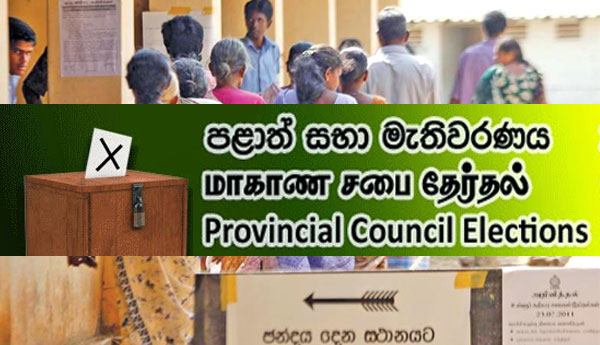
The Government is yet undecided on the electoral system under which to conduct the provincial council (PC) elections due to an amendment brought to the Cabinet of Ministers’ meeting on 29 March.

The proposals were to hold the PC elections either under the old system or to amend the PCs Elections Act and hold the elections under the mixed system.

The final decision regarding the amendment of the law pertaining to the PC elections was to be taken at the Cabinet meeting held on 29 March. At the meeting, the Cabinet had agreed on the enactment of the PCs (Amendment) Act and to thereby hold the elections under the mixed system (to elect 70% of the members under the proportional representation [PR] system and 30% under the first-past-the-post [FPTP] system).

However, Ministers Wimal Weerawansa, Udaya Gammanpila, Vasudeva Nanayakkara, Dr. Bandula Gunawardana, and Dullas Alahapperuma had opposed the proposal under the PR system of having three candidates per party, per electorate/seat.

Thus, President Gotabaya Rajapaksa had decided to have a party leaders’ meeting to make a final decision on the amendment and postponed approving the said cabinet paper on the PCs polls.

The Government has sought Cabinet approval for the introduction of a new electoral system, a mix of the PR and the FPTP systems, for conducting the PC elections.

However, the delimitation process has hit a legal snag, making it impossible for the conduct of the polls in terms of the present law in force.

During its election campaign, the Government promised to hold the PCs elections soon after the general election.

Then Minister of Justice, Human Rights, and Legal Reforms Nimal Siripala de Silva publicly claimed that the PC elections would be held two months after the parliamentary elections that took place in August 2020.

However, even the general election got delayed due to the Covid-19 pandemic.

Nevertheless, while politicians boasted about holding the PC elections soon, the election monitoring bodies pointed out that no one could predict a time period for when the elections would be conducted before a decision in Parliament was taken about the electoral system under which the next PC elections should be held.

As predicted by the monitoring bodies, the Government is yet to decide on the electoral system that it should apply for the upcoming and overdue PC elections.

When contacted by The Morning, Election Commission (EC) Chairman Nimal G. Punchihewa stressed that the Commission was yet to be officially informed about any government decision taken to hold the PC elections.

He said that the elections could be held soon only if an amendment to the existing Act is passed in Parliament.

According to sources, the PC elections would take place after October 2021.

At present, all nine PCs are not functioning as their terms of office have expired. The terms of office of the Sabaragamuwa and Eastern PCs ended in September 2017, while the term of office of the North Central PC ended in October the same year. The terms of office of the Central, North Western, and Northern PCs ended in September 2018. The terms of office of the Southern and Western PCs ended in April 2019, while the term of office of the Uva PC ended in September 2019.

As per the provisions of the PCs Elections Act No. 2 of 1988, within one week of the dissolution of a PC, the EC Chairman is required by law to publish a notice of his/her intention to hold an election to that respective council, and this notice will specify the period during which nomination papers shall be received by the returning officer of each administrative district in the province.

However, with the introduction of the PCs Elections (Amendment) Act No. 17 of 2017, the entire system of PC elections has been changed, as it made necessary the appointment of a delimitation committee by the President within two weeks of the commencement of that Act, where the delimitation committee has to fulfil its responsibilities within four months of its appointment and thereafter submit its report to the subject minister.

Posted in Uncategorized

China’s way is exploiting other countries by persuading rulers and professionals through bribery and corruption: Nedalagamuwe Thero

Exploiting other countries by persuading rulers and professionals through bribery and corruption is the way of China, Prof. Nedalagamuwe Dhammadinna Thero said speaking to a rally held in Rideegama two days (28) ago.

“It is the way of China that bosses are bought for money, while the minions automatically follow. That is the way. Now, if you are in desire of achieving something, the deal could have been done by any means necessary in order to achieve it. That is how the procedure goes,” the Thera said.

He added: “This would be a very immoral, irregular and illegal system. The United States Constitution states that state-owned enterprises do not return commissions at home or abroad. But in China, you will be given a whole commission of 15%, if you ask for a 15% commission. Imagine!”

“Now the best example in our country would be the coal power plant in Norochcholai,” the Thera went on. “That’s about 300 megawatts of electricity. But in fact, only 270 are generated in the turbines. 30 missing. Why ? If quality turbines are imported, commissions cannot be paid. So bring a lower level one to it. Our general public does not know anything about it. We believe what the politicians and the engineers say. When both of them are given commissions, this is what happens.”


Posted in Uncategorized

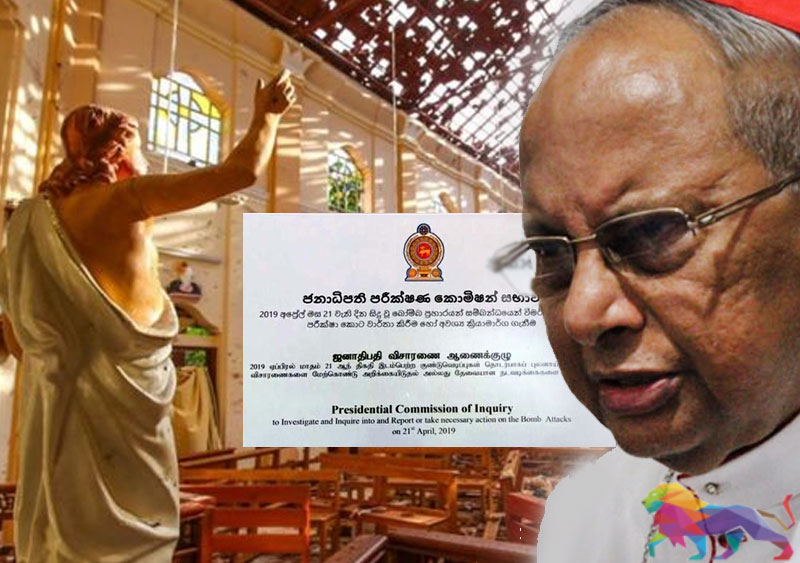
Justice process for Easter Sunday attack victims should begin by April: Cardinal

The Archdiocese of Colombo yesterday faulted the Government for what it termed as repeated delays in bringing to justice those connected to the Easter Sunday attacks, and voiced concern on whether they were caused by “external interferences.”

Archbishop of Colombo Malcolm Cardinal Ranjith, issuing a strongly worded statement, appealed for the process to begin at least by the second anniversary of the attacks that falls next month. The statement also pointed out that even though nearly two years had lapsed there was little tangible headway in investigations to bring justice to the hundreds of people affected.

“This makes us wonder whether there are any external interferences that hamper the efficiency of these institutions in finding out who the real culprits are, and in prosecuting those responsible for the attacks. If this does not happen, we are left with no other option but to intensify further our protest action and to extend it to the whole country,” the two page statement said.

It also went onto request the Government and other stakeholders to expedite further investigations on the matter and bring those responsible before the law without delay, while also speeding up action and the process of prosecution against those who have been arrested in connection with the bombings.

“We wish also to draw attention to the need to investigate thoroughly all those who, during the latter years of the North and East conflict, had contacts or dealings with Zaharan Hashim who is alleged to have been the leader of the suicide bombers.

“We also wish to categorically affirm that it is absolutely necessary to prosecute without hesitation and further delays all those political leaders and officials, irrespective of the position they held, who have been seconded for prosecution in the report of the Presidential Commission of Inquiry on the Easter Sunday attacks, and that for shirking their duty so callously and doing absolutely nothing to prevent the massacre having known sufficiently ahead of time through the report of intelligence that such an attack would really take place,” the statement added.

Malcolm Cardinal Ranjith noted in the statement that the Government should proscribe extremist Islamic groups that are a threat to national security with immediate effect, as well as their foreign sponsors and local agents, adding that those Islamic preachers who promote religious extremism through hate speech “should be banished from the island”.

“We wish to underscore that every effort should be made to implement or at least initiate the first steps in order to implement the foregoing demands before the 21 April 2021, which is the second anniversary of the attacks. When we look at the way the Criminal Investigations Department and all the other relevant State institutions handle intelligence and find out the culprits who commit other crimes in the country, taking action against them speedily, it baffles us as to why, after nearly two years they cannot do so in this case – getting at the culprits who murdered 269 innocent human beings and seriously injured over 300 others, some of whom remain maimed and made to go from hospital to hospital for the rest of their life.”

The statement also warned that the failure to complete the justice process for the Easter attacks could result the country being left vulnerable to future terror attacks, and called on the Opposition to support the Government towards this end.

“It is very clear that if the extremist terrorists organisations who are responsible for the attacks and those who finance them are allowed to possess weapons of different sports and operate freely, such a situation could lead in the future to similar or more violent attacks in any place or against any racial or religious group in the country. Therefore, it poses a serious threat to national peace and security. It is indeed the primary and principle duty of the State to stave off such threats to national security. It is also the responsibility of the Opposition to give their fullest cooperation in this regard without the petty interests of party politics.”

No objections from India to Moragoda’s appointment

India has not objected to the appointment of former Minister Milinda Moragoda as Sri Lanka’s High Commissioner to India, the Government said today.

Cabinet co-spokesman Udaya Gammanpila said that the Cabinet has not been informed of any objections raised by New Delhi.

He told reporters at the post Cabinet press conference today that Moragoda is expected to assume duties in India soon.

The Parliament High Posts Committee had, last September, approved the appointment of eight new diplomats to represent Sri Lanka, including Milinda Moragoda.

Moragoda has been appointed as a Cabinet rank envoy who will directly respond to the President and Prime Minister.

Permanent Representative of Sri Lanka to the United Nations in New York Mohan Peiris, Ambassador to China Dr. Palitha Kohona, Permanent Representative of Sri Lanka to Geneva C.A. Chandraprema, Ambassador to Japan Sajiv Gunasekara and Sri Lanka’s new Ambassador to the United States Ravinatha Aryasinha were among those appointed at the time.

All the new envoys have since assumed duties in the respective countries but Moragoda is yet to leave for New Delhi.

Civilians have right to self-defence: Sri Lanka police

Civilians have the right to self-defence in the event of an unprovoked attack from a police officer, police spokesman DIG Ajith Rohana said.

Speaking to the privately owned Swarnavahini this morning, Rohana said members of the public may resort to self-defence if their life is threatened by the actions of a uniformed police officer abusing his or her powers, as per sections 92 and 93 of the penal code.

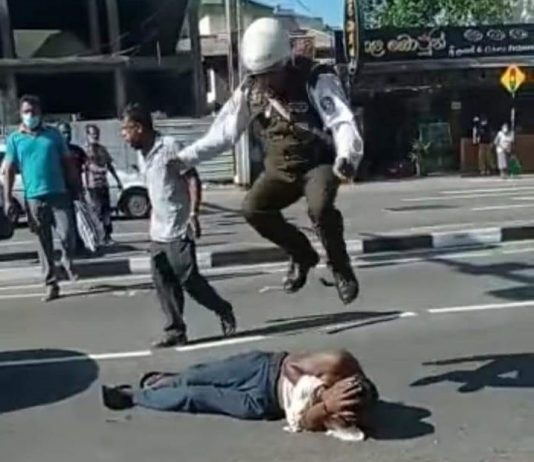
The police spokesman, who is also an attorney-at-law, was commenting on the brutal assault on a lorry driver by a traffic police officer in Pannipitiya yesterday (29). Footage of the incident went viral on social media yesterday afternoon and the constable, who is attached to the Maharagama police station, was promptly arrested later in the evening amid public outcry about police brutality.

Investigations have revealed that the lorry driver in question had accidentally knocked down the Traffic OIC (officer in charge) of the Maharagama police at the Pannipitiya junction on the High Level Road. Footage showed the enraged constable, who was on duty at the junction, shoving the driver to the ground and leaping onto him, not unlike a professional wrestler. (Incidentally, the constable is a former athlete, according to Rohana).

Asked if civilians who find themselves in such situations can retaliate in order to defend themselves, Rohana said a civilian who is unarmed and not showing resistance can use provisions in the penal code to defend themselves in such a situation.

“The law is the same for everyone. It’s fair. And the civilian has the right to self defence in that situation,” he said.

Section 92 of the penal code reads:

There is no right of private defence against an act which does not reasonably cause the apprehension of death or of grievous hurt, if done, or attempted to be done, by a public servant acting in good faith under color of his office, though that act may not be strictly justifiable by law.
There is no right of private defence against an act which does not reasonably cause the apprehension of death or of grievous hurt, if done, or attempted to be done, by the direction of a public servant acting in good faith under colour of his office, though that direction may not be strictly justifiable by law.
There is no right of private defence in cases in which there is time to have recourse to the protection of the public authorities. Extent to which the right may be exercised.
The right of private defence in no case extends to the inflicting of more harm than it is necessary to inflict for the purpose of defence.
Explanation 1

A person is not deprived of the right of private defence against an act done, or attempted to be done by a public servant, as such, unless he knows, or has reason to believe, that the person doing the act is such public servant.

Explanation 2

A person is not deprived of the right of private defence against an act done, or attempted to be done, by the direction of a public servant, unless he knows, or has reason to believe, that the person doing the act is acting by such direction ; or unless such person states the authority under which he acts, or. if he has authority in writing, unless he produces such authority, if demanded.

Section 93:

The right of private offence of the body extends, under the restrictions mentioned in the last preceding section, to the voluntary causing of death or of any other harm to the assailant, if the offence which occasions the exercise of the right be of any of the descriptions hereinafter enumerated, namely –

Firstly- Such an assault as may reasonably cause the apprehension that death will otherwise be the consequence of such assault;

Secondly- Such an assault as may reasonably cause the apprehension that grievous hurt will otherwise be the consequence of such assault;

Thirdly- An assault with the intention of committing rape;

Fourthly- An assault with the intention of gratifying unnatural lust;

Fifthly- An assault with the intention of kidnapping or abducting;

Sixthly- An assault with the intention of wrongfully confining a person, under circumstances which may reasonably cause him to apprehend that he will be unable to have recourse to the public authorities for his release.

Posted in Uncategorized