Schools in Jaffna will be closed for a week from tomorrow

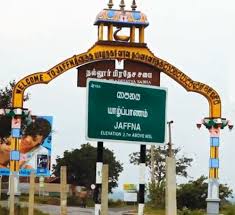
All schools in the Jaffna Education Zone will be closed for a week from tomorrow, Jaffna District Secretary Kanapathipillai Maheshan said.

The decision has been taken considering the spread of the COVID-19 virus in Jaffna.

Jaffna Public Health Inspectors say that the Jaffna District Covid Suppression Committee held today (28) has decided to temporarily close all the schools under the Jaffna Education Zonal Office for the next one week.

Jaffna Public Health Inspectors said that only schools within the Jaffna Zonal Education Office limits will be temporarily closed for the safety of children due to the high incidence of Covid cases reported across the Jaffna Municipal Council boundary and the Tirunelveli area in Jaffna.

According to the Public Health Inspectors, the District Covid Suppression Committee has decided to inform the decision to the Northern Province Education Secretary on the recommendation of the Governor of the Northern Province.

Several areas within the Jaffna Municipal Council city limits were placed under isolation last week due to the high number of patients reported from the Jaffna District during the past week.

The Public Health Inspectors said that due to the prevailing health hazard, travel restrictions have been imposed on a part of Jaffna city and a village in the Tirunelveli area in Jaffna.

Posted in Uncategorized

Govt. to focus on the ‘doables’ before 48th UNHRC Session

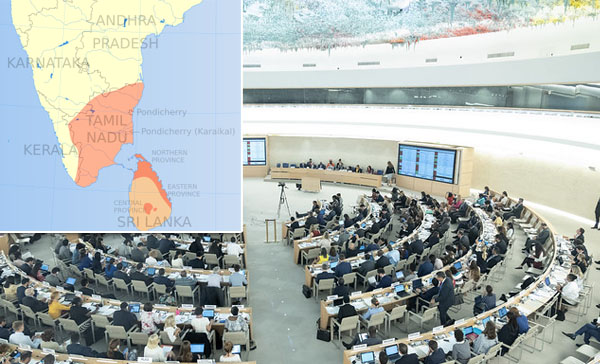
The United Nations (UN) resolution on Sri Lanka “promoting reconciliation, accountability, and human rights”, presented by the UN Core Group led by the UK, Canada, and other allies, was adopted at the 46th Session of the UN Human Rights Council (UNHRC) on 23 March.

What will happen next, now that the resolution – which was strongly rejected by the Government of Sri Lanka (GoSL) for being politically motivated and unwarranted – has been passed?

The Sunday Morning sat down with Foreign Secretary Prof. Jayanath Colombage to get insights into what lies ahead for Sri Lanka post-resolution and what action Sri Lanka is planning to take in order to address the issues highlighted in the resolution, among many other topics.

“Sri Lanka, being a responsible country, will follow the rules and principles. At the moment, we are deciding and debating how to move forward through this resolution,” he said.

The Foreign Secretary said the Government needs to identify the doable measures to address residual issues in the country, as an oral update on the human rights situation is due in the 48th Session of the UNHRC.

Following are excerpts of the interview;

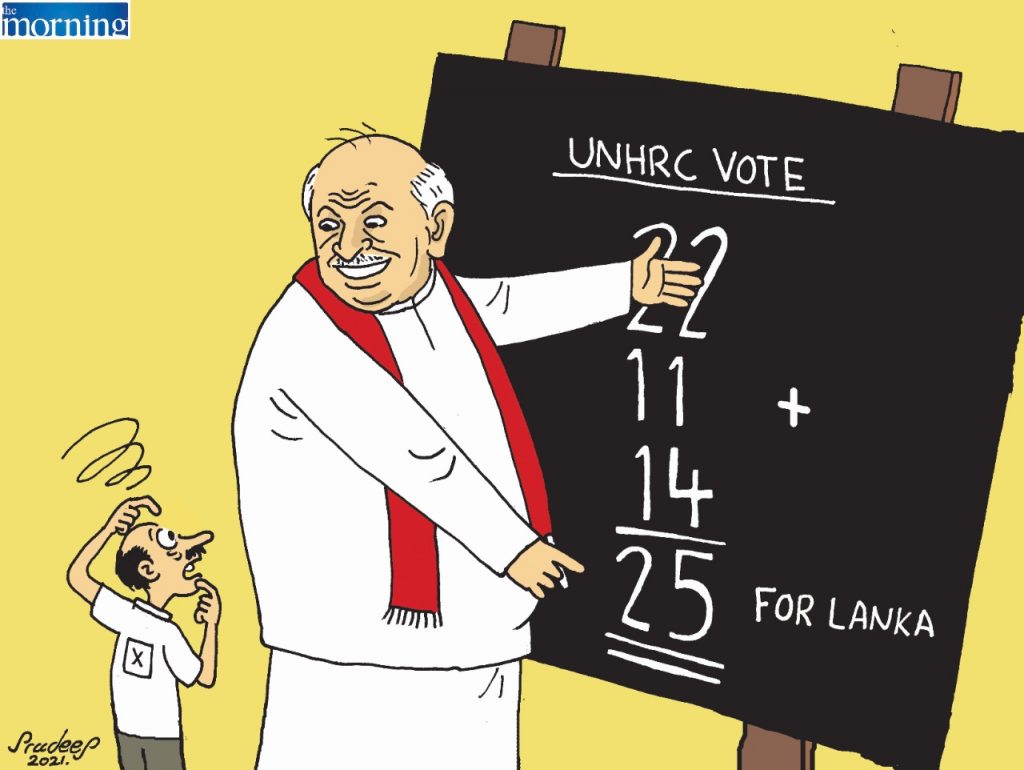
The UN resolution on Sri Lanka was adopted with a majority of votes at the UNHRC, with 22 member states supporting it and 11 voting against. What does this mean for Sri Lanka and what will change?

The resolution was basically moved by the EU (European Union) countries together with Canada and backed by the US. Almost all countries that moved this resolution against Sri Lanka are European countries – the white-dominated countries.

We felt that it was highly unwarranted and unnecessary, and it is against the principles of the UN Charter and the HRC. Therefore, we don’t want to be guided by that resolution, but in a real sense, they have adopted a resolution.

Now, Sri Lanka being a responsible country in the international system, we have to follow the rules and principles and we are at the moment deciding, debating, and discussing as to how we should move forward through this resolution that was adopted.

Some are concerned that there could be sanctions against Sri Lanka as a result of the resolution. Is there such a possibility?

There cannot be UN sanctions against Sri Lanka unless it is passed and ratified through the UN Security Council. This resolution does not talk about sanctions. However, individual countries could take a lead and decide on certain measures economically.

If there are sanctions against Sri Lanka, it is not against a particular community but against the entire Sri Lankan community. So, if somebody is talking about sanctions, they have to remember that this is targeting an entire population, and not necessarily a single community.

There are certain things we have to do in this country because there are certain residual issues coming out of the conflict. We need to find answers and solutions as much as we can in spheres like accountability, missing persons, resettlement, and releasing of lands; of course, we have done quite a lot. But if we can find answers to all these questions, then we will not be as vulnerable to be intruded on by the so-called international community.

We have a responsibility to do many things for the betterment of our people. I have to tell you, no other country is more interested in Sri Lanka than Sri Lanka to find a peaceful reconciliation mechanism in the country.

What are the immediate changes that could take place owing to the adoption of the resolution?

The Government has appointed a (Presidential) Commission of Inquiry (PCoI) with a clear mandate to study all previous reports including those of the LLRC (Lessons Learnt and Reconciliation Commission) as well as Paranagama and Udalagama Commissions, and also to study all HRC resolutions and give us a way forward in addressing these issues raised in various reports up to now.

This is the mechanism we should really work for, work through, and achieve results to find answers to all residual incidents. We need to move on. Also, like the Office on Missing Persons (OMP), the Office of Reparation, the Office of National Unity and Reconciliation, and the Human Rights Commission of Sri Lanka (HRCSL) too need to be empowered. We now need to request them for an action plan that has to be tangible, achievable, and measurable. We need to achieve progress substantially through these independent mechanisms.

Will there be a new mechanism to address human rights concerns and other issues following the adoption of the resolution?

At the moment, I don’t see any other mechanism coming. We will have our hope and focus on the PCoI appointed by the President. This PCoI is basically to find burning issues, if there are any, and the residual issues, if there are any, coming out of the conflict we were engaged in until 2009.

When we look at the voting at the UNHRC for the resolution, 14 countries abstained from voting, including neighbours like India and Nepal. What should Sri Lanka do to change this?

The voting is finally what matters in this HRC and the voting does not take place based on merit, argument, or principles. It is merely a bloc. It is clearly evident in this case. The Western European and Eastern European members all got together. Only Russia from the eastern bloc voted against the resolution. These are not decided even by individual countries. These are decided as a group.

Now in that sense, I think it is a real achievement that 14 countries abstained from voting, because they did not support the vote by the powerful western group and they did not want to be taking a position against it for whatever the reason. If you look at the countries that abstained from voting, I’m sure they have different reasons for doing it.

Some countries told us that they are under tremendous pressure from western countries to vote for the resolution and against Sri Lanka. They said that “Sri Lanka is our friend but we need these countries because we are not developed”. These powerful countries use these human rights as a political weapon, economic aid as a political weapon, and whatever development aid as a political weapon. Then these countries told us that the best they can do is abstain from voting.

If you look at Japan, which depends on the US for its security in that region since they have issues with China, South Korea, and North Korea, they took a very calculated decision to abstain. We need to appreciate that.

Will Sri Lanka be making any changes to its foreign policy in the aftermath of the UN resolution?

I don’t see a major shift in our foreign policy. Towards the latter part of 2020, Sri Lanka launched its first-ever written, documented foreign policy directives for 2020 and beyond. This 20-point foreign policy is there and I don’t think it needs major changes because of the resolution.

The 20-point foreign policy directives were designed to economically develop Sri Lanka and maintain social harmony. We need to continue that rather than responding unnecessarily to the UN resolution. We need to move on for the sake of Sri Lanka.

Several issues in Sri Lanka, such as the Covid burial issue, were highlighted by the resolution, prompting some countries to vote against Sri Lanka. What will Sri Lanka do moving forward?

The burial issue would have been a real factor in those Islamic countries deciding on abstaining, like Bahrain and Indonesia. But we should remember that Bangladesh and Pakistan are also Muslim countries, but they voted against the resolution. The international community also saw this as something the Government did. But unfortunately, it was the health sector that decided on the burial issue. Now, we have found a solution, but it did damage our posture in international relations because we took some time, based on technical or scientific evidence, to come to a conclusion.

We are an island in this global system and very well connected. Our country’s foreign policy and economy are not totally dependent on us. There are outside players and we need to live with that. We have to learn lessons and move on.

The Human Rights High Commissioner is to give an oral update at the 48th UNHRC Session on the human rights situation in Sri Lanka. What are the plans of Sri Lanka to be prepared for this?

We need to identify the doables: What the things are that we can do quickly within a short timeframe because, as you said, an oral update is due next September. So we need to find answers to whatever questions we have during the next six months. The PCoI, OMP, and other offices will have to work and give some measurable and tangible results, so that we can tell the HRC that these issues are addressed satisfactorily for the people of Sri Lanka.

That is something we have to do. But the thing we have observed is that when we achieve certain things, they change the goal post. They bring something totally different. That, we can’t help. The HRC report was not much about the war that took place 12 years ago – it was all about this year. Sri Lanka was battling Covid-19. We had economic issues and restrictions on travel. We didn’t have any human rights violations.

The UN is seeking funds to implement the resolution and the Office of the High Commissioner for Human Rights (OHCHR) is to recruit new employees to work on Sri Lanka, including the monitoring of the human rights situation. These employees are also scheduled to visit Sri Lanka for fact-finding. What would be the response of the Government?

Where is this money coming from? The HRC, in the beginning, said that there is a huge financial crisis for the maintenance of the HRC. They said they don’t have money. Now, on top of that, they have allocated $ 2.8 million. Where can this money come from? Is it coming from the same countries that moved the resolution? Then the next question is: Who is going to be appointed for this monitoring mechanism? Are they from the same countries that provide the money and moved the resolution?

In that sense, you know in Sri Lanka we have a saying that goes “naduth hamuduruwange, baduth hamuduruwange”. Can we expect justice through a mechanism funded, staffed, and moved by a certain group of European countries? We can’t expect any justice through that. So that is the predicament.

The funds sought for are $ 2.8 million. That’s a lot of money. We did a quick calculation. With such an amount of money, two doses of vaccines can be given to all the people in our entire northern peninsula, plus build 20,000 houses. Also, a drinking water project can be completed in Jaffna.

So, this is what we can do with this kind of money, rather than wasting it on an office they want with a staff they want to target the small countries.

Can Sri Lanka not intervene with respect to utilising these funds and nominating staff members in this mechanism?

We need to try many things and it’s only been a couple of days since the resolution was adopted. At the moment, we are exploring each and every avenue technically, legally, and procedurally to find how best we can handle these issues and also to identify what we should do. It will take a few days. It is too early for me to say what we are going to do exactly. Once we get the policy directives, then, of course, the Ministry can translate that into action.

I really don’t know whether we can have one of our people in that group. That’s why I said I don’t know the mechanism, where the funds are coming from, and who’s going to sit on that board. It is very unlikely that they would open the door for Sri Lankans to be a part of it because then, of course, it will have some balanced views.

Coming back to India’s abstention, you were quoted earlier as saying that India will support Sri Lanka at the vote. However, like it has done previously as well, India abstained. What happened?

Well, to begin with, I never said that India will support us. I think I was misquoted. I was echoing the words of the honourable Prime Minister of India. He said India will not do any injustice to Sri Lanka. These are the exact words that I used. But in the Sinhala translation, unfortunately, one of our journalist friends took it as me saying that India will support us. Then it was headline news in Sri Lanka, and Indian news also picked it up and said that the Sri Lankan Foreign Secretary said India will support.

No, I never said that. I need to correct this. I’m sure India got upset that although they had not communicated that they will support us, the Foreign Secretary here is saying that India will. I never said that. But in many discussions and in many forums, I expressed our desire for India to support us. Yes, we did that because India is a major power in the region and our immediate neighbour with the largest military.

Since this Government came to power, we did quite a lot to make India comfortable. We did quite a lot to make India strategically comfortable. We have clearly said that we will never do anything to harm India’s strategic security interest. We did that and gave top priority to India’s security concerns in the Indian Ocean region. So, we expected India to take a firm stand, but actually we can’t blame India.

They must have their own reasons for doing what they did. But in the final statement, they initially said that country-specific resolutions are not good. We are quite happy about that because that is a principal position we have always argued. Country-specific resolutions without the consent of the country is not going to work anyway. India also toed the same line.

We are still happy that India abstained from voting. It would have been a very different issue if India voted for the resolution against Sri Lanka, but they didn’t. We are comfortable with it. And, of course, India is our neighbour; we need to work with India and we need to make progress in every sphere.

Any particular countries Sri Lanka is focusing on strengthening relations with?

We need to maintain relations with all countries. Eleven countries wholeheartedly supported Sri Lanka. Some of those countries are those we don’t even have diplomatic relations with. We need to rethink this; they are great friends who actually rose up for Sri Lanka in a moment of need. We need to think about this and maintain focus in Africa, the Middle East, the immediate neighbourhood, the Asian region, and South America. We need to maintain our focus throughout the world.

The HRC is only one event and then there are many other things to come. We need economic diplomacy; we need more investments to come; we need more exports, tourists to come; we need more technology transfers. So, there are a lot of things we need to do. We have to make them work.


Milinda’s conduct cost India’s vote in Geneva!

The conduct of Milinda Moragoda, Sri Lanka’s High Commissioner-designate to India, has been blamed for failing to secure India’s vote at the resolution on Sri Lanka at the UNHRC session in Geneva.

A weekend newspaper has alleged that Moragoda has yet to assume duties although he was appointed to the post nearly 07 months ago.

The President had decided to appoint Moragoda to the post in August 2020 and the appointment was approved by the Committee on High Posts in Parliament on Sep. 25, 2020.

Political commentators say that the first diplomatic appointment made by almost every post-independence government is to nominate a representative for the post of Indian High Commissioner.

The weekend newspaper also states that Moragoda had also urged that he should be given the privileges of a cabinet minister in order to accept this post.

It is said that the President had given this the nod despite strong opposition from the Maha Sangha and Cabinet Ministers and no other diplomatic mission head had ever made such a request before in the past.

Despite all this, Moragoda had still not gone to New Delhi to assume duties and according to the newspaper, India had not complied with Milinda’s request for cabinet privileges either.

Meanwhile, additional reports say that Moragoda had deliberately stayed back until the UNHRC vote was over and is now expected to go to New Delhi soon to assume duties.

Govt. climbs down from decision to hold PC polls in June

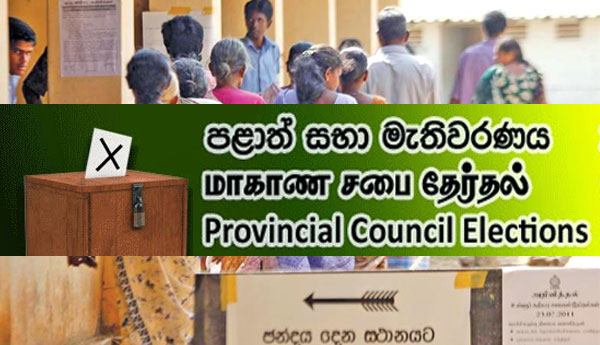
The Government wants to review different election laws in the country in a move that will recede prospects of any early Provincial Council polls.

When Parliament meets on April 6, House Leader and Foreign Minister Dinesh Gunawardena will introduce a motion for the appointment of a Parliamentary Select Committee (PSC) for this purpose. Such a PSC, comprising government and opposition members, will examine election laws relating to presidential, parliamentary, provincial council and local council elections.

The exercise, government officials said, would be long drawn out since the proposed PSC would have to focus on different sets of polls laws. In addition, they said, public representations also would have to be called.

On Thursday, Minister Gunawardena told a party leaders meeting, chaired by Speaker Mahinda Yapa Abeywardena, of the government’s move to appoint a PSC.

The new move appears to be a climbdown from the Government’s earlier plan to hold PC elections, possibly by the third week of June. Towards this end, President Gotabaya Rajapaksa held talks with Election Commission members. He later announced the move at a March 3 meeting of former Provincial Council members and urged them to prepare for the polls. The matter also came up at last Monday’s meeting of the cabinet of ministers. The plans then were to move amendments to electoral laws governing PC polls.

This development comes after the UN Human Rights Council last Tuesday adopted a Resolution on Sri Lanka “promoting reconciliation, accountability and human rights.” Among other matters, it also calls for the conduct of PC elections.

This is besides India which has re-iterated its call for PC elections after the visit to Sri Lanka by its External Affairs Minister, Dr Subramanyam Jaishanker. Two more calls were made thereafter, one by Indra Mani Pandey, India’s Permanent Representative to the UN in Geneva, and the mission’s third secretary, just ahead of the voting on the Sri Lanka resolution.

Posted in Uncategorized

Dinesh ‘bullish’ despite UNHRC vote

Foreign Minister Dinesh Gunawardena claims that it is evident to the world that a majority of the members of the United Nations Human Rights Council did not support the new resolution on Sri Lanka during the 46th session in Genève.

The 47-member UNHRC adopted a resolution – sponsored by a group of countries that includes the United Kingdom, Germany and Canada – which gives UN Human Rights chief Michelle Bachelet the mandate to collect and preserve evidence of wrongdoings related to Sri Lanka’s civil war that ended in 2009.

A total of 22 countries voted for the resolution that was very critical of Sri Lanka’s failure to address alleged human rights violations that occurred during the civil war.

The resolution also contended the human rights situation has deteriorated under the present administration and that rights defenders and ethnic and religious minorities are facing problems.

Eleven countries, including Bangladesh, China and Pakistan, voted against the resolution, while 14 countries, including India, Indonesia, Japan and Nepal, abstained. Minister Gunawardena said they opposes the resolution as it violates the UN convention.

He added the resolution also extended the mandate of the Commissioner until the 51st UNHRC session.

Minister Dinesh Gunawardena claimed that Sri Lanka is facing the consequences since the previous administration co-sponsored a resolution at the Human Rights Council.

He said however the present government will not betray the country and noted that they will stand for the protection of the sovereignty and the people of Sri Lanka.

Minister Dinesh Gunawardena noted that the government will continue to work for the best interest of the people of Sri Lanka.

Posted in Uncategorized

High priority to Buddhism – SLFP tables proposals for new Constitution

The Sri Lanka Freedom Party says it has proposed for Buddhism to be given utmost priority in a proposal handed over to the committee appointed to seek opinions for clauses to be included in the new Constitution.

Speaking to media last evening after handing over the party’s proposals, Deputy Chairman of the Party Minister Nimal Siripala de Silva said they also tabled a proposal to strengthen articles on securing basic human rights.

Minister de Silva said they directed attention towards protecting the environment and strengthening laws to prevent animal cruelty.

He noted fundamental rights petitions could only be filed before the Supreme Court, adding that individuals in rural areas did not have funds to file petitions and table their grievances.

Therefore, the Minister suggested for the justice system to devolve power to District High Courts.

The SLFP has also suggested an opportunity to be granted for District Courts to file an appeal with the Supreme Court.

Minister Nimal Siripala de Silva added the SLFP tabled proposals to strengthen the Provincial Council system.

As a party he noted they were in favour of a further centralising power.

Minister de Silva called on the government to abolish the Preferential Voting system.

The Minister stressed; 25% female representation will be made mandatory at elections adding this too is one such proposal for the proposed new Constitution.

SL will face international challenges fearlessly : President

President Gotabaya Rajapaksa has said that the government will face international challenges fearlessly.

“We are unwilling to sacrifice the country’s sovereignty to fulfil one’s geopolitical needs by allowing separatism to emerge through power devolution,” the President said on Sunday.

He made these remarks during the 16th phase of the Discussion with the Village programme at the Darangala Maha Vidyalaya in Pitabaddara.

The President also expressed critical remarks on the resolution that was adopted on Sri Lanka at the UN Human Rights Council.

“We are an independent country. We are capable of managing our own affairs,” Rajapaksa insisted.

Posted in Uncategorized

Sri Lanka narrowly avoids diplomatic spat with India

Sri Lanka risked a showdown with New Delhi over the arrest of 54 Indian fishermen in what was widely seen in diplomatic circles as a retaliatory move over the censure motion against Colombo at the UN Human Rights Council.

India abstained from voting, but made a statement that supported the UK-led resolution despite Sri Lanka’s Foreign Secretary, Admiral Professor Jayanath Colombage, having indicated New Delhi would support Colombo at Tuesday’s vote in Geneva.

The resolution calling for the establishment of a mechanism to collect and preserve evidence of alleged war crimes in Sri Lanka was adopted with 22 voting in favour, the highest number of votes against Sri Lanka at the UNHRC.

A day after the vote, Sri Lanka’s navy carried out the arrests, the largest single since June 2014, causing alarm in New Delhi because of the implications in Tamil Nadu which is heading for assembly elections in two months.

Tamil Nadu fishermen poach in Sri Lankan waters, but their arrests are seen by them as “harassment” from the island’s navy.

The latest mass arrest triggered angry protests across the Palk Straits in Tamil Nadu where Prime Minister Narendra Modi’s BJP party and its allies are facing stiff opposition at the upcoming elections.

Officials of the Ministry of External Affairs had made it clear that the arrest of fishermen coming on the heels of the UNHRC resolution was seen as a hostile move. With Delhi’s displeasure made plain to Colombo, local authorities switched to damage control mode.

However, local fisheries authorities in Jaffna dealing directly with the Sri Lanka navy had resisted moves to free the fishermen. They agreed to sending back only 40 fishermen on Friday while retaining 14 others along with their trawlers and fishing gear.

Even before the release of the 40 Indians, the Indian High Commission in Colombo made their displeasure clear.

“We reiterate that issues associated with Indian fishermen are to be dealt in a humanitarian manner… Bilateral mechanisms are in place to comprehensively address all matters related to fisheries,” the High Commission said in a statement indicating its displeasure over the navy action.

It is understood that the detention of the 14 had caused more anguish in New Delhi which was keen to avoid the arrest being exploited as a campaign issue in Tamil Nadu.

With high-level intervention on Saturday, the remaining 14 fishermen and their trawlers were released by the Jaffna magistrate with the intervention of the police.

It is understood that the police argued that the fishermen should be released to avoid a possible Covid-19 cluster from Indian fishermen at a time when the virus is rapidly spreading in India.

Thanks to the Covid-19 argument, Sri Lanka may have avoided a new cold war. Prime Minister Modi had attempted to address the issue of fishermen poaching in Sri Lankan waters and officials from both countries have been meeting to find a mutually acceptable solution when the latest arrest took place.

Sri Lanka’s navy had argued that they carried out the arrest as Indian fishermen had strayed too close to the Sri Lankan coast.

Bangladesh learns from Sri Lanka’s mistakes in China deals

Bangladesh says it has learnt from Sri Lanka’s mistakes when dealing with China.

Bangladesh Prime Minister Sheikh Hasina’s Foreign Affairs Advisor, Gowher Rizvi, has said that Dhaka would take a very balanced, calibrated investment policy when dealing with China.

The statement has come at a time when China is luring the developing and underdeveloped countries with its ‘debt trap’ strategy, IB Times reported.

Rizvi said that the country has taken lessons from Sri Lanka and Djibouti which were forced to give control of their assets after they were unable to pay Chinese debt.

Djibouti’s debt to China is said to have risen to more than 70% of the country’s gross domestic product (GDP).

As per the China Global Investment Tracker, Chinese investments and contracts in Djibouti totalled $1.02 billion from 2013 to 2020, with the majority of them in the transportation sector.

Furthermore, in 2004, DP World, a logistics corporation headquartered in the United Arab Emirates, signed a 25-year contract to run the Doraleh Container Terminal. But Djibouti unexpectedly terminated the arrangement in January 2018, nationalized the terminal, and transferred a stake of over 20% to China Merchant Holdings.

Similarly, citing difficulty to pay loans taken to build the project at the southern port of Hambantota, the Srilankan government agreed to lease the port for 99 years to a venture led by China Merchants Port Holdings Co. in return for $1.1 billion.

Meanwhile, Rizvi dismissed any fears of China building Bangladesh’s deep seaport and added, “There was a huge concern that China will build Bangladesh’s deep seaport Are you hearing anything of that sort?” He also said, “We know how to guard our sovereignty. We became an Independent State through a war of liberation. We very carefully monitor our borrowings. We are in a very healthy position insofar as our foreign repayment debt repayment is concerned.”

Calling New Delhi an important ally of Dhaka, Rizvi said that Bangladesh has given importance to its relationship with India.

Sri Lanka reports one COVID-19 death Saturday, toll rises to 559

Sri Lanka confirmed one death on Saturday due to COVID -19 raising the death toll from the viral disease to 559, according to health authorities.

The Director General of Health Services confirmed the following death caused by COVID -19 virus infection and accordingly the total number of deaths due to COVID -19 infection in Sri Lanka is 559 by now.

01. The deceased is an 82 year old male resident from Colombo-06. He was diagnosed as infected with Covid 19 virus while undergoing treatments at Colombo National Hospital and transferred to Mulleriyawa Base Hospital where he died on March 25. The cause of death is mentioned as COVID pneumonia and heart disease.