UK offers to support Sri Lanka in accountability process

The United Kingdom (UK) has offered to support efforts in Sri Lanka to make meaningful progress on justice, accountability and human rights.

Minister of State for the Commonwealth and United Nations at the UK Foreign and Commonwealth Office, Lord Tariq Ahmad said that the UK stands ready to engage constructively in this respect.

He recalled that the UN Human Rights Council concluded its 46th session on Thursday, adopting important resolutions on Sri Lanka, South Sudan, Syria, Iran, Myanmar, Belarus and Georgia, among many other pressing issues.

“I welcome the adoption of the resolution on Sri Lanka. This signals the international community’s continued commitment to post-conflict justice and accountability. It also responds to the deeply concerning report by the High Commissioner who warned that Sri Lanka risked returning to the grave violations of the past,” he said.

Lord Tariq Ahmad said that it is therefore right that the UN should continue its monitoring and collect evidence to support future accountability processes.

As part of the resolution, the Office of the UN High Commissioner for Human Rights (OHCHR) is to appoint legal advisors and criminal investigations on Sri Lanka.

The resolution has called on the Office of the High Commissioner to enhance its monitoring and reporting on the situation of human rights in Sri Lanka, including on progress in reconciliation and accountability.

UN High Commissioner for Human Rights Michelle Bachelet has also been told to present an oral update to the Human Rights Council at its forty-eighth session, and a written update at its forty-ninth session and a comprehensive report that includes further options for advancing accountability at its fifty-first session, both to be discussed in the context of an interactive dialogue.

OHCHR will collect, consolidate, analyse and preserve information and evidence and to develop possible strategies for future accountability processes for gross violations of human rights or serious violations of international humanitarian law in Sri Lanka, advocate for victims and survivors, and support relevant judicial and other proceedings, including in Member States with competent jurisdiction.

British Tamil Conservatives call for legal action, travel bans, and trade sanctions against Sri Lanka

Responding to the passage of the UN Human Rights Council resolution on Sri Lanka, the British Tamil Conservatives welcomed the passage of the resolution but called for further legal action on Sri Lanka officials implicated in war crimes as well as trade sanctions against Sri Lanka.

Their statement is supported by a number of MPs from across the political spectrum who have raised concerns over Sri Lanka’s human rights record and have called for Magnitsky sanctions on senior Sri Lankan officials implicated in war crimes such as Shavendra Silva and Kamal Gunaratne. A number of human rights organisations, such as Human Rights Watch, have also called for targeted sanctions on Sri Lankan officials.

In their statement, they highlighted the resolution’s recognition of the failure of domestic mechanism in Sri Lanka to deliver accountability and justice as well as the deteriorating human rights conditions. The resolution mandates the setting up of an evidence collection mechanism under the Office of the High Commissioner for Human Rights and keeps Sri Lanka firmly on the UNHRC agenda.

Their statement concludes by maintaining:

“It is now time for the member states, including the United Kingdom to take on board the recommendations of her excellency Michelle Bachelet, UN High Commissioner for Human Rights and take legal action based on Universal Jurisdiction, apply travel bans against Sri Lankan officials and trade sanctions against Sri Lanka”.


SLFP wages war against dual citizens

The SLFP has come out with a proposal not to allow dual citizens to hold any key government posts in the future,Political sources say this is one of the proposals included in a report prepared by the SLFP on the party’s suggestions for drafting a new constitution.

The proposal seeks to prevent dual citizens holding key public posts such as president, prime minister, MPs, top posts in government corporations and presidential commissions.

The set of new proposals of the SLFP is to be submitted to president’s counsel Romesh de Silva who is heading the committee appointed to draft a new constitution.

The SLFP has also suggested that all the political parties must discuss and arrive at a decision whether the country should continue with the Executive Presidency.Other proposals of the SLFP’s include setting up two chambers in parliament, a mixed electoral system and devolution of power.

Minister NImal Siripala de Silva chaired the SLFP’s committee that drafted it’s constitutional proposals.

Posted in Uncategorized

Russia to resume commercial flights to Sri Lanka next month

Russia has decided to resume commercial flights to six countries including Sri Lanka from the 1st of April, the country’s emergency response centre said on Thursday (March 25).

Accordingly, commercial flights to Germany (Frankfurt-Moscow/St Petersburg-Frankfurt/ Moscow-Berlin), Venezuela (Moscow-Caracas), Syria (Moscow-Damascus), Tajikistan (Moscow-Dushanbe), Uzbekistan (Moscow-Tashkent) and Sri Lanka (Moscow-Colombo) will recommence from the aforementioned date.

Reportedly, regular international roundtrip flights between Moscow and Colombo are scheduled to operate once a week.

The Russian government reached the decision after a discussion on the epidemiological situation in individual countries and in agreement with Prime Minister Mikhail Mishustin.

Russia suspended international flights in March last year following the outbreak of the COVID-19 pandemic but has since resumed a selected number of routes.

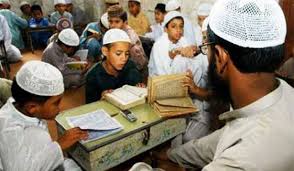
Madrasa School teachers arrested for giving arms training to children

On the Attorney General’s direction, the Criminal Investigations Department arrested two Madrasa School teachers on the charges of giving arms training to school children in Puttlam on Friday (26).

This was confirmed to News 1st by State Counsel Nishara Jayaratne, the Coordinating Officer to the Attorney General.

On Friday (26) morning, Sri Lanka Police said the Terrorist Investigation Division on Thursday (Mar. 25) arrested two men aged 46 and 49 years for propagating extremism.

“The Terrorist Investigation Division arrested the 46-year-old suspect from Matale yesterday (25), and it was revealed that the individual had arrived in Sri Lanka on the 5th of December 2020 from the United Arab Emirates,” Police Spokesperson DIG Ajith Rohana told News 1st on Friday (Mar. 26).

Based on the investigations conducted so far, it has been revealed that the said suspect was deported by the UAE authorities given various extremist activities he had conducted while in the UAE, the Deputy Police Chief further noted.

According to DIG Ajith Rohana, the suspect had collected money from various Sri Lankans who were residing in the UAE and sent the money collected in this manner back to Sri Lanka to propagate extremism.

Furthermore, the suspect had spread extremist and terrorist ideologies via social media.

The suspect was brought to the Terrorist Investigation Division in Colombo and the TID will obtain a detention order under the provisions of the Prevention of Terrorism Act to conduct further investigations, Police Spokesperson DIG Ajith Rohana noted.

Another suspect aged 49-year-old was also arrested by the TID in Kattankudy, Batticaloa on Thursday (Mar. 25) on various offences related to terrorism and extremism committed via social media.

“He has committed various offences connected to terrorism and extremism through social media, especially Facebook. He had promoted Wahabism and extremist ideologies through Facebook. It was also revealed that he was a close follower of the main perpetrator of Easter Sunday bombing Zahran Hashim,” DIG Ajith Rohana told News 1st on Friday (Mar. 26).

The second suspect will also be detained at the Terrorist Investigation Division in Colombo under the provisions of the Prevention of Terrorism Act and further investigations are underway.

Posted in Uncategorized

Jaffna town locked down after rise in COVID-19 patients

A section of the Jaffna town came under a lock down today after 80 COVID-19 patients were detected, health officials said.

Out of 670 individuals who were subject to PCR tests, 80 were reported as COVID-19 infected.

Northern Province Director of Health Services Dr. A.Kedeesaran told the media that the District COVID Control Committee at an emergency meeting decided to lock down the high risk areas that included a part of the Jaffna town including the Kankasanthurai highway, the Jaffna main bus stand, the hospital road, Jaffna public fair ground, Thirunelveli public fair ground and the Jaffna Fort.

Posted in Uncategorized

Targeted sanctions sought on Sri Lankans accused of grave violations -HRW

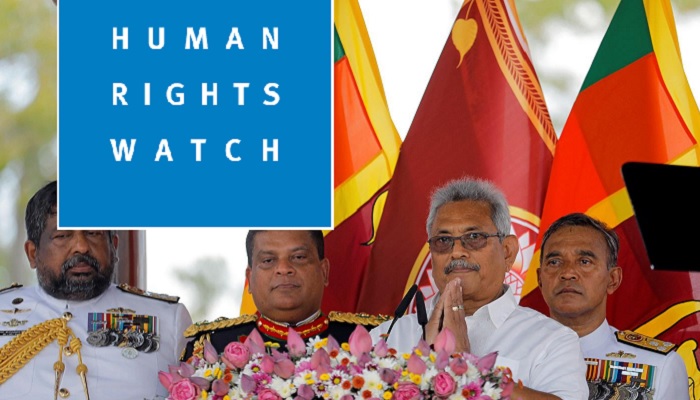
Human Rights Watch (HRW) has called on UN member states to impose targeted sanctions on Sri Lankans allegedly responsible for grave violations and pursue justice for international crimes in national courts under the principle of universal jurisdiction.

The United Nations Human Rights Council resolution on Sri Lanka is a victory for victims of abuses to help them obtain information, accountability, and justice, Human Rights Watch said today.

HRW said that UN and member countries should emphasize to Sri Lankan President Gotabaya Rajapaksa that any reprisals against activists who campaigned for the resolution would have serious consequences.

Resolution 46/1, adopted on March 23, 2021, establishes a powerful new accountability process to collect, analyze, and preserve evidence of international crimes committed in Sri Lanka for use in future prosecutions. The Sri Lankan Government vigorously opposed the resolution, and there have been numerous reports of threats and harassment against rights activists in recent months.

“The Human Rights Council’s landmark resolution on Sri Lanka shows that if justice is denied, the UN will act to provide accountability for atrocities,” John Fisher, Geneva Director at Human Rights Watch said. “When governments fail to respect their international law obligations, as Sri Lanka has, it’s crucial for the Human Rights Council to respond with substantive measures like these.”

Families of abuse victims have struggled for years to learn what happened to their loved ones and to see those responsible held to account, Human Rights Watch said.

The resolution was adopted in response to a devastating report in January by the UN high commissioner for human rights, Michelle Bachelet, on the failure of successive Sri Lankan governments to provide justice and accountability.

It establishes a dedicated new capacity within the Office of the UN High Commissioner for Human Rights “to collect, consolidate, analyse and preserve information and evidence” of gross violations of human rights or serious violations of international humanitarian law committed in Sri Lanka, and “to advocate for victims and survivors, and to support relevant judicial and other proceedings, including in Member States, with competent jurisdiction.”

After many years in which there was barely any progress on accountability, this measure brings justice closer for international crimes committed in Sri Lanka, Human Rights Watch said. The high commissioner is mandated to deliver a report to the Human Rights Council after 18 months, including “options for advancing accountability.”

In her January report, the high commissioner also warned of “clear early warning signs of a deteriorating human rights situation and a significantly heightened risk of future violations.”

The Core Group of states that brought the resolution on Sri Lanka – the United Kingdom, Canada, Germany, Malawi, Montenegro, and North Macedonia – have stood in support of human rights and accountability in Sri Lanka, and upheld the credibility of the Human Rights Council by advancing justice for serious violations of international law, Human Rights Watch said. Altogether 22 Human Rights Council members voted for the resolution, while 11 voted against, and 14 abstained. More than 40 countries co-sponsored the resolution, which remains open for co-sponsorship.

Posted in Uncategorized

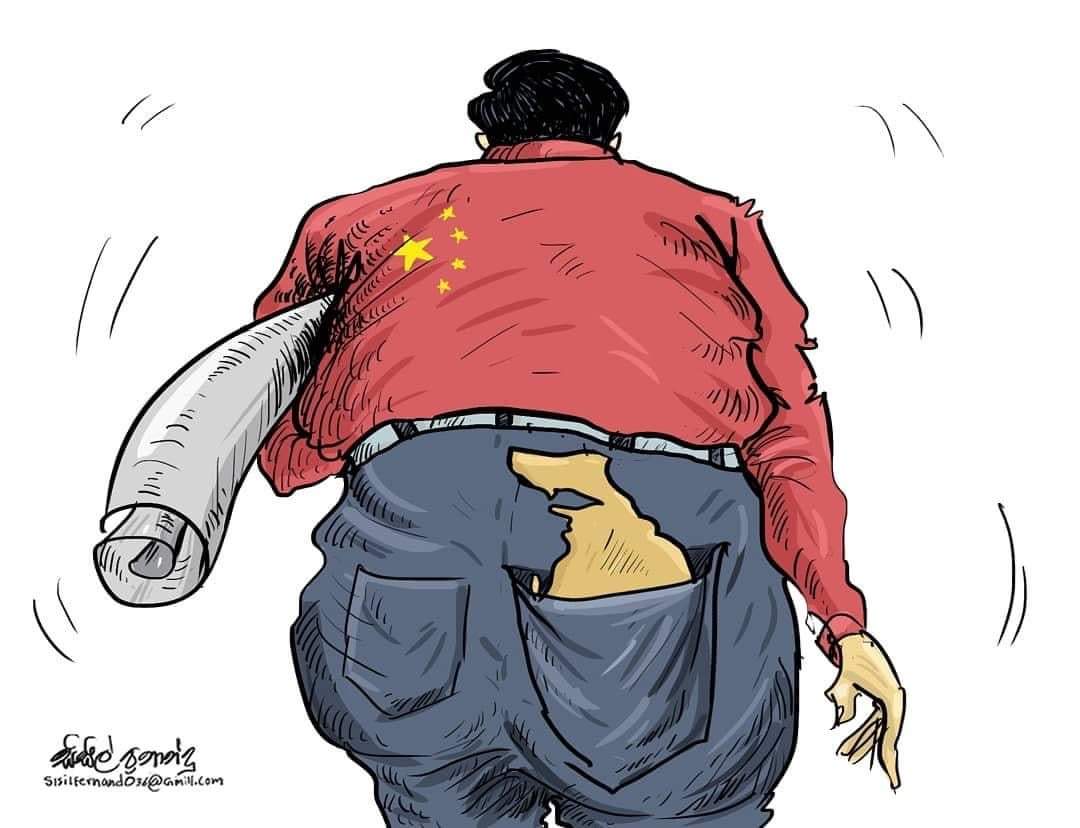
Chinese company hails Cabinet decision on Colombo Port City

The Chinese company behind the Colombo Port City project, has welcomed the Cabinet decision to publish the Colombo Port City Economic Commission Bill on the Government gazette.

Cabinet approval was granted this week following a proposal made by President Gotabaya Rajapaksa.

In January the Cabinet had approved a proposal to establish the Colombo Port City Special Economic Zone which will be an International business and services hub with specialized infrastructure facilities.

This week the Cabinet approved the proposal made by President Gotabaya Rajapaksa to take necessary steps to publish the relevant bill on the Government gazette and submit it to Parliament shortly.

Port City investor company, CHEC Port City Colombo (Pvt) Ltd. welcomed the Government’s move and expects this initiative will bring more Foreign Direct Investments to Sri Lanka.

“The Colombo Port City Special Economic Zone is expected to create a conducive and competitive environment in attracting foreign direct investment (FDI),” the Chinese company said.

The company noted that Urban Development via SEZs is not unique to Sri Lanka and that there are many successful SEZs in the world.

An SEZ will offer relief from various forms of taxation on businesses and individuals who qualify. They also offer superior infrastructure and have streamlined administrative processes in place that results in ease of doing business.

SEZ’s have been a useful tool for developing nations to upgrade infrastructure, human capital and institutional frameworks and test out policies and their impact before they are selectively implemented outside the SEZ in the rest of the country.

“The establishment of a well-positioned SEZ will benefit the nation by upgrading resources and capabilities where policy makers can overcome bottlenecks in resource mobility and attenuate the costs of larger scale implementation or upgrading across the entire country. A successful SEZ sends an important signal that the country is open for business,’ CHEC Port City Colombo said.

It is expected that the SEZ will attract multinational enterprises to set up headquarters or regional offices in Port City and in turn they will bring in financial recourses, technology, technical and managerial know-how.

“We hope the establishment of a SEZ will accelerate Sri Lanka’s economic growth. A realized master plan for the Port City provides 5.7 million square meters of built up area valued at $15 billion that will be home to multinational enterprises, corporate headquarters, transient workers, and residents. It will be the catalyst for a modern services hub that will help Sri Lanka’s transformation into a services-led growth model and elevate the economy to high-income status,” CHEC Port City Colombo said.

Port City Colombo is a brand-new city development built as an extension of the existing Colombo CBD, with a total reclaimed land mass spanning 269 HA.

Posted in Uncategorized

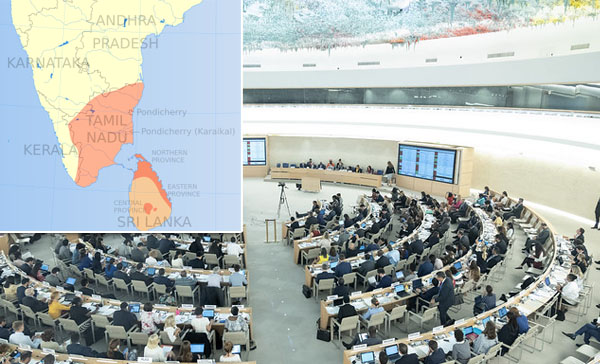
How Delhi’s abstention on Sri Lanka vote in Geneva is playing out in Chennai

India’s vote on United Nations Human Rights Council (UNHRC)’s resolution on Sri Lanka has caused a rift between BJP-AIADMK, but the alliance is safe.

In Mannar, the northern province of Sri Lanka, during the civil war, three children woke up on most mornings to dead bodies near their homes and schools. When they were outdoors, and between their school and home, a four-kilometre walk, their father taught them to run to the nearest shelter if they heard distant sounds of aerial bombs or shelling. The bombings took place so often that even the sound of a coconut breaking would send the children running in fear.

“…they [the children] were traumatised, so I decided to come to India,” said the father, who wished to remain anonymous because of the fear of reprisal for his family back home. His siblings and extended family stayed back in Sri Lanka.

For families like his, the 47-member United Nations Human Rights Council (UNHRC)’s resolution on Sri Lanka is an important step towards justice. On March 23, UNHRC adopted the resolution for promoting reconciliation, accountability, and human rights in Sri Lanka with 22 of its members voting in favour. India abstained, generating concerns among the Sri Lankan Tamils in India. “Our tears and scars are still fresh… We are at peace now in India but how do we find closure for what happened to us if India takes a neutral position?” the 68-year-old father asked.

After living in a transitory camp for four years in Mandapam, his family was shifted to a refugee camp. His four sisters and three brothers stayed back. During the end of the war in 2009, his oldest brother and his children died when they were hiding in a trench. Colloquially called bunkers, these were the safest options to minimise injuries when there was shelling. But death was certain if a bomb landed inside the trench.

In Tamil Nadu, successive governments have provided education quota and other benefits for Sri Lankan Tamils. The three children, scarred by war during their childhood, now have a possibly secure future. One is studying for an MBA degree in a London university while two are employed in the state.

But to ensure justice for Sri Lankan Tamils, both domestic and international pressure is crucial, say activists. “There is value in the UNHRC process because there is an international spotlight on the issues, so we know there is fairness among the global community on this issue and it is not forgotten,” said Sri Lankan-born social worker Poongkothai Chandrahasan, who has been working with refugees for 17 years in Tamil Nadu.

It is voices like these from the ground and the sympathy and solidarity that they evoke among the wider population of the state that has generated pressure on political parties in Tamil Nadu.

India’s abstention has embarrassed the ruling All India Anna Dravida Munnetra Kazhagam (AIADMK). It is being held accountable as it in alliance with the Bharatiya Janata Party (BJP) in Tamil Nadu, which goes to polls on April 6.

Both AIADMK and Dravida Munnetra Kazhagam (DMK) have promised benefits for Sri Lankan refugees in their election manifesto such as dual citizenship and voting rights.

“We know the local parties support our rights and we are aware there may be no immediate solution,” said the father. His generation of refugees wants to return home. “It is our motherland after all,” he said. “But we will advocate for our right to vote and make it a reality before we return.”

While it is not a major electoral poll plank, the issue is sensitive in Tamil Nadu. Some regional parties such as S Seeman’s Tamil nationalist party Naam Tamizhar Katchi (NTK) and Vaiko’s Marumalarchi Dravida Munnetra Kazhagam (MDMK) have grown solely maintaining the Sri Lankan Tamils issue as their core ideology. Several Liberation Tigers of Tamil Eelam (LTTE) leaders, including its chief Vellupuli Prabhakaran, were associated with Dravidian leaders. When they came to the state, they often lived with Tamil families who supported their struggle.

Both AIADMK and BJP have said that India’s vote in Geneva would not affect their alliance, but the regional ally has come down heavily on its national partner. AIADMK leaders say that they are ideologically different from the BJP and the alliance is only aimed to defeat the DMK. “This is not the first time that the BJP is making us answerable to criticism just before elections,” said an AIADMK leader, who wished to remain anonymous. “Before the Vellore by-poll, they passed the legislation against triple talaq and our candidate AC Shanmugam lost all the Muslim votes and the seat. On the Sri Lankan issue, however, our electoral prospects would not be impacted as the people who vote based on this issue will anyway choose NTK.”

MDMK is with the DMK and Vaiko, who was close to Prabhakaran. It has condemned the Central government for its stand on the vote.

DMK president MK Stalin said if there were no elections, the BJP would have voted in favour of Sri Lanka and called abstaining a “great betrayal.” Before the voting, Stalin and AIADMK’s ally, PMK, had urged the Centre to vote against Sri Lanka.

The BJP justified its stand, listing Prime Minister Narendra Modi-led government’s schemes and funds for Lankan Tamils. “Though we have abstained, we have issued a strong statement in favour of Sri Lankan Tamils,” said BJP leader CT Ravi. “This is not a political issue but a humanitarian issue between two countries.”

Modi had earlier said that the Centre would support the equality and dignity of Sri Lankan Tamils at a public meeting in Chennai in February.

“It is like lip-service,” reacted AIADMK’s senior leader C Ponnaiyan.

After the three-decade-long war ended in 2009, there have been seven resolutions on Sri Lanka in UNHRC. India’s position has varied. Ahead of the vote in March 2013, the DMK pulled out of the Congress-led United Progressive Alliance, which was in power at the Centre. DMK said the Congress did not do enough to address the alleged human rights violations of Tamils.

“The BJP is not bothered about the AIADMK’s position on the issue,” said political analyst Ravindran Duraisamy. “It is not an election issue though it would be spoken about during campaigning and only NTK may get voters on this issue.”

Source: Hindustan Times

UNHRC resolution seeks to interfere in matters within domestic jurisdiction – Foreign Min

Minister of Foreign Affairs Dinesh Gunawardena the new resolution against Sri Lanka, adopted by the United Nations Human Rights Council (UNHRC) seeks to interfere in all matters that are essentially within the domestic jurisdiction of a country.

Sri Lanka considers the resolution to be unwarranted, unjustified and a violation of the relevant articles of the United Nations Charter, in particular, Article 2(7) and the relevant sections of the UN resolutions 60/251 that provides for the mandate of the HRC, the minister remarked, delivering a special statement during today’s parliamentary session earlier today (March 25).

For the above reasons the resolution against Sri Lanka is illegal, he added.

Although the resolution says it is guided by the purposes and principles of the Charter of the United Nations, it has violated Article 2(7) of the Charter which states that nothing contained in the present Charter shall authorize the United Nations to intervene in matters which are essentially within the domestic jurisdiction of any state.

“We are a sovereign state that had been cooperating with the United Nations. We will protect our sovereignty. We are a democracy. We are the oldest parliamentary democracy in Asia. We have enjoyed universal suffrage for 90 years and today we are told that elections are not being held. We have held all the elections that could be held when the Election Commission decides.”

Foreign Minister says this resolution against Sri Lanka was pushed forward at the behest of a few countries representing one part of the world without the consent of Sri Lanka. “It is therefore unhelpful and divisive.”

He stressed that there is no moral right to interfere in the affairs of a sovereign country in this manner.

“No country has a greater interest in bringing about reconciliation among its people than Sri Lanka – a point that has been repeatedly been emphasized during the proceedings of the Human Rights Council.”

Minister Gunawardena, in his statement, pointed out that the list of co-sponsors of the resolution has amply demonstrated the divisive manner of such a country-specific initiative. He said it is clear from the result of the vote that there is no consensus within the Council on this resolution.

The resolution adopted on Tuesday (March 23), is intrusive of the sovereignty of the people of Sri Lanka and core values of the UN Charter, the minister said stressing that it can have an adverse effect on the ongoing efforts to maintain peace, reconciliation and development in Sri Lanka. “It will lead to polarization of our societies.”

Sri Lanka categorically rejects the proposal in this resolution to expand the role of the OHCHR, the Foreign Minister reiterated. “This sets a dangerous precedence and will have wide-ranging implications for all other countries.”

He went on to say that the Council cannot assume tasks that are not assigned to it by UN General Assembly in Resolution 60/251 or subsequent resolutions. This resolution is based on the rejected report on Sri Lanka by the UN High Commissioner for Human Rights presented at the 46th Session of the Human Rights Council which violates the principles of sovereignty and equality of all states and non-interference in internal affairs, he continued.

The report is one-sided and has exceeded the mandate of the Human Rights Council, Foreign Minister emphasized. He said the report contains unsubstantiated, unwarranted comments of essentially political nature, which no self-respecting sovereign nature can accept.

The minister pointed out that the report was compiled within months following the formation of the new government in Sri Lanka, without any field visits, while the whole world was grappling with the ongoing COVID-19 pandemic.

He said a well-orchestrated propaganda campaign was launched against Sri Lanka ahead of the 46th session of the Human Rights Council. This campaign was carried out with an extensive focus on Sri Lanka while reports pertaining to the situation in over 10 other countries were presented at relevant HRC session. The synchronized content of the propaganda against Sri Lanka and exploitation of the OHCHR mechanisms demonstrated a clear case of pre-mandated endeavour.

The new resolution, in an unwarranted manner, seeks to interfere in all matters that are domestic affairs of a sovereign country, Minister Gunawardena said further. He questioned the UN members whether Sri Lanka represents a case warranting the immediate attention of Human Rights Council. Sri Lanka only defeated a terrorist campaign and acted within the legal rights to defend its territorial integrity, he elaborated.

The minister says the Sri Lankan government is determined to achieve its main targets to improve the lives of its people despite the distractions from international bodies. “No sovereign government is bound to work according to the external prescriptions but be guided by the democratic aspirations of its people.”

The government remains committed to protecting those who have made immeasurable sacrifices to neutralize terrorism, to protect the territorial integrity of the country and to regain the right to life, he added.

It is regrettable that the proponents of the resolution seek to create ambiguous mechanisms with funds of millions of US dollars at a time of severe financial constraints faced by the UN.

Pointing out that the UNHRC is wasting money to engage in an unnecessary inquiry against Sri Lanka, the Foreign Minister called upon the proponents of the resolution to diversify the money allocated for the implementation of this proposal to improve the lives of people affected by the conflict. He urged them to direct the funds to a more positive cause.

Speaking on the vote on the UNHRC resolution, he highlighted the fact that some countries that voted in favour of Sri Lanka withstood immense pressure. He thanked the countries for braving such adversities to reject the resolution.

Despite the vote on the resolution against Sri Lanka, the island nation will pursue its domestic mechanisms as pledged before the UN agencies aimed at bringing about reconciliation and lasting peace, the minister stressed.

“Sri Lanka will continue to engage constructively with the UN and its agencies in the same spirit of cooperation for the betterment of the people including through the achievement of sustainable development goals, in keeping with the domestic priorities and policies as well as international obligations and undertaking.”