Indian High Commission issues statement on apprehension of 54 fishermen and 5 boats from India

The Indian High Commission in Sri Lanka has issued a statement regarding the arrest of 54 Indian fishermen by the Sri Lanka Navy in Sri Lankan waters yesterday (24).

It calls for dealing with the Indian fishermen arrested in Sri Lankan waters in a humanitarian manner.

The full announcement follows:

High Commission has been informed about the apprehension of 54 fishermen and five boats from India by Sri Lanka Navy on the night of 24 March 2021. We reiterate that issues associated with Indian fishermen are to be dealt in a humanitarian manner.

Providing immediate consular access and emergency supplies to apprehended fishermen are of prime importance. We are working with Government of Sri Lanka for expeditiously securing consular access for these fishermen.

Bilateral mechanisms are in place to comprehensively address all matters related to fisheries. It may be recalled that the Fourth meeting of the Secretary-level JWG was held on 30 December 2020 through virtual mode. Follow-up measures on the basis of discussions which took place during the meeting need to be taken forward quickly.

SL studies about what it should do at UN General Assembly

The Foreign Ministry is currently in the process of studying what it should do at the 76th session of the UN General Assembly regarding the United Nations Human Rights Council (UNHRC) seeking an additional programme budget of US $ 2.8 billion to implement the resolution on Sri Lanka, an official said yesterday.

The official said the Ministry would study the technicalities in the process and decide how it should respond to the situation.

The UNHRC has sought approval for such budgetary support at the 76th General Assembly to cover expenses required by the Office of High Commissioner for Human Rights (OHCHR) to report on Sri Lanka’s situation as envisaged in the resolution.

The related cost has not been included in the programme budget for 2021 and 2022. The latest budgetary requirements’ that arose after the adoption of the resolution is to be brought to the attention of the General Asembkly.

Of the estimate, US $ 137,400 is sought for general operating expenses, US $ 130,000 for contractual services and US $ 41,200 for staff travel. Besides, US $ 75, 400 has been sought to be spent for meeting participants and witnesses.

The OHCHR is to appoint 12 investigators on Sri Lanka for the investigative and evidence-gathering mechanism. In seeking the approval for the programme budget, four trips have been proposed for staff members for fact finding, information collection and awareness rising.

Among the matters proposed to be carried out by the OHCHR are commissioning and analysis of satellite images and the establishment of an information evidence repository.

Pakistani Permanent Representative to UN in Geneva Khalil Hashmi who spoke before the vote on Sri Lanka said allocation of such a large amount of money raised serious concerns when the UNHRC was facing a liquidity crisis.

Sri Lanka rupee can go to 300-350 to the US dollar: Trade Minister

Sri Lanka is controlling the price of the rupee with great difficulty and the it could fall to as much 300 to 350 to the US dollar, given past trends, Trade Minister Bandula Gunewardene told parliament without giving a time frame for the target.

“Now it is with the greatest difficulty (ithar visharler amaruwen) that the exchange rate is controlled at 200 levels (to the US dollar),” Minister Gunewardene told parliament this week.

“What if this rupee goes to 250, or 300 or 350? It can go to that level (ehemer ven-ner puluwan) because when we got independence we paid only 4.77 to the US dollar.”

Minister Gunewardene did not give a timeline for 350 rupees.

Sri Lanka got independence from British rule in 1948.

At the time Sri Lanka had a currency board which could not legally print money to control interest rates and the exchange rate was fixed (externally anchored) 1 to 1 with the Indian rupee from 1885.

The Indian rupee was originally a silver based currency. While the rupees produced by the Board of Commissioners of Currency of Ceylon could move against gold standard moneys such as the sterling, it could not depreciate against the anchor Indian rupee currency.

A currency board (a hard peg) is prohibited from issuing notes against Treasury bills and can only issue notes against foreign currency inflows, making it impossible to generate excess demand and balance of payments crises.

The Board of Commissioners of Currency was set up in 1885 by British administrators after the collapse of the main note issuing bank at the time, the Oriental Bank Corporation, which suspended payments in May 1884. Sri Lanka had several note issuing free banks.

At the time a series of chartered and free banks had fired a bubble, which collapsed bringing commodity prices including coffee down, generating bad loans in many banks in Asia and Ceylon.

Latin America style soft-peg

Sri Lanka set up a Latin America style central bank in 1950 with advice from a Federal Reserve ‘money doctor’ to become part of the Bretton System of failed soft-pegs.

Soon after World War II the US was intent on breaking the so-called ‘Sterling area’, where a partially closed trade system was taking place due to Bank of England money printing dating back from the war years was creating forex trouble with the ‘dollar area’.

Countries like Malaysia, Singapore and the Maldives which got independence around a decade later escaped the central banking debacle.

After the Great Depression the Latin America unit of the Fed had set up a series of money printing central banks which were supposed to do ‘counter cyclical policy’ in several countries, inspired by Argentina’s central bank set up by Raul Prebisch.

Many of those Latin American countries ended up with forex shortages, import substitution and sovereign default. Some central bank struck zeroes off the money, and accumulated more zeroes. Others dollarized.

After the currency board was converted to a soft-peg Sri Lanka had foreign reserves measured in 11 months of imports.

Un-anchored policy

Meanwhile Gunewardene said by 1978 Sri Lanka’s rupee was around 8 to the US dollar.

In 1978 it was devalued to 16 he said during then Finance Minister Ronnie de Mel’s budget.

By 2005 it was down to 105 to the US dollar.

When Mahinda Rajapaksa left office in 2014 it was around 130 he said.

During the five years of the last administration the rupee had fallen to 182 to the US dollar, he said.

Economic analysts had blamed ‘flexible’ policy involving un-anchored monetary policy (flexible exchange rate or no external anchor/flexible inflation targeting or no domestic anchor) for the currency collapse in the past five years, which happened despite steep and unpopular tax hikes and market pricing of fuel.

Gunewardene said the current administration had cut value added tax to help bring down prices and costs to business. Now unprecedented volumes of money was being printed to keep rates down and also finance the deficit.

In 2020, the highest balance of payments deficit of 2.3 billion dollars was recorded with over 650 billion rupees being printed, apparently under ‘Modern Monetary Theory’.

In 2015 the central bank printed money claiming inflation was too low, and in 2018 and 2019 money was printed to target an ‘output gap’. However the central bank has no growth mandate.

The central bank printed money to target an output gap, despite budget deficits coming down, triggering monetary instability.

Analysts have pointed to factors showing that interest rate were controlled as a final target, through overnight liquidity operations for call money, administrative price ceilings as well and outright purchases of longer terms bonds to influence the yield curve.

The resulting monetary instability then forces the central bank to apply brakes through a rate hikes rates and tighter liquidity.

However the currency collapse leads to a consumption collapse, implosion of domestic real capital and a relative inflation of foreign debt, driving short and long term growth down.

Such ‘stop-go’ policies also wreaked havoc in the US and UK in the 1960s and 1970s.

Analysts have called for a overhaul of the central bank or to re-establish the currency board to reign in monetary instability.

SELF-CORRECTING: Before an Argentina style central bank was set up in 1950 Sri Lanka had a self-correcting currency board providing sound money and free trade.


Posted in Uncategorized

Effects and implications of the UNHRC resolution on Sri Lanka explained

The result of the passing of a resolution concerning Sri Lanka in Geneva at the United Nations Human Rights Commission (UNHRC) has left many of our citizens asking questions as to how it will impact the country and its future.

Here are some of the questions we have been asked and the answers we gathered.

Question: Will there be sanctions against Sri Lanka as a result of the passing of the Resolution?
Answer: No

As Senior Researcher at the Centre for Policy Alternatives in Colombo Bhavani Fonseka points out the UNHRC does not have the power to impose sanctions. “Only the UN Security Council has that kind of power and that is an entirely different process.”

However, Fonseka says that “individual countries may impose targeted sanctions such as travel bans on certain persons.”

Countries or groups such as the European Union – which supported the resolution may withdraw special concessions such as the GSP+ which gives Sri Lankan exports a monetary advantage in those markets. That concession which had been withdrawn previously was restored after the 2015 Presidential Elections.

Opposition Member of Parliament Eran Wickramaratne observed: “An urgent fresh appraisal is needed to minimise the negative economic consequences of the resolution. We must not risk legal battles in foreign jurisdictions, travel bans, economic and trade embargoes. The economic consequences will be catastrophic.”

Question: Did Sri Lanka win or lose in Geneva?
Answer: We lost the vote

This is not a zero-sum game. To begin with, the Resolution did not target Sri Lanka as a nation or its general public. It equally pointed fingers at some members of the Sri Lankan Military and the Liberation Tigers of Tamil Eelam for gross Human Rights violations such as War Crimes and Crimes against Humanity.

It calls for transparent investigations and a process that would lead to healing and reconciliation.

The Resolution urges the government to implement recommendations already proposed by multiple commissions appointed by the Mahinda Rajapaksa administration. The report presented by the UN High Commissioner for Human Rights Michelle Bachelet also addressed the overtly anti-minority actions of the current administration.

Question: Was it a diplomatic failure?
Answer: Yes

Despite the government’s claim that the country “won” on the premise that abstentions equal support, some of our staunchest allies, such as India and Japan, who have contributed hugely to our economic and political development did not oppose the resolution. Instead, India used the occasion to reiterate at the debate on the resolution that it had the interests of the Tamil minority at heart.

Dr Paikiasothy Saravanamuttu, Executive Director of CPA called it “a diplomatic fiasco.”

Sri Lanka has in recent months spoken in favour of North Korea and Eritrea at the UNHRC making it impossible for Japan and South Korea as well as many African countries to support Colombo’s stand, some observers have said.

The hardcore vocal LTTE supporters, mostly concentrated in the West, had a muted celebration as the resolution condemned the Tigers for preventing civilians from leaving the warzone following its long-term strategy of using people as a human shield.

Amnesty International commented that the “resolution responds to an OHCHR report released in January, which warned that Sri Lanka’s persistent failure to address historic crimes is giving way to ‘clear early warning signs of a deteriorating human rights situation and a significantly heightened risk of future violations,’ and made concrete recommendations for “preventive action” for the Human Rights Council, including enhanced monitoring and reporting, and the collection and preservation of evidence, which has been mandated by this resolution.”

Question: Will Sri Lankans be charged by the International Criminal Court (ICC)?
Answer: No

The old claim made by the current government’s supporters that Sri Lanka’s “war-heroes” will be taken to the electric chair is absolutely incorrect, and pure misinformation used for propaganda purposes, former Parliamentarian Dr Jayampathy Wickremeratne said.

The ICC, Fonseka points out, “acts only when the domestic judicial process is unable to deal with a matter.” She points out the domestic set-up has to detain and hand over the person for trial. The ICC she says has no mandate to enter a country to carry out an arrest.

No action can be taken without the cooperation of the Government of Sri Lanka, she added.

Question: So what is the effect of the Resolution, will it affect the country immedietely?
Answer: No

The immediate action is to pass funds to create an office that will investigate, collect and preserve evidence of alleged War Crimes and Crimes against Humanity committed in Sri Lanka during the war.

Amnesty noted that the “resolution not only ramps up international monitoring and scrutiny of the human rights situation in Sri Lanka but also mandates the UN human rights office to collect, consolidate and preserve evidence for future prosecutions and make recommendations to the international community on steps they can make to deliver on justice and accountability.”

Its representative in Geneva, Hilary Power, was quoted as saying: “This is a significant move by the Human Rights Council, which signals a shift in approach by the international community. Years of support and encouragement to Sri Lanka to pursue justice at the national level achieved nothing. This resolution should send a clear message to perpetrators of past and current crimes that they cannot continue to act with impunity.”

Reported by Arjuna Ranawana

Political parties with racial or religious names will not be registered

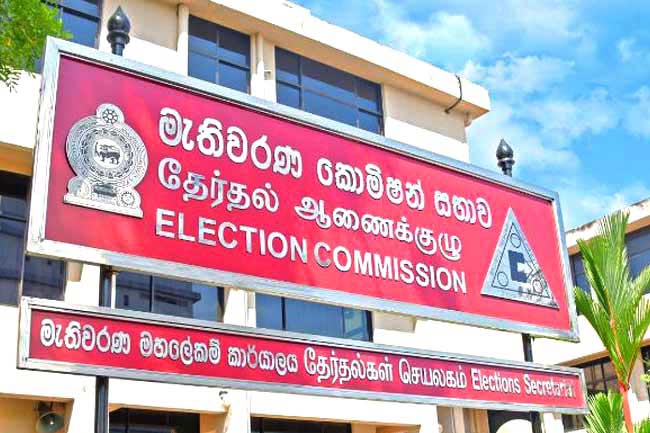
Political parties with racial or religious names will not be registered in future, the Election Commission said today.

The Commission will also look to amend the names of registered political parties with racial or religious names in consultation with the respective parties.

A number of minority political parties with names of a race or religion are registered in Sri Lanka.

A political party is treated as a recognized political party for the purpose of elections under Section 7 of the Parliamentary Elections Act No 1 of 1981 as amended by Parliamentary Elections (Amendments) Act No 58 of 2009.

The Elections Commission publishes a newspaper notice before January 31 every year (if the law has not directed otherwise) calling for applications.

However, if an election is announced during the month of January, the notice is published after the lapse of 30 days from the date of the election.

Posted in Uncategorized

Main Opposition SJB Says Resolution Adopted At UNHRC Displayed Foreign Policy And Human Rights Failures Of Govt

Explaining its position on the resolution on Sri Lanka adopted by the UNHRC yesterday, the main opposition the Samagi Jana Balawegaya (SJB) said it reflected the utter failure of the government.

A statement issued by the SJB said, “1) The Samagi Jana Balawegaya notes the adoption of a resolution on Sri Lanka at the 46th session of the United Nations Human Rights Council.

2. The SJB stands for the principles of justice and accountability, and the protection and promotion of human rights. The SJB believes that human rights and the Rule of law are universal and remains deeply committed to it.

3. The SJB acknowledges that the end of the armed conflict in 2009 was an important turning point in the country’s history. Many people have sacrificed their lives so that the country could have peace. The SJB is committed to safeguarding Sri Lanka’s unity, sovereignty, territorial integrity, political independence, and to the full and meaningful implementation of the 13th amendment to the Constitution, which will entail maximum devolution within a unitary state. However, lasting peace requires reconciliation among all the communities of the country through addressing the effects and the causes of the war.

4. The resolution on Sri Lanka at the 46th session of the Human Rights Council is a direct result of the government’s major failures. It was brought about by the government’s foreign policy failure, and its current failure in safeguarding human rights and democracy in Sri Lanka.

a. Foreign policy failure: The present government has managed its foreign relations extremely irrationally. Instead of embarking on a careful and thoughtful process of diplomatically convincing the world that Sri Lanka is willing to take its human rights obligations seriously, it embarked on an obnoxious and intransigent campaign. The government lacks coherence, competence, and good faith in dealing with the international community. This dysfunctional approach to foreign relations is one of the main reasons countries that once supported Sri Lanka are now no longer its allies.

A fresh approach is needed to better manage Sri Lanka’s foreign relations. Competent professionals with foreign affairs expertise should be guiding Sri Lanka’s foreign policy.

b. Failures in human rights and democracy: The resolution was adopted in the Council mainly because of the present government’s failure to respect and protect human rights and democracy in the country. The text of the resolution makes that very clear.

The SJB condemns the present rapid deterioration of the human rights situation in Sri Lanka, and the racist, xenophobic, and discriminatory policies of the present government. It also condemns the systematic assault on Sri Lanka’s democratic institutions.

The freedom of people to speak freely is being thwarted, as vocal critics of government are being targeted for their views. Politicians, lawyers, media personnel and activists are being punished for their political activities, and human rights work. Communities, including environmental activists, are not being permitted to air their grievances freely, and are being compelled to take to the streets.

The people’s representatives in opposition parties are being systematically targeted through a process designed to strip them of their civic rights, and disqualify them from contesting elections. The SJB fears that the country is being primed to become a one-party state, or worse – a despotic or tyrannical state, where the democratic choice of the people will be destroyed.

A fresh approach is needed to ensure human rights and democracy in Sri Lanka. If Sri Lanka emerges as a country that respects human rights and democracy, it would certainly not be on the agenda of the UN Human Rights Council.

5. The SJB is committed to an internationally credible, independent domestic accountability mechanism. It intends to build on past credible initiatives such as the Lessons Learnt and Reconciliation Commission (LLRC) and later the Paranagama Commission. Both these bodies found that certain violations had taken place, and needed to be investigated. The LLRC in particular made recommendations on measures needed to promote reconciliation in the country. Regrettably, the present government has not implemented these recommendations. Instead, it has promised yet another new commission nearly 10 years after the LLRC report was published. This inaction has directly led to increased international pressure on Sri Lanka.”

Posted in Uncategorized

Tamil Nadu parties slam Indian Govt. for boycotting UN vote against Sri Lanka

The DMK, MDMK and CPM have condemned the Indian Government for not voting on the UN resolution raised against Sri Lanka at the United Nation Human Rights Council (UNHRC) meeting in Geneva on Tuesday, New Indian Express said today.

DMK president MK Stalin dubbed the Centre’s act as betrayal of Eelam Tamils.

“The government is indirectly helping Sri Lanka by boycotting the voting on a resolution, which could have promoted reconciliation, accountability and human rights in Sri Lanka,” he added.

MDMK general secretary Vaiko and CPM general secretary K Balakrishnan also slammed the government.

Posted in Uncategorized

US says Sri Lanka’s prosperity depends on respect for human rights

The United States says the long-term security and prosperity of Sri Lanka depends on respecting human rights today and committing to peace and reconciliation for the future.

The US State Department also called on Sri Lanka to safeguard the rights of ​ethnic and religious minorities.

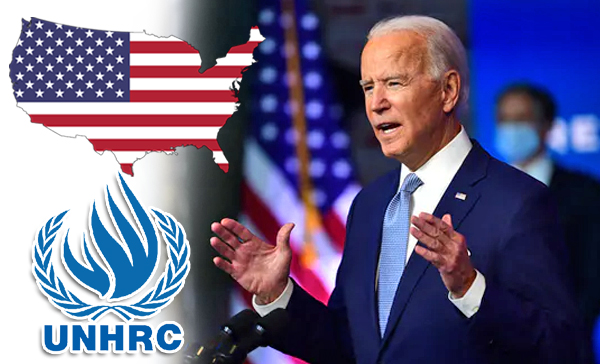
US State Department Principal Deputy Spokesperson Jalina Porter noted that the United Nations Human Rights Council passed a resolution to promote human rights in Sri Lanka.

“The United States co-sponsored this resolution and together with the international community calls on Sri Lanka to safeguard the rights of ​ethnic and religious minorities, human rights defenders, and civil society actors, and to take credible and meaningful steps to address its past, promote reconciliation, and guarantee equal access to justice for all its people,” she said.

Jalina Porter said the resolution expands reporting requirements for the Office of the High Commissioner for Human Rights and includes a mandate to collect and preserve evidence for future accountability processes and expresses concern about the trends over the past year.

Posted in Uncategorized

UN begins monitoring Sri Lanka

The resolution on Sri Lanka which was adopted by the UN Human Rights Council will take immediate effect with the Office of the High Commissioner for Human Rights (OHCHR) beginning the process to closely monitor Sri Lanka, UN sources told Daily Mirror last night.

Monitoring Sri Lanka will be carried out immediately with existing staff while other related work will be implemented once the UN General Assembly approves funding later this year.

The resolution may not have an immediate impact on Sri Lanka but with over 40 cosponsors, sources said that in the long term there could be an impact on trade with some countries and travel restrictions imposed on some officials as a result of the resolution.

The United States, EU and a number of other countries are among the cosponsors of the resolution, some with no voting rights in the UN Human Rights Council.

The resolution has called on the Office of the High Commissioner to enhance its monitoring and reporting on the situation of human rights in Sri Lanka, including on progress in reconciliation and accountability.

OHCHR has also been told to present an oral update to the Human Rights Council at its forty-eighth session, and a written update at its forty-ninth session and a comprehensive report that includes further options for advancing accountability at its fifty-first session, both to be discussed in the context of an interactive dialogue.

Meanwhile, the United Nations said it would require more funds to fully implement the resolution on Sri Lanka.

OHCHR is looking to recruit 12 new employees to work on Sri Lanka. Among them are legal advisors with experience in international criminal justice and/or criminal investigations and prosecutions to coordinate the team and oversee an information and evidence collection strategy, analysts, two investigators/human rights officers and victim support officers.

Director of Programme Planning and Budget Division at the UN, Johannes Huisman said that draft resolution A/HRC/46/L.1/Rev.1, would require an additional one-time requirement of $2,856,300.

He said the funds required to implement the new resolution on Sri Lanka is not in the budget for the year 2021.

In a letter to Goro Onojima, the Secretary of the Human Rights Council, Huisman said that the financial requirements, in accordance with established procedures, would be brought to the attention of the General Assembly at its 76th session.

The resolution seeks OHCHR support for relevant judicial and other proceedings, including in Member States, with competent jurisdiction.

The funds will be required for the process to collect, consolidate, analyse and preserve information and evidence and to develop possible strategies for future accountability processes for gross violations of human rights or serious violations of international humanitarian law in Sri Lanka, advocate for victims and survivors, and support relevant judicial and other proceedings, including in Member States with competent jurisdiction.

UN to collect evidence of alleged Sri Lanka war crimes – BBC

The United Nations human rights chief Michelle Bachelet has been authorised to collect and preserve evidence of alleged war crimes during Sri Lanka’s long civil war, which ended in 2009.

The UN believes 80,000-100,000 people died in the 26-year conflict with the Tamil Tiger rebel group.

A resolution passed by the UN Human Rights Council accused Sri Lanka of “obstructing accountability”.

Sri Lanka described the resolution as “unhelpful” and “divisive”.

The council’s resolution also called for trials of suspects in foreign countries.

Both the government and the Tamil Tiger rebels are accused of atrocities during the conflict.

Speaking to the BBC on Tuesday, Ms Bachelet said: “I welcome the Human Rights Council’s decision to continue its monitoring of human rights in Sri Lanka and pursue accountability for past crimes. I salute the courage and commitment of victims from all communities in Sri Lanka in their pursuit of truth and justice.”

She said she hoped Sri Lanka would “change course from its current policies” and “ensure full protection of minorities, human rights defenders and the media”.

In the war’s final few months, the Sri Lankan army pinned the rebels into a strip of north-eastern coast, where the government says the rebels kept thousands of civilians as human shields, exacerbating the death toll.

Yasmin Sooka, a rights lawyer involved in a civil prosecution against Sri Lanka’s current President Gotabaya Rajapaksa for alleged war crimes, said the resolution was “hugely significant for victims”.

“It really is a recognition that at the domestic level, processes have failed and there is no real hope that victims will access justice,” she told the Reuters news agency.

The push to pass the resolution was led by the UK. It passed by 22 votes to 11, with China and Pakistan among those voting against. There were 14 abstentions, including that of neighbouring India.

Ahead of the vote, the British ambassador Julian Braithwaite said: “We bring this resolution in the hope that it will help advance the human rights of all communities, including Buddhist, Christian, Muslim, Sinhala or Tamil.

“And more importantly that it will help prevent the recurrence of past grave violations of human rights which the High Commissioner warned this council about in such clear terms.”

The success of the resolution gives Ms Bachelet’s office new staff, powers and a $2.8 million budget to look at Sri Lanka’s war with a view to future prosecutions.

At a press conference in Sri Lanka’s capital Colombo, the nation’s Foreign Minister Dinesh Gunewardena said the resolution lacked authority as more nations voted against or abstained than in favour.

“The resolution was brought by countries supported by Western powers that want to dominate the Global South,” he said.

The UN Human Rights Council also expressed alarm at the human rights situation in Sri Lanka today, including a “deepening and accelerating militarisation of civilian government functions”, “the erosion of the independence of the judiciary”, and “increased marginalisation” of Tamil and Muslim minorities.

Analysis

Anbarasan Ethirajan, World Service South Asia Regional Editor

Despite weeks of intense behind-the-scenes diplomatic campaigning, the UN Human Rights Council resolution has gone against the Sri Lankan government.

The new resolution gives more powers to the UN human rights chief to ensure accountability for the alleged war crimes during the conflict with the Tamil Tiger rebels which ended in 2009, and the evidence gathered can be used for any future prosecutions.

Sri Lanka is worried that in the long term it may lead to travel and other restrictions on some of the military and civilian officials involved in the war. The government has been defiant, arguing that the resolution cannot be implemented without the consent of the country concerned.

But some Tamil community leaders believe that the UN resolution did not go far enough to impose tougher sanctions on Sri Lanka. For them, their wait to find answers about their relatives missing in the war continues. They want accountability for the thousands of deaths.

The resolution may not satisfy all the parties concerned, but it’s a clear reminder from the international community that the alleged abuses in the Sri Lankan conflict will not be forgotten or ignored.