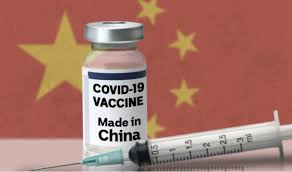
Sri Lanka’s approves China’s Sinopharm Covid-19 vaccine for emergency use

Sri Lanka’s National Medicines Regulatory Authority (NMRA) on Saturday approved China’s Sinopharm Covid-19 vaccine for emergency use in the island country.

According to State Minister of Production, Supply and Regulation of Pharmaceuticals Channa Jayasumana, this is the third Covid-19 vaccine to be approved in the country after the AstraZeneca and Russia’s Sputnik V jabs, reports Xinhua news agency.

Earlier this month, General Manager of the State Pharmaceutical Corporation (SPC) Dinusha Dassanayake said the SPC had also made an application to the NMRA to clear China’s Sinovac vaccine for emergency use.

Sri Lanka is in the midst of a mass inoculation program as it began inoculating all those above 30 years old in the urban Western Province from mid-February, after vaccinating frontline workers and health workers with the AstraZeneca doses.

Sri Lanka received AstraZeneca doses from India in January and February.

It also received 264,000 doses of the AstraZeneca vaccine under the World Health Organization-led COVAX facility which is being administered to those above the age of 60 years.

Source:IANS

Zahran Hashim, Kattankudy and the Islamic State in Sri Lanka By D. B. S.Jeyaraj

The final report of the Presidential Commission of Inquiry (PCoI) into the Easter Sunday attacks was handed over to President Gotabaya Rajapaksa by the Chairman of the Commission, Supreme Court Judge Janak de Silva at the Presidential Secretariat on February 01, 2021. Former President Maithripala Sirisena appointed the Commission of Inquiry on September 22, 2019, to investigate and report on the series of terrorist attacks on Easter Sunday and to recommend necessary action based on the findings. The first and second interim reports were handed over to the President on December 20, 2019 and on March 02, 2020, respectively.

The final report’s release has once again drawn attention to Mohammed Zahran Mohomed Hashim known as Zahran Hashim. The fiery Muslim preacher from Kattankudy in Batticaloa was a man about whom very little was known outside of Islamic circles before the Easter Sunday bombings. However, his name is now a household word as the alleged mastermind behind the Terror attacks on April 21, 2019. This column intends to focus on Zahran Hashim alias “Abu Ubaidah” and his deadly legacy this week.

Kattankudy

Mohammed Zahran Mohomed Hashim was born in the Muslim coastal town of Kattankudy in 1985. Kattankudy pronounced in Tamil as ‘Kaathaankudi’ is situated 211 miles away from Colombo in the Eastern littoral known as ‘Ezhuvaankarai’ (shore of the rising sun). It is a very small place with a land area of 2.56 sq. km. and 1.33 sq. km. of inland waterways. Kattankudy is reportedly the most densely populated town in Sri Lanka with 6,726 residents per square kilometre. The 2012 Census estimated the population in the Kattankudy urban council area as 47,603. Many in Kattankudy dispute these estimates saying thousands of permanent residents who were temporarily away in other parts of the Island or overseas were not enumerated.

In recent times, many Kattankudy residents have sought employment in the Middle-East. This has resulted in increased Islamisation of the Wahabi variety. Wahabis are an orthodox Islamic sect originating in Saudi Arabia

The thickly populated Kattankudy is arguably the most prosperous Muslim town in the East. It is said that Kattankudy is the busiest business centre in the Batticaloa District. The first Muslim Central College in Sri Lanka was established in Kattankudy in 1930. Kattankudy has produced many teachers, lawyers, accountants, engineers, academics and diplomats over the years. In addition, the natives of Kattankudy are well-known for their entrepreneurial skills and business acumen.

A very large number of leading Muslim commercial establishments in the East as well as in other areas of the island belong to people from Kattankudy. So much so that there is a popular saying in Tamil about there being no place in Sri Lanka without a “Kaaham” (crow) or a “Kaathaankudiyaan” (Man from Kattankudy). There is also a booming apparel industry in the town. Kattankudy is reputed for its mats, carpets, sarees and sarongs.

“Qahtankudy”

Interestingly enough there is a widely held belief among Kattankudy denizens that their ancestors hailed from the Qahtan region of South Arabia in what is present-day Yemen. It is said that Arabs who came from Qahtan known as Qahtanis married local Tamil women and got domiciled. The name Kattankudy is said to mean “Qahtan Settlement”. Kattan is derived from Qahtan while Kudi/y means settlement in Tamil. Some years ago there was even a proposal that Kattankudy’s name be officially changed to “Qahtankudy”. It was rejected. However, in recent times Kattankudy has acquired the hallmarks of an Arabian town. This is due to greater interaction between the people of Kattankudy and middle-eastern countries.

In recent times, many Kattankudy residents have sought employment in the Middle-East. This has resulted in increased Islamisation of the Wahabi variety. Wahabis are an orthodox Islamic sect originating in Saudi Arabia. Wahhabism is an ultra-conservative version of Islam that harks back to the past and rejects any religious innovation that came into being after the first three centuries of Islam. It seeks to purify Islam by practising monotheistic worship and rejecting other deviant forms.

Kattankudy today is a modern township bustling with women clad in Black Abayas and men sporting bristling beards. Date palms are grown within urban precincts and many signboards and street arches have Arabic lettering. Kattankudy has more than 60 registered and unregistered mosques. Except for a handful, most of them are in practice influenced by Wahabi ideology.

It must also be remembered that Kattankudy is the place where the LTTE in 1990 shot and killed people in four mosques while they were praying. 147 died in all. Kattankudy was affected badly by the 2004 tsunami too. 108 were killed and 93 reported missing. Some 2,000 dwellings were destroyed or damaged.

Born in 1985

It is in this Kattankudy milieu that Zahran Hashim was born in 1985 to Hayath Mohomed Hashim and Sameema Hashim. It is said that the surname Hashim was earlier spelt as Cassim but later changed to Hashim. The family resided in the Ward 3 area in the town. Zahran was the eldest of five children. Following Zahran were two brothers Zain and Rilwan. The youngest two were sisters Madaniya and Yaseera. All of Zahran’s siblings were married with children.

Zahran Hashim himself was married in 2010. His wife Fathima Haadiya is from Kekunagolla near Narammala in the Kurunegala District. She was a student at the Kekunagolla National School when the wedding took place. They had two children, a boy and a girl.

Jamiyyathul Al-Falah Madrasa

After obtaining primary and secondary education up to GCE O/L at a government school in Kattankudy, Zahran enrolled at the Jamiyyathul Al-Falah Madrasa (Theological College) in Ward 4 of Kattankudy in 2001. He was a very bright student but soon fell foul with his teachers due to his insolence and contrarian views. Young Zahran became very fluent in Arabic and was soon attracted to fundamental Islam and Tawheedism encapsulating the ‘indivisible oneness concept of monotheism in Islam.’

The thickly populated Kattankudy is arguably the most prosperous Muslim town in the East. It is said that Kattankudy is the busiest business centre in the Batticaloa District

Zahran Hashim became extremely rebellious at the Madrasa and argued vehemently with his teachers. He also refused to abide by norms and rules. As a result, he was expelled from Al–Falah Madrasa in 2007. Had he completed his full course of studies, Zahran would have become a ‘Moulavi’ or religious scholar/teacher. But he did not and therefore was officially denied such status. In later years, many of his followers addressed him as Zahran Moulavi and Hashim did not correct them. Some of his disciples opined that Zahran had completed his studies at a school in the South.

After being ejected from the Madrasa, Zahran Hashim attached himself to Sri Lanka Tawheed Jamaat (SLTJ). Tawheed, also spelt as Thowheeth, Thawheed and Tawhid, denotes oneness with God. The Oxford Dictionary of Islam states as follows: Tawhid is the defining doctrine of Islam. It declares absolute monotheism—the unity and uniqueness of God as creator and sustainer of the universe. Used by Islamic reformers and activists as an organising principle for human society and the basis of religious knowledge, history, metaphysics, aesthetics, and ethics, as well as social, economic, and world order. Jamaat on the other hand means assembly or congregation in Arabic.

National Tawheed Jamaat (NTJ)

Zahran Hashim initially worked with the Sri Lanka Tawheed Jamaat (SLTJ) in Kattankudy after his Madrasa studies ended abruptly. But Zahran with his ultra-radical views was soon at loggerheads with SLTJ. He then struck out on his own and formed his own organisation called National Tawheed Jamaat (NTJ). Associated with Zahran in this venture was his one-time mentor Mohamed Ibrahim Mohamed Naufer known as Naufer Moulavi. Neither SLTJ nor its off-shoot the Ceylon Tawheed Jamaat (CTJ) had anything to do with Zahran Hashim’s National Tawheed Jamaat.

Although short of funds, Zahran set up a makeshift prayer centre at a wooden shed in Kattankudy and got down to work. Hashim was a very powerful orator in Tamil and Arabic. He was forcefully effective in putting his viewpoint across. Soon Zahran Hashim became a popular figure in Kattankudy. Furthermore, he was invited by Muslim devotees in different parts of the island to conduct religious lectures. Zahran Hashim travelled to many districts in Sri Lanka to address Muslim congregations. It was during the course of such visits to the Northwestern Province that he met his wife Fathima Haadiya in Kekunagolla and married her. She was introduced to Zahran by Naufer Moulavi who was married to Haadiya’s aunt.

The fiery Muslim preacher from Kattankudy in Batticaloa was a man about whom very little was known outside of Islamic circles before the Easter Sunday bombings

Zahran Hashim with his ultra-radical views and flowery speeches became a magnet for young people of both sexes. He opened a Tamil website for NTJ and propagated his viewpoint. This attracted many in Tamil Nadu as well as those from Sri Lanka and Tamil Nadu who were working in gulf countries. He later operated a Facebook account on the same lines. Soon donations began to pour in. The NTJ Mosque was now housed in a modern building at New Kattankudy – Ward 3. Although Zahran’s oratory was relished by many at meetings, not many participated in the prayers conducted at the National Tawheed Jamaat Mosque also known as ‘Tharul Athar Athaviya.’ This may have been due to the proliferation of different mosques in Kattankudy.

Zahran Hashim also travelled around the country enrolling members for his National Tawheed Jamaat. The National Tawheed Jamaat (NTJ) began to grow in strength and influence. Even as NTJ began developing into a significant entity, Zahran Hashim’s political thinking became more and more extreme. He began sympathising openly with the Islamic State of Iraq and the Levant (ISIL) and the Islamic State of Iraq and Syria (ISIS).

The turning point came in June 2014 when ISIS rebranded itself as Islamic State (IS) and announced the creation of a ‘Caliphate’ (Islamic State) erasing all State borders and making Abu-Bakr Al-Baghdadi the self-declared supreme leader of the world’s estimated 1.5 billion Muslims. Thereafter, Zahran Hashim became an avid propagandist of IS in Tamil. He kept posting news items about IS battlefronts in Tamil and also wrote opinion pieces in support. Zahran Hashim was seen as the voice of IS in some Muslim circles.

Baduriya Mosque

Everything seemed hunky-dory for him but Zahran Hashim got into trouble by overreaching himself. To most Wahabi influenced Muslims in Kattankudy, the Baduriya Mosque at the Aliyar Junction in Ward 6 is anathema. This is because Baduriya Mosque adheres more to mystical Islam known as ‘Sufism’ and adopts practices such as paying homage to saints and indulging in grave worship. Wahabis regard this as blasphemous and heretical.

So in an ill-advised bid to teach a lesson to Baduriya Mosque people, Zahran Hashim organised a National Tawheed Jamaat meeting at the Aliyar Junction in close proximity to the mosque. When the meeting commenced on March 16, 2017, speaker after speaker made insulting references to Baduriya Mosque. The intention was to provoke Baduriya Mosque devotees. Zahran Hashim had brought clubs and swords clandestinely to the venue and kept them concealed on the stage. As expected, Baduriya Mosque devotees were provoked by the insults and retaliated by pelting stones at the stage. Zahran Hashim and his followers then set upon their rivals and attacked them with swords and clubs.

It must also be remembered that Kattankudy is the place where the LTTE in 1990 shot and killed people in four mosques while they were praying. 147 died in all. Kattankudy was affected badly by the 2004 tsunami too

In the clash that ensued several persons on both sides were injured. Three sustained serious injuries and were hospitalised. The people of Kattankudy were incensed at the violence done in the name of religion. A protest demonstration organised by the Baduriya Mosque management opposite the Kattankudy Islamic museum was well attended. There was tremendous pressure on the police to take action. As a result, nine from NTJ Mosque and two from Baduriya Mosque were arrested and remanded for several months. These included Zahran’s brother Zain. Zahran himself was wanted by the police. He chose to evade arrest by absconding. A story was spread in Kattankudy that Hashim had gone to the Maldives.

Tamil Nadu and Kerala

Zahran Hashim left Kattankudy and moved to the Northwestern Province from where his wife hailed. After spending some time in Sri Lanka, Zahran relocated to India where he began interacting with Muslim extremist groups in the South Indian States of Tamil Nadu and Kerala. His sojourns were mostly in the Malappuram District of Kerala and the Coimbatore, Trichy, Thirunelvely, Vellore, Nagapattinam. Kanniyakumari and Ramanathapuram Districts of Tamil Nadu. All these districts have sizeable Muslim populations.

It was during his lengthy stay in India that Zahran Hashim underwent a transformation. From a radical activist propagating fundamental Islamic ideology and eulogising the Islamic State, Zahran Hashim turned into an exponent of armed militancy and practitioner of violence. In a remarkable turnaround, Zahran Hashim resolved to return to Sri Lanka and promote violence for what he thought was the cause of Islam.

Jamaate Millat Ibrahim (JMI)

After returning to Sri Lanka Zahran began cultivating links with rich and educated supporters of the Islamic State (IS). The aim was to enlist more volunteers to go to the middle-east and fight for the IS. But the anti-Muslim violence in Ampara town in February 2018 and the Kandy District anti-Muslim violence of March 2018 made him change his mind. Zahran now wanted to attack a symbolic target like the Ruwanweliseya in Anuradhapura or the Esala Perahera in Kandy. New members were recruited, arms and explosives collected and arms training workshops held. This re-invigorated extremist fervour caused a split in the NTJ. Zahran and his militant disciples broke away and began functioning in tandem with the Jamaate Millat Ibrahim (JMI).

Kattankudy has acquired the hallmarks of an Arabian town. This is due to greater interaction between the people of Kattankudy and middle-eastern countries.

The Islamic State (IS) objective of eliminating or subjugating the “Kaffirs” (non -believers/infidels) and establishing a world-wide Islamic “Calpihate” was something which Zahran embraced wholeheartedly. I have seen some video clips of his speeches. They were very powerful spectacles of persuasive oratory of inhuman nature. He referred to the Christians as “Siluvai Vanangihal” (worshippers of the cross) and Hindus and Buddhists as “Silai Vanangihal” (worshippers of statues). While calling for the destruction of “Kaffirs”, Zahran emphasised one point strongly. He said that even if the Kaffirs were good people who were friendly and helpful towards Muslims, they had to be destroyed when necessary.

Tragically the violence done has been perpetrated by a group of Sri Lankan Muslims in the name of the IS for what is said to be a Pan-Islamic cause

Those disturbing words came brutally alive when Zahran and his followers launched the Easter bombings of April 21, 2019. Two Catholic Churches, Two upmarket Tourist Hotels and an Evangelical Church were targeted in Colombo, Negombo and Batticaloa in the morning. Suicide bombers with explosives strapped to their bodies exploded themselves while worship was going on in Churches and breakfast was being partaken of in Hotels. 268 people were killed and over 500 injured as a result of that “bloody” Easter Sunday. It is suspected that the Islamic State (IS) persuaded Zahran into attacking Hotels and Churches. It is also believed Naufer Moulavi played a part in influencing Zahran.

Islamic State (IS)

Two days after, the international ‘Jihadist’ or Islamic militant movement known officially as Islamic State (IS) claimed responsibility for the terror and horror of ‘bloody’ Easter in Sri Lanka. It attributed the attacks to “Islamic State fighters”. A few days later in April 2019, the then-leader of ISIS Abu-Bakr Al-Baghdadi praised the attackers for what he called retaliation against “the West” for defeating ISIS the previous month in Baghuz, Syria.

The IS, known earlier as Islamic State of Iraq and the Levant (ISIL) and Islamic State of Iraq and Syria (ISIS), aimed at establishing a worldwide ‘Caliphate’ or a single Islamic government. In 2014, the IS controlled extensive swathes of territory in Iraq and Syria. Subsequently, the areas held by IS shrank greatly, thanks to the military defeats inflicted by the US-led coalition of forces.

From a radical activist propagating fundamental Islamic ideology and eulogising the Islamic State, Zahran Hashim turned into an exponent of armed militancy and practitioner of violence

While the IS adopted positional warfare to preserve territorial control in the Middle-East, it resorted to brutal terrorist attacks at another level on a worldwide basis. After its territorial hold began to diminish in Iraq and Syria due to military reversals, the IS began to intensify and accelerate terrorist attacks elsewhere.

This was to demonstrate that the movement could not be crushed by the loss of territory and that it possessed a lethal, global reach. In order to carry out attacks in other parts of the world, the IS utilised militant Islamic organisations in those countries as agents by outsourcing deadly missions of violence to those entities. This is what is deemed to have happened in the case of Sri Lanka too.

According to the Federal Bureau of Investigation (FBI) of the USA, men who were part of a group of ISIS supporters which called itself “ISIS in Sri Lanka” had collaborated with IS in carrying out the Easter attacks in Sri Lanka. It is believed that Zahran Hashim was the linchpin in this lethal nexus between the Islamic State and the “ISIS in Sri Lanka”.

“Abu Ubaidah”

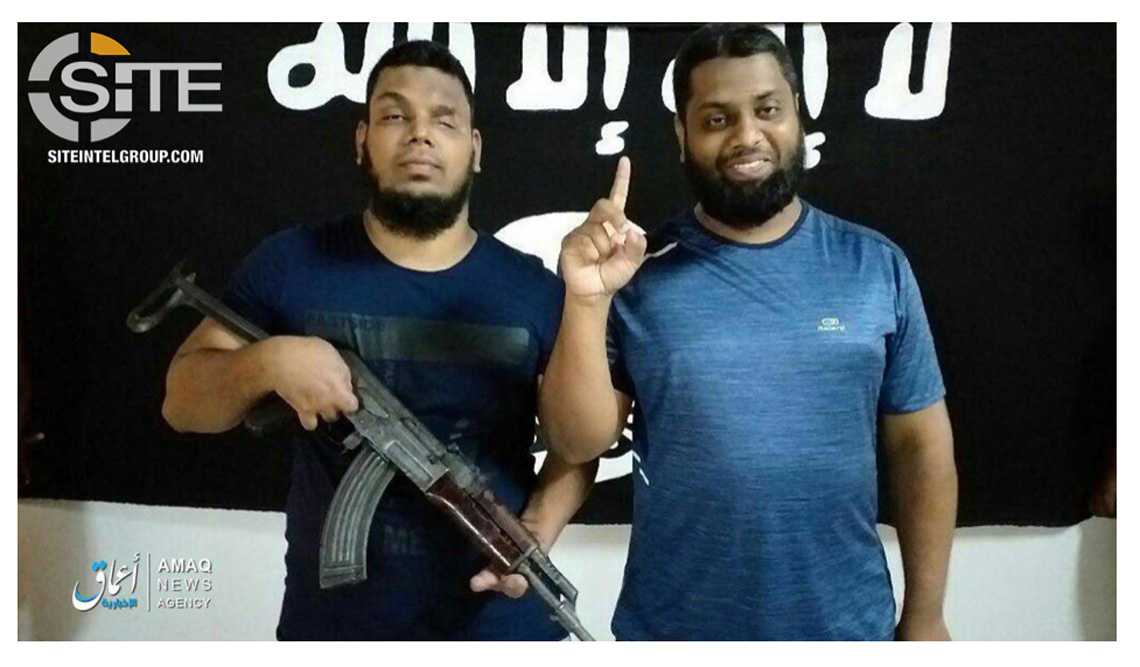
Zahran Hashim alias ‘Abu Ubaidah’ was one of the two suicide bombers who targeted Shangri-La Hotel at Galle Face. A media release by the Aamaq news agency on behalf of the Islamic State (IS) revealed that Zahran had adopted the nom de guerre “Abu Ubaidah” in the IS. Abu Ubaidah refers to Abu Ubaidah Amir ibn Abdillah ibn al-Jarra who was one of the ten prominent companions of Prophet Muhammad. He later served as a commander of the Rashidun Army under Caliph Umar. Abu Ubaidah, credited with several military victories, was hailed then as the “commander of all commanders.

Tragically the violence done has been perpetrated by a group of Sri Lankan Muslims in the name of the IS for what is said to be a Pan-Islamic cause. The misguided zeal and fanatical passion of Mohammed Zahran has caused great damage to the Muslim people of Sri Lanka. The Islamic State (IS) has only brought much death, destruction, displacement, misery and sorrow to many people of the Islamic faith living in different parts of the world. Sri Lanka is no exception.

D.B.S.Jeyaraj can be reached at dbsjeyaraj@yahoo.com

Posted in Uncategorized

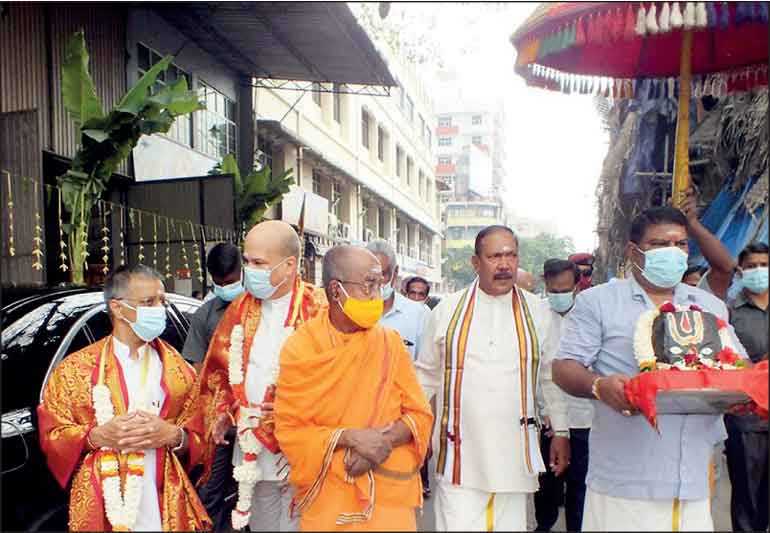
Sacred Monument from Seetha Amman Temple Nuwara Eliya to Ram Mandir, Ayodhya, India

The symbolic Sacred Monument of a stone carved from where Seetha was kept in captive by Ravana was handed over to High Commissioner Designate to New Delhi, India Milinda Moragoda by Member of Parliament and Seetha Amman Temple, Nuwara Eliya Trustee V. Radhakrishnan, Mayurapathi Amman Temple, Mayura Place, Colombo 6 Trustee S. Sundaralingam and E. Muthukrishnan, a leading businessman in Colombo, in the presence of High Commissioner of India in Sri Lanka Shri Gopal Baglay at the function held at Mayurapathi Amman Temple Hall on Thursday, 18 March.

GOPIO Founder President P.P. Devaraj, Deputy High Commissioner Designate to India Dr. V.K. Walson and Deputy High Commissioner Designate to India Dr. Venkatesh also attended this occasion.

The High Commissioner of India in Sri Lanka in his address said that he was very pleased with this endeavor and assured the fullest cooperation to ensure the Sacred Monument reached Ayodhya.

Devaraj, in his address thanked Milinda for having volunteering to undertake the delivery of the Sacred Monument to the Trustees of Ram Mandir, Ayodhya through the Sri Lankan High Commission in New Delhi. Devaraj also explained the long relationship India and Sri Lanka had and wish that relationship should be strengthened by this handing over of the symbolic Sacred Monument.

Radhakrishnan in his address said that Sri Lanka had historical relationship with India even during the days of Ramayana, for more than 3,000 years, and was privileged to send the Sacred Monument from his temple to Ram Mandir, Ayodhya, India.

Muthukrishnan in his address said that he was delighted that his dream which he had of sending a Sacred Monument from Sri Lanka to India, while watching the news item when Indian Prime Minister, Shri Narendra Modi, laying the foundation stone for the Ram Mandhir in Ayodhya in August 2020, has come true today and thanked all the dignitaries for their commitment and cooperation.

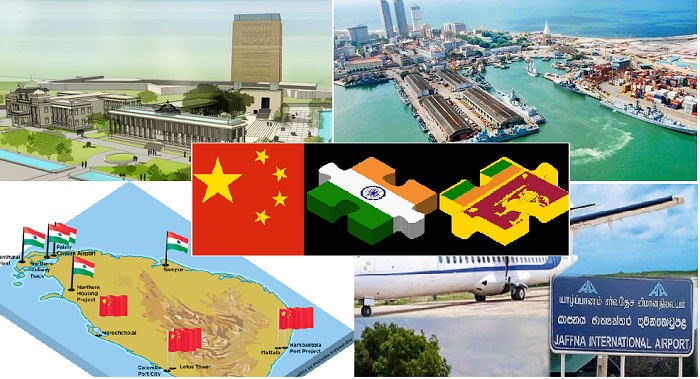
India’s China fears put to rest in Sri Lanka

In a stunning coincidence, a mere two weeks ahead of Indian Prime Minister Narendra Modi’s planned visit to neighboring Bangladesh, the Sri Lankan government on Monday issued a Letter of Intent to India’s Adani Ports and Special Economic Zones Ltd (APSEZ) to develop and operate the West Container Terminal (WCT) in Colombo.

To be sure, Sri Lanka’s Rajapaksa clan-led government took a calculated risk. If New Delhi were in Colombo’s shoes, it probably would have waited for another week to make up its mind before formalizing the audacious decision to invite a big Indian presence – for a couple of generations to come – right at the epicenter of the Sri Lankan dream to be “another Singapore.”

For, in another week, Colombo would know which way the Indians actually voted in Geneva when the crunch time came on the US-sponsored resolution at the UN Human Rights Council regarding the alleged war crimes committed during the last brutally violent phase of the struggle to vanquish the rebel Liberation Tigers of Tamil Eelam (LTTE).

In effect, Colombo has drawn New Delhi into a ring of long-term engagement that will be difficult not only for the Modi government, but for any future Indian government to shake off easily. Gopal Baglay, the Indian high commissioner to Colombo, has reportedly been touring the eastern and northern provinces of Sri Lanka to explain to the Tamil parties what is on the anvil in Geneva.

What brilliant geopolitical “outsourcing!” Simply put, Colombo expects that New Delhi will discourage Washington from undermining the stability of the island nation’s government by threatening to dispatch President Gotabaya Rajapaksa to The Hague to meet the same tragic fate as Slobodan Milošević, the last president of the former Yugoslavia – before it was carved up by the North Atlantic Treaty Organization (NATO) like a turkey on Thanksgiving Day.

The WCT project envisages that APSEZ will partner with John Keells Holdings PLC, Sri Lanka’s largest diversified conglomerate, and the Sri Lanka Ports Authority as a part of the consortium with a 51% majority shareholding. It will be developed on a build, operate and transfer (BOT) basis for a period of 35 years as a public-private partnership.

India’s biggest investment

The WCT will have a quay length of 1,400 meters and alongside depth of 20 meters, thereby making it a prime transshipment cargo destination to handle ultra-large container ships. The project cost is estimated at US$750 million as of now, which may rise.

The WCT will become, perhaps, the single biggest economic project ever executed by an Indian company in the country’s immediate neighborhood.

Indeed, the huge significance of the WCT for the region’s economy cannot be minimized. An APSEZ statement highlighted that the project is expected to boost the WCT’s container handling capacity and further consolidate Sri Lanka’s locational advantage as one of the world’s top strategic nodes along the busiest global transshipment route.

The Port of Colombo is already the most preferred regional hub for transshipment of Indian containers and mainline ship operators, with 45% of Colombo’s transshipment volumes either originating from or destined to an Adani-run port terminal in India.

Simply put, the Sri Lankan government is intertwining its economic prosperity with India’s massive market in an inseparable way. This takes the breath away, considering that it was only five years ago that New Delhi allegedly became messed up with an Anglo-American project to overthrow the established government in Colombo, which was, ironically, headed by the same leadership as today.

Interestingly, India had teamed up with its Quad partner Japan originally to bid (unsuccessfully) for the East Container Terminal project at Colombo Port. There was much-suppressed fury when the Sri Lankan government spurned the offer. Indian strategic analysts thereupon went overboard with the stupid hypothesis that Colombo had buckled under “Chinese pressure.”

But now, the WCT, a much bigger BOT project, has been offered to India on a platter with no strings attached. Colombo seems to prefer that the Indians shake off their Quad ally and undertake the WCT on its own steam.

Political stability

India is de facto becoming a stakeholder in the political stability of Sri Lanka. The bittersweet lesson of 2015 is that securing an easier, cost-effective, risk-free, predictable and durable outcome is possible with a pragmatic outlook and strategic patience.

No one in Delhi talks any more about the “China factor.” The paradox is that the WCT project will be adjacent to the massive Colombo Port project that Chinese companies are funding and executing currently.

Yet, apparently, there is no heartburn in Beijing either that the Adani Group is moving in as next-door neighbor to China’s state-run China Merchants Port Holdings Company Ltd in India’s back yard.

Arguably, Beijing knew about the WCT project, which has been under discussion for a while. But in its ingenuity and wisdom, Beijing assessed that it is just as well if India’s paranoia about China’s presence in Sri Lanka is set at rest.

The WCT saga is unfolding just before Prime Minister Modi’s visit to Bangladesh planned for March 26-27. Bangladesh is another example where it emerges that India doesn’t need to carry a Quad visiting card to build a partnership. The Sri Lankan experience nonetheless has great relevance to Bangladesh.

According to a new World Bank report titled “Connecting to Thrive: Challenges and Opportunities of Transport Integration in Eastern South Asia,” seamless transport connectivity between India and Bangladesh has the potential to increase national income by as much as 17% in Bangladesh and 8% in India.

The report says a 297% increase in Bangladesh’s exports to India and a 172% increase in India’s exports to Bangladesh could be within reach if only transport connectivity improves between the two countries and they were to sign a free-trade agreement.

Nobody’s puppets

From the perspective of diplomacy and foreign policy, the bottom line is that the Indian strategic community should remain self-assured that the political elites in the SAARC (South Asian Association for Regional Cooperation) capitals surrounding India are not only nobody’s puppets but have always regarded New Delhi as their most important partner.

That, in turn, puts the onus on India to act with maturity and a sense of responsibility and decorum.

Only with such a comfort level can India eschew its paranoia about the Chinese presence behind every South Asian bush or coconut tree and instead focus single-mindedly on the pursuit of its business interests optimally in regional capitals. Ideally, leave it to the Adani Group to reset the India-Sri Lanka relationship and put it on a realistic, pragmatic footing.

As for the strategists and think-tankers in Delhi, do not suspend rational thinking after reading the garbage disseminated by US propaganda outfits from time to time expanding on the Central Intelligence Agency’s decade-old hypothesis about a Chinese “string of pearls” around India’s delicate neck.

This article was produced in partnership by Indian Punchline and Globetrotter, which provided it to Asia Times.

M K Bhadrakumar is a former Indian diplomat.

Posted in Uncategorized

Pakistan to back Sri Lanka at UNHRC session

Pakistan has reiterated that it will vote in favour of Sri Lanka at the on-going 46th session of the United Nations Human Rights Council in Geneva.

Pakistan President Arif Alvi has made the revelation during a meeting with visiting Acting Chief of Defence Staff and Commander of the Army, General Shavendra Silva.

The Pakistan President has said Sri Lanka remains at the forefront as a country that successfully defeated terrorism.

Pakistan President Arif Alvi has also emphasised the importance of improving bilateral ties in areas of defence, education, environment, trade and commerce.

The Army Commander has meanwhile commended the support extended by the Pakistan military to Sri Lanka over the years.

General Shavendra Silva has noted that Pakistan supported Sri Lanka unconditionally during difficult times and remains a true friend of the nation.

General Shavendra Silva is currently in Pakistan to attend the Pakistan Day celebrations.

Posted in Uncategorized

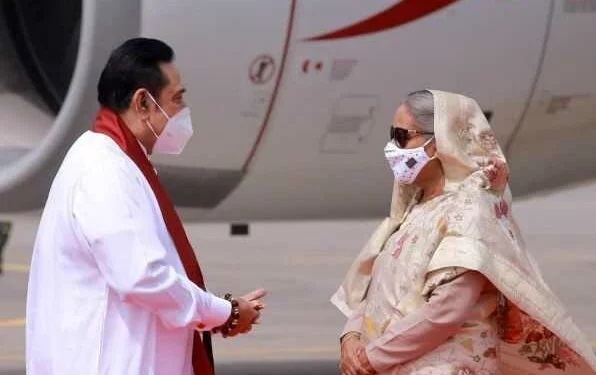
Lankan Prime Minister Mahinda Rajapaksa sought Bangladesh’s support in UNHRC

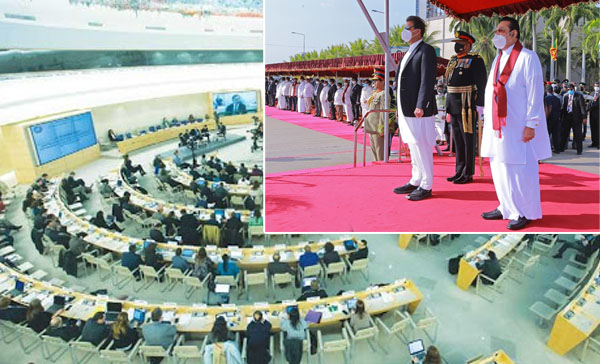
The Joint Communique issued at the end of the visit of Sri Lankan Prime Minister Mahinda Rajapaksa to Bangladesh on Saturday, speaks mainly of economic cooperation and the need to implement MoUs expeditiously. But it also says that Prime Minister Rajapaksa sought Bangladesh’s support in the UN Human Rights Council (UNHRC) where Sri Lanka is to face a hostile resolution next week.

Prime Minister Rajapaksa thanked Bangladesh Prime Minister Sheikh Hasina and the Government of Bangladesh for their steadfast support in combating terrorism in Sri Lanka, and in this context, for extending support to Sri Lanka at international fora, including the UN Human Rights Council (UNHRC) and other United Nations bodies and international organizations.

Rajapaksa expressed the hope that Bangladesh will continue to stand in solidarity with Sri Lanka at the ongoing 46th Session of the UNHRC in Geneva, the Joint Communique said.

Sheikh Hasina appreciated Rajapaksa’s pro-people leadership, initiatives to develop infrastructure and the vision to accomplish equitable socio-economic development of Sri Lanka. She also appreciated his government’s efforts towards national unity, reconciliation and development. Both the leaders appreciated the institutionalization of democracy in their respective countries.

Rajapaksa commended the tremendous socio-economic development in Bangladesh over the last decade and Bangladesh’s accomplishments in food self-sufficiency, poverty eradication, energy generation, agriculture, rural development, industrialization, service sector, ICT, digitalization, disaster management, women empowerment, climate change adaptation, infrastructure development, education, etc. under the visionary leadership of Prime Minister Sheikh Hasina.

Rohingyas’ Issue

Rajapaksa appreciated Hasina for her generosity in sheltering and providing humanitarian assistance to the 1.1 million forcibly displaced Rohingyas from the Rakhine State. Both Prime Ministers reiterated the importance of the voluntary, safe, speedy, dignified and sustainable return of Rohingyas to their homeland. While Sri Lanka provides home for displaced people in neighboring countries, Sri Lanka is committed to work in cooperation with UNHCR to address issues of concerns at all times, while abiding by all the approved legal frameworks and prescribed procedures. Bangladesh Prime Minister requested the Sri Lankan Prime Minister to support Bangladesh in resolving the Rohingya crisis.

Terrorism

Recognizing the threats to pluralistic societies arising from terrorism, violent extremism and radicalization, the two leaders pledged to work together to counteract such challenges in both countries, the region and beyond. To facilitate bilateral cooperation in addressing these complex, shared security challenges, they agreed to work towards setting up a joint institutional mechanism. Bangladesh Prime Minister offered to share Bangladesh’s experience in countering terrorism and violent extremism through a ‘whole-of-society’ approach.

Towards an FTA

Referring to the MoU on Economic Partnership signed between the two countries in moving towards a bilateral Free Trade Agreement (FTA), the two leaders reiterated their commitment for an early conclusion of FTA for harnessing the available synergies of bilateral trade which is far below the potential and not commensurate with the political relations. To this effect, the two leaders agreed to immediately complete the joint feasibility study on FTA.

Meanwhile, as the first step towards FTA they agreed to work for a bilateral Preferential Trade Agreement (PTA) beginning with a short list of products which could open up opportunities for an expanded trade, investments and tourism in future. Both sides agreed to hold the next meeting of the JWG on Trade at an early date.

Both sides agreed to undertake measures for trade facilitation including identification and removal of non-tariff barriers and simplification and harmonization of mutually recognized standards. Both sides also agreed to diversify the basket of tradable goods and look for innovative ways to add fresh impetus to trade and commercial relations. In this context, both sides underscored the need to reduce further the number of items under SAFTA from each other’s negative lists. In this context, emphasis was given on implementation of the Memorandum of Understanding between Bangladesh Standards and Testing Institution (BSTI) and the Sri Lanka Standards Institution (SLSI) on Technical Cooperation at an early date.

Pharma Sector

Noting the potential of mutually beneficial collaboration in Pharmaceutical sector, both Prime Ministers agreed to procure quality pharmaceutical products in greater quantities from Bangladesh and to facilitate, simplify and expedite the registration process for Bangladeshi pharmaceutical products.

Shipping

The two leaders underlined shipping as one of the key areas with potential for mutually beneficial cooperation which should result in improved connectivity and open up further opportunities for bilateral trade between the two countries and beyond. Observing that negotiations on the draft Coastal Shipping Agreement and the draft Standard Operating Procedure (SOP) on the Feeder Services between Chattogram and Colombo are at an advanced stage, they agreed to conclude these early.

Two-way Investments

Both sides noted with satisfaction that a number of Sri Lankan business entities have invested in Bangladesh to the mutual benefit of both parties. Bangladesh welcomed more Sri Lankan investment in sectors such as textiles, knitwear, linen, leather, pharmaceuticals, agro-based industries and steel & engineering, IT, education, health and hospitality etc. Sri Lanka Prime Minister invited the Bangladesh business sector to seek out new opportunities available in Sri Lanka in the sectors of pharmaceutical, value added apparel, food processing, logistics, tourism and IT enable services. Both leaders encouraged for early conclusion of the Bilateral Investment Promotion and Protection Agreement.

Joint Ventures

The two leaders recognized the potential for collaborative partnership between the private sectors of the two countries, particularly in high-end apparel and textiles, information and communication technology and related knowledge industry, jute and jute products, religious and eco-tourism, gems and jewelry and precious metal, agriculture and agro-processing, fisheries–livestock–dairy–horticulture, health management, infrastructure development and construction, pharmaceuticals, energy and power. They underlined that investments from both countries could benefit through increased joint ventures, public-private partnerships. They encouraged sectoral industries, industry associations, chambers, etc. of the two countries for greater dialogue towards beneficial and result-oriented collaboration, including in investments.

Garments

Given both the countries’ experiences in apparel industries, the two leaders stressed on the follow up on the implementation of the Memorandum of Understanding between Chattogram BGMEA Institute of Fashion and Technology and Sri Lanka Institute of Textile and Apparel.

The Sri Lankan Prime Minister thanked Bangladesh for hosting a sizable presence of Sri Lankan workers and professionals across manufacturing and service sectors making it one of the largest such presence of Sri Lankan professionals in the region. The two leaders agreed to work towards facilitating easy movement for the nationals of both countries.

In order to reap the benefits of wider economic partnership, the leaders also directed the respective concerned authorities for early conclusion of the agreement on customs cooperation between the two countries.

Special Economic Zones

Both sides agreed to facilitate mutually beneficial investments in respective Special Economic Zones, Industrial Parks, Hi-Tech Parks, etc. by utilizing the Memorandum of Understanding between the Bangladesh Investment Development Authority (BIDA) and the Board of Investment (BoI), Sri Lanka.

Two leaders agreed to request their respective Central Banks and other financial institutions to cooperate closely in investments, SWAPs and technical issues.

IT Services

Referring to the accomplishment of the two countries as top IT services outsourcing destinations in the world, the two leaders agreed to encourage the industries of the two countries to use the respective competitive advantages and expertise in the field to further expand market competitiveness. It was also agreed to hold the meeting of the JWG on ICT and related industry to facilitate greater collaboration and partnership between the relevant stakeholders of both countries.

The two sides noted with satisfaction the ongoing cooperation in the area of defense through exchange of training and goodwill visits of Navy ships of both the countries.

Education

Recognizing the potential of collaboration in higher education, the two leaders emphasized on the implementation of the Memorandum of Understanding between the University Grants Commissions of Bangladesh and Sri Lanka. Building on that, both sides agreed to facilitate closer cooperation between Sri Lanka and Bangladesh higher educational institutions.

Sri Lanka appreciated the scholarships offered and facilities extended by Bangladesh to Sri Lankan students in pursuing higher studies, including medical and dental studies in the Government Medical and Dental Colleges. Both the leaders directed relevant officials to expeditiously address the issue of recognition of the medical and dental colleges so that Sri Lankan students may utilize their academic qualifications in Sri Lanka. Bangladesh appreciated Sri Lanka’s support in training Bangladeshi nurses and other health professionals.

Blue Economy

Recognizing the potential for cooperation in maritime affairs and blue economy between the two countries, the two leaders agreed to work together to explore new areas and innovative means to tap opportunities in developing the Bay of Bengal into a region of peace, growth and prosperity. Bangladesh side expressed interest in obtaining support from Sri Lanka in deep sea fishing. Bangladesh Prime Minister appreciated Sri Lanka’s leadership role in the Indian Ocean Rim Association (IORA). Sri Lankan Prime Minister congratulated Bangladesh for taking over the Chairmanship of IORA for the term 2021-2023.

Air Connectivity

Recognizing the importance of enhanced air connectivity to promote people-to-people contact, tourism and trade, both sides agreed to initiate flight operation by Bangladesh carriers to Colombo at an early date to meet the growing demand of air traffic between the two countries.

Agriculture

Sri Lankan Prime Minister complemented Bangladesh’s advancement in agriculture sector and fresh-water fisheries and expressed interest to benefit from Bangladesh’s experience. They stressed on the implementation of the Memorandum of Understanding to foster comprehensive cooperation in agriculture through collaboration in agro-processing, agro-business, technological innovation, supply chain development involving private sector of the two countries in beneficial manner.

Bangladesh offered to host delegations from Sri Lanka for exposure visit to/training in agriculture extension, practices, innovation in rice farming and fresh-water fisheries in Bangladesh. Both sides emphasized on following up on the implementation of the Work Plan signed in 2011 between Bangladesh Agricultural Research Council (BARC) and Sri Lankan Council for Agricultural Research and Policy (SLCARP). Both sides also welcomed the renewal of the Memorandum of Understanding (MoU) between BARC and SLCARP and agreed for its expeditious implementation and follow up.

Bangladesh offered to share her knowledge, expertise and experience in disaster management and climate change adaptation capabilities with Sri Lanka.

Acknowledging growing interaction among the peoples of the two countries, the two leaders agreed to deepen people-to-people contact and cultural exchange particularly by utilizing the Cultural Exchange Program.

Tourism

Noting the significant potential in tourism particularly regional tourism, the two leaders agreed to work for concluding an MoU on Cooperation in Tourism involving tour operators and other related hospitality sector stakeholders of the two countries and with special focus on joint investment in tourism, marketing and promotional activities, Buddhist circuit and private sectors. In this context, Bangladesh proposed for signing of an MoU on Coastal Cruise Shipping for Tourism between the two countries.

The two leaders underlined the need for a prosperous, peaceful, stable, inclusive and sustainable South Asian region. They agreed to deepen cooperation in various sub-regional and regional cooperation mechanisms; and to work towards focused and result-oriented regional economic cooperation in BIMSTEC, SAARC and IORA.

Prime Minister Mahinda Rajapaksa conveyed Sri Lanka’s support to the candidate from Bangladesh for the position of Regional Director of the WHO SEARO.

Six MoUs Signed

a. Memorandum of Understanding (MoU) between the Government of the Democratic Socialist Republic of Sri Lanka and the Government of the People’s Republic of Bangladesh on Cooperation for Strengthening Youth Development.

b. Memorandum of Understanding (MoU) between Sri Lanka Council for Agricultural Research Policy and Bangladesh Agricultural Research Council.

c. Memorandum of Understanding between the Tertiary and Vocational Education Commission (TVEC) of the Democratic Socialist Republic of Sri Lanka and the Directorate of Technical Education (DTE), Ministry of Education of the People’s Republic of Bangladesh on Exchange of Documentation on Vocational Qualification.

d. Memorandum of Understanding between the Government of the Democratic Socialist Republic of Sri Lanka and the Government of the People’s Republic of Bangladesh for Co-operation of Training of Bangladesh Nurses and Healthcare Workers in Sri Lanka.

e. Memorandum of Understanding (MoU) for Cooperation between Lakshman Kadirgamar Institute of International Relations and Strategic Studies and Bangladesh Institute of International & Strategic Studies.

f. Cultural Exchange Programme between the Government of the People Republic of Bangladesh and the Government of the Democratic Socialist Republic of Sri Lanka for the Years 2021-2025.

The two leaders also directed the relevant offices of both sides to take immediate steps for due implementation and follow up on all bilateral instruments signed between the two countries.

Source:Newsin.Asia

Posted in Uncategorized

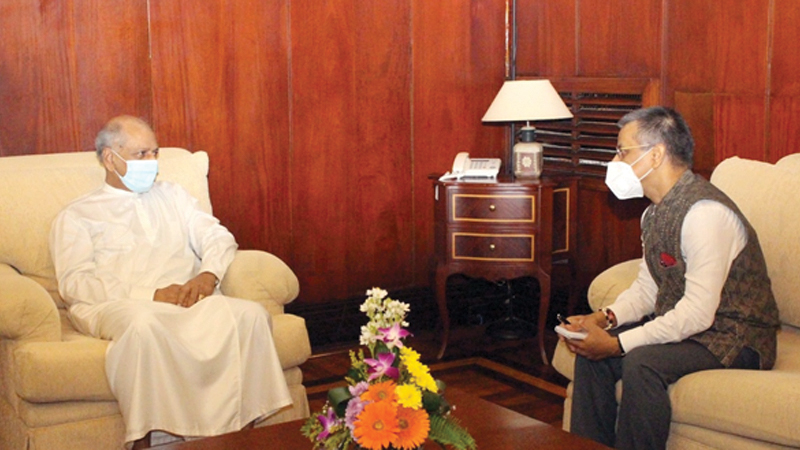
Indian HC calls on Foreign Minister; discusses provision of Indian vaccine

Indian High Commissioner to Sri Lanka Gopal Baglay called on Foreign Minister Dinesh Gunawardena at the Foreign Ministry yesterday.

The Ministry said a lengthy discussion was held on the control of the COVID-19 pandemic and the provision of the Indian vaccine to the people of both countries with special attention paid to the longstanding bilateral relations.

Posted in Uncategorized

Britain gives hope to families of Sri Lanka’s ‘disappeared’

The UK is pushing for action from the UN Human Rights council as Sri Lanka’s president seeks to quash investigations into alleged war crimes

It was almost midnight when the bark of the street dogs caused Aarvi Radhakrishnan* to wake with a jolt, alerting her to the four men in military combats outside.

Cradling guns over their shoulders, they entered Mrs Radhakrishnan’s home through an open window before inexplicably dragging away her terrified husband, Raghunandan*, in front of their three children and into the dark night.

“They pushed me to the ground and threatened to shoot me. They dragged my husband through our town and I tried to follow them, shouting for our neighbours but they were too afraid to help,” said Mrs Radhakrishnan, 45.

The long search for Raghunandan and 20,000 other Sri Lankans who remain missing after the country’s barbaric 26-year civil war has completely halted after the election of Gotabaya Rajapaksa, who is personally accused of an array of war crimes during the conflict, as President in 2019.

But, there may now be renewed hope for Mrs Radhakrishnan, after a United Kingdom-led council at the United Nations High Commission for Human Rights (OHCHR) proposed a new landmark resolution in February to investigate those responsible for atrocities.

The abduction of her fisherman husband in June 2008 was the fifth disappearance in the town that year, as the largely Sinhalese Sri Lankan Army accused townspeople of selling goods to the Tamil Tiger (LTTE) insurgents.

“Raghunandan never got involved in anything and therefore we had no reason to think he would be abducted, or else we would have sent him far away from our town,” bemoans Mrs Radhakrishnan.

Gotabaya Rajapaksa served as Defence Secretary during the last four years of the conflict – appointed by his brother Mahinda, who was then President – and is accused of overseeing some of the most horrific war crimes.

The rampaging, victorious Sri Lankan Army allegedly murdered up to 40,000 Tamil civilians, as graphically documented in Channel 4’s award-winning “Sri Lanka’s Killing Fields”, during the final few months of the conflict in 2009.

To the horror of Sri Lanka’s minorities, Gotabaya was elected as President himself in 2019, as the majority Sinhalese electorate prioritised security after the Easter Sunday suicide bombings that killed 269 people.

Gotabaya wasted no time in withdrawing Sri Lanka from an OHCHR resolution, agreed by the previous regime in 2015, that promised to establish a domestic mechanism to prosecute those who carried out atrocities.

He described the UN agreement as a “historic betrayal” and promised to protect the nation’s “war heroes” from prosecution, pardoning Sunil Ratnayake a sergeant convicted of the wartime killing of eight Tamil civilians, including children.

At least 28 former military personnel were then appointed to key government posts and the Office of Missing Persons, set up in 2017 to log disappearances, has been staffed with Gotabaya’s allies.

“Since the new government was elected, the few cases where police investigations had gone forward to identify and prosecute perpetrators are being stalled,” explains Meenakshi Ganguly, South Asia Director at Human Rights Watch.

“One senior police officer who led these investigations had to flee the country, while another was arrested, allegedly in a politically motivated case.”

Mrs Radhakrishnan had already searched fruitlessly for her husband for years, arranging meetings with local police officers, human rights activists, and even her local priest. But, now, she says any remaining channels of investigation are being exhausted.

“During the previous government we could demonstrate, protest and speak to the authorities about our situation but now there would be a huge drama,” said Mrs Radhakrishnan.

In particular, members of the Sri Lankan civil society which previously assisted families of the disappeared have suddenly found themselves under intense scrutiny from Gotabaya’s regime.

In January, more than 40 NGOs reported to the UN that they were receiving harassment from intelligence officials, including regular visits to their homes, anonymous threats, and having their movements tracked.

“Every minute I do this job, I think that there is no real assurance for my life. When I go out, I can’t assure my family whether I will return home, this is how much fear we have these days,” one Sri Lankan activist told the Daily Telegraph.

In 2011, Mrs Radhakrishnan and 200 women formed an activist group to search for their missing relatives but this has ceased to operate following Gotabaya’s election after members were put under surveillance and their spokesperson threatened with arrest.

A human rights lawyer assisting family members of the disappeared said not one abduction case had been resolved since Gotabaya’s election, with judges replaced with regime allies.

“Lawyers now face a host of issues including securing the safety and security of their clients, enduring and mitigating surveillance and harassment from the state and fellow colleagues who accuse us of working for NGOs, and lastly, it is very hard to access the information we need for cases,” said the human rights lawyer.

Infuriated by Gotabaya’s brazen attempts to protect soldiers under his command during the civil war, the OHCHR is expected to pass a landmark resolution on March 22 to begin the collection of evidence related to atrocities committed in Sri Lanka.

“The victims from all communities of Sri Lanka’s brutal civil war are a decade later still awaiting justice for loved ones murdered or missing, and dealing with the repercussions of violence and conflict,” said Lord Ahmad, the Minister of State for South Asia and the Commonwealth.

“That is why the UK is seeking a new resolution at the UN Human Rights Council to call on Sri Lanka to hold perpetrators of human rights violations to account, improve human rights and deliver justice for the war’s victims.”

If the Sri Lankan Government still then refuses to investigate war crimes itself, the UN could establish an international, unilateral mechanism to assist in bringing the perpetrators to justice, as in the aftermath of the Syrian conflict.

“Before this announcement, various politicians had promised to find my husband but it had been unbearably difficult, I had lost hope,” said Mrs Radhakrishnan, through tears.

“I need to know whether he is alive or not, I just need an answer, I have been through unbearable difficulties.”

*Some names have been changed to protect the identity of interviewees

Source:Telegraph.co.uk

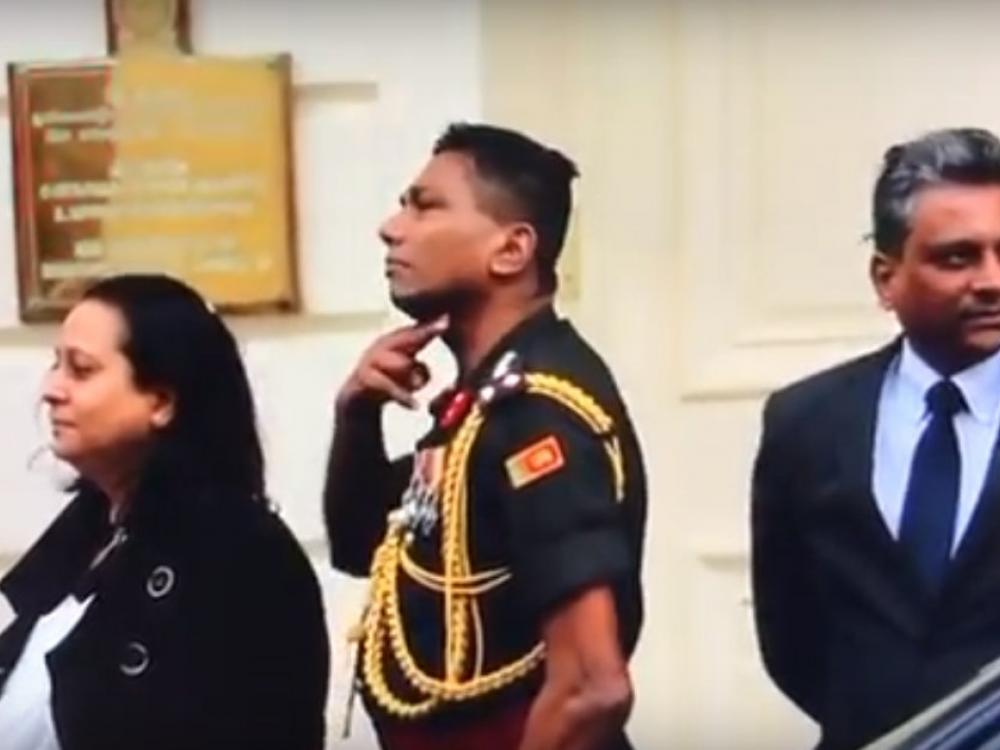
High Court overturns decision to fine Sri Lankan soldier for throat-cutting gesture

THE High Court has ruled in favour of a senior Sri Lankan military officer who was found guilty of public order offences for making slit-throat gestures at protesters in London.

Brigadier Priyanka Fernando was convicted in 2019 and ordered to pay more than £4,000 in compensation and costs after he was filmed making threatening gestures towards Tamil protesters outside the Sri Lankan high commission in 2018.

Three of the protesters, who brought the case, said that the actions of the then military attache had caused them alarm, harassment and distress.

The senior district judge at Westminster magistrates’ court also found that Brig Fernando’s actions were not protected by diplomatic immunity because they did not form part of his duties.

But the High Court overturned the decision today following an appeal by the Sri Lankan soldier, ruling that his actions were covered by diplomatic immunity.

Handing down the court’s decision, Sir Julian Flaux and Mrs Justice McGowan ruled: “We consider that the acts in question in the present case were ones which were performed by the appellant in the exercise of his functions as a member of the mission and thus qua diplomat.

“They did not somehow lose that quality and become acts performed in a personal capacity merely because they were criminal.”

Peter Carter QC, acting for Majuran Sathananthan, one of the Tamil protesters who brought the orginal case, had argued that Brig Fernando’s actions were performed in a personal capacity.

“We are extremely disappointed by this decision,” said solicitor Paul Heron, of the Public Interest Law Centre, who represented the three protesters.

“We would not expect a diplomat to be carrying out his official duties by threatening peaceful protesters.

“We will be reviewing the case in detail, consulting with our client and considering appeal options.”

Source:https:morningstaronline.co.uk

Rupee dip triggers political standoff, policy response

Government and main Opposition politicians traded points over rupee depreciation yesterday, in the backdrop of the Central Bank suspending the requirement for licensed banks to sell 10% of worker remittances and 50% of export earnings to the monetary authority and stopping the purchase of Sri Lanka Development Bonds as part of a multi-pronged effort to stabilise the currency.

Issuing two circulars on Wednesday, the Central Bank suspended the requirement imposed last month making it mandatory for licensed commercial banks to sell 10% of converted worker remittances to the monetary authority. It did the same for the regulation requiring 50% of export earnings to be sold to the Central Bank.

Both suspensions will be implemented until further notice. On Thursday, an additional circular informed licensed commercial banks and National Savings Bank to suspend the purchase of Sri Lanka International Sovereign Bonds with effect from 23 March until 9 April.

“The Central Bank of Sri Lanka with a view to easing pressure on the exchange rate and considering the substantial amount of possible/potential outflow of foreign exchange by banks and its impact on banks’ risk management, licensed commercial banks and National Savings Bank are hereby informed to suspend the purchase of Sri Lanka International Sovereign Bonds with effect from 23 March 2021 until 09 April 2021,” a directive issued by the Governor of the Central Bank said.

The Central Bank had earlier said the rupee recorded a depreciation of 4.9% against the dollar till 10 March. But that was exacerbated this week after the rupee closed at Rs. 202/203 to the dollar in the one-week forward market on Wednesday. It managed to do slightly better yesterday closing at 198.50/199 levels, according to dealers. The bond yields remained unchanged.

Weighing in on the depreciation issue yesterday, State Minister for Money, Capital Markets and State Enterprise Reforms Ajith Nivard Cabraal was confident fresh forex flows are around the corner and backed Government policies for creating the right environment to attract them.

“The right #policies are now in place for non-debt #forex inflows. It’s only a matter of time before the #Rupee appreciation process starts. #Businesses and #industries must prepare for that transformation. @CBSL #SriLanka #debt #GOSL #economicrecoveryplan,” the State Minister tweeted.

However, there was a swift rebuttal from Samagi Jana Balawegaya (SJB) and former State Minister of Finance Eran Wickramaratne, who faulted the Government for triggering depreciation by increasing market liquidity levels. He also pointed out that market sentiment was low due to fast shrinking reserves, which the Government had so far failed to boost and warned that unless more clarity is provided on debt sustainability, the rupee could continue its decline. Sri Lanka’s reserves reached $ 4.5 billion in February.

Wickramaratne criticised the Government for pushing the Central Bank to purchase large amounts of Government Securities to finance a high Budget deficit, resulting in the release of Rs. 700 billion into the market. He argued that this high a level of liquidity was causing the rupee to depreciate. The Central Bank has maintained a contradictory stance, pointing out that due to import restrictions, especially on vehicles, demand is being kept subdued and liquidity was not driving depletion of reserves.

“There is a big problem with policy making and management of the economy,” Wickramaratne told reporters at a press conference. “The continuation of the Government’s current fiscal policy will lead to a greater crisis. Printing money is one thing. But if debt servicing is not done properly, it will be disastrous for Sri Lanka.

“The 17 March treasury bond auction is a good example. There wasn’t a demand for Treasury Bills even with a three-month maturity. This is the state of affairs.”

Analysts who spoke to the Daily FT acknowledged pinning down the exact reason for rupee depreciation was tricky but conceded that market sentiment could be under additional pressure due to two large debt repayments in May and July. On 1 May the Central Bank will have to settle an estimated $ 670 million in Sri Lanka Development Bonds, about half what is due for the year. This will be closely followed by a $ 1 billion bond repayment in mid-July.

“With limited reserves investors are concerned about how these repayments will be met. This is a key question asked by many foreign investors who call us. Exports also tend to be lower in April due to New Year holidays, and imports tend to increase ahead of the festival period, sometimes creating currency pressures. But these dynamics may have changed due to the pandemic,” opined ICRA Lanka Head of Research and Business Development Lalinda Sugathadasa.

“It is hard to give a specific reason, but sentiment definitely plays a huge role.”

Analysts also agreed that a significant inflow of forex is needed to reverse depreciation but suggested that the recent $ 1.5 billion swap with China was unlikely to meet this requirement as it was a local currency facility and not a dollar one.

“Since the swap is in Yuan the Government can likely only draw down to pay import bills. This is useful since China is one of our biggest import destinations with Sri Lanka regularly importing about $ 3.5-4 billion in goods. But it will not top up reserves and that is what Sri Lanka really needs,” a well-known economist told Daily FT on conditions of anonymity.

So far, the Central Bank’s active intervention in the domestic foreign exchange market through supply of foreign exchange and sell/buy swaps with local commercial banks has contributed to enhancing the foreign exchange liquidity in the market. The monetary authority supplied $ 72 million, on a net basis, to the domestic foreign exchange market in January.

Posted in Uncategorized