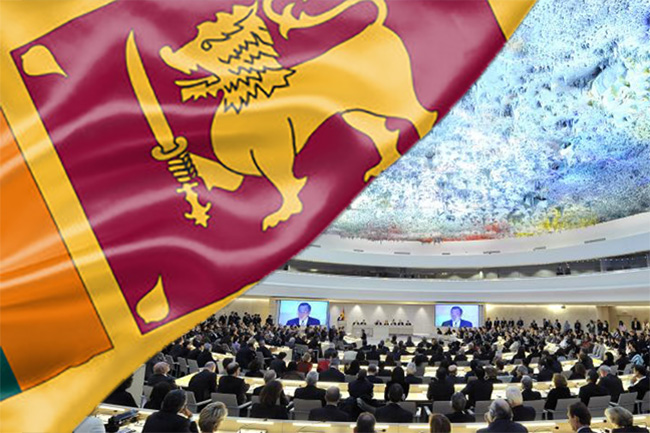
Sri Lanka accuses UK, Canada and Germany of concealing the truth

Sri Lanka has accused the United Kingdom, Canada and Germany of concealing the truth.

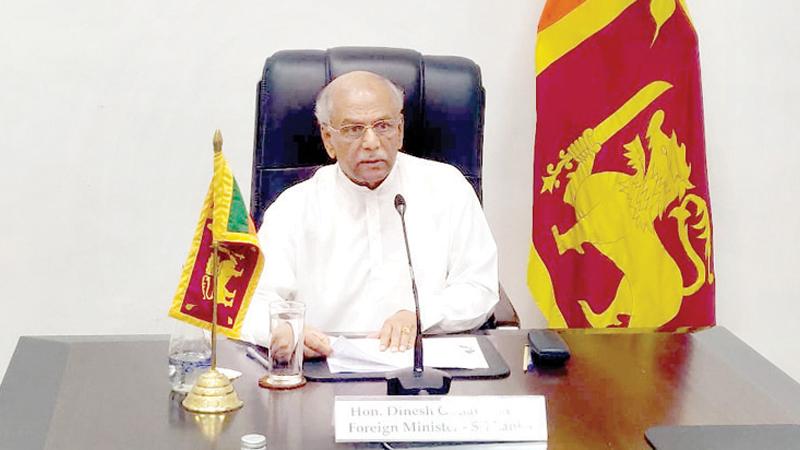
Foreign Minister Dinesh Gunawardena said that the allegations of human rights abuses in Sri Lanka by several countries including the UK, Canada and Germany is an action taken for political purposes, by concealing the truth.

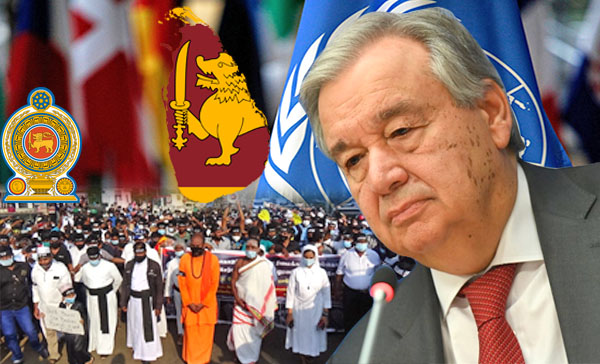
A vote is scheduled to be held on 22 March 2021 on the allegations made by several countries against Sri Lanka, at the 46th session of the UN Human Rights Council (UNHRC) in Geneva.

Responding to a question raised by journalists at the Foreign Ministry in this regard today, the Minister pointed out that it is not the responsibility of an internationally recognized Human Rights Council to accuse or take a vote on the internal affairs of our country.

“Over the years, various allegations have been levelled against our country, alleging human rights abuses. We have been cautious about this. After our Government was elected, a Presidential Commission has been appointed to investigate human rights allegations,” he said.

The Minister said that funds have been allocated from the budget to activate the Office on Missing Persons.

He said that while the present Government was taking a number of such positive steps, it was not fair to ignore it and accuse Sri Lanka repeatedly in various manners at the Human Rights Council in Geneva.

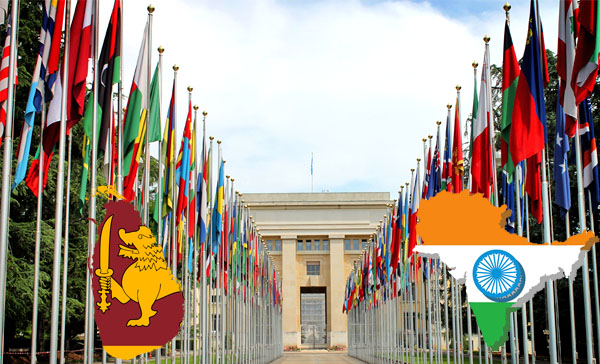
“We try to defeat the false accusations levelled against us. Many friendly countries have joined hands with us in this. We hope that India too, will support us this time.”, said Minister Gunawardena.

The resolution on Sri Lanka on which a vote will be taken on 22 March 2021 was presented to the Council by the Core Group on Sri Lanka, which includes the United Kingdom, Canada and Germany.

State intelligence chief denies meeting Easter bomber in Malaysia

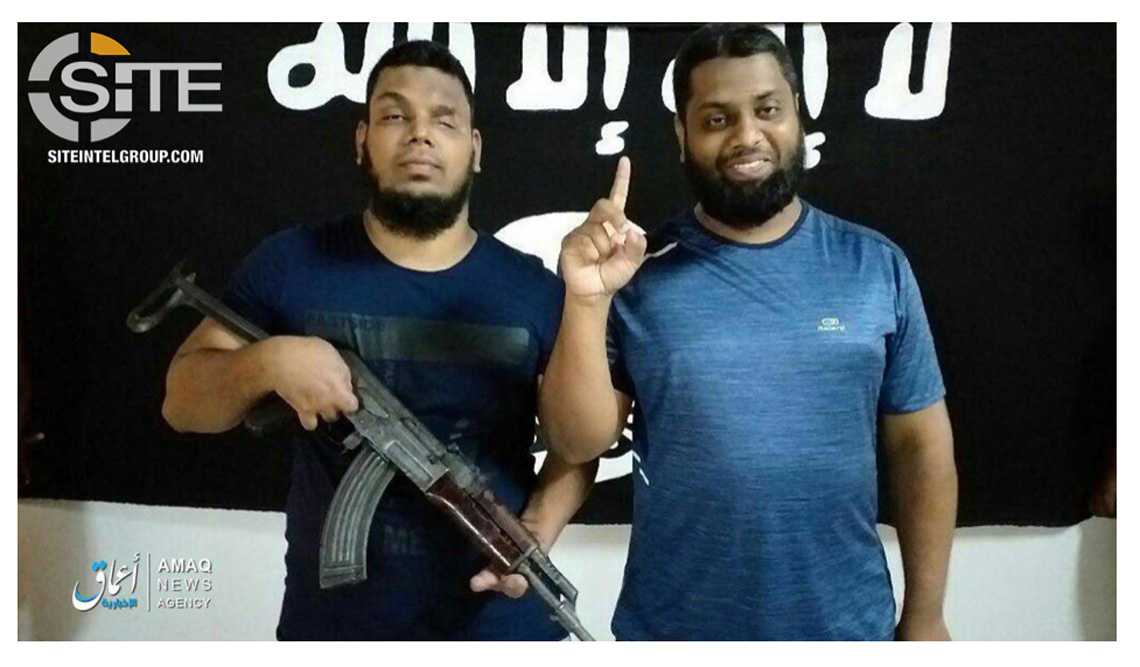
State Intelligence Service (SIS) Director, Major General Suresh Sallay has denied having links with the mastermind of the Easter Sunday attacks, Zahran Hashim.

He says he had not met Zahran Hashim in Malaysia, as claimed by an opposition Parliamentarian.

Major General Suresh Sallay has filed a complaint with the Criminal Investigations Department (CID) against Parliamentarian Nalin Bandara Jayamaha over the allegations.

Nalin Bandara had made the allegations at a media conference in Colombo.

The Parliamentarian had also claimed that Suresh Sallay had cleared the way for Zahran Hashim to travel to Malaysia, Indonesia and India before the 2019 Easter bombings in Sri Lanka.

Major General Suresh Sallay has called on the CID to investigate the claims made by the parliamentarian.

He says the claims are false and has an impact on his family life and the State Intelligence Service.

South African Muslim bodies seek intervention over burqa ban in Sri Lanka

South African Muslim organisations have called on the country’s foreign minister to intervene in the proposed Sri Lankan ban on the burqa and closure of hundreds of Islamic schools.

This followed the announcement by Sri Lanka”s minister for public security, Sarath Weerasekera, during the weekend that his country would ban the traditional full-face covering worn by some Muslim women because it posed a threat to national security.

This was quickly followed by a statement from the Sri Lankan foreign ministry, which said a decision would only be taken on the proposal after consultations and further discussion.

The United Ulama Council of South Africa (UUCSA) has now asked South Africa’s Minister of International Relations and Co-operation Naledi Pandor to intervene in the matter.

UUCSA had earlier also called for such intervention when Sri Lanka decided that Muslims should also be cremated rather than buried, in defiance of Muslim requirements, which prohibit cremation. The cremation ruling was rescinded later.

“The UUCSA will once again appeal to the Department of International Relations and Co-operation to engage with its counterparts to stop state-sanctioned Islamophobia,” Yusuf Patel, the secretary-general of UUCSA, told the weekly Post.

“Muslims in Sri Lanka have become targets of virulent hate speech in mainstream and social media. The ban on the burqa and the closure of schools are meant to appease Sri Lanka’s Buddhist majority, who thrive on entrenching sectarian and religious divides through hate propaganda,” Patel said.

Adding its voice to the call for action against Sri Lanka, the South African Muslim Network (Samnet) said it was hypocritical of the Sri Lankan government to target Islamic schools.

“There are other religious groups who also have institutions that teach their religious teachings, but there has been no attempt to target those,” Samnet chairperson Dr Faisal Suliman told the weekly.

“Such moves like this, on the Muslim community, will likely give rise to radicalism, fundamentalism and underground movements, which will in fact be a greater source of insecurity than working with religious schools, interacting with them and looking at the syllabi taught. By doing this, they will be ensuring that there are standards and uniformity of the teachings.”

Suliman said Samnet would express its concerns to both the local foreign ministry as well as the Sri Lankan embassy in South Africa. (PTI)

Posted in Uncategorized

Harvard Law Student Coordinates Open Letter to United Nations Calling for Human Rights Accountability in Sri Lanka

Sondra R. P. Anton, a second-year student at Harvard Law School, has coordinated an open letter to the United Nations calling on the Human Rights Council to create a new resolution to promote accountability for human rights violations in Sri Lanka.

The open letter, which was sent in February, argues that “prospects for domestic justice and accountability efforts in Sri Lanka have dimmed entirely” since the election of Gotabaya Rajapaksa to the Sri Lankan presidency in November 2019.

The letter was signed by 22 organizations, including Harvard Law School’s International Human Rights Clinic, the Center for Justice and Accountability, Human Rights Watch, and the World Organization Against Torture.

Rajapaksa formerly served as secretary to the ministry of defense in the government led by his brother, former president Mahinda Rajapaksa, from 2005 to 2015. During this period, many critics of the Sri Lankan government disappeared or were tortured or murdered.

Sri Lanka’s 26-year-long civil war ended in May 2009 with the deaths of tens of thousands of Tamil civilians in the final months alone, many of them caused by government shelling. The UN and other human rights groups have called for inquiries into alleged war crimes and crimes against humanity committed by Gotabaya Rajapaksa during this period.

Rajapaksa’s election to the presidency has ignited fears about the regression of human rights in Sri Lanka. In February 2020, the new administration announced its withdrawal from a landmark resolution that promoted human rights — a move the UN High Commissioner for Human Rights said demonstrated the Sri Lankan government’s “inability and unwillingness” to be held accountable for human rights violations.

Anton, who worked closely with the Law School’s International Human Rights Clinic during the letter-writing process, said this is “a really pivotal time” for Sri Lanka, and that the country is “one of the world’s biggest failures” in recent history.

“There’s this assumption that with the end of war comes peace, and that could not be further from the truth in Sri Lanka,” Anton said.

Tyler Giannini, a co-director of the Law School’s International Human Rights Clinic, said the letter “fits into a broader effort” to advocate for increased accountability in Sri Lanka, which has been perpetrating decades-long human rights abuses that culminated in the killing of tens of thousands of civilians in 2009.

“There’s really two reasons to do this letter,” Giannini said. “To make sure that accountability doesn’t go off the international agenda, and also to prevent future abuses, because there’s heightened risks of things deteriorating pretty badly in the future under this new regime.”

Thomas Becker, a signatory of the letter and a former clinician at the Law School, said he believes the growing wave of ethno-nationalism and persecution of minorities is influenced by a lack of accountability in places across the globe, including Sri Lanka.

“Impunity breeds impunity and justice breeds justice,” Becker said.

James L. Cavallaro ’84, the executive director of the University Network for Human Rights and former professor at the Law School, said it is “important that the UN re-engage” with efforts to hold Sri Lanka accountable.

“This is a space where a state like Sri Lanka is susceptible to international pressure, and it’s sort of fallen off the international radar screen,” Cavallaro said. “People have sort of moved on in a way that is not healthy, in a way that is not good for international law, for accountability.”

Nushin Sarkarati, senior staff attorney for the Center for Justice and Accountability, said it is “up to the member states now” to determine whether the world will hold Sri Lanka accountable.

“I hope they see that there is a groundswell of support for a new resolution,” Sarkarati said. “We want them to recognize that various NGOs are all supportive of this action moving forward and it’s up to them to now vote in favor.”

Anton wrote in an emailed statement that, as the daughter of an Ashkenazi Jewish mother and a Tamil father, she has witnessed how “the legacy of mass atrocity is passed down through generations” and the “indelible mark that impunity leaves on survivor communities.”

“Witnessing the pain and reliving of trauma that international inaction has brought on my own family and community has made this type of work even more frustrating at times,” Anton wrote. “But it also serves as a constant reminder that regardless of what happens this month in Geneva, and no matter how much time has passed, justice matters.”

—Staff writer Emmy M. Cho can be reached at emmy.cho@thecrimson.com.

India Vote Crucial for Sri Lanka at UNHRC But No Guarantee Yet

In his recent telephone conversation with the Sri Lankan President Gotabaya Rajapakasa, Indian Prime Minister Narendra Modi has assured that India “will not do any injustice to Sri Lanka,” says the Sri Lankan Foreign Secretary Adm.Prof.Jayanath Colombage.

He denied a report in the State-owned Daily News which quoted him as saying that India had assured that it would “support” Sri Lanka, and “protect the country’s sovereignty during the UNHRC sessions.”

The paper further quoted the Foreign Secretary as saying: “Being the super power they (India) are, Sri Lanka greatly appreciates their position.” The Foreign Secretary was speaking at the Third Digital Dialogue hosted by the Media Center for National Development, the paper said.

Clarifying the position, Colombage said that in his recent telephone conversation with the Sri Lankan President Gotabaya Rajapakasa, Indian Prime Minister Narendra Modi, the latter assured that India “will not do any injustice to Sri Lanka.”

India’s support is critical for Sri Lanka as the line-up against it in the 47-member UN Human Rights Council (UNHRC) on the resolution on human rights violation is formidable. The hostile resolution calling for intervention and sanctions is likely to be carried.

While China, Pakistan and Russia are firm supporters of Sri Lanka, and the Sri Lankan Foreign Minister Dinesh Gunawardena claims that the Asian bloc will support his country, it appears that there is no such firm commitment on their part.

India has taken a stand that does not back Sri Lanka but is not supportive either. Its Representative, Indra Mani Pandey ,raised the issue of power devolution to the provinces under the 13th.Amendment and called for its implementation if there is to be ethnic reconciliation and national unity in Sri Lanka.

However, considering the precarious position Sri Lanka will be in, when the noose tightens in Geneva and the resolution comes for a vote, Sri Lankan opinion makers earnestly hope India would commit itself in its favor and lobby for it among the Afro-Asian countries even if only in the eleventh hour.

Conversations with Sri Lankans reveal that they would like India to uphold Prime Minister Narendra Modi’s “Neighborhood First” policy and come to Lanka’s aid when it needs it most. They recall that India has time and again reiterated its historical, cultural and religious ties with Sri Lanka and its commitment to the maintenance of its sovereignty and say that this is the time to demonstrate it.

It is also pointed out that Sri Lanka has cooperated with India on maritime security by becoming part of the India-inspired Indian Ocean Maritime Security architecture and setting up a Secretariat for it in Colombo.

Sri Lanka has offered the West Container Terminal project in Colombo port in lieu of the East Terminal. ECT could not be given to India or any foreign entity because of nationalist opposition. Sri Lanka suspended the solar power projects in the North which were earlier given to a Chinese company. Sri Lanka has also indicated that it will hold provincial council elections soon.

But politically aware Sri Lankans also realize that India has its concerns and grievances vis-à-vis Sri Lanka.

India has a long-standing commitment to the Tamil minority in the island, which has huge support among the Tamils of Tamil Nadu. In the past, India had had to intervene in Sri Lanka substantially because of domestic pressure from Tamil Nadu. And Tamil Nadu is going for State Assembly elections in April in which Narendra Modi’s Bharatiya Janata Party (BJP) is contesting as an ally of the ruling All Anna Dravida Munetra Kazhagam (AIADMK).

If the BJP gets a decent number of seats in the Assembly it will be a huge step forward for it as it will mean that Tamil Nadu is coming under the sway of Hindu nationalism, the BJP’s stock-in-trade.

Secondly, devolution of power to elected Provincial Councils in Sri Lanka is India’s brainchild. India is interested in its survival. The system stems from the July 1987 India-Sri Lanka Accord. Despite stiff opposition, the 13 th.Amendment (13A) creating elected provincial councils with a measure of autonomy, was passed by the Lankan parliament and has been in operation till recently. The councils have not had elections to enable the government to change the election law and go for a fresh delimitation of constituencies.

However the utterances of some key Lankan Ministers calling for the repeal of the 13A has raised an alarm in New Delhi. The Gotabaya Rajapaksa government is committed to bringing about a new constitution, where provincial autonomy might be pruned in favor of greater centralization, it is feared.

It is based on these apprehensions that Prime Minister Modi has repeatedly called for a full implementation of the 13A – which was reiterated by the Indian envoy in UNHRC.

Lankan President Gotabaya Rajapaksa has now said that Provincial Council elections will be held in June. But the legal decks have to be cleared first. The government has to decide whether it will go by the old electoral law and old delimitation of constituencies or have a new legal framework. According to reports efforts are being made to speed up the legal deck-clearing.

India has still not gotten over the disappointment over its removal from the project to build the East Container Terminal in Colombo port after signing an MOU on it in 2019. Piqued by this, the Indian government did not take the alternative offer of the West Container Terminal leaving it to be negotiated by the Adanis, a private Indian port operators’ company.

However, despite irritants and hiccups, India and Sri Lanka continue to engage each other in various fields. India was the principal foreign participant in the event related to the 70 th. Anniversary of the Sri Lankan Air Force. It sent its indigenous fighter aircraft Tejas and its aerobatic teams to give stunning displays for three days. India is also the only supplier of COVID-19 vaccines to date.

Recently, it gave LKR 22 million worth of teaching equipment to the Sri Lanka Maritime Naval Academy at Trincomalee and inaugurated the construction of 114 housing units for Catholic pilgrims who come to the historic Madhu Church in North Sri Lanka.

Source:THE CITIZEN

Posted in Uncategorized

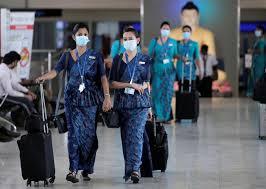
Revised quarantine guidelines issued for arrivals from overseas

Director-General of Health Services has issued revised COVID-19 quarantine guidelines for all incoming passengers and tourists arriving in Sri Lanka from overseas.

The guidelines noted that they should receive the approval to enter the country from the Foreign Affairs Ministry and other relevant authorities or from Sri Lanka Tourism, respectively.

All travelers should submit the filled Health Declaration Form to the staff of Airport Health Office at Health Counters at the arriving airport, it read further.

Key points in the guidelines for Sri Lankan citizens/dual citizens and foreign nationals:

• For passengers who have received the recommended doses of COVID-19 vaccine:

– They should arrive in the country after two weeks of completion of COVID-19 vaccination.

– Upon arrival, they should produce the original copy of the vaccination certificate together with a certified copy of English language translation if the certificate is not in English language, to the Airport Health Officer.

– They will be referred to a PCR test within 24 hours upon arrival (Day One) from a private or state sector laboratory approved by the Health Ministry.

– Once the test report is available, they will be released from the quarantine hotel or centre by issuing a discharge document mentioning the date of PCR sample collection and PCR test result.

– They should undergo repeat PCR on Day Seven after arrival to Sri Lanka from a private or state sector laboratory approved by the Health Ministry.

• For passengers who have not received the COVID vaccine or not completed the recommended doses of vaccination and arrive in Sri Lanka within less than two weeks of vaccination:

– If they are undergoing hotel quarantine (single or shared by family members), they will be referred to PCR testing on Day One and Day Seven.

– However, if they are under quarantine at a centre, they will be subjected to PCR testing on Day One and Day Ten.

– If both tests are negative, they will be released from the quarantine procedure, following the second PCR test.

Upon being discharged, all arrivals are required to arrange their own transport method to go to their respective residences from the quarantine hotel or centre.

Immediately upon arriving home, they should inform the area Medical Officer of Health (MOH) by telephone or email and produce a discharge document issued by the designated authority at the quarantine hotel or centre.

After informing the area MOH, the travellers, who have received both vaccine doses and obtained a negative PCR report on Day One of arrival, are not required to quarantine further.

For those who have not received the recommended vaccine doses, a balance home-quarantine period (out of 14 days) under the supervision of area MOH, is mandatory.

All PCR test results must be informed to the MOH attached to their respective residential area. If one of the PCR test results is positive, they should inform the MOH, and follow the treatment protocol of Health Ministry.

If febrile or display respiratory symptoms of COVID- 19 during the quarantine period, they should inform the relevant MOH.

In the meantime, separate guidelines issued for tourists arriving in the country have also been revised by the Director-General of Health Services.

Posted in Uncategorized

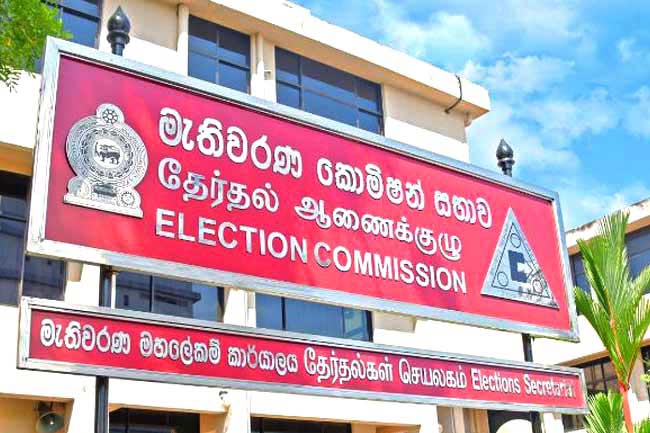
No more political parties based on racial & religious grounds: NEC

The National Election Commission (NEC) has drawn its attention to STOP the registration of political parties that are based on different racial and religious ideologies in the future, the Commission’s top official said.

The National Elections Commission (NEC) is currently holding discussions in this regard, Attorney-at-Law Nimal Punchihewa, the Chairman of the National Elections Commission told News 1st on Thursday (Mar. 18).

According to Punchihewa, the focus is also on changing the names of already registered political parties on the basis of race and religion.

Such political parties will be allocated a reasonable time period to change the existing party name nominated on the basis of various ethnicities and religions, the NEC Chairman pointed out.

The attention was drawn to this matter, taking into account the recommendations of several commission reports including the report of the Presidential Commission of Inquiry into the 2019 April 21 Attacks, pertaining to the registration of political parties on national and religious grounds, the Secretary of the National Elections Commission told News 1st.

Posted in Uncategorized

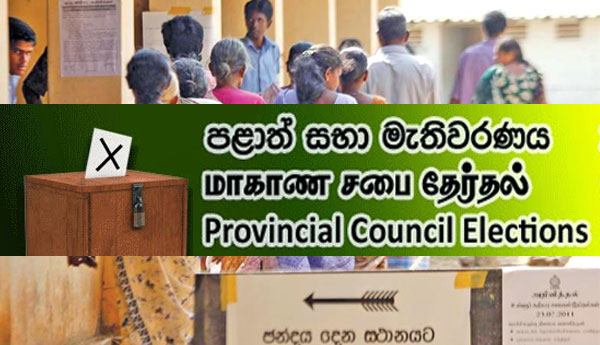
Key political parties contradict on PC election

The upcoming Provincial Council (PC) Election should be held according to the new draft bill tabled in parliament, the Sri Lanka Freedom Party (SLFP) said.

A special Central Working Committee meeting will be held on 30th March to hold further discussions regarding the matter, State Minister Dayasiri Jayasekara, the SLFP General Secretary told News 1st.

Meanwhile, the Sri Lanka Podujana Peramuna (SLPP) is of the view that the election should be held expeditiously, regardless of whether it is held according to the new or old system, in order to activate the operations of provincial councils, which are currently functioning without public representatives.

The party agrees with any decision taken by the Cabinet of Ministers with regard to the method of holding the Provincial Council Election, Sagara Kariyawasam, the General Secretary of the SLPP told News 1st.

Commenting on the same matter, the Samagi Jana Balagavega (SJB) said the majority opinion of the party is that the Provincial Council Election should be held according to the old system.

The party will hold further discussions in this regard, SJB National Organizer Tissa Attanayake told News 1st.

A discussion will be held on Friday (Mar. 19) between the Committee appointed to review the Local Government Election System and submit recommendations for a new election system, and the Chief Secretaries of all Provincial Councils and Local Government Commissioners.

The discussion will be held at the Ministry of Local Government and Provincial Councils.

The practical problems of the local government system will be inquired during the discussion, Chairman of the Committee – Secretary to the Ministry of Lands, R.A.A.K. Ranawaka said.

Posted in Uncategorized

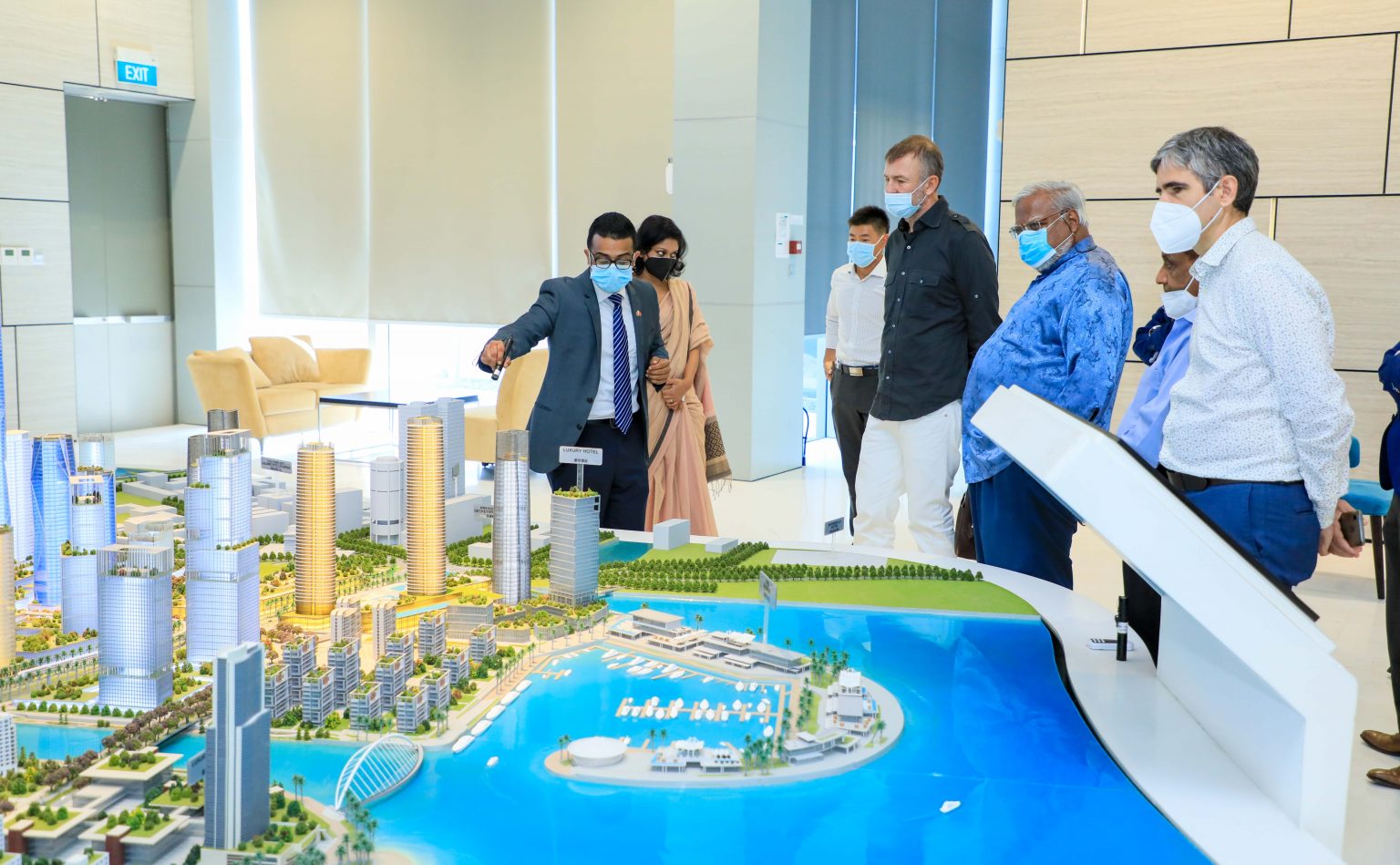
Top Russian billionaire visits Colombo Port City

Prominent Russian business tycoon Andrey Melnichenko visited the Port City in Colombo. He was accompanied by Sri Lankan-born British Politician and former EU Parliamentarian Niranjan Deva Aditya.

Melnichenko is a self-made billionaire with major investments in Switzerland based fertilizer giant EuroChem Group and Russia based coal energy company SUEK.

He was warmly welcomed by Port City Colombo Assistant Managing Directors Yue Yeqing and Thulci Aluwihare together with Director Sales and Marketing Yamuna Jayaratne.

The delegation was briefed on the Port City Colombo project, its construction progress and future developments by Radhika Ellepola, Country Manager Sales and Investor Relations.

Melnichenko expressed positive remarks about the project and he was impressed about the strategic planning of the new city in the making.

Board of Investment Chairman, Sanjaya Mohottala, Director General Pasan Wanigasekara and corporate sector veteran Rajan Brito were also present at the occasion.

From the beginning of this year, Port City Colombo continued to attract several world leading business personalities, keeping Sri Lanka back in the map as a potential hub for future investment.

Port City Colombo now awaits the introduction of the Special Economic Zone (SEZ) law by the Government which will further enhance FDIs to Sri Lanka.

Port City Colombo is a brand-new city development built as an extension of the existing Colombo CBD, with an initial investment of $ 1.4 billion and an expected $ 15 billion overall investment when completed.

Spanning 269 hectares, it is a sea reclamation project connected to the current central business district. Port City Colombo is made up of five precincts – a financial district, central park living, an international island, the marina and island living.

When completed, Port City Colombo is estimated to have 5.7 million square metres of built space, boasting some of the best in design in terms of grade-A offices, medical facilities, educational facilities, an integrated resort, a marina, retail destinations, hotels and other lifestyle developments.

Using the latest sustainable city design and smart city concepts, Port City Colombo will be the hub of South Asia.

Resolution on SL to be taken up at UNHRC on March 22

The resolution on Sri Lanka will be taken up at the United Nations Human Rights Council next Monday with a vote expected the same day or the following day, Daily Mirror learns.

Tuesday was the deadline for the incorporation of any amendment to the resolution to be moved by the core group of countries led by the United Kingdom. The other countries in the core group are Canada, Germany, Malawi, Macedonia and Montenegro.

Besides, there are around 40 countries that have signed the resolution as co-sponsors or additional co-sponsors. Most of these countries are from the western world. Besides, the countries that have pledged support to Sri Lanka are from outside the west making Sri Lanka’s case looks like a division between the east and the west.

In South Asia, Pakistan has been the open supporter of the Sri Lankan government in countering this resolution. The resolution calls for the UN High Commissioner for Human Rights to report on Sri Lanka regarding the human rights situation.

Diplomatic sources said Sri Lanka is under pressure from the Australia-india-japan-united States alliance called ‘Quad’. It has been formed with the primary intention of containing China whose influence is growing in the world. A source said pressure is exerted on Sri Lanka through various tools to take a line in favour of the Free and Open Indo-pacific policy followed by Quad.

The leaders of the Australia-india-japan-united States Quad met on March 12 in a virtual summit