Sri Lanka seeks India’s help to save face at crucial UNHRC vote – WION

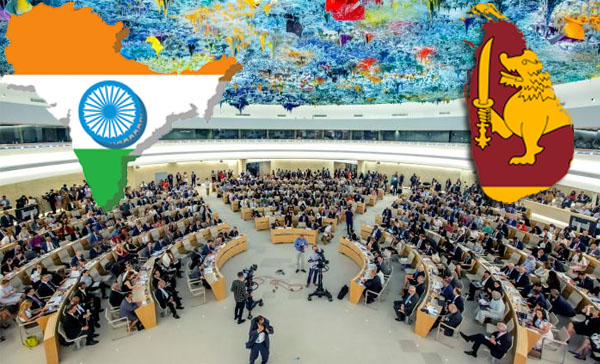
Sri Lanka is in a fix. This weekend, Sri Lankan President Gotabaya Rajapaksa spoke to Indian Prime Minister Narendra Modi, just over a week before a crucial vote at United Nations Human Rights Council.

Colombo wants to avoid a defeat at the world stage and escape the global scrutiny on the issue of human rights. Especially after its recent decision to ban the burqa and close 1,000 Islamic schools.

A press release from New Delhi says, among other things, the two leaders discussed cooperation in multilateral fora. The statement says a lot more, but mention of ‘multilateral forums’ stands out. Next week, Sri Lanka faces a crucial vote at the UNHRC in Geneva and it’s bad news for Colombo.

The resolution is backed by Canada and the UK. It says the human rights situation in Sri Lanka is deteriorating. The civilian government’s functions are being militarised. Institutions like the judiciary are losing their independence, minorities are being marginalised and the civil society and media are facing intimidation.

When this scathing resolution comes up for a vote in Geneva, Sri Lanka reportedly wants India’s support. Will they get it?

India can choose to abstain but Colombo cannot be sure.

A statement made by an Indian diplomat in Geneva signals that India is unhappy with Sri Lanka. Last month, India said the UN Human Rights chief’s report on Sri Lanka raises ”important concerns”. There was also a mention of “respecting the rights of the Tamil community”.

India was referring to the report from January released by the UN Human Rights chief. The report says Sri Lanka is on an alarming path towards the recurrence of grave human rights violations. It adds that, since taking power, the Sri Lankan president has appointed at least 28 serving or former military and intelligence personnel. They have been given key administrative posts in the government. This includes senior military officials, who were implicated by the United Nations in alleged war crimes and crimes against humanity during the civil war that ended nearly 12 years ago.

New Delhi has more reasons to be upset with Colombo. Sri Lanka recently refused to honour a port agreement with Japan and India and went ahead with an energy project with a Chinese company close to the coast of Tamil Nadu. The Rajapaksa government says it has offered an alternative terminal project with the vote at the UNHRC looming.

The Sri Lankan foreign secretary said last month in an interview, “India cannot abandon us”. The Modi government has a choice to listen to that appeal and abstain from the vote but if it chooses to send a message, Sri Lanka might struggle to defend itself at the UN.
Posted in Uncategorized

Turkish terror group’s links to Easter Sunday carnage under investigation

President Gotabaya Rajapaksa, in terms of the Presidential Commission of Inquiry (PCoI) report on the 2019 Easter Sunday carnage has issued specific instructions to the Police/Criminal Investigation Department (CID) and other relevant authorities to expedite investigations, SLPP Chairman Prof. G.L. Peiris said yesterday.

Addressing the regular SLPP briefing at the Waters Edge, Prof. Peiris, who is also the Education Minister said that President Gotabaya Rajapaksa intervened on behalf of the government whereas the Attorney General proceeded with own actions.

Prof. Peiris said that the entire set of PCoI volumes was handed over to the AG recently to enable him to proceed. The SLPP Chairman emphasized the pivotal importance in taking tangible measures to secure the arrest of those suspects living abroad.

Prof. Peiris said that as part of the overall investigations law enforcement authorities had been instructed to probe the alleged FETO (Fetullah Terrorist Organization aka the Gulen movement) links to the Easter Sunday carnage. Prof. Peiris explained that the proscribed Turkish organization had provided funding to some persons named in the report and a thorough inquiry was called into foreign involvement in the attacks.

The PCoI revealed that the previous government had turned a blind eye to information provided by Turkey regarding FETO activities in Sri Lanka. FETO leader Gulen has secured US protection.

Reiterating the government’s commitment to bring Easter Sunday perpetrators before court, Prof Peiris revealed the arrest of 99 persons in connection with the attacks and also efforts to secure the extradition of 35 others. However, the Minister didn’t explain the status of the extradition process pertaining to those 35 living overseas.

Prof Peiris said that the 36 separate investigations into various aspects of the Easter Sunday attacks had been completed. The police were directed to hand over the relevant files without delay, the minister said.

Appreciating the services rendered by the PCoI, Minister Peiris said that specific information hitherto not available were now with authorities and quite useful in the investigations.

The former top law academic also discussed the Wanathavilluwa detection made by the CID in the run up to the Easter Sunday attacks. Making reference to three wounded persons in custody, Prof. Peiris said that the police were directed to conduct thorough investigations into their alleged involvement.

Archbishop of Colombo Malclom Cardinal Ranjith moved Court of Appeal regarding the recovery of swords and daggers in the wake of the Easter Sunday attacks. The SLPP spokesperson said that President Gotabaya Rajapaksa issued specific instructions as regards the detection of some 1,440 swords and daggers. The academic explained the judiciary addressing the Easter Sunday issues while President Gotabaya Rajapaksa issued directives to expedite the overall process.

Prof. Peiris censured the previous government over allowing extremist elements a free hand. The minister pointed out how foreign preachers were allowed in without any scrutiny. Dismissing Opposition and civil society criticism of planned prohibition of burqa, Prof Peiris emphasized the right and the responsibility on the part of the government to take tangible measures to neutralize the threat.

Blaming the previous government for issuing visa on arrival to dangerous foreign elements, Prof Peiris explained how irresponsible and foolish conduct of the previous administration created an environment for extremists to destroy Buddha statues at Mawanella. If the government of the day properly inquired into Mawanella incidents, including the attempt to kill the then Minister Kabir Hashim’s coordinating secretary, the Easter Sunday carnage could have been averted, the minister said.

Minister Peiris also questioned the rationale in one-time Western Province Governor Azath Salley’s declaration that his community wouldn’t care about laws of the country and would abide by Muslims law. The minister said that no one would be able to take such a stand under any circumstances.

Commenting on PCoI recommendations and findings, Prof. Peiris said that 54 persons living abroad were categorized as wanted in connection with the Easter Sunday investigations. Of them, 50 had been already extradited and were under investigations whereas actions were being taken to bring down the remaining four in foreign custody.

Minister Peiris said that the government would soon request Australia to inquire into some persons who had been arrested in Qatar in Oct 2020 and subsequently sent Down Under.

According to Minister Peiris, the PCoI called for the establishment of a separate unit at the AG’s Department to handle terrorism cases, bring in amendments or introduce new laws in parliament as regards foreign funding matters, extradition and money laundering et al, setting up a National Intelligence Organization by way of a parliamentary act, restrictions on setting up of private organizations by lawmakers and special court to hear Easter Sunday case and any other case related to it.

Ex-Governor Azath Salley arrested by CID

Former governor Azath Salley was arrested by the Criminal Investigation Department on Tuesday (16) on the advice of the Attorney General.

Attorney General Dappula De Livera had advised the DIG of Criminal Investigations Department that Azath Salley had committed offenses under the Penal Code, Prevention of Terrorism Act, and the International Covenant on Civil and Political Rights over a statement made on the 10th of March.

This was confirmed to News 1st by State Counsel Nishara Jayaratne who serves as the Coordinating Officer to the Attorney General.

Police Spokesperson DIG Ajith Rohana said Azath Salley was arrested in terms of the provisions of the PTA in connection with the 2019 April 21st Attacks and he will be detained and interrogated under the provisions of the Prevention of Terrorism Act.

Sri Lanka PC polls: no int’l pressure, but people’s rights must be upheld, says govt

There is no move to expedite Sri Lanka’s long-delayed provincial council elections at the behest of foreign powers but simply an attempt to ensure that the people’s rights are upheld, a cabinet spokesman said today.

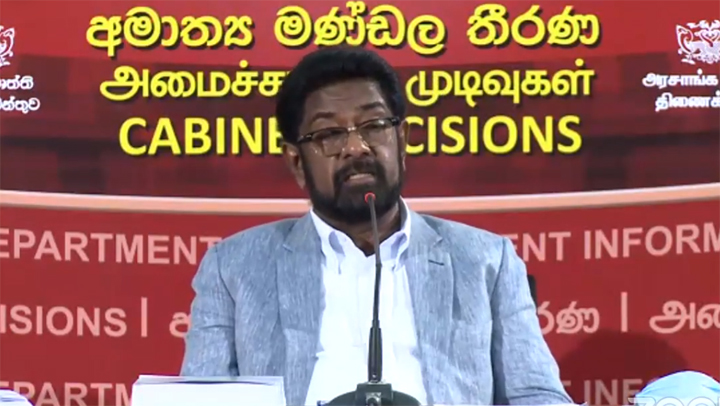
Asked whether the government is in a hurry to hold the PC polls due to pressure from India, co-cabinet spokesman Minister Keheliya Rambukwella said there was no special attempt to expedite the elections.

“The previous government postponed the PC polls indefinitely. The 13th amendment to the constitution is the law of the land. It is our responsibility to correct the necessary legal provisions to [hold the elections]. It is not about whether we agree with it or not; it is simply the law, which we must obey. Nor is it a question about India, America or any other country,” he said.

“The shortcomings of the last few years must be fixed. The duty of the present government is to uphold the people’s rights and to protect the law,” he added.

President Gotabaya Rajapaksa last week said PC polls must be held soon either under the previous Provincial Councils Elections Act or under the proposed new (Amendment) Act with its “complications” removed, the president’s office said.

Rajapaksa made these remarks at a meeting with the Association of Provincial Council Members of the ruling Sri Lanka Podujana Peramuna (SLPP) at the Presidential Secretariat last Friday (12).

The President had said that the Amended Provincial Councils Act which included a new delimitation of the constituencies, a quota for women candidates and other changes “had been defeated by the former government which proposed it.” Sri Lanka’s supreme court determined that the PC polls can be held under either the old or new system but upon the amending legislation being passed. The Rajapaksa government has yet pass amendments to the (Amendment) Act to conduct the elections under the previous proportional representation system.

At present, he said, the provincial councils are functioning without the people’s representatives in the council, necessitating speedy elections.

All nine provinces in Sri Lanka are currently being run by their respective governors following the end of their five-year terms at various points. The United Nations Human Rights Council (UNHRC) has also called for the early conduct of polls, a sentiment echoed by India. The provincial councils are a legacy of the Indo-Lanka accord signed in 1987.

“India will unequivocally stand by Sri Lankan Tamil communities” – Jaishankar

Indian External Affairs Minister Dr. Subrahmanyam Jaishankar told a conclave over the weekend that Indian Prime Minister Narendra Modi’s vision relating to Sri Lanka is a long-term one.

“We will unequivocally stand by Sri Lankan Tamil communities to ensure equality, equity, peace, and development. It has been reinforced through the devolution of power through the 13th Amendment,” he said.

“Tamil Nadu has directed its attention towards Tamil communities residing in Sri Lanka. It remains the same when considering the fishermen’s woes,” said Dr. Jaishankar.

The Indian External Affairs Minister went on to note that India will constantly monitor the status of Tamil communities in Sri Lanka.

“Those residing in Tamil Nadu and other states should understand one fact. Your intentions must be pure. A sudden interest cannot spur with one month to go for an election and then die down once it’s over,” he said adding those feelings shouldn’t be fleeting moments and they need to remain the same each day of the year.

“If you ask me why those in Tamil Nadu should vote for the BJP, I would say Prime Minister Narendra Modi’s government holds a firm stance on this matter. He is the first Prime Minister to tour Jaffna,” he added.

Elections are set to take place on the 6th of April, in several states in India including Tamil Nadu.

The incumbent Government of the BJP has extended its support towards the AIADMK party led by the current Chief Minister of Tamil Nadu Edappadi K. Palaniswami, at this year’s Tamil Nadu election.

The AIADMK through its manifesto has assured to award dual citizenship to Sri Lankan refugees in Tamil Nadu.

This assurance has been given against a backdrop where the Chief Minister of Tripura has revealed a plan by the BJP to extend its political reach to Sri Lanka.

With the enforcement of the 20th Amendment to the Constitution, dual citizens are now allowed to contest in Sri Lanka’s elections.

“There are two important pillars in our relationship. One is the bilateral pillar, which is what happens between us (Government of India) and Sri Lanka. Then there is the ethnic issue and the interest that India has had, which has also been a long-standing issue,” said Indian External Affairs Minister Dr. Subrahmanyam Jaishankar.

“There was an inter-governmental agreement between India and Sri Lanka and Japan on the East Container Terminal. Then the Sri Lankan government told us that they want to shift to an investor-driven model. They want to approach investors in India and Japan, and see if they can negotiate with the investors because they didn’t want to take a loan,” said the Indian External Affairs Minister.

“They (Sri Lankan Government) have been directly talking to investors,” he said adding the Sri Lankan government had made the decision that they would prefer to have an investor for the Western Container Terminal rather than Eastern Container Terminal.

Posted in Uncategorized

DMK supports citizenship for Sri Lankan Tamil refugees

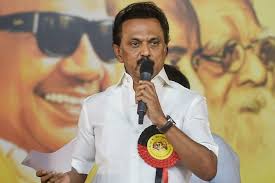
India’s DMK chief M K Stalin said his party would continue to urge the union Government to scrap the contentious Citizenship Amendment Act and confer citizenship on Sri Lankan Tamils living in refugee camps in India, the New Indian Express reported.

In an addendum to the party manifesto unveiled on Saturday, he said DMK had all along opposed the CAA and campaigned against it and he even ran a campaign in Tamil Nadu collecting one crore signatures pressing for scrapping the law.

“The Central government will be urged to withdraw the Citizenship Amendment Act, 2019,” Stalin said in the addendum.

The DMK in its manifesto has said that the Centre would be requested to include Sri Lanka in the Citizenship Amendment Act (CAA) and give citizenship to Lankan Tamil refugees living in camps in India.

Making the addition, Stalin said his party had all along opposed the CAA and campaigned against it and he even ran a signature campaign in Tamil Nadu collecting one crore signatures seeking the scrapping of the legislation.

“I would like to reiterate again that a resolution will be passed in the assembly (if DMK is voted to power) and will raise its voice for scrapping CAA,” he said in a statement.

The DMK top leader also added two more points to the manifesto, an assurance that the “anti-farmer” Chennai-Salem expressway project would not be implemented and the Kattupalli port shall not be allowed here and the draft environment assessment report for it would be rejected.

The DMK released its 505-point manifesto featuring a host of highly populist promises.

Waiver of crop and jewel loans in cooperative banks and a one-time assistance of Rs 4,000 for COVID-19 hit rice ration card holders were among the assurances.

Protests were held in various parts of the state against the CAA, which expedites citizenship applications from religious minorities from Pakistan, Afghanistan and Bangladesh.

DMK had questioned why Muslims and Tamil refugees of Sri Lanka were kept out of the ambit of the act and alleged it ‘divided’ people on the basis of religion.

The expressway project witnessed several protests by farmers and others over land acquisition and environment concerns.

The greenfield corridor was challenged in the Madras High Court which quashed the land acquisition proceedings and Pattali Makkal Katchi (an ally of the AIADMK now) leader Anbumani Ramadoss was among the petitioners against the project in court.

However, the Supreme Court had in December last year upheld the notification for land acquisition for the Rs 10,000 crore eight lane project.

Posted in Uncategorized

Lankan President says Special Forces camps will be reopened in Eastern Province

Sri Lankan President Gotabaya Rajapaksa has said that security will be beefed up in the Eastern Province to stem separatist terrorism and Islamic extremism.

Tamils and Muslims together outnumber the Sinhalese in the Eastern Province. The province had been the base of the Liberation Tigers of Tamil Eelam (LTTE) and also Jehadists who staged the April 21, 2019 suicide bombings in Colombo and other places.

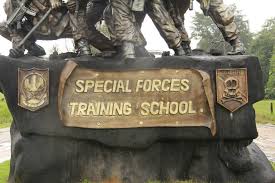
Speaking at the 14 th. “Discussion with the Village” program in Galagoda East in Galle District on March 13, the President said: “ There were about 50 camps in the Eastern Province. They had been removed and only a handful of camps remain. I have advised that these camps be opened again, because separatist terrorism or Islamic extremism will not be allowed under our government.”

As per the full text issued by the President’s Media Division, the President said: “I’m well versed in national security and gravely concerned about it too. Under President Mahinda Rajapaksa I was entrusted with this responsibility as the Secretary of Defense. We worked as a team to end the 30-year war. I know how hard and how dedicated they were in executing it. So I will never allow this victory to be spoiled.”

He went on to say: “Those who neglected national security as a government are now trying to pin the Sunday Easter attacks on the former President alone. The Report of the Commission has clearly shown that the previous government did not give due importance to national security. All those who were part of the former government are responsible for this heinous attack.”

“His Eminence Malcolm Cardinal Ranjith has made a statement claiming that some politicians are involved in the attack and they were not mentioned in the report. We will investigate them as well. Those politicians are not with us. They did not help bring me or the government into power. They are with the opposition. We don’t want to protect anyone. We are not up for negotiation. We have 2/3rd majority (in parliament).”

“We came to power without any help from them. So we don’t need to protect them. If they have done anything wrong, they will be exposed.”

“After we came to power, in addition to those who were arrested by the CID, the police, the Terrorism Investigation Division, we have arrested others that had ties with foreign countries and several others who were engaged in them were also apprehended. Investigations are being carried out and they will continue until all the culprits are caught by the law.”

The President pointed out that the report of the Presidential Commission on Easter Sunday attack repeatedly stated that the previous government did not pay any attention to national security and it was the reason for this attack.

“True, we told the same thing back then. Not only did we win the war but we also placed required security measures to prevent a war from happening again, especially in the Northern and Eastern Provinces. However, during the previous government everything was neglected. Intelligence officers were imprisoned, and complaints were leveled against them. The security arrangements in those areas were completely dismantled. Even if a simple poster had been pasted, we would catch them. If you can remember, anyone who were even involved in minor incidents were apprehended. That is how we ensured national security. However, the Report clearly concludes that the previous government did not pay any attention to it and national security was ignored.”

On the steps his government has taken to ensure security, the President said: “ We have re-activated the program we carried out by deploying competent personnel to ensure national security. But when something like this collapses, it is difficult to rebuild. It will take some time. The existing intelligence services need to be re-launched. Officers need to be reinstated in those areas. The Special Forces, especially the police.”

Indian company to get 51% in West Container Terminal deal

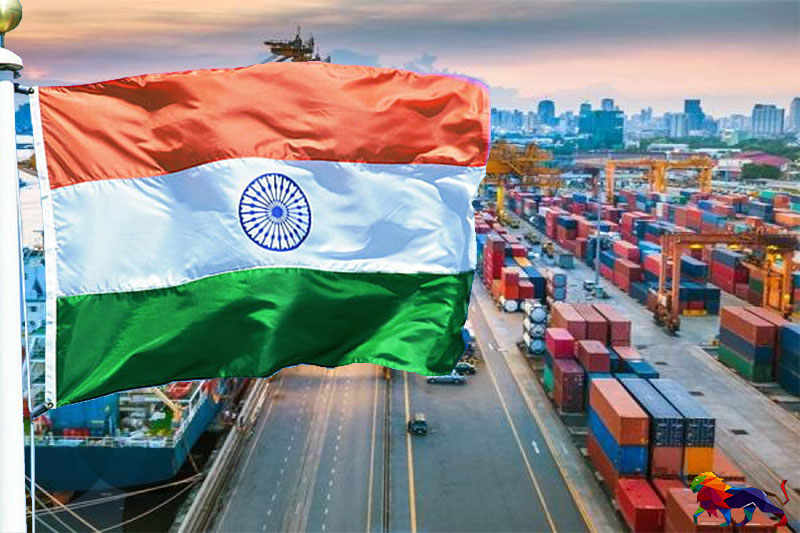
India’s Adani Ports is to get 51% in the West Container Terminal (WCT) deal of the Colombo Port, the company said today.

Adani Ports and Special Economic Zones Ltd. (APSEZ) India’s largest private ports and logistics company and a key subsidiary of the diversified Adani Group, said today it had received a Letter of Intent (LOI) from the Ministry of Ports and Shipping of Sri Lanka and the Sri Lanka Ports Authority, acting on behalf of the Government of Sri Lanka, pursuant to approval from the Sri Lankan Cabinet of Ministers for the development and operations of West Container Terminal (WCT) in Colombo, Sri Lanka.

APSEZ will partner with John Keells Holdings PLC, Sri Lanka’s largest diversified conglomerate, and with the Sri Lanka Ports Authority (SLPA) as a part of the consortium awarded this mandate.

The WCT will be developed on a Build, Operate and Transfer basis for a period of 35 years as a public-private partnership. WCT will have a quay length of 1400 meters and alongside depth of 20 meters, thereby making it a prime transhipment cargo destination to handle Ultra Large Container Carriers.

The project is expected to boost WCT’s container handling capacity and further consolidate Sri Lanka’s locational advantage as one of the world’s top strategic nodes along the busiest global transhipment route.

The Colombo Port is already the most preferred regional hub for transhipment of Indian containers and mainline ship operators with 45% of Colombo’s transhipment volumes either originating from or destined to an Adani port terminal in India.

APSEZ said the network impact of the partnership is significant and expected to be mutually benefitted from the string of 7 container terminals across its 12 ports that Adani operates along the Indian coastline handling an annual volume of over 6 million TEUs.

This partnership will multiply and accelerate the transhipment options that will become available to serve various shipping lines and other potential port customers across the South Asian waters, benefiting both, India and Sri Lanka in multiple ways.

Speaking on the occasion Karan Adani, CEO and Whole Time Director of APSEZ said, “Any port partnership is a validation of the mutual trust between two nations and in this context the WCT partnership is significant on several fronts. It is a continuation of the deep and mutually beneficial strategic relationship between two neighbouring nations whose history is deeply intertwined, and I am grateful to the Leaders of the Government of India, Leaders of the Government of Sri Lanka and our Sri Lankan partners for the deep trust they have endowed on us. The combination of the strategic location of the Port of Colombo as a launching point for transshipment across the entire subcontinent, the deep domestic strength of SLPA and John Keells Holdings PLC, and the Adani Group’s unmatched network of container terminals across the Indian coastline opens up several dimensions of growth possibilities for years to come, not just within our two countries but also to the east as well as the west of our two nations”.

Commenting on the occasion, Krishan Balendra, Chairman of JKH, said “We are excited about this opportunity to invest in the much-needed capacity expansion of the Colombo Port and to partner the Adani Group, the leading port operator in India.”

He went on to say that the Public Private Partnership development of the West Container Terminal would bring to bear the synergies, expertise and experience of the Adani Group, the John Keells Group and the Sri Lanka Ports Authority, which would ensure a world class deep-water offering in the Port of Colombo, catering to the largest container ships afloat.

Sri Lanka reports five COVID-19 deaths Monday, toll rises to 532

Sri Lanka confirmed five deaths on Monday due to COVID -19 raising the death toll from the viral disease to 532, according to health authorities.

The Director General of Health Services confirmed the following deaths caused by COVID -19 virus infection and accordingly the total number of deaths due to COVID -19 infection in Sri Lanka is 532 by now.

01. The deceased is an 86 year old female resident from Jaffna. She has died while undergoing treatments at Jaffna Teaching Hospital on March 13. The cause of death is mentioned as Covid pneumonia and blood poisoning.

02. The deceased is a 76 year old female resident from Gampaha. She was diagnosed as infected with Covid 19 virus while undergoing treatments at Gampaha District Hospital and transferred to the National Institute of Infectious Diseases where he died on March 13. The cause of death is mentioned as Covid pneumonia, multi-organ failure and acute diabetes.

03. The deceased is a 61 year old male resident from Kochchikade. He has died at Colombo North Teaching Hospital on March 08. The cause of death is mentioned as acute kidney damage and liver disease.

04. The deceased is a 78 year old male resident from Pamunugama. He has died at his residence on March 10. The cause of death is mentioned as Covid infection, high blood pressure and acute diabetes.

05. The deceased is a 94 year old female resident from Kalutara North. She was diagnosed as infected with Covid 19 virus while undergoing treatments at Moratuwa Base Hospital and transferred to the Homagama Base Hospital where he died on March 14. The cause of death is mentioned as Covid infection and acute diabetes.

Posted in Uncategorized

Pakistan envoy raises concern over ‘burqa ban’ in Sri Lanka

The Pakistani High Commissioner in Colombo has raised concern over Sri Lanka’s recent announcement on outlawing the burqa, noting that such a ban would “injure” the feelings of ordinary Muslims in Sri Lanka and elsewhere.

Sharing a news report on the development, head of the Pakistani mission Saad Khattak on Monday said in a Twitter thread: “The likely ban on Niqab #SriLanka will only serve as injury to the feelings of ordinary Sri Lankan Muslims and Muslims across the globe. At today’s economically difficult time due to Pandemic and other image related challenges faced by the country at international fora, such divisive steps in the name of Security, besides accentuating economic difficulties, will only serve as fillip to further strengthen wider apprehensions about fundamental human rights of minorities in the country.”

Rights issue

Coming two days after Sri Lanka’s Public Security Minister announced his government’s decision to prohibit the wearing of the burqa, the Pakistani High Commissioner’s remark is the first reaction to the move from the international community. Mr. Khattak’s reference to “other image related challenges faced by the country at international fora” assumes significance just a week ahead of the vote on Sri Lanka at the Human Rights Council, where Pakistan is currently a member.

The UN resolution on Sri Lanka’s rights record is expected to draw upon the January 2021 report of the Office of the High Commissioner for Human Rights, which observed that the country’s Tamil and Muslim minorities “are being increasingly marginalised and excluded from the national vision and Government policy, while divisive and discriminatory rhetoric from the highest State officials risks generating further polarization and violence”.

Sri Lanka has reached out to different members states, including India, seeking support at the Council. About a third of the 47-member Council’s current membership, including Pakistan, is part of the Organisation of Islamic Cooperation (OIC), which earlier criticised Colombo’s mandatory cremations policy for COVID-19 victims that affected the island’s Muslim minority.

Reversal on cremations

Following persistent calls from the island nation’s Muslim community, and from international bodies, including the OIC and the UN, Sri Lanka reversed the policy on February 26. Burials of victims of the virus would be permitted, the government said, days after Pakistan Prime Minister Imran Khan’s visit to Sri Lanka last month, when he reportedly raised the matter with the Sri Lankan leadership. High Commissioner Khattak had welcomed the move in a twitter message back then.