Lanka Defends North Korea At UN Human Rights Council; Reaches New Low In Multilateral Diplomacy

Sri Lanka marked another phenomenal low point in multilateral diplomacy by defending the appalling human rights record of one of the worst dictatorial regimes on the face of the earth.

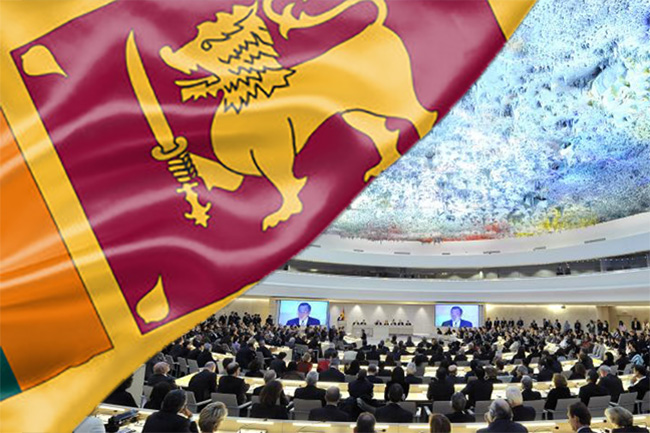
Sri Lankan Ambassador to the UN in Geneva, C. A. Chandraprema made a statement at the human rights council defending North Korea, led by third generation dictator by Kim Jung-un. During an interactive dialogue after a Special Rapporteur presented a damning report on the appalling human rights situation in North Korea, Chandraprema who is himself an accused executioner allegedly involved in at least three assassinations of human rights lawyers, urged “All UN human rights mechanisms to engage in a genuine and constructive dialogue with the Democratic Peoples’ Republic of Korea based on mutual respect and cooperation.”

A 2014 UN Commission of Inquiry found that the government of North Korea committed gross, systematic and widespread rights abuses, including extermination, murder, enslavement, torture, imprisonment, rape, forced abortions, and other sexual violence. North Korea operates secretive prison camps where perceived opponents of the government are sent to face torture, starvation and forced labour.

The shocking statement by Chandraprema comes the same week Sri Lanka became the first and only country in the world to recognize the military Junta Myanmar which staged a coup d’etat to unseat the democratically elected administration on February 1.

Foreign Minister Dinesh Gunawardena formally invited the purported Foreign Minister of the military regime, U. Wunna Maung Lwin for a The Bay of Bengal Initiative for Multi-Sectoral Technical and Economic Cooperation (BIMSTEC) meeting to be chaired by Sri Lanka.

No other government in BIMSTEC which also includes India, Bangladesh and Thailand have recognized the military regime in Myanmar. The formal invitation by the Foreign Minister – Sri Lanka’s top diplomat has granted recognition to what the rest of the world considers an illegitimate regime.

Meanwhile in Geneva, President Nandasena Rajapaka’s handpicked Ambassador has been aligning Sri Lanka with some of the worst human rights violators in history. Last week Colombo Telegraph reported how Candauda Chandraprema similarly defended Eritrea, a country that had openly supported the LTTE even facilitating 10 aircraft to be smuggled to the terrorists’ organization. Foreign Ministry sources confirmed to Colombo Telegraph that Secretary to the Ministry, Admiral Professor Jayanath Colombage has approved Chandraprema to defend the human rights records of some of the worst violators in the world including North Korea, Syria, Eritrea, Belarus and Nicaragua.

These actions however will most likely backfire on Sri Lanka at the UN Human Rights Council. The resolutions on North Korea at the UN General Assembly in New York and the Human Rights Council in Geneva are championed by Japan and the Republic of Korea (South Korea). These countries also happen to be two of Sri Lanka’s largest bilateral donors. Both South Korea and Japan are current members of the HRC which is due to vote on a resolution concerning Sri Lanka next week. Bangladesh, which too is a member of the council, will be concerned by Sri Lanka’s recognition of the military junta in Myanmar which it accuses of gross violations which may even tantamount to genocide of the Rohingya community. Nearly a million Rohingya refugees who were chased out of Myanmar since 2017 are looked after by Bangladesh.

A very senior diplomat with previous experience in the Geneva processes commented to Colombo Telegraph that the ‘the inexperienced and cavalier Colombage-Chandraprema combo have managed to drag Sri Lanka to the nadir of multilateral diplomacy and made it impossible even for our friends in the international arena to vote in our favour at the upcoming resolution.’

A resolution on the human rights situation in Sri Lanka is due to be taken up for a vote on either 22nd or 23rd of March. See video of Ambassador Chandraprema’s intervention on behalf of DPRK (North Korea) here (time stamp 47.40-48.25). (By Chinthika De Silva)
Incidents of police torture on the rise

The Sri Lankan Coalition Against Torture says in the first two months of this year alone, the organisation received thirteen complaints of police torture in several southern provinces.

It is unfortunate that the government has had to reaffirm its responsibility to create a country free of torture within a very short period of time since the beginning of the year while the Geneva HRC sessions are on going.

Although the recent police assault was that on law student Migara Gunaratne, the Sri Lankan Coalition Against Torture has reminded the government and its citizens that there have been similar assaults as well as even more violent deaths in the past due to torture by the Police.

The group alleges that the government is not sincere in its commitment to bring to justice the brutal attack on inmates at the Mahara Prison late last year and that justice has yet to be done for other prison incidents, including the Welikada prison massacre.

The Prisoners’ Rights Committee had earlier revealed that eyewitnesses to the Mahara shooting that killed 11 people were severely tortured by the STF.

The Sri Lankan Association Against Torture has expressed regret over the humiliation inflicted on Sri Lanka by police torture.

They emphasize to the Government that the right to be safe from torture is not only a fundamental right enshrined in the Constitution, but also that torture is an offense punishable under criminal law under Act No. 22 of 1994.

Incidents of torture have been reported from the Pitigala Police in Galle District, Hakmana Police in Matara District, Walasmulla and Tangalle Police in Hambantota District, Pothuhera and Wellawa Police in Kurunegala District, Aluthgama, Kosgoda and Payagala Police in Kalutara District and Aralaganwila Police Station in Polonnaruwa District.

Furthermore, three incidents of torture at the Gampaha Police have been reported to the Sri Lankan Coalition Against Torture, the organisation said.

Posted in Uncategorized

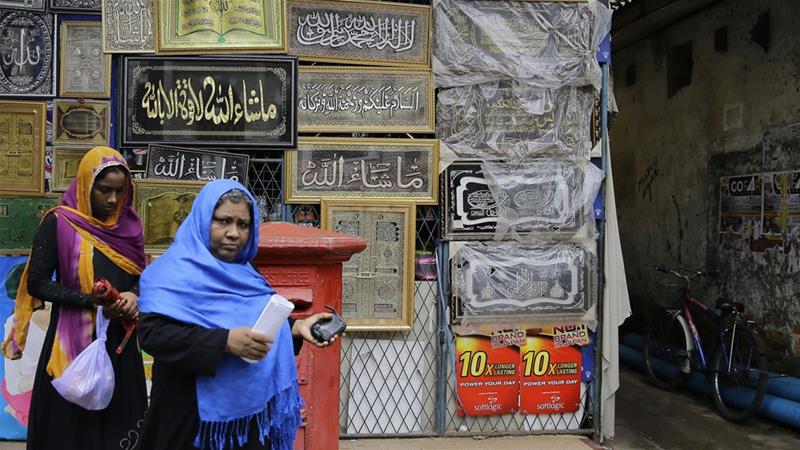
‘Racist agenda’: Fear, worries over Sri Lanka’s burqa ban

Sri Lanka’s move to ban the burqa on “national security” grounds while calling its use “religious extremism” has been termed a “racist agenda” used to cause divisions in the country.

A burqa is an outer garment worn to cover the entire body and the face and is used by some Muslim women.

On Saturday, Sri Lanka’s Minister for Public Security Sarath Weerasekera said he had signed a paper for cabinet approval to ban the burqa, adding that the government also plans to ban more than 1,000 Islamic schools that were defying national education policy.

Sri Lankans expressed disapproval of the proposal, with many viewing the act as an attempt to appease Sri Lanka’s Buddhist majority and cause divisions.

“This is a racist agenda,” Hilmy Ahamed, vice-president of the Muslim Council of Sri Lanka, told Al Jazeera. “They are trying to convince the Buddhists that they are going after Muslims.”

Sinhalese Buddhists account for about 75 percent of the country’s 22 million people with Muslims making up about nine percent. Ethnic minority Tamils, who are mainly Hindus, make up to about 15 percent.

The signed documents outlawing the burqa were submitted on Friday, according to Weerasekera. The proposal requires the approval of the Cabinet and Parliament, where the government has a two-thirds majority, before it becomes law.

“The burqa has a direct impact on national security,” Weerasekara told a ceremony at a Buddhist temple on Saturday. “It is a sign of religious extremism that came about recently. We will definitely ban it.”

Weerasekera’s announcement came a few weeks ahead of the second anniversary of the 2019 Easter attacks on three churches and three luxury hotels in the country that killed at least 269 people.

Two local Muslim groups that had pledged allegiance to the ISIL (ISIS) group were blamed for the attacks.

“It [wearing a burqa] should be considered a right of a women to choose,” added Ahamed.

“They forcibly cremated over 350 Muslims [COVID-19 deaths] against their religious belief and now they want to ban madrasas and burqa. Will the same scrutiny be there on Christian and Buddhist education which serves the same purpose as madarasas to educate theologians.”

In March last year, the government imposed regulations that said the bodies of COVID-19 victims could only be cremated. The rules banned burial, saying the virus could spread by contaminating groundwater.

This ban was lifted last month after criticism from international rights groups across the world and months of protests mainly by Muslim groups.

Vraie Cally Balthazaar, a gender activist based in the capital, Colombo, said the move will affect the lives of Muslims in the country after the government mandated the cremation of COVID-19 victims.

“I don’t think anyone making decisions on the burqa are doing it with the intention of national security or keeping the rights of women in mind. I think the burqa has become a symbol of a power struggle that the state wants to control,” Balthazaar told Al Jazeera.

“Having dealt with the cremation issue, we now have to face this. This is affecting the lives of Muslims, particularly women, in the country.”

‘Public awareness on what burqa is’
The burqa was temporarily banned after the 2019 bombings, drawing a mixed response with activists saying it “violated Muslim women’s right to practise their religion freely”.

Jamila Husain, a journalist based in Colombo, said there needs to be “public awareness on what the burqa really is”.

“Not many people, other than Muslims, know the difference between a burqa, hijab and niqab. Lack of proper awareness could lead to discrimination or targeting of Muslim women,” Husain told Al Jazeera.

“After the Easter Sunday attacks when the burqa was temporarily banned, Muslim women even covering their face or head with a shawl were abused or threatened because some non-Muslims assumed covering the head was banned. So there needs to be proper awareness before this is made law.”

Last month, Sri Lanka was called by the United Nations Human Rights Council to hold human rights abusers to account and to deliver justice to victims of its 26-year-old civil war, including over their treatment of Muslims.

SOURCE : AL JAZEERA

Covid cluster at a garment factory in Vavuniya: 21 infected at present

Vavuniya Public Health Inspectors say that 21 employees of a leading garment factory in the Vavuniya District have been infected with the Covid -9 virus.

The Vavuniya Public Health Inspectors said PCR tests conducted following the confirmation that a group of employees were infected have confirmed that 21 more workers have been infected with the virus.

The garment factory employs nearly 700 people and the workers have been referred for PCR tests, Public Health Inspectors said.

However, people in the area told Neth New that they could see that the garment factory where the infections were reported was continuing to operate. As a result, there is a fear among them that there is a possibility of a serious health risk in the area.

Therefore, the residents of the area have reportedly requested the health authorities to temporarily close the garment factory where the infected persons were found and prevent the spread of the Covid in the area.

Posted in Uncategorized

Parliamentary approval needed to hold PC polls – Dinesh

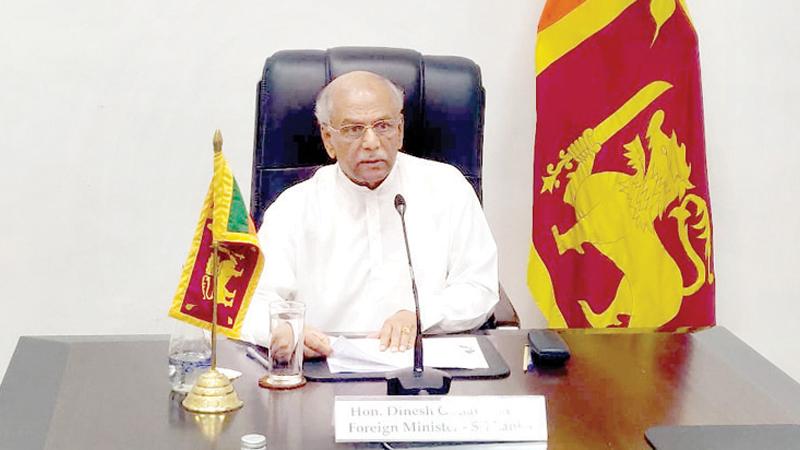
Parliamentary approval should be obtained before holding the Provincial Council elections, says Minister of External Affairs Dinesh Gunawardena.

Discussions are currently being held regarding the action to be taken in connection with the holding of the Provincial Council elections, the Minister added

Gunawardena mentioned this addressing the media following a ceremony held in Trincomalee.

“The previous government changed the law holding provincial council elections. However, the Supreme Court has ruled it illegal. Therefore, no one can hold an election without making a change in the law. The Supreme Court has asked the law to be fixed and passed.”

Posted in Uncategorized

Revised Core Group draft resolution tabled: Calls for implementation of 13A

The draft of the revised Resolution by the United Nations (UN) Core Group of countries on Sri Lanka was tabled at the UN Human Rights Council (UNHRC) on Friday night (12) with more revisions, including a paragraph calling for the implementation of the 13th Amendment (13A) to the Constitution.
The Resolution, titled “Promoting reconciliation, accountability, and human rights in Sri Lanka”, was presented by the Core Group comprising Canada, Germany, Malawi, Montenegro, North Macedonia, and the UK.

The new paragraph on 13A also urged Sri Lanka to fulfil the commitment to devolve political power.

It said: “Calling upon the Government of Sri Lanka (GoSL) to fulfil its commitments on the devolution of political authority, which is integral to reconciliation, and the full enjoyment of human rights by all members of its population and encouraging the Government to respect local governance, including through the holding of elections for provincial councils (PCs), and to ensure that all PCs, including the Northern and Eastern PCs, are able to operate effectively, in accordance with the 13th Amendment to the Constitution.”

When the draft was revised for the first time, a new paragraph was inserted to highlight the joint statement issued on 26 May 2009 by then President Mahinda Rajapaksa and then UN Secretary General Ban Ki-moon to seek a political settlement and to bring about lasting peace and development in Sri Lanka. This paragraph remains unchanged.

It also said that states should comply with their relevant obligations under human rights law and international humanitarian law (IHL), including where applicable to prosecute those responsible for gross violations of human rights law or serious violations of IHL.

The Resolution has been revised to remove “positive” from the sentence which read “positive engagement between the GoSL and the Office of the UN High Commissioner for Human Rights (HCHR) between 2015 and 2019”. Now, it simply says “the engagement”, and the timeframe “between 2015 and 2019” has also been taken out.

The increased marginalisation of the Tamil and Muslim minorities, restrictions on media freedom, and restrictions on the public memorialisation of victims of war, including the destruction of a memorial, have been added in the new draft as areas of serious concern.

The paragraph on the mandatory cremation of Covid-19 victims has been amended to take off the sentence, “the decision made by the GoSL to mandate cremations for all those deceased from Covid-19”. The entire paragraph has not been taken out, however, as reportedly requested by the Government stating that the burial of victims has been allowed. The relevant paragraph now says: “…Expresses further concern that the response to the coronavirus (Covid-19) pandemic has had an impact on the freedom of religion or belief and exacerbated the prevailing marginalisation of and discrimination against the Muslim community, and that cremations for those deceased from Covid-19 have prevented Muslims and members of other religions from practicing their own burial-related religious rites, and has disproportionately affected religious minorities and exacerbated distress and tensions.”

The Resolution called on Sri Lanka to ensure the effective and independent functioning of the Human Rights Commission of Sri Lanka, Office on Missing Persons, and Office for Reparations to deliver their respective mandates.

It also called upon Sri Lanka to protect human rights defenders, to end surveillance, and to foster the freedom of religion or belief.

The final paragraph has been amended to include not only a written update but also an oral update from the Office of the UNHCHR at two separate UNHRC sessions instead of one.

Accordingly, the Resolution requested the UNHCHR to enhance monitoring and reporting on the situation of human rights in Sri Lanka, including on progress in reconciliation and accountability, and to present an oral update to the UNHRC at its 48th Session, as well as a written update at its 49th Session.

It said that a comprehensive report that includes further options for advancing accountability should be presented at the UNHRC’s 51st Session. Both reports are to be discussed in the context of an interactive dialogue.

Meanwhile, the UK Parliament, on 12 March, said that its parliamentarians would hold a general debate on a motion on the UK’s commitment to reconciliation, accountability, and human rights in Sri Lanka.

The House of Commons said that the general debate put forward by backbench MPs Siobhain McDonagh, Elliot Colburn, and Edward Davey will be held on 18 March.

However, Foreign Affairs Minister Dinesh Gunawardena said that Sri Lanka cannot in any way agree to the said Resolution, adding that the country’s response to the final draft and the final position on the matter would be declared next week at the UNHRC.

Gunawardena told The Sunday Morning earlier on Friday: “We cannot agree to the Resolution that they are bringing in. Many countries have already expressed their objection to the content during the meetings that have been held. We do have another round. We have not given a fixed date but we have the opportunity next week, after the Resolution is tabled. The Ambassador has the right to reply. We will make it next week.”

When queried about support at a vote on the Resolution, he said that Sri Lanka has no issue about the support of friendly countries.

“It is the western countries that run this. They do have a vote bloc. We are having fair support and it is growing. Only after the final draft is tabled will the reaction increase,” he added.

Posted in Uncategorized

UNHRC’s latest draft resolution on Lanka incorporates India’s demand for devolution

The West-led Core Group on Sri Lanka in the UN Human Rights Council (UNHRC) on Thursday went a step further to get India’s support for the tough resolution it is planning to bring against Sri Lanka. It has incorporated India’s demand that Sri Lanka implement in toto, the 13th Amendment of the constitution, which devolves powers to the provinces.

According to DailyFT, the 11 March draft calls on the Government of Sri Lanka to fulfil its commitments on devolution of power, and “respect local governance” by holding Provincial Council Elections and ensuring all Provincial Councils function effectively in accordance with the 13th Amendment. The most recent revision to the paragraph on devolution also makes specific reference to the Northern Provincial Council. The Northern Province is predominantly Tamil.

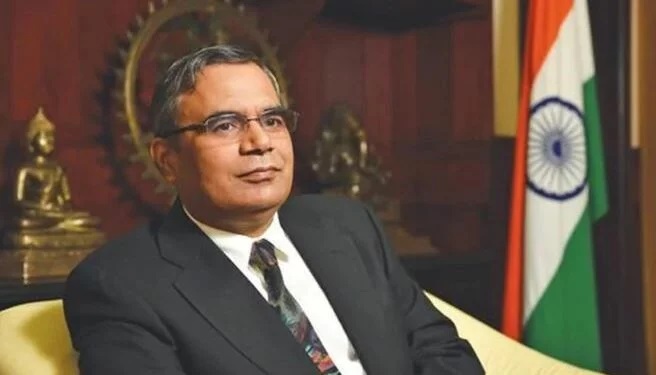
Significantly, the Indian High Commissioner Gopal Baglay is currently touring the Northern and Eastern Provinces, both with a significant Tamil population. He is meeting local leaders.

India believes that devolution of power under the 13A will pave the way for ethnic reconciliation and strengthen the unity and integrity of Sri Lanka. India’s Representative in the UNHRC Indra Mani Pandey told the council precisely that in February.

India was responding to an apparent move in Sri Lanka to jettison the 13A or do away with devolution of power to the provinces altogether, partly on account of the fact that the 13A is seen as a byproduct of the India-Sri Lanka Accord of 1987 which in turn is seen by Sinhala nationalists as an unbearable Indian imposition.

The revised draft of March 11 was expected to be tabled by end of business in Geneva Friday, ahead of a UNHRC deadline for submission of draft proposals. However, written revisions to the text are possible until March 16.

New Time Table

The revised draft calls on UN High Commissioner for Human Rights Michelle Bachelet to present an oral update on Sri Lanka’s progress on reconciliation and pursuing justice for grave human rights violations in September 2021, followed by a written report in March 2022, one year from now.

Bachelet is expected to deliver a comprehensive update to the Council when the resolution will come up for renewal at the UNHRC’s 51st Session in September 2022.

Data base on Lanka to be used for filing cases

In the 18-month period between the 46th Session of the Council and September 2022, the Office of the High Commissioner for Human Rights (OHCHR) will be mandated to establish a central database of information and evidence of human rights abuses in Sri Lanka that can be used to support international trials in jurisdictions outside the island.

If the resolution is adopted at the end of the current UNHRC session, the OHCHR evidence preservation mechanism on Sri Lanka will have an operating budget of at least $ 2 million and a team of between six to 10 personnel including legal officers, analysts, and victim support officers.

The evidence collection and preservation mechanism led by the OHCHR will be mandated to “develop strategies” for prosecutions against perpetrators of grave rights violations and related crimes in Sri Lanka. These include war-time abuses including enforced disappearances, summary executions and indiscriminate shelling of civilian and humanitarian targets, political murders and enforced disappearances and attacks against journalists.

Withdrawal From Co-Sponsorship

The previous Yahapalanaya administration won temporary reprieve from the prospect of international accountability measures when it co-sponsored a UNHRC resolution in 2015 and 2017. The previous Government pledged to establish local mechanisms with independent experts to seek accountability for serious human rights abuses and alleged war-time atrocities. But virtually none of the promises was kept. Promises followed by prevarication was the order of the day.

After the Gotabaya and Mahinda Rajapaksa came to power in 2019-2020, through Presidential and parliamentary elections, Colombo withdrew from the co-sponsorship saying that the co-sponsored resolution was unconstitutional, intrusive and divisive. The government also completely rejected the prospect of subjecting Lankan war heroes who liberated the country from a ruthless terrorist group to international criminal jurisdiction.

Lankan Foreign Minister Dinesh Gunawardena told the 46 th.Session twice that the Core Group’ endeavors were baseless, malafide and motivated by geo-political considerations. He repeatedly asked members to reject the resolution outright as such resolutions would be a threat to their own sovereignty and independence.

Source:newsin.asia

Posted in Uncategorized

President tells officials to focus on calling for PC elections soon

President Gotabaya Rajapaksa has instructed the relevant officials to take steps to do away with the Provincial Council (Amendment) Bill or its confusions and expedite the holding of the Provincial Council Elections, said the President’s Media Division.

According to a statement from the President’s Media Division, the President had pointed out that the Provincial Council (Amendment) Bill which included several segments including the Electorate System, Delimitation, a mix of the first-past-the-post/simple majority and proportional representation and composition of female representation which was moved by the former government was defeated and at present Provincial Councils are functioning in the absence of public representatives.

The President had emphasized on the need to raise awareness among the public of this situation and call for elections, it added.

The President had made these comment at a meeting with provincial council representatives of the Sri Lanka Podujana Peramuna on Friday (12).

Core Group submits final draft resolution on Sri Lanka

The Core Group of countries have prepared the final draft of the resolution on Sri Lanka to be moved at the United Nations Human Rights Council (UNHRC), the Daily Mirror learns.

The resolution which has already been communicated to Sri Lanka, calls for the UN High Commissioner for Human Rights to enhance the monitoring and reporting of the human rights situation and progress on the reconciliation and accountability in Sri Lanka.

The resolution calls for the High Commissioner to submit a comprehensive report at the 51st session of the UNHRC.

Besides, an oral update has to be made at the 48th session.

Salley must go to Saudi Arabia if he wants honour only Shari’a law: Minister

While claiming that former Western Province Governor Azath Salley’s recent statement would lead to religious extremism, Public Security Minister Sarath Weerasekara said Azath Salley should be arrested for making such statement.

Recently, he had allegedly said that he does not respect the law of the land but only respects and welcomes the Muslim law.

The minister said Salley’s remarks a statement has full of religious extremism.

“If he wants to act according to Shari’a law, he must go to Saudi Arabia. He cannot live in Sri Lanka. As long as he lives in Sri Lanka, he should act according to the law that prevails in Sri Lanka. We will arrest him and take legal action against him. I have personally told the CID to look into the matter,” the Minister said.

Posted in Uncategorized