Gazette issued to de-radicalize detainees accused of extremism

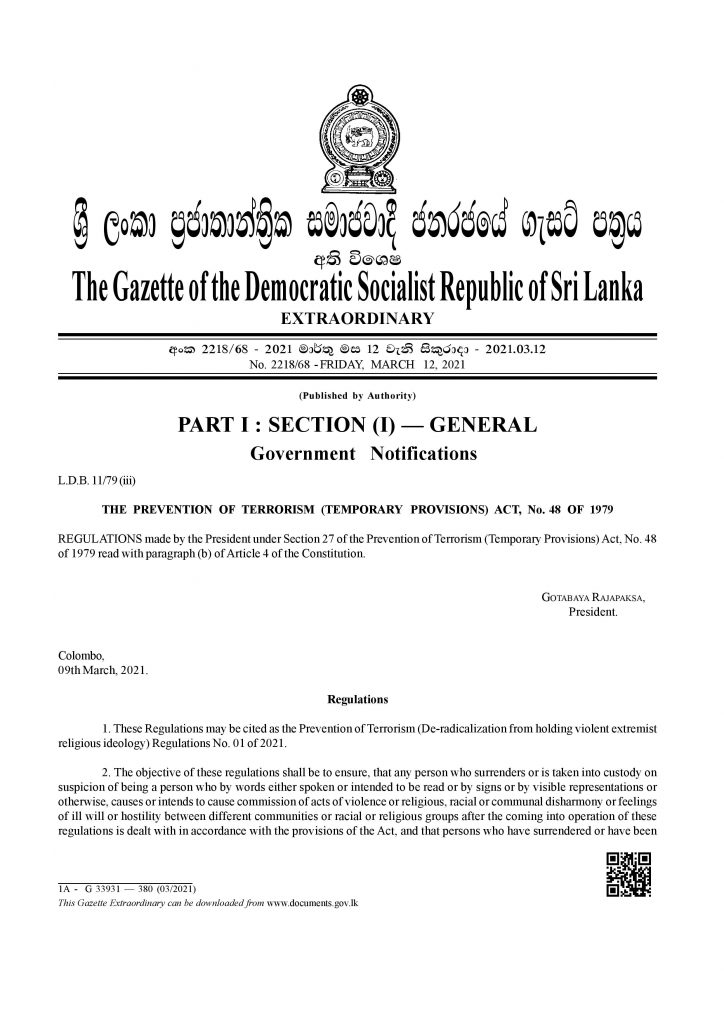
President Gotabaya Rajapaksa has issued a gazette notice to de-radicalize detainees accused of extremism.

The gazette notice states that the objective of the regulations is to ensure that any person who surrenders or is taken into custody on suspicion of causing or intending to cause acts of violence or religious, racial or communal disharmony is dealt with in accordance with the provisions of the Act.

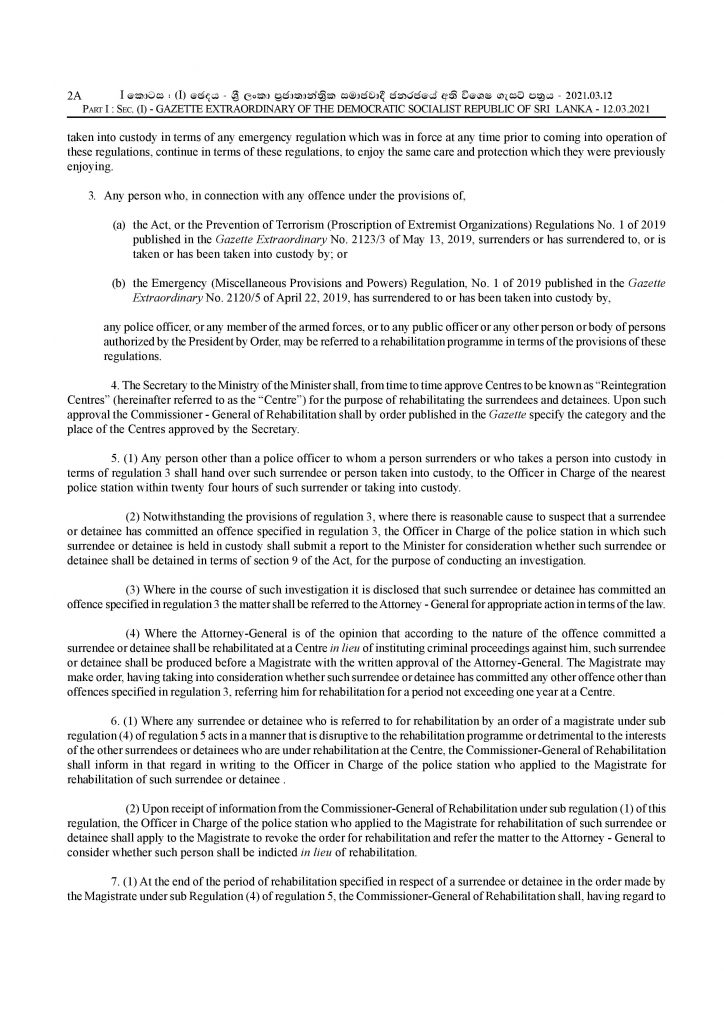
According to the gazette notice, any person who surrenders or is taken into custody on suspicion of being a person who by words either spoken or intended to be read or by signs or by visible representations or otherwise, causes or intends to cause commission of acts of violence or religious, racial or communal disharmony or feelings of ill will or hostility between different communities or racial or religious groups after the coming into operation of these regulations is dealt with in accordance with the provisions of the Act, and that persons who have surrendered or have been taken into custody in terms of any emergency regulation which was in force at any time prior to coming into operation of these regulations, continue in terms of these regulations, to enjoy the same care and protection which they were previously enjoying.

The gazette notice also states that any person who, in connection with any offence under the provisions of, (a) the Act, or the Prevention of Terrorism (Proscription of Extremist Organizations) Regulations No. 1 of 2019 published in the Gazette Extraordinary No. 2123/3 of May 13, 2019, surrenders or has surrendered to, or is taken or has been taken \ into custody by or the Emergency (Miscellaneous Provisions and Powers) Regulation, No. 1 of 2019 published in the Gazette Extraordinary No. 2120/5 of April 22, 2019, has surrendered to or has been taken into custody by, any police officer, or any member of the armed forces, or to any public officer or any other person or body of persons authorized by the President by Order, may be referred to a rehabilitation programme in terms of the provisions of these regulations.

The Secretary to the Ministry of the Minister has been instructed to from time to time approve centres to be known as “Reintegration Centres” for the purpose of rehabilitating the surrendees and detainees.

Any person other than a Police officer to whom a person surrenders or who takes a person into custody in terms of the regulations must hand over such surrendee or person taken into custody, to the Officer in Charge of the nearest Police station within twenty four hours of such surrender or taking into custody.

Notwithstanding the provisions of regulations, where there is reasonable cause to suspect that a surrendee or detainee has committed an offence specified in the regulations, the Officer in Charge of the police station in which such surrendee or detainee is held in custody must submit a report to the Minister for consideration whether such surrendee or detainee shall be detained in terms of section 9 of the Act, for the purpose of conducting an investigation.

Where in the course of such investigation it is disclosed that such surrendee or detainee has committed an offence specified in regulation 3, the matter must be referred to the Attorney General for appropriate action in terms of the law.

According to the gazette notice, where the Attorney-General is of the opinion that according to the nature of the offence committed a surrendee or detainee shall be rehabilitated at a Centre in lieu of instituting criminal proceedings against him, such surrendee or detainee must be produced before a Magistrate with the written approval of the Attorney-General.

The Magistrate may make order, having taking into consideration whether such surrendee or detainee has committed any other offence other than offences specified in regulation 3, referring him for rehabilitation for a period not exceeding one year at a centre.

If any surrendee or detainee who is referred to for rehabilitation by an order of a magistrate under sub regulation (4) of regulation 5 acts in a manner that is disruptive to the rehabilitation programme or detrimental to the interests of the other surrendees or detainees who are under rehabilitation at the Centre, the Commissioner General of Rehabilitation must inform in that regard in writing to the Officer in Charge of the Police station who applied to the Magistrate for rehabilitation of such surrendee or detainee.

Upon receipt of information from the Commissioner-General of Rehabilitation under sub regulation (1) of the regulation, the Officer in Charge of the Police station who applied to the Magistrate for rehabilitation of such surrendee or detainee can apply to the Magistrate to revoke the order for rehabilitation and refer the matter to the Attorney General to consider whether such person shall be indicted in lieu of rehabilitation.

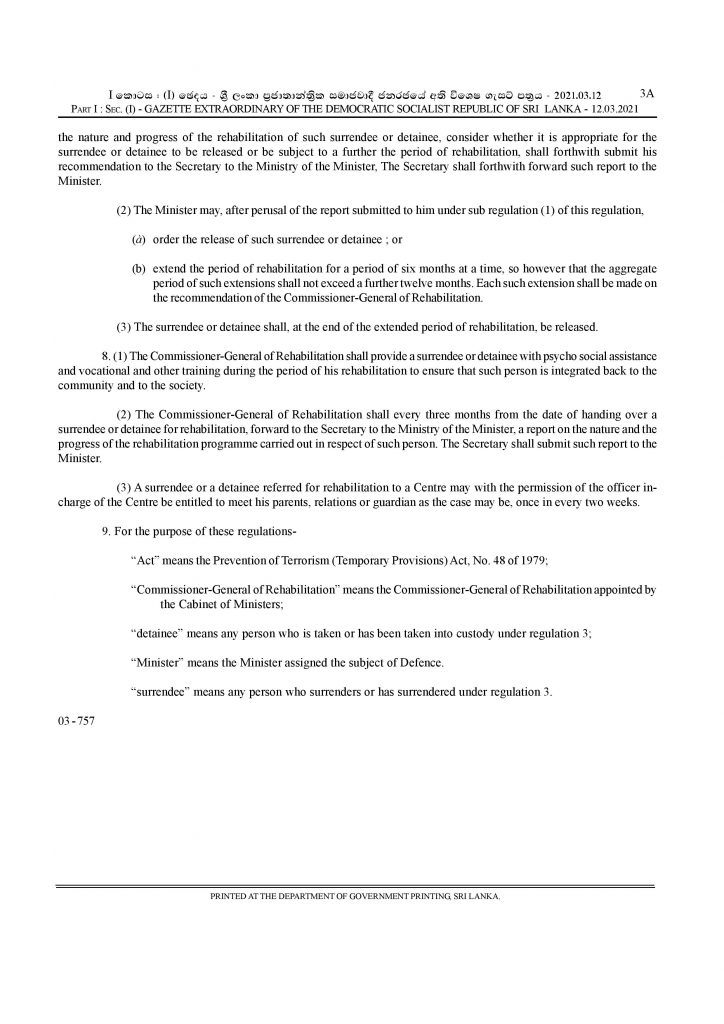
At the end of the period of rehabilitation specified in respect of a surrendee or detainee in the order made by the Magistrate under sub Regulation (4) of regulation 5, the Commissioner General of Rehabilitation shall, having regard to the nature and progress of the rehabilitation of such surrendee or detainee, consider whether it is appropriate for the surrendee or detainee to be released or be subject to a further the period of rehabilitation, shall forthwith submit his recommendation to the Secretary to the Ministry of the Minister, and the Secretary shall forthwith forward such report to the Minister.

The Minister may, after perusal of the report submitted to him under sub regulation (1) of the regulation, order the release of such surrendee or detainee or extend the period of rehabilitation for a period of six months at a time, so however that the aggregate
period of such extensions shall not exceed a further twelve months.

Modi speaks to President Rajapaksa days before Geneva vote

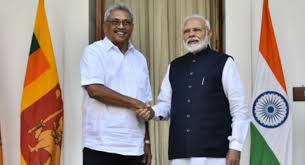
Indian Prime Minister Narendra Modi spoke to President Gotabaya Rajapaksa today, days before a vote in Geneva on a resolution against Sri Lanka.

All eyes are on the stand India will take on the resolution with some suggesting India will abstain from voting.

During the telephone conversation today Modi and Rajapaksa agreed to maintain regular contact between relevant officials, including in the context of the continuing COVID-19 challenges, the IANS news service reported.

The two leaders also reviewed topical developments and the ongoing cooperation between the two countries in bilateral and multilateral forums. Prime Minister Modi reiterated the importance of Sri Lanka to India’s Neighbourhood First policy.

The conversation between Modi and Rajapaksa took place days after Sri Lanka received 10 state-of-the-art railway passenger coaches from India as part of the supply of 160 coaches to Sri Lankan Railways by the Rail India Technical and Economic Service.

Meanwhile, the Indian High Commissioner to Sri Lanka Gopal Baglay also visited the Ram Setu in the island nation this week and offered his prayers on the occasion of Mahashivratri.

The official prayed for reinforcement of strong bonds between the people of India and Lanka, recalling their millennia-old links and the role of historical structures in creating these links.

Public Security Minister signs order banning burqa in Sri Lanka

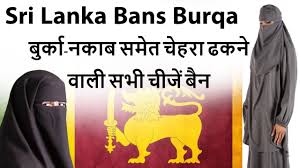
Minister of Public Security Rear Admiral (Rtd) Sarath Weerasekara says he has signed the Cabinet paper banning the burqa in Sri Lanka.

His remarks came during an event held at Munasinghe Aramaya in Kalutara today (March 13).

Explaining the reason for the move, the Public Security Minister said the burqa directly affects the national security of the country.

“We had a lot of Muslim friends when we were little. But Muslim females did not wear the burqa back then.”

Minister Weerasekara stressed that burqa is a symbol of religious extremism that came to Sri Lanka quite recently. “So, it will definitely be banned.”

Speaking on the regulation of Madrasas, he said there are more than 2,000 such schools in the country.

Minister Weerasekara said: “No one can arbitrarily open a school and teach the students whatever they want. All children aged from 5 – 16 years must study under a national education policy. We will take measures to ban more than 1,000 Madrasas which have not been registered under a national education framework.”

Posted in Uncategorized

South African President Ramaphosa Urged to Help Refer Sri Lanka to Int’l Criminal Court (ICC) – Urges P2P Movement

P2P Movement which recently led a five day march joined by tens of thousands of Tamils have urged South African President Ramaphosa to help to Refer Sri Lanka to the International Criminal Court (ICC), for war crimes, crimes against humanity and Genocide committed against the Tamil people by the Sri Lankan State.

“Since South Africa is one of the world powers, have undergone the pain of Apartheid, active on international issues and have good understanding of the Tamil issues, we are writing to appeal to you to help Refer Sri Lanka to the International Criminal Court (ICC) by including it in the current UN Human Rights Council Resolution on Sri Lanka called “Zero Draft” dated February 19, 2021, which was jointly submitted by United Kingdom, Canada, Germany, Montenegro and North Macedonia” said the letter.

“These countries did not even consult the victims when they drafted this Resolution and ignored joint appeals by Tamils, before they submitted this arbitrarily written “Zero Draft” at the UN Human Rights Council.”

As victims and victim representatives, we are appealing to you to use your good offices to help Refer Sri Lanka to the International Criminal Court (ICC) in the Zero Draft Resolution.

This “Zero Draft” does not meet even the basic expectations of the Tamil community who are the victims of the atrocity crimes including mass killings of Tamils and rape of Tamil women by the Sri Lankan Security Forces.

Due to the serious nature of the situation, Tamils unitedly sent a letter over a month ago to UN Human Rights Council members on January 15, 2021, urging Sri Lanka to be referred to International Criminal Court (ICC). This call was validated by tens of thousands of Tamils in a recent rally called Pothuvil to Polikandy (P2P) which was organized by the North-East Civil Society.

We specifically urge this request, after losing any hope of getting justice for war crimes, crimes against humanity, and Genocide committed against Tamil people by the Sri Lankan State.

“Not referring Sri Lanka to ICC will not only open the doors for abusers of atrocity crimes to escape justice, but it will also embolden Sri Lankan political leaders and Security Force leaders to commit international crimes against Tamil people without any hesitation, knowing well that they will not have to face justice. We strongly urge you to seriously consider this risk Tamil people will face, if Sri Lanka is not referred to International Criminal Court (ICC).”

Furthermore, the current High Commissioner for Human Rights Michelle Bachelet in her Report dated 27th January 2021 urged UN Human Rights Council Member States to take steps toward the referral of the situation in Sri Lanka to the International Criminal Court (ICC).

Also, twenty former senior UN officials, including four former UN High commissioners of human rights, nine independent UN experts and all members of the UN Secretary General’s Panel of Experts on Sri Lanka jointly issued a statement on February 18, 2021 titled “Sowing the Seeds of Conflict” have called on Sri Lanka to be Referred to International Criminal Court (ICC).

“….the fact is that Sri Lanka has made its justice institutions unavailable to its own victims. We therefore echo the High Commissioner’s recommendations to work with victims and their representatives to pursue justice through universal or extraterritorial jurisdiction. Existing international avenues for accountability such as the International Criminal Court (ICC) should be considered” said the report.

Some examples of international atrocity crimes committed against Tamil people by the Sri Lankan State:

1) According to the March 2011 Report of the UN Secretary General’s Panel of Experts on Accountability in Sri Lanka stated that war crimes and crimes against humanity were committed during the final stages of the armed conflict and around 40,000 Tamil civilians were killed in the final six months of the war that ended in May 2009.

2) According to the November 2012 Report of the UN Secretary-General’s Internal Review Panel on UN Action in Sri Lanka, over seventy thousand (70,000) Tamils were unaccounted for during the final six months of the war that ended in May 2009.

3) Several were killed when Sri Lankan forces repeatedly bombed and shelled an area designated by the Government as No Fire Zones (Safe zones). Even hospitals and food distribution centers were bombed. Several also died of starvation and bled to death due to lack of medical treatment.

4) International Truth and Justice Project (ITJP) in February 2017 handed over details to UN of Sri Lankan Military run “Rape Camps”, where Tamil women are being held as “sex slaves.”

5) According to UK Foreign and Commonwealth Office report on April 2013, there are over 90,000 Tamil war widows in Sri Lanka.

6) Thousands of Tamils disappeared including babies and children. UN Working Group on Enforced Disappearances stated that the second-highest number of enforced disappearance cases in the world is from Sri Lanka.

BELOW, PLEASE FIND THE FULL LETTER:

March 12, 2021

Honorable Cyril Ramaphosa
President of South Africa
Pretoria
South Africa

Dear Honorable President,

Appeal to South Africa to help Refer Sri Lanka to the International Criminal Court (ICC) at the UN Human Rights Council

Since South Africa is one of the world powers, have undergone the pain of Apartheid, active on international issues and have good understanding of the Tamil issues, we are writing to appeal to you to help Refer Sri Lanka to the International Criminal Court (ICC) by including it in the current UN Human Rights Council Resolution on Sri Lanka called “Zero Draft” dated February 19, 2021, which was jointly submitted by United Kingdom, Canada, Germany, Montenegro and North Macedonia.

These countries did not even consult the victims when they drafted this Resolution and ignored joint appeals by Tamils, before they submitted this arbitrarily written “Zero Draft” at the UN Human Rights Council.

As victims and victim representatives, we are appealing to you to use your good offices to help Refer Sri Lanka to the International Criminal Court (ICC) in the Zero Draft Resolution.

This “Zero Draft” does not meet even the basic expectations of the Tamil community who are the victims of the atrocity crimes including mass killings of Tamils and rape of Tamil women by the Sri Lankan Security Forces.

Due to the serious nature of the situation, Tamils unitedly sent a letter over a month ago to UN Human Rights Council members on January 15, 2021, urging Sri Lanka to be referred to International Criminal Court (ICC). This call was validated by tens of thousands of Tamils in a recent rally called Pothuvil to Polikandy (P2P) which was organized by the North-East Civil Society.

We specifically urge this request, after losing any hope of getting justice for war crimes, crimes against humanity, and Genocide committed against Tamil people by the Sri Lankan State.

Not referring Sri Lanka to ICC will not only open the doors for abusers of atrocity crimes to escape justice, but it will also embolden Sri Lankan political leaders and Security Force leaders to commit international crimes against Tamil people without any hesitation, knowing well that they will not have to face justice. We strongly urge you to seriously consider this risk Tamil people will face, if Sri Lanka is not referred to International Criminal Court (ICC).

Furthermore, the current High Commissioner for Human Rights Michelle Bachelet in her Report dated 27th January 2021 urged UN Human Rights Council Member States to take steps toward the referral of the situation in Sri Lanka to the International Criminal Court (ICC).

Also, twenty former senior UN officials, including four former UN High commissioners of human rights, nine independent UN experts and all members of the UN Secretary General’s Panel of Experts on Sri Lanka jointly issued a statement on February 18, 2021 titled “Sowing the Seeds of Conflict” have called on Sri Lanka to be Referred to International Criminal Court (ICC).

“….the fact is that Sri Lanka has made its justice institutions unavailable to its own victims. We therefore echo the High Commissioner’s recommendations to work with victims and their representatives to pursue justice through universal or extraterritorial jurisdiction. Existing international avenues for accountability such as the International Criminal Court (ICC) should be considered” said the report.

Some examples of international atrocity crimes committed against Tamil people by the Sri Lankan State:

1) According to the March 2011 Report of the UN Secretary General’s Panel of Experts on Accountability in Sri Lanka stated that war crimes and crimes against humanity were committed during the final stages of the armed conflict and around 40,000 Tamil civilians were killed in the final six months of the war that ended in May 2009.

2) According to the November 2012 Report of the UN Secretary-General’s Internal Review Panel on UN Action in Sri Lanka, over seventy thousand (70,000) Tamils were unaccounted for during the final six months of the war that ended in May 2009.

3) Several were killed when Sri Lankan forces repeatedly bombed and shelled an area designated by the Government as No Fire Zones (Safe zones). Even hospitals and food distribution centers were bombed. Several also died of starvation and bled to death due to lack of medical treatment.

4) International Truth and Justice Project (ITJP) in February 2017 handed over details to UN of Sri Lankan Military run “Rape Camps”, where Tamil women are being held as “sex slaves.”

5) According to UK Foreign and Commonwealth Office report on April 2013, there are over 90,000 Tamil war widows in Sri Lanka.

6) Thousands of Tamils disappeared including babies and children. UN Working Group on Enforced Disappearances stated that the second-highest number of enforced disappearance cases in the world is from Sri Lanka.

History of false promises by the Sri Lankan Government on accountability for international crimes:

We also would like to bring to your attention that successive Sri Lankan Governments have failed to implement any of the UNHRC Resolutions, including the ones they voluntarily co-sponsored.

The previous Government not only failed to take any meaningful steps to implement the Resolution that it co-sponsored, on the contrary the President, Prime Minister and senior members of the Government have repeatedly and categorically stated that they will not implement the UNHRC Resolution.

The current Government went one step further and officially withdrew from the co-sponsorship of the Resolutions 30/1, 34/1 and 40/1 and walked away from the UNHRC accountability process.

Furthermore, as a snub to UNHRC, only soldier who was ever punished and sentenced to death for killing civilians including children were pardoned by the current President.

Also, several senior military officials who were credibly accused of committing war crimes have been given promotions and treated as “war heroes.” One officer who was named in UN reports as a suspected war criminal was promoted as a four-star General.

We appeal to you to take our appeal seriously and include Referral to International Criminal Court (ICC) in the Zero draft Resolution.

Thank you.

Sincerely,

Thavaththiru Velan Swamigal (Coordinator)
S.Sivayoganathan (Coordinator)
Rev. Fr. Kandaiah Jagathas (Coordinator)

Contact: Thavaththiru Velan Swamigal / S. Sivayoganathan
Phone: (+94) 077 761 4121 / (+94) 077 906 0474
Email: p2p.people.uprising.movement@gmail.com
P2P Movement
P2P Movement
+94779060474 ext.
p2p.people.uprising.movement@gmail.com


Sri Lanka’s COVID-19 death toll up to 525

Sri Lanka’s COVID-19 death toll rose to 525 yesterday with the confirmation of five fatalities.

The Director General of Health Services said a 72 year old female from Akkareipattu passed away on Thursday while a 75 year old male, a resident of Moratuwa, also passed away on Thursday.

A 72 year old female a resident of Wattala meanwhile succumbed to the virus on Thursday while a 65 year old male a resident of Ragama passed away on Wednesday.

A 73 year old male resident of Polgasowita also succumbed to the virus yesterday.

The cause of deaths were determined as COVID-19 infections and other health complications.

Posted in Uncategorized

British parliament to hold debate on Sri Lanka ahead of crucial UN vote

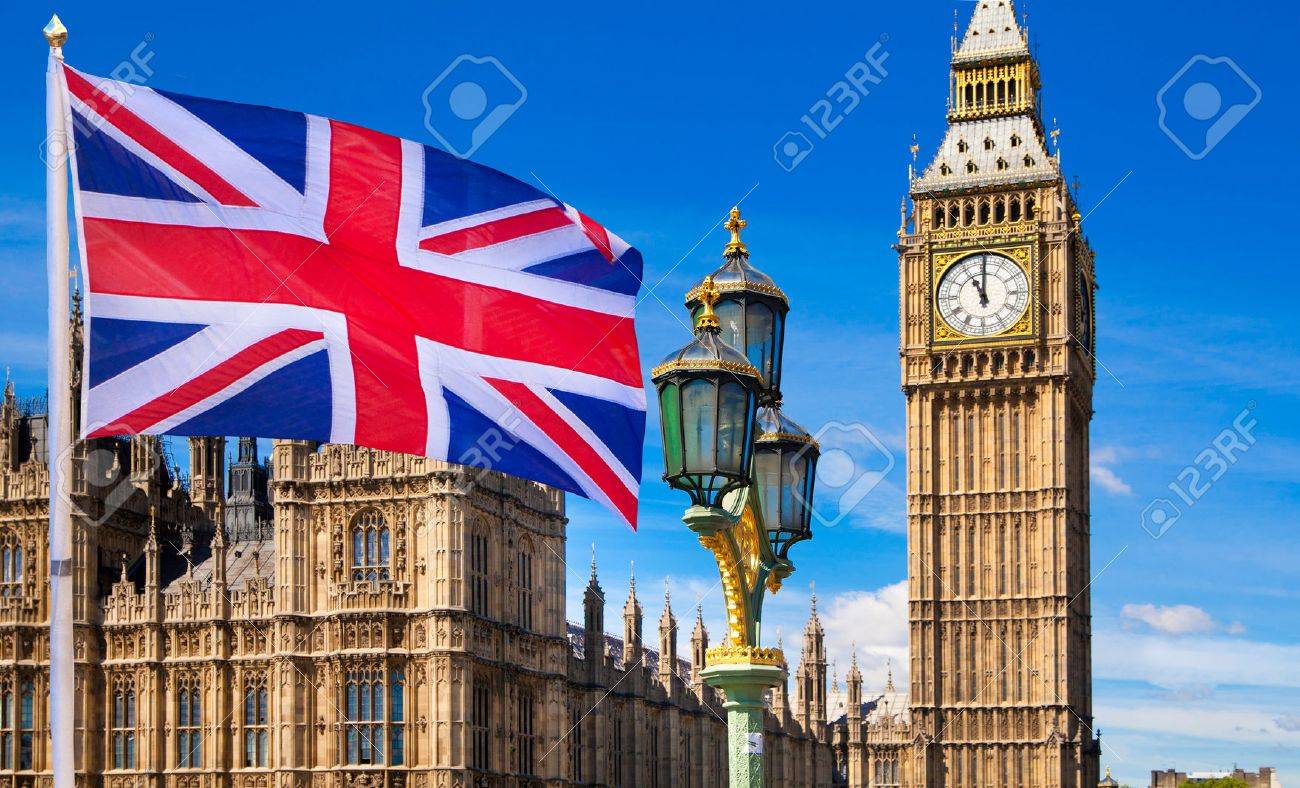
Britain’s parliament is to hold a debate on the “UK’s Commitment to Reconciliation, Accountability and Human Rights in Sri Lanka,” as a resolution on the issue is due to be voted on at the UN Human Rights Council in Geneva this month.

The debate, organised by the All Party Parliamentary Group on Tamils, will be held on March 18th.

The announcement of the debate comes as the Core Group on Sri Lanka at the United Nations Human Rights Council tabled a resolution on accountability.

The resolution, being tabled in Geneva today, calls on the Office of the High Commissioner for Human Rights to “collect” as well as “consolidate, analyse and preserve” evidence that could be used in future war crimes trials.

However, it has failed to implement UN High Commissioner Michelle Bachelet’s recommendations which call on member states to consider asset freezes and travel bans on Sri Lankan officials credibly accused of human rights abuses and to consider “steps towards the referral of the situation in Sri Lanka to the International Criminal Court (ICC)”.

Whilst the British government has defended the resolution, both the UK Labour and Liberal Democrat parties have called for stronger wording.

Shadow Minister Stephen Kinnock, called on the government to “comprehensively rewrite” the current proposed UN resolution. Leader of the UK Liberal Democratic Ed Davey also slammed the proposed resolution on Sri Lanka stating it “completely fails to rise to the challenge”.

Posted in Uncategorized

Indian envoy lays foundation stone for 144 transit housing units for Madhu church pilgrims

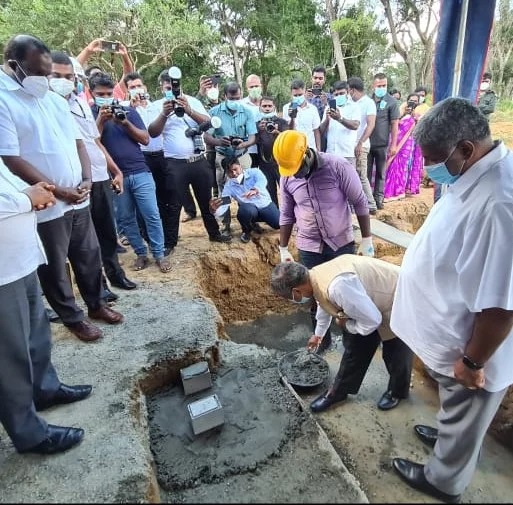
The Indian High Commissioner Gopal Baglay on Friday, laid the foundation Stone for the construction of 144 transit housing units for pilgrims at the Shrine of Our Lady of Madhu in Mannar along with Hon’ble Prasanna Ranatunga, Minister of Tourism in the presence of Most Rev. Dr. Emmanuel Fernando , Bishop of Mannar, and three Members of Parliament – TELO Leader Selvam Adaikkalanathan,SLPP K. Kader Masthan and EPDP Kulasingam Dhileeban.

These housing units will be built with grant assistance from India at a cost of around SLR 300 million.

The High Commissioner had a luncheon meeting with Mrs.P.S.M Charles, Governor of the Northern Province and other senior functionaries from the province. They had comprehensive discussions on deeper engagement in the fields of education, skills development, health, agriculture, water and fishing.

The High Commissioner attended a dinner hosted in his honor by S. Balachandran, Consul General of India in Jaffna. He interacted with prominent dignitaries from political, economic, academic, social and cultural spheres. The discussions at the dinner put emphasis on cooperation for development of the Northern Province through increased investment and assistance from India.

The government of India has a long history of carrying out development projects in diverse sectors including livelihood, health, education, industrial development in Northern and Eastern Provinces

High Commissioner Baglay commenced his four-day visit to Northern and Eastern Provinces of Sri Lanka on March 11, by attending Shivratri Pooja at the sacred Thiruketeeswaram temple. After offering prayers at the temple, the High Commissioner reviewed the restoration project at the temple that was carried out by government of India. This project is being executed on a grant basis at a cost of SLR 326 million.

He also prayed at the Ramsethu (Adam’s bridge) – a connecting bridge between India and Sri Lanka.

Posted in Uncategorized

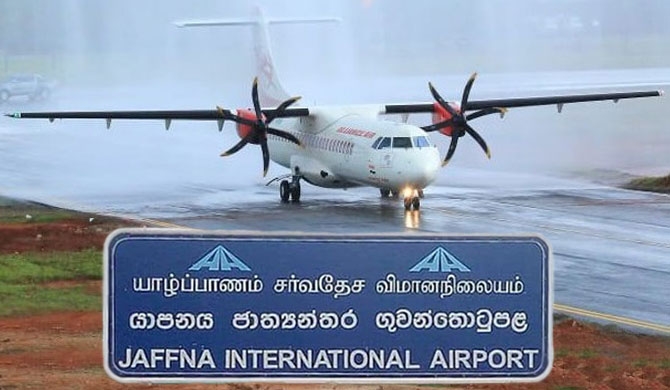
Govt. to resume Jaffna-Chennai direct flights

Prasanna Ranatunga, Minister of Tourism, says that the government is planning to resume Jaffna-Chennai direct flight which was suspended due to the Covid epidemic.

The Minister said that this is also expected to be launched under the same concept of the Tourist Air Bubble to be launched between India and Sri Lanka.

He was speaking at the inauguration of 144 intermediate housing units for pilgrims participating in the Madhu pilgrimage at a cost of Rs. 300 million with the assistance of the Government of India.

Meanwhile, domestic flights between Ratmalana, Jaffna and Batticaloa are scheduled to commence soon.

The government also intends to develop the Jaffna and Batticaloa airports as international airports.

Posted in Uncategorized

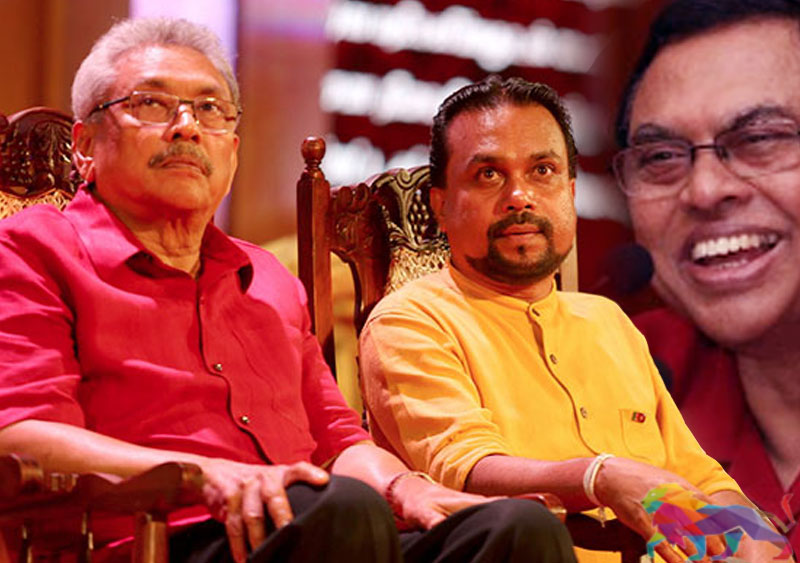
SLPP furious over alleged Rishad links, claims Wimal stabbed govt. in the back

The government had been stabbed in the back by National Freedom Front (NFF) leader and Industries Minister Wimal Weerawansa, SLPP parliamentary group sources said yesterday (11).

Referring to Minister Weerawansa’s accusations regarding clandestine links between a section of the government and All Ceylon Makkal Congress (ACMC) leader Rishad Bathiudeen, allegedly involved with those responsible for 2019 Easter Sunday carnage, sources pointed out that the NFF leader’s move was intended to undermine the SLPP.

Delivering a public lecture at Sambuddhathva Jayanthi Mandiraya, on Tuesday (9), lawmaker Weerawansa alleged a group of decadent ruling party politicians who realised entering into political marriage with what the minister called Islamic extremism in the future had prevented the exposure of the likes of Rishad Bathiudeen.

Weerawansa holds Small and Medium Business and Enterprise Development, Industries and Supply chain Management portfolios. The NFF parliamentary group consists of six members, including one National List MP.

SLPP sources said that Minister Weerawansa’s outburst had caused irreparable damage to the government at a time it was under heavy pressure over the alleged shortcomings in the Presidential Commission of Inquiry (PCoI) report and the controversial recommendation that 22 volumes of it shouldn’t be handed over to the Attorney General on the basis of them being sensitive.

Responding to a query, sources said that Minister Weerawansa had attacked the government the day before the commencement of three-day debate on the PCoI report and the issue at hand had been brought to the notice of Prime Minister Mahinda Rajapaksa.

Minister Weerawansa alleged that the likes of Rishad Bathiudeen and former Eastern Province Governor M. L.A, M, Hizbullah had been taking overland in the Mannar region and the Eastern Province, respectively in line with strategy promoted by Yusuf al-Qaradawi, an Egyptian Islamic scholar based in Doha, Qatar.

The National Freedom Front Leader alleged that Rishad Bathiudeen during his tenure as the Industries and Commerce Minister of the UPFA (2010-2015) and yahapalana (2015-2019) administrations had deliberately undermined some businesspersons on racial grounds. Minister Weerawansa, who, too, had been a minister in the same Cabinet with Rishad Bathiudeen, explained how the ACMC leader bad exploited his ministerial portfolio for the benefit of a particular community.

Minister Weerawansa questioned the rationale behind the PCoI conveniently not recommending specific measures in respect of President of the Muslim Council M. N. Ameen, who included extremist teachings of Yusuf al-Qaradawi in Muslim teachers’ guide.

Weerawansa alleged that Yusuf al-Qaradawi’s teachings had been severely inimical to the country and promoted violence. Minister Weerawansa also said that the PCoI owed an explanation why specific recommendations weren’t made in respect of Hizbullah in spite of him being identified as a person who propagated extremism in the Kattankudy area.

The NFF leader also questioned the circumstances under which Rishad Bathiudeen’s brother, Riyaj arrested in connection with his alleged involvement with the Easter Sunday carnage under the Prevention of Terrorism Act (PTA) in April 2020 had been released. Minister Weerawansa said the police, after accusing Riyaj of being in touch with one of the Easter Sunday bombers, had quietly released him.

Commenting on one-time Western Province Governor Azath Salley’s conduct, Minister Weerawansa asked why the PCoI refrained from recommending action against the NUA (National Unity Alliance) leader Salley. Alleging that the then Prime Minister Ranil Wickremesinghe, in spite of being responsible for disrupting intelligence services thereby creating an environment conducive for Thowheed terrorists was conveniently let off the hook, Minister Weerawansa questioned the conduct of the P CoI on many points.

Minister Weerawansa tore into the PCoI questioning the motives of its members who cleared Wickremesinghe although he was responsible for the breakdown of the national security apparatus. He said there was no point in going after the then Defence Secretary Hemasiri Fernando, IGP Pujith Jayasundera, Chief of National Intelligence retired DIG Sisira Mendis and Chief of State Intelligence Services (SIS) DIG Nilantha Jayawardana when the very person who created a situation conducive for Thowheed terrorists escaped the attention of the PCoI.

Lambasting the PCoI for omissions, Minister Weerawansa asked whether Easter Sunday bomber Zahran Hashim’s ghosts had been active in the PCoI, and how the PCoI had recommended specific action against Bodu Bala Sena (BBS) General Secretary Ven. Galagodaatte Gnanasara over alleged extremist activity and left out those who connived, aided and abetted Easter Sunday conspirators.

The then President Maithripala Sirisena appointed the PCoI whereas his successor Gotabaya Rajapaksa extended its term.

SL raises concerns with China over door mat using national flag print

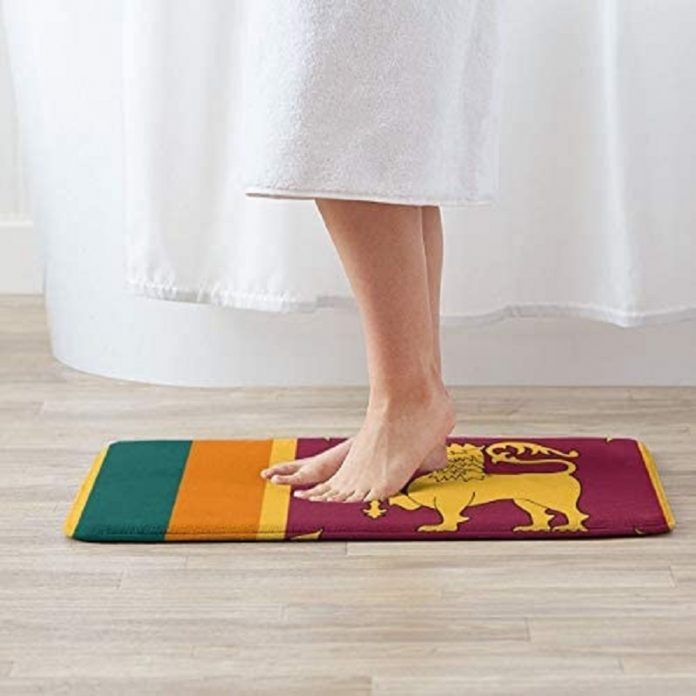
The Foreign Ministry today said that it had called for a full scale inquiry into the sale of non slip doormats on the Amazon site with the print of Sri Lanka’s national flag.

The Ministry, in a statement said that following, recent reports on social media platforms of a “Sri Lanka Flag Non-Slip Doormat” which is being advertised for online purchase on the Amazon website, Foreign Secretary Admiral Prof. Jayanath Colombage has informed the Sri Lanka Embassy in Beijing to contact the manufacturer concerned in China and also has brought to the attention of the Chinese Embassy in Colombo, the advertising of Sri Lanka’s national flag as a doormat.

The Sri Lanka Embassy in Washington D.C has also been instructed to follow up on the matter with the advertising platform Amazon.

The doormats are being sold on Amazon.com for US$ 12 per piece. The site is reported to be distributing the doormats worldwide from Singapore and has announced a shipping cost of US$ 9.02.