India tells UNHRC Sri Lanka must respect rights of Tamils

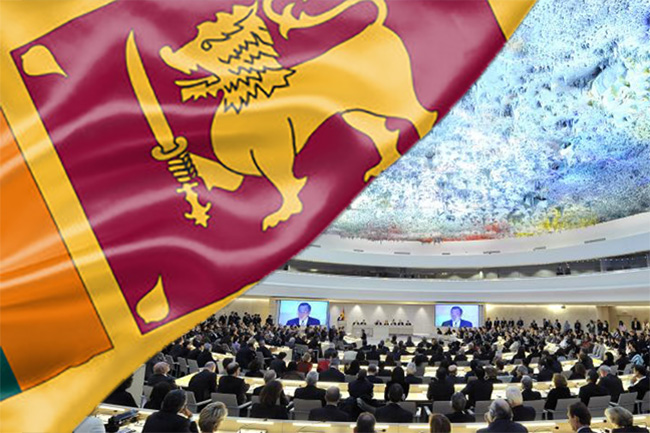
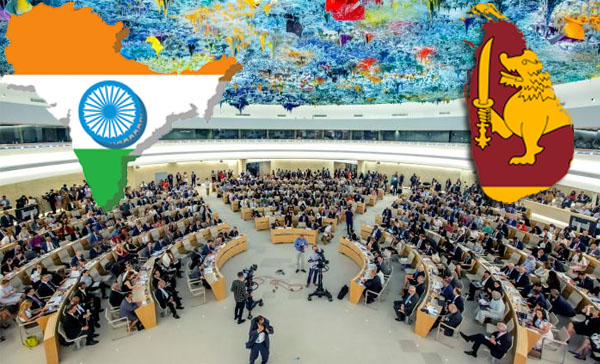
India told the UN Human Rights Council (UNHRC) in Geneva today Sri Lanka must respect the rights of the Tamils.

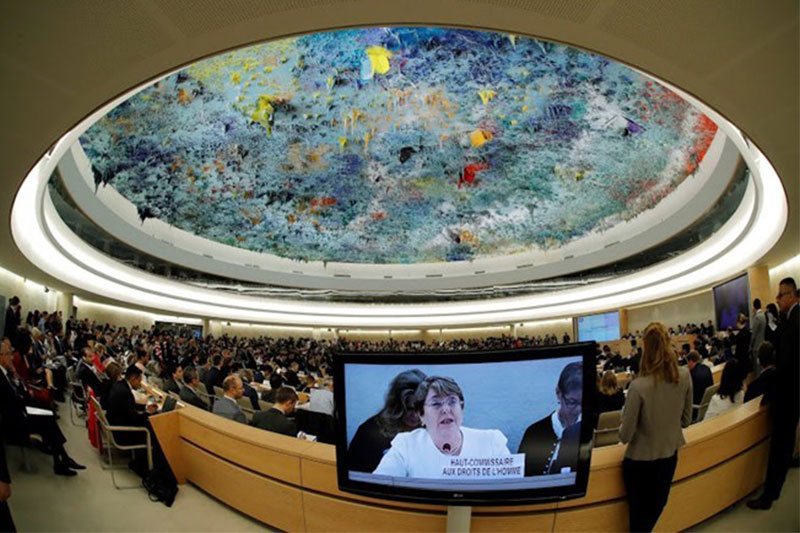
Speaking during the interactive dialogue on the report on Sri Lanka by the Office of the High Commissioner for Human Rights (OHCHR), during the 46th Session of Human Rights Council today, Ambassador Indra Mani Pandey, the Permanent Representative of India to Geneva, said that India has taken note of the High Commissioner’s report on Sri Lanka and her oral remarks.

Pandey noted that the Council has adopted seven resolutions on the question of human rights in Sri Lanka since May 2009, when the three decades old conflict ended.

“India has been an active participant in the discussions on these Resolutions and has remained engaged with Sri Lanka as its close friend and immediate neighbor,” he said.

The Ambassador said that India’s consistent position rests on two pillars. One is to support Sri Lanka’s unity and territorial integrity, and the other is the abiding commitment to the aspirations of the Tamils of Sri Lanka for equality, justice, peace and dignity.

“These are not either-or choices. We believe that respecting the rights of the Tamil community, including through meaningful devolution, contributes directly to the unity and integrity of Sri Lanka. Therefore, we advocate that delivering on the legitimate aspirations of the Tamil community is in the best interests of Sri Lanka,” the Ambassador said.

India called on Sri Lanka to take necessary steps for address such aspirations, including through the process of reconciliation and full implementation of the 13th Amendment to the Constitution of Sri Lanka.

The Ambassador said that the assessment of the High Commissioner regarding developments nearly 12 years from the end of the conflict raises important concerns.

Pandey also said the Sri Lankan Government has articulated its position on these issues as well.

He said that in evaluation of both of these, one should be guided by a commitment to find a lasting and effective solution for the issue.
Posted in Uncategorized

Pakistan offers Sri Lanka $50m credit line for defence purchases

Pakistan has extended a $50m line of credit for defence purchases to Sri Lanka, its foreign ministry says as Pakistani Prime Minister Imran Khan concludes a landmark visit to the island nation.

An agreement was also made to increase intelligence sharing and cooperation on other security issues, including anti-terrorism and anti-crime operations.

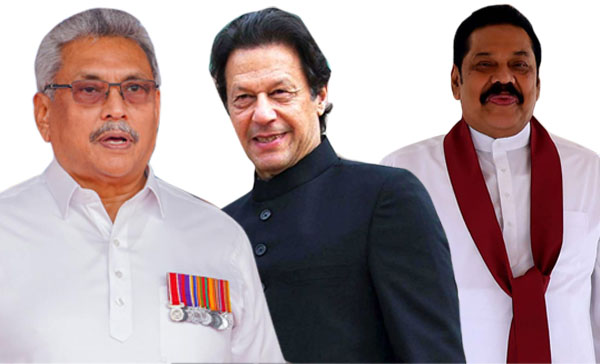
Khan left Sri Lanka on Wednesday after a two-day visit that saw him hold talks with his Sri Lankan counterpart Mahinda Rajapaksa and President Gotabaya Rajapaksa, address a bilateral investment conference, and hold numerous other engagements.

“Both sides expressed satisfaction at the existing bilateral cooperation in the field of defence and noted that the elevation of staff-level talks to Defence Dialogue has further provided an opportunity to expand security sector relations,” said a joint statement.

Pakistan has provided significant military support to Sri Lanka in the past, notably in the closing stages of the country’s decades-long civil war against Tamil rebels, when Pakistani forces provided training and material support to the Sri Lankan military.

Trade ties

The other major focus of Khan’s visit, the first by a head of state to Colombo since the Rajapaksas assumed power last year, was enhancing trade and investment ties.

The Pakistan-Sri Lanka Trade and Investment Conference, held in Colombo on Wednesday, sought to connect businesses from the two countries to expand trade, as both struggle with a pandemic-related economic slowdown.

“The two sides stressed the importance of realising the goal of achieving US$ 1 billion bilateral trade target and also agreed to work towards broadening and deepening of Pakistan Sri Lank Free Trade Agreement,” said the statement.

In separate talks, Pakistan’s foreign minister Shah Mehmood Qureshi and his Sri Lankan counterpart Dinesh Gunawardena discussed the possibility of linking Sri Lankan ports to the southern Pakistani port of Gwadar, a flagship project of the China Pakistan Economic Corridor, a Pakistani statement said.

“Foreign Minister Qureshi … highlighted the mutual benefit that linking of Gwader Port in Pakistan to the Sri Lankan Ports could bring to both the countries. He invited Sri Lanka to benefit from Gwader Port for easy access to the Central Asian markets,” said the statement.

Cultural exchanges

The visit also focused on cultural exchanges and cooperation in the areas of sports and education.

Pakistan announced 100 new scholarships for Sri Lankan students who wished to study at medical and dental schools in Pakistan.

The potential for expanding religious tourism was also discussed, with the joint statement stressing the need to expand Sri Lankan tourism to Pakistan, which is home to a number of notable Buddhist archaeological sites.

“While realising the existence of great potential of religious tourism to Buddhist archaeological sites and noting the close ancient and cultural ties dating back to Gandhara civilisation, the two sides underscored the importance of enhancing cooperation in the field of tourism and highlighted the benefits of sharing expertise in the hospitality industry, including training and capacity building,” said the statement.

The two sides signed memorandums of understanding on strengthening cooperation in tourism, investment, and educational exchanges. Pakistan also announced a $330,000 grant for the promotion of sports in Sri Lanka.

A joint parliamentary body was also reconstituted, with greater cooperation between the two countries’ legislatures planned. Both sides also stressed the importance of the South Asian Association for Regional Cooperation (SAARC), a regional body that has seen limited cooperation in recent years due to bilateral issues between India and Pakistan.

SOURCE : AL JAZEERA

Justice has failed Sri Lanka civil war victims: UNHCR

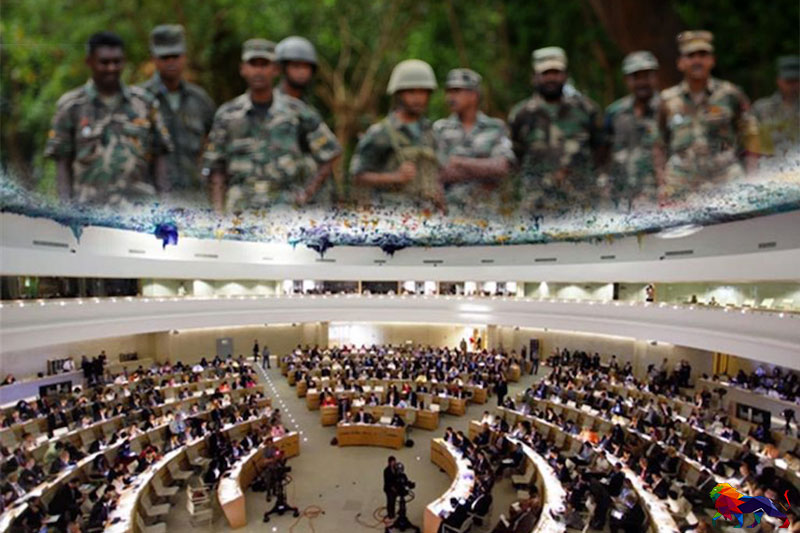
Twelve years after the end of armed conflict in Sri Lanka, domestic efforts to ensure justice for victims have failed, the United Nations High Commissioner for Human Rights Michelle Bachelet said on Wednesday.

Introducing her report on Sri Lanka to the UN Human Rights Council, Bachelet said the effect of the conflict on thousands of survivors from all communities was devastating.

“Despite commitments made in 2015, the current government, like its predecessor, has failed to pursue genuine truth-seeking or accountability processes,” she said.

“The impact on thousands of survivors, from all communities, is devastating. Moreover, the systems, structures, policies and personnel that gave rise to such grave violations in the past remain – and have recently been reinforced.”

The decades-long civil war between the Sri Lankan security forces and the separatist Tamil Tigers ended nearly 12 years ago in 2009.

The war killed about 100,000 people, including up to 40,000 Tamil civilians killed by the Sri Lankan forces in the final onslaught, a charge the government denies.

UN reports have accused Sri Lankan troops of shelling hospitals and indiscriminate aerial bombardments, executing surrendering rebels and causing the disappearance of thousands of minority Tamils.

Bachelet said the independence of the judiciary and other accountability bodies has been “deeply eroded” following a recent constitutional amendment and accused the Sri Lankan government of blocking the possibility of genuine progress to end impunity.

“The independence of the judiciary, the Human Rights Commission of Sri Lanka, the National Police Commission and other key bodies has been deeply eroded by the recently adopted 20th Constitutional Amendment,” Bachelet said.

“The growing militarisation of key civilian functions is encroaching on democratic governance. The continued failure to implement comprehensive reforms – or to vet personnel – leaves in place security and military officers who have been implicated in alleged grave crimes and violations.”

She said longstanding, structural and systemic issues persisted in Sri Lanka and warned there were “clear warning signs that past patterns of violations could be repeated”.

A UNHCR report last month said the government of President Gotabaya Rajapaksa has reversed some advances made under previous administrations in protecting human rights in the country.

Surveillance of rights activists and dissidents has increased and a climate of self-censorship has emerged, it said.

Rajapaksa won the 2019 presidential election on a nationalist agenda which included a promise that troops who crushed the Tamil rebels would not be prosecuted.

Rajapaksa was the top defence official when government forces crushed the rebel fighters in a military campaign that ended in May 2009. His brother Mahinda was president then and is currently the prime minister.

On Tuesday, Sri Lanka urged the UN Human Rights Council to reject a forthcoming resolution voicing “serious concern” over the “deteriorating” rights situation in the country.

Foreign Minister Dinesh Gunawardena told the council the resolution was a “political move” and part of an “unprecedented propaganda campaign” against Sri Lanka.

The United Kingdom, Canada, Germany, Malawi, Montenegro and North Macedonia have submitted a draft resolution for consideration by the 47-member council next month.

SOURCE : AL JAZEERA AND NEWS AGENCIES

UN rights chief accuses government; SL rejects report

UN human rights chief Michelle Bachelet has accused the government of failing to “pursue genuine truth-seeking and accountability processes” just as the previous administration.

“…the system’s, structures, policies and personnel that gave rise to such grave violations in the past remain and have been recently reinforced,” Bachelet said during the 46th UN Human Rights Council sessions.

She made these remarks during an interactive dialogue on the report of the Office of the United Nations High Commissioner for Human Rights on Tuesday.

The UN human rights chief also lashed out at the 20th amendment passed recently, citing that it has tarnished the independence of the judiciary, the human rights commission and, the national police commission.

“The policy of forced cremation of covid-19 victims has caused pain and distress to the minority Muslim and Christian communities,” Bachelet observed.

She also noted that commissions appointed by the government have failed to credibly establish and ensure accountability.

“The latest commission of inquiry appointed in January 2021 to review the findings of previous commissions promises to repeat the cycle without meaningful result,” Bachelet insisted.

However, foreign minister Dinesh Gunawardena said that Sri Lanka rejects the report of the UN human rights chief.

“Sri Lanka rejects High Commissioner’s report which has unjustifiably broadened its scope and mandated further incorporating many issues of governance and matters that are essentially domestic for any self-respecting sovereign country,” he said.

The minister also lamented that the human rights chief had refused to publish remarks made by the government as an addendum in the report.

“Sri Lanka calls upon the members of this council that any resolution that is based on this report be rejected by this council and be brought to a closure,” he urged.

The UN Core Group on Sri Lanka has said it would table a resolution against the country at the ongoing UN Human Rights Council sessions.

Posted in Uncategorized

Canada concerned over deterioration of rule of law in Sri Lanka

Canada is concerned over the deterioration of the rule of law in Sri Lanka.

The Minister of Foreign Affairs of Canada, Marc Garneau, said that Canada is deeply concerned about the deteriorating human rights situation in Sri Lanka.

He said this includes threats to human rights defenders and civil society organizations, suppression of memorialization, forced cremations of religious minorities and the deterioration of the rule of law.

Marc Garneau said the recent report of the High Commissioner for Human Rights highlights the need for the UN Human Rights Council to ensure accountability for crimes committed in Sri Lanka.

Garneau said Canada will continue to support measures that will support accountability, reconciliation and peace.

The Minister of Foreign Affairs of Canada was speaking at the 46th Session of the UN Human Rights Council in Geneva.

Canada is part of the Core Group which has tabled a resolution on Sri Lanka at the UN Human Rights Council.

Posted in Uncategorized

US backs UN resolution against Sri Lanka for lack of accountability

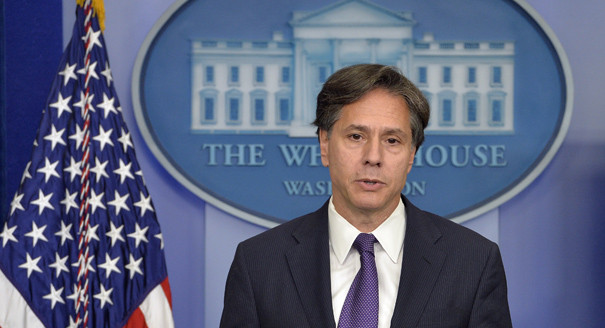
US Secretary of State Antony J. Blinken today (24) encouraged the United Nations Human Rights Council (UNHRC) to support the resolution on Sri Lanka.

Speaking at the Council today, Blinken noted the lack of accountability for past atrocities in Sri Lanka.

“We encourage the Council to support resolutions at this session addressing issues of concern around the world, including ongoing human rights violations in Syria and North Korea, the lack of accountability for past atrocities in Sri Lanka, and the need for further investigation into the situation in South Sudan,” he said.

Blinken said the United States is fully committed to the universal protection and promotion of human rights.

“We look forward to working collaboratively with friends and partners in this body and in the NGO community from all regions, to ensure that the Council lives up to its mandate and effectively contributes to human rights around the world,” Blinken said.

Blinken also noted that the United States is now re-engaging with the Human Rights Council and other important international organisations.

“I’m here to reaffirm America’s commitment to respect and defend the human rights of all people, everywhere. As the Universal Declaration of Human Rights proclaims: All human rights are universal, indivisible, interdependent, and interrelated,” he said.

Blinken said the United States is placing democracy and human rights at the centre of its foreign policy, because they are essential for peace and stability.

18 countries pledge to speak on behalf of SL at UNHRC

Eighteen countries have pledged to speak on behalf of Sri Lanka during the ongoing session of the United Nations Human Rights Council (UNHRC), a top source said.

These countries will share their views in support of the Sri Lankan government’s position during the High-Level Segment and events. According to the source, there are countries that hold the UNHRC membership among these 18 countries that will stand by Sri Lanka.

Sri Lanka has undertaken an intense international campaign to lobby for the support of the respective countries to thwart an attempt by the core group of countries to pass a resolution on Sri Lanka on alleged human rights and accountability issues during the war time.

A zero draft of the resolution has been circulated at the moment. Sri Lanka believes the content is identical to the 30/1 resolution passed in 2015. The present government that took office in 2019 withdrew from co-sponsorship of this resolution in March, last year.

The zero draft calls for the Office of the High Commissioner to enhance its monitoring and reporting on the human rights situation in Sri Lanka, including progress on reconciliation and accountability, and to present a written update to the Human Rights Council at its forty-ninth session, and a comprehensive report including further options for advancing accountability at its fifty-first session, both to be discussed in interactive dialogues.

However, India has not yet made known its stand on Sri Lanka. The two countries are currently involved in a row over the withdrawal from the commitment of the previous government to develop the East Container Terminal of Colombo Port jointly with India. Also, India has raised concerns over the offer of a contract to a Chinese company to execute power projects in three islets off Jaffna. India is opposed to the involvement of a Chinese company citing security concerns. The Chinese company issued a statement on Monday firmly opposing India’s interference. The company said it won the project through an international, competitive bidding process, and wanted Sri Lanka to respect the guidelines.

Posted in Uncategorized

Khan assures Gotabaya Pakistan’s support for Sri Lanka

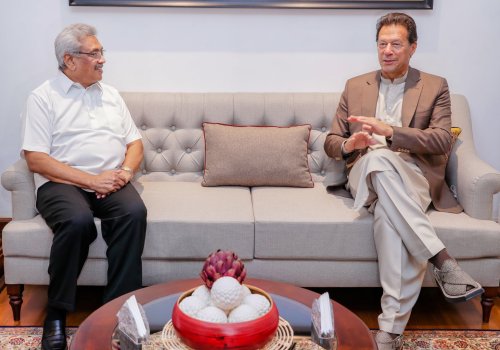
Pakistan ​Prime Minister Imran Khan has assured Pakistan’s support for Sri Lanka during discussions with President Gotabaya Rajapaksa at the Presidential Secretariat today.

During the meeting, the visiting Pakistan ​Prime Minister had extended a cordial invitation to President Rajapaksa to visit Pakistan at the earliest convenience.

The Pakistan High Commission in Colombo said the one-on-one meeting between the two leaders was followed by delegation-level talks. The talks were held in a warm and cordial atmosphere.

Prime Minister Imran Khan underlined the exceptional quality of Pakistan-Sri Lanka relations marked by trust, understanding and mutual support. The Prime Minister emphasized the importance of building robust economic partnership characterized by enhanced bilateral trade, investments, and commercial cooperation.

The Prime Minister also laid emphasis on deeper collaboration in diverse fields —particularly agriculture, tourism, science and technology, sports, education and culture. The importance of sharing experiences in poverty alleviation was stressed.

The Pakistan High Commission in Colombo further said the Prime Minister underlined that Pakistan and Sri Lanka had always stood by each other.

Imran Khan had re-affirmed Pakistan’s steadfast support to Sri Lanka in future. The close cooperation between the two sides in the multilateral fora was also re-affirmed.

While noting the close traditional and cultural ties between the two countries, Prime Minister Imran Khan highlighted that Pakistan has the potential of being a choice destination for religious tourism for Sri Lankan people. He particularly highlighted the rich Buddhist heritage of Pakistan.

In the regional context, Prime Minister Imran Khan shared his vision of peace, development, and connectivity.

Prime Minister Imran Khan further emphasized the importance of regional cooperation through the platform of SAARC and the opportunities for regional prosperity through CPEC, the flagship project of the Belt and Road Initiative (BRI).

Indian MP writes to UNHRC urging strong resolution against Sri Lanka

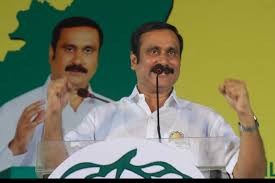
Indian MP Anbumani Ramadoss yesterday wrote to the UN Human Rights Council (UNHRC) urging the Member States to pass a strong resolution affirming an international commitment to protect human rights and justice in Sri Lanka.

He requested the Member States to take measures to protect the Tamil population of Sri Lanka against human rights violation.

In particular, he requested to create mechanisms to find a lasting political solution under the arbitration of the international community in a way that fulfills the long standing legitimate aspirations of the Tamil people.

He requested that their physical security and political authority to be granted to decide their own political, cultural, economic and social affairs.

In order to further this, he requested the OHCHR field officers be placed in the Northern and Eastern Provinces to monitor and report ongoing violations.

Ramadoss commended the resolution to be brought against Sri Lanka at the 46th UNHRC Session.

He urged that the UNHRC vote for a resolution which implements the process of bringing accountability and justice for the victims of alleged crimes (war crimes, crimes against humanity and genocide) in Sri Lanka by referring the case or creating an appropriate international criminal justice mechanism.

He also recommended the establishment of an international independent investigative mechanism to assist in the investigation and prosecution of persons responsible for atrocities.

He also called on Member States as requested by the High Commissioner to support relevant proceedings.

OIC calls on Sri Lanka to respect right of burial of Muslims

The Organisation of Islamic Cooperation (OIC) has called on Sri Lanka to respect the right of burial of the Muslim community.

Dr. Yousef Al Othaimeen, Secretary General of the Organization of Islamic Cooperation, speaking during the High-Level Segment of the 46th session of the United Nations Human Rights Council, said that the OIC is keen on monitoring the situation of Muslim communities in non-OIC Members.

In this regard, he said the OIC is concerned with the situation of Muslims in Sri Lanka as they are denied the right to bury the bodies of COVID-19 victims following the Islamic rules while adhering to the guidelines of the World Health Organization.

“The OIC urges the Government of Sri Lanka to take swift action to guarantee and respect the right of burial of the Muslim community,’ he said.

Regarding freedom of religion, he said the OIC firmly supports international efforts and the global policies geared towards fighting religious intolerance, stigmatization, discrimination, incitement to violence and violence against persons based on religion or belief, as underlined in the Human Rights Council Resolution 16/18 and 66/167 of the UN General Assembly, both adopted by consensus in 2011.

“These resolutions provide for various substantive actions to address the concerns related to freedom of religion. In line with this conviction, the OIC has launched, in partnership with other stakeholders, many inter-religious dialogues such as the Buddhist-Muslim dialogue, the Muslim-Orthodox dialogue and is engaged in many activities aiming at reinforcing respect for cultural diversity and freedom of belief, exploring avenues of understanding between Muslims and non-Muslims and promoting the precepts of tolerance, coexistence,” Dr. Yousef Al Othaimeen said.

Dr. Yousef Al Othaimeen also said that the OIC supports all international and regional efforts aimed at preventing violent extremism and combating international terrorism in order to safeguard global peace and security.