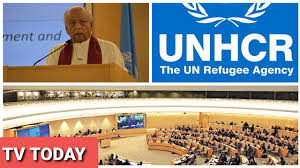
Sri Lanka warns UNHRC and calls for rejection of resolution

Minister of Foreign Affairs Dinesh Gunawardena has appealed to all member states of the United Nations Human Rights Council (UNHRC) to reject any resolutions against Sri Lanka.

He also said it is regrettable that despite the spirit of cooperation with the HRC and its mechanism, elements working against Sri Lanka intend to table another country-specific resolution based on the OHCHR report.

Foreign Affairs Minister’s remarks came during the 46th session of the United Nations Human Rights Council (UNHRC) a short while ago. He delivered his speech through video technology.

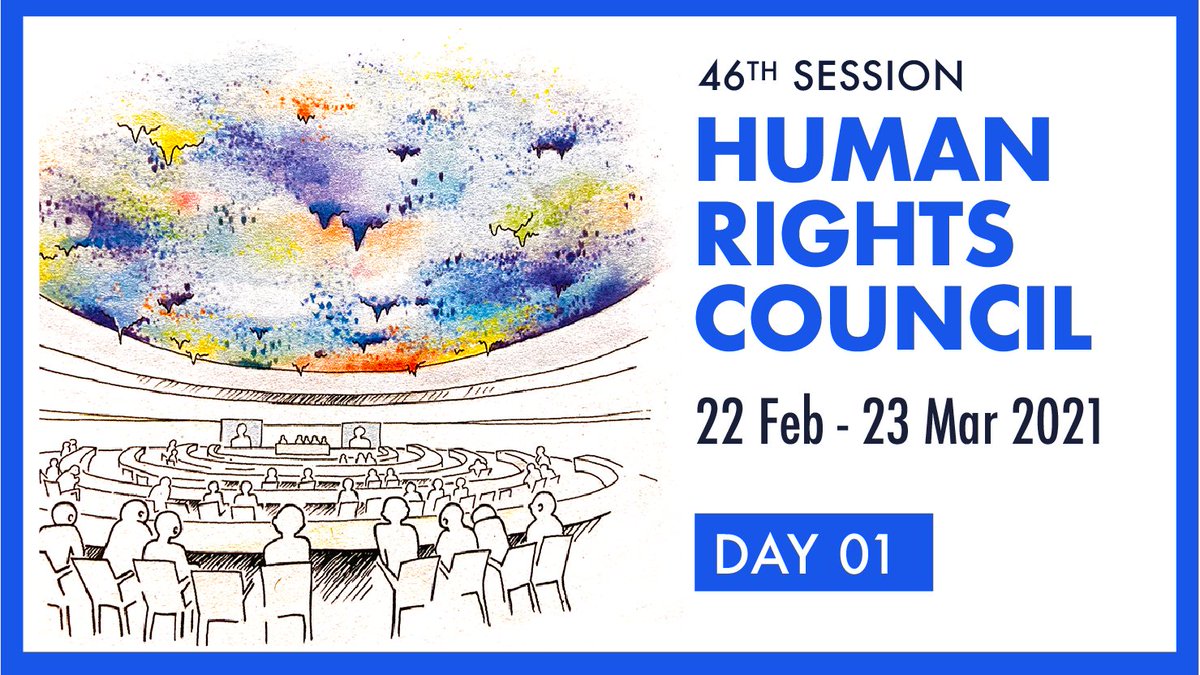
The 46th session of the United Nations Human Rights Council (UNHRC) commenced yesterday (February 22) in Geneva, Switzerland, and is scheduled to continue until March 23.

Core Group on Sri Lanka – consisting of UK, Canada, Germany, North Macedonia, Malawi, and Montenegro – plans to put forward a further resolution at the UNHRC session to promote reconciliation, accountability and human rights in the island nation.

The new resolution comes in line with a recent report published by the Office of the UN High Commissioner for Human Rights (OHCHR) on human rights, reconciliation and accountability in Sri Lanka.

UN Human Rights Commissioner Michelle Bachelet is due to present the relevant report during the session.

Full statement delivered by the Foreign Affairs Minister is produced below:

Madam President,
Madam High Commissioner,
Distinguished Ambassadors,
Ladies and Gentlemen,

As I address you today, the Office of the High Commissioner for Human Rights (OHCHR) has published a report on Sri Lanka accompanied by an unprecedented propaganda campaign on that report.

Sri Lankan heroic armed forces militarily neutralized the LTTE in 2009 after three-decades of conflict. The Sri Lanka Government acted in self-defense to safeguard the unitary state, sovereignty & territorial integrity from the world’s most ruthless separatist terrorist organization.

The LTTE is the only terrorist organization in the world which has killed two world leaders: a serving President of Sri Lanka and a former Prime Minister of India extending its terror beyond the borders of Sri Lanka.

End of terrorism guaranteed the most cherished of all human rights – right to life of all Sri Lankans – Sinhala, Tamil, and Muslims.

Nonetheless hegemonic forces colluded against Sri Lanka in bringing an unsubstantiated resolution against Sri Lanka which was defeated by the support of friendly nations who remain by Sri Lanka’s side even today. Further resolutions were presented to this Council on purely political motives. In each instance Sri Lanka presented the procedural improprieties, and how such processes could set a dangerous precedent affecting all member states of the United Nations.

The Government which assumed office in Sri Lanka in 2015, in a manner unprecedented in human rights fora, joined as co-sponsors of Resolution 30/1 which was against our own country. It carried a host of commitments that were not deliverable and were not in conformity with the Constitution of Sri Lanka. This led to the compromising of national security to a point of reviving terrorist acts on Easter Sunday 2019 causing the deaths of hundreds.

The rejection of this resolution by the peoples of Sri Lanka was clearly manifested in the mandate received by His Excellency President Gotabaya Rajapaksa in November 2019. Based on this mandate I announced at the 43rd session of this Council that Sri Lanka would withdraw from co-sponsorship of the resolution. I also stated that Sri Lanka would remain engaged with the UN system including this Council.

We have provided detailed updates to the OHCHR in December 2020 as well as in January 2021 on the progress of implementation of commitments that Sri Lanka had undertaken such as continuity of the existing mechanisms, appointment of a special commission of inquiry headed by a Supreme Court Judge, achieving the SDGs, progress made in returning lands, demining and creating new avenues of livelihoods.

These steps have been taken even as Sri Lanka was battling the effects of the COVID-19 pandemic for the past one year. In spite of these challenges, we held a free and fair general election in August 2020 and elected a new Government with a two-thirds majority in one of Asia’s oldest Parliamentary democracies.

It is regrettable that despite the spirit of cooperation with the HRC and its mechanisms, elements working against Sri Lanka intend to table another country-specific resolution based on this OHCHR Report. This rejected report by Sri Lanka has unjustifiably broadened its scope and mandate further, incorporating many issues of governance and matters that are essentially domestic in any self-respecting, sovereign country.

I leave it to the members and observers of this Council to make their own judgment on whether Sri Lanka represents a situation that warrants the urgent attention of this Council, or if this campaign is essentially a political move that contravenes the very values and principles on which this Council has been established. Particularly at a time when legislation is enacted by some countries to protect their soldiers from prosecution in military operations carried out overseas, only points to duplicity and the hypocritical nature of their motives. This cannot but result in a significant loss of morale among countries engaged in the struggle against terrorism.

The Council must hold the scales even. Not going by hearsay, unilateral action or one-angled doubtful sources but adhere to its guiding principles. Insistence on such ever-expanding externally driven prescriptions notwithstanding our continuous cooperation and engagement with this Council can pose numerous challenges.

As the Council is aware this is a critical time to the entire world in the last hundred years where we need to be united in our efforts to overcome the Covid19 pandemic and to revive battered economies. I appeal to the members of this Council to take note of our continued engagement and cooperation on its merit and support us by rejecting any resolution against Sri Lanka. We believe that the extent to which the resources and time of this Council has been utilized on Sri Lanka is unwarranted, and carries a discouraging message to the sovereign states of the global South.

The need of the hour, in the face of an unprecedented pandemic, is solidarity rather than rancor and acrimony arising from divisions within this council. In view of the circumstances set out above, we urge that this resolution be rejected by the Council and be brought to closure.

May I conclude quoting the words of Lord Buddha,
“Siyalu sathwayo niduk wethwa, nirogee wethwa, suwapath wethwa”.

May all beings be safe,
May all beings be free from suffering.
May all beings be well and happy.

Thank you.
Posted in Uncategorized

British MPs urge Britain’s Foreign Secretary to ensure accountability in Sri Lanka

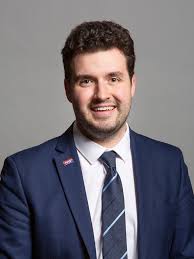
Following the publication of a draft UN resolution on Sri Lanka, a number of British MPs led by the chair of the All-Party Parliamentary Group for Tamils (APPGT) have called on British Foreign Secretary, Dominic Raab, to go beyond the current resolution and consider referring Sri Lanka to the International Criminal Court, as well as prepare files for independent criminal proceedings.

In his statement Elliot Colburn, chair of the (APPGT) notes the group’s concern over the draft resolution noting that it “does not sufficiently support the important recommendations by the UN High Commissioner for Human Rights that are critical for ensuring progress towards accountability”.

He further referenced the 2012 OISL report which documented mass atrocities and human rights abuses of “unspeakable brutality and on an extraordinary scale”. The report further notes the failure of the UN to prevent these mass atrocities which allowed for the massacre of tens of thousands of Tamil civilians during the final months of the armed conflict. Colburn notes that despite Sri Lanka’s repeated pledges to “ensure accountability, and repeated extensions by UNHRC members of their deadlines […] successive Sri Lankan governments have delayed and obfuscated at every turn”.

“Six years after the OISL report, and 11 years after the end of the war in Sri Lanka, it is now time for the UK and the UNHRC member states to put the victims, the so many people who lost their lives, lost loved ones, and were put through unimaginable suffering, at the forefront of international efforts to ensure justice is delivered to them, without any further delay”, he adds.

The statement further makes three recommendations.

1. Evidence gathering for the purpose of criminal prosecutions

Colburn notes the need for an independent mechanism to “collect, consolidate, preserve, and analyse evidence” of violations of international law between 21 February 2002 and 15 November 2011, and to prepare, “facilitate and expedite fair and independent criminal proceedings”. These proceedings, he highlights, maybe in “national, regional or international courts or tribunals that have or may in the future have jurisdiction over these crimes”.

2. International Mechanism

Colburn calls on the Foreign Secretary to provide a mandate for the Office of the High Commissioner to consider and report on the feasibility of international mechanisms for accountability in recognition of the fact that “Sri Lankan authorities have failed to prosecute alleged perpetrators of serious abuses, which may amount to war crimes, crimes against humanity, and genocide”.

He notes that the ICC should be considered as it was “established precisely so as to ensure that perpetrators of such heinous crimes do not enjoy impunity because the State in question is unwilling or unable to prosecute them”.

He urges the UK to lead on this as the next Chief Prosecutor at the ICC is a leading British barrister, Karim Khan.

3. Special Rapporteur

The final request is for the UN HRC to appoint an expert Special Rapporteur to investigate and report on the human rights situation in Sri Lanka, noting that “it is not only past violations and the lack of accountability for those that are concerning for us but ongoing ones also”.

He further highlighted the UN High Commissioner’s latest damning report on Sri Lanka’s deteriorating human rights situation and “appalling track record”.

He concludes by stating:

“After over a decade of promised yet ultimately denied justice for victims, we also believe these are the minimal steps that the UK should pursue, if our commitment to human rights, international rule of law, and justice is not to appear hollow, to both the victims and the perpetrators”.

An overview of Pakistan-Sri Lanka relations and visit of PM Khan – FT.LK

The connection between the people of Pakistan and Sri Lanka is rooted deep in history. Buddhism had flourished in areas that became Pakistan and the Muslims traders, in the early years of Islam, had been familiar with Serendib from where they took spices and gems to the Middle East and Europe.

This tradition of goodwill continued in the years after the two countries gained independence, when Sri Lanka also became the port of call on the 3,000-mile of ocean route between the two wings of Pakistan. On 4 February 1948, in a message on Sri Lanka’s independence, Quid-e-Azam Muhammad Ali Jinnah aptly described the nature of Pakistan-Sri Lankan relations.

He said: “Pakistan has the warmest goodwill towards Ceylon, and I am sanguine that the good feeling which exist between our two people will be further strengthen as the years roll by and out common interests, and mutual and reciprocal handling of them, will bring us into still closer friendship.”

When the liberation war broke out in East Pakistan in 1971, and India had banned over-flights by Pakistani aircraft, the then SLFP Government in Sri Lanka led by Sirimavo Bandaranaike allowed Pakistani aircraft to refuel in Colombo 174 times. India felt betrayed by this because it had sent aircraft to help Sirimavo quell a left extremist uprising against her Government earlier that year.

Pakistan-Sri Lanka military ties became a critical factor in the prolonged war against the Liberation Tigers of Tamil Eelam (LTTE). In 2000, when a LTTE offensive code-named ‘Operation Ceaseless Waves’ overran Sri Lankan military positions in the north, entered Jaffna and trapped government troops, Sri Lanka had sought Multi-Barrel Rocket Launchers and Pakistan airlifted them. In 2006, the LTTE tried to assassinate the Pakistan High Commissioner Bashir Wali Mohammad.

In April 2009, Sri Lanka requested $ 25 million worth of 81 mm, 120 mm and 130 mm mortar ammunition to be delivered within a month. During a state visit by President Asif Ali Zardari to Sri Lanka in November 2010, Sri Lanka evinced interest in purchase of Pakistani al-Khalid Main Battle Tanks, light weapons and ammunition, and the Sino-Pak joint venture product JF-17 Thunder aircraft.

Prime Minister Imran Khan also congratulated Gotabaya Rajapaksa, the newly-elected President of Sri Lanka, for winning elections and extended a cordial invitation to visit Pakistan at his earliest convenience, which the latter duly accepted.

Under United National Party (UNP) Governments as well as under the Sri Lanka Freedom Party (SLFP) regimes, Sri Lanka has had friendly ties with Pakistan. The reason for this consistency is that Sri Lankan governments, irrespective of the party in power, feel a sense of unease vis-à-vis India.

Pakistan now trains Sri Lankan armed forces personnel and invariably supports Sri Lanka in international forums on the ethnic question but Pak-Lanka relations have failed to acquire an economic content. Sri Lanka was the first country to sign a Free Trade Agreement with Pakistan, which became operational from 12 June 2005.

Pakistan’s exports to Sri Lanka grew from $ 97 million in 2004 to $ 355 million in 2018 while, Sri Lanka’s exports to Pakistan grew from $ 47 million in 2004 to $ 105 million in 2018, almost double over the same period. However, the two way trade is only $ 460 million when the potential is more than $ 2 billion.

Since both President Gotabaya Rajapaksa and Prime Minister Imran Khan are pledged to promote FDIs, various areas of investment will be discussed. Due to a lack of awareness, exporters do not make full use of the market potential and benefits under the free trade agreement. Additionally, Sri Lankan businessmen tend to stick to the existing markets. Both countries need to diversify their products through research, innovation, and value addition, adjusting according to the demands of each other’s market.

High Commissioner Khattak has also highlighted in his recent interview that Pakistani companies have invested in agriculture, Information Technology, textiles and construction/real estate development in Sri Lanka.

The Sri Lankan construction and real estate industry is rapidly growing and the country has an import requirement of $ 600 million worth of cement annually from various countries. Pakistan already exports cement to Sri Lanka and has the capacity to increase its exports due to competitive pricing and good quality. This sector has a larger potential due to increased consumer spending on construction and real estate.

Similar case is with the sugar as Sri Lanka imports more than 90% of its annual sugar requirement. Sugar is one of the potential sectors where Pakistani investors can focus on in 2021. Because of strained relations between India and Pakistan betel leaves from India do not come to Pakistan. That place has been taken by Sri Lankan betel leaves.

Prime Minister Imran Khan will be the first Head of Government to visit Sri Lanka after President Gotabaya Rajapaksa and Prime Minister Mahinda Rajapaksa assumed office last year. Imran Khan’s proposed visit is significant in the context of India making vigorous efforts to strengthen their ties with Sri Lanka, which has assumed strategic importance in the Indian Ocean region.

Posted in Uncategorized

Lankan Tamil refugees in Tamil Nadu: The nowhere people -India Today

Days after the Parliament passed the Citizenship Amendment Act (CAA) in December 2019, T Yanadhan, a 28-year-old man born to Sri Lankan Tamil parents living in a refugee camp in Pavalathanur in Tamil Nadu’s Salem district, sought the collector’s permission to kill himself. Obligingly, he uploaded his petition on YouTube.

Yanadhan is not an Indian citizen. He’s not a Sri Lankan citizen. He’s not a citizen of any country, really. But India is the only state system he knows. His parents fled north Sri Lanka after the second phase of the civil war and never returned. Yanadhan was born in the refugee camp in India.

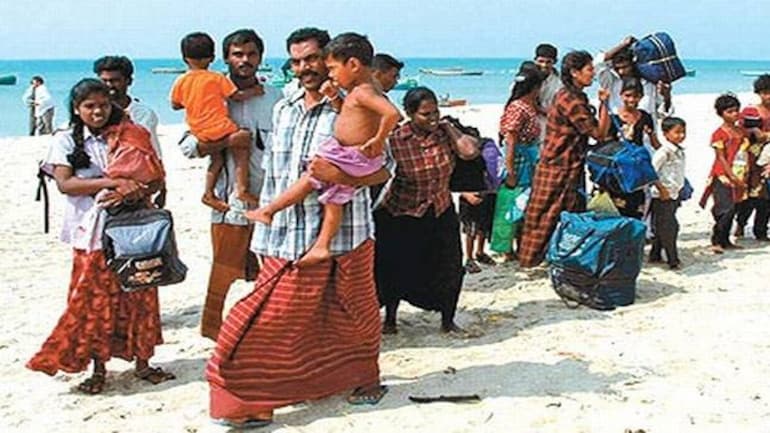
Yanadhan is one among 94,069 Sri Lanka Tamil refugees living in various parts of Tamil Nadu: most of them in 107 camps in 15 districts in the state. According to a report of the Ministry of Home Affairs, more than 3 lakh refugees entered India in different phases between 1983 and 2012 due to the ethnic conflict. While 99,469 were repatriated to Sri Lanka till 1995, some refugees left for other countries on their own. After 1995, there was no organised repatriation.

None of the refugees has voting or property rights in India. Most of them have lost them in Sri Lanka as well. Their last hope was the CAA. The law expedited citizenship for persecuted immigrants except Muslims from three neighbouring countries – Pakistan, Afghanistan and Bangladesh. It left out Sri Lanka. The CAA passed only because the All India Anna Dravida Munnetra Kazhagam (AIADMK), the ruling party in Tamil Nadu and once the biggest supporter of Tamils fighting for their identity in Sri Lanka, backed the law.

The AIADMK has one member in the Lok Sabha and had 11 members in the Rajya Sabha. When the Bill was introduced in the Rajya Sabha, all 11 AIADMK MPs voted for it. The Bill was passed in the Rajya Sabha with 125 MPs voting in favour and 99 MPs voting against it. The law excluded refugee Tamils in India and the AIADMK gave the Centre a free pass.

Prof V Suryanarayan, an academic, an authority in Tamil politics in Sri Lanka and author of many books, including ‘The Refugee Dilemma’, says, “New Delhi is unfortunately adopting a different yardstick for Tamils. They (are ready) to give citizenship to those who have sought asylum from Pakistan, Bangladesh and Afghanistan. But those who have come from Sri Lanka are treated as illegal immigrants”.

Tamils fled Sri Lanka for India for a variety of reasons at different times, mostly to escape the violence. Some Tamils left from the tea plantations where they had been sent as indentured labour during British colonial rule, when the racial violence spread to those areas especially in the decade of the 1970s.

Many of those families have since returned. But the largest chunk of families came to India from north and east Sri Lanka to escape the civil war and also protect their children against forced recruitment by militant groups, especially the Liberation Tigers of Tamil Eelam (LTTE). One such recruiter, Tamizhini, gives a poignant account of how child soldiers were forced into conscription by the LTTE in her biography published recently.

Yanadhan’s parents can apply for Indian citizenship if they give up Sri Lankan citizenship. But he was born in India as a refugee. There are, according to Prof Suryanarayan, around 25,000 such stateless people. They continue to be housed in camps where they get some financial assistance. They make a living doing odd jobs and working on construction sites. If they’d been back home, many of them would have been doctors and engineers. Some have tried to return but have scurried back to the camps, judging it safer to stay as refugees in India than in Sri Lanka.

Prof Suryanarayan says it is not an easy life, but it isn’t too difficult either. “True, they live in makeshift homes. But some of them have bought three-wheelers and mopeds. They get a small stipend and many have extended their homes to include a back yard where they can grow some vegetables,” he said. That said, at the end of the day, they’re still refugees.

When the AIADMK voted in favour of the CAA, it raised the issue of citizenship for these stateless Tamils. At the time, and later as well, Home Minister Amit Shah assured the House that dual citizenship would be considered. But the refugees are pragmatic: their quiver has no arrows any more.

And the reality is that for the Tamils of Sri Lanka, the capital of the country is still Colombo, not Jaffna as they hoped it would be. India, which promised to help them create their homeland, necessarily has to be a disinterested observer. So, Prime Minister Narendra Modi’s assurance in Chennai earlier this month while campaigning for the assembly elections that “India is always committed to ensuring that the Tamils in Sri Lanka lived with equity, equality, justice, peace and dignity” means little to them.

Posted in Uncategorized

Khan’s meeting with Hakeem and Rishad cancelled Security is the reason, the government has nothing to do with it – Minister Keheliya

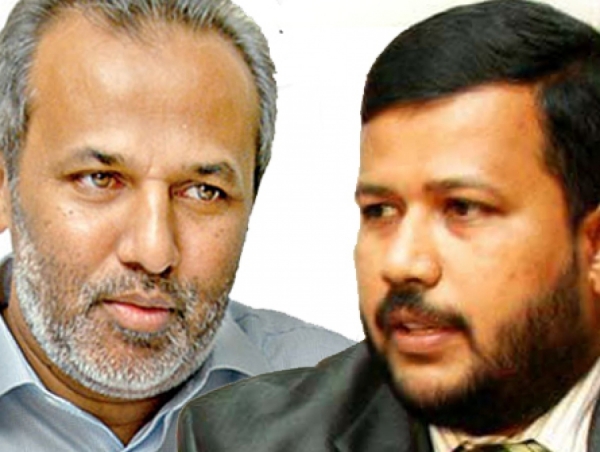
Pakistan Prime Minister Imran Khan’s meeting with Sri Lanka Muslim Congress (SLMC) Leader Rauff Hakeem and All Ceylon Makkal Congress (ACMA) Leader Rishad Bathiudeen has been cancelled on security grounds.

Cabinet Spokesman Keheliya Rambukwella told reporters today that the decision to cancel the meeting was not politically motivated as assumed by many.

When inquired by a journalist on the cancellation of the meeting, he said this decision has not been taken by the Government.

Minister Keheliya Rambukwella said decisions pertaining to the Pakistan Prime Minister’s visit are drawn by the Political Advisory Committees from both countries, in which the Government has no involvement.

He pointed out that most decisions are taken based on security concerns pertaining to the visiting dignitary and the locations proposed for meetings.

Minister Rambukwella further said that not only the discussions with MPs Hakeem and Bathiudeen, but also a proposed visit to a sports complex has also been cancelled due to security reasons.

Responding to the cancellation of the meeting, MP Rauff Hakeem said almost all Muslim MPs representing all parties had requested for a meeting with Pakistan Prime Minister Imran Khan.

He said sadly it was an absurd and cowardly excuse not second to the excuse given by Parliament for canceling the visiting Prime Minister’s address to the House.

“Out of respect for the visiting Pakistan Prime Minister, whom we adore, I shall say no more,’ MP Hakeem Tweeted.

The cancellation of the requested meeting, comes on the back of last week’s announcement that Pakistan Prime Minister Imran Khan’s address to Parliament during his official visit to Sri Lanka has been cancelled.

Sergeant-at- Arms of Parliament, Narendra Fernando told Colombo Gazette that the Foreign Ministry had informed Parliament that the Pakistan Prime Minister’s visit to Sri Lanka will go ahead as scheduled, but his address to Parliament has been cancelled.

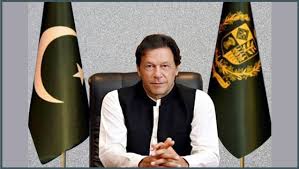
Pakistan Prime Minister Imran Khan will arrive in Sri Lanka today on a 02-day official state visit.

Khan, who will be the first head of state to visit the country since the Covid-19 pandemic, is to hold talks with President Gotabaya Rajapaksa, Prime Minister Mahinda Rajapaksa and Foreign Minister Dinesh Gunawardena during the visit.

Posted in Uncategorized

US jails lobbying agent recruited by Sri Lanka in 2014

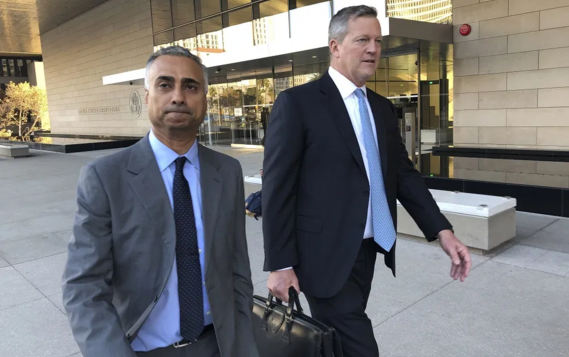
A US court has jailed a venture capitalist and political fundraiser who was recruited by Sri Lanka in 2014 to rehabilitate the country’s image in the United States.

The US Department of Justice said that Imaad Shah Zuberi was sentenced to 144 months in federal prison for falsifying records to conceal his work as a foreign agent while lobbying high-level U.S. government officials, evading the payment of millions of dollars in taxes, making illegal campaign contributions, and obstructing a federal investigation into the source of donations to a presidential inauguration committee.

In November 2019, Zuberi pleaded guilty to a three-count information charging him with violating the Foreign Agents Registration Act (FARA) by making false statements on a FARA filing, tax evasion, and making illegal campaign contributions. In June 2020, Zuberi pleaded guilty in a separate case to one count of obstruction of justice.

“Mr. Zuberi flouted federal laws that restrict foreign influences upon our government and prohibit injecting foreign money into our political campaigns. He enriched himself by defrauding his clients and evading the payment of taxes,” said Acting U.S. Attorney Tracy L. Wilkison for the Central District of California.

Zuberi operated Avenue Ventures LLC, a San Francisco-based venture capital firm, and solicited foreign nationals and representatives of foreign governments with claims he could use his contacts in Washington, D.C., to change U.S. foreign policy and create business opportunities for his clients and himself.

US Justice Department documents noted that Sri Lanka hired Zuberi in 2014 to rehabilitate the country’s image in the United States, which had suffered because of allegations that its minority Tamil population had been persecuted.

Zuberi promised to make substantial expenditures on lobbying efforts, legal expenses, and media buys, which prompted Sri Lanka to agree to pay Zuberi a total of $8.5 million over the course of six months in 2014. Days after Sri Lanka made an initial payment of $3.5 million, Zuberi transferred $1.6 million into his personal brokerage accounts and used another $1.5 million to purchase real estate.

In total, Sri Lanka wired $6.5 million pursuant to the contract, and Zuberi used more than $5.65 million of that money to the benefit of himself and his wife. Zuberi paid less than $850,000 to lobbyists, public relations firms and law firms, and refused to pay certain subcontractors based on false claims that Sri Lanka had not provided sufficient funds to pay invoices.

Relatedly, Zuberi failed to report on his 2014 tax return millions of dollars in income he received from the Sri Lankan government. While his 2014 federal income tax return claimed income of $558,233, Zuberi failed to report more than $5.65 million he received in relation to the Sri Lanka lobbying effort. Zuberi’s tax evasion over the course of four years – 2012 through 2015 – caused tax losses ranging from $3.5 million to as much as $9.5 million.

Posted in Uncategorized

Sri Lanka human rights: UK seeks new UN resolution on abuses – BBC

Sri Lanka is facing a new UN resolution calling on it to hold human rights abusers to account and deliver justice to victims of its 26-year civil war.

Britain and others have circulated a draft of the resolution among UN Human Rights Council (UNHRC) member states.

It is expected to be adopted at the end of the four-week UNHRC spring session in Geneva, which began on Monday.

Sri Lankan forces and Tamil rebels were accused of atrocities during the war, which killed at least 100,000 people.

“The victims from all communities of Sri Lanka’s brutal civil war are, a decade later, still awaiting justice for loved ones murdered or missing, and dealing with the repercussions of violence and conflict,” said Lord Ahmad, Britain’s minister of state for South Asia and the Commonwealth.

Germany and Canada are among the six countries in the Britain-led Core Group on Sri Lanka.

Lord Ahmad said the resolution was a vital step towards reconciliation and peaceful relations among all of Sri Lanka’s diverse communities and faith groups.

The UN and other aid agencies estimate that more than 40,000 people, mostly civilians from the minority Tamil community, were killed in the final stages of Sri Lanka’s war against the Tamil Tiger rebels, who were crushed in May 2009. The UN human rights office accused both sides of atrocities during the conflict.

Thousands went missing during the war and the Sri Lankan security agencies are blamed for the disappearance of Tamil rebels who either surrendered or were captured.

Since then, the families of Tamils who were killed or went missing have demanded justice and accountability. The Sri Lankan government has consistently denied targeting civilians and rejects all allegations it is guilty of enforced disappearances.

Following international pressure, the then Sri Lankan government in 2015 committed to investigate violations and hold war crimes trials supported by foreign judges, as part of a consensus resolution at the UNHRC.

But current Sri Lankan President Gotabaya Rajapaksa withdrew from the UN resolution in February 2020, months after he was elected on a nationalist platform by voters from the Sinhala majority. Last year he reassured his supporters of an end to the “era of betraying war heroes” – referring to legal action against soldiers accused of rights abuses.

Mr Rajapaksa led the war effort as the powerful defence secretary under his elder brother Mahinda, who was president from 2005 to 2015. He rejects allegations that war crimes were committed on his orders.

“The Sri Lankan government is not resisting any form of accountability within our constitution. Our constitution does not provide [options] for foreign judges,” the current foreign minister, Dinesh Gunawardena, told the BBC as the UNHRC session was about to begin.

Gotabaya Rajapaksa has also set up a three-member commission to look into what the government described as “political victimisation” of government officials by the previous government.

In a scathing report released last month, the UN High Commissioner on Human Rights, Michelle Bachelet, said: “Nearly 12 years on from the end of the war, domestic initiatives for accountability and reconciliation have repeatedly failed to produce results, more deeply entrenching impunity, and exacerbating victims’ distrust in the system.”

Ms Bachelet’s report will be submitted to the UN Council meeting later this week.

But the Sri Lankan foreign minister rejected the report, saying: “The ground situation is totally different to what the commissioner’s report is. That’s why Sri Lanka disagreed with her, with documents, evidence and detailed reports and answered her draft report.”

Rights groups say under the current government, activists and those seeking justice for abuses committed during the war face threats and intimidation.

“If you go to the north and the east [Tamil areas], the surveillance is very high. Civil society organisations are visited regularly [by security agencies] and it is a form of harassment,” Bhavani Fonseka, a human rights lawyer, said.

Thousands of Tamils and members of the Muslim and Christian communities held a massive rally earlier this month. They marched from the east to the north – despite a ban because of Covid – to highlight their grievances.

While the Tamil community called for accountability and justice for the crimes committed during the civil war, Muslims complained about the forced cremation of Covid victims by the government, which they say is against Islamic practices.

Tamils say the reconciliation process and accountability are being systematically undermined by the current government.

For example, they point out that last year President Rajapaksa pardoned a soldier, Sunil Ratnayake, who’d been sentenced to death for killing eight Tamil civilians, including a five-year-old and two teenagers, in the village of Mirusuvil in northern Jaffna region in 2000.

It was one of the few convictions from the civil war era, and the UN said the pardon was “an affront to victims”.

Ms Bachelet’s report also pointed out that after assuming power, President Rajapaksa had appointed senior military officials who were implicated in United Nations reports into alleged war crimes during the final years of the conflict.

The government denies those accusations.

For people like Asha Nagendran, a Tamil from the north-eastern city of Trincomalee, justice appears further away than ever.

Sri Lankan security forces took her 25-year-old son for investigation in 2008. She has not heard from him since.

“The UN should not give any more time to the Sri Lankan government,” Ms Nagendran said. “A body set up by international representatives should investigate and address our plight.”

The content of the resolution was not in line with the expectations of the Tamil people so TELO sent the UK FCO a letter

A prototype of the British-led resolution on Sri Lanka was unveiled at a meeting of the Human Rights Commission beginning on February 22. The day before yesterday, TELO, through its UK branch, sent a message to the British Foreign Office stating that the content of the resolution was not in line with the expectations of the Tamil people at a time when efforts were being made to implement the resolution at the British-led Commission on Human Rights.

We are in receipt of the draft resolution and thanking you and the core group for the effort taken.

We appreciate your PP7 and OP6 in the resolution and kindly request to pay attention to include more constructive and conclusive clauses keeping in line with the HCHR report of 12th Jan 2021 and the request of the Tamil Nationalistic party leaders enclosed hereto.

You will appreciate that we have been trying to bring justice to the Tamil People of Sri Lanka since the end of genocidal war 2009, to inquire the atrocity crimes including genocide, war crimes and crime against humanity by

Accountability Mechanism available in International Law ICC, ICJ, or similar mechanism or a Special Tribunal

establishing Independent International Investigatory Mechanism IIIM to support the accountability Mechanism.

Mandating the OHCHR to appoint field officers in Sri Lanka to monitor and the Human Rights violations

Referring the matter to the Secretary General of the UN for appropriate action

A lasting political solution to the Tamil People recognizing our right to self-determination and North and east as our traditional homeland with international mediation.

We were confident when the report of the High Commissioner was released and observe that the strength lost in the draft resolution not only deviating from the report (12th Jan 2021) but leaving out many clauses in the previous resolutions namely 30/1, 34/1 and 40/1

We feel that our call for justice is weakened, our people’s faith in depending on UNHRC system and core group with the draft resolution which we still feel will be amended to meet the requirements of the people who cry for justice not leaving room for the parties committed the crime to escape.

UK says new resolution will maintain focus on Sri Lanka

The United Kingdom (UK) says a new resolution to be presented to the UN Human Rights Council (UNHRC) in Geneva at its ongoing session, will maintain focus on Sri Lanka.

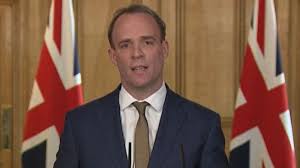
British Foreign Secretary Dominic Raab told the Council today that the UK will present a new resolution on Sri Lanka to maintain the focus on reconciliation and on accountability.

“Madam President, we want to see an effective international human rights system that holds to account those who systematically violate human rights. The Human Rights Council must be ready to play its role in full, or I fear we will see its reputation sorely damaged,” the Foreign Secretary said in his speech.

He said the UK wants the Council to succeed and so it will work with its international partners and continue to speak up in the Council for what is right.

The 46th Session of the UNHRC opened in Geneva today with Sri Lanka on the formal agenda.

The Core Group on Sri Lanka, consisting of Canada, Germany, North Macedonia, Malawi, Montenegro and the UK will be presenting a new resolution on Sri Lanka at the session.

The first draft (zero draft) of the resolution on Sri Lanka to be tabled at the session calls on the Office of the High Commissioner for Human Rights to enhance its monitoring and reporting on the human rights situation in Sri Lanka.

An open message to PM Imran Khan from a 13-year-old Sri Lankan

A 13-year-old Sri Lankan boy has made an impassioned plea through an open message to Pakistan Prime Minister Imran Khan seeking his intervention with regard to the Sri Lankan government’s mandatory cremation only policy.

Premier Khan is scheduled to arrive in the island on February 23.

Ammaar Rishad, in a video statement today (22), noted that it is “truly disrespectful” to deny the honour of burial to the dead, especially when there is no scientific proof of infection through burial, adding that only Sri Lanka has adopted the forced cremation policy.

Despite scientific evidence and recommendation of experts, Sri Lanka continues to defy any and all calls for burial rights, he said.

Leaders from many parts of the World including the British Parliament have conveyed their dismay and have urged the Government to allow burials for Covid victims, but nothing has materialized yet.

“It has been announced that Pakistani Prime Minister, Hon. Imran Khan will be arriving in Sri Lanka on a State visit on the 23rd of February. I had hoped that he would deliver an address in Parliament where our Parliamentarians could raise this burning issue with him, but the proposed Parliamentary visit was cancelled.

I am still hopeful that this message with the concerns of the Muslim and other communities can be conveyed to him through the power of the media. I am sincerely hopeful that Hon. Imran Khan will hear our cries and heed our request to address this issue with our President,” he added.

Posted in Uncategorized