Pakistani PM to address Lankan parliament amid Muslim human rights concerns – ARAB NEWS

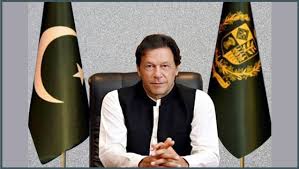
Sri Lankan Muslim community leaders were on Tuesday pinning their hopes on Pakistani Prime Minister Imran Khan addressing their human rights concerns during his historic visit to the island nation later this month.

Premier Khan is due to arrive in the capital Colombo on Feb. 23 where he is expected to hold talks with key government officials and party leaders.

Sri Lanka’s parliament speaker, Mahinda Yapa Abeywardena, on Tuesday said that the Pakistani PM was slated to address the legislature the following day.

Khan will become the third Pakistani head of state to address the Lankan parliament, after former President Gen. Mohammed Ayub Khan (1963) and Prime Minister Zulfikar Ali Bhutto (1975).

Former Indian premier, Jawaharlal Nehru, also addressed the Lankan parliament in 1962, followed by British Prime Minister Margaret Thatcher in 1985. More recently, Indian PM Narendra Modi spoke to the legislature in 2015.

During his two-day visit to the country, Khan is expected to hold talks with Sri Lankan President Gotabaya Rajapaksa, Prime Minister Mahinda Rajapaksa, and Foreign Minister Dinesh Gunawardena.

Prominent representatives of the island’s 2 million Muslims, who make up 9 percent of the total population, said they were banking on “great Muslim leader” Khan to “speak on our behalf.”

President of the Muslim Council of Sri Lanka, N. M. Ameen, told Arab News: “The community wishes to welcome a great Muslim leader who is coming as his country’s prime minister for the first time. He is in a vantage position to speak on behalf of the Sri Lankan Muslims.”

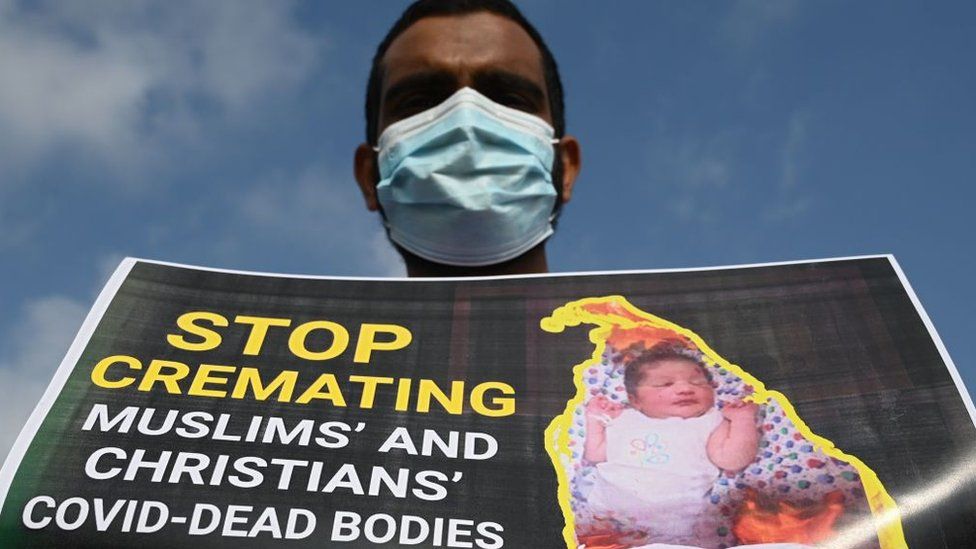
Rishad Bathiudeen, former minister and leader of the All-Ceylon Makkal Congress, who met with the charge d’affaires of the Pakistan High Commission in Colombo on Tuesday, told Arab News: “We have expressed the concerns of the Muslim community, especially regarding the forced cremation policy of the government (for COVID-19 victims).”

Last year, the Sri Lankan government was accused of forcing the cremation of anyone confirmed or suspected to have died from the coronavirus disease (COVID-19).

The move outraged Muslims who said it breached their religious rights, and medical experts argued that there was no evidence that COVID-19 could be contracted from dead bodies.

Shreen Saroor, a women’s rights activist and co-founder of the Women’s Action Network, told Arab News: “Our legitimate rights to bury our dead must not undermine the rights of our Tamil and Sinhala brothers and sisters to protect their rights or know the truth about the death of their family members and to be allowed to mourn them.”

“Prime minister Khan must use his visit to assist in our struggles for human rights, justice, and accountability for all in Sri Lanka,” she said.

Saroor added that there were “concerns” that Khan might “negotiate a deal with the Sri Lankan regime to restore Muslim burial rights while in turn offering Pakistan’s support to Sri Lankan diplomatic efforts to reject the (UN) Human Rights Council resolution.

“This would not be the act of a friend to Sri Lanka and would be at the cost of the Tamil community’s legitimate struggle for truth and justice. Like Muslims, Tamils have been facing many challenges. The failures of domestic justice have prevented reconciliation in our country and stopped the nation from moving toward a stable and prosperous future.”

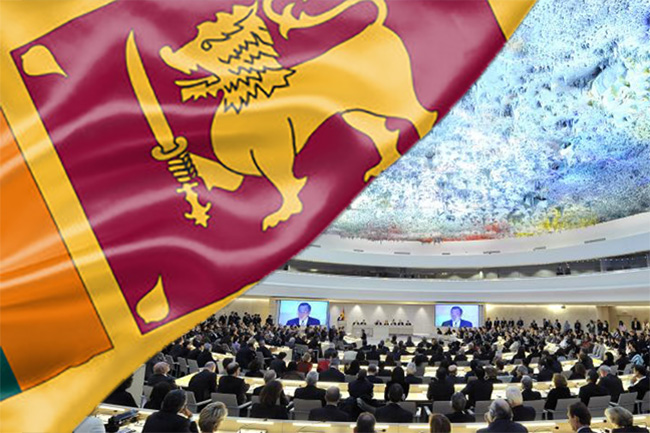
A Jan. 27 report by UN High Commissioner for Human Rights Michelle Bachelet, highlighted the need for a “strong human rights resolution” to address Sri Lanka’s “deteriorating human rights situation” and “pursue accountability for past and recent violations.”

It also set out steps for the UN Human Rights Council to “confront the growing risk of future violations.”

In response to the report, the Human Rights Watch organization said: “Since the government of President Gotabaya Rajapaksa has withdrawn its support for the 2015 consensus resolution seeking justice and reconciliation, and shown general disregard for upholding basic human rights, the council should act to protect those most at risk and advance accountability for grave international crimes.”

Toward the end of the 2009 civil war between the government and the separatist Liberation Tigers of Tamil Eelam (LTTE), both groups committed atrocities which led to the deaths of tens of thousands of civilians.
Thousands March for Justice in Sri Lanka, Despite Ban -HRW

In Sri Lanka, families like those of Mariyasuresh Easwary, whose husband was forcibly disappeared by the authorities, have been waiting a long time for answers—and for justice.

“We have approached the courts, we did not get justice there. We approached commissions of inquiry, we did not get our justice there either,” she told reporters.

Now, many families of Sri Lanka’s “disappeared” are joining others to call upon the United Nations Human Rights Council to support international accountability efforts for grave violations committed during the 26-year civil war that ended in 2009. “We need the international community and the United Nations to deliver justice for us,” she said.

Sri Lankan officials immediately tried to muzzle victims’ groups, issuing numerous court orders against a five-day protest march around the country’s independence-day celebrations on February 4. For example, the Kalavanjikudi Magistrates Court on February 1 issued an order to “prohibit protests planned in support of the accusation of human rights violations at the Geneva sessions.”

A sinister threat followed with the public security minister warning that the protesters would be arrested. “Now we have their photographs and we have their vehicle numbers, we know who these individuals are,” the minister said in a television interview.

Thousands of Tamil civilians were killed in the final months of fighting between the Sri Lankan government and separatist Liberation Tigers of Tamil Eelam, when both sides were responsible for numerous atrocities. With Sri Lanka having failed to uphold commitments to prosecute alleged perpetrators, the Human Rights Council later this month is expected to consider measures to promote international accountability.

Instead of addressing concerns, President Gotabaya Rajapaksa’s government has denounced international efforts for justice, adopted discriminatory measures against Tamils, and harassed victims’ groups. For a second year, the singing of the national anthem in Tamil, an official language, was dropped from the government’s independence-day parade. In January, authorities demolished a memorial to Tamil civilians killed during the war.

UN human rights commissioner Michelle Bachelet has warned that the government’s policies of protecting alleged perpetrators while persecuting minority groups are a “warning sign” of future violations.

Human Rights Council members should now pay heed to the victims and their families who are trusting them to pass a strong resolution to advance accountability and deter the government from committing further abuses.

Rumours of PM’s resignation false – Yoshitha

Rumours which circulated on social media late last evening, announcing that Prime Minister Mahinda Rajapaksa will resign from his Premiership post today are false and there have been no such discussions, Prime Minister’s Chief of Staff,yoshitha Rajapaksa told Daily Mirror yesterday.

A video news clip, quoting Minister Namal Rajapaksa as stating that Prime Minister Rajapaksa will step down from the Premiership post, spread rapidly on Whatsapp last evening, leading to questions if Rajapaksa would resign today.

However, the said news clip is one from 2018 when Rajapaksa remained in office for 52 days after which he eventually resigned. Yoshitha said the clip which has resurfaced on Whatsapp was false and there had been no such discussion for the Premier to resign. “This is nothing but fake news,” he said.

Posted in Uncategorized

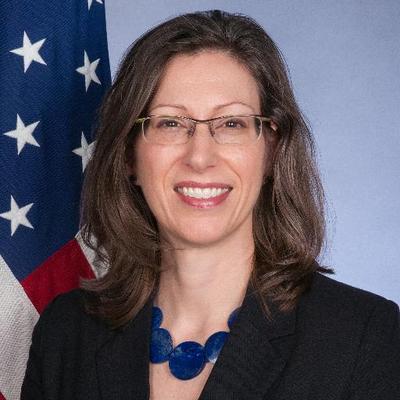
US envoy questions poor coverage of P2P protest by Colombo media

The United States (US) Ambassador to Sri Lanka has questioned the poor coverage of the Pottuvil to Point Pedro (P2P) protest by the by Colombo-based media.

Ambassador Alaina B. Teplitz tweeted saying a peaceful protest is an important right in any democracy.

She also said that significant and legitimate concerns should be heard.

“I saw Tamil media coverage of the march from Pottuvil to Point Pedro and wondered why it was not more widely covered by Colombo-based media?” the Ambassador tweeted.

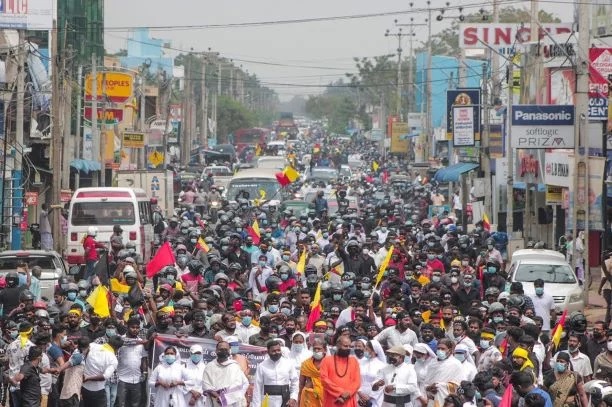
Tamils in the North-East staged the massive protest last week to drawn attention to several of their demands.

However, Minster of Public Security, Law and Order Sarath Weerasekera said that legal action is to be taken against the protesters.

Speaking on a private television station, Weerasekera said that the vehicles used by the protesters will also be confiscated.

The Minister had already ordered special security provided to Tamil National Alliance Parliamentarian M.A Sumanthiran to be withdrawn after he had participated in the protest.

Tamils up the ante to put Lankan government in a spot By P.K.Balachandran

Due to the high profile majority supremacist policies of the Gotabaya Rajapaksa government, disparate and mutually antagonistic Tamil-speaking communities of Sri Lanka have come together to jointly struggle against the Rajapaksa regime.

Though the complaint about Sinhala-Buddhist majoritarian dominance was decades old, the minority Tamils and Muslims were stung by President Gotabaya Rajapaksa’s assertion of his Sinhala-Buddhist identity in his Independence Day oration on February 4.

The President had said in the very beginning of his speech: “I am a Sinhala Buddhist leader and I will never hesitate to state so.”

The Pottuvil to Poligandy (P to P) long march through the Eastern and Northern provinces of Sri Lanka from February 3 to 7, was primarily meant to highlight the festering grievances and the long standing demands of the North-Eastern Sri Lankan Tamils. But for the first time, Sri Lankan Tamil marchers shouted slogans highlighting the grievances of the Indian Origin Tamils working in the plantations, and of the Muslims, who are hurt by the government’s refusal to allow them to bury their COVID dead when their religion enjoins them to bury and not cremate their dead.

The P to P march was also meant to whip up support for the Tamils at the March session of the UN Human Rights Council (UNHRC) where there could be vote on a resolution condemning Sri Lanka for alleged failure to investigate charges of “genocide, war crimes, and violations of human rights and international humanitarian law.” The report of the High Commissioner for Human Rights, Michelle Bachelet, has recommended “targeted sanctions” and reference to the International Criminal Court (ICC). The last recommendation stemmed from a demand made earlier by a united front of Sri Lankan Tamil political parties.

Tamil Parties Sink Differences

The exclusionary politics of the incumbent Lankan regime have brought together not only Tamils and Muslims but created a rationale for unity among the disparate and mutually antagonistic Tamil political parties. The long and hard struggle of the Indian Origin Tamil plantation workers for a daily wage of Rs.1000/- was also highlighted by the marchers. For the first time, leaders of the Indian Origin Tamils, who had earlier kept away from the movements of the Sri Lankan Tamils, threw in their lot with the latter.

Marchers’ Demands

The marchers demanded from the UNHRC the following: (a) a reference to the International Criminal Court (ICC) for War Crimes, Crimes Against Humanity and Genocide; (b) a guarantee that the genocide that (allegedly) took place against Tamils is not repeated; (c) a permanent political solution which should be founded on an internationally conducted and monitored referendum among the Tamils of Sri Lanka.

Exploiting Indo-Lankan Rift

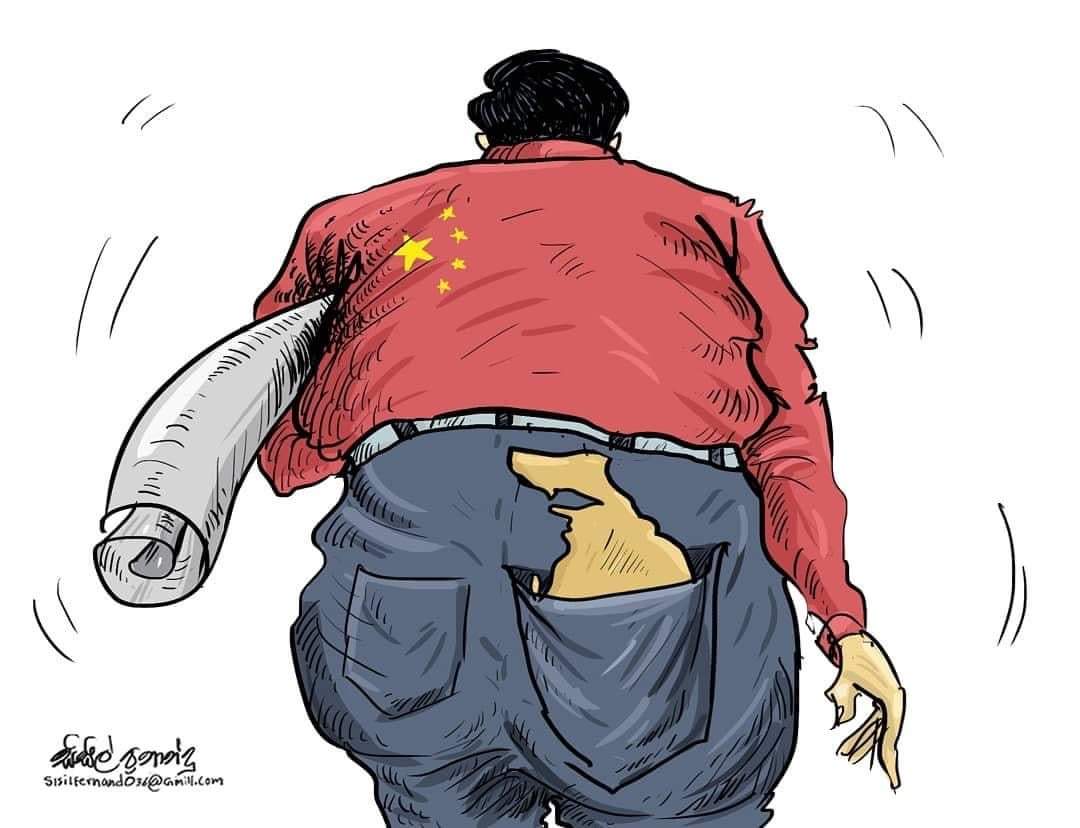
The Tamils are also poised to exploit the present strain in the relations between Sri Lanka and India over the Eastern Container Terminal (ECT) in the Colombo port, and the grant of contracts to a Chinese firm to build and operate renewable energy power stations in the islands off Jaffna, not far from India.

India had strongly protested against Sri Lanka’s non-adherence to an existing agreement over the ECT and the grant of the power projects to China creating a security concern for India.

Commenting on the issue of the ECT and the northern power projects, current Member of Parliament and former Chief Minister of the Tamil majority Northern Province, C.V.Wigneswaran, said: “It is no secret that successive Sri Lankan Governments have cheated India many a time. This is another example. I expected this to happen after the Geneva sittings. I mentioned this in an interview with the media a few weeks ago. But it has happened slightly earlier.”

“There is news that the Sri Lankan Government wishes to lease out three of the Islands close to Jaffna to a Chinese organization to start certain projects to generate electricity. This is a serious matter. It is high time India identified the Tamils of the North East of Sri Lanka as their dependable friends and changed their present political stance making sure that the Tamil speaking in the North and East were granted the right to govern themselves while ensuring their safety.”

“If the Southern Block of India (the Indian Foreign Ministry) is to be safe, India must ensure self-determination for the Tamils of the North and East of Sri Lanka. It is appropriate for India to take the leadership to ensure a referendum in the North and East to be conducted by the International Community so that the Tamil speaking people would decide their political future.”

“What happened to the Eastern Terminal will sure happen to the 13th Amendment soon. India must realize that any solution to the ethnic problem within a Unitary State of Government is bound to fail.”

In 1987 during discussions preceding the Indo Sri Lankan Agreement there was speculation that India preferred the same rights given to their Regional States be given to the Provinces in Sri Lanka. But J.R.(President J.R.Jayewardene) tricked the Indians and brought out a toothless Thirteenth Amendment which gave very little powers to the periphery. After him President R.Premadasa went a step further and pulled out the Government Agents, Divisional Secretaries and Grama Sevakas from under the Provincial Administration and brought them under the Centre. Even the meagre Land and Police powers given under the Thirteenth Amendment have been denied to the Provinces up to date by successive Sinhala majority Governments.”

Finally, Wigneswaran warned: “The Sinhalese are generally adepts at giving ropes, meaning giving false hopes. They would be subservient until they get their things done. Once done they will take high ground. India must realize this. Unless India gains the goodwill of the Tamils of the North and East both will suffer in the long run.”

Posted in Uncategorized

Chinese firm to carry out three energy projects in Sri Lanka

The Hindu newspaper has reported that Sri Lanka has granted approval for an energy project on three islands located off Sri Lanka’s coast.

The report noted that Sri Lanka’s recent decision to pull out of the East Container Terminal deal with India and Japan is not the only challenge to New Delhi’s interests emerging this year.

It added that Sri Lanka had cleared a Chinese energy project in three islands off the Jaffna peninsula, barely 50 km from the Tamil Nadu coast, a week before reneging on the 2019 East Container terminal agreement.

According to the report, hybrid renewable energy systems are to be installed in the Nainativu, Delft, and Analaitivu islands based on cabinet approval received on the 18th of January.

The tender for these projects had been handed over to the Sinosoar-Etechwin joint venture in China upon receiving the approval of the cabinet.

Meanwhile, the Sri Lanka Tea Board has signed a Memorandum of Understanding with Fujian Star China International Trade Company Ltd., to promote Pure Ceylon Tea in the Chinese market.

Under the 15-year agreement, Fujian Star China International Trade Company will purchase more than 4 million kilos of tea from Sri Lanka annually.

Although the Sri Lankan Embassy in China said that the Chinese company will purchase tea on a pre-agreed price, the Sri Lanka Tea Board said that tea would be exported under the existing market rates in Sri Lanka.

As reports emerge on trade and investment ties between China and Sri Lanka, Imran Khan, the Prime Minister of Pakistan that is a close ally of China, is due to visit Sri Lanka this month.

The Pakistani Prime Minister will visit Sri Lanka on February 22 of this month and will deliver a special address in Parliament at 2 pm on February 24.

Against such a backdrop, cabinet spokesperson Keheliya Rambukwella has said that Sri Lanka will hold talks on the UN human rights chief’s report before the 46th UNHRC sessions begin on February 22.

Posted in Uncategorized

Sri Lanka confirms India has objected to power projects given to China on Northern islands

Co-Cabinet Spokesman Keheliya Rambukwella confirmed that the Sri Lankan government has received complaints from the Indian Government over the power projects handed to China on islands in the sea close to the Indian coast.

He told reporters this morning that those power projects were already approved and the complaints will be looked into and discussed in detail with relevant authorities.

The Sunday Times reported that India has lodged a strong protest with Sri Lanka on the award of a tender to a Chinese company to set up three renewable energy projects in outlying islands off the Jaffna peninsula.

It reported that this decision came even before the Cabinet of Ministers decided not to give India and Japan the East Container Terminal in the Colombo Port. The protest was triggered by the Department of Information releasing the decisions of the Cabinet about the approval of the Hybrid Renewable Energy Systems in the northern islands on January 18.

The Sunday Times quoted diplomatic sources as saying that India’s protest was on the grounds that such a move would raise security concerns for it. The islands concerned are the Delft Island, Analativu and Nainativu.

The islands, separated by the Palk Strait from India, were in close proximity to India’s coast.
It was also reported that energy project’s local partner, the Ceylon Electricity Board, has finalized matters related to the project by identifying lands for the joint venture with Etechwin of China. The funds for the project are to come from the Asian Development Bank.

The USD 12 million projects have been awarded to MS/Sinosar-Etechwin Joint Venture in China based on the recommendation given by the Cabinet-Appointed Standing Committee on Procurement.

Under the project, international competitive bids were called to install hybrid renewable energy systems in the three islands utilizing accessible energy resources to improve the efficiency of the prevailing energy network.

However, the Indian High Commission in Colombo refused to comment on the matter when inquired by EconomyNext.

Posted in Uncategorized

Core Group confirms Resolution to be submitted on Sri Lanka

The Core Group on Sri Lanka has confirmed it will be submitting a Resolution on Sri Lanka at the upcoming session of the UN Human Rights Council (UNHRC) in Geneva.

The British Ambassador and Permanent Representative to the UK in Geneva, Julian Braithwaite, informed the UNHRC yesterday (Monday) of the decision to submit the Resolution.

The confirmation was made as the UNHRC met to discuss its plans for the 46th Session of the UNHRC which will be held from 22 February 2021 to 23 March 2021.

The Core Group on Sri Lanka consists of Canada, Germany, Montenegro, North Macedonia, and the United Kingdom.

Braithwaite said that a Resolution will be submitted to the Council on promoting reconciliation, accountability and human rights in Sri Lanka.

The Resolution is a follow-up to one already co-sponsored by the former government, from which the current administration withdrew last year.

Braithwaite said the Resolution will be based on the recent damning report on Sri Lanka by the UN High Commissioner for Human Rights, Michelle Bachelet.

Bachelet had last month made public a damning report on Sri Lanka and has proposed targeted sanctions, such as asset freezes and travel bans against credibly alleged perpetrators of grave human rights violations and abuses.

The UN report warns that the failure of Sri Lanka to address past human rights violations has significantly heightened the risk of such violations being repeated. It highlights worrying trends over the past year, such as deepening impunity, and increased militarisation of governmental functions, ethno-nationalist rhetoric, and intimidation of civil society.

Nearly 12 years after the armed conflict in Sri Lanka ended, impunity for grave human rights violations and abuses by all sides is more entrenched than ever, with the current Government proactively obstructing investigations and trials, and reversing the limited progress that had been previously made, states the report, mandated by UN Human Rights Council Resolution 40/1.

The report urges enhanced monitoring and strong preventive action by the international community, warning that “Sri Lanka’s current trajectory sets the scene for the recurrence of the policies and practices that gave rise to grave human rights violations”.

Among the early warning signals the report highlights are the accelerating militarisation of civilian governmental functions, reversal of important constitutional safeguards, political obstruction of accountability, exclusionary rhetoric, intimidation of civil society, and the use of anti-terrorism laws.

Posted in Uncategorized

Schools to reopen for all grades from March 15

All schools in the country will reopen for all grades from March 15, Minister of Education Prof. G. L. Peiris announced today (February 09).

Meanwhile, many schools in the Western Province will be able to reopen from February 15 once the approval is granted for the district recommendations forwarded to health authorities, he said.

The District Development Committee has recommended that 412 out of 495 schools in the Colombo District will be able to open for academic activities from February 15.

However, the reopening of 80 schools in the district has not been recommended by the committee.

Education Minister stated that once the G. C. E. Ordinary Level Exam ends on March 11, steps will be taken to reopen all schools for all grades from March 15 under the consent of health authorities.

The Ministry of Education recently obtained recommendations from District Development Committees on reopening schools in non-isolated areas of the Colombo, Gampaha, and Kalutara Districts.

UK Muslims complain to UN over Sri Lanka’s cremation policy

Muslim families in the United Kingdom whose loved ones have been cremated in Sri Lanka have submitted a complaint to the United Nations, branding the South Asian country’s controversial policy “unjust and discriminatory” and calling for its immediate suspension.

Buddhist-majority Sri Lanka made cremation mandatory last March for people who die, or are suspected to have died, with coronavirus.

The move has deeply upset Muslims, because according to Islam, the dead should be buried.

Christians bury their dead, too, and some in Sri Lanka have also been hurt by the move, which came despite World Health Organization (WHO) guidelines which permit burials for people who die from COVID.

The UK complaint was lodged to the UN’s Human Rights Council (UNHRC) on Friday by the Muslim Council of Britain (MCB) in partnership with UK-based law firm Bindmans on behalf of the families.

Zara Mohammed, the secretary general of the MCB, described the country’s cremation policy as “unprecedented”.

“No other state has carried out such unjust and discriminatory measures,” she said in a statement issued on Monday. “We very much hope that the Sri Lankan government will change its policy in line with the World Health Organization advice.”

Tayab Ali, a partner at Bindmans who represents the MCB and the families, described the practice as “heartless”.

“Our clients were already suffering from the distress of losing a family member to COVID,” he said in a statement. “It is truly heartless for the Sri Lankan government to add to that distress by unnecessarily forcing the bodies of loved ones to be cremated.”

Ali also called for the UNHRC to “take immediate action on receipt of this complaint by granting interim measures to halt these cremations”.

UN experts urge policy rethink

The complaint said there was “no justification, on the facts, for the prohibition of burial maintained by the Sri Lankan government”.

“This has been recognised by multiple institutions of the UN,” it said. “There are, as scientific experts have already advised, multiple protection measures that can be put in place to protect public health without the blanket denial of the right of individuals to practise their religion and to be buried in accordance with their faith.”

Sri Lankan officials have claimed that bodies of COVID victims would contaminate the groundwater if buried.

But several experts have countered this claim, noting that if burial locations are well planned, the groundwater would not be affected.

In January, an expert panel appointed by Sri Lanka’s Ministry of Health said burying those who had died from COVID-19 was allowed, in line with precautions to curtail the pandemic.

UN special rapporteurs, for their part, have twice called on Sri Lanka’s government to reconsider its mandatory cremation policy in letters sent to authorities in January this year and last April.

In their latest note, UN experts said the practice ran contrary to the beliefs of Muslims and other minority communities in Sri Lanka, and could “foment existing prejudices, intolerance and violence”.

The WHO has said there is no evidence to suggest that cremation prevents the spread of coronavirus.

“While we must be alert to the serious public health challenges posed by the pandemic, COVID-19 measures must respect and protect the dignity of the dead, their cultural and religious traditions or beliefs, and their families throughout,” the UN experts said.

Critics of Sri Lankan Prime Minister Mahinda Rajapaksa have accused his government of using the pandemic to marginalise Muslims, who make up roughly 10 percent of Sri Lanka’s 21 million people.

More than 70,000 COVID-19 infections have been recorded in Sri Lanka since the pandemic erupted, and 365 people have died after contracting the virus, according to data collated by Johns Hopkins University School of Medicine.

SOURCE : AL JAZEERA