Sri Lanka- Shifting the goal-post on economic front, too By N Sathiya Moorthy

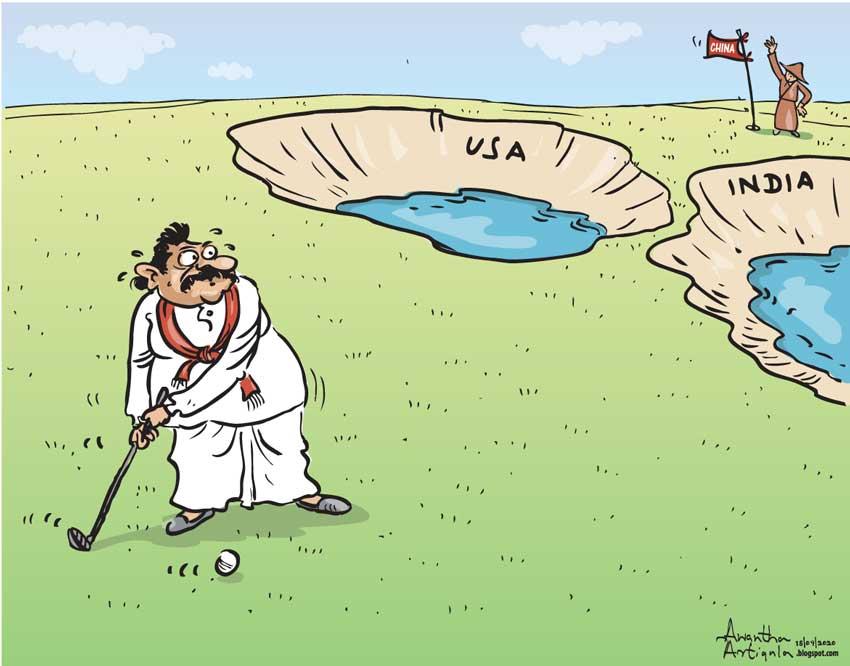
If there is one thing that continues under the Rajapaksas’ regime after a gap of governance by their political rivals, it is their ability and consistency, if it’s any, to keep shifting the goal-posts, and at a global level. Earlier, under President Mahinda Rajapaksa, now Prime Minister, the international community (read: West) was peeved at what they claimed as such, especially on post-war commitments to ethnic reconciliation.

Today, under incumbent Gotabaya Rajapaksa, the trend has extended to cover bilateral commercial relations, this one though entered into by the predecessor regime. In modern international vocabulary, it is ‘protectionism’ by another name – or, in the name of ‘nationalism’ and ‘sovereignty’.

India is only the latest, along with Japan, to feel peeved at the Government going back on the trilateral Memorandum of Cooperation (MoC) for developing the Eastern Container Terminal (ECT), with the other two. Then, there was the light rail project with Japanese funding, again a product of an agreement entered into by the previous Government, which again the present incumbent has dumped.

If this Government uses the specious plea that they were not the ones to give a commitment of the kind, and were only reviewing all major agreements of the kind, initiated by the previous Government, it is not how international trade and investments are conducted. Just as successive Governments in Colombo are expected to honour global commitments made by the Sri Lankan State as an entity, independent of which party or leader is in power at a given point in the long history of a nation-State.

Before India and Japan, the US felt the same way, when the incumbent Government went back on the predecessor’s commitment on the MCC grant MoU, the very same way. Both the Rajapaksas, and also their Chinese principal should be wondering what if the predecessor Government had similarly gone back on President Mahinda’s earlier commitment on the debt-for-development funding at Hambantota, and asked Beijing to take a walk.

It is still possible for future Governments in Colombo to do the same thing, on other projects in which China has put in money, notwithstanding the Chinese presence in Hambantota for a 90-year-long period, no thanks to the debt-equity deal struck by the previous Government of President Maithripala Sirisena and Prime Minister Ranil Wickremesinghe.

It is thus ironical that the Sirisena-led rump SLFP should be among the parties now declaring that the ECT deal with India and Japan should be taken off the board. It is worse than anything to say that in Government I will initiate something, or acquiesce to whatever my Prime Minister initiates and has it initialled – but out of power, I will dishonour my own commitments from the past. Ironically, the SLFP, if not Sirisena personally is now a part of this Government, too, and yet…

Not the first time…

Incidentally, this is not the first time that the Sri Lankan State has gone back on its commitment, incidentally, one of them to India, earlier – though not of the commercial kind like the ECT. In 2006, the maiden Mahinda Government went back on the commitment made decades earlier by a rival political dispensation, on the North-East merger. In that case, the Government cited a Supreme Court decision on the merger, which flowed from an international commitment under the Indo-Sri Lanka Accord of 1987 – or, two decades earlier.

Of course, the Supreme Court’s decision was not on the Accord but on the specific provisions of the Provincial Councils Act, 1987, which formed a part of the 13th Amendment of the same year, which in turn had its genesis in the Accord. It is another matter that the Court had upheld the Accord, when agitated before it, soon after Parliament had cleared it. It is not about the political part of who was right and who was wrong on the Accord and the Amendment, but it was/is still all about the Sri Lankan State not keeping up a promise.

The same applies now to the ECT, too, in a different and more distinct way. The real problems started during the run-up to the parliamentary polls in August last. When the labour unions wanted the ECT deal thrown into the sea, both President Gota and Prime Minister Mahinda had given the impression that they would back it, and back out of the previous commitment.

But soon, both of them turned around, and said that around 70 per cent of the transhipment business of Colombo Ports involved Indian goods, either to or from, the northern neighbour. President Gotabaya in particular conceded that India was justified in seeking a stake in the Colombo Port as its strategic interests were involved, thus. The reference was in particular to the ECT, and was not open to the Western Container Terminal (WCT), as if now being reportedly offered to the private sector promoter from India.

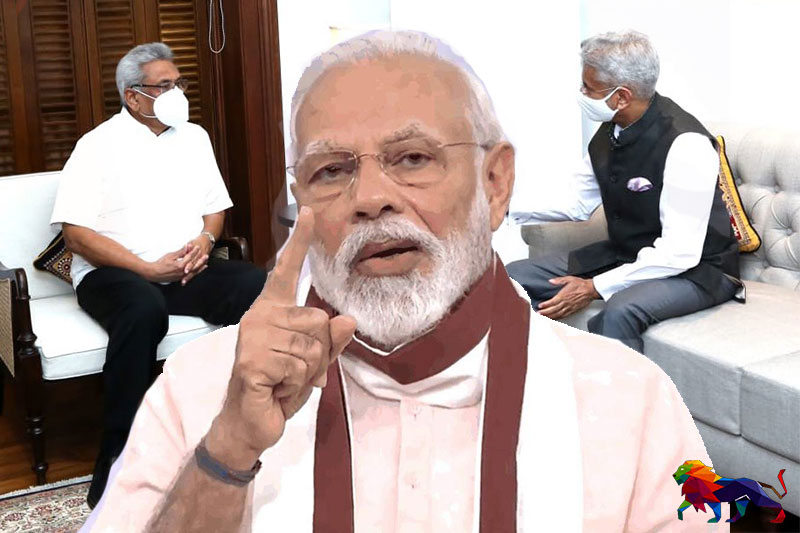
In fact, that was also the situation when India’s External Affairs Minister S Jaishankar came calling on a three-day official visit in the first week of January. It can now be safely argued that no commitment was made on taking the MoC on ECT forward and making it into a full-fledged agreement, also involving Japan. But it cannot be gainsaid thus, as oral observations on a commitment already made are only reiteration of what is already on record – and does not indicate a review of unilateral rescinding of the same. Which is what it has now become.

Sole investor or what…

The way the Government is going about externally-funded projects, it is becoming increasingly clear that the nation would be deprived of further funding from the global investor, both Governments and private entities. This is particularly when the incumbent leadership has been openly urging foreign entities to put their moneys here, on viable projects, to create jobs for Sri Lankans nearer home, incomes for their families, and revenues for the host-Government.

Two, the three sacked overseas-funded projects come at a time when the nation’s economy is in dire straits. Blame it on the Easter blasts, the Covid pandemic or mismanagement by the predecessor Government, or all or any two of them put together, the fact remains, it is now left to the present dispensation to pull the nation out of the economic quagmire, into which it is admittedly sinking.

The foreign investor is already put off by international rating agencies’, which do not see a bright future for early economic recovery for the nation to be able to provide him with the wherewithal to take back his investments and with substantive benefits for their stock-holders, and in good time. Now, if you were to go back on past commitments, and also make an institutional habit of it, then, nations and enterprises would stay away from Sri Lanka, and for good.

Is it the kind of message that this Government wants to send out?

All of it can boil down to only one thing. Granting that China still wants to put in more of its money, then that could well mean more of land-grabbing by China and land-surrender by Sri Lanka, whenever repayments become due. In international political terms, it translates as the nation handing over its territory to a foreign power — which is precisely what the cancellation of the ECT deal purportedly wants to revert, and for good.

The fact is that even without the Easter attack and Covid pandemic, the nation has been sinking in debts of its own making. Translated into simple English, the nation has been living beyond its means, independent of whoever was in power and whatever leader has done it. If anything, no leader or party in power could exonerate itself, himself or herself from such a situation.

Beginning with the JVP insurgencies, followed or accompanied by LTTE terrorism, which was much more horrendous in terms of the duration and the economic-hit that the nation took, successive Governments have found reasons, justified and otherwise, to defend their borrowing from their own people and from outside the country. If news reports of the time were to be believed, the previous Wickremesinghe Government was believed to have taken a huge credit from a private European entity. According to Wickremesinghe, this Government was asking individual Sri Lankans to put in $ 10 m to purchase Covid vaccines. At least, that claim does nsot seem to have been denied.

Protectionism or what

All told, by going back on the Sri Lankan State’s commitment to go forward with the MCC, light rain project and now the ECT may fall into an unmistakable pattern, especially of the kind identifiable with the Rajapaksas – of shifting the goal-posts, time and again. On a single deal as the ECT, over the six months or so, the Government leaders who matter have been talking in multiple voices, whether intended or otherwise, whether their voices differed on specifics, and at different times.

Already, the Sri Lankan trade reputation is at the bottom of the pit, after this Government imposed unilateral ban on imports of certain commodities. It could well mean ‘protectionism’ at one level under WTO and other international norms. At a more plausible level, it could well mean reneging on import commitments, with the result, those nations can also renege on export commitments for Sri Lanka. This can create more job losses and income losses for individuals and industry in the country.

Already, the EU has taken it up with Foreign Minister Dinesh Gunawardena. But that is only one side of the action. On the more actionable side is the fading memory of the older generation of Sri Lankans, who may come to recall instances of early Governments under the SLFP, which is the parent party of the Rajapaksas and their SLPP.

If SLPP founder S W R D Bandananaike as Prime Minister, who created the mess that is still now the ‘naitonal problem’ of ethnic orientation, by introducing ‘Sinhala Only’. His wife and successor, Sirimavo, messed up the economy enough, by taking the ‘socialist model’ to the ends of democratic political existence, when raids, arrests and the State reneging on commitments of post-Independence Sri Lanka became the order of the day.

Are we back there?

(The writer is Distinguished Fellow Head-Chennai Initiative, Observer Research Foundation, the multi-disciplinary Indian public-policy think-tank, headquartered in New Delhi. email: [email protected] )
Posted in Uncategorized

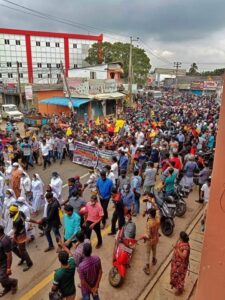
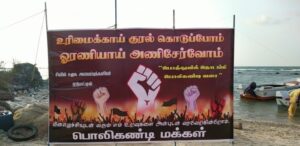
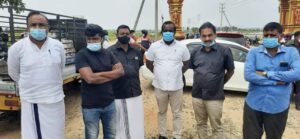
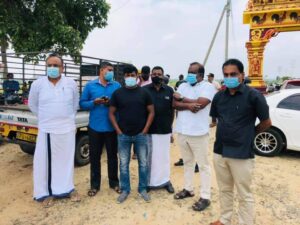
Tens of thousands march to Polikandy against oppression, injustice

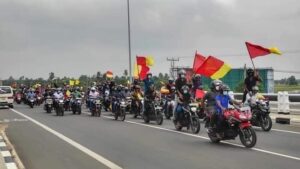
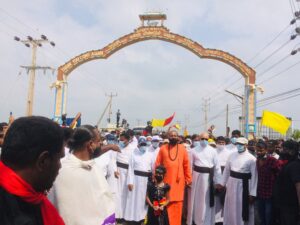
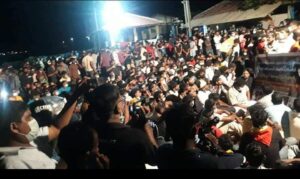
Tens of thousands of people have joined one of the largest rallies in the Tamil homeland since the end of the armed conflict in 2009, as they marched to Polikandi to conclude a five-day long campaign across the Tamil homeland.

The rally commenced from Kilinochchi and made its way to the northern-most point of the Tamil homeland in Polikandy. Over the past five days, it has crossed all eight districts in the North-East, starting from Pottuvil in Amparai.

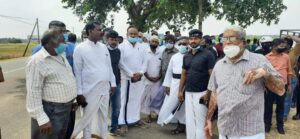
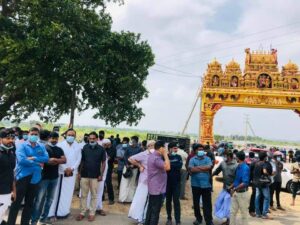
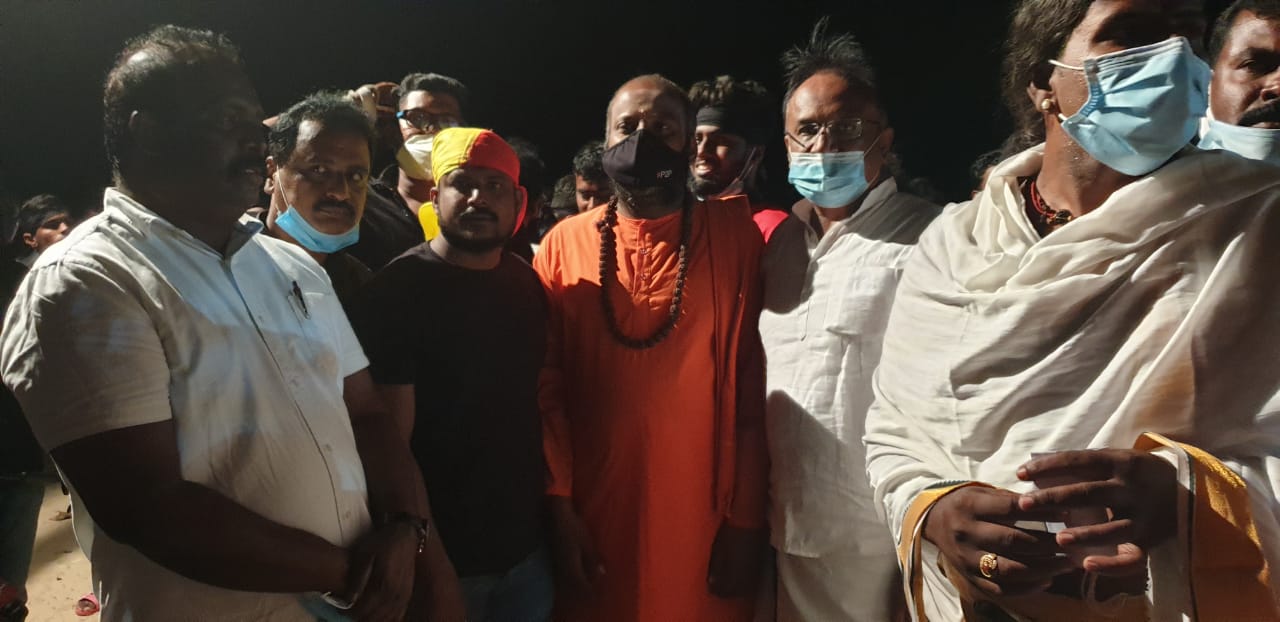
Religious leaders joined hundreds of Tamils and Muslims in a five-day Walk for Justice to raise key issues facing ethnic and religious minorities in Sri Lanka.

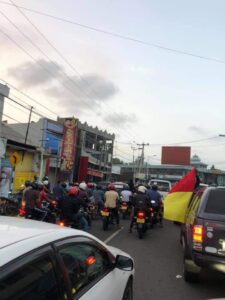
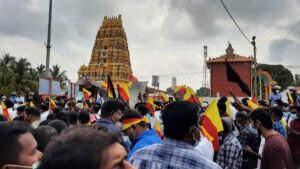
Civil society organizations, religious leaders, political parties, university students, relatives of the missing and rights activists hit the road carrying black flags and banners and chanting slogans against the oppression of minorities as they walked hundreds of kilometers.

The protest march focused on military land grabbing in the north, political prisoners, enforced disappearances, protests against the cremation of Muslims who died of the coronavirus, investigation of war crimes and the release of people falsely arrested after the Easter 2019 terror attacks.

Tamils and Muslims joined the Feb. 3-7 march despite roadblocks, harassment and intimidation from the eastern town of Pothuvil in Batticaloa to the northern town of Polikandi in Point Pedro.

Bishop Christian Noel Emmanuel of Trincomalee and several Tamil journalists and civil society leaders were issued with stay orders by police to prevent them from participating in the Walk for Justice.

Tamil lawmaker Shanakiyan Rajaputhiran Rasamanickam said they marched to protect the rights of Tamil and Muslim minorities.

“We hope the government will treat all of us as equal citizens of Sri Lanka. Don’t put iron nails on roads and deflate the tires of our vehicles. You can’t stop this protest march by doing such things,” he said.

According to the demonstrators, vehicles traveling with activists were stoned in Trincomalee, while iron nails were left on roads close to a military checkpoint.

Velan Suvamigal, a Hindu priest and a member of the Civil Society Forum, said Tamils and Muslims are fighting for freedom in the country.

“All continue the protest for five days to seek justice for Tamils, Muslims and those who face a lot of challenges and troubles in the country,” he said as the protest march entered the northern city of Mannar on Feb. 6.

Thousands were killed and disappeared during Sri Lanka’s 26-year civil war that ended in 2009 when the army defeated Tamil rebels. Both sides were accused of serious rights violations.

The controversial policy to cremate the bodies of Covid-19 victims has outraged Muslims, for whom cremation is forbidden. Activists say the decision isn’t based on scientific evidence but targets minorities.

Activists demanded the release of Tamil political prisoners who have been jailed for more than 25 years under the Prevention of Terrorism Act and the emergency.

UN High Commissioner for Human Rights Michelle Bachelet has called for member states to consider asset freezes and travel bans on Sri Lankan officials accused of rights abuses.

Father Leo Armstrong, parish priest of St. Fatima’s Church at Iranaipalai in Puthukkudiyiruppu, said they are not against anyone and it was a non-violent protest.

“We are all divided into races, castes, religions and political parties but we have been working together for the last five days to win our rights without any divisions,” he said.

Father Rohan of the Church of the American Ceylon Mission said in the past there was a division between Muslims and Tamils but now Muslims have realized that their fundamental rights have been violated by the government.

“We are happy that the Muslim community has shown solidarity with the march and the fight for the rights of minorities,” he said.

Another Catholic priest said minorities should also have the opportunity to live with dignity in the country.

“Many years have passed since the end of the civil war but justice has not yet been done to the Tamils,” said the priest who wished to remain anonymous.

“Political prisoners have been detained without hearing their cases, hundreds of war widows have no idea what happened to their husbands. Land taken by the military during the war has not yet been returned to rightful owners,” said the priest.

Although the Police in every district of the Northern Province had obtained court injunctions against the protest march, it was significant that the protest marches were held in defiance of those injunctions.

The protest march focused on archeological excavations in the North and East, the seizure of Tamil lands, the release of Tamil political prisoners, the payment of compensation for those missing in the war, the payment of 1,000 rupees to plantation workers, and the non-cremation of Muslims dying of the coronavirus.

The protest march was led by several Tamil and Muslim political parties led by the Tamil National Alliance (TNA) and was spearheaded by civil society organizations, university students, relatives of the missing and religious leaders.

It is noteworthy that yesterday(07-02-2021), the last day of the march, all the political parties that were divided in the North have joined the protest.

UNP and SJB kick-start talks to work together

The United National Party (UNP) and the Samagi Jana Balawegaya (SJB) have kicked off key talks to explore the possibility of working together.

SJB MP Harin Fernando told Daily Mirror that he met UNP leader Ranil Wickremesinghe and discussed opportunities to work together.

“I met Ranil Wickremesinghe. I told my leader I’m going to meet him because he also wanted to have a chat and to see how we can work together. Our General Secretary has opened up a conversation,” Fernando said.

He said that Wickremesinghe had requested the SJB to have talks with UNP Deputy Leader Ruwan Wijewardena and work out an arrangement.

“I think Ruwan has an ideal opportunity because he’s young. He worked with us. We have been together as a team,” Fernando said.

However, Wickremesinghe ruled out a possible merger between the UNP and SJB. When contacted, a spokesman told Daily Mirror after speaking to Wickremesinghe that there will not be a merger.

Instead, Wickremesinghe said he is open to working with the SJB on key issues. “We need to get all of them on one platform because we are fighting a regime that is very difficult. So if you are to fight against corruption, malpractices, we need to come into a common platform, leaving our political differences aside,” Fernando said.

SLPP Crisis Takes New Turn: General Secretary Wants Weerawansa To Apologise Over “Insulting Remarks” On Party Leadership

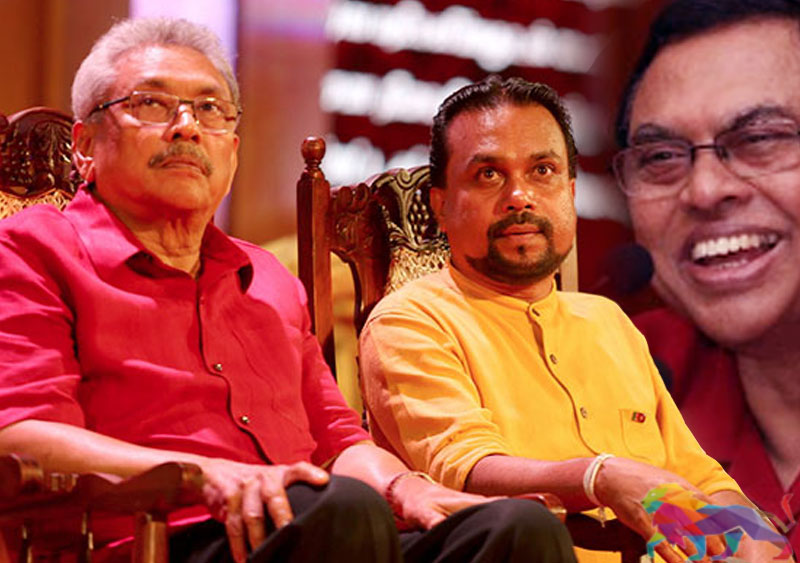
Taking the internal division within the SLPP government to a new height, SLPP General Secretary Sagara Kariyawasam today asked Minister Wimal Weerawansa to tender an apology to the public on the SLPP leadership.

In an interview with a weekend newspaper, Weerawansa said President Gotabhaya Rajapaksa should be made the leader of the SLPP as he is currently isolated in the Presidential Secretariat with a coterie of bureaucrats.

“How can he make such statements about the SLPP leadership? This is not this party nor does he have any standing the SLPP. He should mind the affairs of his own party. He doesn’t have any right to say that Prime Minister Mahinda Rajapaksa should be removed and President Gotabhaya Rajapaksa should be appointed in his place,” Kariyawasam added.

In the same interview, Weerawansa also hit out at Kariyawasam saying he was not bothered by the disappointment of the SLPP General Secretary who was dished out a parliamentary seat for being a “servant”.

‘We have no problem with him being sad. I have a problem if the people of the country feel sorry for the actions we take. That’s the only problem we have. Those who came from the national list and won seats do not understand the paramount importance of defending the mandate given by the people. The post of National List Member of Parliament is a gift that is given to someone for being a servant,” Weerawansa added.

Parliament to convene tomorrow

The Committee on Parliamentary Business met today (8) under the chairmanship of Speaker Mahinda Yapa Abeywardena, decided to convene Parliament during the next four days.

Accordingly, the Secretary General of Parliament Dhammika Dasanayake said the regulation issued by the Minister of Labour under an Extraordinary Gazette which was presented in the Parliament on January 21 under the Employees Provident Fund Act will be taken up for debate tomorrow.

Following the commencement of Parliament tomorrow (9) at 10.00 am, time will be allotted for oral questions by the Members of Parliament until 11.00 am. Subsequently the debate will begin at 11.00 am and will continue until 4.30 pm.

The adjournment motion moved by the ruling party will be taken up for debate from 4.30 pm to 5.30 pm, Mr. Dasanayake said.

Posted in Uncategorized

Proposed changes to National Flag: Still at ministerial level: Govt

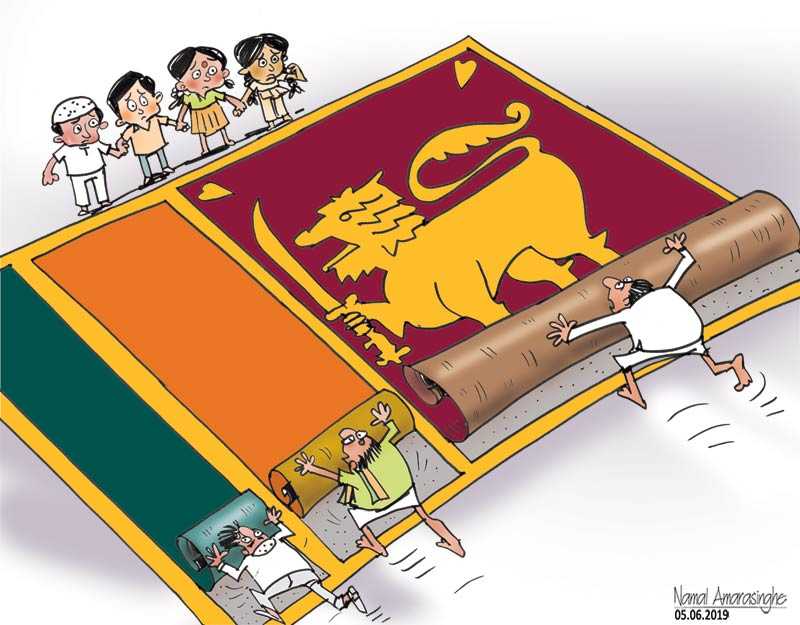
The proposed changes to Sri Lanka’s National Flag remain at ministerial level, and have not been brought before the Cabinet as of yet, stated Cabinet Spokesperson Keheliya Rambukwella.

During a news briefing held early this week, Defence Secretary (Retd.) General Kamal Gunaratne said that proposals have been made to amend the lion in the National Flag.

A committee appointed at the Home Affairs Ministry has taken these proposals into consideration.

When contacted, Rambukwella told The Sunday Morning that, according to the Defence Secretary, a committee had been appointed to look into the suggestions, but they have not been put forward to the Cabinet yet.

“They are still at the ministerial level. There have been requests and certain concerns from certain people saying that this is not the right thing. So, an opportunity has been given to submit their proposals to list out the reasons. I believe what he (Gen. Gunaratne) said was that there have been certain proposals, and that they are under consideration at the ministerial committee level,” he said.

When queried about the groups that have raised concerns, Rambukwella said that he was unaware of anything further in this regard, and that the Defence Secretary should be consulted for relevant information.

Commenting further on the proposed changes, he said that they were regarding the format of the lion. “There will be no significant change, and that is what Gunaratne said,” the Minister added.

Despite attempts made to contact him, Gen. Gunaratne was not available for comment.

Posted in Uncategorized

Pakistan Prime Minister to visit Sri Lanka on February 22

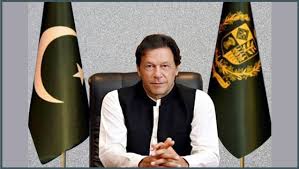
Pakistan Prime Minister Imran Khan is scheduled to visit Sri Lanka on February 22 on a two day official visit, according to Sri Lanka’s Foreign Ministry.

Pakistan PM will hold talks with President Gotabaya Rajapaksa, Prime Minister Mahinda Rajapaksa and Foreign Minister Dinesh Gunawardena during his stay in Colombo.

He will be the first head of state to visit the country after Covid 19 pandemic.

According to a Sunday Times report, Foreign Ministry sources have said Pakistan, which is currently a member of the UN Human Rights Council, is lobbying Muslim countries in the UNHRC to vote against a UN resolution that is due to come up on February 23 against Sri Lanka.

SLPP leadership should be given to the President – Wimal

President Gotabaya Rajapaksa should have been appointed the leader of the Sri Lanka Podujana Peramuna (SLPP) after he was elected as the head of state since he was not an experienced campaigner in the political arena, Minister of Industries Wimal Weerawansa said.

Pointing out that it would be inappropriate to isolate him to the Presidential Secretariat as this would weaken the cordial link between the President and the Members of Parliament, he said that it would not be conducive to the social, economic and political well-being of the incumbent government as well as the country.

The Minister made these comments in an interview with the ‘Sunday Lankadeepa’.

Prime Minister Mahinda Rajapaksa is the leader of the SLPP while Basil Rajapaksa functions as the National Organiser.

“Confining Gotabaya Rajapaksa to a coterie of bureaucrats at the Presidential Secretariat is an impediment to the well-being of the country” – Industries Minister Wimal Weerawansa

While noting his concerns on certain people with vested interests who have been working vehemently to realise their own personal agendas, he said that he was deeply saddened by these efforts which would have devastating repercussions to the government.

The Minister also said that he was perplexed about the lack of effort to stop this harmful situation from developing further and questioned as to whose aspirations they were trying to realise.

India fumes as China gets northern power projects

India has lodged a strong protest with Sri Lanka on the award of a tender to a Chinese company to set up three renewable energy projects in outlying islands off the Jaffna peninsula.

The protest, the Sunday Times learnt, came even before the Cabinet of Ministers decided not to give India and Japan the East Container Terminal in the Colombo Port. This also provoked a strong protest from India.

The protest was triggered by the Department of Information releasing the decisions of the Cabinet. The renewable energy project was approved by the Cabinet on January 18.

Diplomatic sources said India’s protest was on the grounds that such a move would raise security concerns for it. The islands concerned are the Delft Island, Analativu and Nainativu. The sources said the islands, separated by the Palk Strait from India, were in close proximity to India’s coast.

The Delft Island is only 48 kilometers away from the Indian coastal town of Rameshwaram.

The energy project’s local partner, the Ceylon Electricity Board, has finalised matters related to the project by identifying lands for the joint venture with Etechwin of China. The funds for the project are to come from the Asian Development Bank.

The US$ 12 million project has been awarded to MS/Sinosar-Etechwin Joint Venture in China.

The award to the Chinese company was recommended by the Cabinet-Appointed Standing Committee on Procurement.

Under the project, international competitive bids were called to instal hybrid renewable energy systems in the three islands utilising the accessible energy resources to improve the efficiency of the prevailing energy network.

Posted in Uncategorized

Biden administration throws its weight behind new Geneva resolution – The Island

Ahead of the 46th sessions of the Geneva-based United Nations Human Rights Council (UNHRC) scheduled to begin later this month, newly elected US President Joe Biden’s Democratic Party has raised Sri Lanka accountability issues in a recently submitted Resolution, with the focus on appointment of military officials, including that of Gen. Shavendra Silva as the Commander of the Army.

The UNHRC consists of 47 countries divided into five groups. The UK took over Sri Lanka matter in the wake of the US quitting the UNHRC in June 2018. It now heads the Sri Lanka’s Core Group.

Silva, the first General Officer Commanding (GoC) of the celebrated 58 Division was named the Commander of the Army by President Maithripala Sirisena.

Sirisena’s successor, Gotabaya Rajapaka, appointed Silva the Chief of Defence Staff (CDS) and subsequently promoted him to the rank of General.

Democratic Party Congressman Brad Sherman, a ‘very’ close associate of professional activists within the Global Tamil Diaspora has tabled a Resolution in the U.S. Congress charging President Gotabaya Rajapaksa administration of engaging in harassment and intimidation of human rights defenders and enforced disappearances, and protecting war criminals, Daya Gamage, former political specialist of the US State Department said.

Bradley James Sherman is the US Congressman representing California’s 30th congressional district since 2013.

The author of Tamil Tigers’ debt to America Gamage explained how the change in US administration had started to bring in ‘initial bearing’ on Sri Lanka with Congressman Sherman making a move. Gamage said that the US stand on the accountability issues should be examined against the backdrop of a statement attributed to Foreign Secretary Admiral Jayanath Colombage that the political change wouldn’t have any bearing on Sri Lanka.

Gamage said that in spite of the US not being a member of the UNHRC, it would throw its full weight behind the push for a new Resolution to be moved at the forthcoming sessions.

Here are four areas the Congressional Resolution on Sri Lanka has touched:

Whereas the Government of Sri Lanka has promoted high ranking military officials suspected of forcibly disappearing persons and bearing responsibility for war crimes, including Lieutenant General Shavendra Silva, and has failed to hold accountable other current military officials accused of war crimes.

Whereas, during the 26-year civil war ending in 2009 between government forces and the Liberation Tigers of Tamil Eelam, tens of thousands of Tamils were forcibly disappeared by the police, military, and paramilitary operatives

Whereas, according to a 2020 United Nations Special Rapporteur’s report, “no observable progress has been made on pending cases, including habeas corpus applications into the disappearance of Tamil Tigers and members of their families who surrendered during the final days of the war”.

Whereas lawyers, human rights defenders, and victims involved in cases of enforced disappearances face intimidation, harassment, and violence, particularly since Rajapaksa became President.

The Island learns that since the initial government reaction to the US slapping travel ban on Gen. Shavendra Silva and his immediate family members an year ago, the government hadn’t made representations to the US or UNHRC. The government ignored an opportunity to take up the Army Commander’s issue in the wake of the recent declaration made by the then US Secretary of State Mike Pompeo regarding the Army Commander’s matter. When the media raised the US travel ban on the Army Commander at a joint media conference given by Pompeo and Foreign Minister Dinesh Gunawardena, the one-time CIA Chief said “All right. Thank you. I think there were three questions there. The last one, look, it’s a legal process in the United States. We’ll always continue to review it. We want to make sure we get it technically, factually, and legally right. We’ll continue to do that.”

Well informed sources said that the UK spearheading the moves for a new Resolution at the UNHRC had told the Sri Lankan government in no uncertain terms that it was determined to go ahead with the project. Sources said that Secretary of State for Foreign, Commonwealth and Development Affairs and the Minister for South Asia Lord Ahmad of Wimbledon explained their stand to Minister Gunawardena and the Sri Lankan High Commission in London.

Tamil political sources said that they had the required support to secure a new Resolution at the forthcoming session. Sources said that a petition forwarded by three Tamil political parties represented in parliament to UNHRC members as well as the HR Commissioner received approval from those who mattered. Sources pointed out that the HR Commissioner’s latest report on Sri Lanka took the Tamil parties’ petition into consideration.