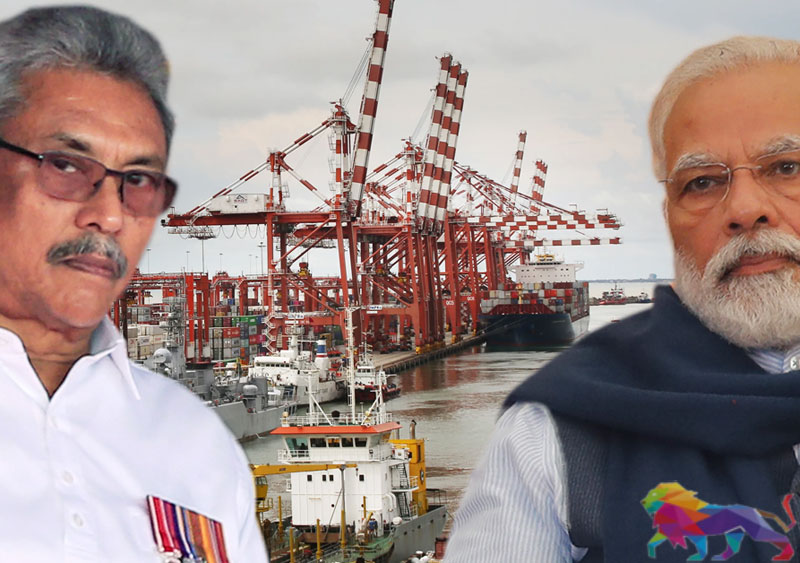
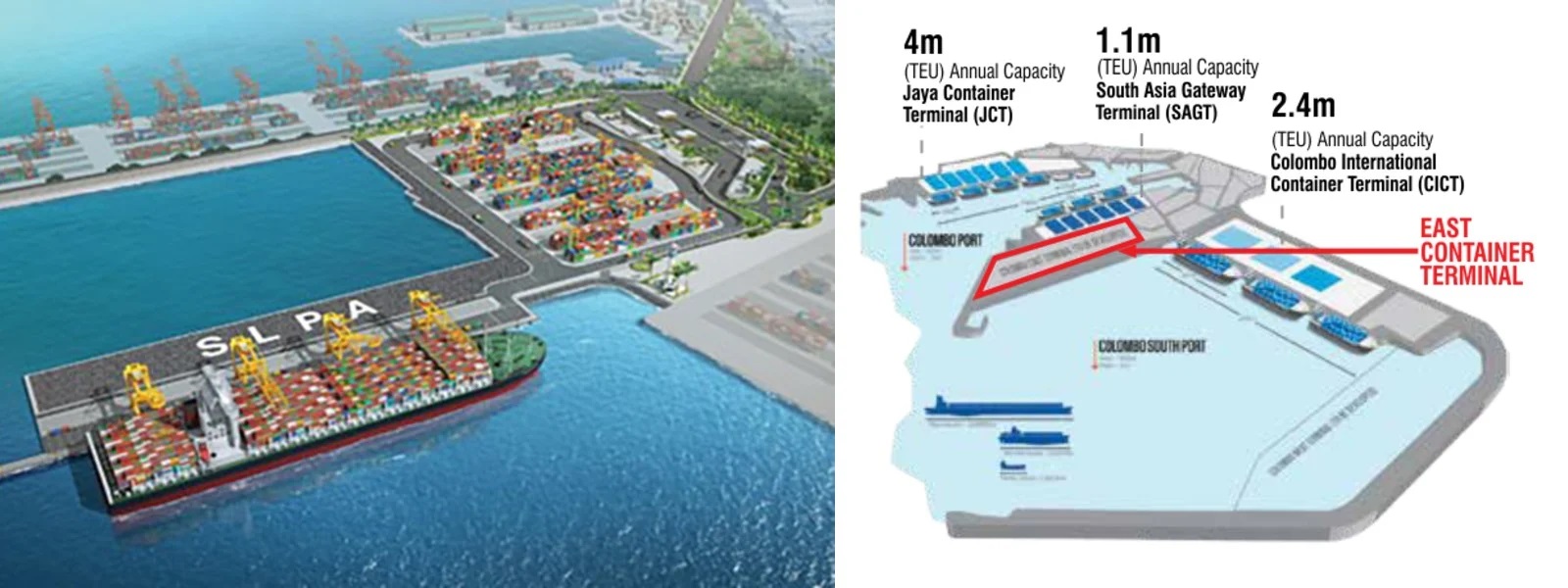
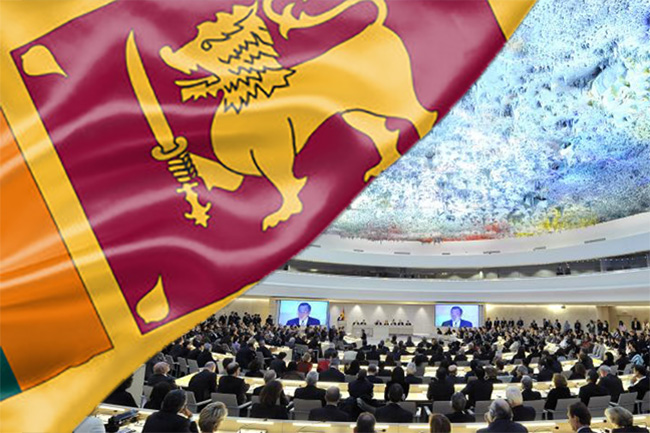
Sri Lanka to hold talks with Delhi on West Container Terminal

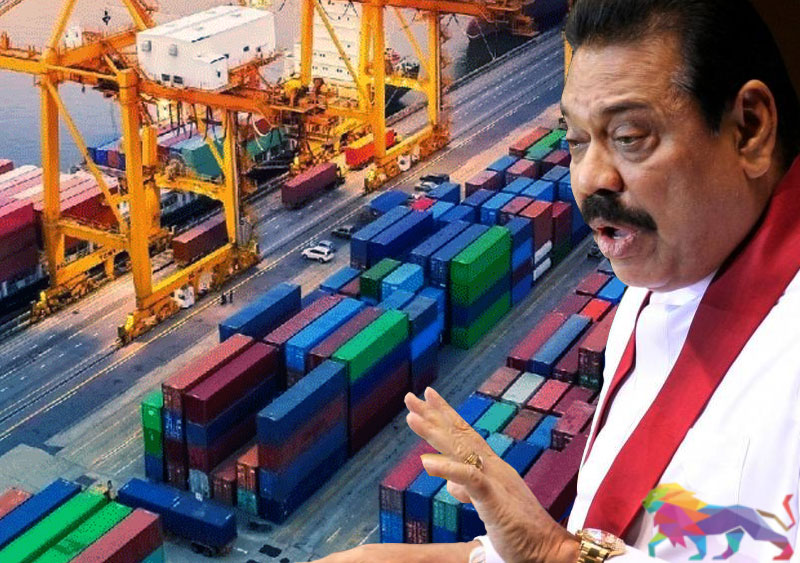
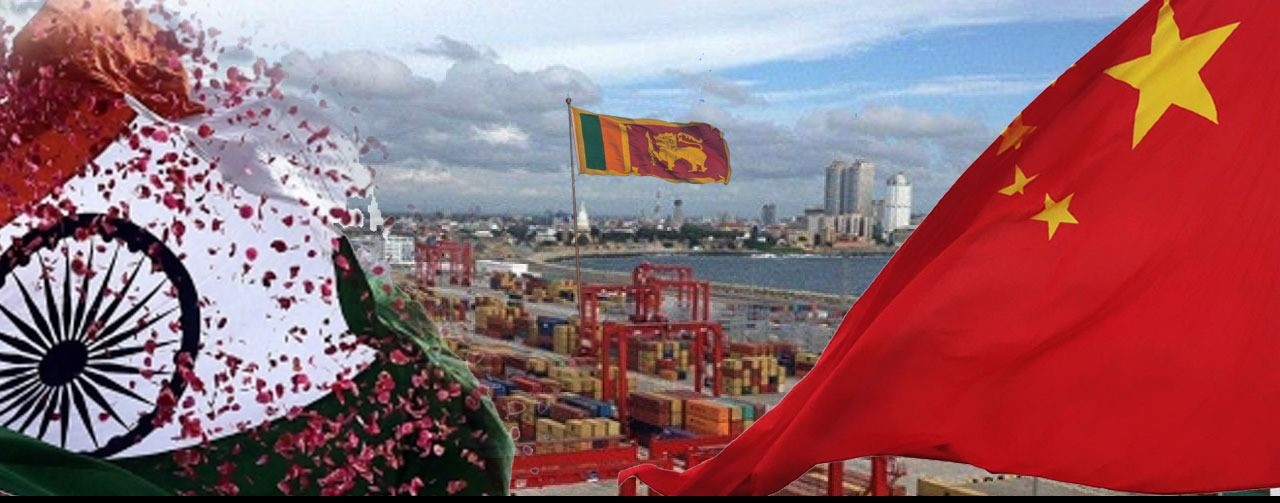
Sri Lanka is to hold talks with New Delhi on the West Container Terminal of the Colombo Port.

The move comes after the Cabinet decided to make a u-turn on its earlier decision to develop the East Container Terminal with India and Japan.

Minister of Ports and Shipping Rohitha Abeygunawardena said that a Cabinet sub-committee has been appointed to discuss the new proposal with India.

The Cabinet had today approved a proposal to ensure the East Container Terminal (ECT) was 100 percent in the control and management of the Sri Lanka Ports Authority (SLPA).

India had today demanded the full implementation of the agreement reached with Sri Lanka and Japan on the East Container Terminal.

The Indian High Commission in Colombo hit back after Prime Minister Mahinda Rajapaksa told trade unions today that a cabinet paper will be submitted to ensure the East Container Terminal (ECT) is operated 100 percent by the Sri Lanka Ports Authority.

The Memorandum of Cooperation among the three Governments of Sri Lanka, Japan and India on the development of the East Container Terminal located in the Colombo South Port was signed in Colombo on Tuesday, 28 May 2019.

“I would like to reiterate the expectation of Government of India for expeditious implementation of the trilateral Memorandum of Cooperation (MOC) signed in May 2019 among the Governments of India, Japan and Sri Lanka for the development of ECT with participation from these three countries,” a spokesperson at the Indian High Commission in Colombo told Colombo Gazette.

The spokesperson said that the commitment of the Government of Sri Lanka with regard to the ECT has been conveyed several times in the recent past, including at the leadership level.

“Sri Lanka cabinet also took a decision three months ago to implement the project with foreign investors. All sides should continue to abide by the existing understandings and commitment,” the spokesperson said.

Following the recent visit to Sri Lanka by Indian Foreign Minister Dr. S. Jaishankar, it was decided to award the expansion project of the East Container Terminal to Adani Group of India.

However Rajapaksa today said that the foreign company which was to manage the East Container Terminal had refused to accept a report submitted by a committee appointed to explore concerns over the ECT.

As a result the cabinet paper will be submitted to ensure the ECT is fully managed by the Sri Lanka Ports Authority.

Following the assurance given by the Prime Minister, trade unions who had been protesting against the deal with the Indian company, decided to suspend the protest tomorrow (Tuesday).

The Sri Lanka Ports Authority was earlier declared an essential service as workers continued to protest against the decision to give a 49% stake of the East Container Terminal to India’s Adani Group.

In an Extraordinary Gazette notice issued on Saturday, President Gotabaya Rajapaksa declared all services, work or labour of any description necessary or required to be done by or in connection with the Sri Lanka Ports Authority established by Section 3 of Sri Lanka Ports Authority Act, No. 51 of 1979 an essential public service.

The gazette notice noted that the services provided by any Public Corporation or Government Department or Local Authority or Cooperative Society or any branch thereof being a Department or Corporation or Local Authority or Cooperative Society, which is engaged in provision of the services specified in the Schedule hereto, is essential to the life of the community and is likely to be impeded or interrupted.

Cabinet agrees to operate Eastern Terminal 100% under Ports Authority

The Cabinet of Ministers has approved the 100 percent retention of the Eastern Container Terminal of the Colombo Port by the Sri Lanka Ports Authority (SLPA).

According to Minister Rohitha Abeygunawardena, the decision of the Cabinet was unanimous.

Following a discussion held with the representatives of port trade unions today (01), Prime Minister Mahinda Rajapaksa stated that a Cabinet paper proposing the East Container Terminal to be operated entirely under the control of the SLPA.

The collective of trade unions at the Colombo Port had resorted to trade union action, such as a work-to-rule campaign, opposing any moves to handover control and ownership of the ECT to any foreign country.

“Open Wounds and Mounting Dangers: Blocking Accountability for Grave Abuses in Sri Lanka,” HRW

(Geneva) – Sri Lanka’s government is aggressively attacking efforts to hold officials to account for past grave abuses, Human Rights Watch said in a report released today.

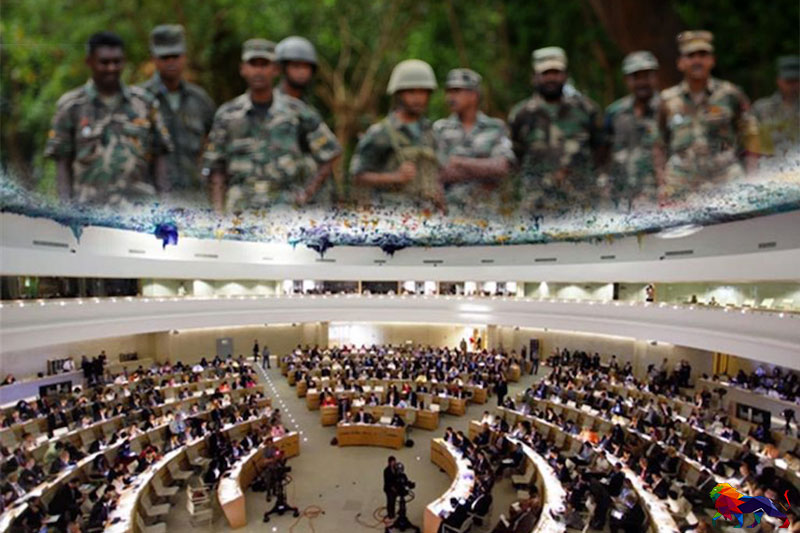
The 93-page report, “Open Wounds and Mounting Dangers: Blocking Accountability for Grave Abuses in Sri Lanka,” examines efforts by the government of President Gotabaya Rajapaksa to thwart justice in seven prominent human rights cases. It describes the current context of government repression of activists, journalists, lawyers, and the families of victims, as well as threats against vulnerable minorities. The United Nations Human Rights Council, at its session beginning February 22, 2021, should adopt a resolution upholding justice for serious international crimes in Sri Lanka and condemning ongoing abuses.

“The Sri Lankan government’s assault on justice increases the risk of human rights abuses today and in the future,” said John Fisher, Geneva director. “The UN Human Rights Council should adopt a resolution at its upcoming session that demonstrates to the Rajapaksa administration that the world won’t ignore its abuses and offers hope of justice to victims’ families.”

Efforts to provide accountability significantly declined during 2020, Human Rights Watch said. Senior police officers investigating killings and enforced disappearances committed during the Mahinda Rajapaksa administration have fled the country or been charged with apparently fabricated offenses. A commission appointed by the president has sought to interfere in criminal cases involving his allies and supporters.

Trials of military and intelligence officials accused of enforced disappearances have been delayed and disrupted. And the Rajapaksa-dominated parliament passed an amendment to the constitution that abolishes key checks on presidential power, undermining the independence of the judiciary and institutions such as the Human Rights Commission of Sri Lanka.

Atrocities by government security forces and the separatist Liberation Tigers of Tamil Eelam (LTTE) during Sri Lanka’s 26-year civil war, which ended in 2009, have been well documented by the UN, the media, and domestic and international human rights groups, including Human Rights Watch. The UN’s internal Petrie Report exposed the systemic failures of the UN to help protect civilians in the war’s final months.

Gotabaya Rajapaksa, the defense secretary in the government led by his brother President Mahinda Rajapaksa between 2005 and 2015, had direct responsibility for the conduct of government forces, which committed numerous war crimes, including indiscriminate attacks, summary executions, and rape.

Since being elected president in November 2019 he has appointed people implicated in war crimes and other serious violations to senior administration positions. He disavowed Sri Lanka’s obligations to promote truth, justice, and reparations under the Human Rights Council’s landmark 2015 resolution as an attack on the country’s “war heroes.” And he pardoned one of the very few soldiers ever convicted of abuses.

During the government of former President Maithripala Sirisena, from 2015-2019, a number of police investigations into human rights violations made progress, revealing evidence of official responsibility for killings and enforced disappearances. However, important investigations have been derailed under Gotabaya Rajapaksa’s presidency, including into the 2009 murder of newspaper editor Lasantha Wickrematunge; the 2010 forced disappearance of journalist Prageeth Ekneligoda; and the enforced disappearance by naval intelligence officers of young men for ransom in 2008-2009.

There has been no progress in other important cases in which senior officials have been implicated, including the 2006 Trinco Five massacre in which five ethnic Tamil students were killed, and the massacre of 17 members of a French aid group Action Contre la Faim.

Under Rajapaksa, self-censorship has returned to the Sri Lankan media, while security forces have carried out intense surveillance and harassment against victims’ families and activists campaigning to learn what happened to the thousands missing. One activist described the fear the new president has generated: “Any activity he does not want to tolerate, he will arrest people. So very little is going on among activists, and people are in self-censorship mode.”

A member of the advocacy group Mothers of the Disappeared, whose son was forcibly disappeared in 2009, said that since the presidential election, police from the Criminal Investigation Department have visited her repeatedly.

“They have come and asked who is going to meetings, and who is going to Geneva [to attend the UN Human Rights Council],” she said. “These are children who were taken by white vans from our houses or who surrendered [to the army]. I want to know what happened to my son, whether he is dead or alive, and if he is not alive, what happened to him and who did it – whether he was beaten, whether they broke a limb.”

Many families of victims have turned to the Human Rights Council to uphold respect for human rights in the face of government antipathy. In 2020, the government harassed activists engaging with the UN process in Geneva.

On January 21, President Rajapaksa announced a new domestic commission of inquiry to review the findings of the numerous earlier commissions of inquiry, which have not led to accountability or revealed the fate of missing people. The government has already indicated the outcome of this process, telling the Human Rights Council in September that allegations against senior military officers are “unacceptable” and without “substantive evidence.”

Previous Sri Lankan governments have used commissions of inquiry to deflect international pressure to address rights concerns, and those commissions have never met basic international standards. Human Rights Council members should not be deflected by the Rajapaksa government’s use of this tactic, Human Rights Watch said. The council should build on its own conclusions and the steps it has already taken over many years of Sri Lankan government delay, prevarication, and defiance.

Council members should uphold principles of international law for the worst international crimes by mandating a UN mechanism or process to collect, preserve, and analyze evidence, and for the UN high commissioner for human rights to report to the council on avenues to accountability. The high commissioner should also be given a renewed mandate to report on the situation inside Sri Lanka. Foreign governments should impose targeted sanctions on individuals credibly accused of serious abuses.

“The Human Rights Council should ensure that a new resolution responds to the situation described in the high commissioner’s report and upholds the council’s responsibilities,” Fisher said. “A meaningful new resolution is crucial to maintain international pressure. Failure would send a terrible message to abusers around the world that the community of nations is willing to overlook even the most terrible crimes.”

Posted in Uncategorized

India demands implementation of East Container Terminal agreement

India has demanded the full implementation of the agreement reached with Sri Lanka and Japan on the East Container Terminal (ECT).

The Indian High Commission in Colombo hit back after Prime Minister Mahinda Rajapaksa told trade unions today that a cabinet paper will be submitted to ensure the East Container Terminal (ECT) is operated 100 percent by the Sri Lanka Ports Authority.

The Memorandum of Cooperation among the three Governments of Sri Lanka, Japan and India on the development of the East Container Terminal located in the Colombo South Port was signed in Colombo on Tuesday, 28 May 2019.

“I would like to reiterate the expectation of Government of India for expeditious implementation of the trilateral Memorandum of Cooperation (MOC) signed in May 2019 among the Governments of India, Japan and Sri Lanka for the development of ECT with participation from these three countries,” a spokesperson at the Indian High Commission in Colombo told Colombo Gazette.

The spokesperson said that the commitment of the Government of Sri Lanka with regard to the ECT has been conveyed several times in the recent past, including at the leadership level.

“Sri Lanka cabinet also took a decision three months ago to implement the project with foreign investors. All sides should continue to abide by the existing understandings and commitment,” the spokesperson said.

Following the recent visit to Sri Lanka by Indian Foreign Minister Dr. S. Jaishankar, it was decided to award the expansion project of the East Container Terminal to Adani Group of India.

However Rajapaksa today said that the foreign company which was to manage the East Container Terminal had refused to accept a report submitted by a committee appointed to explore concerns over the ECT.

As a result the cabinet paper will be submitted to ensure the ECT is fully managed by the Sri Lanka Ports Authority.

Following the assurance given by the Prime Minister, trade unions who had been protesting against the deal with the Indian company, decided to suspend the protest tomorrow (Tuesday).

The Sri Lanka Ports Authority was earlier declared an essential service as workers continued to protest against the decision to give a 49% stake of the East Container Terminal to India’s Adani Group.

In an Extraordinary Gazette notice issued on Saturday, President Gotabaya Rajapaksa declared all services, work or labour of any description necessary or required to be done by or in connection with the Sri Lanka Ports Authority established by Section 3 of Sri Lanka Ports Authority Act, No. 51 of 1979 an essential public service.

The gazette notice noted that the services provided by any Public Corporation or Government Department or Local Authority or Cooperative Society or any branch thereof being a Department or Corporation or Local Authority or Cooperative Society, which is engaged in provision of the services specified in the Schedule hereto, is essential to the life of the community and is likely to be impeded or interrupted.

Port Unions call off strike on Mahinda’s assurances that ECT will not be given to foreigners

The coalition of Trades Unions protesting against the handing over of the East Container Terminal to a foreign company has decided to call off the strike action after Prime Minister Mahinda Rajapaksa assured them it will not be handed over to a foreign party, the PM’s office said.

In a press release issued by the PM’s Media Secretary Rohan Welivita, Rajapaksa’s office said representatives of the Trade Union coalition which comprises 23 different bodies met with the PM and other officials today, Monday, February 1.

“The Prime Minister reassured the unions that the Terminal will be 100 per cent owned and operated by the Sri Lanka Port Authority,” the statement said.

When the Union Representatives asked for his guarantee in writing Rajapaksa had said he had solved many such disputes in the past and his word had been good enough.

Ports and Shipping Minister Rohitha Abeygunewardene who had also attended the meeting had said that as the company that had been approached to be a partner in the port had rejected the terms and conditions presented by the SLPA, he would be informing the Cabinet later today about the decision.

The Unions, according to the statement, had said they would stop the work rule union action from tomorrow.

However, MediaLK.com quoted one union leader Niroshan Gorakanage as saying that while they accept the word of the Prime Minister a final decision would be made after perusing the cabinet paper on the subject.

Posted in Uncategorized

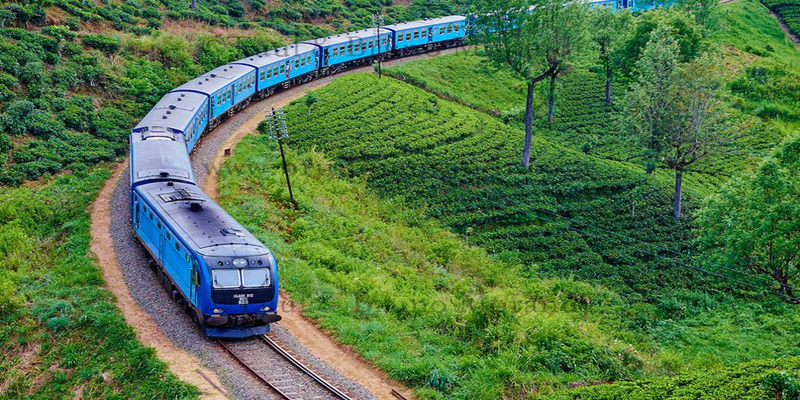
‘Trains with Chinese compartments a risk’

The Locomotive Engine Operators’ Union has decided to refrain from operating trains with compartments imported from China, until they are maintained and added to the fleet.

Secretary of the Union Indika Dodangoda speaking during a media briefing in Colombo said the decision was reached as there is a risk of accidents taking place as a result of trains with compartments imported from China not being maintained appropriately.

Dodangoda said a train with such a compartment had split near the Peliyagoda flyover and the Kelaniya train station recently, and continued along the railway track freely for around 1km.

He claimed generally if a train splits the brakes are activated automatically and the train will come to a stop within 20m.

Dodangoda said however the train that parted from the compartments recently had only come to a stop after the engine operator had applied the brakes and the second half had stopped after ramming onto the front compartments.

He noted it wasn’t the first such incident adding it poses a great risk to commuters.

He added therefore engine operators will refrain from operating such trains until they’re repaired.

Posted in Uncategorized

The pro government parties oppose the ECT deal with India and Japan’s investors but not China’s investors

A majority of partners in the ruling alliance want the East Container Terminal (ECT) in the Colombo Port vested entirely with the Sri Lanka Ports Authority (SLPA).

They are opposed to ceding the ECT for a joint project with India and Japan.

Port Supply Facilities State Minister Jayantha Samaraweera told the Sunday Times a decision in this regard was made at a joint meeting yesterday.

He said those represented were from the Sri Lanka Freedom Party (SLFP), the Pivithuru Hela Urumaya (PHU), the Lanka Sama Samaja Party, the Democratic Left Front, the Communist Party of Sri Lanka, the Sri Lanka Mahajana Pakshaya, the Ceylon Workers’ Congress, the United People’s Party, the National Congress, the Eelam People’s Democratic Party and the Yuthukama Organisation.

The move came as the Cabinet is set to take a decision on the matter tomorrow. The task of conveying the decision reached at the meeting to Cabinet tomorrow has been entrusted to Ministers Wimal Weerawansa, Vasudewa Nanayakkara and Udaya Gammanpila.

Minister Gammanpila said the representatives who met yesterday agreed that the ECT must be developed fully by the SLPA and must be 100 percent SLPA-owned. “We will request that the Government provide loan facilities from state banks to develop the ECT,” he said. “If that is not possible, then the ECT can be listed on the stock exchange where our citizens will be able to purchase shares.”

The meeting chaired by Minister Weerawansa was held as port sector trade unions threatened to begin an indefinite island-wide strike tomorrow if the Government pushed ahead with the move to give a 49 percent stake in the ECT to India’s Adani Group.

At the Colombo Port, work is already hampered owing to the work-to-rule campaign started by trade unions on Friday. Twenty-three unions are engaged in the campaign, said Prasanna Kalutarage, Port Sector Branch President of the Sri Lanka Nidahas Sewaka Sangamaya, which is affiliated to the SLFP. He added that unions affiliated to all political parties were fighting together over the ECT issue.

Union representatives have agreed on four main proposals and sent them to President Gotabaya Rajapaksa on Friday. The proposals include giving the SLPA written approval to begin operations at the ECT section that has already been developed and presenting a Cabinet paper proposing that operations of the entire ECT be brought under the SLPA.

The trade unions were yesterday continuing with their work-to-rule campaign and will decide tomorrow whether they will convert the work to rule into a strike.

On Friday, the Government gazetted the Port services as an essential service.

Meanwhile, commercial discussions were held between the investors and the Cabinet-Appointed Negotiating Committee (CANC) which will hand over its report to the Minister tomorrow. Its contents will be revealed by the Government, said SLPA Chairman Daya Ratnayake, who pledged that the ongoing dispute would be resolved in a positive manner.

“Everyone is of the opinion that the ECT must be run by the SLPA, not handed over to some other institution or country,” he told the media. This includes the port workers, trade unions, management and the public.

“I am of the view that a proposal to satisfy all their aspirations has been arrived at by the CANC,” he said. “There is the possibility of a Cabinet memorandum being ready by tomorrow.”

The Government had earlier insisted on the SLPA retaining a 51 percent holding in the business. This posed a challenge because, constitutionally, the enterprise would be “State-owned”, making it difficult to run it flexibly.

During talks, the SLPA had high expectations regarding what it would earn from the deal in terms of royalties and other gains. The demand was for several times more income than its revenue from the China-run Colombo International Container Terminal (CICT) which is also in the Colombo Port.

The investors saw this as unreasonable and commercially unfeasible. That is because the ECT will deal with the same customers and offer the same service in the same harbour as the CICT.

The SLPA holds only a 15 percent stake in the CICT. China Merchants Holdings (International) (CMHI) holds the remaining 85 percent. There is, therefore, a “reasonable expectation” that the ECT must yield more for the SLPA.

Posted in Uncategorized

Diplomatic bungling as Lanka faces head-on collision with UNHRC – Sunday Times.LK

A head-on confrontation between the Government and the UN system has become inevitable, judging from the latest report of the Office of the High Commissioner for Human Rights.

The preliminary report, obtained by me from an authoritative source, appeared in these columns last week. Sections of the Colombo-based diplomatic community and other ill-informed quarters, here and abroad, surmised that it had been leaked by the Government so it may publicly criticise the contents. It is furthest from the truth. There was embarrassment in government circles. Some even tried to locate the source whilst a few in the Foreign Ministry pinned it on one of Sri Lanka’s diplomats serving in an important capital. To all of them, what mattered was the source and not the substance.

However, it seems that the UN Human Rights High Commissioner has taken cognisance of the hurriedly put together response from Colombo. It was transmitted to the HRC’s office on the same day that the report was officially released in Geneva on Wednesday (January 27). There were no changes in the contents but only additions of footnotes.

This is reflected in the front-page of the report where it states that “The present report was submitted after the deadline as a result of consultations with the member State,” and contains other footnotes referring to communications from the Permanent Mission in Geneva including that of January 27. The delay was because of two schools of thought – one to ignore the report in its entirety and the other to respond and hit back hard. After last Sunday’s disclosures in these columns, the latter gained more traction highlighting the need for a prompt and strong response.

The UNHRC Report calls upon member states to refer the situation in Sri Lanka to the International Criminal Court (ICC), resort to; “actively pursue extraterritorial or universal jurisdiction” and “prosecute “international crimes committed by all parties in Sri Lanka”. It has also called for “targeted sanctions, such as asset freezes and travel ban against State officials and other actors credibly alleged to have committed or be responsible for grave human rights violations or abuses.”

Hard on the heels of the Report on Sri Lanka, making matters worse for the Government, is that the UN High Commissioner’s Office has resorted to sensitising the world (on the Report) through a video campaign. It seems to be a new manner in publicising a country situation report. It is based on visuals of the separatist war, highlights the “suffering” of civilians and calls for support to enforce human rights. Does one need to say anything more that the odds are being stacked against Sri Lanka? This brings into question the bona fides of the UN High Commissioner’s objective of supposed constructive engagement with Sri Lanka. The Government is to lodge a strong protest in Geneva over this and issue a statement condemning the move. It is of the view that the exercise shows the prejudice of the UNHRC.

Added to that was a tweet from UN Human Rights Commissioner Michele Bachelet. She said she “calls on intl community to establish dedicated capacity to collect/preserve evidence of crimes in Sri Lanka for states to pursue prosecution in their national court and consider targeted sanctions against perpetrators.”

President Gotabaya Rajapaksa was angered by the UNHRC Report. His advisors had told him that the tenor and content of the UNHRC report, compared to any country in the past, was “unprecedented” and “unconventional.” He summoned a meeting at his Secretariat last Monday to obtain the views of the participants for a strong response. Those taking part – a cross section of those in the present government – seemed politically significant because of the different schools of thought they came from. They not only represent the constituent parties of the Government but also members of President Rajapaksa’s “Viyath Maga.”

Those taking part in the conference were Prof. G.L. Peiris, Nimal Siripala de Silva, Sarath Weerasekera, Wimal Weerawansa, Udaya Gammanpila, Mahinda Samarasinghe, Nalaka Godahewa, Prof. Channa Jayasumana, Jayanath Colombage and P.B. Jayasundera. Foreign Minister Dinesh Gunawardena, and his deputy Tharaka Balasuriya took part via Zoom since both were undergoing quarantine. This was after the detection of a positive Covid-19 victim at their office. Consensus was reached that a reply should be sent since some of the contents of the report were “not based on facts” and were “totally misleading.” It was agreed that the salient issues would be addressed.

The same group met the next day (Tuesday) for more than two hours at the Foreign Ministry where the formulation of the response took shape. Absent at this meeting were Wimal Weerawansa and Nalaka Godahewa. Foreign Secretary Jayanath Colombage gave a presentation of the current situation vis-à-vis the dialogue with the UNHRC. In essence, the reply from the Government is to declare that the report is “selective on Sri Lanka, subjective and biased” to mislead the international community. The reply was sent to the UNHRC in Geneva on Wednesday through the Permanent Representative, C.A. Chandraprema. The Government has also defended the appointment of military officers to key positions saying it was a general practice followed in other countries too. Moreover, these military personnel, the Government has claimed, were experts in the field in positions they have been appointed to. It has added that accountability issues were being addressed on a ‘factual approach.’

Another course of action President Gotabaya Rajapaksa will follow is speak to as many leaders as possible of the 47 member states of the UNHRC. Besides this, Foreign Minister Gunawardena, who is taking a low-key approach to these issues shying away from the media at this crucial moment, will meet heads of missions of the member countries that have diplomatic representation in Colombo. Sri Lankan envoys overseas are to be tasked to brief the others.

The absence of Foreign Minister Gunawardena, unlike his predecessors, to defend the issues confronting Sri Lanka as a result of the Report is worrisome and damaging. More so when other senior politicians in the Government have all remained stoically silent. It is only a ‘one-man’ campaign that is under way by a bureaucrat though some of his comments have raised eyebrows. There is also the absence of a cohesive communications strategy to tell Sri Lankans and the world about the issues related to the UNHRC. This is at a time when Sri Lanka’s own envoys overseas are otherwise busy — sending pictures and reports to the media here only about themselves and what they are purportedly doing. There is not one account of their meeting any high-level personality in the host country or pushing the country’s interests.

A glaring case in point, unprecedented and unconventional, came from Foreign Secretary Colombage, a retired Admiral from the Sri Lanka Navy, Ahead of that, it is important to note that Colombage has remained a very friendly personality when he served the Sri Lanka Navy, the Pathfinder Foundation and now as Foreign Secretary. Foreign diplomats have commended him for his outgoing and persuasive ways. This came about when they were comparing predecessors. His demeanour won him friends. When Indian High Commissioner Gopal Baglay then told him about an impending visit by Indian External Affairs Minister Dr Subramaniam Jaishankar, he promptly replied “We will give him a grand welcome.” Thus, he has won friends and brought pride to the country.

Alas, this week, he crossed the forbidden red line in diplomatic practice. He told several media outlets that the United States’ new President Joe Biden should first put his house in order. He was alluding to the protection of democracy and fighting extremism in the US. Not that President Biden is free from criticism. Neither Foreign Secretaries nor persons in the ilk of foreign relations are expected to make such remarks and this is the first time one holding office in Sri Lanka has done so. It is common sense that it is offensive to the country concerned.

Imagine if the new US Secretary of State, Anthony Blinken was to make such remarks about Sri Lanka. Would it not have drawn a protest from Colombo? Would not there be a lot of chest thumping asking the US to mind its business? Was this a response for the US Ambassador Allaina B. Teplitz’s remarks during a roundtable discussion with journalists? If that be the case, she is perfectly entitled to speak out as the US envoy. Such conduct only causes damage to the reputation of the country and its leaders. Sadly, one senior diplomat remarked, “you guys have a superpower complex.” Added a retired, senior Sri Lankan diplomat who did not wish to be named: “The least a Foreign Secretary says, except on extraordinarily important issues, the better it is for the country, the Government and its leaders.”

Of course, this is not the first time a Ministry Secretary has caused such a faux pas. In October 2007, the then UN Human Rights High Commissioner Louise Arbour, a Canadian lawyer, prosecutor, and jurist visited Sri Lanka. The morning she was due to address a news conference in Colombo, the Secretary of the Ministry which dealt with human rights, called her “a football” in a morning newspaper report. This was because she was short in height and appeared fat. She was infuriated and refused to attend the news conference. It took time and effort by the minister concerned to persuade her that the views expressed were not of the Government. She later agreed.

It is not only in the conduct of foreign relations that such highly damaging faux pas occurs. Take for example the story about Health Minister Pavithra Wanniarachchi, rather unfortunately, being stricken by the deadly coronavirus. Many reports in the western media ridiculed her in the reportage citing her as the promoter of a syrup made by a sorcerer. She had earlier dropped ‘charmed’ clay pots into rivers standing atop bridges. This is on the advice of faith healer Dr Eliyantha White. The resultant publicity embarrassed the Government, its leaders and the people of Sri Lanka. This is at a time when, in other parts of the world, health ministers were giving studied discourses on satellite television channels about the Covid-19 epidemic in their own countries.

In a world dominated by western media influence, Sri Lanka cannot compete with the machinery available in the United States and its allies. Certainly not with offensive rhetoric. The Government requires a strategy to get its message across. The increasing negative media coverage could only strengthen the international lobby of the Liberation Tigers of Tamil Eelam (LTTE). Therefore, taking an adversarial position against the Western powers and their media empires could be counterproductive, particularly with the current mediocre and unprofessional approach. There is no communications strategy and the focus is on media statements and interviews from the Foreign Ministry.

The global alignment of world powers has changed. India in the past was preoccupied with Pakistan, an ally of the US then. The importance of India to the US has been categorically outlined by President Biden and his administration comprises Indian American nationals in key positions. Therefore, it could be expected that India will don the US mantle to monitor the South Asian region, to which Sri Lanka needs to pay heed. Today India has to counter alleged Chinese aggression in the Himalayan border and Indian Ocean. Equations are, therefore, different. India is now a member of the Indian Ocean Quad with the US, Australia, and Japan. On top of that, one must concede, Sri Lanka’s conduct of foreign relations has deteriorated. Take for example India – there has been no High Commissioner in New Delhi for more than a year now. This is besides the appointment to higher and lower positions in diplomatic missions overseas of sons and daughters of ministers, state ministers, government officials and close relatives of leaders. That is notwithstanding the Government’s election pledge to appoint the most suitable from the Foreign Service. If indeed there was interaction, part of the damage Sri Lanka now faces could have been minimised.

At the UNHRC in Geneva, a new resolution is now taking shape. The precursor to this was Resolution 30/1 and the subsequent 34/1 and 40/1 as related rollovers to mark time for Sri Lanka to deliver on its undertakings. Though the Government was earlier in favour of a ‘consensus’ resolution, it has now taken a step back from the move. There has also been a suggestion for the Government to seek the help of friendly nations to move a resolution of its own. The new resolution could be expected to be contested and the question remains on of how many countries will back Sri Lanka, how many will abstain and how many will vote against.

According to a Framework Document for a draft resolution, it covers significant elements of the latest UNHRC report. In general terms, it will “remind Sri Lanka of the state’s responsibility to comply with their obligations” and make positive reference to OHCHR so far. Among the highlights of the operative paragraph are:

  • Express concerns over current and developing situation in Sri Lanka based on the UNHRC report.
  • Express the importance of a comprehensive accountability process for all violations and abuses committed during the war.
  • Express the need for an achievable time-bound plan of implementation.
  • Highlight the inability so far to achieve any meaningful domestic mechanism to achieve accountability.
  • Hint at possibilities of individual countries devising their own mechanisms to deal with the perpetrators of these alleged crimes
  • Encourage the Government of Sri Lanka to implement as many recommendations as possible from the previous resolutions and from the UNHRC report.
  • Encourage cooperation with OHCHR and to allow field presence.
  • Encourage cooperation with special procedure mandate holders.
  • Request new reporting by OHCHR on progress and on national reconciliation and accountability mechanisms – update in March 2022 and full report in September 2022.

As is now known, the United States is not a member of the UNHRC. This was after then US President Donald Trump pulled out of it. President Joe Biden, however, has said that the US would re-join. The core-group that backed the US – the United Kingdom (playing the lead role), Canada, Germany, North Macedonia, and Montenegro are still active.

This week, interesting enough, strong differences among the core group countries represented in Sri Lanka – Canada, Germany and the United Kingdom – surfaced. The envoys of the countries met on Wednesday; the same day the Government’s response was sent to the UNHRC report. UK High Commissioner in Sri Lanka, Sarah Hulton tweeted, “UK raising human rights concerns with Sri Lanka, including forced cremation of Covid-19 victims. UN report to be published next week, will inform the approach to @UN HRC.”

She also retweeted a message from Julian Braithwaite, UK Ambassador to the World Trade Organisation (WTO) and the United Nations. He said, “The UK will be considering the important new UN Human Rights report on Sri Lanka. We will continue to support human rights and accountability in Sri Lanka at the upcoming session of the UN Human Rights Council.” Holger Seubert, the German Ambassador in Sri Lanka, responded that consensual resolution will be possible, because Germany is not supporting a “tough” resolution against Sri Lanka. He tweeted, “Important UNHCR session coming up in Geneva soon. Hoping that a consensual resolution will be possible.”

The German Ambassador’s tweet, which seemed a diversion from his UK colleague, appears to have ruffled feathers in his home capital. Berlin. Barbel Kofler, Commissioner for Human Rights policy in the Federal Foreign Office, tweeted that ”The report published by @Human Rights yesterday is cause for grave concern about the situation of human rights in Sri Lanka. I am pleased Germany remains committed to reconciliation and accountability, also through the Human Rights Council.” There was another tweet thereafter by Ambassador Seubert which said, “Very important report, to be discussed thoroughly at the forthcoming Human Rights Council (HRC) in Geneva.”

A diplomatic source in Colombo, familiar with the goings on, claimed that the position taken by the German Ambassador made it difficult for the core group to take a unified position to lobby member states. It has also made it near impossible to finalise the wording for the resolution. However, home capital Berlin will prevail in Geneva together with the other western capitals.

It is most likely that Foreign Minister, Dinesh Gunawardena will address the “high level” segment of the Human Rights Council sessions from Colombo through a video link. Already, a team of officials have travelled to Geneva to assist the permanent mission there in work related to the UNHRC sessions.

Playing a key role locally in these developments is the Tamil National Alliance (TNA). Its front-liner M.A. Sumanthiran spoke to the Sunday Times. Edited excerpts:

“We welcome the report from the Office of the UN Human Rights Commissioner. Many would have noticed that the report reflected some issues we raised in the collective letter we sent earlier to the office of Human Rights Chief. It is a coincidence. The fact that the Government refused to cooperate with the UN mechanism despite it agreeing to do so three times previously has got the Government into this position. If the State which gave assurances to the UN and international community in the past and then receded from those commitments, these are the natural consequences.

“For wartime accountability, Sri Lanka gave its consent for a hybrid mechanism to investigate violations through the UN Resolution 30/1. However, the Government kept saying that it will never allow the foreign judges to sit in such a mechanism as agreed. This February, the Government informed the UN that it will not comply with those UN resolutions. You need the consent of the concerned country to do this. When the State fails to comply, it escalated to other steps such as referral to the International Criminal Court (ICC), urge other member states to apply universal jurisdiction, travel bans and freezing assets.

“From the recent interviews given by the Foreign Secretary, it seems the Government is still continuing the denial mode even after ten years. The matter was vested with the Human Rights Council with the submission of the report by the Panel of Experts in 2011. We had to take a harder position now as the international community also realised after giving ten years for the Government to achieve wartime accountability and it failed to do so.”

Added Suren Surendiran from the London Global Tamil Forum (GTF) which is at the forefront of the lobbyists in Geneva: “We believe it is a damning report by the High Commissioner and it clearly reflects the frustration, anguish and despair that the OHCHR feels for the future of Sri Lanka based on the current trajectory. Some of the recommendations made by the High Commissioner to the member states are bold, historic and apt.”

Public Security Minister Sarath Weerasekera charged that the High Commissioner’s report was full of incorrect allegations against Sri Lanka. The Minister, who has previously travelled to Geneva when the UNHRC was in session, told the Sunday Times, “High Commissioner Bachelet is poking her finger into the internal affairs of a sovereign country. Against our President, she is making allegations which are wrong. For example, even US President Biden has appointed retired military officers to top positions. She has criticised me. I am an elected parliamentarian. I won the largest number of votes in Colombo District and the second largest in Sri Lanka. For her, even that is wrong.”

Minister Weerasekera said the blame for the current situation should be on former Foreign Minister Mangala Samaraweera. It was he, on behalf of the previous Yahapalana government, who co-sponsored the US-backed resolution. That was a treacherous act. “The people of Sri Lanka should not be scared. President Rajapaksa will take good care of them,” he added.

Minister Udaya Gammanpila told the Sunday Times “The UN Human Rights Commissioner has gone beyond her remit in producing the Report on Sri Lanka. From a 17 page report, it is unfortunate, that she had only devoted two pages to deal with subject matters at issue. The reference to cremation of Muslims who die of Covid-19 has been for valid reasons. She does not talk about how Muslims were attacked on five different occasions during the previous Yahapalana government. On military appointments, they have lost sight of the fact that the Chief of Defence Staff and Army commander General Shavendra Silva was appointed by the previous government .

The strategy on addressing this issue at hand seems rudderless at present. This is extremely alarming. Lucidly strategised, constructive engagement with all parties is the need of the hour. Understandably, at the outset, Sri Lanka is not able to accept a consensual resolution as wished by the proponents considering that it would recall the earlier related resolutions, particularly 30/1 and those that followed, being unconstitutional in their content had been established on earlier occasions by the country.

However, Sri Lanka cannot expect to simply wish away the dictates of the Human Rights Commission resolutions by having retracted co-sponsorship but seek other ways and means to proceed towards their closure. Whilst there is much to contend with vis-à-vis the UNHRC process, it is imperative to ensure that this issue does not breach this framework to be lodged in the Security Council which is the only UN mechanism that can dish out prescriptions that are legally binding.

It may be recalled that the Tamil political parties and civil society groups in their joint communication to UNHRC member countries recently requested for such action. It is incumbent upon the Government to conduct a strategy of engagement based on the accepted tenets of diplomatic practice, rather than slaving to megaphone sound bites which seems to be presently gaining ground. It is not in the country’s interest to waste time on history, lecturing and publishing atrocities of the LTTE, considering that it remains proscribed in 32 countries, having been convinced of the unacceptability of its modus operandi during the separatist terrorist war. Let not Sri Lanka get isolated in the international arena due to the ill-conceived notions and attitudes, which is unaffordable at any cost. The key to assistance to Sri Lanka is within the country’s immediate neighborhood.

The onus also lies fairly and squarely on Sri Lanka’s Permanent Representative to the UN in Geneva to strategize and forge relationships with Human Rights Council member states there, to positively sensitize on the related contentious issues of the Report, and assist Sri Lanka in securing support against foreign machinations and those of the UN High Commissioner for Human Rights.


Posted in Uncategorized

Sri Lanka approaches India and other countries for support in UNHRC – Daily Express

Sri Lanka is in discussion with India and other countries for support in the March session of the UN Human Rights Council (UNHRC) in Geneva when Western nations bring an intrusive and punitive resolution against it for alleged war crimes.

A top source in the Lankan government said that the support of about 15 members of the 47-member UNHRC is being sought to counter the Core Group’s move to bring a resolution that is expected to call for targeted sanctions, asset freezes and travel bans among other intrusive measures. The High Commissioner for Human Rights Michelle Bachelet has even recommended that the Lankan case be taken to the International Criminal Court.

The Core Group comprises Canada, Germany, North Macedonia, Montenegro and the UK. The US, which is the prime factor in the anti-Sri Lankan move but is not a UNHRC member, is using the Core Group to push its anti-Lankan agenda. The Core Group is now working a “consensual resolution”. But given the radical difference between the stands of the Core Group and Sri Lanka, chances of a consensus emerging appear to be slim.

According to the government source, Sri Lanka approached India first and India had said that it would consider the Lankan request. China and Russia have already publicly stated that they would support Sri Lanka in international forums. Sri Lanka is also counting on African countries to support it, as in their case especially, the Black Lives Matter movement in America is of special significance.

Sri Lanka is bringing to the fore the fact that the US has much to account for in terms of human rights violations before it points an accusing finger at Sri Lanka. Recent incidents of gross violations of the basic rights of the Blacks and other minorities in the US, and the unbridled assaults and vandalism against established democratic institutions, will be highlighted.

The government also pointed out that the one-sided indictment of the High Commissioner of Human Rights will only exacerbate Sinhala-Buddhist majoritarianism.

It will also push Sri Lanka further into the arms of China, which the West has been trying hard to prevent.

Colombo is pointing out that the US and the Core Group are ignoring the political reality in Sri Lanka which is that the majority detests Resolution 30/1 of 2015 which had called for unconstitutional accountability mechanisms. The source said that the Western nations must take into account that the co-author of the co-sponsored 2015 resolution, viz.,the previous government of Sri Lanka, lost face among the people and was voted out in the 2019 and 2020 elections. The resolution’s prime movers lost their seats in parliament. Therefore, Colombo sees no logic in the US and Core Group’s current bid to bring in an even stronger resolution.

Pathfinder Foundation

The Pathfinder Foundation (PF), a Lankan think tank close to the government, issued a statement on Saturday warning: “Sri Lankan and like-minded member States will be obliged to press such resolutions to a highly divisive vote in the Council. Even if the resolution is adopted by a slim majority, Sri Lanka is most likely to ignore it and pitch her bilateral ‘economic tents’ with countries that vote in its favor.”

The PF asked as to whether the Core-Group on Sri Lanka expects to get its job done by resorting to confrontation and browbeating a member state, instead of cooperating and engaging in consultation?

“If the answer is yes, then those countries representing the South in the HRC will think deeply before they cast their vote in support of another meaningless and intrusive resolution,” the PF said.

Class by Itself

PF said that Resolution 30/1 of 2015 is probably “the first instance in the history of the HRC, a supposedly sovereign and independent country co-authored a UN Resolution containing an array of highly intrusive, unconstitutional and un-implementable demands directed at itself. It probably scores another first in that the self-authored Resolution touches upon a range of governance matters, which are generally considered the exclusive preserve of the domestic jurisdiction of the authoring member state itself viz, Sri Lanka.”

Electoral Defeat

“The resolution of 2015 may be unique as well, for the reason that in no other democratic country a HRC resolution had been so instrumental in delivering so massive an electoral defeat to the incumbent government that cosponsored the resolution,” PF said.

“The HRC and the fellow internationals that generally get busy exploring how to ‘helpfully intervene’ in Sri Lanka about this time every year, must understand the reality that it is a function of the free franchise in one of the two oldest democracies in South Asia. There was a groundswell of opinion in this country against the resolution, which was initiated by a group of countries, who had only a limited understanding of Sri Lanka. It was seen as a blatant interference in a small sovereign nation, by virtually forcing it to ‘out-source’ the oversight of and judgment on many governance matters to a secretariat in distant Geneva,” the statement added.

Bad Template

It pointed out that the provisions of Resolution 30/1 were a ‘bad template’ for HRC to promote international cooperation on human right because that template had failed elsewhere (example the so-called Hybrid Courts in Cambodia).

Some of the recommendations were unconstitutional/un-implementable (example appointment of foreign judges). A watching brief on governance matters was to be conferred on a Secretariat based in Geneva and a dedicated UN office in Colombo was proposed for the oversight of these activities.

“That all these were at variance with the UN Charter, was of no concern to the ill-advised Core- Group on Sri Lanka,” PF pointed out. “Instead, the Council would have been well-advised to develop and propose robust and independent domestic accountability processes, supported where necessary, by international cooperation in technical assistance, advisory services, best practices etc.,” it added.

The Pathfinder Foundation said that it believes such an approach, which is “advisory”, rather than “retributive” in nature will: (1) work within normal national and international legal norms (2) serve as a model for other countries needing such services, to cooperate with the UN and (3) not function as a dis-incentive for countries that are willing to voluntarily cooperate.

The PF said that some of the HRC’s recommendations sound “bizarre” as they refer to now familiar Western parlance of ‘targeted measures, assets freeze’ and so on.

“These are counterproductive as far as addressing the real issues of cooperation were concerned, for no country will accept such invasive measures, pathfinder states. Such actions will face hugely divided votes in the UN General Assembly and definite vetoes in the Security Council,” it argued.

The think tank recalled that President Gotabaya Rajapaksa said that Sri Lanka will not rule out the possibility of walking out of any entity that does not respect the accepted principles of sovereignty and independence of countries. But he did affirm that his government is fully committed to international cooperation including with the UN on SDGs, which of course include human rights, peace and justice related matters. The PF pointed out that Sri Lanka has continued to work effectively with various Special Procedure Mandates or Rapporteurs of the UNHRC.

Sri Lanka To Be Defiant At UNHRC – Analysis By P. K. Balachandran

A think-tank close to the government says an anti-Lankan resolution will be a dead letter and warns that Colombo will switch economic ties from the invasive West to those countries which respect its sovereignty.
Pathfinder Foundation (PF), a prominent Sri Lankan think tank which is close to the government, has clearly indicated that Sri Lanka will take a defiant posture at the March session of the UN Human Rights Council (UNHRC) in Geneva when Western nations bring an intrusive and punitive resolution against it for alleged war crimes.

In her report to the UNHRC, the High Commissioner for Human Rights, Michelle Bachelet, had recommended that Sri Lanka be subjected to “targeted sanctions” and that the alleged war crimes be taken to the International Criminal Court (ICC) as Colombo had not taken any steps to address the “credible allegations”.

In a statement issued on Saturday, Pathfinder Foundation (PF) warned: “Sri Lanka and like-minded member States will be obliged to press such resolutions to a highly divisive vote in the Council. Even if the resolution is adopted by a slim majority, Sri Lanka is most likely to ignore it and pitch her bilateral ‘economic tents’ with countries that vote in its favour.”

“Such a resolution will not therefore help the cause of accountability and reconciliation one bit, and will simply add to the considerable number of other resolutions already ignored by countries like China, Cuba, India, Israel, the US, and so on.”

Pathfinder believes that the only way forward is a “negotiated and consensual” one, rather than “unilateral actions” either by Sri Lanka or the initiators of any resolution. There is no point in adding to the paperwork at the Human Rights Council (HRC) with no prospect of implementation at the ground level. It will not enhance the utility or credibility of HRC’s tool kit for international cooperation in human Rights, PF argues.

Core Group

The Pathfinder Foundation asked as to whether the Core-Group on Sri Lanka (comprising Canada, Germany, North Macedonia, Montenegro and the UK) expects to get its job done by resorting to confrontation and browbeating a member state, instead of cooperating and engaging in consultation?

“If the answer is yes, then those countries representing the South in the HRC will think deeply before they cast their vote in support of another meaningless and intrusive resolution,” the PF said.

The 46th session of the UN Human Rights Council (HRC) will see a debate on its controversial Resolution 30/1 of 2015, which the previous Sri Lankan government co-owned in an “unprecedented and unwise move”.

Resolution 30/1 adopted in 2015 ‘runs out’ this year and the HRC egged on by the so called ‘core group’ of Western countries – the pilots of 30/1- will feel obliged to take stock of the situation and see where they want to go from here.

Class by Itself

PF says that Resolution 30/1 is in a “class by itself” in both form and content would be obvious to any reasonably literate person, including to its most ardent supporters.

“It is probably the first instance in the history of the HRC, a supposedly sovereign and independent country co-authored a UN Resolution containing an array of highly intrusive, unconstitutional and un-implementable demands directed at itself. It probably scores another first in that the self-authored Resolution touches upon a range of governance matters, which are generally considered the exclusive preserve of the domestic jurisdiction of the authoring member state itself viz, Sri Lanka.”

Electoral Defeat

The resolution of 2015 may be unique as well, for the reason that in no other democratic country a HRC resolution had been so instrumental in delivering so massive an electoral defeat to the incumbent government that cosponsored the resolution, PF said.

“The HRC and the fellow internationals that generally get busy exploring how to ‘helpfully intervene’ in Sri Lanka about this time every year, must understand the reality that it is a function of the free franchise in one of the two oldest democracies in South Asia. There was a groundswell of opinion in this country against the resolution, which was initiated by a group of countries, who had only a limited understanding of Sri Lanka. It was seen as a blatant interference in a small sovereign nation, by virtually forcing it to ‘out-source’ the oversight of and judgment on many governance matters to a secretariat in distant Geneva,” the statement added.

It pointed out that the provisions of Resolution 30/1 were a ‘bad template’ for HRC to promote international cooperation on human right because that template had failed elsewhere (example the so-called Hybrid Courts in Cambodia).

Some of the recommendations were unconstitutional/un-implementable (example appointment of foreign judges). A watching brief on governance matters was to be conferred on a Secretariat based in Geneva and a dedicated UN office in Colombo was proposed for the oversight of these activities.

“That all these were at variance with the UN Charter, was of no concern to the ill-advised Core- Group on Sri Lanka,” PF pointed out. “Instead, the Council would have been well-advised to develop and propose robust and independent domestic accountability processes, supported where necessary, by international cooperation in technical assistance, advisory services, best practices etc,” it added.

Pathfinder said that it believes such an approach, which is “advisory”, rather than “retributive” in nature will: (1) work within normal national and international legal norms (2) serve as a model for other countries needing such services, to cooperate with the UN and (3) not function as a dis-incentive for countries that are willing to voluntarily cooperate.

Way forward

The PF said that some of the HRC’s recommendations sound “bizarre” as they refer to now familiar Western parlance of ‘targeted measures, assets freeze’ and so on.

“These are counterproductive as far as addressing the real issues of cooperation were concerned, for no country will accept such invasive measures, pathfinder states. Such actions will face hugely divided votes in the UN General Assembly and definite vetoes in the Security Council,” it argued.

Lanka Will Engage

The PF pointed out that even as Colombo pulled out of the co- sponsorship of 30/1 owing to electoral compulsions, it has made it clear (at the HRC itself) that the withdrawal of co-sponsorship does not mean a withdrawal of Sri Lanka’s responsibilities concerning reconciliation and accountability.

President Gotabaya Rajapaksa said that Sri Lanka will not rule out the possibility of walking out of any entity that will not respect the accepted principles of sovereignty and independence of countries, but he did affirm that his government is fully committed to international cooperation including with the UN on SDGs, which of course include human rights, peace and justice related matters.

It is also a fact that Sri Lanka has continued to work effectively with various Special Procedure Mandates or Rapporteurs of HRC, PF pointed out.

P. K. Balachandran is a senior Indian journalist working in Sri Lanka for local and international media and has been writing on South Asian issues for the past 21 years.