Govt. decides to reject UN rights chief’s report on Sri Lanka

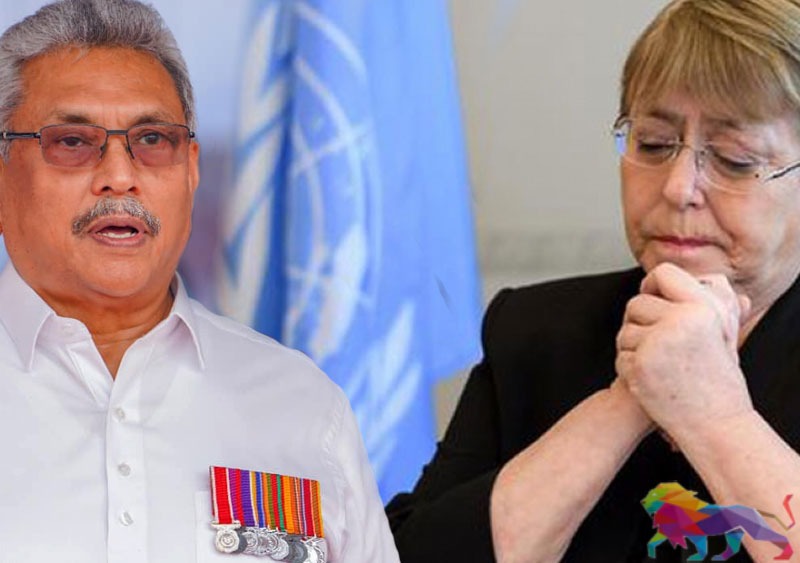
The Government of Sri Lanka has decided to reject the report compiled by the United Nations Human Rights Commissioner Michelle Bachelet on alleged human rights violations in Sri Lanka, says Minister Udaya Gammanpila.

He said Sri Lanka’s response to the report, which has already been submitted in writing, will be made public when Foreign Affairs Minister Dinesh Gunawardena addresses the UN Human Rights Council.

The government decided to reject the report as it has been prepared in violation of the mandates given through resolutions 30/1 and 40/1 of the UN Human Rights Council, Minister Gammanpila noted.

Further, the 17-page report only contains 02 pages that are in accordance with the mandate conferred on the Human Rights Commissioner, the Minister explained. The remaining content of the report are maliciously aimed at the government, contrary to their scope, he added.

In addition, the report has failed to present credible evidence pertaining to the allegations levelled at Sri Lanka, Minister Gammanpila said further.

In the report published in late January, the UN rights chief had stressed that the failure of Sri Lanka to address past violations has significantly heightened the risk of human rights violations being repeated.

She also called for an International Criminal Court investigation into Sri Lanka’s Tamil separatist conflict and sanctions on military officials accused of war crimes.

“Domestic initiatives for accountability and reconciliation have repeatedly failed to produce results, more deeply entrenching impunity, and exacerbating victims’ distrust in the system,” the report read.

It went on to say that the government of President Gotabaya Rajapaksa has reversed some advances made under previous administrations in protecting human rights.

India-Lanka relations under strain over denial of East Container Terminal in Colombo port

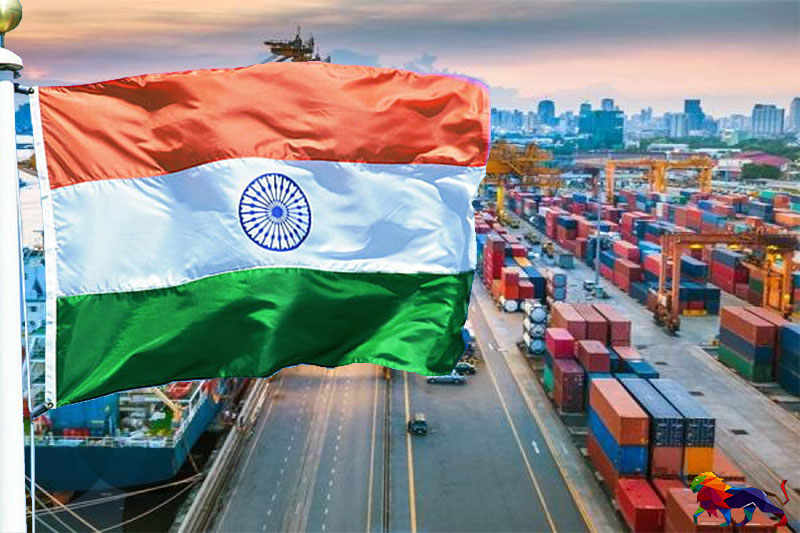
India-Sri Lanka relations have come under strain following Sri Lanka’s withdrawal from its written commitment to give Colombo port’s Easter Container Terminal (ECT) to India, and to offer the West Container Terminal (WCT) in lieu of it as a sop.

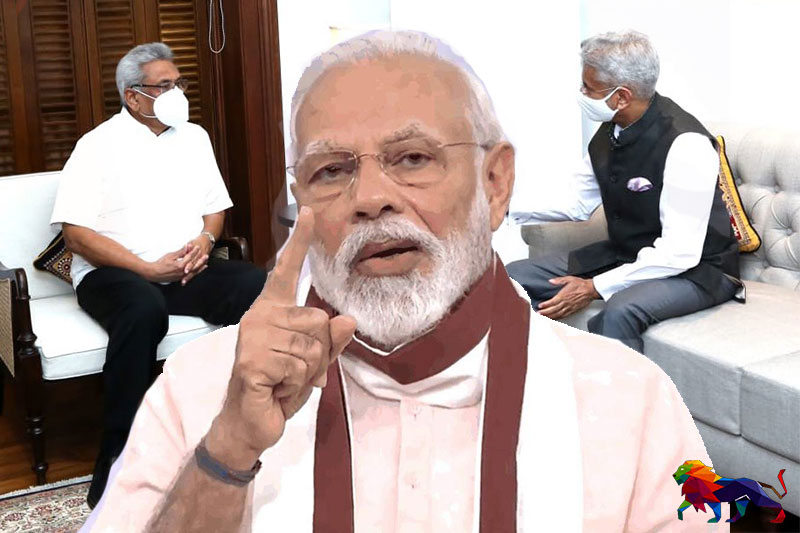
A disappointed Indian High Commissioner Gopal Baglay met President Gotabaya Rajapaksa, Prime Minister Mahinda Rajapaksa and Foreign Minister Dinesh Gunawardena on Tuesday apparently to express India’s dismay about the breach of trust.

Asked about the outcome of the discussions, the Indian High Commission said that India will issue a statement on it from New Delhi. The statement is awaited.

The suddenness of the Sri Lankan cabinet’s decision, without any prior discussion with India, had upset New Delhi, Indian sources said. The cavalier fashion in which a bilateral agreement and repeated verbal commitments were flouted is bound to have an impact on the relationship, though it is too early to say in what particular ways it will be impacted, the sources added.

As regards the offer of the West Container Terminal (WCT), the sources said that it had come out of the blue. Firstly the offer has to be made officially and with adequate details for India to consider it in depth, the sources said. As of now there is only a public statement, albeit official, that the WCT will be built and run by the Sri Lanka Ports Authority (SLPA) in collaboration with India and Japan for 35 years as a private public partnership to go by, Indian sources said.

Immediately after the February 1 cabinet decision, the Indian High Commission had issued a statement reiterating India’s position that all parties to the May 18, 2019 Memorandum of Cooperation (MOC) – Sri Lanka, India and Japan – over the ECT, should adhere to it. It was stated that the MOC had emerged from discussions at the highest national level and was backed with assurances from the Sri Lankan government subsequently, and even recently.

Earlier in January, the Indian Foreign Minister S.Jaishankar had indicated India’s deep interest in the ECT. “India is interested in the security and development of Colombo port,” he said in explanation when asked about his talks on it with the Sri Lankan President here.

Just a few days prior to the cabinet decision, the government of India had gifted 500,000 doses of the COVISHIELD vaccine to Sri Lanka as part of its “Neighborhood First Policy” and had committed itself to a steady supply of the vaccine. India was, as in many cases in the past, the first respondent to the virus pandemic in Sri Lanka. China has only promised to send 300,000 doses of its vaccine.

Support in UNHRC

Earlier, Sri Lanka had made a request to India to support it at the UN Human Rights Council (UNHRC) where a hostile resolution is likely to be introduced in March by the Core Group led by Western nations backed by the US. The UN High Commissioner for Human Rights, Michelle Bachelet, had recommended “targeted sanctions” against Sri Lanka and also referring it to the International Criminal Court (ICC) for alleged “war crimes”. The US is at odds with Sri Lanka since the later rejected a grant of US$ 480 million for transport development and land registration under the Millennium Challenge Corporation Compact.

In the light of Colombo’s decision on the ECT, the question that is asked is: Would New Delhi’s approach to Sri Lanka’s case in the UNHRC change? However, informed sources said that there is still a lot of time for India to adopt a stand on this issue. Much would depend on the exact nature of Colombo’s offer of the West Container Terminal and the seriousness of its intention to stick to commitments solemnly made in regard to it, they added.

Reasons For Denial

While it was true that Sri Lankan nationalists, both within the government and outside, along with 23 workers’ unions and a section of Buddhist monks, were against giving the ECT to India, it was believed President Gotabaya Rajapaksa was himself in favor of the deal largely based on the May 2019 MOC.

It was believed that Gotabaya was considering several factors such as: geo-political factors, the importance of India for the defense of Sri Lanka, and the need to maintain a balance between China and India in economic and strategically important projects. The President was therefore expected to be able to convince the agitated port workers’ unions that the ECT was not going to be sold or leased out to India and that the SLPA would have majority stake (51%) in the terminal.

But at the end of the day, the workers’ view prevailed. This was because they kept insisting that the President’s election manifesto Vistas of Prosperity and Splendor had explicitly mentioned Public-Private Sector Partnership only in the case of the development of the West Container Terminal (WCT), and not the ECT. What was implicit in the line on ECT was that the government will build and run the ECT.

Furthermore, key members of the President’s own think tank “Viyathmaga” such as Dr.Nalaka Godahewa and Dr.Priyath Bandhu Wickrama had had discussions with the workers’ unions and had reported back to the President to say that the workers’ case was reasonable based as it was on the election manifesto. The interlocutors assured the President that the workers’ were in agreement with him on Public-Private cooperation in building and running the West Container Terminal.

So far, India has not indicated whether it will accept the Lankan proposal on the West Container Terminal. The proposed deal appears to be the same as that which related to the ECT broadly. But the WCT has to be constructed from scratch and the details as to the stakes are yet to be worked out.

Some hardline Lankan nationalists would continue to agitate against giving any port terminal to India “even a 1% stake” as a union leader said.

The General Secretary of the Port Workers’ Union, Niroshan Gorakahenna, has been quoted in the Tamil paper Virakesari as saying that the workers were opposed to giving any terminal to foreign countries whether it was ECT or WCT. The WCT could not be bartered away to get back the ECT, he stressed. The workers would now discuss what steps they should take to press their case, Gorakahenna added.

In its defense, the government could say that it is only implementing the President’s election manifesto faithfully, a manifesto for which 6.9 million Lankans (52%) voted to install Gotabaya Rajapaksa in power.

India will Mount Pressure

India is also expected to flex its muscles so that Sri Lanka does not take it for granted. It is already raising the Tamil-Sinhalese ethnic reconciliation issue especially the full implementation of the 13 th.Constitutional Amendment (13A) which stems from the India-Sri Lanka Accord of 1987.

The 13A, which established elected provincial councils, gave the Tamil majority province (as well as other provinces) a modicum of devolved power, which in India’s view, would led to the extinction of separatist tendencies among the minority Tamils. There is an apprehension that in the proposed new Lankan constitution, the provisions contained in 13A will not find a place.

On Tuesday, the Indian Deputy High Commissioner, Vinod.K.Jacob, met two Tamil leaders from the Eastern Province, former Chief Minister and current MP, Sivanesathurai Chandrakanthan alias Pillayan, and former Minister Vinayagamurthi Muralitharan, alias Karuna Amman, and discussed 13A.

Jacob had reiterated the position of the Government of India that meaningful devolution is the way forward for achieving the aspirations of the Tamil people and stressed full implementation of 13th amendment.

The other sensitive issue is the tough resolution which is likely to be moved in the UN Human Rights Council (UNHRC) in Geneva in March. While the Human Rights High Commissioner Michelle Bachelet has recommended targeted sanctions and hauling up Sri Lanka before the International Criminal Court for alleged “war crimes” the Sri Lankan government has taken a defiant stand accusing the UNHRC of going by falsehoods and recommending remedies which violate the sovereignty of Sri Lanka.

Sri Lanka has asked for India’s support in the UNHRC since India has generally been supporting Sri Lanka in the council. Colombo hopes that with the grant of the WCT to compensate for the denial of the ECT, New Delhi will oblige Colombo at the UNHRC. Sri Lankans point out that China and Russia have already pledged support openly.


India presses for full implementation of 13A in Sri Lanka for better representation of Tamils

Colombo: During a meeting with Eastern Province’s former chief minister Sivanesaturai Chandrakanthan and former lawmaker Vinayagamurthi Muralitharan, India’s Deputy High Commissioner Vinod K Jacob on Tuesday discussed bilateral cooperation and implementation of the 13th Amendment.

“Deputy HC Vinod K Jacob held separate meetings with delegations led by Hon”ble MP S Chandrakanthan (Pillayan) & Mr V Muralitharan (Karuna Amman). Development coop in the East & full implementation of 13th amendment & Provincial Councils were discussed in these meetings,” the Indian High Commission in Colombo tweeted on Tuesday.

The 13th Amendment provides for devolution of power to the Tamil community. India has been pressing Sri Lanka to implement the 13th Amendment which was brought in after the Indo-Sri Lankan agreement of 1987.

However, the Sinhala nationalist parties and the erstwhile Liberation Tigers of Tamil Eelam vehemently opposed it.

While nationalists have decried it as excess sharing of power, the Tamil Tigers criticised it as sharing of only few powers.

President Gotabaya Rajapaksa has shown inclination to abolish the provisions in a soon-to-be revised Constitution.

The ruling Sri Lanka People’s Party (SLPP) allies have mounted a public campaign for abolition of the provincial councils system. The SLPP’s Sinhala majority hardliners have been advocating a total abolition of the island’s provincial council system established in 1987.

In his visit to Colombo last month, External Affairs Minister S Jaishankar met a delegation of Tamil National Alliance (TNA) lawmakers with whom he discussed, among other things, the role played by provincial councils in national reconciliation. The TNA is the main Tamil party in the island nation. Jaishankar also met a delegation of the Tamil Progressive Alliance.

During a joint media interaction with his counterpart Dinesh Gunawardena in Colombo, Jaishankar underlined India’s backing for Lanka’s reconciliation process and an “inclusive political outlook” that encourages ethnic harmony.

“As we promote peace and well-being in the region, India has been strongly committed to the unity, stability and territorial integrity of Sri Lanka. Our support for the reconciliation process in Sri Lanka is longstanding, as indeed for an inclusive political outlook that encourages ethnic harmony,” he said.

“It is in Sri Lanka’s own interest that the expectations of the Tamil people for equality, justice, peace and dignity within a united Sri Lanka are fulfilled. That applies equally to the commitments made by the Sri Lankan government on meaningful devolution, including the 13th Amendment to the Constitution,” Jaishankar had said.

Posted in Uncategorized

Indo- Lanka ties takes a hit

Relations between Sri Lanka and India hit a new low yesterday after Prime Minister Mahinda Rajapaksa announced that Sri Lanka will not go ahead with the agreement to jointly manage the East Container Terminal (ECT) at the Colombo Port with India and Japan.

Sources in New Delhi told the Daily Mirror that the Indian Government is likely to express serious disappointment at Sri Lanka’s decision at a higher level.

While India is expected to maintain its interest on Sri Lanka and continue funding key projects to counter China’s stronghold on the island, the decision not to implement the agreement signed in 2019 will however see strong reactions from Delhi, sources said.

The Memorandum of Cooperation among the three Governments of Sri Lanka, Japan and India on the development of the East Container Terminal located in the Colombo South Port was signed in Colombo on May 28, 2019. Then Ports and Shipping and Southern Development Minister Sagala Ratnayaka who signed the agreement on behalf of Sri Lanka in 2019 insisted that the ECT was not “sold” to India or Japan.

“The original discussion was for them to operate it for 35 years but we later brought it down.we had a consultant working with us and we were to work it all out by November.

But there was a government change,” he said.

He told the Daily Mirror that there was also no opposition to the agreement at the time and that Sri Lanka stood to greatly benefit from the deal.

As per the 2018 agreement India and Japan were to have a 49% stake collectively in the Terminal Operations Company that was to be set up with the exclusive and explicit purpose of providing the equipment and systems necessary for the development of the ECT and managing the ECT for long periods. Under the agreement the stake of 51% of the TOC was to belong to the Government of Sri Lanka under the Sri Lanka Ports Authority (SLPA). It was recently speculated that Chinese intelligence agencies were behind the opposition by trade unions to the ECT deal. Indian diplomatic sources told the Daily Mirror they are still of the strong view that Chinese agencies were funding some protests against the ECT. However, there has not been any evidence to back the claims.

Meanwhile, the Indian High Commission in Colombo issued a quick response after Prime Minister Mahinda Rajapaksa announced that the ECT will be fully managed by Sri Lanka.

“I would like to reiterate the expectation of the Government of India for expeditious implementation of the trilateral Memorandum of Cooperation (MOC) signed in May 2019 among the Governments of India, Japan and Sri Lanka for the development of ECT with participation from these three countries,” a spokesperson at the Indian High Commission in Colombo told reporters.

The spokesperson said that the commitment of the Government of Sri Lanka with regard to the ECT has been conveyed several times in the recent past, including at leadership level.

“Sri Lanka cabinet also took a decision three months ago to implement the project with foreign investors,” the spokesperson said.

Anthem only in Sinhalese at Independence Day event

The National anthem will be sung only in Sinhalese and not two languages at the main Independence Day celebrations this week.

Defence Secretary General (Retd) Kamal Gunaratne said the anthem will be sung when President Gotabaya Rajapaksa hoists the National flag at the main event on Thursday, 4th February.

The former government sang the National anthem in Sinhalese and Tamil.

However the current administration sang the anthem only in Sinhalese at the 72nd Independence Day celebrations last year.

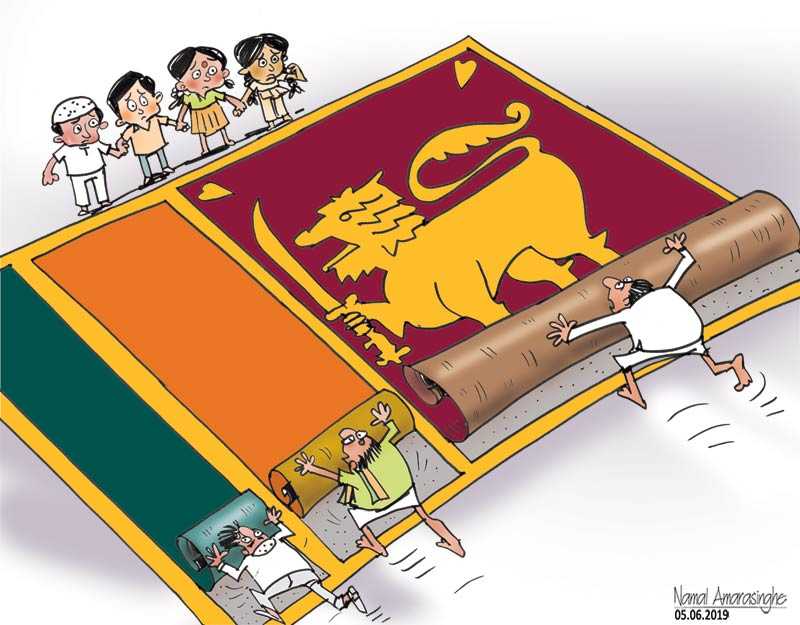
Meanwhile, steps are being taken to amend the Lion in the National flag.

Responding to a question posed at a virtual media conference, General Gunaratne said that concerns had been raised over some shortcomings in the image of the Lion in the Sri Lanka flag.

“Proposals were made by some people in society over some shortcomings in the Lion image,” he said.

General Gunaratne said that the Home Affairs Ministry has taken the proposals into consideration.

“However, there is a large process to follow. It will need to be put forward to Parliament for approval,” General Gunaratne added.

General Gunaratne said that the relevant officials are discussing the matter with the Government.

He said that very little could be done with the flag ahead of the 73rd Independence Day celebrations.

As a result, the existing Sri Lanka flag with the Lion image will be used at the celebration.

However, he said the process to make the required changes is underway.

Posted in Uncategorized

Sri Lanka, PRC sign MoU to deepen apparel trade ties

Sri Lanka and China recently signed a memorandum of understanding (MoU) to boost bilateral apparel trade that was severely affected by the COVID-19 pandemic. The China National Textile and Apparel Council signed the agreement with Sri Lanka’s Joint Apparel Association Forum (JAAF) to strengthen the working relationship between the two associations.

Other key objectives of the agreement are to promote value chain cooperation in the two countries, increase mutual visits, promote exchanges and improve mutual trust among industry personnel.

The effort was initiated by the embassy of Sri Lanka in Beijing, JAAF chairman A Sukumaran and China National Textile and Apparel Council vice president XuYingxin, according to a Sri Lankan newspaper report.

Sri Lanka also invited investors from China to explore investment opportunities in the upcoming textile park in Eravur.

Apparel and textile trade between China and Sri Lanka has expanded over the last three years and in 2019, the total textile and apparel trade between the two countries reached $1.24 billion.

Posted in Uncategorized

Erasing Tamil Legacy in Sri Lanka – jurist.org

It has been almost 12 years since the civil war in Sri Lanka came to an end after the defeat of the Liberation Tigers of Tamil Eelam (LTTE). Since 2009, there has been a concerted effort to hold perpetrators accountable for the mass killings against Tamil citizens, there has also been a governmental committee set up to assess the conflict known as the Lessons Learnt and Reconciliation Committee. However, something sinister has continued to endure in Sri Lanka beyond 2009, and that is the slow but steady erosion of Tamil culture and legacy that is indigenous to the Island.

The Tamil community in Sri Lanka was subject to some of the most brutal and inhumane torture and killings during the civil war. In fact, the crimes committed against the Tamil community were so heinous that they have been labeled as genocide and ethnic cleansing, with former President Barack Obama recently describing it as an ‘ethnic slaughter’. The numbers involved of Tamil victims have been staggering, with death estimates as high as 146,000 and a further 280,000 put behind barbed wire concentration camps – scenes which the world would not have contemplated repeating since the Second World War. It is no wonder that the term genocide has been commonly used to describe the horror faced by Tamils in Sri Lanka. With such trauma and memories of torture, the Tamil community in Sri Lanka has continued to show resilience in having their voice heard, and to commemorate the death and torture of so many at the hands of the Sri Lankan government. Part of this has included developing upon the community’s culture, history, and collective memory to strengthen cultural ties and erect memorials to ensure the suffering is not forgotten when it is still so recent; the government however does not seem to share the same pain, and through the subtle passage of time has been eroding and erasing Tamil presence from the Island.

Most recently this was exhibited on 9 January 2021 when the Mullivaikal Memorial at Jaffna University was demolished at the behest of the Sri Lankan government. What such acts demonstrate is a nation-wide effort to minimize the legacy of Tamils – indigenous to the Island, from its ancient roots to recent representations.

Tamil roots in the Island known as Sri Lanka stretches into antiquity, at least since the 2nd century BCE. During the Sangam Period, almost 4,400 years ago, Tamil literature was present in Sri Lanka, then known as Eelam. Of note, was the esteemed poet Eelattu Poothanthevanar who lived on the Island, along with a number of scientific writings produced in Eelam during the medieval period in the Jaffna Kingdom. With a presence of Tamil culture so intrinsically attached to the Island, it is of no small significance that the High Commission of Sri Lanka in the United Kingdom registered a formal complaint against The Guardian newspaper on 16 May 2020 for publishing an online travel quiz which asked the question: Eelam is an indigenous name for which popular holiday island? The High Commissioner demanded a retraction from The Guardian as it was apparently inaccurate to describe the Island as Eelam; this being counter to historical facts.

Both recent actions – the detraction demand on the use of the term Eelam and the demolition of the Mullivaikal Memorial – demonstrate the underhand effort of erasing the collective Tamil legacy in Sri Lanka. This continued erasure presents a legal problem to the Sri Lankan government, one which has since 2009 tried to whitewash its genocidal past to display a vibrant, cohesive holiday destination to the international community. Sri Lanka is a signatory to the United Nations Declaration on the Rights of Indigenous People 2007.

Article 8 of the Declaration states:

Article 8

Indigenous peoples and individuals have the right not to be subjected to forced assimilation or destruction of their culture.
States shall provide effective mechanisms for prevention of, and redress for:
(a) Any action which has the aim or effect of depriving them of their integrity as distinct peoples, or of their cultural values or ethnic identities;

By the High Commissioner’s insistence in the denial of the word Eelam to describe the Island, the Sri Lankan government has further cemented its intention to erase Tamil culture and history which is indigenous to the island. In doing so, the Government can be seen as violating Article 8(1) and (2)(a) where the Tamil cultural identity is being destroyed. This is nothing short of cultural genocide.

Further, the Sri Lankan government is a signatory and State Party to the International Covenant on Economic, Social and Cultural Rights in 1980. Article 15(2) sets out that State Parties in recognizing the right of everyone:

The steps to be taken by the States Parties to the present Covenant to achieve the full realization of this right shall include those necessary for the conservation, the development and the diffusion of science and culture.

It is difficult for a State Party to conserve culture when it is taking underhand actions to erase the Tamil culture from national memory. Holding State Parties to account for violating covenants and declarations is difficult, and any advocacy action is a Goliath battle that takes years to achieve, yet the pace at which the Sri Lankan government is conducting its erasure exercise is fast outpacing any such accountability.

In 2019 there was a change in Sri Lanka’s government – if only in name – which proceeded to back away and withdraw from its international legal commitments. In 2015 the government had co-sponsored the UN Human Rights Council Resolution 30/1, which made a commitment to promote reconciliation, accountability, and human rights. It further renewed its commitment in 2017 and 2019 to establish a judicial mechanism and a special counsel to investigate violations of human rights and international humanitarian law.

However, in 2019 the new government decided to withdraw from this Resolution, with no trace of any effort to set up such a mechanism. Reconciliation could have included the promotion and recognition of Tamil culture and history, it could have gone some way in assuring Tamil citizens they belonged to the Island that has been their home for over 4,000 years. With the new government’s withdrawal from such a commitment, it is no surprise that the Sri Lankan government is unwavering by its other international commitments. With no international accountability, the allegations of genocide, torture, and human rights violations will continue to rub salt in the wounds of the hundreds of thousands of Tamil victims.

With an almost silent international community, the Sri Lankan government has a free hand to continue its efforts to erode Tamil culture from the Island’s memory. Sri Lanka already has a dark past blighted by anti-Tamil pogroms, with the conflict formally concluded in 2009, its attention has now turned to suppress cultural recognition of Tamils that is nothing short of cultural genocide.

Samir Pasha is a lawyer specializing in Human Rights and Criminal Law. He qualified as a barrister and was a Middle Temple Scholar recipient, a Human Rights Law Association bursary winner for his work in the West Bank, occupied Palestinian Territory, and holds a masters from the University of Oxford specializing in the Modern South Asia.

Naga Kandiah is a Human Rights and Public Law solicitor. He has also worked with war crime witnesses and victims of torture. Mr. Kandiah also regularly represents vulnerable clients with severe mental or physical health issues, having successfully acted for clients in complex asylum, deportation, and entry clearance appeals.

This article was prepared for publication by Vishwajeet Deshmukh, a JURIST staff editor. Please direct any questions or comments to him at commentary@jurist.org.

Opinions expressed in JURIST Commentary are the sole responsibility of the author and do not necessarily reflect the views of JURIST’s editors, staff, donors or the University of Pittsburgh.

Posted in Uncategorized

Hold referendum in Sri Lanka under UN supervision, Vaiko says

The MDMK general secretary has written to the President of the European Parliament, among other global organisations, in regard to this

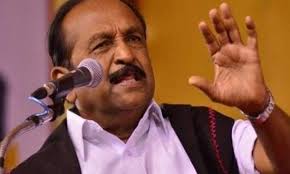
MDMK general secretary and Rajya Sabha MP Vaiko has written to the President of the European Parliament, among other global organisations, calling upon the members of the United Nations Human Rights Council (UNHRC) and other affiliated UN agencies and member States to accept the right to self-determination of the Eelam Tamils and organise a referendum in Sri Lanka under the supervision of the United Nations.

Mr. Vaiko also requested the UNHRC members to recognise the genocide resolution passed unanimously in the Northern Provincial Council of Sri Lanka on February 10, 2015 and direct appropriate measures at the International Criminal Court outlining that the affected Tamil people in Sri Lanka have no faith in any domestic commission or inquiry.

The Rajya Sabha MP also said India should work together with Council Members to have a new Resolution under Agenda 4 to appoint a special rapporteur to monitor and investigate ongoing human rights violations and repression of the Tamil people.

Mr. Vaiko said the special rapporteur should monitor and investigate human rights violations in the island nation, undertake a country visit to Sri Lanka and to the region and engage with relevant stakeholders, submit reports to the General Assembly and Human Rights Council on the situation of human rights in the North and East of Sri Lanka; and engage publicly on issues of concern, including through press releases.

Mr. Vaiko also demanded that all political detainees be released or brought to justice without any further delay.

Posted in Uncategorized

No Indian role in developing ECT in Colombo, Sri Lanka decides – The Hindu

The Sri Lankan government would instead offer the West Container Terminal to India for possible investments, a senior government source told The Hindu.

Reneging on a 2019 agreement with India and Japan, Sri Lanka has decided to develop the strategic East Container Terminal (ECT) at the Colombo Port on its own. The Sri Lankan government would instead offer the West Container Terminal to India for possible investments, a senior government source told The Hindu.

The decision was taken at Monday’s Cabinet meeting helmed by President Gotabaya Rajapaksa, when members “unanimously” agreed to proposals submitted by the Minister of Ports and Shipping, the source said. It comes amid mounting pressure from Port union workers against any foreign role or investment in the ECT project, where nearly 70% of the transhipment business is linked to India.

Asked about the development, a senior Indian source said: “We would hope that Sri Lanka does not unilaterally decide on this matter, as there is a tripartite agreement on it.”

For New Delhi, the strategic ECT project in Colombo has been high on priority. It has figured in talks at the highest levels, including when External Affairs Minister S. Jaishankar visited in January. A week after his visit, President Gotabaya Rajapaksa told agitating Port worker unions that the Adani Group – Government of India’s nominee – would invest in the terminal, and that the Terminal would not be “sold or leased” to any foreign entity, signalling that his government was taking forward the 2019 Memorandum of Cooperation (MOC). The Sri Lanka Ports Authority (SLPA) was to hold 51 % stake in the operations, while India and Japan together would hold 49 %, as per the MOC, which was signed by the former Maithripala Sirisena-Ranil Wickremesinghe administration.

However, amid growing resistance from port workers since, the ruling Rajapaksa government’s position appears to have shifted.

The first indication that Sri Lanka might keep India and Japan out of the deal came earlier on Monday, when Prime Minister Mahinda Rajapaksa told union representatives that the operation of the terminal would be “100 %” with the SLPA, because the “foreign company” did not agree to the proposals made by a committee appointed by the subject minister.

The PM’s remarks seem to have shocked the Indian side, as there has been no communication from Colombo that ongoing negotiations – held in person and virtually — had ended, according to sources. The remarks prompted a media statement from the Indian High Commission for the first time since the controversy heightened. A spokesman of the Indian mission on Monday reiterated “the expectation of the Government of India for expeditious implementation” of the trilateral MOC signed among Sri Lanka , India and Japan in May 2019, for the development of ECT with participation from the three countries. “The commitment of the Government of Sri Lanka in this regard has been conveyed several times in the recent past, including at the leadership level…all sides should continue to abide by the existing understandings and commitment,” the statement had said, hours before the Cabinet decided otherwise.

Seven more COVID-19 deaths bring tally to 323

Sri Lanka has reported 07 more coronavirus related deaths, the Director-General of Health Services confirmed today (February 01).

As per the Department of Government Information, five male patients and two female patients are among the victims.

The new deaths bring the number of COVID-19 related deaths witnessed in Sri Lanka to 323 in total.